










In-stock dealer units are still priced on pre-March cost structures. Once current inventory clears, replacements carry updated freight and material surcharges. Used equipment spread has widened to 25-35% below new. Lock rental rates now before 5-8% Q3 increases.
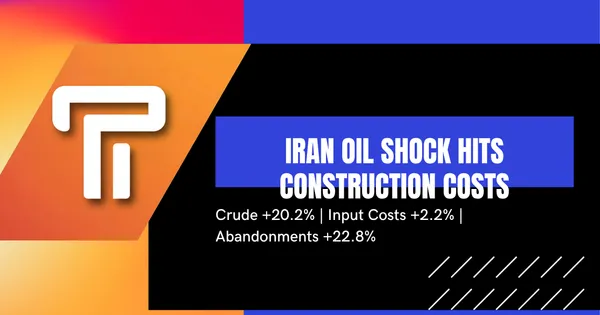
Crude petroleum prices jumped 20.2% month-over-month in March 2026, driven by the Iran conflict disrupting Middle East oil flows. That single number cascaded through the entire US construction cost chain: input prices climbed 2.2% in a single month, year-over-year hit 4.8% (highest since January 2023), and project abandonments surged 22.8% month-over-month according to ConstructConnect data. If you’re quoting equipment or placing orders right now, every bid from February is already stale.
## How Oil Prices Flow Into Equipment Costs
The connection isn’t abstract. Diesel fuel prices climbed steadily from late February as crude spiked toward $100/barrel. When diesel goes up, freight follows. When freight goes up, every piece of equipment that moves by truck or container gets more expensive to deliver.
For telehandler buyers, the math is direct. Transporting a 10-ton telehandler from a European port to a US jobsite costs roughly $4,200-$5,800 in freight. A 15-20% increase in fuel surcharges adds $630-$1,160 per unit. That’s before you account for the steel cost increases baked into the machine itself.
This compounds with the existing 50% Section 232 tariffs on steel and aluminum already in effect. Steel mill product prices were already up 20.9% year-over-year in February before the oil shock hit. Aluminum mill shapes had jumped 39.1% YoY. March data will almost certainly show further acceleration.
## 22.8% Abandonment Rate: What Gets Cancelled First
The ConstructConnect project abandonment data tells you where the pain concentrates. A 22.8% month-over-month jump in abandonments means roughly one in five active bids is getting pulled or renegotiated. The projects most vulnerable are mid-size commercial and private industrial developments where owners have the flexibility to pause.
Public infrastructure projects funded by the Infrastructure Investment and Jobs Act are largely insulated. Federal funding commitments hold firm regardless of material cost swings. This creates a two-track market: government-funded projects continue generating equipment demand, while private sector work contracts.
For equipment suppliers, the abandonment surge means two things. First, some contractors who had equipment on order or rental agreements in place will try to defer or cancel. Expect fleet utilization to dip slightly in Q2 across the Sunbelt states where private commercial construction is concentrated. Second, the surviving projects face tighter budgets, pushing contractors toward used equipment and short-term rental over new purchases.
## What AGC’s Chief Economist Is Flagging
Ken Simonson, the AGC’s chief economist, noted that major price increases for diesel fuel and key metals were already occurring before the Iran conflict started. The disruption of oil, natural gas, and aluminum supplies from the Middle East is adding a second wave of cost pressure on top of tariff-driven increases.
The specific warning: construction input prices surged at a 12.6% annualized rate in early 2026, the fastest pace since 2022. With March adding another 2.2% monthly jump, the annualized trajectory is accelerating, not stabilizing.
For equipment procurement specifically, OEM pricing adjustments typically lag raw material increases by 2-3 quarters. Manufacturers absorb short-term spikes but pass through sustained increases. If oil remains above $90/barrel through Q2, expect telehandler list prices to see another 3-5% adjustment by late 2026, on top of the 5-8% increases already implemented in early 2026.
## Timing Your Purchase Around the Shock
The immediate window (March-April 2026) actually favors buyers who can move quickly on in-stock units. Dealers still have inventory priced on pre-March cost structures. Once those units sell through, replacements will carry updated freight and material surcharges.
Used equipment becomes more attractive in this environment. A 2022-2023 telehandler purchased today avoids both the tariff premium on new imports and the oil-shock freight surcharge. The price gap between new and 3-year-old used units has widened to 25-35% in the 6-10t class, up from the typical 20-28% spread.
Rental rates haven’t adjusted yet but will follow within 60-90 days as fleet operators recalculate replacement economics. Lock in rental agreements now if you’re on the fence. Monthly rates for mid-range telehandlers ($3,500-$4,200/month) will likely see 5-8% increases by Q3 2026.