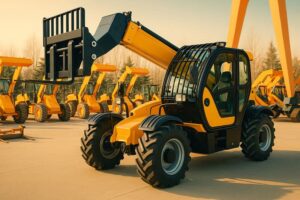











Откройте для себя 5 лучших навесных устройств для телескопических погрузчиков и как они используются в строительстве, сельском хозяйстве и промышленности.
В этом видеоролике рассказывается о том, как такие вложения, как вилы, ковши, крюки и рабочие платформы превратить один телескопический погрузчик в многоцелевую машину.
Узнайте, где телескопические погрузчики наиболее эффективны - на стройплощадках, фермах, складах и в арендных парках - и почему их ценят за радиус действия, устойчивость и гибкость.
В ней также рассматриваются основные стандарты безопасности включая соответствие стандартам CE, ANSI и ISO, а также графики нагрузки, стабилизаторы и датчики для безопасного подъема.
Краткое руководство для покупателей оборудования, операторов и подрядчиков, которые хотят безопасно и эффективно использовать телескопические погрузчики в реальных условиях.
5 основных видов навесного оборудования для телескопических погрузчиков, их использование и советы по безопасности
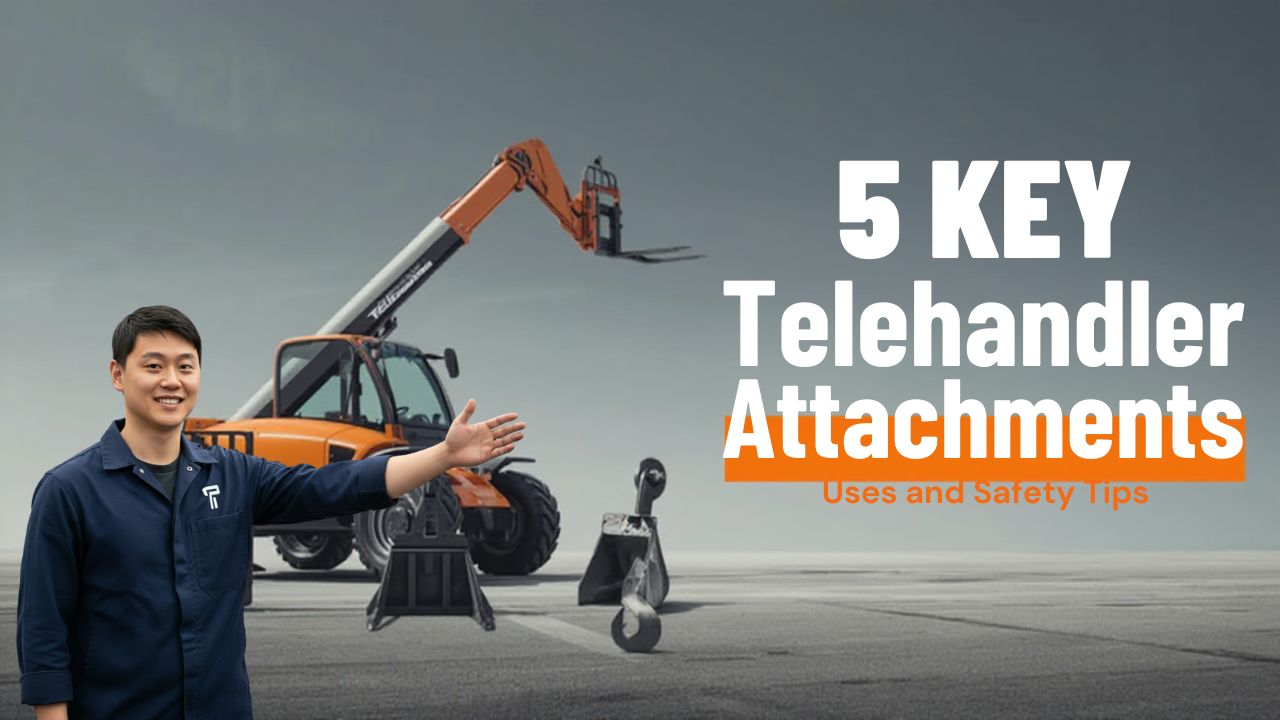
Краткое руководство по 5 лучшим навесным устройствам для телескопических погрузчиков, их реальному применению и основным стандартам безопасности. Узнайте, как одна машина адаптируется к различным требованиям работы.
Transcript
Hey everyone, welcome back! In my last video, I explained what a telehandler is and how it works. Today, let's talk about what makes these machines so useful – the attachments and where you'll actually use them.
The attachment system is what really sets telehandlers apart. One machine, multiple jobs – just change what's on the end of that boom. Pallet forks – for lifting pallets and materials.
Your standard attachment. Buckets – turn it into a loader for sand, gravel, or dirt. Lifting jibs or hooks – now you've got a crane for suspended loads.
Work platforms – safely lift personnel to work at height. Quick-change system means you can swap these in minutes. That's efficiency.
So where do people actually use these machines? Construction sites – placing materials on upper floors, loading trucks, moving equipment around the site. This is where you'll see telehandlers most often.
Agriculture – handling hay bales, moving feed, loading silos. On modern farms, these machines are everywhere. Industrial operations – warehouses, factories, moving heavy machinery and stacking materials.
Rental fleets – rental companies love them because one machine replaces multiple pieces of equipment. High versatility means high utilization. Why are telehandlers so popular?
Extended reach – you can place loads over obstacles and onto upper floors. Regular forklifts can't do that. Rough terrain capability – mud, gravel, slopes, uneven ground – these machines handle it all with four-wheel drive and big tires.
Attachment flexibility – one machine, multiple jobs. Saves money and space on your site. Compact and maneuverable – compared to cranes, telehandlers work in tight spaces and crowded job sites.
So there you have it – attachments and applications for telehandlers. Change the attachment, change the job. Use them wherever you need reach, lifting power, and versatility.
If you found this helpful, hit that like button and subscribe for more equipment insights. Thanks for watching, and I'll see you in the next one!