

Откройте для себя широкий ассортимент применение телескопических погрузчиков в строительстве, сельском хозяйстве, портах, складах и горнодобывающей промышленности. Узнайте, как эти машины сочетают в себе мощность вилочного погрузчика, крана и погрузчика для эффективного выполнения различных работ.
В этом видео рассказывается об их ключевых ролях в:
- Строительство: подъем и размещение материалов на площадке.
- Сельское хозяйство: обработка сена, кормов и удобрений.
- Промышленность и складское хозяйство: погрузочное и штабелирующее оборудование.
- Порты и терминалы: управление грузами и контейнерами.
- Горнодобывающая промышленность и инфраструктура: подъемный персонал и инструменты для обслуживания.
Телескопические погрузчики универсальны, адаптируемы и экономически эффективны - идеальное решение для предприятий, которым необходимо безопасно перемещать и поднимать материалы в различных условиях.
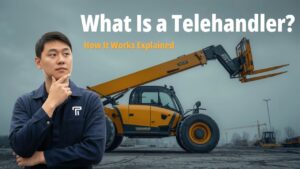
Что такое телескопический погрузчик? Основные области применения

Наглядный обзор применения телескопических погрузчиков в строительстве, сельском хозяйстве, промышленности и портах. Узнайте, как одна универсальная машина эффективно выполняет множество задач по подъему и перемещению грузов.
Transcript
Hey everyone. Today, let's talk about telehandlers. What are they actually used for?
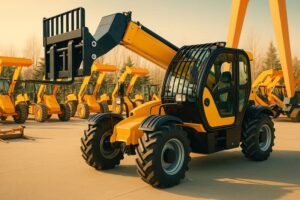
You might know them as telescopic handlers, teleporters, or boom forklifts. Whatever you call them, these machines are incredibly versatile. They combine the functions of a forklift, a crane, and a loader.
All in one unit. The magic is in that telescopic boom. It extends out and up, letting you lift and place loads in positions that other equipment just can't reach.
So, where do people actually use these machines? Let's break it down. First up, construction.
This is where you'll see telehandlers most often on a building site. They're doing the heavy lifting, literally. Moving steel bars, timber, bricks, cement pallets, you name it.
They can reach upper floors or tight spots where a tower crane can't operate. What makes them really useful is the attachment system. You can switch between forks, hooks, buckets, even work platforms.
One minute you're lifting materials, the next you're cleaning up the site or getting workers up to height. And here's the thing, on tight urban job sites, a telehandler can do what a crane does, but in a much smaller footprint. That's efficiency.
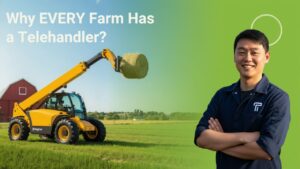
Next, let's talk farming, especially in Europe, where telehandlers are everywhere on farms. Farmers use them for handling hay bales, feed, fertilizer, grain, all the daily farm operations: loading and unloading products, cleaning out livestock barns, moving materials around. Need to get feed up to a silo or barn storage?
The telescopic boom handles that easily. With a bucket attachment, you've got a powerful loader. With forks, you're moving pallets.
It's the Swiss Army knife of farm equipment. Moving into industrial applications, think factories, warehouses, large facilities. These places need to move heavy machinery, equipment, containers, big awkward loads.
Telehandlers can reach high racks, load and unload from elevated storage, and handle multiple tasks with different attachments. You might use forks for pallets, hooks for lifting equipment, or platforms for maintenance work. It's about versatility.
One machine, multiple jobs. Now, ports and terminals. Here, telehandlers are handling containers, bulk materials, logs, steel coils, the kind of cargo that needs flexible handling equipment.
They assist with ship operations, yard stacking, and light lifting tasks where bringing in a full-size crane doesn't make sense. They're the practical choice for secondary handling operations. Let's look at mining, infrastructure work, and maintenance operations.
In mines or large construction sites, telehandlers transport equipment and materials across rough terrain. For road and railway maintenance crews, they're essential support equipment. And for maintenance work on electrical and communication infrastructure, you can mount a work platform and safely lift personnel and tools to height.
That's safer and more stable than a standard lift. Here's what really sets telehandlers apart. The attachment system.
One machine can do multiple jobs just by changing the attachment. Let me list the main ones: forks for pallets and general handling; hooks and lifting jibs for crane-style lifting; buckets for loading and excavation work; grapples for grabbing bales, logs, or loose materials; and work platforms for getting people up to height safely. So you're not buying five different machines.
You're buying one platform that adapts to whatever the job demands. That's cost effective and practical. Let me wrap this up with a quick overview.
Construction, lifting materials, site handling, working in tight spaces, agriculture, feed handling, barn cleaning, farm operations, industrial, heavy loads, high stacking, warehouse operations, ports, cargo handling, yard work, container operations, mining and maintenance, equipment, transport, personnel access, infrastructure work. Bottom line, telehandlers are true multi-purpose machines. Whether you're building, farming, manufacturing, or maintaining, if you need to lift, reach, and handle materials efficiently, a telehandler is worth considering.
That's it for today. If you have questions about specific applications or want to know more about what telehandlers can do for your operation, drop a comment below. Thanks for watching and I'll see you in the next one.