










Descubra o Os 5 principais acessórios para manipuladores telescópicos e como eles são usados em operações de construção, agricultura e industriais.
Este vídeo explica como anexos como garfos, caçambas, ganchos e plataformas de trabalho transformar um manipulador telescópico em uma máquina multiuso.
Saiba onde os manipuladores telescópicos são mais eficazes - em canteiros de obras, fazendas, armazéns e frotas de aluguel - e por que eles são valorizados pelo alcance, estabilidade e flexibilidade.
Ele também abrange padrões de segurança incluindo conformidade com CE, ANSI e ISO, além de tabelas de carga, estabilizadores e sensores para elevação segura.
Um guia conciso para compradores de equipamentos, operadores e empreiteiros que desejam usar os manipuladores telescópicos de forma segura e eficiente em aplicações do mundo real.
5 principais acessórios, usos e dicas de segurança para manipuladores telescópicos
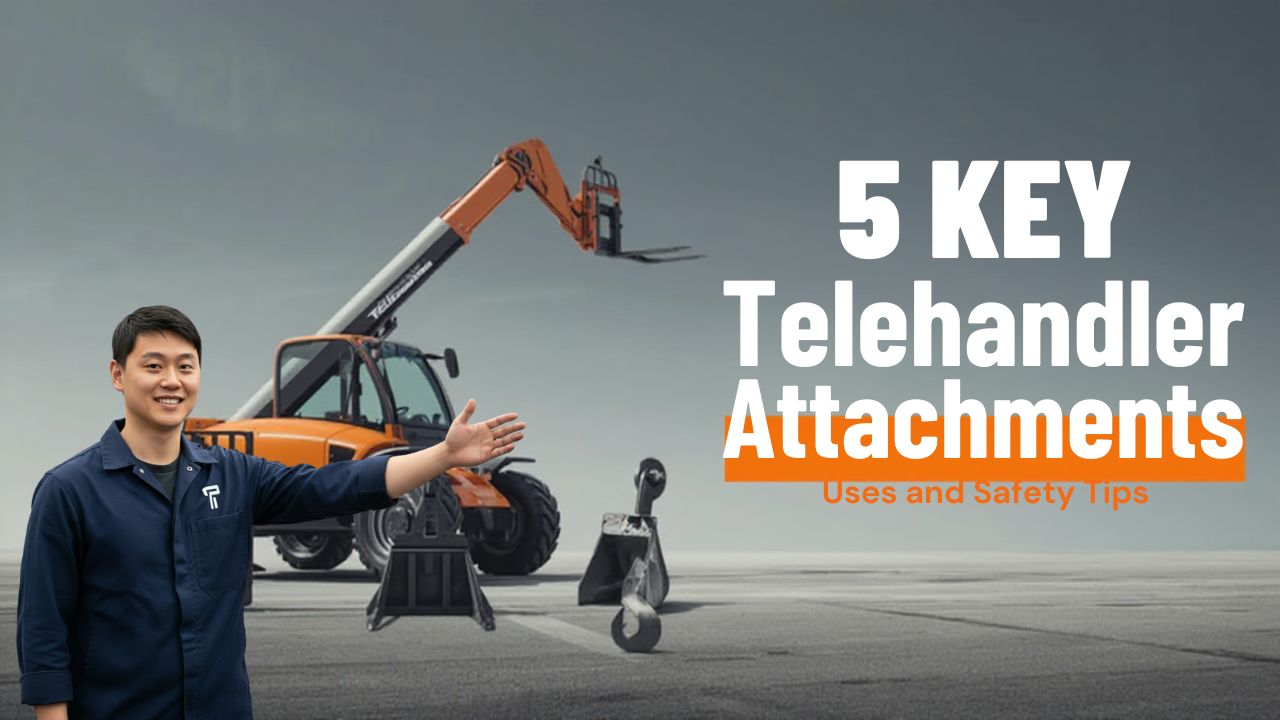
Um guia rápido sobre os 5 principais acessórios para manipuladores telescópicos, seus usos no mundo real e os principais padrões de segurança. Saiba como uma máquina se adapta a várias demandas de trabalho.
Transcript
Hey everyone, welcome back! In my last video, I explained what a telehandler is and how it works. Today, let's talk about what makes these machines so useful – the attachments and where you'll actually use them.
The attachment system is what really sets telehandlers apart. One machine, multiple jobs – just change what's on the end of that boom. Pallet forks – for lifting pallets and materials.
Your standard attachment. Buckets – turn it into a loader for sand, gravel, or dirt. Lifting jibs or hooks – now you've got a crane for suspended loads.
Work platforms – safely lift personnel to work at height. Quick-change system means you can swap these in minutes. That's efficiency.
So where do people actually use these machines? Construction sites – placing materials on upper floors, loading trucks, moving equipment around the site. This is where you'll see telehandlers most often.
Agriculture – handling hay bales, moving feed, loading silos. On modern farms, these machines are everywhere. Industrial operations – warehouses, factories, moving heavy machinery and stacking materials.
Rental fleets – rental companies love them because one machine replaces multiple pieces of equipment. High versatility means high utilization. Why are telehandlers so popular?
Extended reach – you can place loads over obstacles and onto upper floors. Regular forklifts can't do that. Rough terrain capability – mud, gravel, slopes, uneven ground – these machines handle it all with four-wheel drive and big tires.
Attachment flexibility – one machine, multiple jobs. Saves money and space on your site. Compact and maneuverable – compared to cranes, telehandlers work in tight spaces and crowded job sites.
So there you have it – attachments and applications for telehandlers. Change the attachment, change the job. Use them wherever you need reach, lifting power, and versatility.
If you found this helpful, hit that like button and subscribe for more equipment insights. Thanks for watching, and I'll see you in the next one!