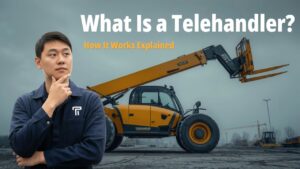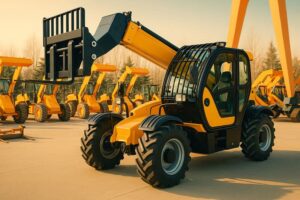











Scoprire il I 5 migliori accessori per sollevatori telescopici e come vengono utilizzati nell'edilizia, nell'agricoltura e nelle attività industriali.
Questo video spiega come allegati come forche, benne, ganci e piattaforme di lavoro trasformare un sollevatore telescopico in una macchina polivalente.
Scoprite dove i sollevatori telescopici sono più efficaci - nei cantieri, nelle aziende agricole, nei magazzini e nelle flotte di noleggio - e perché sono apprezzati per portata, stabilità e flessibilità.
Copre anche gli aspetti essenziali standard di sicurezza tra cui la conformità CE, ANSI e ISO, oltre a tabelle di carico, stabilizzatori e sensori per un sollevamento sicuro.
Una guida concisa per gli acquirenti di attrezzature, gli operatori e gli appaltatori che vogliono utilizzare i sollevatori telescopici in modo sicuro ed efficiente nelle applicazioni reali.
5 principali accessori per sollevatori telescopici, usi e consigli per la sicurezza
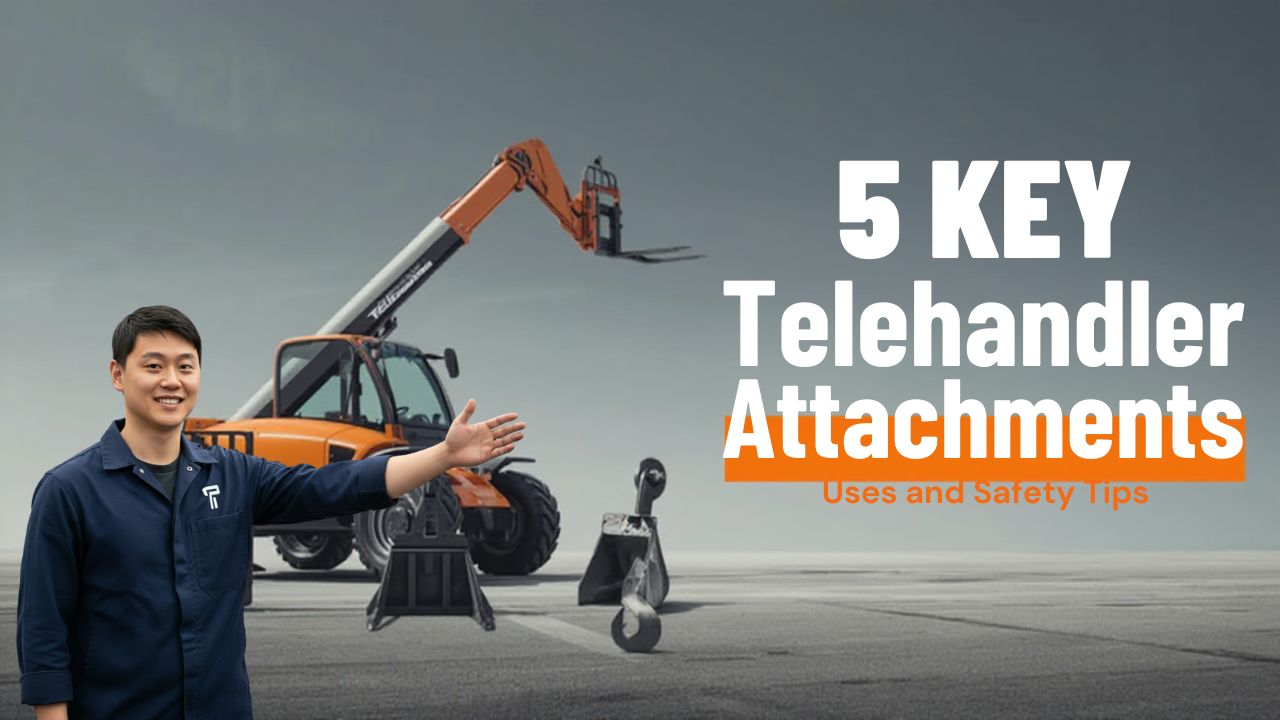
Una guida rapida ai 5 principali accessori per sollevatori telescopici, ai loro usi reali e ai principali standard di sicurezza. Scoprite come una sola macchina si adatta a molteplici esigenze di lavoro.
Transcript
Hey everyone, welcome back! In my last video, I explained what a telehandler is and how it works. Today, let's talk about what makes these machines so useful – the attachments and where you'll actually use them.
The attachment system is what really sets telehandlers apart. One machine, multiple jobs – just change what's on the end of that boom. Pallet forks – for lifting pallets and materials.
Your standard attachment. Buckets – turn it into a loader for sand, gravel, or dirt. Lifting jibs or hooks – now you've got a crane for suspended loads.
Work platforms – safely lift personnel to work at height. Quick-change system means you can swap these in minutes. That's efficiency.
So where do people actually use these machines? Construction sites – placing materials on upper floors, loading trucks, moving equipment around the site. This is where you'll see telehandlers most often.
Agriculture – handling hay bales, moving feed, loading silos. On modern farms, these machines are everywhere. Industrial operations – warehouses, factories, moving heavy machinery and stacking materials.
Rental fleets – rental companies love them because one machine replaces multiple pieces of equipment. High versatility means high utilization. Why are telehandlers so popular?
Extended reach – you can place loads over obstacles and onto upper floors. Regular forklifts can't do that. Rough terrain capability – mud, gravel, slopes, uneven ground – these machines handle it all with four-wheel drive and big tires.
Attachment flexibility – one machine, multiple jobs. Saves money and space on your site. Compact and maneuverable – compared to cranes, telehandlers work in tight spaces and crowded job sites.
So there you have it – attachments and applications for telehandlers. Change the attachment, change the job. Use them wherever you need reach, lifting power, and versatility.
If you found this helpful, hit that like button and subscribe for more equipment insights. Thanks for watching, and I'll see you in the next one!