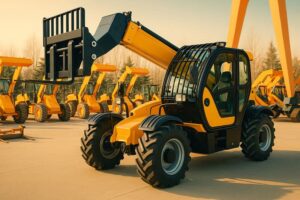











Entdecken Sie die Top 5 Anbaugeräte für Teleskoplader und wie sie im Bauwesen, in der Landwirtschaft und in der Industrie eingesetzt werden.
Dieses Video erklärt, wie Anhänge wie Gabeln, Schaufeln, Haken und Arbeitsbühnen einen Teleskoplader in eine Mehrzweckmaschine verwandeln.
Erfahren Sie, wo Teleskoplader am effektivsten eingesetzt werden - auf Baustellen, in landwirtschaftlichen Betrieben, Lagerhäusern und Mietflotten - und warum sie wegen ihrer Reichweite, Stabilität und Flexibilität so geschätzt werden.
Sie deckt auch wesentliche Sicherheitsstandards einschließlich CE-, ANSI- und ISO-Konformität sowie Lasttabellen, Stabilisatoren und Sensoren für sicheres Heben.
Ein kompakter Leitfaden für Käufer, Bediener und Bauunternehmer, die Teleskoplader sicher und effizient in der Praxis einsetzen wollen.
5 wichtige Anbaugeräte, Verwendungszwecke und Sicherheitstipps für Teleskoplader
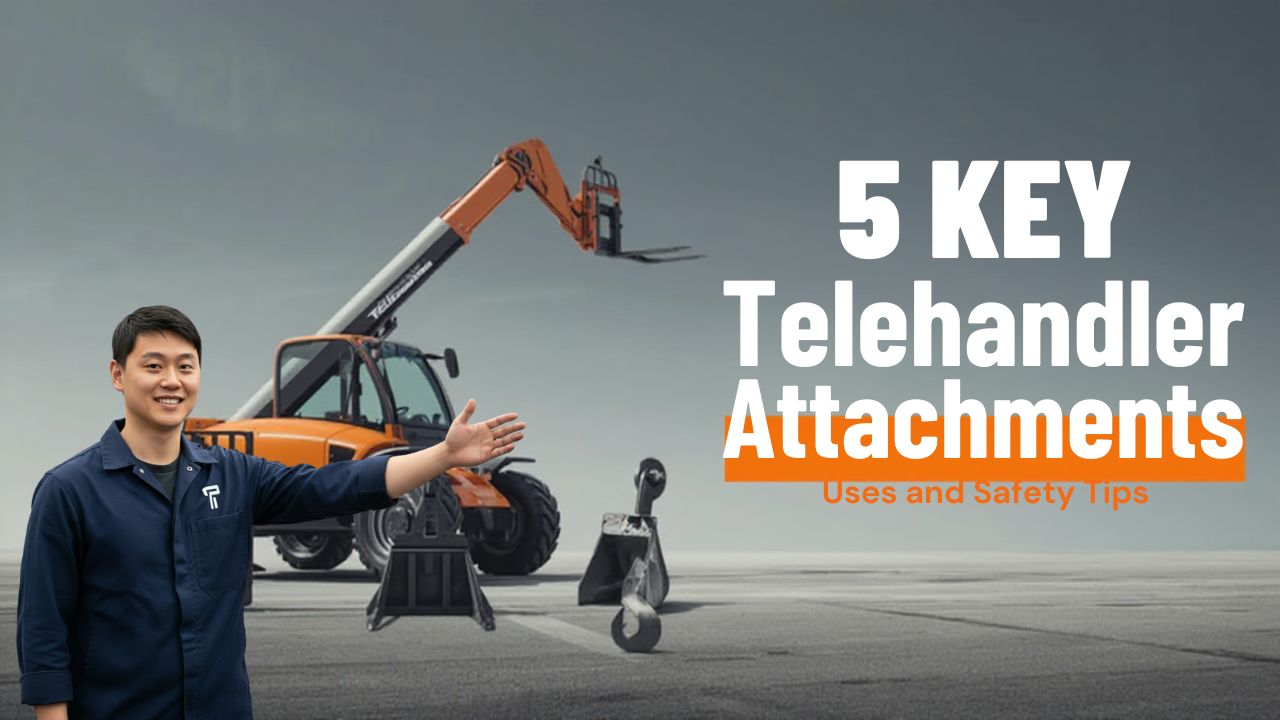
Ein kurzer Leitfaden zu den 5 wichtigsten Anbaugeräten für Teleskoplader, ihren praktischen Einsatzmöglichkeiten und den wichtigsten Sicherheitsstandards. Erfahren Sie, wie sich eine Maschine an verschiedene Arbeitsanforderungen anpassen lässt.
Transcript
Hey everyone, welcome back! In my last video, I explained what a telehandler is and how it works. Today, let's talk about what makes these machines so useful – the attachments and where you'll actually use them.
The attachment system is what really sets telehandlers apart. One machine, multiple jobs – just change what's on the end of that boom. Pallet forks – for lifting pallets and materials.
Your standard attachment. Buckets – turn it into a loader for sand, gravel, or dirt. Lifting jibs or hooks – now you've got a crane for suspended loads.
Work platforms – safely lift personnel to work at height. Quick-change system means you can swap these in minutes. That's efficiency.
So where do people actually use these machines? Construction sites – placing materials on upper floors, loading trucks, moving equipment around the site. This is where you'll see telehandlers most often.
Agriculture – handling hay bales, moving feed, loading silos. On modern farms, these machines are everywhere. Industrial operations – warehouses, factories, moving heavy machinery and stacking materials.
Rental fleets – rental companies love them because one machine replaces multiple pieces of equipment. High versatility means high utilization. Why are telehandlers so popular?
Extended reach – you can place loads over obstacles and onto upper floors. Regular forklifts can't do that. Rough terrain capability – mud, gravel, slopes, uneven ground – these machines handle it all with four-wheel drive and big tires.
Attachment flexibility – one machine, multiple jobs. Saves money and space on your site. Compact and maneuverable – compared to cranes, telehandlers work in tight spaces and crowded job sites.
So there you have it – attachments and applications for telehandlers. Change the attachment, change the job. Use them wherever you need reach, lifting power, and versatility.
If you found this helpful, hit that like button and subscribe for more equipment insights. Thanks for watching, and I'll see you in the next one!