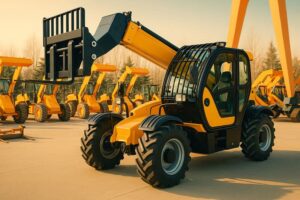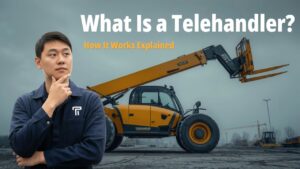










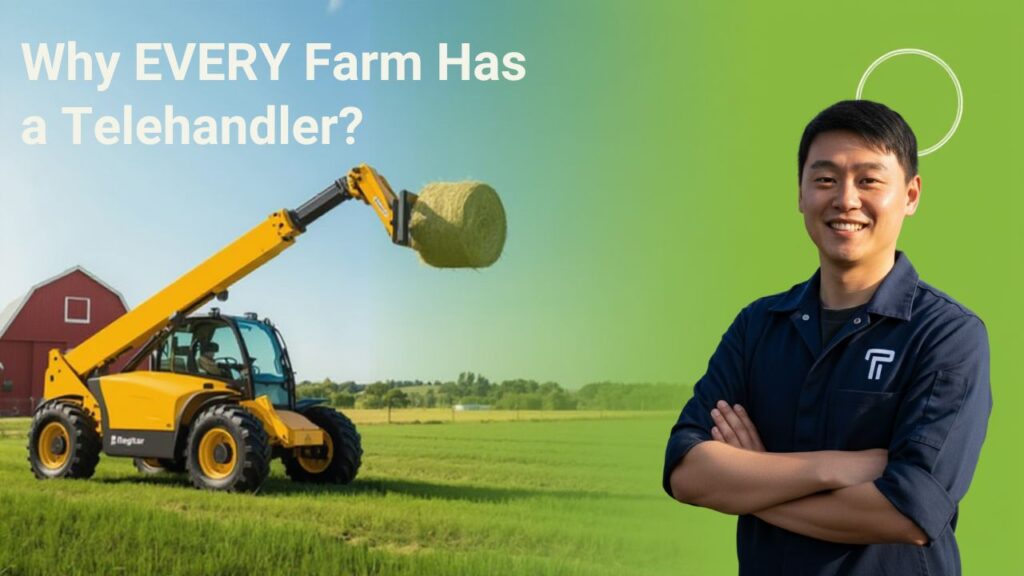
I sollevatori telescopici agricoli sono diventati attrezzature agricole indispensabili per le moderne attività agricole, in quanto consentono di accatastare il fieno, caricare il mangime, gestire l'insilato e la manutenzione della stalla con un'unica macchina versatile. Il loro sbraccio telescopico e il sistema di attacco a cambio rapido eliminano la necessità di più attrezzature specializzate.
Principali applicazioni e benefici per l'agricoltura:
Movimentazione di fieno e balle - Accatasta balle rotonde o quadrate fino a 9 metri di altezza nei capannoni di stoccaggio, superando di gran lunga il limite di 4 metri dei caricatori per trattori standard.
Gestione dei mangimi e dell'insilato - Carica i carri miscelatori, sposta l'insilato dalle pinze alle mangiatoie e trasporta le granaglie nei rimorchi alti con un braccio a portata estesa
Manutenzione di stalle e cortili - Passaggio all'accessorio benna per lo sgombero dei cortili del bestiame, il caricamento degli spandiletame e le operazioni generali di pulizia dell'azienda agricola.
Cambio rapido degli accessori - In circa due minuti è possibile passare dalle punte per balle alle benne e alle forche, consentendo di eseguire più lavori in una sola giornata di lavoro.
Capacità di sollevamento e prestazioni sul terreno - Gestisce carichi di 3-4 tonnellate con trazione integrale e pneumatici da fuoristrada per cortili fangosi, pendii e spazi stretti del fienile
I sollevatori telescopici per l'agricoltura consentono un notevole risparmio di tempo durante le stagioni critiche come il raccolto e le operazioni di alimentazione quotidiana. Una sola macchina con un solo operatore sostituisce la tradizionale combinazione di caricatore, carrello elevatore e lavoro manuale per le attività di movimentazione dei materiali.
Telescro produce sollevatori telescopici progettati specificamente per gli ambienti agricoli, caratterizzati da robusti sistemi di attacco, quattro ruote sterzanti per la manovrabilità in spazi agricoli ristretti e prestazioni affidabili in condizioni di terreno difficili tutto l'anno.
Perché le aziende agricole moderne hanno bisogno dei sollevatori telescopici: Guida completa
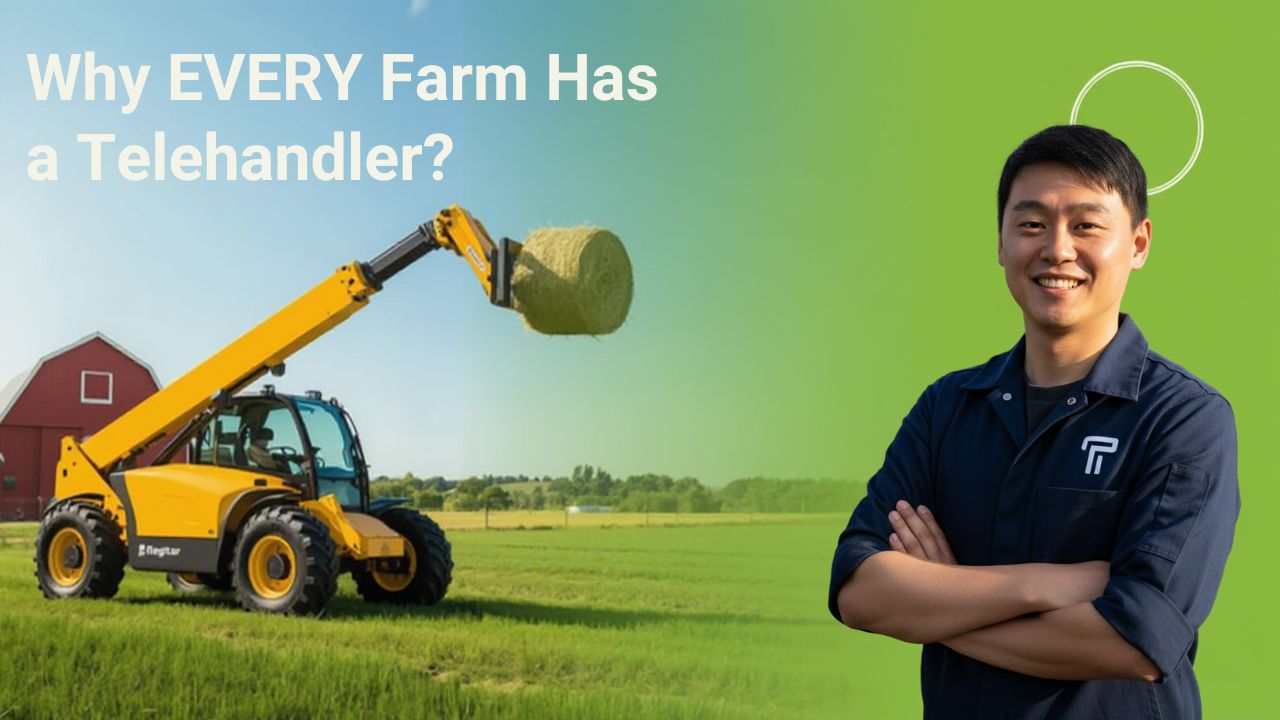
Scoprite perché i sollevatori telescopici agricoli sono essenziali per l'accatastamento del fieno, la movimentazione del mangime e i lavori in stalla. Una sola macchina sostituisce più attrezzature.
Transcript
One machine on your farm can stack hay, load feed, clean barns, and move grain—all in the same morning. Let me show you why. Telehandlers have become absolutely essential on modern farms.
If you're still using multiple machines for material handling, you need to see what you're missing. Here's what makes telehandlers so valuable in agriculture—you can switch attachments in minutes. Start your morning loading silage with a bucket, swap to a bale spike for stacking hay, then finish the day with forks moving pallets of feed.
One machine, dozens of different jobs throughout the year. Let's talk about what this actually does on a daily basis. Bale handling—you're stacking round or square bales several layers high in your storage shed.
Feed and silage—you're loading your mixer wagon or moving silage from the clamp to the feed trough. Barn cleaning—grab bucket on, and you're clearing livestock yards or loading manure into spreaders. And because this boom extends up to 9 meters, you can tip grain into tall trailers or stack materials way higher than any tractor loader can reach.
Three big reasons you see these on almost every farm now. First, lifting power—most agricultural telehandlers handle 3 to 4 tons, giving you the capacity for heavy loads without multiple trips. Second, terrain capability—four-wheel drive, big off-road tires, and four-wheel steering mean you're working comfortably in muddy yards, on slopes, or inside tight barn spaces.
Third, time savings—during busy seasons like harvest or feeding time, this machine keeps your operation moving efficiently without switching between equipment. Now, one thing to be clear about—telehandlers aren't replacing your tractor for fieldwork. They're not built for plowing or harvesting.
Their strength is lifting and moving materials, and that's where they shine. So that's why telehandlers have become the multi-purpose workhorse of modern agriculture. They handle the daily material movement that keeps farms running smoothly, and they do it faster and safer than using multiple specialized machines.
If you're in agriculture and found this useful, subscribe for more equipment insights. Running a farm with a telehandler? Tell me what attachment you use most in the comments.
Catch you in the next one.