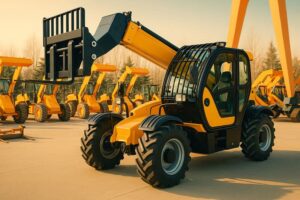










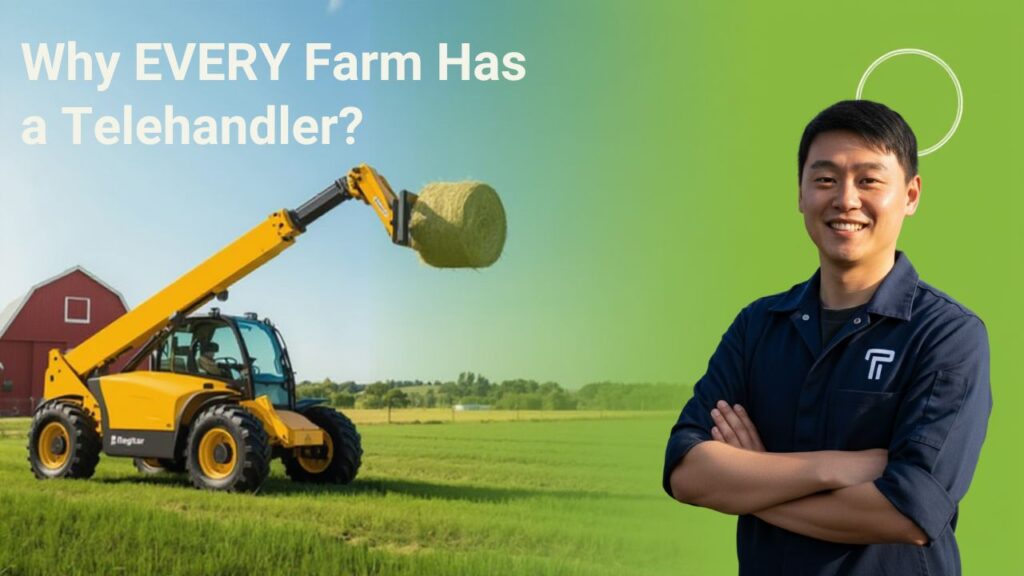
Farm telehandlers have become indispensable agricultural equipment for modern farming operations, handling hay stacking, feed loading, silage management, and barn maintenance with a single versatile machine. Their telescopic reach and quick-change attachment system eliminate the need for multiple specialized pieces of equipment.
Key agricultural applications and benefits:
Hay and bale handling – Stacks round or square bales up to 9 meters high in storage sheds, far exceeding the 4-meter limitation of standard tractor loaders
Feed and silage management – Loads mixer wagons, moves silage from clamps to feed troughs, and tips grain into tall trailers with extended boom reach
Barn and yard maintenance – Switches to bucket attachments for clearing livestock yards, loading manure spreaders, and general farm cleanup tasks
Quick attachment changes – Swaps between bale spikes, buckets, and forks in approximately two minutes, enabling multiple jobs throughout a single workday
Lifting capacity and terrain performance – Handles 3-4 ton loads with four-wheel drive and off-road tires for muddy yards, slopes, and tight barn spaces
Agricultural telehandlers deliver significant time savings during critical seasons like harvest and daily feeding operations. One machine with one operator replaces the traditional combination of loader, forklift, and manual labor for material handling tasks.
Telescro manufactures telehandlers specifically engineered for agricultural environments, featuring robust attachment systems, four-wheel steering for maneuverability in confined farm spaces, and reliable performance across demanding terrain conditions year-round.
Why Modern Farms Need Telehandlers: Complete Guide
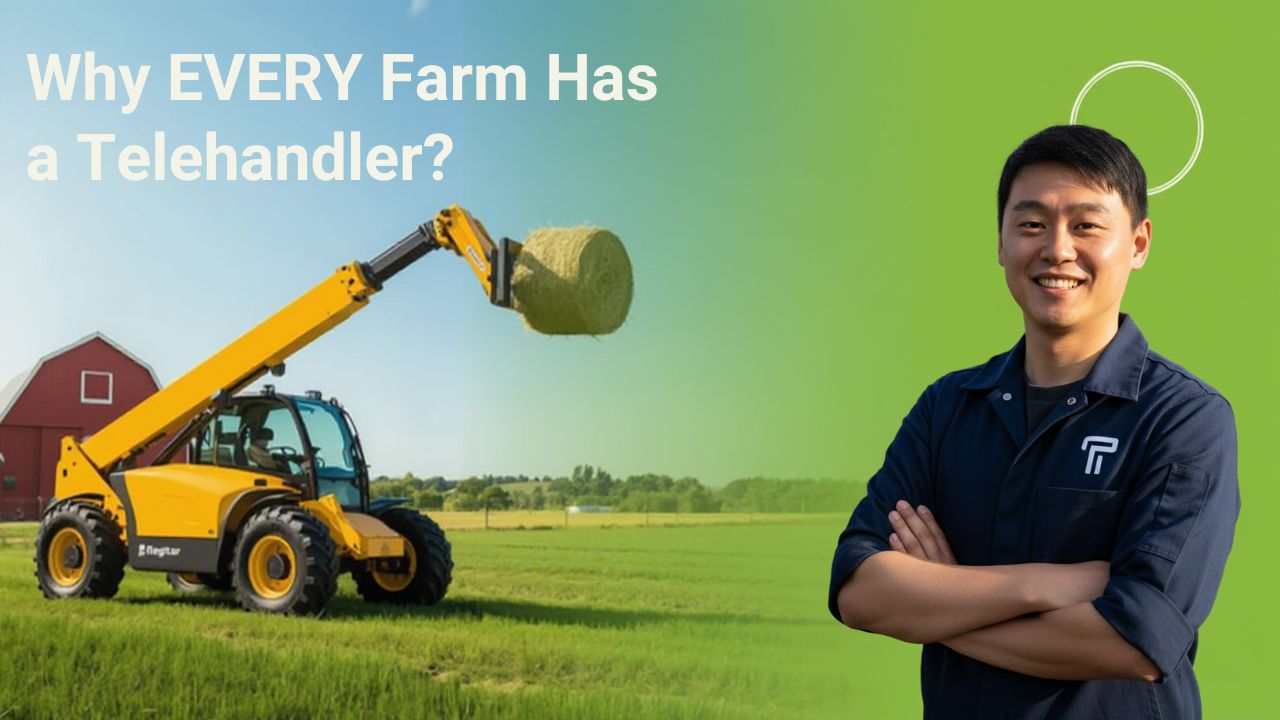
Learn why farm telehandlers are essential for hay stacking, feed handling, and barn work. One machine replaces multiple equipment pieces.
Transcript
One machine on your farm can stack hay, load feed, clean barns, and move grain—all in the same morning. Let me show you why. Telehandlers have become absolutely essential on modern farms.
If you're still using multiple machines for material handling, you need to see what you're missing. Here's what makes telehandlers so valuable in agriculture—you can switch attachments in minutes. Start your morning loading silage with a bucket, swap to a bale spike for stacking hay, then finish the day with forks moving pallets of feed.
One machine, dozens of different jobs throughout the year. Let's talk about what this actually does on a daily basis. Bale handling—you're stacking round or square bales several layers high in your storage shed.
Feed and silage—you're loading your mixer wagon or moving silage from the clamp to the feed trough. Barn cleaning—grab bucket on, and you're clearing livestock yards or loading manure into spreaders. And because this boom extends up to 9 meters, you can tip grain into tall trailers or stack materials way higher than any tractor loader can reach.
Three big reasons you see these on almost every farm now. First, lifting power—most agricultural telehandlers handle 3 to 4 tons, giving you the capacity for heavy loads without multiple trips. Second, terrain capability—four-wheel drive, big off-road tires, and four-wheel steering mean you're working comfortably in muddy yards, on slopes, or inside tight barn spaces.
Third, time savings—during busy seasons like harvest or feeding time, this machine keeps your operation moving efficiently without switching between equipment. Now, one thing to be clear about—telehandlers aren't replacing your tractor for fieldwork. They're not built for plowing or harvesting.
Their strength is lifting and moving materials, and that's where they shine. So that's why telehandlers have become the multi-purpose workhorse of modern agriculture. They handle the daily material movement that keeps farms running smoothly, and they do it faster and safer than using multiple specialized machines.
If you're in agriculture and found this useful, subscribe for more equipment insights. Running a farm with a telehandler? Tell me what attachment you use most in the comments.
Catch you in the next one.