











Telehandler Pricing
Market Cost Ranges by Capacity and Buying Path
See what telehandlers typically cost across compact, construction, and heavy-duty classes. Compare new vs used pricing, factory-direct vs dealer sourcing, and the factors that shape your real landed cost before you request a custom quote.

- Typical New Market Range
Broadly from the lower five figures to $180,000+, depending on machine band and configuration (approximate market estimate)
- Typical Used Market Range
Broadly from the low five-figure range to $100,000+, depending on condition and configuration (approximate market estimate)
- Quote Path
Factory-direct custom pricing available
On This Page
Navigate to any section
How Telescro Pricing Compares to Foreign Brands
European and American telehandler brands such as Manitou, JLG, Merlo, and JCB carry premium pricing built around dealer networks, regional distribution, and brand markup. Telescro ships the same machine class factory-direct from China, typically saving buyers 40 to 55 percent without sacrificing core specs.
| Machine Class | Foreign Brands Manitou · JLG · Merlo · JCB | Telescro Factory-Direct FOB China · ex-works | You Save | Best-Match Model |
|---|---|---|---|---|
| Compact / Agriculture Farms, yards, light-duty sites | $25,000–$55,000 | $15,000–$28,000 | ~50% | T4512 / T625-A |
| General Construction Construction, material handling | $45,000–$85,000 | $22,000–$42,000 | ~50% | T735-A / T3507 / T1035 |
| Infrastructure / 4T Infrastructure, heavier site lifting | $70,000–$120,000 | $32,000–$55,000 | ~55% | T1440 / TH1840 |
| Heavy-Duty / 5T Heavy construction, industrial, mining | $95,000–$180,000 | $45,000–$82,000 | ~55% | T1850 |
No dealer markup
You buy directly from the factory in Shandong, China. No regional distributor margin layered on top.
Lower production cost
China-based manufacturing, shorter supply chain, and efficient labor structure lower the floor cost without lowering build quality.
Same core specs
Yuchai engines, hydraulic systems, and load-management safety match the standards used in mainstream branded units.
Know which class fits your project? Get a configuration-based factory-direct quote with current pricing, lead time, and shipping.
What Drives Telehandler Price?
Six factors determine where a telehandler lands within and across price bands. Understanding them before you enter a sourcing conversation saves time on both sides.
1. Capacity Class and Lift Height
The single biggest price driver in the market.
Moving from a compact 2,750 lb-class machine at 14–15 ft lift height to a heavy-duty 11,000 lb-class unit at roughly 59 ft can double or triple the base price. Every step up in capacity class brings a larger boom structure, heavier counterbalance, more powerful hydraulics, and a higher-spec chassis. Buy the capacity class your application actually requires.
2. New vs Used Condition
Used machines can be 30–60% less upfront.
But the real cost depends onmachine hours, service history, maintenance condition, configuration match to your site requirement, and whether the machine clears current compliance requirements in your destination market. Used pricing looks attractive in listings; the total cost comparison is more complex.
3. Engine and Emissions Configuration
EPA Tier 4 Final compliance for North America, EU Stage V for Europe, and market-specific requirements elsewhere affect both the base machine spec and destination eligibility.
Engine brand selection(Kubota, FPT, or others) also influences price. A machine that cannot be imported legally into your market is not a bargain at any price.
4. Attachment Package
Standard pallet forks ship with most machines, but work platforms, buckets, winches, jib booms, and other attachments add cost and shipping weight.
Each attachment also changes what themachine can do on site. Specify your attachment requirement early — it affects both the quote and the build schedule.
5. Buying Channel
Factory-direct pricing removes the distributor layer and starts from your specific configuration requirement.
Dealer stock units offer faster availabilityand local after-sales coordination in some markets, but price typically reflects margin and a pre-set configuration bundle. The used market offers the lowest entry price but the highest verification burden. Each channel has trade-offs that only your project timeline and risk tolerance can resolve.
6. Destination Market and Delivery
Destination market and delivery requirements also affect the real purchase cost, but the exact impact depends on freight route, inland delivery, compliance paperwork, and shipping method.
Treat ex- works price and landed cost astwo different numbers — the [landed-cost section](#landed-cost) below breaks down the variables that drive the gap.
Need Help?
These six factors interact. The combination determines your real quote. Tell us your requirement and budget target.
New vs Used Telehandler: What Changes the Real Cost?
The upfront price difference between new and used is real. Whether that difference holds up over a project lifecycle depends on what you are comparing.
| Factor | New | Used |
|---|---|---|
| Purchase Price | Higher upfront | Lower entry cost |
| Machine Hours | 0 | Varies — verify carefully |
| Warranty | Manufacturer-backed | Depends on seller and condition |
| Configuration | Built to your exact requirement | As-is or limited modification |
| Compliance | Aligned with current standards | May need additional verification |
| Maintenance Risk | More predictable for 3–5 years | Condition-dependent |
If you are comparing used listings against a new build, request a quote only after you confirm the required specification and destination-market requirement. That comparison then becomes meaningful.
Factory-Direct vs Dealer: How the Buying Path Changes Price
Both channels serve real buyer needs. The right choice depends on your timeline, configuration requirement, and how much flexibility you need on spec.
| Buying Path | What Buyers Usually Gain | What Buyers Need to Accept |
|---|---|---|
| Factory-Direct | Direct manufacturer communication, configuration-based pricing, more visibility into quote scope and what is included | Lead time depends on build schedule, destination, and production slot |
| Dealer / Stock Unit | Faster availability if stock exists, easier local inspection or demo, simpler local after-sales coordination in some markets | Price may include distributor margin and stock-bundle limitation, less configuration flexibility outside existing stock spec |
Factory-direct pricing starts from your working requirement, not a fixed bundle.
What Changes Your Landed Cost by Market?
The ex-works price of a telehandler is not your landed cost. For cross-border buyers, the gap between those two numbers can be significant. These are the factors that move it.
1. Destination Market and Inland Delivery
Where the machine needs to arrive determines freight route, port handling complexity, and the last-mile logistics from port to site.
Markets with limited port infrastructure orlong inland distances carry meaningfully higher delivery cost. Inland delivery to remote construction or mining sites adds further.
2. Engine and Emissions Configuration
Different destination markets impose different emissions requirements at import.
A machine built to EU StageV spec cannot simply substitute for an EPA Tier 4 Final unit in North America, and vice versa. The correct configuration must be specified at order, not corrected at port. Getting this wrong adds cost and delay.
3. Attachment Package and Special Options
Attachments affect not only the quote price but also the shipping weight, container configuration, and in some cases whether the full machine ships assembled or partially disassembled.
Specify your attachment requirement at orderstage.
4. Shipping Method
Container, RoRo, and road transport each carry different cost structures, transit times, and risk profiles.
Container shipping typically gives better protectionfor the machine but adds loading and unloading cost. RoRo can be faster for certain routes. The right method depends on origin port, destination port, and local unloading infrastructure.
5. Documentation and Certification
CE marking, ROPS/FOPS certification, EPA Tier 4 Final documentation, and any market-specific compliance paperwork must be correct and complete before the machine clears customs.
Missing or incorrect documentation causes delaysand fees. In factory-direct procurement, documentation and configuration are usually defined together at order stage rather than clarified after purchase.
Need Help?
Use this section to compare like-for-like landed-cost scope. Ask whether each supplier is pricing the same destination, the same attachment list, the same emissions spec, and the same delivery method before you compare totals.
How Telescro Models Map to Each Price Band
Telescro's product line covers all four price bands shown above, from 1.2 ton compact to 5.0 ton heavy-duty machines. Each model below is tagged with its corresponding band so you can match capacity, lift height, and budget at a glance.
No model carries a published price — all pricing is configuration-based and provided through custom quotation.
Price Band Legend

T4512
1.2 t · 4.5 m Compact Telehandler
Ideal for urban construction, interior handling, and space-restricted sites. Compact footprint with easy transport logistics.

T625-A
2.5 t · 6 m Agricultural Telehandler
Optimized for farm material handling and confined agricultural environments. Balanced reach and capacity for daily operations.
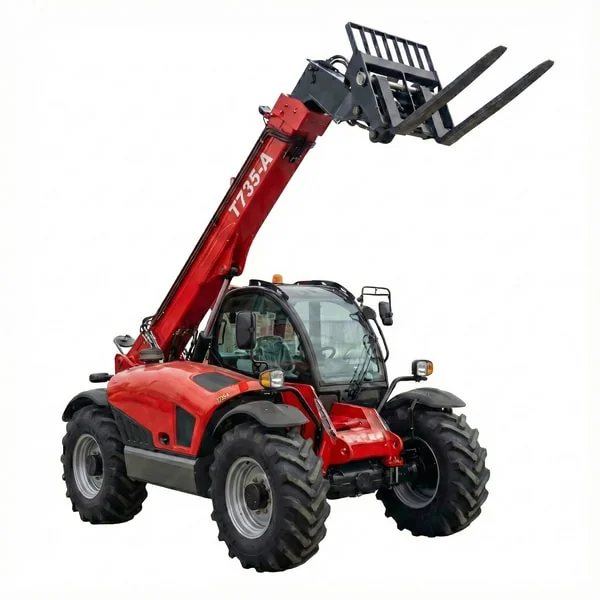
T735-A
3.5 t · 7 m Telehandler
Designed for intensive farm handling and feed operations. Stable lifting performance with upgraded hydraulic configuration.
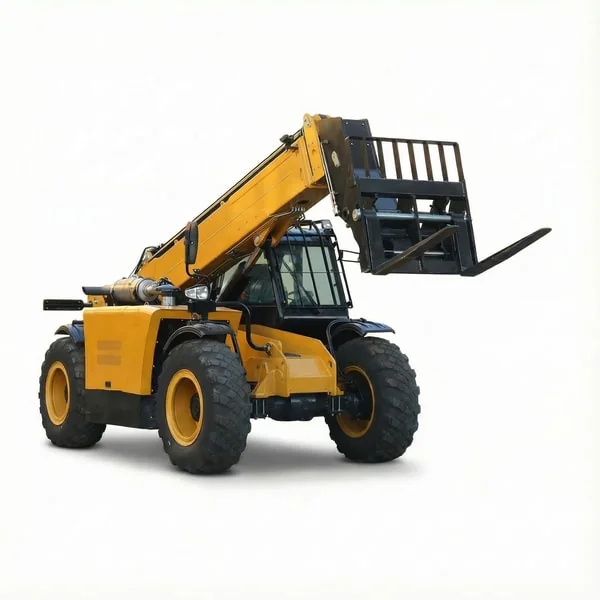
T3507
3.5 t · 7 m Telehandler
Compact yet capable for construction and industrial material handling. A versatile entry point across multiple applications.
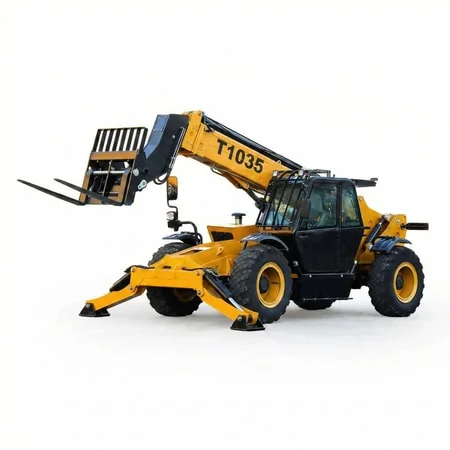
T1035
3.5 t · 10 m Telehandler
Mid-reach telehandler for construction sites, warehouses, and general contracting. Strong balance of reach and load capacity.
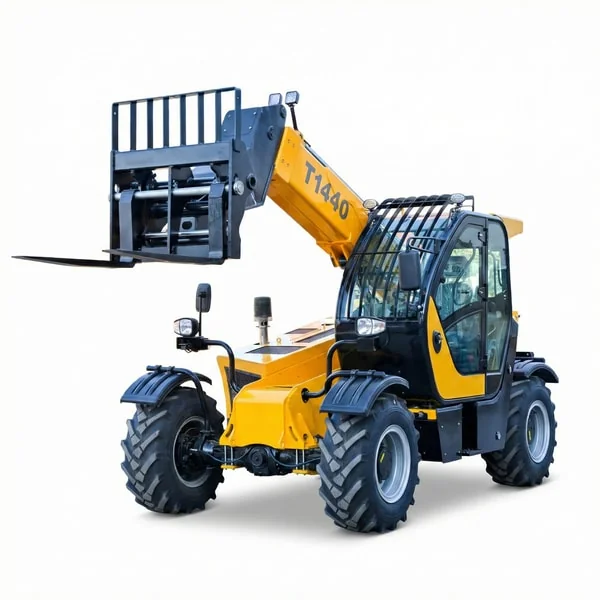
T1440
4.0 t · 14 m Telehandler
Extended reach model for demanding construction lifting and high-rise material placement applications.

TH1840
4.0 t · 17.5 m · EPA Compliant
Configured with EPA-certified powertrain for North American and emission-regulated markets.
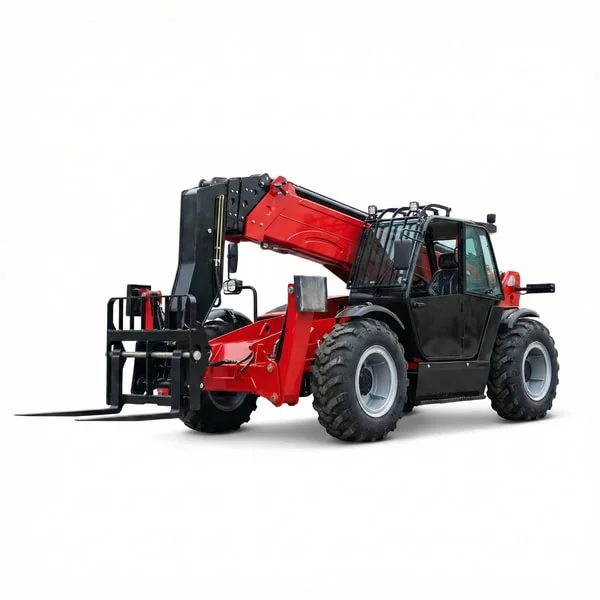
T1850
5.0 t · 18 m Telehandler
High-capacity solution for large-scale construction, infrastructure projects, and heavy material handling.
Quote Logic Made Simple
Telescro pricing is configuration-based — model selection plus engine, cab, attachment package, and destination market all factor in. The price ranges shown above are factory-direct estimates for reference. For your exact configuration and current shipping cost, request a custom quotation.
Why Buyers Use Telescro for Pricing and RFQ
Pricing starts from your application, lift target, destination market, and attachment requirement — so the discussion narrows to the right machine band before numbers are compared. Buyers who skip this step often discover the quote was for the wrong configuration.
Reduce Specification Risk Before RFQ
Pricing starts from your application, lift target, destination market, and attachment requirement — so the discussion narrows to the right machine band before numbers are compared. Buyers who skip this step often discover the quote was for the wrong configuration.
Compare Machine Bands Without Restarting
Buyers weighing compact, construction, and heavy-duty options can keep one pricing conversation while the requirement is clarified. If the first machine band does not fit, the discussion shifts — the requirement data stays.
Make Quote Scope Easier to Judge
Delivery method, documentation, and configuration items are discussed early, so ex-works and landed-cost assumptions are less likely to be mixed together when you compare supplier quotes.
Tell us your capacity target, lift height, application type, destination market, and any required attachments. We will provide a custom quote for the closest Telescro configuration.
Request Your Telehandler Quote
Tell us what you need. We'll send a factory-direct quote within 48 hours.

Hi, I'm Sally
Sales Manager · Telescro
"Send me your project basics and I'll come back with the right machine, real pricing, and shipping options for your market."
Send Your Requirements
Fields marked * are required.
Telehandler Pricing Questions, Answered
Quick answers to the questions buyers ask most when comparing new vs used, factory-direct vs dealer, and landed-cost across markets. Tap any question to expand.
Question not covered above? Send it our way.