











How to Choose the Right
Telehandler Lift Height
A practical guide to selecting the correct lift height for construction, agriculture, and industrial applications — so you invest in the right machine from day one.
Quick Guide
The required lift height depends on the working environment, building height, and material handling tasks. The table below provides typical lift height ranges for common applications.
| Application | Typical Working Height | Recommended Lift Height |
|---|---|---|
| Small Farms & Agricultural Work Hay baling, feed handling, barn stacking | 4 – 6 m | 6 – 8 m |
| Warehouse Loading & Stacking Pallet handling, racking, logistics yards | 5 – 7 m | 7 – 10 m |
| Low-Rise Construction (1–2 Floors) Residential builds, renovations, roofing | 6 – 8 m | 10 – 12 m |
| Mid-Rise Construction (3–4 Floors) Commercial projects, multi-story steel work | 10 – 14 m | 14 – 17 m |
| High-Reach Construction & Industrial Heavy infrastructure, power plants, mining | 14 – 17 m+ | 17 m or higher |
Small Farms & Agricultural Work
Hay baling, feed handling, barn stacking
Working Height
4 – 6 mRecommended Lift
6 – 8 mWarehouse Loading & Stacking
Pallet handling, racking, logistics yards
Working Height
5 – 7 mRecommended Lift
7 – 10 mLow-Rise Construction (1–2 Floors)
Residential builds, renovations, roofing
Working Height
6 – 8 mRecommended Lift
10 – 12 mMid-Rise Construction (3–4 Floors)
Commercial projects, multi-story steel work
Working Height
10 – 14 mRecommended Lift
14 – 17 mHigh-Reach Construction & Industrial
Heavy infrastructure, power plants, mining
Working Height
14 – 17 m+Recommended Lift
17 m+A telehandler should normally provide additional reach beyond the actual working height to allow safe positioning of materials and proper boom angles during operation.
As a rule of thumb, add 2–3 meters above your maximum working height to ensure safe clearance, attachment positioning, and compensation for uneven terrain.
Why Telehandler Lift Height Matters
Telehandler lift height determines how high materials can be safely placed on a jobsite. Choosing the correct height ensures the machine can reach the required working level while maintaining safe load capacity and stable boom angles.
If the lift height is too low, operators may struggle to place materials efficiently or safely, which can slow down work and increase operational risks.
Key Reasons to Choose the Right Lift Height
Selecting the correct telehandler lift height directly impacts safety, productivity, and return on investment across every project.
Not sure which lift height fits your project? Our engineers can recommend the ideal telehandler model based on your working height, load requirements, and jobsite conditions — at no cost.
Get a personalized lift height recommendation within 24 hours. No obligation, just expert guidance from our factory team.
Telehandler Lift Height by Application
Different industries require different lift heights depending on working environments, building structures, and material handling tasks. Understanding typical height requirements for each application helps you choose equipment that matches the jobsite.
Application 1 of 4
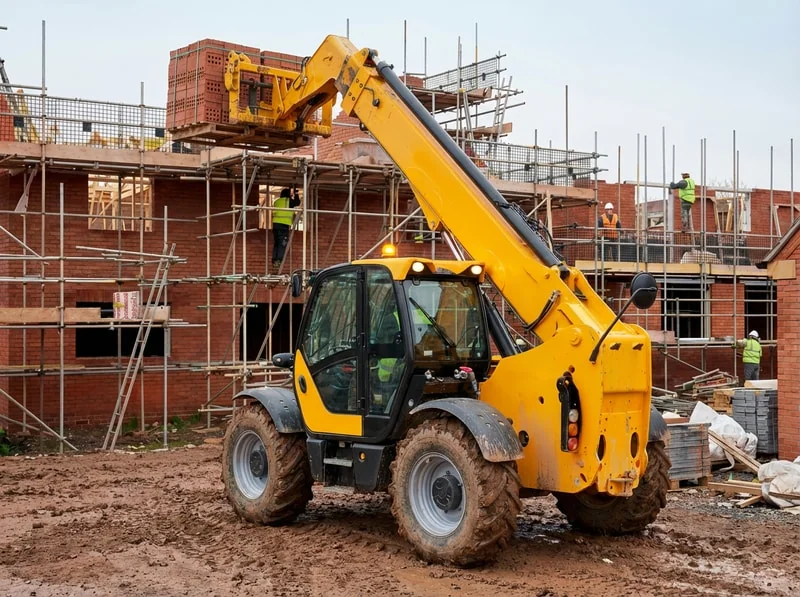
Construction Projects
Telehandlers are widely used on construction sites for lifting pallets of bricks, steel components, roofing materials, and scaffolding equipment.
For low-rise buildings, moderate lift height is usually sufficient. However, multi-story structures require greater vertical reach to place materials safely at upper levels.
Application 2 of 4
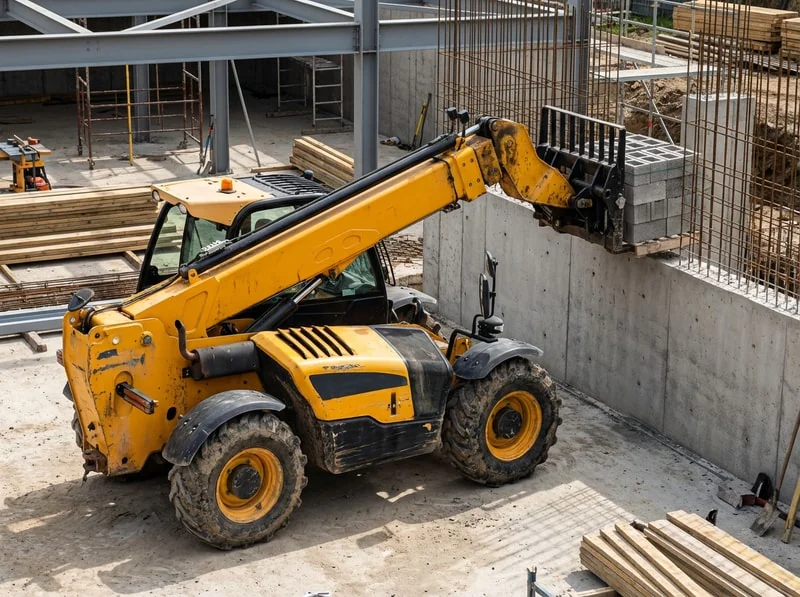
Warehouse & Industrial
In warehouses, factories, and logistics facilities, telehandlers are used for pallet handling, loading trucks, and stacking materials.
The required lift height is generally determined by storage rack height, loading dock design, and internal building clearance.
Application 3 of 4
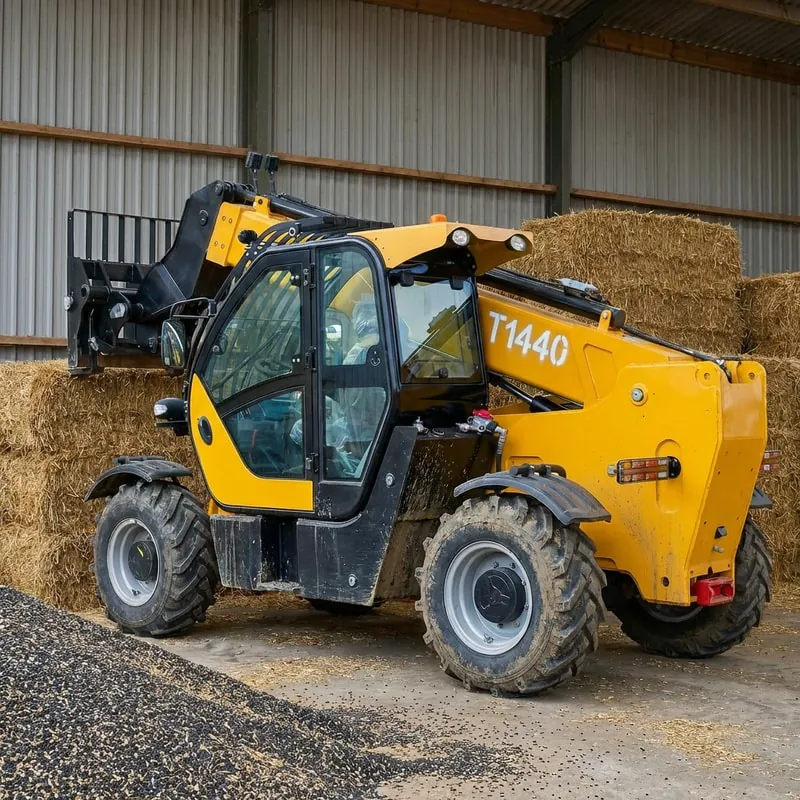
Agriculture & Farming
Agricultural telehandlers are commonly used for handling feed, stacking hay bales, loading grain, and moving palletized supplies.
In most farm environments, equipment must operate in barns, storage buildings, and outdoor yards, where moderate lift height provides sufficient reach.
Application 4 of 4
Infrastructure & Industrial
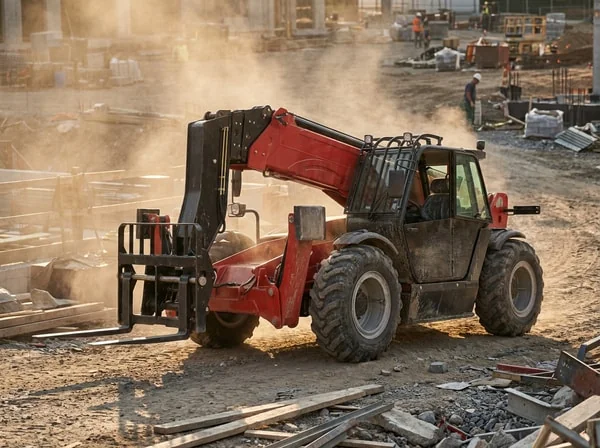
Large infrastructure projects such as bridges, industrial plants, and energy facilities often require extended lift heights.
These environments may involve lifting materials to elevated structures, steel frameworks, or maintenance platforms where additional vertical reach is necessary.
Selecting lift height based on the intended application helps ensure safe operation, efficient material handling, and reliable performance across different working environments.
Tell us your application type and working conditions — our team will recommend the most suitable lift height and telehandler model for your project.
5 Key Factors That Determine
Telehandler Lift Height
Selecting the correct telehandler lift height requires evaluating several jobsite conditions and operational requirements. The required height is not determined by building height alone — operators must consider reach distance, load characteristics, and placement conditions to ensure safe and efficient lifting.
Required Working Height
The starting point is the height at which materials must be placed — floor levels, roof edges, scaffolding platforms, or elevated work areas.
The machine's maximum lift height should always exceed the actual working height to ensure safe load placement.
Horizontal Reach Distance
Telehandlers are rarely positioned directly next to the lifting point. Building structures, obstacles, or safe maneuvering usually require operating several meters away.
As horizontal reach increases, the boom extends at a lower angle, requiring greater lift height to reach the same working level.
Load Weight & Capacity
The weight of the material being lifted directly affects the usable lift height. Telehandlers have different load capacities depending on boom extension and lifting height.
As the boom extends upward or outward, lifting capacity decreases — always verify the load chart for your target height.
Load Placement Clearance
The boom must extend slightly above the final placement point before lowering the load into position accurately.
This is critical when placing pallets on roofs, scaffolding, or elevated structures where additional vertical clearance is needed.
Jobsite Operating Conditions
Uneven ground, slopes, confined spaces, and nearby structures may prevent the telehandler from working close to the lifting point.
These conditions increase the effective reach distance and may require a telehandler with greater lift height.
Not Sure Which Factors Apply to Your Project?
Share your jobsite conditions, target working height, and load requirements. Our engineering team will analyze the key factors and recommend the ideal lift height for your application.
Common Mistakes When Choosing Telehandler Lift Height
Selecting the wrong lift height can limit equipment performance and create operational challenges on the jobsite.
The following mistakes are commonly encountered when telehandlers are selected without a full evaluation of working conditions, reach distance, load characteristics, and placement requirements.
Assuming Lift Height Equals Building Height
A common mistake is selecting a telehandler with a maximum lift height equal to the height of the structure or working platform. In practice, the machine must extend above the placement point to position materials safely. The telehandler lift height should exceed the actual working height.
Ignoring Horizontal Reach Distance
Lift height alone does not determine whether a telehandler can reach a work area. On most jobsites, the machine must operate several meters away from the structure. As horizontal reach increases, the boom operates at a lower angle, which increases the lift height required to reach the same point.
Not Checking Load Capacity at Maximum Height
Telehandlers have different lifting capacities depending on boom extension and lift height. The lifting capacity typically decreases as the boom extends upward or outward. Failing to consider the load weight at the required height may prevent safe lifting.
Choosing Height Without Considering Attachments
Attachments such as buckets, work platforms, jibs, or specialized forks can change the load center and increase the distance between the boom and the load. These changes may reduce lifting capacity or alter the reach required for certain tasks.
Not Allowing Placement Clearance
Placing materials accurately often requires the boom to extend slightly above the final placement point. When working with roofs, scaffolding platforms, or elevated structures, additional clearance is needed to lower the load safely into position.
Ignoring Jobsite Layout & Access Conditions
Restricted access areas, nearby structures, uneven ground, or limited maneuvering space may prevent the machine from working close to the lifting point. In these situations, additional reach and lift height may be required.
Selecting Height Only for the Current Project
Some buyers choose a telehandler based only on the requirements of a single project. However, telehandlers are typically used across multiple projects over several years. Limited lift height may restrict usefulness for future applications.
Underestimating Future Work Requirements
Construction projects, industrial facilities, and rental fleets often face changing lifting requirements over time. If the selected telehandler does not provide sufficient reach for future scenarios, additional equipment may be required.
Avoiding these common mistakes starts with a proper evaluation of your working height, reach distance, load requirements, and jobsite conditions before selecting a telehandler.
Share your project details with our team — we'll help you identify the right lift height and avoid costly selection errors.
Telehandler Models by Lift Height
Telescro offers telehandlers covering lift heights from 4.5 m to 18 m with capacities from 1.2 to 5.0 tons — serving agriculture, construction, warehouse, and infrastructure applications. Each model is designed around a specific height and capacity range to match real jobsite requirements.
Select a model to view full specifications — or contact us to confirm which lift height suits your project.

T4512
1.2 t · 4.5 m Compact Telehandler
Ideal for urban construction, interior handling, and space-restricted sites. Compact footprint with easy transport logistics.

T625-A
2.5 t · 6 m Agricultural Telehandler
Optimized for farm material handling and confined agricultural environments. Balanced reach and capacity for daily operations.
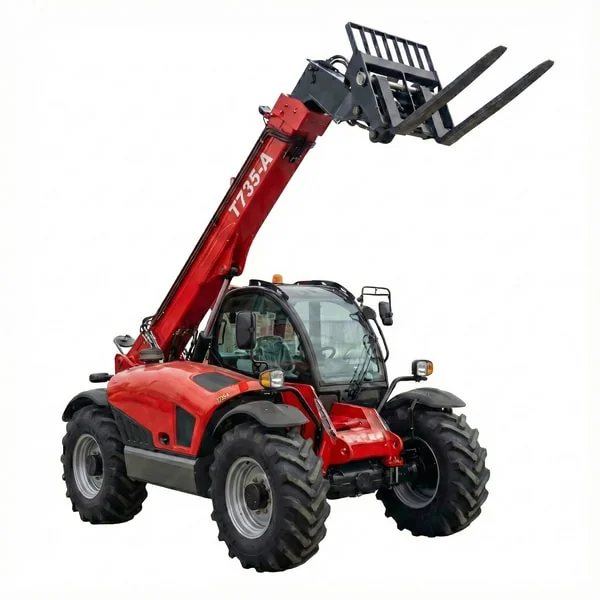
T735-A
3.5 t · 7 m Agricultural Telehandler
Designed for intensive farm handling and feed operations. Stable lifting performance with upgraded hydraulic configuration.
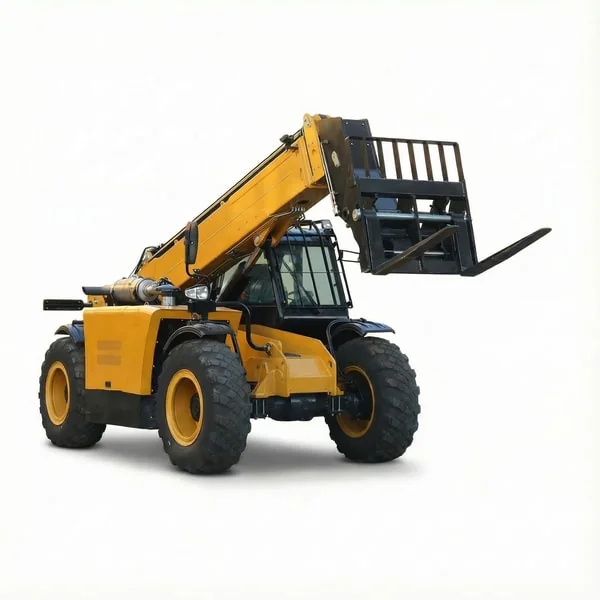
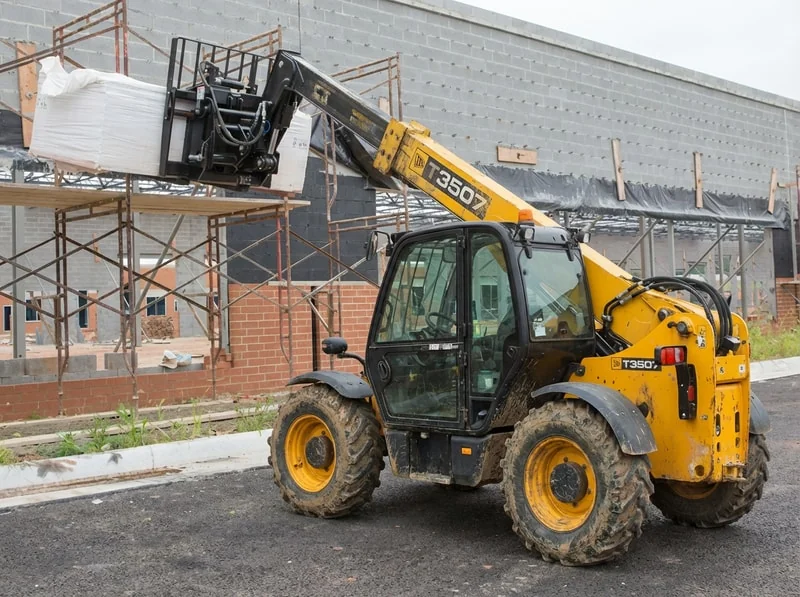
T3507
3.5 t · 7 m Telehandler
Compact yet capable for construction and industrial material handling. A versatile entry point across multiple applications.
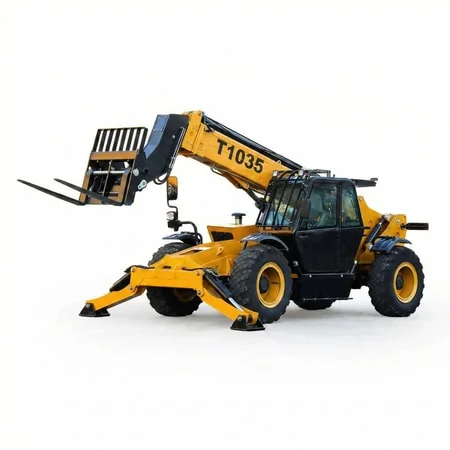
T1035
3.5 t · 10 m Telehandler
Mid-reach telehandler for construction sites, warehouses, and general contracting. Strong balance of reach and load capacity.
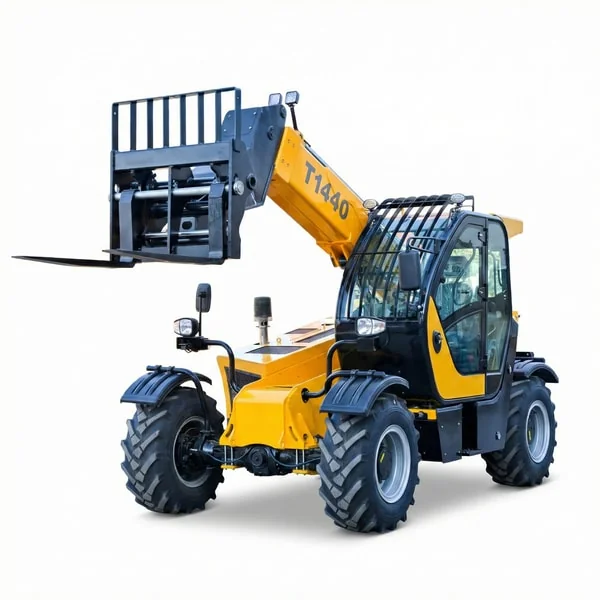
T1440
4.0 t · 14 m Telehandler
Extended reach model for demanding construction lifting and high-rise material placement applications.
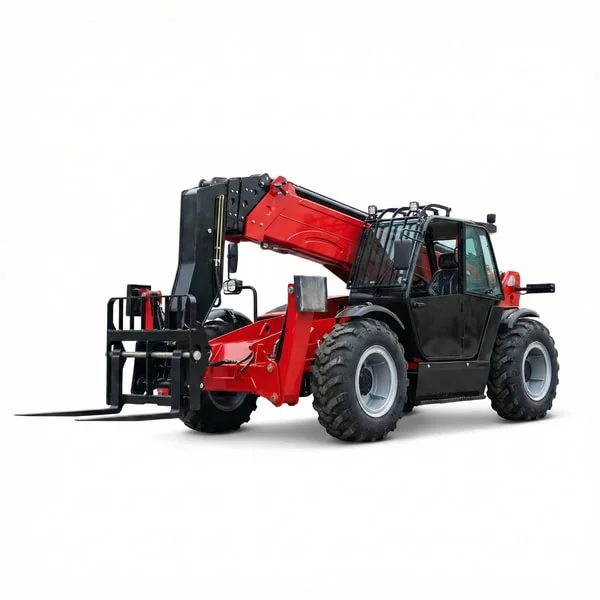
T1850
5.0 t · 18 m Telehandler
High-capacity solution for large-scale construction, infrastructure projects, and heavy material handling.

TH1840
4.0 t · 17.5 m · EPA Compliant
Configured with EPA-certified powertrain for North American and emission-regulated markets.
Not sure which model matches your required lift height? Talk to Sally — share your working height and application, and we'll recommend the right model.
Useful Telehandler Resources
Reference materials to support your telehandler buying decision, equipment selection, pricing research, and long-term maintenance planning.
Equipment Selection
Comparison & buying decision guides
Choose the Right Lift Height
NEWLift height selection guide
New vs Used Telehandler
NEWInvestment comparison guide
Telehandler or Wheel Loader?
Side-by-side equipment comparison
Telehandler or Forklift?
Equipment selection comparison
Application & Sourcing
Industry-specific sourcing guides
2026 Sourcing Guide
Step-by-step evaluation reference
China Telehandler for Agriculture
Farm-specific sourcing from China
Telehandler for Construction
Building & infrastructure applications
China Telehandler for Rental
Rental fleet sourcing from China
Pricing, Logistics & Maintenance
Costs, shipping & aftercare planning
Maintenance Checklist
NEWDaily, weekly, monthly & annual guide
What Affects Telehandler Price?
Cost factors & pricing transparency
Import & Customs Guide
Documentation for overseas purchases
Shipping Time Reference
Production and transit timelines
Container Loading Cases
Real shipping examples
Wear Parts & Consumables
Maintenance planning reference
Telehandler Lift Height Selection FAQ
Common questions about choosing the correct telehandler lift height, working height, load capacity, and reach requirements.
Have more questions about choosing the right telehandler lift height?
Ready to Choose the Right Telehandler Lift Height?
Share your project requirements and get a personalized lift height recommendation with factory-direct pricing — so you invest in the right machine from day one.

Hi, I'm Sally.
Sales Manager at Telescro
I can help you with:
- Lift height recommendation based on your working environment
- Model selection matching your lift height, capacity, and reach needs
- Load chart review for your specific height and weight requirements
- Factory-direct pricing with full warranty and after-sales support
- Shipping logistics and delivery timeline to your location
No commitment required. Tell me your working height, application, and load requirements — I'll prepare a transparent quotation with full specifications that you can evaluate at your own pace.
Get Your Lift Height Recommendation & Quote
Tell us what you need — Sally will respond with a detailed recommendation within 24 hours.