











New vs Used Telehandler:
Which One Is the Better Investment?
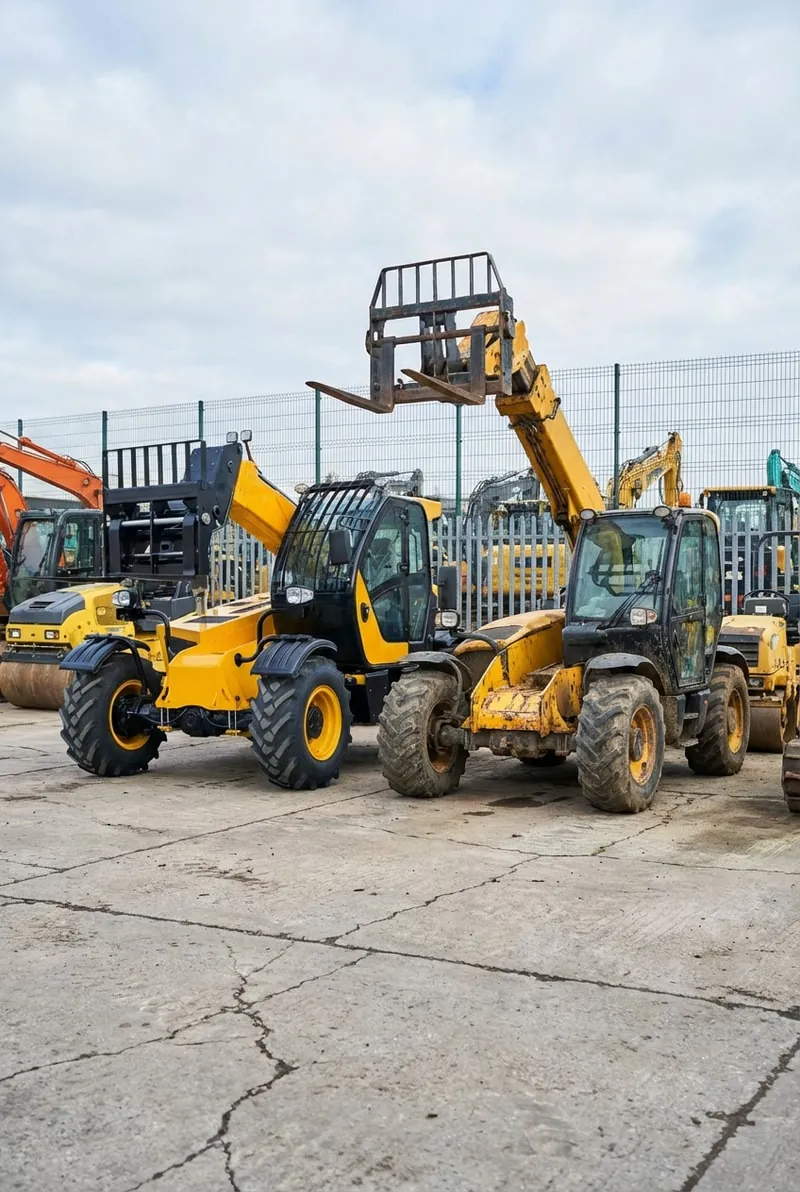
A Complete Cost, Reliability & Value Comparison for Construction, Agriculture & Industrial Buyers
Buying a telehandler is a major investment for construction, agriculture, and industrial operations. Many buyers face the same question: Should you buy a new telehandler or save money with a used machine?
In this guide, we compare cost, reliability, maintenance, and long-term value to help you choose the right option for your business.
Used machines may have lower upfront prices, but new telehandlers often deliver better reliability, warranty protection, and long-term performance.
In This Guide
Navigate to any section to find the information you need.
New vs Used Telehandler: Quick Answer
If you are deciding between a new vs used telehandler, the best choice depends on how you plan to use the machine. A used telehandler usually costs less upfront, but it may come with higher maintenance costs, unknown wear, and no warranty. A new telehandler requires a larger initial investment but offers better reliability, warranty protection, and predictable operating costs.
For most businesses that rely on equipment daily, a new telehandler is often the safer long-term investment.
When you buy a telehandler, you are not just paying for the machine — you are investing in productivity, reliability, and project efficiency. If the equipment will be used regularly on construction sites, farms, or industrial operations, downtime and unexpected repairs can quickly cost more than the price difference between a new and used machine.
This is why many equipment managers prefer new telehandlers with manufacturer support and warranty coverage, especially for long-term operations.
Below, we compare new vs used telehandlers in terms of cost, lifespan, maintenance, and operational reliability, so you can choose the right solution for your business.
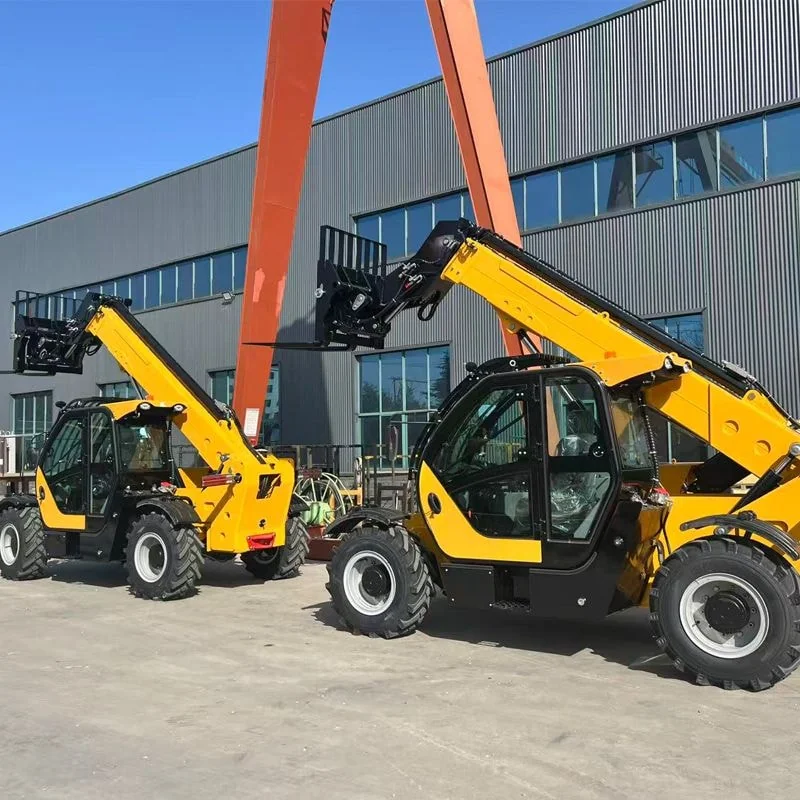
New vs Used Telehandler Comparison
Choosing between a new vs used telehandler involves more than just comparing the purchase price. You also need to consider reliability, maintenance costs, downtime risk, and long-term operating value.
| Factor |
New Telehandler
|
Used Telehandler
|
|---|---|---|
| Purchase Price | Higher upfront investment | Lower initial cost |
| Machine Condition | Brand-new components and systems | Condition depends on previous usage and maintenance |
| Reliability | Very high reliability in early years | Varies depending on hours and wear |
| Warranty | Manufacturer warranty included | Usually no warranty or very limited |
| Maintenance Cost (First Years) | Lower during early operating life | Often higher due to wear and parts |
| Downtime Risk | Lower risk of unexpected breakdowns | Higher risk of mechanical failures |
| Technology & Safety | Latest hydraulic systems, safety features, and controls | Older technology depending on machine age |
| Operating Efficiency | Consistent performance and productivity | Performance may decline with wear |
| Maintenance History | Fully documented from factory delivery | Records may be incomplete or unavailable |
| Resale Value | Higher resale value after several years | Lower resale value as machine ages |
| Customization | Can be configured with attachments and specifications | Limited to existing configuration |
| Total Cost of Ownership | Predictable operating cost over long term | Can become expensive if repairs occur |
Want to know the exact price difference for your project?
While a used telehandler can reduce the upfront purchase cost, it may introduce uncertainty in maintenance history, reliability, and long-term operating expenses.
For businesses that rely on equipment daily — such as construction companies, farms, and rental fleets — a new telehandler often provides more predictable performance, lower downtime risk, and better long-term value.
How Long Does a Telehandler Last?
The average lifespan of a telehandler typically ranges between 8,000 and 10,000 operating hours, depending on maintenance, working conditions, and application.
Well-maintained machines used in agriculture or light-duty environments may last longer, while telehandlers used on heavy construction sites often experience faster wear. When considering a used telehandler, the machine's operating hours and maintenance history are critical factors in determining its remaining service life.
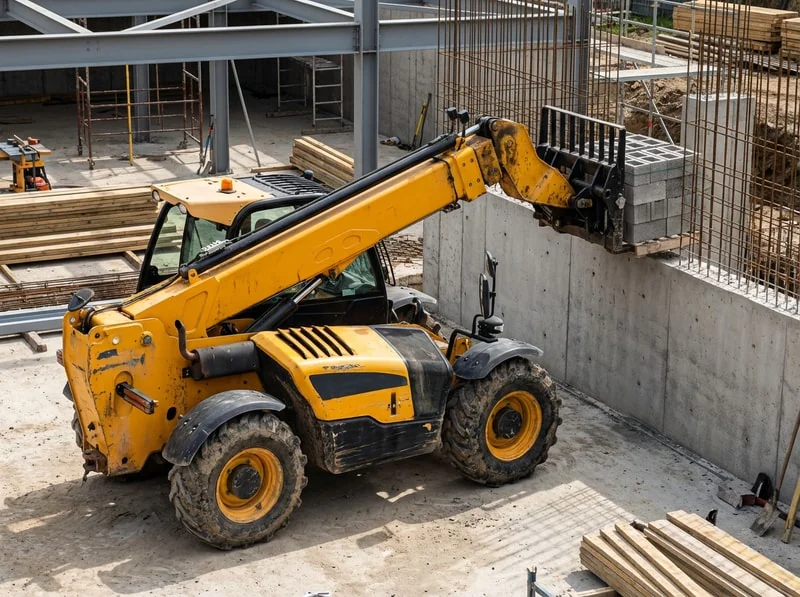
Telehandler Lifespan Overview
New
0 hrs
Factory fresh
Lightly Used
1K–3K hrs
Low usage
Mid-Life
4K–6K hrs
Moderate usage
High Hour
7K–10K hrs
Heavy usage
End of Life
10K+ hrs
Major overhaul needed
Factors That Affect Telehandler Lifespan
Three key factors determine how long your telehandler will remain productive and reliable.
Working Environment
Telehandlers used in construction sites often experience more stress due to heavy lifting, uneven terrain, and continuous operation. Machines operating in agriculture or light material handling may last significantly longer because the workload is less demanding.
Maintenance & Service
Regular maintenance is one of the most important factors affecting equipment lifespan. Proper servicing of the hydraulic system, transmission, engine, and boom structure helps prevent premature wear and costly failures.
Operating Hours
Operating hours are often the first indicator buyers evaluate when inspecting a used telehandler. Machines with over 6,000 hours may require more frequent repairs and component replacements.
What Telehandler Hours Are Considered High?
General industry guidelines for evaluating telehandler operating hours. For buyers considering used equipment, machines approaching 7,000–8,000 hours may involve higher maintenance costs and increased downtime risk.
Under 3,000 hours
Low usage — Best condition
3,000 – 6,000 hours
Moderate usage — Inspect carefully
6,000 – 8,000 hours
Heavy usage — Higher repair risk
Over 8,000 hours
End of service life approaching
Avoid the risk of high-hour machines — get a factory-new telehandler with full warranty.
Advantages of Buying a Used Telehandler
A used telehandler can be a practical choice depending on your budget, project timeline, and equipment usage requirements. If you only need the machine for short-term work, light-duty tasks, or occasional operations, buying a used telehandler may help reduce your upfront investment.
However, it is important to evaluate the machine condition, service history, and operating hours before making a decision. Below are some situations where a used telehandler may make sense for your business.
Lower Initial Investment
One of the main reasons buyers choose a used telehandler is the lower purchase price. Used machines typically cost significantly less than new models, which can help businesses with limited budgets access lifting equipment without large capital investment.
Suitable for Short-Term Projects
If you need a telehandler for a temporary construction project or seasonal work, a used machine may be sufficient. For short-term operations, buyers sometimes prioritize lower upfront cost over long-term reliability.
Immediate Availability
Used telehandlers are often available for immediate purchase and delivery, while new machines may require production lead time depending on customization and factory schedules.
Lower Depreciation
New equipment tends to depreciate most during the first years of ownership. A used telehandler has already passed through much of this depreciation stage, which can make resale value more stable in the short term.
While used telehandlers can offer cost and availability advantages, buyers should carefully evaluate potential risks including mechanical wear, hidden maintenance costs, and unexpected downtime.
Read the next section to understand common risks and what to inspect before purchasing a used machine.
Risks of Buying a Used Telehandler
While used telehandlers may reduce the initial purchase price, you should carefully evaluate the potential mechanical and operational risks.
Telehandlers operate under heavy loads, frequent lifting cycles, and challenging terrain conditions. Over time, key components such as the boom structure, hydraulic system, drivetrain, and chassis can develop wear that affects safety, reliability, and operating cost.
Structural Wear in the Telescopic Boom
Over thousands of lifting cycles, boom sections, wear pads, and slide surfaces gradually wear down. Excessive wear can cause misalignment, increased friction, and reduced lifting stability.
Hydraulic System Degradation
Components such as hydraulic pumps, cylinders, hoses, and valves may suffer from internal wear or leakage. Hydraulic failures can reduce lifting performance and require expensive repairs.
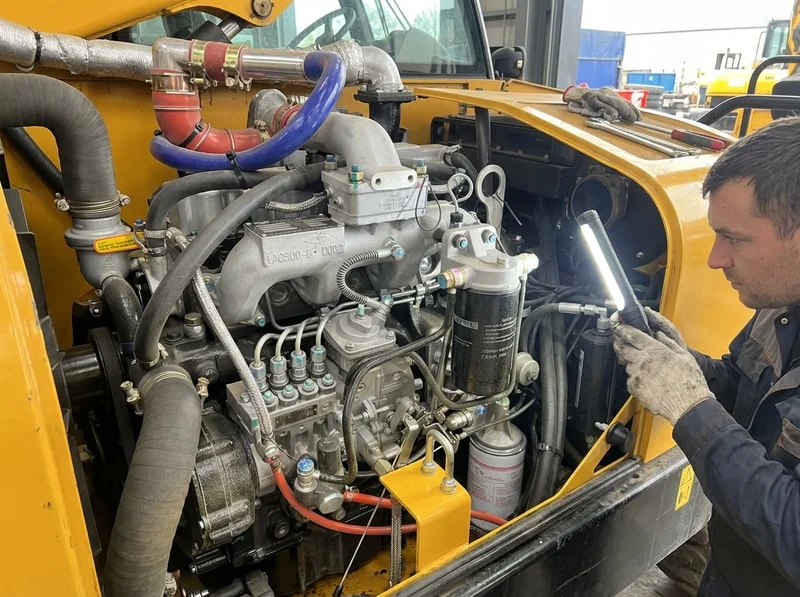
Transmission & Drivetrain Wear
Heavy loads and rough terrain place significant stress on the transmission, axles, and drivetrain. High-hour machines may experience reduced efficiency, gear slipping, or axle wear.
Engine Wear & Reduced Efficiency
Common issues include loss of compression, fuel system wear, or cooling system problems. Older engines may also have lower fuel efficiency and higher emissions compared with newer models.
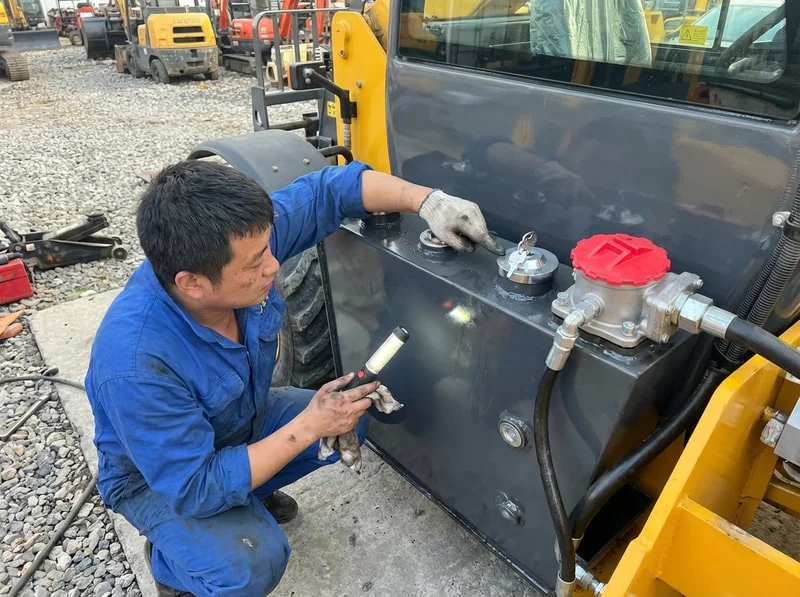
Unknown Maintenance History
Without detailed service records, it can be difficult to determine whether the machine received regular oil changes, hydraulic servicing, or component inspections. This increases the risk of hidden problems.
Safety System Wear or Outdated Features
Older telehandlers may lack modern safety technologies or have worn components such as load management systems, stability controls, or operator protection systems.
Higher Downtime & Repair Costs
Unexpected failures can result in equipment downtime, project delays, and additional rental or repair expenses. For daily-use businesses, downtime significantly impacts productivity.
Used telehandlers may carry risks across the boom, hydraulics, drivetrain, engine, and safety systems — many of which are difficult to detect without thorough inspection and complete service records.
A new telehandler eliminates these uncertainties with factory-tested components, full documentation, and manufacturer warranty protection from day one.
Benefits of Buying a New Telehandler
When you invest in lifting equipment, the purchase price is only one part of the decision. You also need to consider reliability, maintenance costs, and how the machine will perform over years of operation.
For many construction companies, farms, and rental businesses, choosing a new telehandler provides greater confidence in day-to-day operations. Below are several advantages you may want to consider.
Manufacturer Warranty Protection
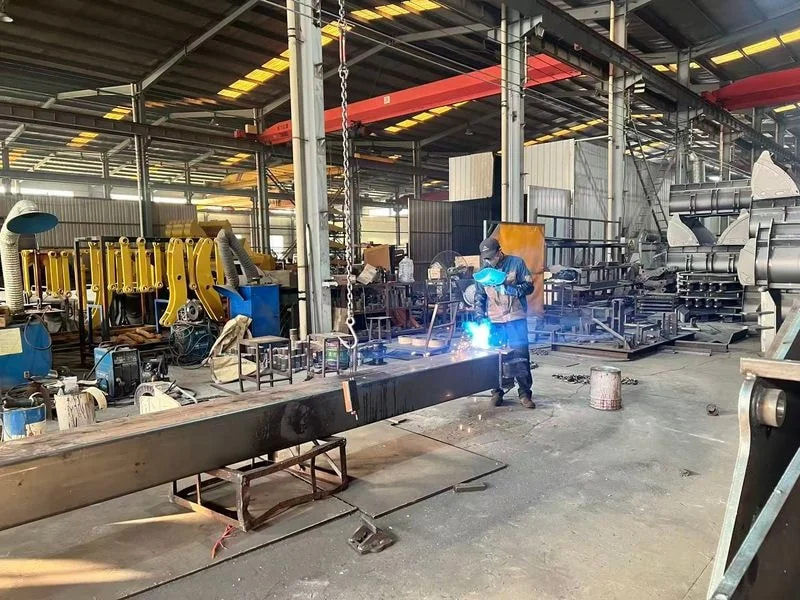
A new telehandler is typically covered by a manufacturer warranty. If a component fails during the warranty period, you can rely on manufacturer support for repairs or replacement — reducing uncertainty and making maintenance costs easier to plan.
Reliable Performance from Day One
All major components — including the engine, hydraulic system, transmission, and boom structure — start at zero hours. This gives you greater confidence without the hidden wear that sometimes exists in older equipment.
Lower Maintenance During Early Operation
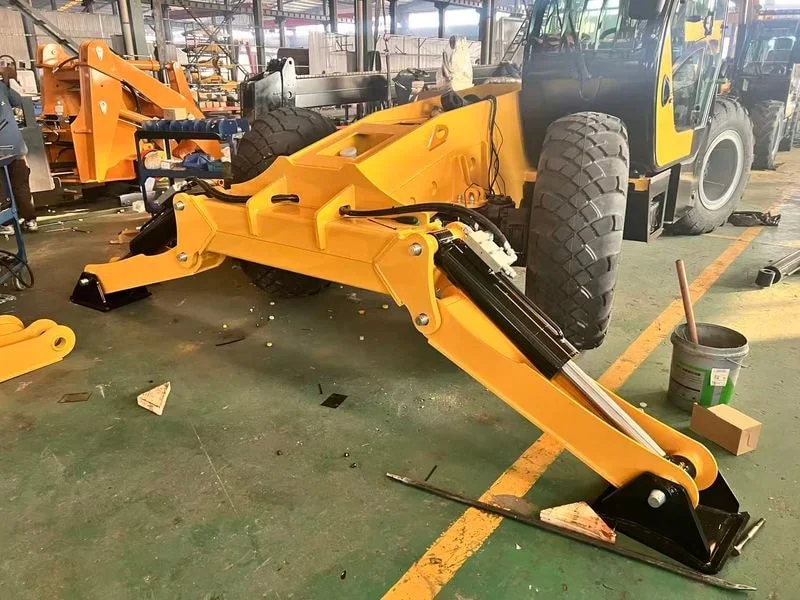
During the first several thousand hours, a new telehandler typically requires only routine maintenance — scheduled oil changes, filter replacements, and standard inspections. The likelihood of unexpected repairs is significantly lower.
Updated Safety Features
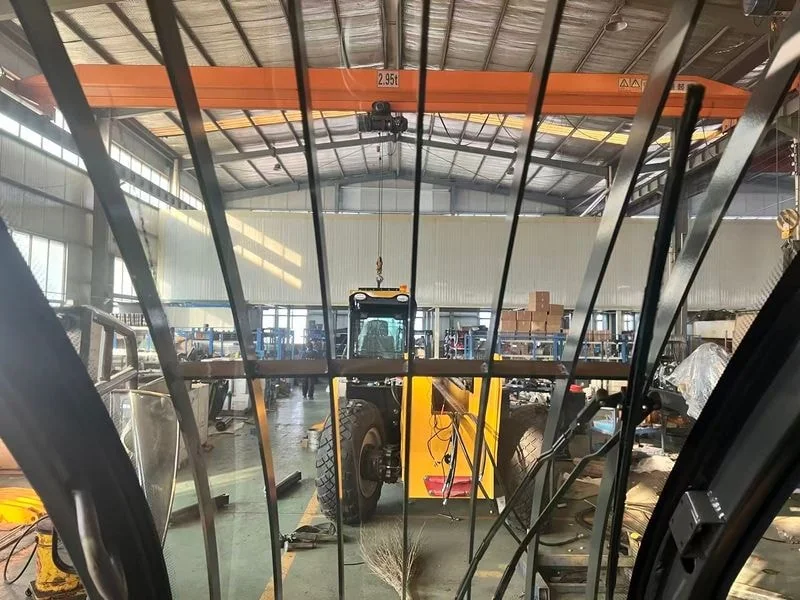
Newer models often include improvements in operator visibility, stability systems, and load management technology. These features help maintain safer working conditions on busy construction sites.
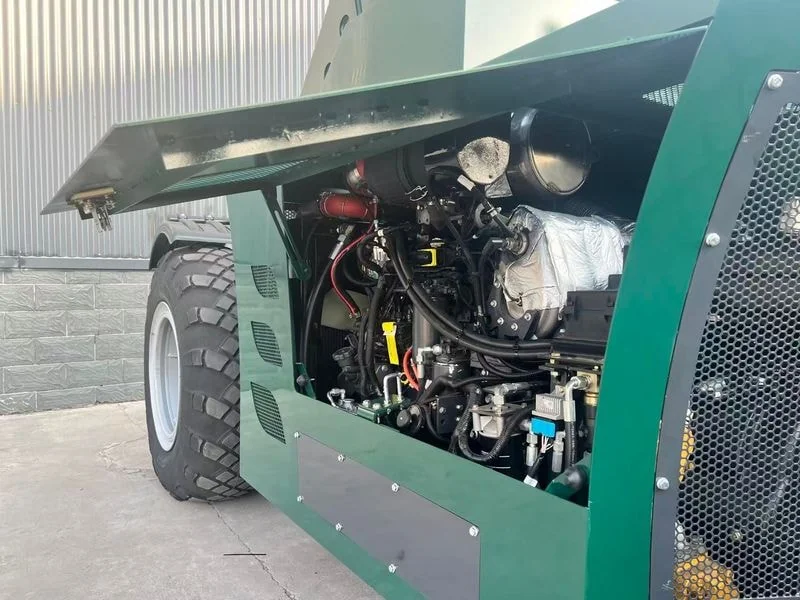
Improved Fuel Efficiency & Hydraulic Performance
Modern telehandlers feature more efficient engines and optimized hydraulic systems. This improves lifting responsiveness while reducing fuel consumption — even small efficiency gains add up over long operating hours.
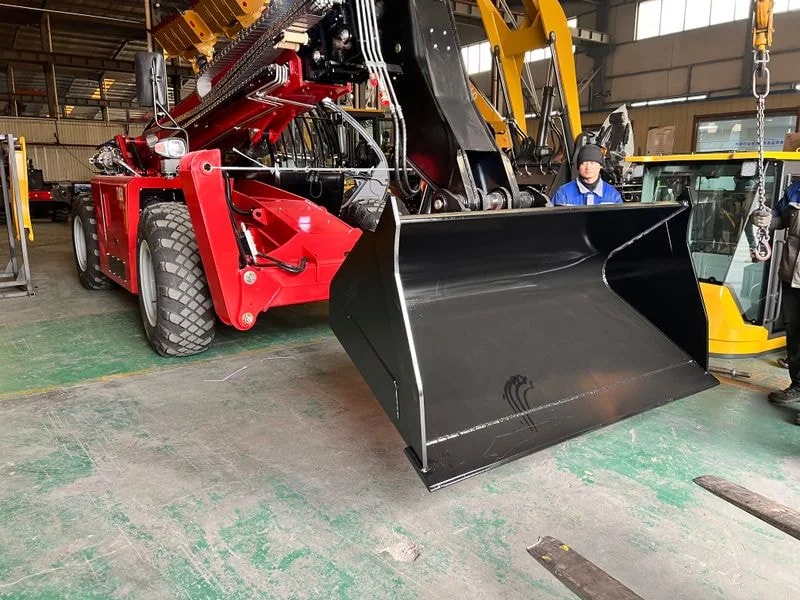
Full Remaining Service Life
A new telehandler begins with zero operating hours, meaning you benefit from the machine's entire service life. Starting new makes it easier to manage long-term maintenance planning and asset value.
Ready to invest in a reliable, factory-new telehandler with full warranty?
New Telehandler vs Used Western Brands
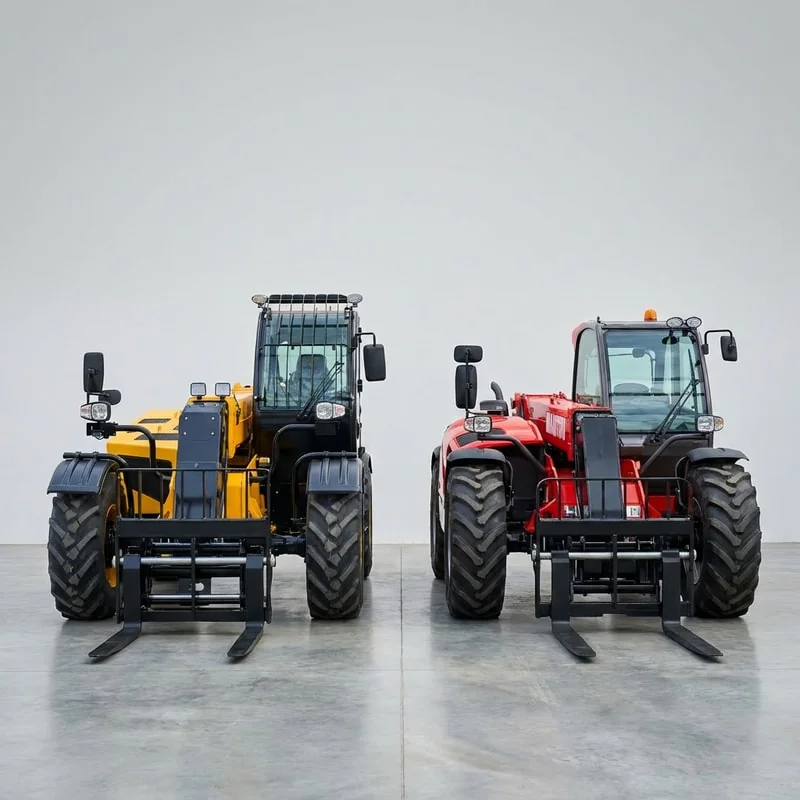
When comparing telehandler options, many buyers face a practical decision: Should you purchase a used machine from a well-known Western brand, or invest in a new telehandler from a manufacturer?
Used equipment from brands such as JCB, Manitou, or Genie may offer strong brand recognition. However, these machines may already have thousands of operating hours, bringing uncertainty in component condition, maintenance history, and remaining service life.
At the same time, some buyers consider new telehandlers from manufacturers because they provide brand-new components, warranty coverage, and a full service life from the first hour of operation.
Understanding the differences can help you choose the option that best fits your budget and operational needs.
New vs Used Western Brand: Side-by-Side
The table below compares key factors between a new telehandler from a manufacturer and a used machine from a well-known Western brand.
| Factor |
New Telehandler
|
Used Western Brand
|
|---|---|---|
| Operating Hours | 0 hours (brand new machine) | Often 3,000–6,000+ hours |
| Component Condition | All major components are new | Components already partially worn |
| Warranty | Manufacturer warranty included | Often limited or unavailable |
| Maintenance Risk | Low in early years | Higher depending on previous usage |
| Technology | Latest hydraulic and safety systems | May use older technology depending on model year |
| Purchase Price | Moderate upfront investment | Lower upfront cost in many cases |
| Remaining Service Life | Full service life available | Reduced remaining lifespan |
Get a direct comparison quote — see how a new telehandler compares to used Western brands for your project.
A used telehandler from a premium brand may cost less upfront, but with several thousand operating hours already logged, reliability and future maintenance costs become harder to predict.
In contrast, a new telehandler provides a full operating lifespan, predictable maintenance requirements, and manufacturer support — giving businesses greater confidence for long-term operations.
Our Telehandler Models
This maintenance checklist applies to all Telescro telehandler models. Our range covers capacities from 1.2 tons to 5.0 tons, serving agriculture, construction, and emission-regulated markets. OEM spare parts and service support are available for every model.
Select a model to view full specifications — or contact us for maintenance support and genuine spare parts.

T4512
1.2 t · 4.5 m Compact Telehandler
Ideal for urban construction, interior handling, and space-restricted sites. Compact footprint with easy transport logistics.

T625-A
2.5 t · 6 m Agricultural Telehandler
Optimized for farm material handling and confined agricultural environments. Balanced reach and capacity for daily operations.
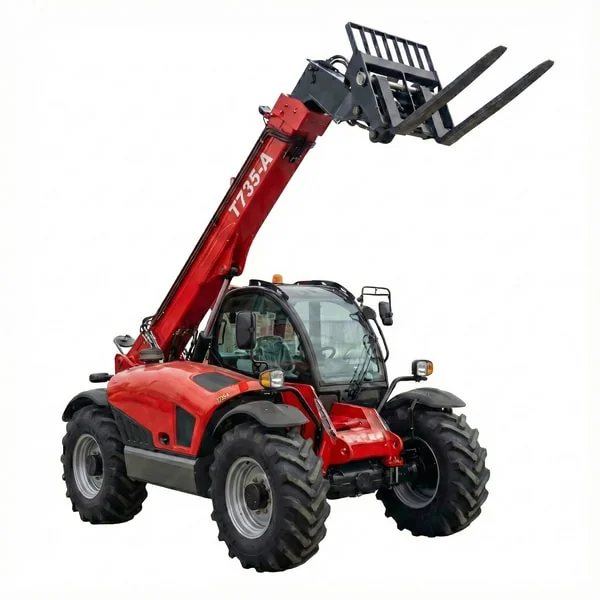
T735-A
3.5 t · 7 m Agricultural Telehandler
Designed for intensive farm handling and feed operations. Stable lifting performance with upgraded hydraulic configuration.
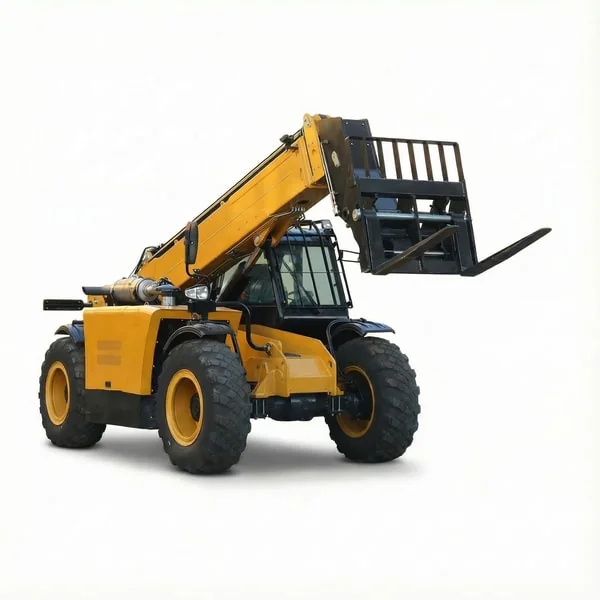
T3507
3.5 t · 7 m Telehandler
Compact yet capable for construction and industrial material handling. A versatile entry point across multiple applications.
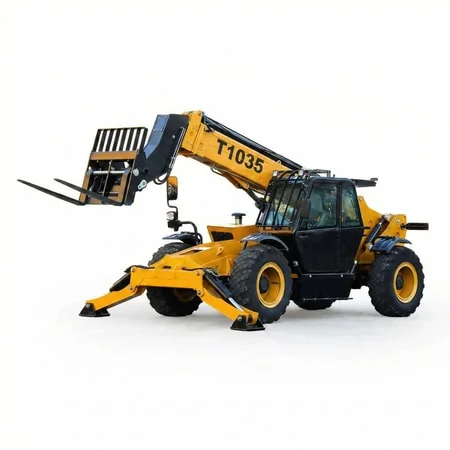
T1035
3.5 t · 10 m Telehandler
Mid-reach telehandler for construction sites, warehouses, and general contracting. Strong balance of reach and load capacity.
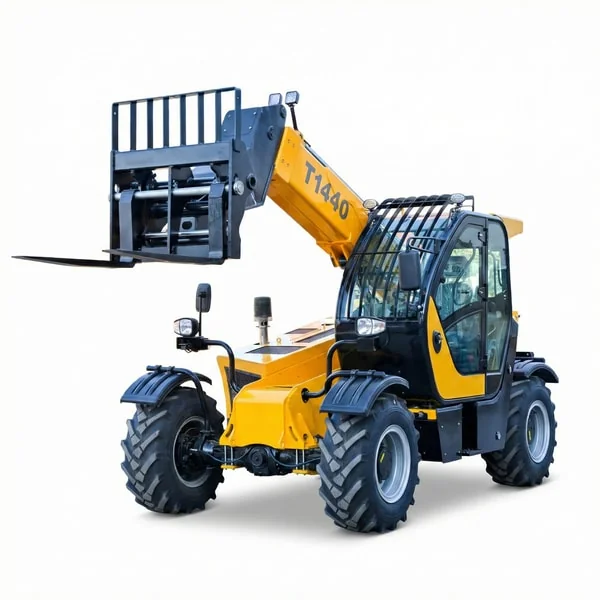
T1440
4.0 t · 14 m Telehandler
Extended reach model for demanding construction lifting and high-rise material placement applications.
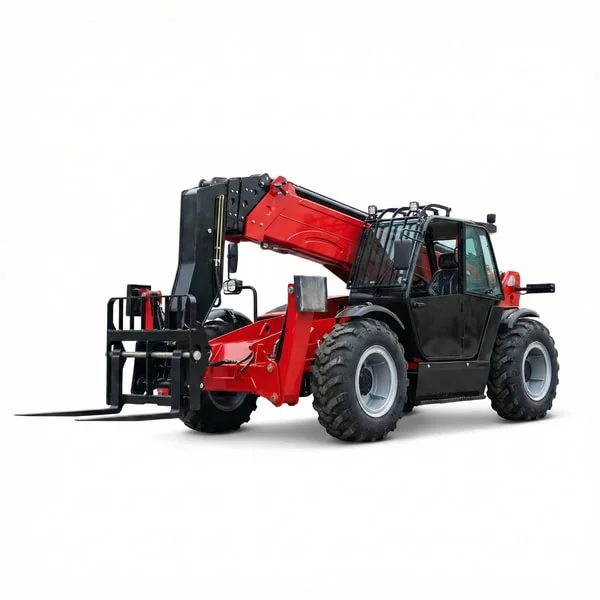
T1850
5.0 t · 18 m Telehandler
High-capacity solution for large-scale construction, infrastructure projects, and heavy material handling.

TH1840
4.0 t · 17.5 m · EPA Compliant
Configured with EPA-certified powertrain for North American and emission-regulated markets.
Need spare parts or maintenance support for your model? Talk to Sally — share your model and service requirements, and we'll provide the right parts and guidance.
Useful Telehandler Resources
Reference materials to support your telehandler buying decision, equipment selection, pricing research, and long-term maintenance planning.
Buying Decision & Equipment Selection
Choosing the right telehandler for your needs
Telehandler or Wheel Loader?
Side-by-side equipment comparison
Telehandler or Forklift?
Equipment selection comparison
2026 Sourcing Guide
Step-by-step evaluation reference
China Telehandler for Agriculture
Farm-specific sourcing from China
Telehandler for Construction
Building & infrastructure applications
China Telehandler for Rental Company
Rental fleet sourcing from China
Pricing, Logistics & Maintenance
Costs, shipping & aftercare planning
Telehandler Maintenance Checklist
NEWDaily, weekly, monthly & annual service guide
What Affects Telehandler Price?
Cost factors & pricing transparency
Import & Customs Guide
Documentation for overseas purchases
Shipping Time Reference
Production and transit timelines
Container Loading Cases
Real shipping examples
Wear Parts & Consumables
Maintenance planning reference
Frequently Asked Questions
Common questions about buying new vs used telehandlers, machine lifespan, reliability, and long-term value.
Have more questions about choosing between new and used telehandlers?
Ready to Invest in a New Telehandler?
Skip the risks of used equipment. Share your requirements and get factory-direct pricing on a brand-new telehandler with full warranty coverage.

Hi, I'm Sally.
Sales Manager at Telescro
I work with construction companies, equipment dealers, rental businesses, and farms worldwide, helping them source reliable new telehandlers at competitive factory-direct pricing.
If you've been comparing new vs used options and want to see how a new telehandler with full warranty fits your budget, I'm happy to help.
I can help you with:
- New telehandler pricing for your specific requirements
- Model selection based on lift height, capacity, and application
- Warranty details and after-sales support options
- Shipping logistics and delivery timeline to your location
- Comparing total cost of ownership: new vs used options
No commitment required. Tell me what you're looking for — I'll prepare a transparent quotation with full specifications that you can evaluate at your own pace.
Get Your New Telehandler Quote
Tell us what you need — Sally will respond with a detailed quotation within 24 hours.