










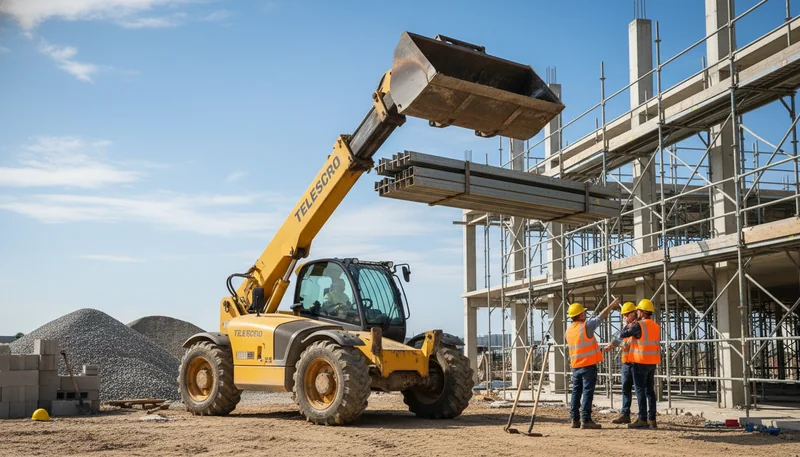
What is a Telehandler Bucket Used For? Field-Tested Applications Explained
Not long ago, I was on a muddy jobsite in Poland where the crew was stuck hand-shoveling gravel for backfill—meanwhile, their telehandler sat idle nearby. When I showed them what a simple bucket could do, the whole crew’s workflow changed in a single afternoon.
A telehandler bucket is used to move loose, bulk materials like soil, sand, gravel, rubble, or grain. It turns a telehandler into a compact loader for tasks such as loading trucks, backfilling, site cleanup, and handling light materials in construction, agriculture, and road maintenance.
What Materials Can Telehandler Buckets Move?
A telehandler bucket is designed for moving loose, bulk materials such as soil, sand, gravel, aggregates, rubble, grain, fertilizer, manure, coal, wood chips, and snow. It allows the telehandler to scoop, carry, and dump diverse loads, functioning like a compact wheel loader for non-palletized tasks.

Let me share something important about telehandler buckets—they’re built for materials that won’t sit neatly on a pallet. Think about earth, sand, gravel, loose stone, rubble, or even large piles of snow. On sites in Kazakhstan, I’ve seen buckets move around 1.5 cubic meters of gravel in a single pass with a 4-ton telehandler—much faster than forklifts and way less backbreaking than manual shoveling. Don’t expect one bucket to be perfect for every job, though. Contractors in Dubai prefer a lower-profile bucket for backfilling trenches, but a bigger 2.0 cubic meter model devours soft materials like coal or wood chips.
I’ve worked with farmers in Brazil who load grain and fertilizer using their telehandler bucket almost every week during harvest. The task? Clearing out a 30-ton pile of corn in half a day. A compact loader would get stuck in that shed, but a telehandler slots in close—then extends to dump right into waiting trucks. The point is, when you switch from forks to a bucket, you turn your machine into a small wheel loader. The change matters most for loose, bulky tasks.
The load chart1 always comes first for me. Buckets add weight, so the usable rated capacity drops once you attach one. If your job means more scooping and dumping than pallet stacking, I always suggest making the bucket a core attachment. Verify the load capacity for your specific bucket attachment—don’t guess. Your productivity and safety depend on it.
A 1.2-cubic-meter telehandler bucket can be used with wet concrete on suitably rated machines, but operators must strictly follow the load chart and avoid overfilling. Wet concrete is both abrasive and chemically aggressive, so residues should be cleaned off promptly to limit accelerated wear and corrosion.True
Wet concrete is abrasive and can chemically attack standard bucket steels. Using the bucket for concrete is effective but requires frequent cleaning to extend bucket life, a practice often overlooked by new operators.
Telehandler buckets are specifically designed to lift finished lumber and drywall sheets without causing damage.False
Telehandler buckets are intended for loose bulk materials, not delicate or packaged items like drywall or lumber. Using a bucket for these materials can cause surface damage and is less effective and safe than fork attachments designed for such loads.
Key takeaway: Telehandler buckets are core attachments for handling loose materials, not pallets. They transform telehandlers into versatile machines ideal for construction, agriculture, and bulk handling, saving labor and replacing wheelbarrows or dedicated loaders where frequent material transport is required.
What Tasks Can a Telehandler Bucket Perform?
A telehandler bucket enables contractors to move and load sand, aggregates, demolition rubble, and backfill, as well as manage general cleanup. With 1.0–1.5 m³ buckets, telehandlers handle backfilling foundations, trench filling, rough grading, and loading high-sided trucks—tasks not accessible with smaller loaders or skid steers.

Here’s what matters most when you’re thinking about a telehandler bucket—the real value is flexibility. Instead of paying to bring in a loader or skid steer for backfill and cleanup, you can use what’s already on site. I’ve seen this become a big cost saver in places like Kenya and Vietnam, where contractors often face tight margins and tough transport. Buckets sized at 1.0 to 1.5 cubic meters are common—enough volume to move sand, aggregates, or demolition debris efficiently, but still manageable for a 3 to 4-ton rated telehandler.
Last month, a customer in Dubai used their 14-meter unit with a bucket to backfill slab edges and load high-sided dump trucks. Their skid steer couldn’t reach over the truck’s side rails, but the telehandler’s telescopic boom finished the work in half the time. Cleanup after rebar work also got noticeably faster—they scooped waste right from the second floor and loaded it directly into bins, instead of hauling bags by hand.
Most buckets can handle backfilling foundations, trench filling with loose material, and light rough grading—though the finish won’t match a dozer. On drainage or slab-prep jobs, I remind operators not to expect laser precision, but you can still make the area “neat and safe” quickly. A 4-in-1 bucket adds light dozing and clamping for loose debris, but its higher attachment weight reduces the machine’s rated capacity. Always check the load chart with the bucket’s weight deducted—never assume the capacity is the same as with forks.
I suggest always matching bucket volume to your site’s size and debris type. For multi-tasking and quick changeovers, a basic pin or hydraulic quick-coupler saves you wasted minutes every shift.
A telehandler bucket equipped with a bolt-on cutting edge can extend the life of the bucket lip by up to 50% when frequently handling abrasive materials.True
Bolt-on cutting edges are replaceable wear parts that bear the brunt of abrasion and impact during digging or backfilling, especially with aggregates or demolition rubble. Replacing the edge instead of the entire bucket lip preserves structural integrity and delays major repairs.
Telehandler buckets are typically designed with a standard quick coupler that makes them interchangeable with most skid steer attachments without modification.False
Telehandler and skid steer quick coupler designs are often different in size, pin orientation, and locking mechanisms. Most telehandler buckets are not directly compatible with skid steer attachments without using specialized adaptor plates or modifications.
Key takeaway: Fitting a bucket attachment transforms a telehandler into a versatile compact loader and site cleaner. While not as precise as dedicated machines for grading or digging, it streamlines essential earthmoving and cleanup tasks, reducing the need for multiple specialized machines on site.
How Are Telehandler Buckets Used in Agriculture?
Telehandler buckets in agriculture serve as versatile tools for handling grain, silage, feed, manure, fertilizer, topsoil, and storm debris. High-capacity light-material buckets2 (2.0–4.0 m³) are suited for low-density materials, streamlining tasks like loading feed mixers, cleaning sheds, and building muck heaps. Farmers select bucket size based on their heaviest typical material.
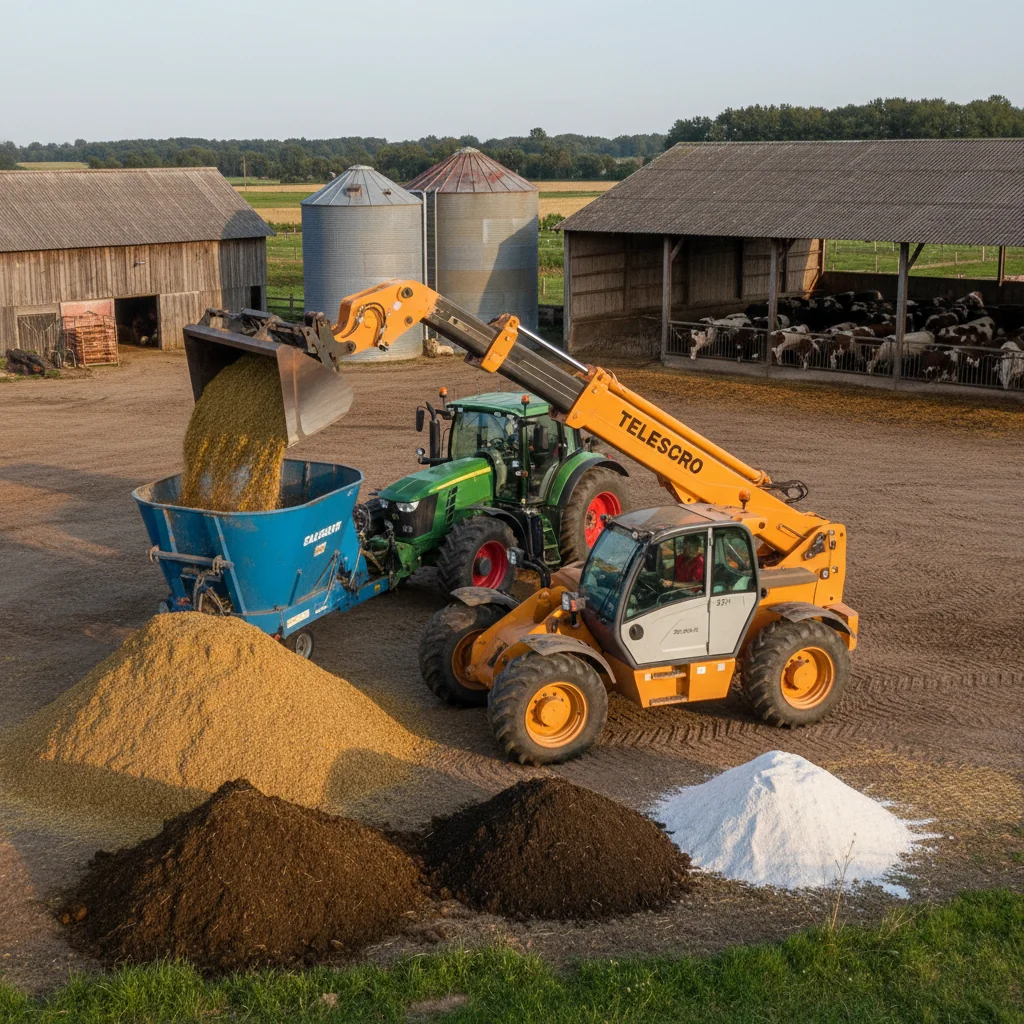
The biggest mistake I see on farms is underestimating how much versatility a telehandler bucket can deliver. Many customers in Australia and Kazakhstan told me they used to move grain, muck, or silage by hand or with a tractor loader—slow and exhausting. Once they switched to a telehandler with a 3.0‑cubic meter light-material bucket, jobs that took all morning could be finished in under an hour. One customer in Kazakhstan used his bucket to load grain (around 0.75 t/m³) into a mixer and clear storm debris after a summer hail. He told me the unit shifted about 2.2 tons per scoop—no problem when working at mid-boom.
Here are the most common agricultural uses I see for telehandler buckets:
- Loading grain and feed into mixers, trailers, or bulk storage
- Cleaning out livestock sheds, including deep muck or bedding
- Moving and stacking silage, hay, or compost quickly
- Handling fertilizer, topsoil, and manure for fieldwork
- Clearing storm debris around the farmyard after heavy winds
I always remind operators that bucket choice and telehandler capacity go hand in hand. Buckets for silage and grain are designed larger since the material is light; something like wet manure or compacted silage, though, can be much heavier—easily over 1.2 t/m³. That’s where checking the load chart becomes critical, especially if you’re running the boom out into a shed or over a barrier.
A telehandler bucket with a 3.0-cubic meter capacity can move over 2.2 metric tons of wheat in a single pass, assuming average grain density.True
Wheat has an average bulk density of about 0.75 t/m³. With a 3.0 m³ bucket, a telehandler can move approximately 2.25 t of wheat per load, significantly increasing productivity compared to smaller buckets or manual handling.
Telehandler buckets in agriculture are only suitable for dry materials and cannot be used for wet manure or silage.False
Specialized telehandler buckets are available for both dry and wet materials. Heavy-duty and grapple buckets, for example, are designed to handle wet manure and silage effectively, making telehandlers versatile tools for a range of agricultural tasks.
Key takeaway: Telehandler buckets are essential on farms for efficiently moving various bulk materials. The right bucket size and understanding the telehandler’s load chart enable agricultural operators to maximize productivity, reduce manual labor, and safely tackle diverse daily tasks—especially when handling heavier wet materials or operating with the boom extended.
Where Do Telehandler Buckets Excel in Landscaping?
Telehandler buckets are highly effective for moving, placing, and roughly spreading soil, mulch, gravel, sand, and stone in landscaping projects. Their extended boom3 allows precise material placement over hedges, fences, or finished surfaces, minimizing surface disruption and enabling efficient backfilling, import, or removal of materials in space-constrained or high-end sites.

Last month, a landscaping contractor in Dubai asked why his team struggled to place decorative gravel behind a series of newly installed garden walls. He was using a compact loader, but every trip over the finished lawn left tracks—costing him extra time fixing turf damage. That’s where telehandler buckets really stand out. By extending the boom, you can reach over garden walls, hedges, or even ornate fountains to drop soil, mulch, or gravel exactly where it’s needed. I’ve seen operators fill raised beds or backfill behind retaining walls without moving the machine onto the grass at all.
From my experience, this reach isn’t just handy—it’s essential on high-end or space-constrained jobs. In Singapore last year, one client tackled a rooftop landscape project where space was too tight for dumpers. Using a 3-ton telehandler with a 1.2 m³ general-purpose bucket, he lifted mulch and soil materials directly from street level up four stories. Each load was set down with minimal spillover because he could control the placement so precisely.
I always tell customers: pick a bucket width that matches your machine, usually between 2.0 and 2.5 meters on a mid-size telehandler. This gives clean passes and keeps lifting stable. And use the bucket’s cutting edge for rough leveling, but avoid digging like you would with an excavator—it accelerates wear on both machine and bucket. If you’re moving mixed materials like gravel and mulch, a reinforced general-purpose bucket around 1.0–1.3 m³ offers the right balance of control and versatility for most landscaping jobs.
A telehandler bucket with a 6-meter reach can deposit materials behind landscape barriers up to 4 meters tall without crossing fragile surfaces.True
The telescopic boom allows the bucket to extend vertically and horizontally, enabling material placement over obstacles like garden walls or hedges without driving over and damaging turf or decorative areas.
Telehandler buckets are specifically designed to hydraulically compact soil after placement, eliminating the need for a separate compactor in landscaping.False
Telehandler buckets are intended for lifting, carrying, and dumping materials. They lack the mechanical features needed to compact soil; separate compacting equipment is still required for proper soil settling.
Key takeaway: Telehandler buckets stand out in landscaping due to their reach and precise placement abilities. This minimizes surface damage and allows efficient material handling over obstacles, making them preferable for high-end or tight-access projects where conventional machines might struggle to deliver similar results.
How are telehandler buckets used in roadwork?
Telehandler buckets play a critical role in road maintenance by enabling snow removal, salt or grit spreading, and debris handling in winter, as well as loading and transporting asphalt, aggregates, and waste in warmer months. Equipped with robust wear plates4, these buckets maximize telehandler fleet utilization for councils and contractors.
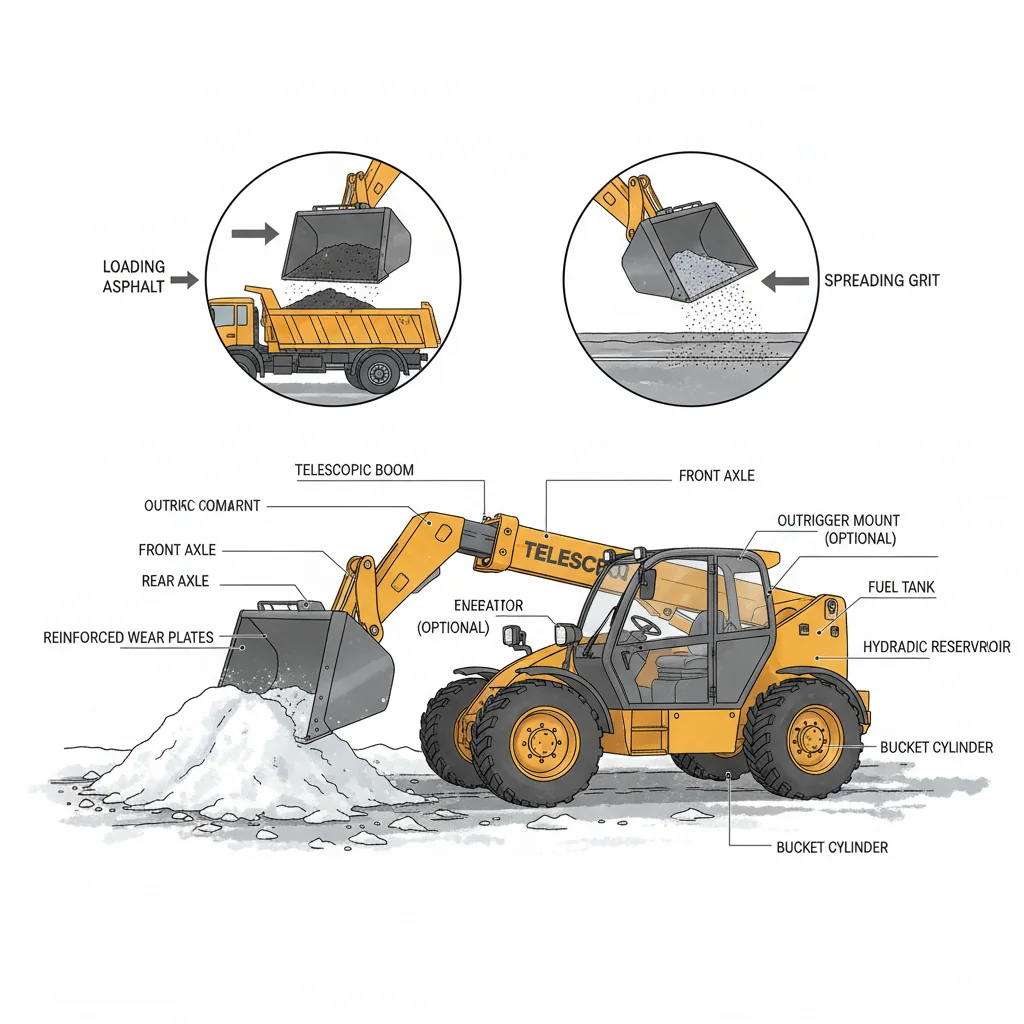
To be honest, the spec that actually matters is how well your bucket matches the real tasks on site, not just the width or “max volume” you see in a catalog. In roadwork, telehandler buckets need to prove themselves year-round.
I’ve seen councils reuse the same 3-cubic-meter light-material bucket for snow in winter, then part-fill it with asphalt or aggregates in summer. This works in practice, but only if operators keep fill levels low enough to stay within the telehandler’s load chart and accept faster wear on a bucket that wasn’t originally designed for dense, abrasive materials.
Here’s how telehandler buckets get put to work in municipal and road maintenance jobs:
- Snow removal – Scoop and shift snow quickly from roads, parking lots, and industrial yards. A well-matched bucket clears surfaces far faster than workers with shovels.
- Loading salt and grit – Fill gritters or salt spreaders efficiently, or lay down anti-skid materials directly with the bucket.
- Handling aggregates – Move and distribute gravel or crushed stone for patching and resurfacing. Dense materials demand extra wear resistance, so I suggest buckets with reinforced leading edges and side wear plates.
- Asphalt operations – Load hotboxes with fresh tarmac. This is safer and faster than hand shoveling—one customer in Kazakhstan cut their patching crew from six people to just three.
- Storm cleanup and debris – After heavy rain or damage, buckets can remove rubble, wet soil, or ditch washouts along roadsides.
Most people don’t realize that telehandlers with the right bucket attachment can keep working through all four seasons.
A 3-cubic-meter light-material bucket on a telehandler can be used for snow removal in winter and, when only partially filled, for handling asphalt or aggregates in summer roadwork applications.True
Light-material buckets are intended for low-density materials such as snow. In practice, some contractors reuse them for denser materials like asphalt or aggregates, but only at reduced fill levels to remain within the telehandler’s load chart. This seasonal use can improve fleet utilization but increases wear and requires careful load management.
Telehandler buckets used for roadwork are engineered to be interchangeable with excavator buckets without any additional modifications or adapters.False
Telehandler buckets and excavator buckets have different attachment systems and structural designs. Using a bucket intended for an excavator on a telehandler requires modifications or specialized adapters, as the mounting couplers, hydraulic hookups, and stress tolerances are not standardized between the two types of equipment.
Key takeaway: Telehandler buckets dramatically improve fleet efficiency for road and municipal contractors by supporting seasonal tasks from snow clearance to asphalt handling. Choosing a bucket with the right capacity and abrasion resistance ensures safe, year-round use for multiple heavy-duty municipal operations.
Which Telehandler Bucket Suits Each Material?
Telehandler bucket selection5 depends on material type and duty. General-purpose buckets handle soil and aggregates. Light-material buckets suit grain and silage. Rock buckets manage heavy, abrasive loads. Waste and specialty buckets are for irregular or specific uses. Correct match maximizes performance, safety, and prevents excessive wear.
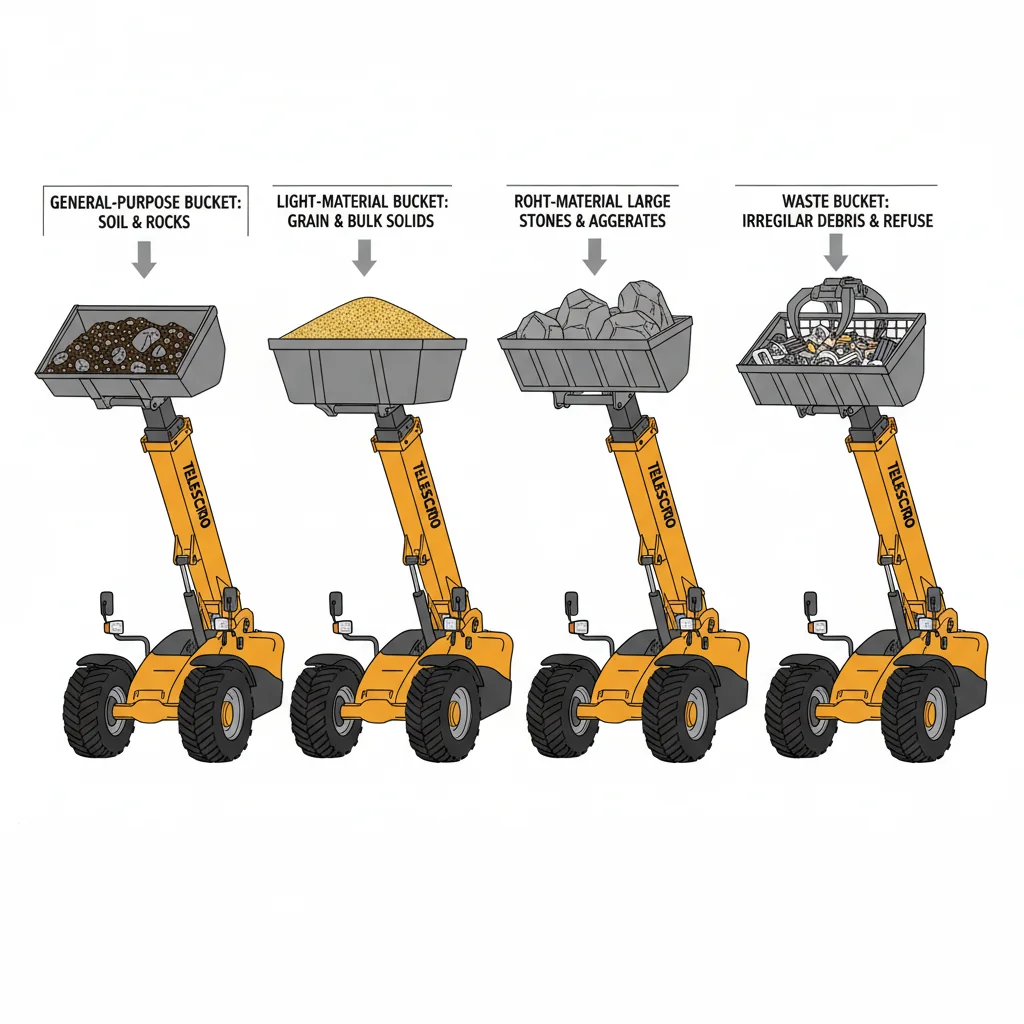
Most people don’t realize that choosing the wrong telehandler bucket can cost you both money and downtime. Different jobs—loading grain, moving rock, clearing scrap—put totally different stresses on your bucket and your machine. I’ve seen contractors in Kazakhstan try to move wet sand with a lightweight grain bucket. What happened? They bent the side walls in a single week. The right bucket for your main material isn’t just about size—it’s about structure, steel thickness, and wear protection.
Let’s compare the common options:
| Bucket Type | Best For | Volume | Reinforcement | Main Risk If Mismatched |
|---|---|---|---|---|
| General-purpose | Soil, sand, gravel, rubble | Medium | Standard | Excessive wear with rock |
| Light-material | Grain, silage, woodchips | Large (high sides) | Light | Buckling with dense material |
| Rock/Heavy-duty | Rock, demolition debris | Small (low sides) | Heavy (teeth, strips) | Low productivity with light loads |
| Waste/Grapple | Bulky, irregular scrap/waste | Large, wide | Standard + clamps | Loss of load (spillage) |
| Specialty | Concrete, snow | Task-dependent | Task-specific | Unsafe if wrongly specified |
The reality is, most buyers only mention max lift capacity but forget details like bulk density, lift height, or the number of daily cycles. In Brazil, I helped a recycling plant specify a grapple bucket for 5-meter dumps. We matched the bucket size to their cycle rate and waste density—to avoid overloading the rated capacity or stressing the boom hydraulics.
High-capacity buckets for loose materials such as grain often use thinner side walls—typically around 6–8 mm—while heavy-duty rock buckets may use 10–12 mm or thicker steel to handle impact and abrasion.True
Bucket wall thickness varies by manufacturer and duty class. Light-material buckets prioritize volume and lower weight, whereas rock and demolition buckets require thicker, reinforced steel to withstand high mechanical stress and abrasive conditions.
All telehandler buckets are designed with the same universal attachment, so any bucket can handle any material on any machine without compatibility issues.False
Telehandler buckets are not universally interchangeable; different materials and load types require specialized bucket frames, mounting plates, and reinforcements. Using an incompatible bucket can result in rapid wear or even dangerous equipment damage.
Key takeaway: Matching telehandler bucket type to the primary material—considering bulk density and typical handling duty—is essential for both safety and efficiency. Specifying material type, lift height, and cycle rate to the dealer ensures the chosen bucket neither overloads, nor underperforms, in field use.
How Do Telehandler Buckets Improve Productivity?
Telehandler buckets dramatically improve material handling productivity compared to forks by enabling bulk movement of fill, debris, or spoil—eliminating much manual labor or extra equipment. With a 1 m³ capacity per pass, buckets streamline tasks like cleanup, backfilling, and minor excavation, supporting efficient job sequencing and machine utilization, especially for small fleets or farms.

Most people don’t realize how much time they lose using forks instead of a bucket for bulk jobs. With forks alone, you’re stuck carrying pallets—or maybe shifting a bundle of pipes—but anything loose, like gravel or soil, means grabbing a shovel. That just isn’t practical on a big job. A customer in Kazakhstan told me their team spent half a day clearing up spoil by hand after drainage trenching. After adding a 1 m³ bucket, that same job took only 45 minutes. It freed up two workers, and let them use the telehandler for other tasks, not just material lifts.
The real difference comes when you look at the workflow. Say you have piles of sand or demolition debris spread around site. With a bucket, one pass scoops and dumps up to a cubic meter each time. No wheelbarrows. No extra skid steer. That means less equipment on site—critical for small teams or farms that own a single telehandler. From my experience, on projects moving spoil or aggregates most days, around 60% of telehandler hours end up on bucket work, not forks. I always recommend checking your typical material profile; if bulk loose materials dominate, the bucket will do more work than the forks by far.
The other big point is job sequencing. A telehandler can start the day with forks to unload materials, switch to the bucket for cleanup, and finish minor excavation before heading home. That keeps the machine earning every hour. I suggest reviewing your load chart with the attachment included—bucket weight counts against capacity—but for backfilling and bulk cleanup, this approach is the fastest way to handle site tasks efficiently.
A telehandler bucket can move loose aggregates several times faster than forks, significantly increasing material handling rates on bulk jobs.True
Buckets allow the telehandler to scoop, carry, and dump large volumes of loose materials in each cycle, while forks are limited to palletized or bundled loads. This makes bucket handling substantially more efficient for soil, sand, or gravel compared with fork-only operation.
Telehandler buckets are specifically designed to maintain the same maximum lift capacity as forks, regardless of material typeFalse
The maximum lift capacity for a telehandler fitted with a bucket is typically lower than with forks due to the shifting center of gravity and the increased weight and volume of loose materials, which affects machine stability and safe operating limits.
Key takeaway: A telehandler bucket transforms the machine into a versatile loader, handling bulk tasks like backfilling, cleanup, and minor excavation with speed and efficiency. For operations frequently moving loose materials, the bucket becomes the primary attachment, maximizing jobsite value and often making additional loaders unnecessary.
How to Size a Telehandler Bucket Safely?
Telehandler bucket size must be matched to material density6 and machine rated capacity, not maximized indiscriminately. The total load is calculated as bucket volume multiplied by material density, plus the bucket’s weight. Oversizing increases the risk of instability, excessive wear, and safety hazards. Always reference the telehandler’s load chart for attachment-specific limits.
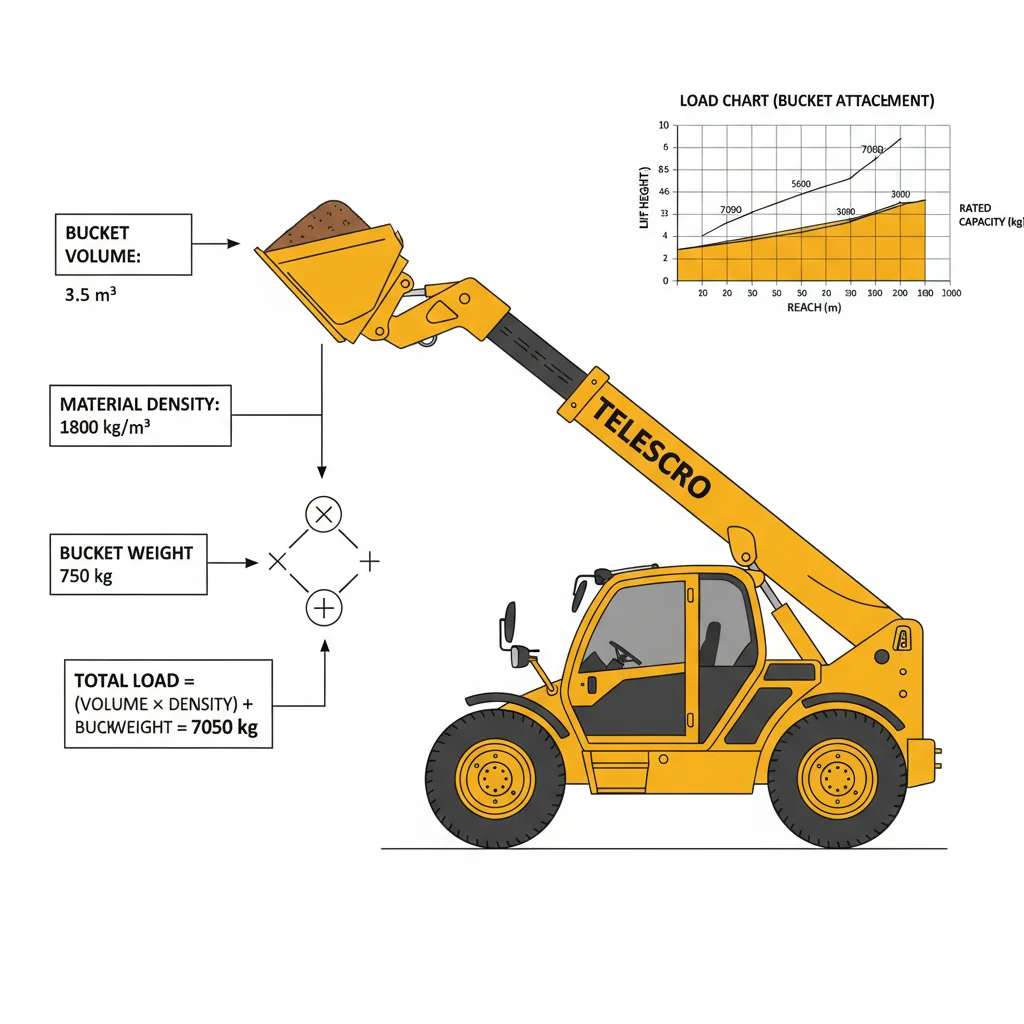
The biggest mistake I see is people thinking a larger bucket always means more productivity. That mindset gets a lot of operators in trouble, especially when switching between lighter and denser materials. For example, I’ve consulted on sites in Kazakhstan where crews used 2.5 m³ buckets for snow. In winter, that’s fine. But come spring, they tried loading gravel with the same bucket—suddenly each scoop was over 4.5 tons, completely overloading their 3.5-ton telehandler at full reach. The load chart warned them, but they didn’t check until hydraulic hoses started leaking from the extra strain.
You have to factor in material density every single time. The real lift isn’t just “bucket size”; it’s bucket volume multiplied by your material’s density, plus the bucket’s own weight. Take wet sand at around 1.8 t/m³: even a 2 m³ bucket easily hits 3.6 tons, before adding an extra 350 kg for the bucket itself. Compare that to handling dry grain at just 0.75 t/m³—in the same bucket, your total is well within most machines’ limits. That’s why one-size-fits-all buckets rarely deliver safe results.
From my experience, always reference the load chart for the specific bucket, not just the forks. Check the limits at your typical working reach—which might only allow 70–80% of rated capacity with a heavy load. If your project will ever see dense or abrasive materials, I suggest sizing slightly down and opting for reinforced buckets. It’s always better to work safe today than face expensive downtime tomorrow.
Using a bucket with excess capacity for high-density materials, like wet sand or gravel, can reduce a telehandler's rated lifting capacity by up to 40% at maximum reach.True
Telehandler load charts are based on weight and load center. Overfilling a large bucket with heavy materials moves the load center further out and increases total load weight, both of which reduce safe lifting capacity significantly. Operators often overlook this when swapping between light and dense materials.
Telehandler buckets are designed to safely accommodate any material as long as the bucket's volume does not exceed the machine's rated capacity.False
Bucket safety is determined by both the material's density and the machine's rated load. A bucket that's safe for high-volume, low-density materials like snow can dangerously exceed weight limits if used for dense materials such as gravel, even if the volume fits within the machine's limits.
Key takeaway: Selecting telehandler bucket capacity7 requires careful calculation of both material density and total load, not just bucket size alone. Always verify bucket and material weight against the machine’s rated lift at typical reach, and consult the load chart for safe, stable operation—especially with dense or abrasive materials.
What Safety Rules Apply to Telehandler Buckets?
Telehandler buckets move the load center forward and higher, creating significant stability challenges—especially with the boom extended. Safe operation demands using the load chart for buckets8, keeping booms low and retracted, traveling slowly, and never using the bucket to lift people. Weight estimation errors with wet materials9 are a core accident cause.
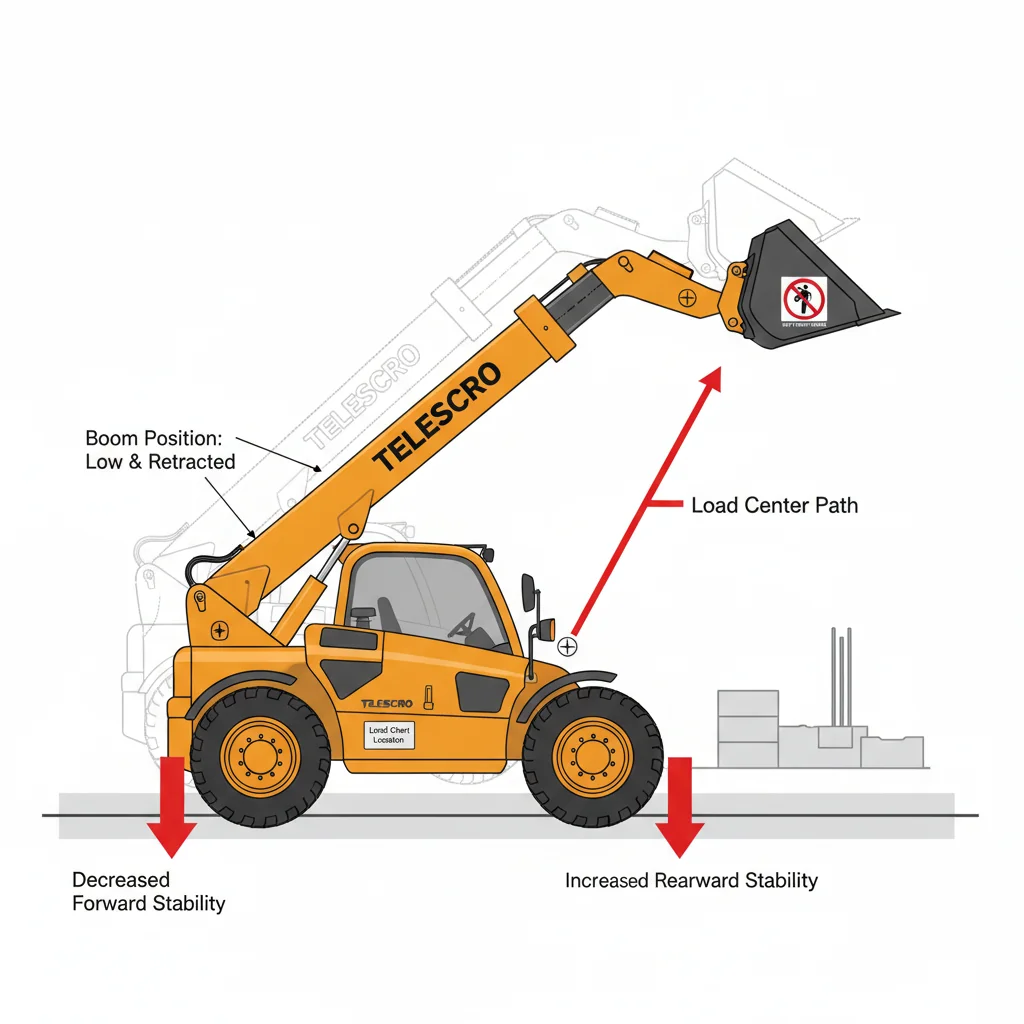
Most people don’t realize just how much stability changes when you put a bucket on a telehandler. The weight shifts forward and higher than it does with forks—especially when you start extending the boom. I had a customer in Kazakhstan who thought his 3-ton machine would handle a full bucket of wet sand at maximum reach. On the second week, the rear wheels lifted before he could even dump the load. He was lucky—no damage, but it could have been a disaster.
Never trust “feel” or guess the weight. Wet soil, gravel, or grain can be much heavier than you expect—up to 40% more than dry material. I always remind operators: if your load chart says 1,200 kg at 5 meters with a bucket, that’s not an estimate—it’s your actual safe limit, assuming the boom is low and you’re on solid ground. Ignore the load chart or travel with the boom up, and you risk tipping the whole machine. Believe me, I’ve seen expensive compact models tip in less than a second just because someone lifted the load too high while turning.
Another key rule—no carrying people in buckets. Only use approved work platforms designed for telehandlers, never improvise. I saw this shortcut attempted on a rural site in Brazil; even a moment’s imbalance nearly pitched a worker three meters down. Simple habits matter: keep speed slow, boom low and retracted, watch out for soft ground, and always read the load chart for your bucket, not the forks. That’s how you work efficiently and safely every day.
Remember that bucket load charts are different from fork load charts. Swapping from forks to a heavier bucket without switching to the correct chart can easily push the machine beyond its limits, especially with dense or wet materials.
When using a bucket attachment, extending the telehandler boom just 50% can reduce rated lift capacity by more than 60% compared to fully retracted.True
Telehandler capacity charts show a steep drop in safe lifting ability as the boom is extended, especially with non-fork attachments like buckets, due to increased leverage and shifting center of gravity.
It is safe to transport personnel in a telehandler bucket as long as the machine remains stationary.False
Buckets are not designed for human transport and lack the required safety features such as guardrails or attachment points. Standards strictly prohibit using buckets to carry people, regardless of machine movement.
Key takeaway: Always refer to the telehandler’s load chart for bucket use—never estimate capacity or stability by guesswork or generic rules. Boom position, ground conditions, material moisture, and proper operator training dramatically reduce tip-over risk, enabling efficient, compliant use without compromising safety.
How Does Maintenance Impact Telehandler Bucket Life?
Telehandler bucket longevity depends on steel quality, correct reinforcement, and regular maintenance. Common wear points include the cutting edge, bottom plate, and corners. Buckets facing abrasive work benefit from wear strips, gussets, and reversible edges. Routine weekly inspections, prompt replacement of wear parts, and cleaning after corrosive loads are essential.

I’ve worked with quarry operators in South Africa who run telehandlers for close to 1,000 hours a year, mostly shoveling crushed stone. Their bucket life often comes down to one thing: consistent weekly maintenance. When crews skip inspections, I usually see cracks form at the corners and along the cutting edge. These high-stress points wear fast, especially with abrasive loads like gravel. Once, a customer waited months to replace worn wear strips—by then, the bottom plate had thinned so much it actually bent under a heavy load. That led to three days of downtime and a repair bill that easily topped $800.
From my experience, choosing the right bucket design is just as important as routine care. Buckets built with thick, wear-resistant steel and reinforced with gussets at the corners last far longer in aggressive applications. For demolition or roadwork, I suggest using reversible bolt-on edges10—you get almost double the working life since you can flip the edge when one side wears down. But don’t fall into the trap of thinking heavier always means better. I’ve seen cheap, heavy buckets that looked sturdy but ate up usable payload, meaning fewer scoops per hour and more fuel burned. Thin-plate, unreinforced buckets, on the other hand, often crack through within 18 months under real jobsite use.
If you want your telehandler buckets to last, weekly maintenance is non-negotiable. Inspect welds and wear strips, clean off any fertilizer or salt after each shift, and grease all pivots and locking points. This approach cuts downtime and keeps performance consistent, especially when your fleet racks up hundreds of hours every season.
A telehandler bucket can experience significant structural weakening if worn wear strips are not replaced in time when operating in high-abrasion environments.True
Wear strips protect the bucket’s underside from continuous abrasion. If they are not replaced once worn, the bucket floor can thin rapidly, increasing the risk of cracking or deformation at high-stress points such as the cutting edge and corners.
Routine greasing of a telehandler’s boom joints has a direct effect on reducing bucket wear when shoveling aggregates.False
While greasing boom joints is vital for articulation and longevity of the telehandler itself, it does not affect the abrasion or wear rate experienced by the bucket during aggregate handling. Bucket wear depends on contact with materials and bucket-specific maintenance, not boom lubrication.
Key takeaway: Investing in a well-built telehandler bucket and maintaining it weekly—including inspecting welds, replacing worn wear strips, and cleaning off corrosive materials—significantly extends service life, minimizes downtime, and maximizes safe performance, especially for fleets accumulating substantial annual operating hours with high-abrasion materials.
Conclusion
We’ve covered what telehandler buckets really do best: moving loose materials quickly and safely, not handling pallets. If you’re thinking about adding a telehandler bucket to your fleet, remember—those impressive specs in the brochure don’t always translate to real jobsite performance. I’ve seen "showroom hero, jobsite zero" situations where contractors focused only on price or lift height, then got stuck waiting for critical parts or found their machine wasn’t up to the day-to-day demands. If you have questions about attachments, load charts, or what works best for your site, I’m happy to help. Just reach out—no pressure. Every operation is different, and it pays to choose what fits your workflow.
References
-
Provide an in-depth analysis of the role of the load chart in safe load management, helping operators avoid overloading and ensure jobsite safety. ↩
-
Explore how light-material buckets optimize handling of low-density materials in farms, improving efficiency for tasks like feed loading and debris clearing. ↩
-
Learn how an extended boom allows operators to reach over obstacles, facilitating efficient backfilling and material placement. ↩
-
Learn how reinforced wear plates extend bucket life under tough conditions, improving durability and reducing replacement costs in roadwork projects. ↩
-
Detailed guidance on selecting telehandler buckets by material type to maximize performance, safety, and reduce wear, with expert tips. ↩
-
Explains how material density affects load calculations and telehandler safety, helping avoid overloading and equipment damage. ↩
-
Learn how matching bucket size to material weight enhances productivity and prevents overloads, with real-world examples from diverse farming operations. ↩
-
Explains how to interpret load charts specifically for telehandler buckets to avoid tipping and maintain stability during operation. ↩
-
Details risks and accident causes linked to inaccurate weight estimates of wet materials, crucial for operators to understand load limits. ↩
-
Details how reversible edges nearly double bucket life by allowing users to flip worn edges, enhancing durability in demolition and roadwork. ↩