











Telehandler Weight Guide
Operating-Weight Bands, Lift-Capacity Relationship & Transport Fit
Operating weight and rated lift capacity are two different specifications. This manufacturer-led guide maps five market operating-weight bands to typical classes, transport realities, a quick 3-step fit check, and the Telescro lineup — so you can size the machine for the job, not just the catalog.
- Market operating-weight bands covered
5 (from compact under 4,000 kg / 8,800 lb to heavy-duty 15,000 kg / 33,000 lb+)
- 3-step Quick Weight Fit
maps your job type, reach need, and site constraint to the closest band
- Per-model operating weight
depends on configuration, attachments, and fluids — confirmed at RFQ review
Send your current machine photo or layout for quick evaluation.
On This Page
Navigate to any section
What Is Telehandler Operating Weight — and Why It's Not the Same as Lift Capacity
A telehandler does NOT weigh the same as its rated lift capacity. They are two different specifications, and confusing them is a common source of mismatched procurement. The split below is what every buyer should internalize before reading the band table.
Operating Weight
The telehandler's total configured mass — chassis, boom, tires, cab, hydraulics, fluids, and standard attachment — as it stands on site.
- Trailer & container booking for transport
- Ground-bearing calculations for site access
- Abnormal-load permit authorization
Varies by: attachment, fluid level, tire setup, ballast. Catalogs publish a base figure; real site weight is confirmed at RFQ.
Rated Lift Capacity
The maximum load the load chart certifies at a specific (height, reach) point — not a flat number across the working envelope.
- A 5,000 kg rated machine does not lift 5,000 kg at every position
- Capacity drops as the boom extends forward or upward
- Two machines with same peak can have very different curves
Always validate against the model-specific load chart at your real working position — not the brochure peak.
Buyer Takeaway
Both numbers appear in spec sheets in the same unit (kg or lb), and SERP language uses "weight" loosely — which is why several rental listings publish them side-by-side without clearly separating them. In the next table, read the bands by operating weight (drives transport and ground access) and the capacity column as the typical rated envelope at each band (the chart governs what the machine actually lifts).
Operating Weight Bands: Five Brackets from Compact to Heavy-Duty
Five operating-weight brackets, organized as a market-tendency framework rather than a strict class rule. Band edges overlap at transition points, and the same nominal class (for example, an "8K" machine) can sit in different bands depending on model configuration, tires, and standard attachment. Both metric and imperial are shown; the rated capacity column is the typical envelope at each band, not a model-specific spec. Use this table for band self-location, then the sections below for engineering, logistics, and Telescro routing.
| Operating Weight Band | Typical Class Envelope | Typical Reach Band | Logistics & Application Context | Telescro Routing Context |
|---|---|---|---|---|
| Compact (under 4,000 kg / 8,800 lb) | 3 t and below rated lift | up to 5 m / 16 ft | shorter-container planning may be possible; low barns, greenhouses, event sites, tight aisles | T4512, T625-A entry envelope |
| Standard (4,000–7,000 kg / 8,800–15,400 lb) | 2.5–3.5 t rated lift | 5–7 m / 16–23 ft | export container planning commonly reviewed; general framing, pallet handling, large farms | T625-A, T735-A, T3507 |
| Mid-Reach (7,000–10,000 kg / 15,400–22,000 lb) | 3.5–4 t rated lift | 7–10 m / 23–33 ft | high-cube container planning often relevant; multi-story construction, facade, scaffold | T1035 |
| High-Reach (10,000–13,000 kg / 22,000–28,700 lb) | 4 t rated lift | 10–14 m / 33–46 ft | high-cube or alternative loading may need review; infrastructure, precast, bridge | T1440 |
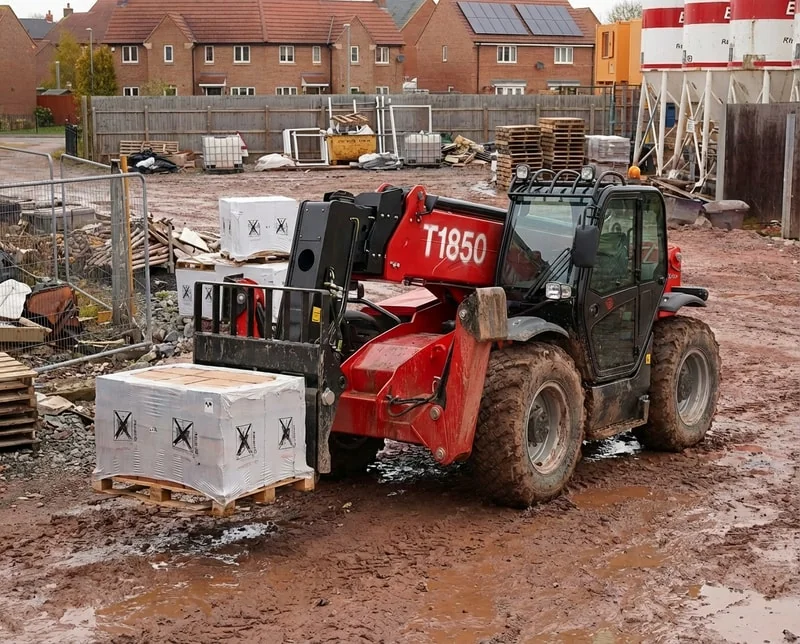
| Heavy-Duty (13,000 kg / 28,700 lb +) | 4–5 t rated lift | 14 m+ / 46 ft+ | transport planning usually becomes a project step; some markets may trigger abnormal-load permits | T1850, TH1840 |
Not sure where your setup lands? Match your site profile against the band table in one step.
Quick Weight Fit — A 3-Step Check Before You Spec
Catalogs and band tables describe the landscape, but most buyers still need a fast path from "my job" to "my band" before they start comparing models. This 3-step check maps three inputs — job type, required reach, and site constraint — to the operating-weight band your setup most likely sits in. It's a routing signal for conversation, not a final spec; the configured weight is still confirmed at RFQ.
What's your job type?
Pick the primary operational context.
This sets the typical workload profile and the shape of the conversation:
bale, pallet, silage, yard handling; usually mid-stable ground; moderate reach
pallet, block, scaffold; mixed ground, varied sites; wider reach envelope
heavier payload, longer reach, often weight-regulated transport
aisle width and ceiling often dominate the decision; load varies by process
What reach do you need?
Pick the maximum forward reach the job requires.
Reach is the second biggest input after job type, and it usually narrows the band within one step:
Compact to Standard band territory
Mid-Reach band tendency
High-Reach band tendency
Heavy-Duty band tendency; transport planning is usually relevant from day one
What's your site / transport constraint?
Pick the constraint that dominates your planning.
This is the step most often skipped, and it's the one that flips the answer when it matters:
favor lighter bands first, regardless of what reach alone would suggest
reach and job type lead the decision
start from the lowest feasible band, then climb if reach forces it
Your answer across all three steps is a routing signal, not a final spec — the configured weight is confirmed at RFQ.
Got Your 3-Step Answer? Let's Validate It.
Send your job type, required reach, and site constraint — we'll confirm the band and configure the right model for your real working envelope.
Why Operating Weight Matters Beyond the Spec Sheet
Operating weight feeds three practical decisions: stability at max reach, jobsite footprint handling, and transport-route margin — none reduces to "heavier is better".
Weight × Stability
Operating weight contributes to counterbalance, but stability is not a one-to-one function of mass.
Boom angle, wheelbase, rear ballast, and outrigger deployment all interact; the load chart is the net expression for the specific chassis, not a generic class. Heavier can improve stability in some envelopes, but it also raises transport cost, ground pressure, and site-access friction.
Weight × Ground Pressure
Operating weight across the tire contact patch gives the effective ground pressure.
On firm ground, standard tires usually suffice. On soft soil, wet clay, asphalt edge, or suspended slabs (basement, bridge deck, car park), ground pressure is what decides site structural review. A heavier mid-reach machine on soft soil can cause more access issues than a lighter high-reach machine with wider tires. Send the ground-bearing limit (kN/m² if available) with the brief.
Weight × Reach
— and Why Heavier ≠ Always Safer
Operating weight alone does not define stability — weight distribution and wheelbase often matter more than total mass.
Assuming "heavier = safer at full reach" is directionally useful inside one model family but breaks down across different chassis designs. A longer-wheelbase mid- weight machine may stay within itscertified chart to full reach, while a heavier short-wheelbase machine in the same class may not. Over-specifying weight adds transport cost, permit complexity, and access friction without adding working capacity. Match operating weight to the site and transport envelope; match rated capacity to the actual lift profile; verify both against the specific model's chart.
Size, reach, and capacity interact — along a narrower path than "bigger is safer" implies.Match Weight to Site, Capacity to Lift Profile
Send your ground-bearing limit, transport route, and lift profile — we'll verify both operating weight and rated capacity against the specific model's load chart before quoting.
Weight in Export Logistics — What OEM Catalogs Don't Usually Surface
For buyers sourcing across borders, operating weight is also a logistics variable — container fit, road-permit thresholds, and site access path.
Container Fit
A 40 ft high-cube container is a common freight unit; compact-band machines may fit shorter container planning depending on configured dimensions.
Operating weight is one constraint; cargo length and boom footprint are the other — plan from the configured drawing, not the band alone. Container weight allowance varies by carrier, port, and routing — worth checking with your forwarder.
Road & Permit Thresholds
Abnormal-load thresholds (axle load, gross vehicle mass, overall dimensions) are set per country, sometimes per state or province — no single global number covers every route.
Crossing a threshold typically triggers permitrequirements, escort vehicles, or routing restrictions. Send known axle-load or permit limits with the brief.
Site Access & Ground-Bearing
Weight that fits the container and clears road permits can still fail at the site gate: car-park floors rated in kN/m², finished ground floors under retrofit, approach roads rated for light-vehicle traffic.
RFQ inputs: access path width, ground type, and any weight-rated transitions on the route in.
Telescro Lineup Mapped by Weight-Planning Context
Eight Telescro models, each grouped by its typical operating-weight band and primary market.
Canonical specs come from the product data sheet; exact configured operating weight for your specific setup is confirmed at RFQ. Each card closes with a "Best if" decision prompt.

T4512
1.2 t · 4.5 m · 18.4 kW
Access-sensitive compact routing for low ceilings, narrow aisles, or tight transport envelopes.
Best if: low ceiling, narrow aisle, or tight transport envelope

T625-A
2.5 t · 5.8 m · Kubota 54.6 kW
General-farm and rental-fleet routing; confirm configured dimensions and weight before container planning.
Best if: general farm or rental-fleet workload with moderate reach
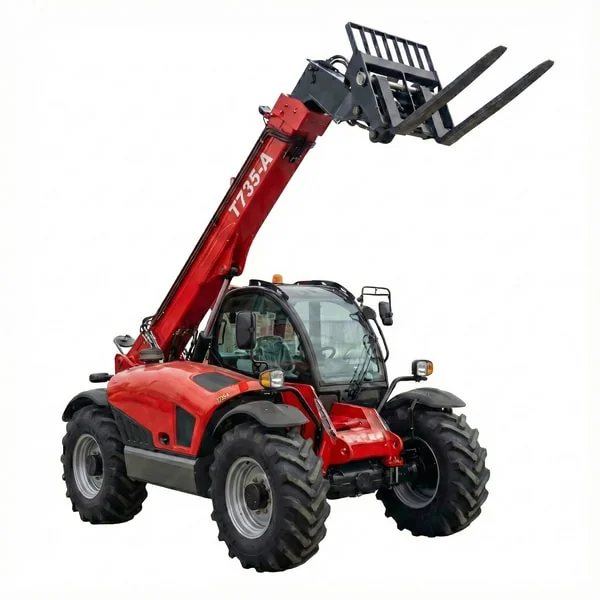
T735-A
3.5 t · 7.0 m · 73.5 kW
3.5-ton agricultural workload; review ground condition and transport route with the final configuration.
Best if: heavier agricultural workload or mid-capacity site work at 7 m reach
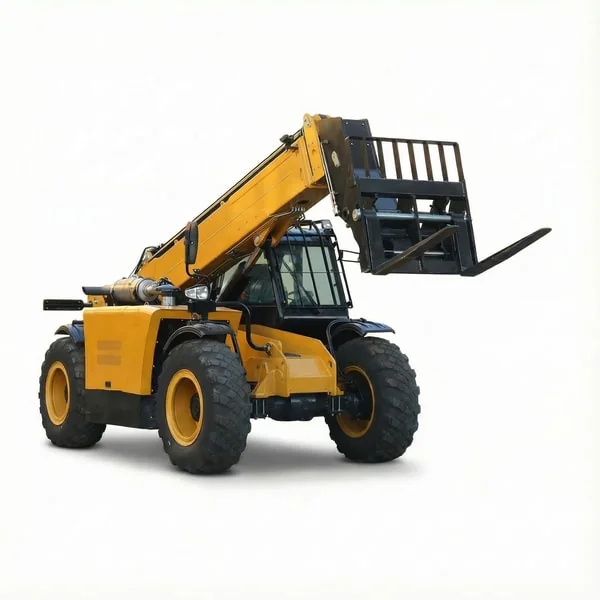
T3507
3.5 t · 7.0 m · 75 kW
Same envelope as T735-A with a construction profile and budget-sensitive emerging-market routing.
Best if: budget-sensitive construction workload in emerging markets
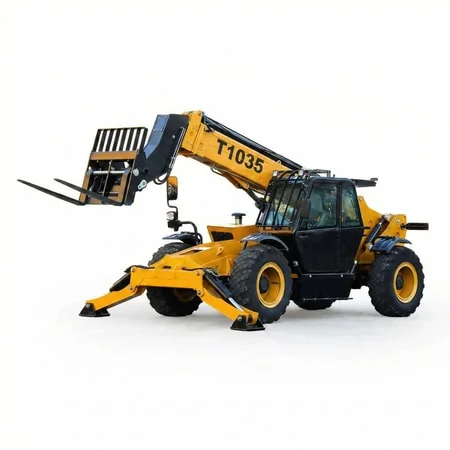
T1035
3.5 t · 10.0 m · 85 kW
Multi-floor construction core match with typical mid-reach weight-planning tendency.
Best if: multi-story construction, scaffold, or facade work near 10 m reach
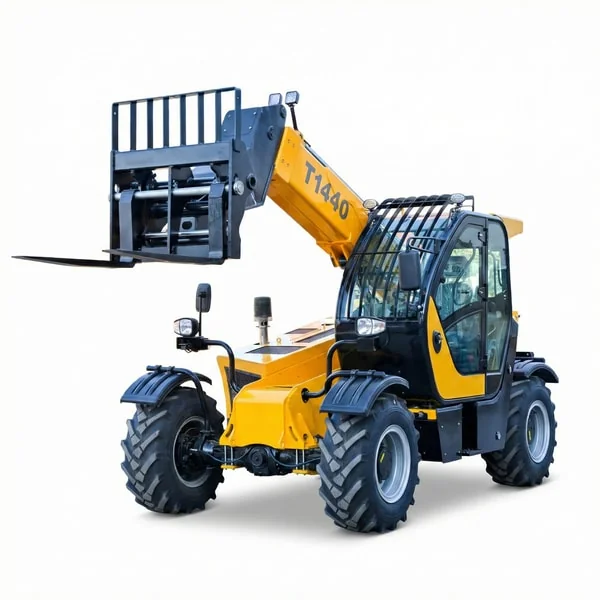
T1440
4.0 t · 13.5 m · 92 kW
Infrastructure and precast routing; transport and ground-bearing review become more important at this reach band.
Best if: precast, bridge, or infrastructure lift at 13 m or above
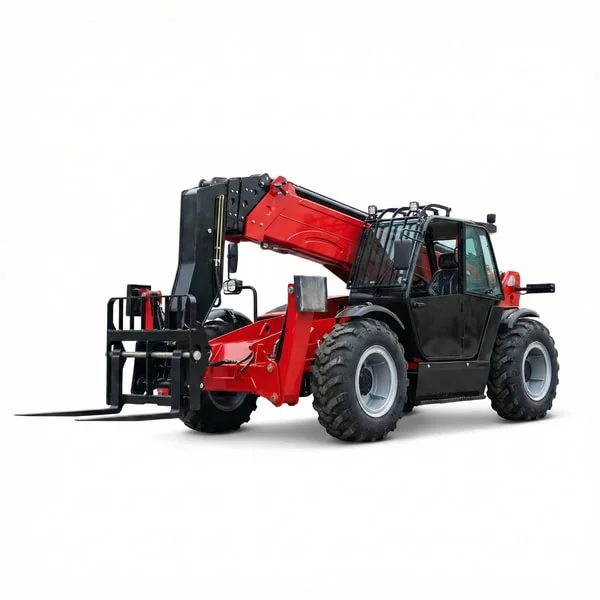
T1850
5.0 t · 18.0 m · 92 kW
Payload-led upper band; review transport and site access before locking the model.
Best if: high reach with heavy payload in heavy industry or mining

TH1840
4.0 t · 17.55 m · FPT 75 kW
North-America EPA Tier 4 Final compliance path with reach-led routing.
Best if: a North-America-compliant (EPA Tier 4 Final) reach-led configuration
Not sure which model fits your site constraints and transport envelope? and we'll recommend the best fit.
Common Mistakes About Telehandler Weight
Most weight-related procurement regret traces back to one of four recurring mistakes. Each is easy to avoid with a brief sanity check before spec lock — and each shows up in post-delivery conversations more often than we'd like to see.
Assuming Lift Capacity Equals Machine Weight
Reading "5,000 kg telehandler" on a datasheet and planning transport as if the machine weighs 5,000 kg.
Rated lift capacity (the load chart peak) and operating weight (the configured mass on site) are different specifications. A telehandler with a given rated-capacity number can weigh substantially more than that number in operating mass, depending on chassis, boom length, tires, and attachment. Impact shows up when transport is booked undersized, container weight limit is missed at port, or a surprise permit requirement stops the shipment mid-route.
Sanity check: whenever a spec is quoted as "X kg telehandler", confirm whether it refers to rated capacity or operating weight before planning logistics.
Over-Specifying Weight for "Safety"
Assuming a heavier machine is universally safer at full reach.
The reality is that stability is governed by the load chart, and weight distribution, wheelbase, and boom geometry matter as much as total mass. A longer-wheelbase mid-weight machine may stay within its certified chart to full reach, while a heavier short-wheelbase machine of the same class may not. Over-specified weight adds avoidable purchase cost, transport cost, permit complexity, and site-access friction without adding real working capacity — and the heavier machine will then need to be moved, permitted, and serviced for the life of the fleet.
Sanity check: match weight to site and transport envelope; let the load chart govern the lift profile, not the machine mass.
Ignoring Ground-Bearing Limits
Weight that fits the container and clears road permits can still fail at the site gate.
Overlooked constraints are recurring: soft soil, wet clay, asphalt edge, suspended slabs (basement, bridge deck, car park floor), or site structural review thresholds that the buyer didn't see on the spec sheet. A heavier mid-reach machine on soft ground often causes more access issues than a lighter high-reach machine with wider tires.
Sanity check: if your destination has any suspended slab, soft ground, or site-specific ground-bearing limit (e.g. kN/m² rating), flag it in the job brief before narrowing the model list — not after.
Not Checking Transport Constraints Before Model Lock
Locking the model from spec-sheet analysis, then discovering container weight, axle-load, or site entry problems during shipment planning.
By that point, re-engineering transport is typically more expensive than a different model would have been. Transport constraints that commonly bite include destination-country abnormal-load thresholds, 40 ft high-cube weight allowance versus machine configured mass, port-of-destination routing restrictions, and final-mile access road ratings.
Sanity check: bring the transport route and destination spec into the RFQ conversation before model lock, not after it.
Why Telescro When Weight and Class Matter to You
Three operating principles shape every weight-class recommendation you'll get from us — what other buyers tell us made the difference between a fitted quote and a procurement regret.
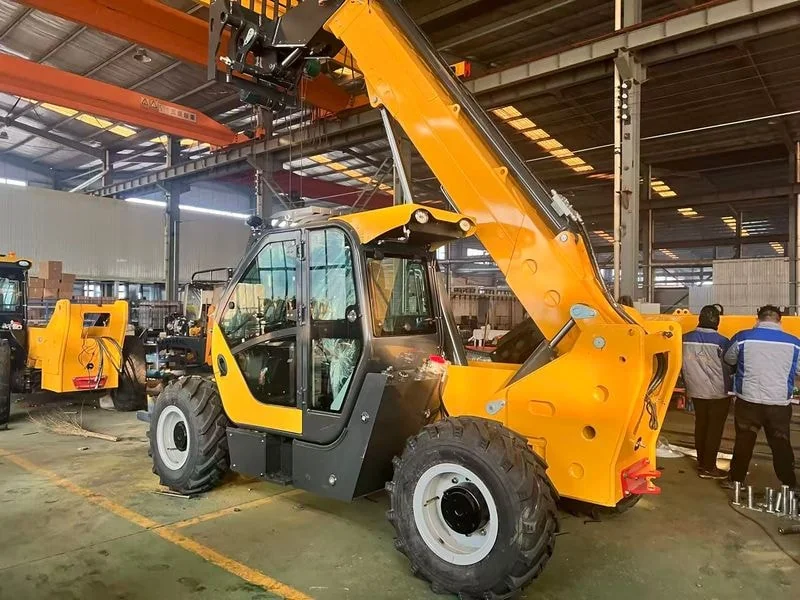
You Get the Right Band, Not the Biggest Inventory
You won't be pushed toward "the biggest machine you can afford" the way dealers earning on inventory movement often do. Send your load, reach, site, and transport — we map your setup to the closest band, narrow it to the Telescro model that fits, and confirm configured operating weight for your specific attachment and tire setup. You get the model that fits your job, not the one sitting on the floor this week.
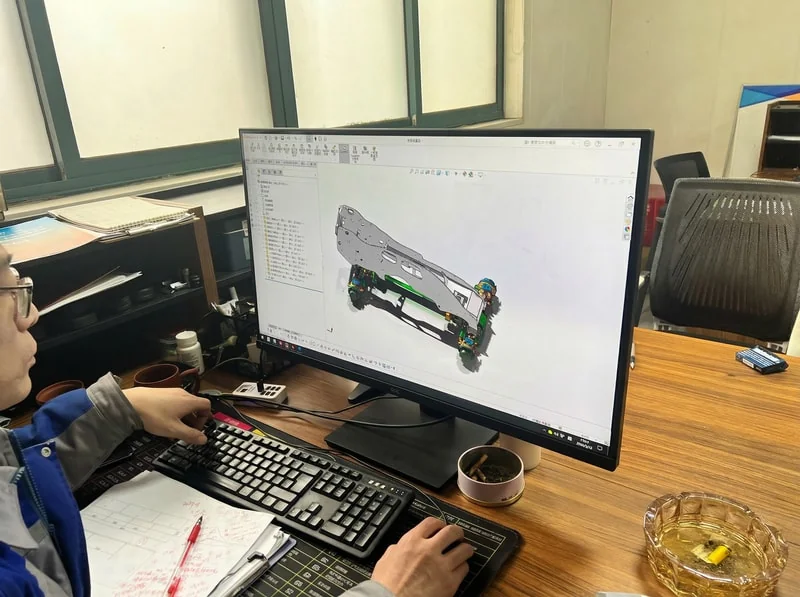
You Get Both Metric and Imperial — Documented
If you're reviewing your telehandler across both imperial and metric documents, you already know how easily conversion errors creep into permits and on-site paperwork. We publish canonical specs in metric and present imperial in your quote documents; your operating-weight confirmation comes in both units during RFQ review. The numbers you see upstream are the numbers on your delivery paperwork — no conversion ambiguity in your tender, permit, or port declaration.
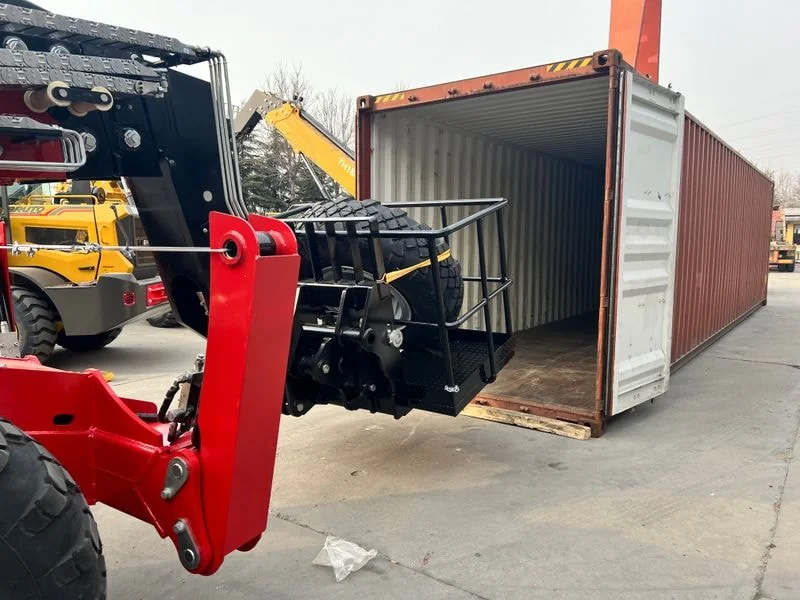
You Solve Transport Before Signing, Not After
Transport cost surprises after you've selected the machine are a common regret — and they're usually preventable. Send us your route, destination spec, or site-access constraints in your job brief, and we'll route the transport feasibility conversation alongside the model recommendation — before you sign the quote. You align weight, class, and shipping envelope before your purchase decision, not after delivery when your options are narrower and your costs are higher.
Operating weight, rated capacity, site access, and transport route all interact. Send the setup details — job profile, reach, site condition, destination market — and we'll map your job to the closest Telescro band with a written note on why, before we quote.
Tell Us About Your Setup
Send the details below and we'll review them against the Telescro lineup, your destination market spec, and the transport route before recommending an operating-weight band and a model. We reply with a written note on why the band and the model fit — not a bare quote — so you can compare against any other source of data you've gathered.

Hi! I'm Sally
Telescro Sales Manager
"Send me your project basics and I'll come back with the right machine, real pricing, and shipping options for your market."
Send Your Requirements
Fields marked * are required.
Telehandler Weight FAQ
Operating weight is the machine's configured mass (chassis, boom, fluids, and standard attachment), used for transport booking, ground-bearing checks, and container math. Rated lift capacity is the maximum load the load chart certifies at a specific lift point. In market references, a high-capacity lifting class often sits in a much heavier operating-weight band — a telehandler does NOT weigh the same as its rated lift capacity. The two numbers answer different questions, and treating them as interchangeable is a common source of procurement mismatch at the quoting stage.
Still have questions?