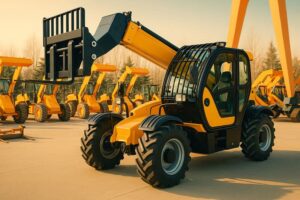










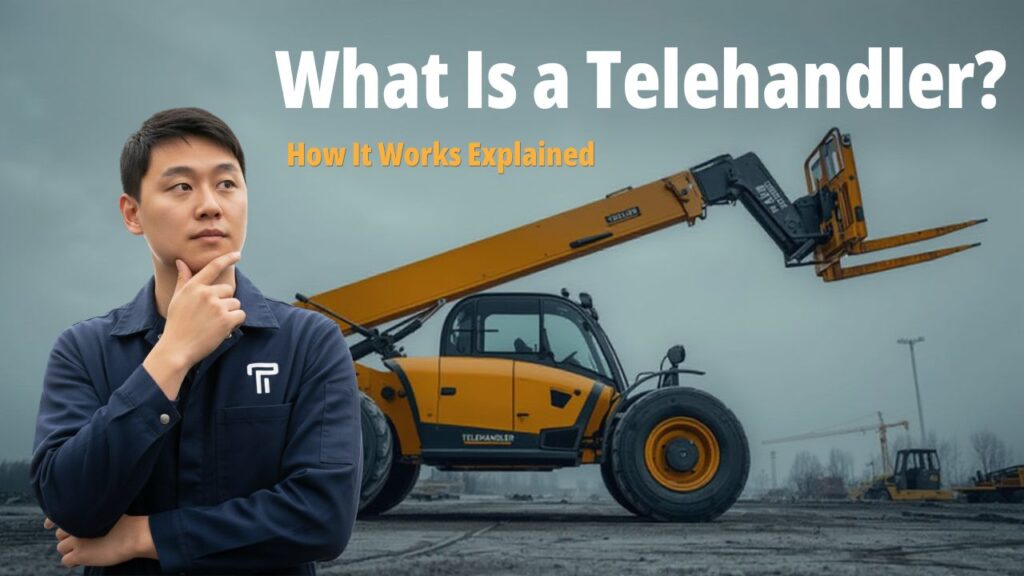
더 알아보기 텔레핸들러(텔레스코픽 핸들러) 가 무엇인지, 어떻게 작동하는지 알아보세요.
이 동영상에서는 텔레핸들러가 지게차, 크레인, 작업 플랫폼의 기능을 하나의 강력한 기계로 결합하는 방법을 설명합니다.
텔레스코픽 붐과 유압 시스템부터 어태치먼트 커플러, 섀시, 엔진에 이르기까지 주요 구성 요소를 살펴보고 각 부품이 도달 범위, 리프팅 파워, 안정성에 어떻게 기여하는지 알아보세요.
또한 하중 차트, 안전한 리프팅 원칙, 어태치먼트를 통해 다양한 작업 유형에 맞게 기능을 확장하는 방법도 배울 수 있습니다.
원격 핸들러의 작동 방식과 현장에서의 활용도를 이해하고자 하는 건설 전문가, 장비 구매자 및 운영자에게 적합합니다.
텔레핸들러란 무엇이며 어떻게 작동하나요?
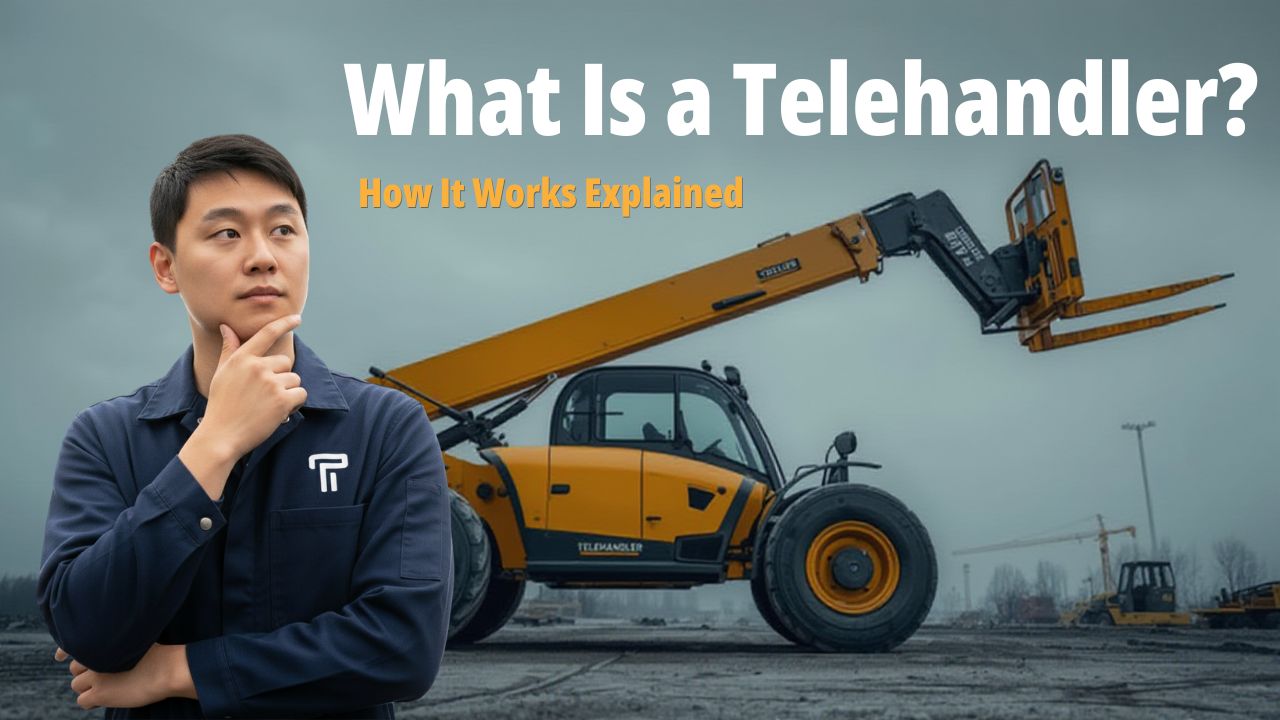
텔레핸들러의 정의와 작동 방식, 붐, 유압 장치, 어태치먼트, 효율적인 리프팅과 도달 범위를 위한 안전 기능에 대한 명확한 설명이 포함되어 있습니다.
Transcript
Hey everyone, today I want to answer a question I get all the time – what exactly is a telehandler? You might've seen these machines on construction sites or farms and wondered what they do. Well, let me break it down for you.
A telehandler – short for telescopic handler – is basically three machines in one. It's a forklift, a crane, and a work platform all combined. And that makes it one of the most versatile pieces of equipment you can have on site.
So what makes a telehandler special? It's all about that telescopic boom. Unlike a regular forklift that just lifts straight up, a telehandler can extend forward and upward.
That boom reaches out to places other machines simply can't access. Most models can reach anywhere from 6 to 20 meters high, depending on the size. But here's something important to understand – the higher and further you extend that boom, the less weight you can safely lift.
That's basic leverage — the further you reach, the lighter the load must be. That's why every telehandler comes with a load chart. It tells you exactly how much you can lift at different heights and extensions.
Safety first, always. Let's take a quick look at the main parts. The telescopic boom – that's your reaching arm.
It extends and retracts hydraulically, giving you that forward and upward reach that makes telehandlers so useful. The attachment system – at the end of the boom, you've got a quick coupler. This lets you swap attachments in just minutes, turning your telehandler into completely different machines depending on what you need.
The chassis and frame – built for stability. These machines are designed to handle heavy loads without tipping. The frame distributes weight properly to keep everything balanced.
Hydraulic system – this powers everything. Boom movement, steering, attachments – it's all hydraulic. That's what gives you smooth, controlled operation.
Engine and transmission – usually diesel-powered, giving you the muscle for both driving and lifting. These engines are built for heavy-duty work all day long. And the tires – big, chunky, all-terrain tires with four-wheel drive.
These machines can handle rough, uneven ground that would stop a regular forklift in its tracks. Mud, gravel, slopes – they handle it all. Next, let's talk farming – especially in Europe, where telehandlers are everywhere on farms.
Farmers use them for handling hay bales, feed, fertilizer, grain – all the daily farm operations. Loading and unloading products, cleaning out livestock barns, moving materials around. Need to get feed up to a silo or barn storage?
The telescopic boom handles that easily. With a bucket attachment, you've got a powerful loader. With forks, you're moving pallets.
It's the Swiss Army knife of farm equipment. Now, I mentioned the attachment system – and this is what really makes telehandlers so versatile. You can mount pallet forks for material handling, buckets for loading loose materials, lifting jibs to work like a crane, or work platforms to safely lift personnel.
One machine, multiple jobs. But I'll dive deeper into attachments and applications in my next video – so make sure you're subscribed for that. So that's what a telehandler is and how it works.
It's a telescopic boom machine that combines reach, lifting power, and versatility. The boom extends to places other equipment can't reach, the hydraulics give you precise control, and the rugged chassis handles tough terrain. If you found this helpful, hit that like button and subscribe for more equipment insights.
I've got more telehandler content coming, including attachments, applications, and safety tips. Thanks for watching, and I'll see you in the next one!