











Forklift vs Telehandler:
Key Differences, Best Uses & How to Choose

A Complete Comparison for Construction, Agriculture & Industrial Buyers
Both machines have their place, but choosing the wrong one can cost you thousands in lost productivity. This guide helps you make the right call.
What's Inside This Guide
Jump to any section. This guide covers everything you need to make the right equipment decision.
What Is a Forklift
Counterbalance
Most common type. Rear weight offsets front load, allowing compact design and precise vertical lifting.
Warehouse
Narrow aisles, high-density storage, reach trucks for upper shelf placement.
Rough Terrain
Pneumatic tires for outdoor, moderate conditions. Higher ground clearance than warehouse models.

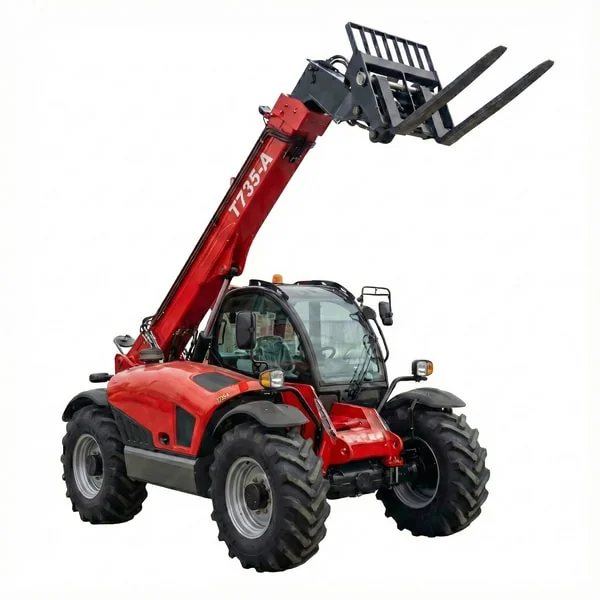
What Is a Telehandler
Height + Reach
Up to 18m vertical lift height, 13m+ forward reach. Access loads beyond footprint and above high structures.
Rough Terrain
4WD, large pneumatic tires, high ground clearance. Stable on uneven ground, mud, gravel, and slopes.
20+ Attachments
Forks, buckets, grapples, work platforms, sweepers. One machine handles multiple job types.
Not Sure Which Machine Fits Your Job?
Tell us your application, lifting requirements, and budget. Our team will recommend the right equipment and send you a detailed quote within 24 hours.
Detailed Equipment Comparison
Compare key metrics side-by-side. See how forklifts and telehandlers differ across critical performance areas.
| Category | Forklift | Telehandler | Better For |
|---|---|---|---|
| Lift Height | 3 - 6m. Standard warehouse racking. Limited to typical pallet heights and modest overhead structures. | 5 - 18m+. Reaching high walls, upper-floor placement, crane-like lifts above ground obstacles. | Telehandler |
| Terrain | Flat, paved floors only. Indoor or sealed outdoor surfaces. Poor on gravel, mud, slopes. | 4WD, rough terrain. Large tires, high ground clearance. Excels on mud, gravel, slopes. | Telehandler |
| Load Handling | 1 - 5 tons. Precision placement. Vertical lift only, strict footprint. | 2 - 5+ tons. Vertical and horizontal reach. Access loads beyond footprint. | Depends |
| Attachments | Limited. Side shift, fork extensions. Single-task machine. | 20+ types. Buckets, grapples, forks, platforms, sweepers, bale handlers. One machine, many applications. | Telehandler |
| Maneuverability | Excellent in narrow aisles. Tight turning radius. Warehouse efficiency, dense storage. | Larger footprint. Wider turning. Designed for open outdoor sites. | Forklift |
| Cost | $20,000 - $50,000. Lower fuel, minimal maintenance. Single-purpose investment. | $50,000 - $150,000+. Replaces multiple machines. Better ROI in multi-task environments. | Depends |
Lift Height
TelehandlerForklift
3 - 6m. Standard warehouse racking. Limited to typical pallet heights.
Telehandler
5 - 18m+. Reaching high walls, upper-floor placement, crane-like lifts.
Terrain
TelehandlerForklift
Flat, paved floors only. Indoor or sealed outdoor surfaces. Poor on gravel, mud, slopes.
Telehandler
4WD, rough terrain. Large tires, high ground clearance. Excels on mud, gravel, slopes.
Load Handling
DependsForklift
1 - 5 tons. Precision placement. Vertical lift only, strict footprint.
Telehandler
2 - 5+ tons. Vertical and horizontal reach. Access loads beyond footprint.
Attachments
TelehandlerForklift
Limited. Side shift, fork extensions. Single-task machine.
Telehandler
20+ types. Buckets, grapples, forks, platforms, sweepers, bale handlers.
Maneuverability
ForkliftForklift
Excellent in narrow aisles. Tight turning radius. Dense storage.
Telehandler
Larger footprint. Wider turning. Designed for open outdoor sites.
Cost
DependsForklift
$20,000 - $50,000. Lower fuel, minimal maintenance. Single-purpose.
Telehandler
$50,000 - $150,000+. Replaces multiple machines. Better ROI for mixed operations.
When to Choose a Forklift
Forklifts are the ideal choice for operations that are fast-paced, repetitive, and confined to flat, controlled environments.
Indoor Operations
Warehouses, distribution centers, manufacturing facilities. Protected from weather.
Flat, Paved Surfaces
Concrete floors, asphalt lots. No slopes or rough terrain.
Regular Pallet Handling
Same load types. Same heights. Standardized workflows every day.
Budget-Conscious
Lower upfront cost. Minimal maintenance. Proven reliability.
Repetitive Tasks
Same operation all day. Operators become highly efficient and skilled.
When to Choose a Telehandler
Telehandlers shine in dynamic, outdoor environments where reaching high, accessing difficult locations, and handling varied materials matter most. If your operation involves any of these scenarios, a telehandler is likely the better investment.
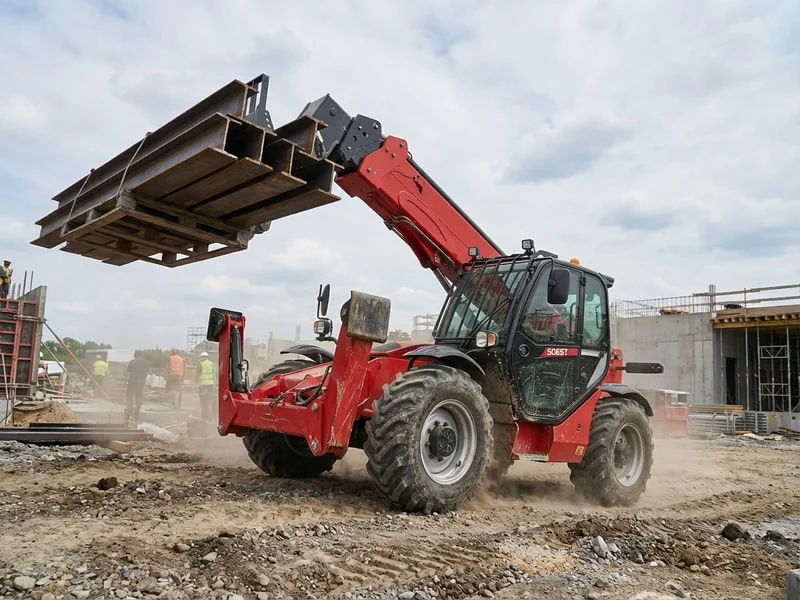
Outdoor, Multi-Material Job Sites
Building sites, agricultural operations, and demolition projects demand a machine that can do more than just lift pallets. Telehandlers handle bricks, timber, roof trusses, hay bales, bulk materials, and personnel platforms, all with a single machine and quick-attach system.
On a typical construction site, you might need a forklift for pallets, a crane for height, and a loader for bulk materials. A telehandler with the right attachments replaces all three, reducing equipment costs, transport logistics, and operator training requirements.
Bottom line: One telehandler with attachments replaces forklifts, cranes, cherry pickers, and skid steers, cutting fleet size, fuel spend, and operator training by up to 60%.
Lifting Above 6m or Forward Reach
Any job requiring lifting above six meters demands a telehandler. Standard forklifts top out at around 6m and can only lift directly in front of the machine. The moment you need to place materials on a second floor, load over a wall, or reach across an obstacle, a forklift simply cannot do it.
Telehandlers solve this with a telescoping boom that extends both vertically and horizontally. This means you can stand back from a building edge, extend the boom over scaffolding, and place loads precisely where they need to go, without repositioning the machine or calling in a separate crane.
Telescro range: Up to 18m lift height and 13m+ forward reach across our full model lineup. No forklift comes close to this capability.
Mud, Gravel, Slopes & Uneven Ground
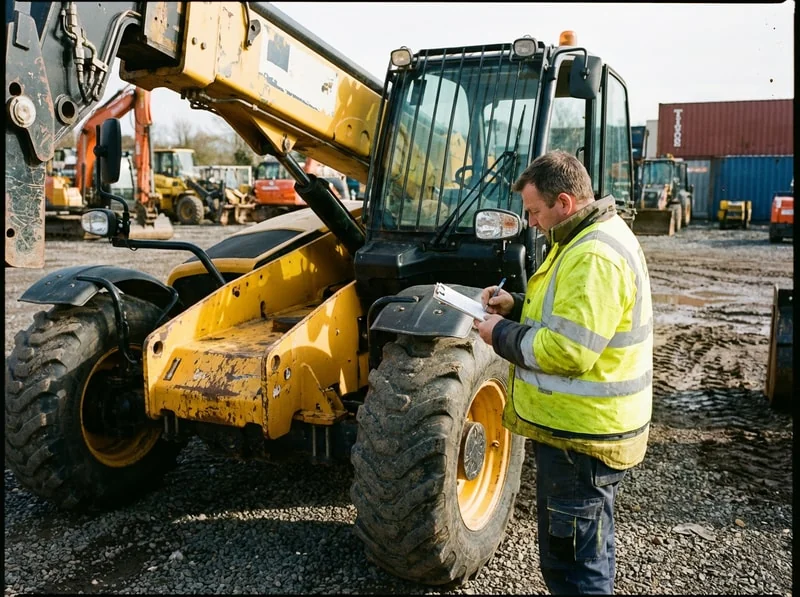
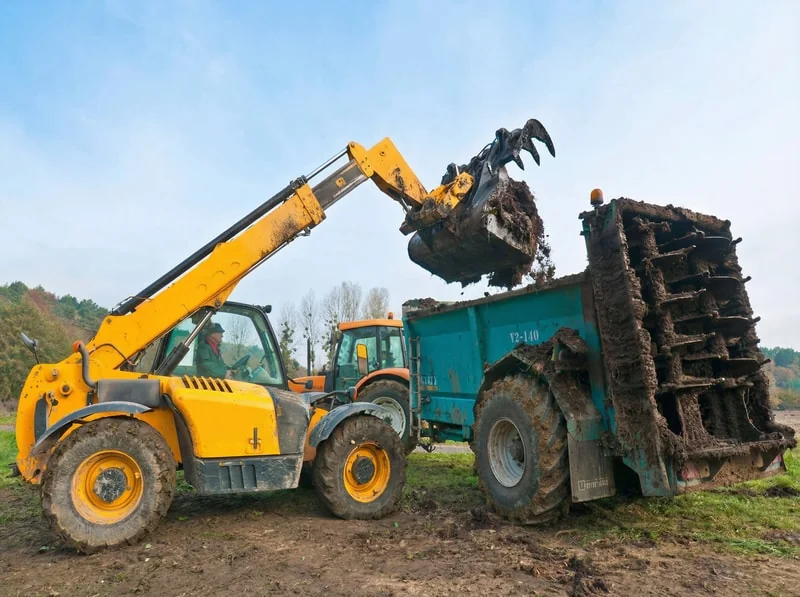
Construction sites and farms are not paved warehouses. Rain turns ground to mud, gravel shifts underfoot, and gradients challenge stability. Forklifts with their low ground clearance and small solid tires are simply not built for these conditions, and operating one on soft or uneven ground is both inefficient and dangerous.
Telehandlers are purpose-built for exactly these environments. 4-wheel drive, large pneumatic tires, and high ground clearance come standard. The wider stance and lower center of gravity keep the machine stable on slopes, while the drivetrain pushes through soft ground that would strand a forklift.
All Telescro models include 4WD, large pneumatic tires, and high ground clearance as standard. Three steering modes (2WS, 4WS, crab) handle any site layout.
Best Fit by Industry
Quick reference: which machine suits your sector
Warehouse
Forklift
Construction
Telehandler
Agriculture
Telehandler
Factory
Forklift
Rental Fleets
Telehandler
Mining
Telehandler
Not Sure Which Machine Fits Your Operation?
Describe your application, terrain, and lifting requirements. Our engineers recommend the right equipment type and model within 24 hours.
Tell us your application type — construction, farming, rental, industrial — and we match the right machine.
Share your lifting height, load capacity, and terrain conditions for a precise recommendation.
Get factory-direct pricing with no obligation. Includes full spec sheet and delivery timeline.
Action Plan
Get Expert Recommendation
Response within 2 hours during business hours. Full spec sheet and pricing included.
You can also reach us by email at sally@telescro.com.
Cost Comparison & Total Value
Upfront cost is just one factor. Compare total cost of ownership, versatility, and long-term ROI to make the right investment decision.
Forklift
$20,000 - $50,000
Typical purchase price range
Lower upfront investment
Lower fuel consumption and simpler maintenance
Single-purpose, indoor/flat surface only
Need additional machines for height, reach, terrain
Telehandler
$50,000 - $150,000+
Typical purchase price range
Replaces 3-5 separate machines
20+ attachments, rough terrain, up to 18m height
Better total ROI for mixed operations
Higher resale value and rental demand

3-5x
Machines replaced by one telehandler
60%
Lower fleet cost vs multiple machines
Higher Resale
Multi-role demand keeps value strong
Faster ROI
More billable hours per machine
Why Telehandlers Cost More — And Why It's Worth It
The higher price reflects engineering complexity and multi-role capability. Here's where the money goes.
Complex Engineering
Telescoping boom, advanced hydraulics, and multi-directional control systems require precision manufacturing and high-grade materials.
Built-In Versatility
Quick couplers, 20+ attachment compatibility, and advanced load moment sensors add cost but enable one machine to do the work of many.
Terrain Capability
4WD drivetrain, oversized pneumatic tires, high ground clearance, and stability systems add weight, durability, and cost.
Higher Performance
Greater reach, height, load capacity, and operating range demand stronger frames, larger engines, and heavier-duty components throughout.
Can a Telehandler Replace a Forklift?
One of the most common questions buyers ask. The short answer: in many situations, yes. But not all. Here's when each machine is the better choice.
Telehandler Wins
Outdoor / Mixed Terrain
You work outdoors, need more than vertical lift, and handle multiple material types on rough surfaces. A forklift cannot operate safely or efficiently in these conditions. Mud, gravel, slopes, and uneven ground require a machine built for it.
Height & Forward Reach
Any lift above 6m or loads beyond the machine's footprint. Loading over walls, placing materials on upper floors, reaching across obstacles. Forklifts physically cannot do this. A telehandler's telescoping boom is the only solution short of a crane.
Multi-Task Job Sites
Sites where you'd otherwise need a forklift, a crane, a loader, and a work platform. One telehandler with quick-attach handles all four roles, cutting fleet size, transport costs, and operator training.
Forklift Wins
Indoor Warehouse Operations
Pure warehouse work on flat, sealed floors with narrow aisles and tight turning requirements. Forklifts are more compact, more agile, and cheaper to run in these controlled environments. No reason to bring in a larger machine.
Repetitive Pallet Work
Same load type, same height, same route every shift. Operators become highly skilled and fast on a forklift. When the task never changes, specialization beats versatility. A forklift is the more efficient tool here.
Budget-Constrained Indoor Use
If your operation is strictly indoors and budget is tight, a forklift at $20-50k does the job. No need for 4WD, boom reach, or terrain capability you'll never use.
The Practical Rule
If your work is 100% indoor and flat-surface, keep the forklift. If outdoor conditions, varied tasks, or height/reach are part of the job, a telehandler is the more capable and often more cost-effective solution.
Mixed operations strategy: Many companies run both. A forklift handles repetitive warehouse work, while a telehandler covers outdoor, construction, and height-dependent jobs. This combination optimizes efficiency across diverse operations without overspending on either side.
Why Telehandlers Are Gaining Popularity
Across construction, agriculture, and industrial operations globally, telehandlers are becoming the default choice for operations that need flexibility.
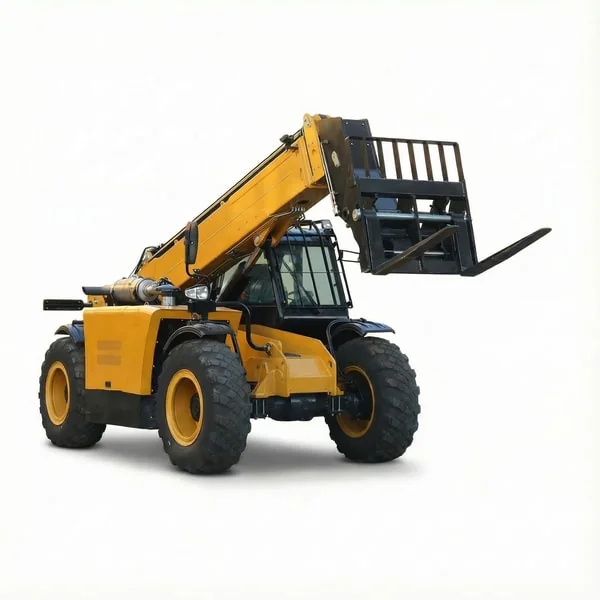
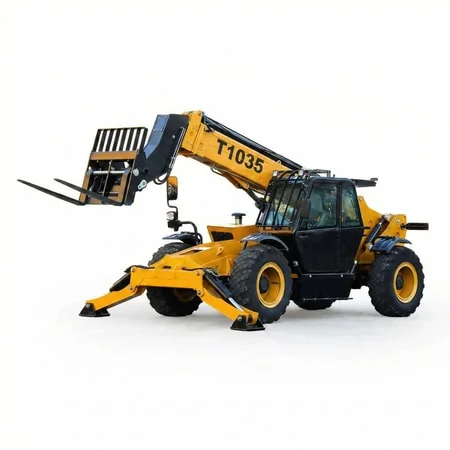
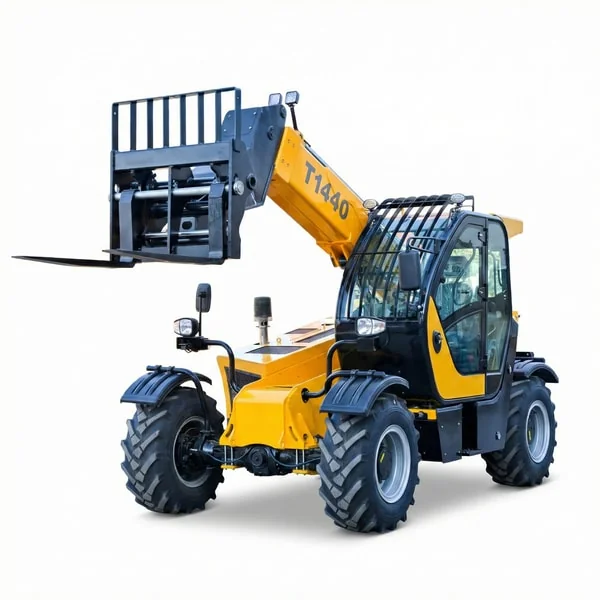
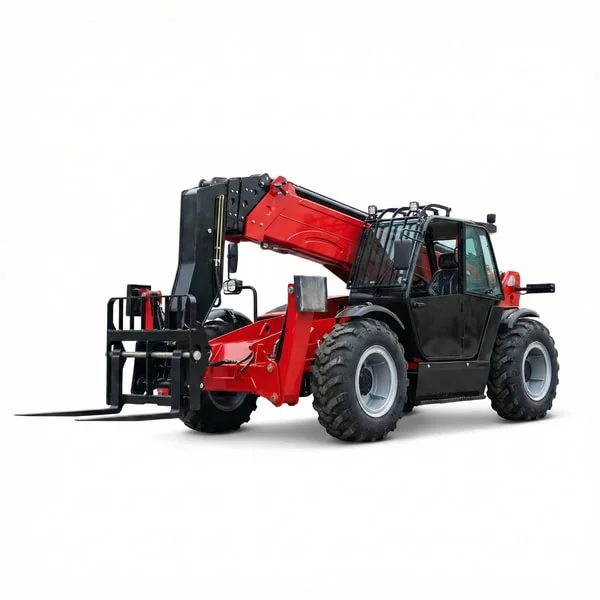
Rental companies stock them as core equipment. New construction sites demand them. Farmers rely on them year-round. Here are 8 proven Telescro models trusted worldwide.



Frequently Asked Questions
Your questions answered by our equipment specialists.
1 What is the maximum lift height for a forklift? +
Standard forklifts lift 3-6 meters. Some heavy-duty models reach 10 meters, but these are less common and still lower than telehandlers. For heights above 6 meters, telehandlers are the standard choice.
2 Can telehandlers operate on sloped terrain? +
Yes. Telehandlers are designed for slopes up to 30 degrees with proper ballast and technique. Their 4WD, high ground clearance, and weight distribution make them far more stable on uneven terrain than forklifts, which are limited to flat floors.
3 How many attachments can a telehandler use? +
Telescro telehandlers support 20+ quick-couple attachments: forks, buckets, grapples, work platforms, sweepers, bale handlers, and more. Most machines can be fitted with different attachments in minutes, making them true multi-task platforms.
4 What is the typical load capacity at maximum height? +
Load capacity decreases with height. At maximum reach, a telehandler typically carries 30-50% of its base capacity. For example, a 5-ton telehandler might carry 2.5-3 tons at full height. Capacity charts are available for each model.
5 Are forklifts or telehandlers more fuel-efficient? +
Forklifts are slightly more fuel-efficient due to their smaller engines and simpler hydraulics. However, the difference is minimal when comparing operating costs over time. Telehandlers' versatility often outweighs marginal fuel cost differences.
6 What certifications do operators need? +
Forklift operators typically need OSHA certification for indoor warehouse work. Telehandler operators require similar licensing plus additional training for rough terrain and elevated work. Training varies by jurisdiction and work environment.
Have more questions? Contact our equipment specialists.
Find the Right Telehandler for Your Operation
Telescro manufactures compact and mid-size telehandlers for construction, agriculture, rental fleets, and industrial applications.
Talk to an engineer about your specific needs. We'll recommend the exact model, configuration, and attachment solution for your operation.
Next Step
Get Your Custom Recommendation
You can also reach us by email at sally@telescro.com.
Useful Telehandler Resources
Reference materials to support your telehandler buying decision, equipment selection, pricing research, and long-term maintenance planning.
Equipment Selection
Comparison & buying decision guides
Choose the Right Lift Height
NEWLift height selection guide
New vs Used Telehandler
NEWInvestment comparison guide
Telehandler or Wheel Loader?
Side-by-side equipment comparison
Telehandler or Forklift?
Equipment selection comparison
Application & Sourcing
Industry-specific sourcing guides
2026 Sourcing Guide
Step-by-step evaluation reference
China Telehandler for Agriculture
Farm-specific sourcing from China
Telehandler for Construction
Building & infrastructure applications
China Telehandler for Rental
Rental fleet sourcing from China
Pricing, Logistics & Maintenance
Costs, shipping & aftercare planning
Maintenance Checklist
NEWDaily, weekly, monthly & annual guide
What Affects Telehandler Price?
Cost factors & pricing transparency
Import & Customs Guide
Documentation for overseas purchases
Shipping Time Reference
Production and transit timelines
Container Loading Cases
Real shipping examples
Wear Parts & Consumables
Maintenance planning reference
Still Deciding Between a Forklift and a Telehandler?
Tell us about your job site, lifting needs, and budget. We'll recommend the right machine and send you a factory-direct quote within 24 hours.

Hi, I'm Sally.
Sales Manager at Telescro
I can help you with:
No commitment required. Tell me your application, terrain conditions, and lifting requirements — I'll prepare a transparent quotation with full specifications that you can evaluate at your own pace.
Get Your Equipment Recommendation & Quote
Tell us what you need — Sally will respond with a detailed recommendation within 24 hours.