











15K Telehandler Specs, Reach Options & Capacity Class Guide
Compare typical 15,000 lb telehandler specs across common 44ft, 55ft, and 70ft reach configurations. Many buyers enter the 15K category before confirming whether their real working load at height actually requires it. Use this guide to decide whether your project truly fits the 15K class, or whether 12K or 20K+ is the more realistic path.
- Nennkapazität
15,000 lb (6,804 kg) class reference
- Typical Reach Paths
44 ft / 55 ft / 70 ft market variants
- Am besten für
Heavy construction, structural staging, precast, industrial yards
Auf dieser Seite
Navigieren Sie zu einem beliebigen Abschnitt
Typical 15K Telehandler Specifications
The 15K class is not a single machine profile. Three distinct reach configurations serve fundamentally different applications — same rated capacity, but different operating weight, boom geometry, and site footprint. Compare them before deciding which path your project requires.
| Spezifikation | 44ft Band | 55ft Band | 70ft Band |
|---|---|---|---|
| Nennkapazität | 15,000 lb (6,804 kg) | 15,000 lb (6,804 kg) | 15,000 lb (6,804 kg) |
| Maximale Hubhöhe | 44–45 ft (13.4–13.7 m) | 54–56 ft (16.5–17.1 m) | 68–70+ ft (20.7–21.3+ m) |
| Maximale Reichweite nach vorn | 28–32 ft (8.5–9.8 m) | 38–42 ft (11.6–12.8 m) | 45–55 ft (13.7–16.8 m) |
| Betriebsgewicht | 30,000–36,000 lb | 34,000–42,000 lb | 42,000–50,000+ lb |
| Typische Anwendung | HVAC / compact heavy-duty | Standard heavy-duty construction | High-reach structural / infrastructure |
If your working load, required lift height, or forward reach puts you near the boundary between reach bands — or near the rated limit at any working position — confirm your actual requirement before committing to a class. [Get Capacity Recommendation →](onclick="document.getElementById('contact_modal').showModal()")
What a 15K Telehandler Is Best For
Placing precast wall panels, beams, and structural elements where working load consistently exceeds the practical margin of the 12K class at real lift height and reach. The 55ft and 70ft variants provide the boom height needed for multi-story structural work, while the 15K band adds the heavier-duty working margin that 12K often cannot sustain.
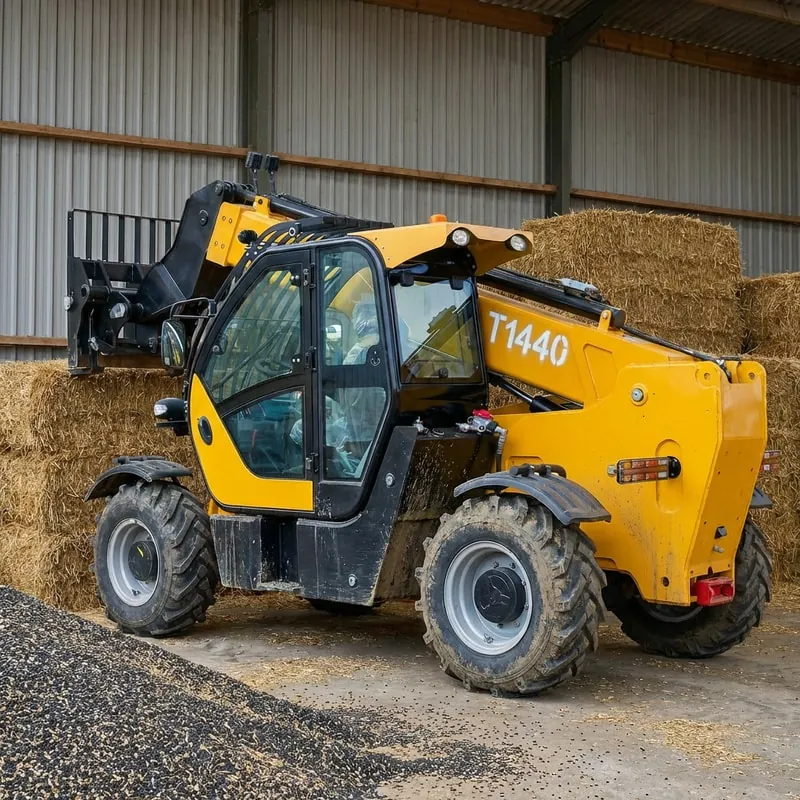
Precast and Structural Staging
Placing precast wall panels, beams, and structural elements where working load consistently exceeds the practical margin of the 12K class at real lift height and reach. The 55ft and 70ft variants provide the boom height needed for multi-story structural work, while the 15K band adds the heavier-duty working margin that 12K often cannot sustain.
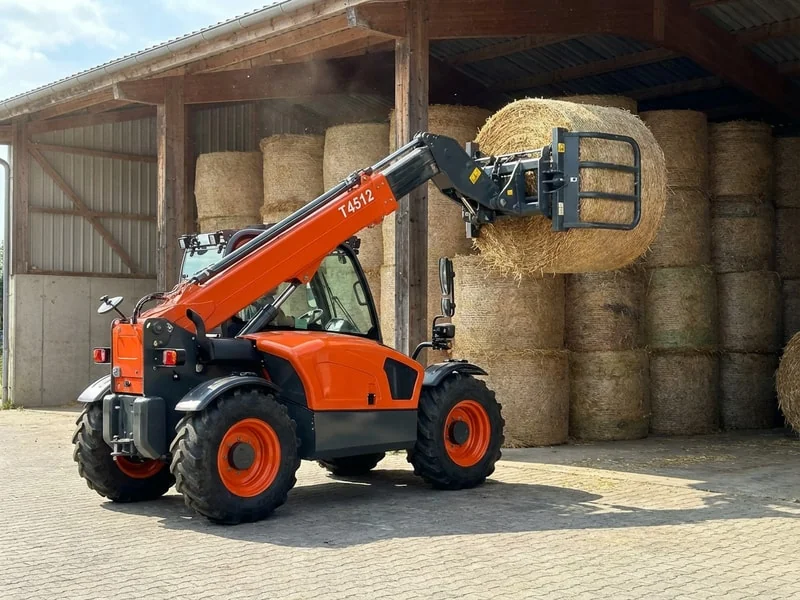
Heavy Roof and Mechanical Unit Placement
Rooftop HVAC units, large mechanical assemblies, and industrial equipment installation where the combination of load weight, working height, and forward reach pushes beyond the practical 12K envelope. The 44ft variant fits compact-footprint heavy-duty mechanical work where crane mobilization is excessive but the load still exceeds lighter-class margin.
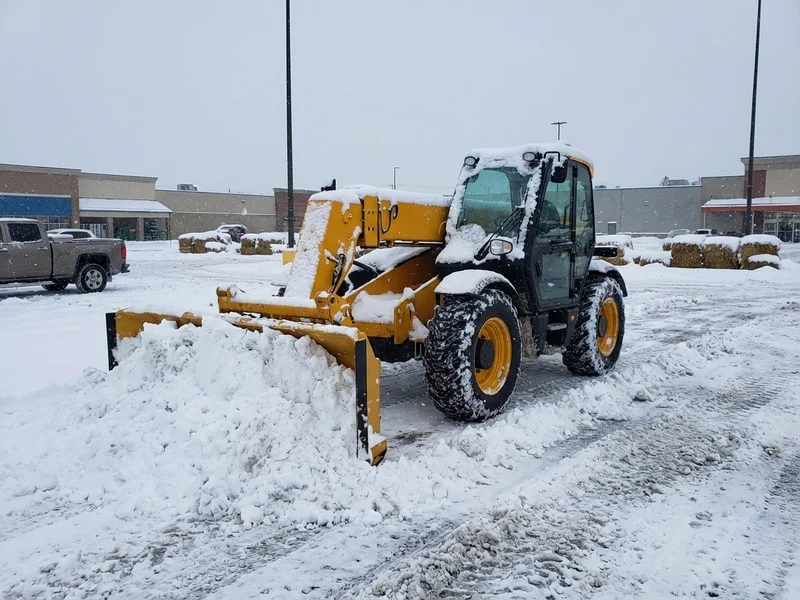
Industrial Yard and Equipment Movement
Moving heavy fabricated components, large pipe segments, or industrial machinery in yards where terrain and distance rule out overhead crane use, but load weight exceeds lighter class capacity consistently across the workday.
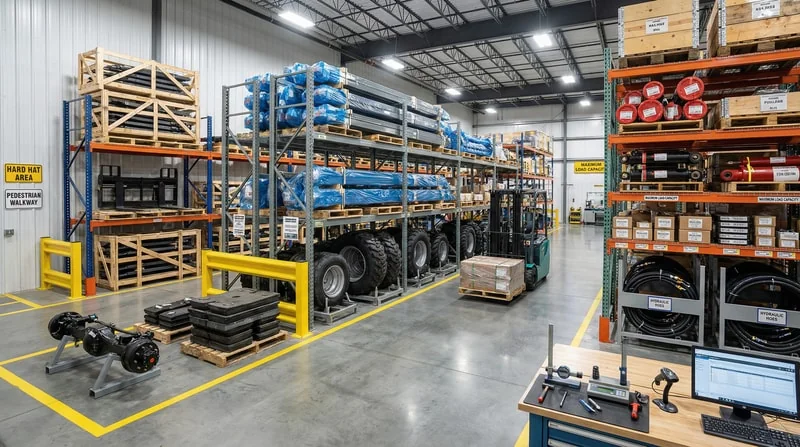
Infrastructure Material Handling at Height
Bridge components, structural steel, and infrastructure staging where project specifications define both load weight and lift elevation, locking in a 15K-or-above requirement before the machine arrives on site.
Not sure whether your application truly requires 15K, or whether 12K can cover it with the right configuration? The next section covers the qualification logic directly.
Is a 15K Telehandler the Right Class for Your Project?
> The headline 15,000 lb rating does not equal working load at maximum height or forward reach. Actual usable capacity changes materially with boom geometry, load center, and attachment setup. A 15K machine lifting near its maximum reach may deliver significantly less than 15,000 lb of usable capacity at the working position. This is why buyers who "fit" 15K on paper often need to verify the load chart against their actual lift height, forward reach, and attachment configuration — not just the class label.
1. 15K may be the right fit if:
Working loads consistently exceed 12K class capacity at your actual lift height and reach.
Project specs require structural staging, precast placement, or industrial-grade lifting by design — not occasionally, but as the regular working condition. The job site cannot accept the size or mobilization cost of a crane for routine lifts, and the load chart at your actual working position confirms you are in the 15K band.
2. You may only need 12K if:
Loads reach 15K only at ground level, and drop below 12K capacity at your actual working height and forward reach.
Most lifts stay within 40–50 ft height and 30–38 ft forward reach. The job is heavy commercial construction without structural precast or large-scale infrastructure elements, and you are buying on rated capacity alone without checking the load chart at your working position.
3. Stop considering 15K if:
Your working load at actual height and reach is consistently well below 12K capacity and you are selecting 15K for headline margin alone.
The extra machine weight— 30,000 to 50,000+ lb depending on reach configuration — creates site access or mobilization constraints that outweigh the capacity benefit. Your real requirement is high lift height at moderate load weight, where a 12K machine with 55ft reach already covers the job without the cost and weight penalty.
4. Choosing between 44ft, 55ft, and 70ft:
Start with your highest working point — the maximum lift height you need with meaningful load.
If that is 44–45 ft or below, the 44ft configuration is the starting point. If you regularly work between 50–56 ft with heavy loads, the 55ft band is the right path. The 70ft configuration is for high-reach structural or infrastructure projects where both height and load weight are high by design. Operating weight and site access requirements increase significantly with each step up the reach ladder.
Brauchen Sie Hilfe?
Start with your highest working point — the maximum lift height you need with meaningful load. If that is 44–45 ft or below, the 44ft configuration is the starting point. If you regularly work between 50–56 ft with heavy loads, the 55ft band is the right path. The 70ft configuration is for high-reach structural or infrastructure projects where both height and load weight are high by design. Operating weight and site access requirements increase significantly with each step up the reach ladder.
10K vs 12K vs 15K vs 20K+: Which Class Fits Your Project?
The 15K class sits at the upper boundary of standard heavy-duty telehandler work. Buyers in this decision range are typically coming from 12K — where they need more margin — or evaluating whether 15K gives them enough reserve before moving to 20K+. The table below maps typical project signals to each class.
10K
12K
15K
20K+
Buyers whose requirements sit near the top of the 12K class should verify the load chart before moving to 15K — the extra machine weight and mobilization cost are real trade-offs, not just a spec upgrade. If your loads, height, and reach land between 12K and 15K, it is worth reviewing that before committing to either class.
If Your Requirement Falls Below True 15K
Not every project that searches for a 15K telehandler actually needs a true 15K machine at working height and reach. Some requirements fall back into the upper end of the 10K–12K range once the real load chart position is reviewed.
1. If the working load drops below 15K at actual height and reach
Many buyers enter the 15K category based on headline lifting needs, but the real working requirement may sit lower once height, forward reach, attachment weight, and load center are confirmed.
In these cases, a properly selected 12K-class machine may already cover the project.
2. If the lift is height-driven more than capacity-driven
Some projects appear to require 15K only because the lift point is high.
But if the real working loadstays well below the heavy-duty threshold, the decision may be a reach-path issue rather than a true 15K capacity issue.
3. If site access and mobilization are already under pressure
The jump into 15K class also means a jump in operating weight, trailer class, and site logistics.
If the project can stay ina lower class without losing required working margin, that often improves mobilization, transport, and total project efficiency.
Brauchen Sie Hilfe?
If your project may fall below true 15K requirement after reviewing the real lift conditions, we can help confirm whether the better path is still 12K or lower. [Check Whether 15K Is Truly Necessary →](onclick="document.getElementById('contact_modal').showModal()")
Key Buying Considerations for a 15K Telehandler
The 15,000 lb rating is measured at minimum reach with the load close to the machine and load center at manufacturer specification. At full forward reach or near maximum lift height, usable capacity drops substantially. Always compare your working load against the load chart at actual lift height and reach — not the headline number — before confirming 15K is the right class.
1. Actual working load vs headline rating
The 15,000 lb rating is measured at minimum reach with the load close to the machine and load center at manufacturer specification.
At full forward reach or nearmaximum lift height, usable capacity drops substantially. Always compare your working load against the load chart at actual lift height and reach — not the headline number — before confirming 15K is the right class.
2. 44ft, 55ft, or 70ft reach requirement
The three reach paths in the 15K class serve fundamentally different applications.
This is not a simple specupgrade between variants — it changes operating weight, site access requirements, and transport class. Confirm your highest working point and your maximum forward reach at meaningful load before deciding which path fits.
3. Attachment penalty at working position
Work platforms, jib attachments, and specialized rigging all reduce usable lift capacity.
Buyers should calculate residual capacity afterattachment weight at the actual working position, not against the rated capacity figure. An attachment-heavy application may move the effective capacity requirement one full class up from what the headline number suggests.
4. Site access, trailer class, and mobilization
15K machines weigh 30,000–50,000+ lb depending on the reach configuration.
This affects trailer selection, ground bearing pressure, and access route planning — all of which add to project cost and timeline. At this weight range, mobilization cost and logistics planning are real buying factors that should be confirmed before machine selection, not after.
5. Ownership vs rental economics at 15K
At 15K class, ownership cost, transport cost, and utilization rate determine total cost of ownership differently than at lighter classes.
If project duration is short orutilization is not high enough to justify acquisition, rental remains the lower-cost path. The class decision and the buy-vs-rent decision should be made together, not separately.
6. Destination market compliance and support
15K machines require appropriate compliance documentation for the destination market — CE for Europe, EPA Tier 4 Final for North America, and equivalent for other regulated markets.
Confirm parts availability, service network coverage, and the supplier's documentation package before selecting a machine. At this class level, after-sales capability and parts supply are not secondary considerations.
Brauchen Sie Hilfe?
The more of these factors that fall in your blind spot, the more important it is to do a full requirement review before committing to a class. [Get Capacity Recommendation →](onclick="document.getElementById('contact_modal').showModal()")
Many buyers enter the 15K category based on headline lifting needs, then find that their actual working load at height still fits within the 12K range. Share your load, lift height, forward reach, and application. We will tell you whether 15K is truly necessary, whether 12K still covers the job, or whether the project is already moving toward 20K+ territory.
Why Buyers Use Telescro to Check a 15K-Class Requirement
Many 15K searches begin before the load chart is checked at real height and reach. We help confirm whether the project truly needs 15K before it absorbs unnecessary machine weight, transport cost, and mobilization complexity.
Avoid overbuying the class
Many 15K searches begin before the load chart is checked at real height and reach. We help confirm whether the project truly needs 15K before it absorbs unnecessary machine weight, transport cost, and mobilization complexity.
Clarify no-fit situations early
If the requirement falls below true 15K after the working position is reviewed, we say so early and help route the discussion toward the right adjacent capacity band. If the requirement genuinely stays in 15K territory, we confirm that too.
Keep the discussion tied to real machine data
We do not use the 15K class label as a generic sales hook. Telescro's current product line reaches a maximum of 5,000 kg (11,023 lb) with the T1850, so we tell buyers clearly when the requirement falls inside that adjacent range — and when it does not.
Request a 15K-Class Requirement Review
Tell us your working load, required lift height, forward reach, application type, and destination market. We will review your actual requirement and confirm whether 15K is truly the right class, whether 12K still covers the job, or whether your project is moving beyond the practical 15K band.

Hi! I'm Sally
Telescro Sales Manager
To help us assess your application:
- Working load (at actual height and reach, not just the headline rating)
- Required lift height
- Maximale Reichweite nach vorne
- Main application (structural, HVAC, industrial yard, infrastructure, other)
- Destination market / country
- Attachment requirements (if any)
Kein Druck, keine Verpflichtung
Senden Sie Ihre Anforderungen
We typically respond within one business day
15K Telehandler FAQ
The 15,000 lb rating applies at minimum reach, close to the machine, with load center at manufacturer specification. At full forward reach or near maximum lift height, usable capacity drops substantially — often well below the headline number. Buyers should always check the load chart at their actual working height and forward reach before confirming that 15K is the right class. A machine that is rated at 15,000 lb may deliver significantly less at the position where you actually need to lift.
Haben Sie noch Fragen?