


Jib for Telehandler: Truss Boom Types, Fitment Checks & Quote Guidance
Compare jib booms, truss booms, and lifting hooks for telehandlers. Learn what information matters before you request a quote.
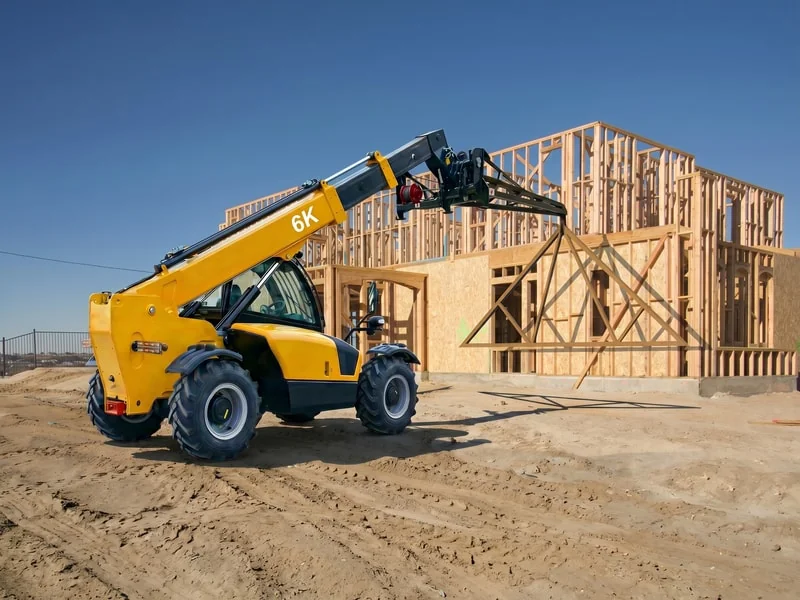
-
Attachment type depends on load shape and placement task
Jib booms, truss booms, and lifting hooks serve different lifting jobs. The right choice depends on what you are lifting and how it needs to be placed.
-
Capacity changes with boom length and extension position
A telehandler rated at 10,000 lb on forks may only handle 2,900 lb at full truss boom extension. Always reference the load chart.
-
A correct quote needs your machine model, carriage type, reach, and load
We verify compatibility before quoting. Send your machine details and lifting task for a fitment review and recommendation.
What This Guide Covers
This page walks you through jib and truss boom selection, fitment variables, capacity behavior, market pricing, and how to request a manufacturer-guided recommendation.
What a Jib or Truss Boom
Quote Requires
Before we can recommend an attachment type or provide a quote, we need four pieces of information from you.
Your Telehandler
Brand, model, and rated capacity. If you are buying a new machine rather than fitting an existing one, let us know.
This determines the mounting interface and base capacity available for the attachment.
Mounting Interface
Carriage style, quick-attach type, or fork pocket dimensions. If you are not sure, send us the machine model and we will look it up.
A jib designed for one carriage type will not bolt onto a different interface without an adapter.
Lifting Task
What you are lifting, how far out, and whether the load must be placed precisely at roof level or simply hooked and moved.
This determines whether you need a jib boom, truss boom, or lifting hook.
Real Load Weight
Include the weight of rigging (slings, shackles, spreader bars), not just the item weight.
This affects which attachment capacity class and boom length we recommend.
Have These Details Ready?
Send your machine model, mounting interface, lifting task, and load weight. We will start the fitment review and come back with a recommendation.
Jib Boom vs Truss Boom vs Lifting Hook: Which One Do You Need?
Many buyers search for "jib for telehandler" when they actually need a truss boom, or vice versa. The three main attachment types serve different lifting jobs.
| Feature | Jib Boom | Truss Boom | Lifting Hook |
|---|---|---|---|
| Primary job | Precision suspended lifting | Longer forward placement of structural loads | Basic hook lifting from forks |
| Typical use case | HVAC units, machinery, precast panels | Roof trusses, rafters, wall sections | Occasional loads with lifting eyes |
| Reach profile | Compact, short-reach (2-4 ft typical) | Longer forward reach (12-15 ft typical) | Minimal added reach |
| Selection trigger | You need precision positioning more than forward reach | You need forward reach and clearance to place long structural members | You need simple, low-complexity hook lifting |
| Buyer risk to watch | Assuming the telehandler's fork rating still applies with a jib attached | Underestimating how much capacity drops at full boom extension | Ignoring rigging weight and fork-pocket load limits |
The right choice depends on what you are lifting and how it needs to be placed. Tell us your lifting task and we will recommend the right attachment type.
Not sure which attachment type fits your lifting task? Tell us what you are lifting and where, and we will recommend the right type and configuration.
Common Applications for Telehandler Jib & Truss Boom
Your application determines the attachment type, boom length, and required capacity. Include your specific use case when requesting a recommendation.

Residential Construction
Roof truss placement, rafter installation, and wall section lifting. A 12-15 ft truss boom handles most residential framing jobs.

Commercial Construction
HVAC unit placement on rooftops, steel beam positioning, and precast panel installation. Jib booms are preferred for precision vertical positioning.

Industrial & Warehouse
Machinery installation, equipment repositioning, and overhead work in confined spaces. A short jib (2-4 ft) with a swivel hook keeps the load close for controlled placement.

Maintenance & Renovation
Roofing material delivery to height, signage installation, and utility work. Adjustable booms cover multiple reach needs across different tasks on the same site.
Your application directly affects what we suggest.
Include your use case when requesting a recommendation.
How Boom Length Affects Lifting Capacity
When a jib or truss boom is attached to a telehandler, the machine's effective lifting capacity drops compared to its standard fork rating. The longer the boom extension, the lower the safe lifting capacity. This is not a defect. It is physics. And it is the single most important variable that buyers underestimate.
| Position | Extension | Rated Capacity |
|---|---|---|
| 1 | 4 ft | 10,000 lb |
| 4 | 7.42 ft | 4,500 lb |
| 8 | 12 ft | 2,900 lb |
Example based on a market-available adjustable truss boom. Your actual capacity depends on the specific attachment and machine combination. Always refer to the load chart for your setup.
Three rules that apply to every jib and truss boom installation:
-
Always use the load chart for your specific attachment and machine combination. Generic capacity ratings do not account for your actual setup.
-
Include rigging weight as part of the load. Slings, shackles, and spreader bars add weight that reduces your available lifting capacity.
-
Do not assume fork rating applies. A telehandler rated at 10,000 lb on forks may only handle 2,900 lb at full truss boom extension.
This is why a correct quote requires your actual load weight, not just an estimate. We verify capacity against the machine and attachment combination before recommending a configuration.
What Determines Jib and
Truss Boom Compatibility
Compatibility is not a simple yes-or-no question. It depends on three variables that must be confirmed for your specific machine.
Carriage or Mounting Interface
Quick-attach style, fork pocket dimensions, and pin pattern all vary by telehandler brand and model.
A jib designed for one carriage type will not bolt onto a different interface without an adapter, and adapters introduce their own capacity considerations.
Machine Capacity and Reach Envelope
The base machine's rated capacity is not the same as the capacity available when an attachment is mounted.
Load chart review is required for the actual machine-plus-attachment combination at the working reach you need.
Attachment Design
Fixed jibs, adjustable truss booms, hook-only solutions, and winch-equipped models each have different interface requirements.
Winch models need auxiliary hydraulic circuits that not every telehandler has. The attachment design must match both the machine's interface and the lifting task.
Telehandler Jib & Truss Boom: Market Price Reference
These are aftermarket market reference prices for standalone jib and truss boom attachments purchased separately from an attachment supplier. They are not Telescro pricing.
| Attachment Type | Market Price Range |
|---|---|
| Basic Lifting Hook | $200 - $800 |
| Short Jib Boom (2-4 ft) | $1,500 - $3,500 |
| Standard Truss Boom (12 ft) | $2,500 - $3,500 |
| Extended Truss Boom (15 ft) | $3,000 - $4,000 |
| Truss Boom with Hydraulic Winch | $4,000 - $6,000+ |
What drives the price difference:
-
Boom length and adjustability - longer and multi-position booms cost more
-
Rated capacity - higher-capacity models use heavier steel and stronger hardware
-
Mounting type - quick-attach models may cost more than fork-slot versions
-
Winch inclusion - winch-equipped models usually cost more than basic hook-only configurations
-
Brand and documentation level - attachments with more complete documentation and supplier support may cost more
Important: These are aftermarket market reference prices, not Telescro pricing. Final quote depends on machine model, mounting interface, load, reach, and the specific configuration required. When sourcing a jib or truss boom as part of a new telehandler order, factory-bundled configuration can reduce separate fitment verification steps and aftermarket sourcing friction.
Final quote depends on machine model, mounting interface, load, reach, and the specific configuration required.
Request a Jib or Truss Boom Recommendation
Tell us about your telehandler and lifting task. We will review fitment, recommend the right attachment type and configuration, and provide a quote.

Hi, I'm Sally.
Telescro Sales Manager
Online now · Replies within 2 hoursI help buyers figure out which attachment configuration works for their telehandler and lifting task. Whether you are ordering a new machine or retrofitting an existing one, I will walk you through the fitment review and get you a recommendation.
Include the following in your message:
- Telehandler brand and model (or tell us you are buying new)
- Carriage or mounting type (quick-attach style, fork pocket size, or "not sure")
- Load weight including rigging, in lbs or kg
- Required forward reach or lift height for the task
- Application (roof trusses, HVAC units, machinery, etc.)
- New machine order or retrofit to existing fleet
No pressure. We review fitment first and follow up with a recommendation and quote based on the confirmed configuration. If it does not fit, we will tell you.
6+
Years exporting
12+
Countries served
2h
Response time
Send Your Details for a Recommendation
Include your machine model and lifting task. We respond with a configuration recommendation within 2 hours.
Why Source Attachment Configuration
from Telescro
Telescro is a telehandler manufacturer, not an attachment reseller. When you source a jib or truss boom through the machine configuration process, fitment verification is part of the quote.
New-Machine Package Option
Attachment can be discussed within the machine configuration process instead of as a separate aftermarket purchase.
Fitment Review Included
We verify compatibility before quoting, not after purchase. This avoids the guesswork that leads to returns or adapter requirements.
Configuration Matching
Attachment type, reach profile, and hook setup matched to your lifting task. Not a generic catalog selection.
Whether you are configuring a new telehandler purchase or adding a jib to an existing machine, start by sending your machine details and lifting task. We will handle the fitment review and come back with a recommendation.
Telehandler Jib & Truss Boom FAQ
Answers to the most common questions about jib booms, truss booms, fitment, capacity, and ordering.
Still have questions about jib or truss boom selection? We are here to help.