











8K Telehandler Specs, Jobsite Fit & Closest Configuration Path
Compare typical 8,000 lb telehandler specifications, understand where the 8K class fits between 6K and 10K+, and confirm whether your requirement is better matched by the closest Telescro configuration before requesting a quote.

- Class Reference
8,000 lb (3,629 kg) market capacity band
- Typical Lift Height
42–55 ft (12.8–16.8 m) market range
- Closest Telescro Paths
T1035 (7,716 lb) or T1440 (8,818 lb)
On This Page
Navigate to any section
Typical 8K-Class Market Specifications
The table below covers market-typical parameter ranges for the 8K capacity class. These are not Telescro product specifications. They reflect the range of machines you will encounter in the 8K segment across the major OEM lines, and serve as the starting point for class qualification.
| Specification | Common 42ft Band | Higher-Reach Variants |
|---|---|---|
| Rated Capacity | 8,000 lb (3,629 kg) | 8,000 lb (3,629 kg) |
| Max Lift Height | 42–44 ft (12.8–13.4 m) | 54–56 ft (16.5–17.1 m) |
| Max Forward Reach | 28–30 ft (8.5–9.1 m) | 38–42 ft (11.6–12.8 m) |
| Operating Weight | 24,000–28,000 lb (10,886–12,700 kg) | 28,000–32,000 lb (12,700–14,515 kg) |
| Engine Power | 100–130 hp diesel | 115–140 hp diesel |
If your working load and lift requirement need a more precise configuration match, Telescro's T1035 and T1440 are the two closest configurations to the 8K class. [Get the Closest Telescro Quote →](onclick="document.getElementById('contact_modal').showModal()")
What an 8K Telehandler Is Best For
The 8K class occupies a specific band in the capacity hierarchy: heavier than mid-duty commercial work, lighter than full industrial lifting. Four use cases define where it earns its keep.
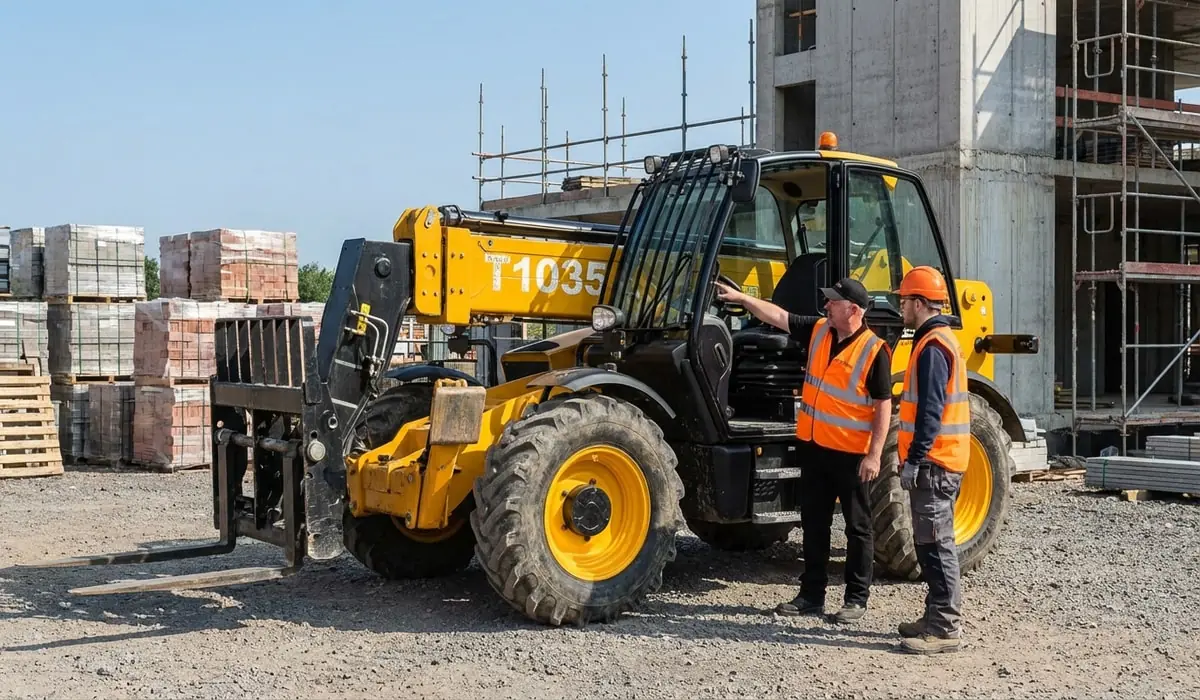 01
01
Heavy Commercial Construction
Structural steel placement, precast panel installation, and heavy framing where 6K capacity runs out of working margin. The 8K class provides the load capacity step that prevents the bottleneck, without requiring the footprint and transport weight of a 10K+ machine.
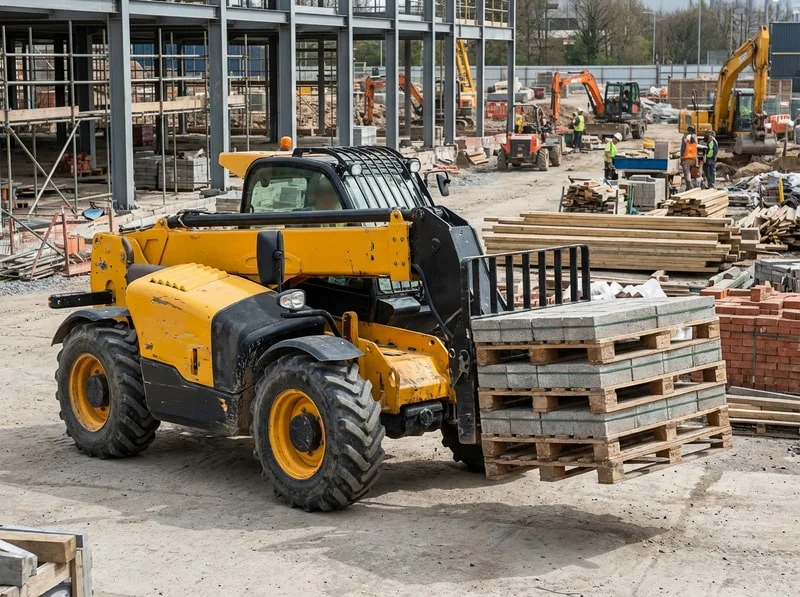 02
02
Industrial Material Handling
Warehouse and factory material movement at height, where loads regularly exceed 6,000 lb and a larger capacity band is needed for safe working margin. The 8K class covers most industrial pallet and racked-material scenarios that a 6K handles at or near its limit.
 03
03
Infrastructure Projects
Bridge work, utility installation, and heavy infrastructure lifting where both lift height and load demand exceed the 6K band. Projects that routinely stage heavy equipment or materials at height are the primary 8K infrastructure use case.
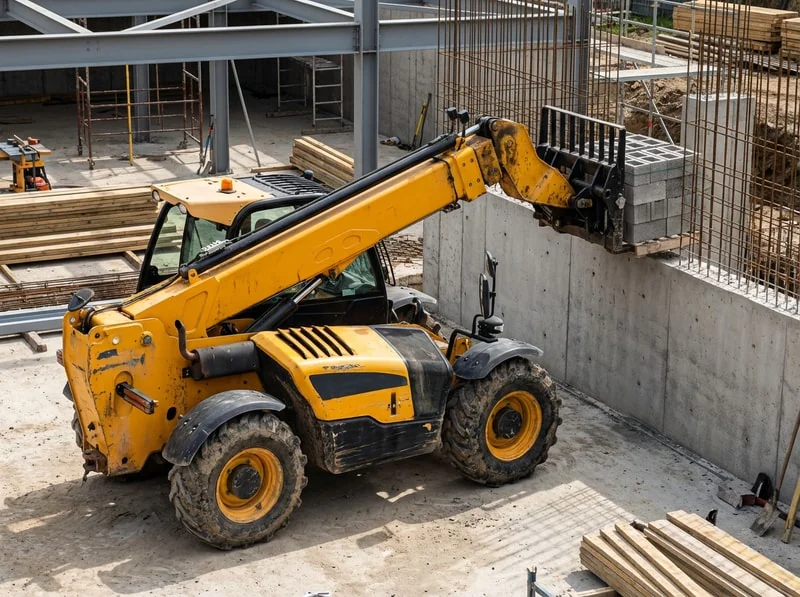 04
04
Multi-Story Construction
Material staging above 4 floors where 6K capacity is insufficient and working height requires 42ft or more of reach. The 8K class covers most 4–6 story staging requirements before the project steps into 10K territory.
These scenarios define the 8K fit envelope. If your project lands here, the next section confirms whether the capacity class is right for your specific working load and reach requirement.
Is an 8K Telehandler the Right Class for Your Project?
The headline 8,000 lb rating does not equal working load at maximum height or forward reach. Actual usable capacity changes materially with geometry, load center, and attachment setup. Before committing to this class, verify the load chart at your actual working position — height, reach, and attachment configuration combined.
Load Chart Reality
The headline 8,000 lb rating does not equal working load at maximum height or forward reach. A machine rated at 8K full-down at close range may deliver significantly less usable capacity at half height with a jib attachment. Verify the load chart at your actual working position first — height, reach, and attachment configuration combined.
8K may be the right fit if
Working loads exceed 6K capacity but remain within 8,000 lb at your actual operating height and reach. You need the capacity step beyond mid-duty but the project does not push into full industrial territory.
You may need 10K+ if
Loads regularly approach the 8K limit at actual working height or reach. Operating consistently near the chart edge means you lack the safety margin the next class up provides as standard.
Stop considering 8K if
Your working load regularly sits near the chart limit at your actual operating position — not at ground level with full crowd. The spec sheet will look fine, but real site performance will not match it.
42ft band or a higher-reach variant?
The 42ft band is the dominant 8K configuration and covers most heavy commercial and multi-story construction work. Choose a higher-reach variant when the project regularly requires more than 42ft — infrastructure work, taller structural builds, or staging above 6 floors.
Not sure which way to go?
Share your working load, lift height, and reach targets. We will map them against the 8K load chart and tell you honestly whether this class fits — or whether the right answer sits one tier above or below.
Closest Telescro Configurations for 8K-Class Requirements
Telescro does not manufacture an exact 8,000 lb SKU. The two closest configurations in the Telescro product line bracket the 8K class from below and above.
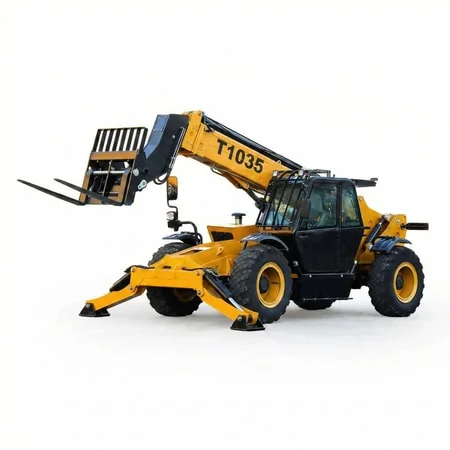
T1035
3.5 t · 10 mWhen Your Load Is in the Lower 8K Range
Sits just below the 8K band. The right path when your working load peaks at around 7,500 lb or lower at actual height and reach, and you do not need the extra margin that pushes you into the heavier class.
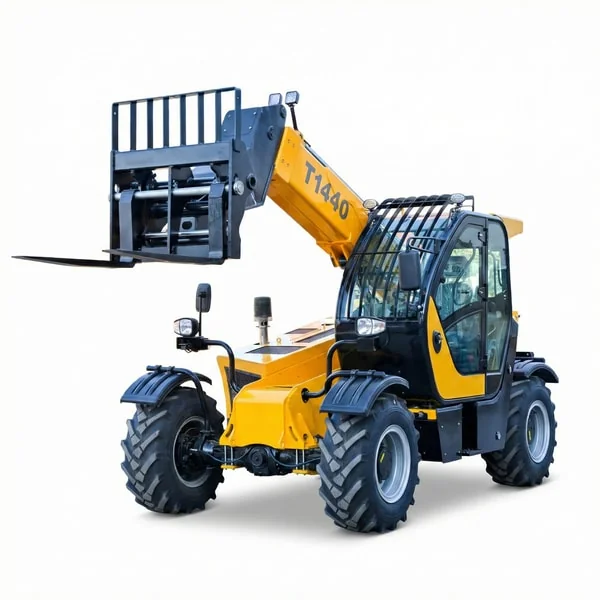
T1440
4.0 t · 14 mWhen Your Requirement Pushes Past 8K
Sits just above the 8K band. The right path when loads approach or exceed 8,000 lb at working height and reach, and you need reserve margin rather than operating at the chart limit.
Not sure which side you fall on?
Share your working load, required lift height, forward reach, application type, and destination market. We will map it against the T1035 and T1440 load charts and tell you which path — lower bracket or upper — actually fits.
6K vs 8K vs 10K vs 12K+: Which Class Fits Your Project?
The 8K class sits between mid-duty commercial and higher-capacity structural or industrial work. Use this table to confirm whether 8K is the right tier before committing to a configuration — or to identify when stepping up to 10K is the better procurement decision.
| Class | Best For | Typical Lift Height | Load Range |
|---|---|---|---|
| 6K | Mid-duty, framing, HVAC | 34–44 ft | 6,000–6,600 lb |
| 8K This Page | Heavy commercial, structural | 42–55 ft | 8,000 lb |
| 10K | Higher-capacity structural | 50–56 ft | 10,000 lb |
| 12K+ | Heavy industry, mining | 55 ft+ | 12,000+ lb |
If your working load sits near the top of the 8K range after reviewing the load chart at your actual operating position, compare the 10K+ class before committing. The right decision is based on safety margin, reach requirement, and productivity needs — not the headline class number.
Key Buying Considerations for an 8K Telehandler
Six factors determine the right 8K configuration for your project. Work through each before finalizing a purchase or rental decision.
1. Actual load weight vs rated capacity at working position
The 8,000 lb rating applies under best-case geometry.
Confirm your working load at theactual combination of height, forward reach, and load center your project requires — not at ground level with the boom crowded. The chart value at your working position is the number that matters.
2. Common 42ft band vs higher-reach variant
The 42ft configuration handles the majority of heavy commercial and multi-story construction work.
Move to a higher-reach variant only if your project regularly demands more than 42ft of lift with a meaningful load. Adding reach adds machine weight, footprint, and cost.
3. Site access and ground conditions
8K machines are significantly larger and heavier than 6K units.
Operating weight ranges from 24,000 to 32,000 lb depending on configuration. Confirm site entry width, floor loading capacity for indoor work, and ground conditions before finalizing the machine selection.
4. Attachment requirements and load-center penalty
Heavy attachments — jib arms, work platforms, heavy forks — reduce usable capacity more at 8K loads than at lighter class levels, because you are starting closer to the chart limit.
Identify your attachment configuration before confirmingthe capacity class.
5. Transport and logistics
8K machines require a suitable trailer and, depending on jurisdiction, an overweight or oversized load permit.
Confirm actual machine weight including attachmentfor transport planning, and check route and bridge load requirements for your delivery path.
6. Regional compliance, service, and destination-market requirements
Confirm the certification and emissions requirements for your destination market against the actual configuration being discussed — compliance coverage depends on the specific model and engine, not on the capacity class label.
Factor parts availability and local servicesupport into your total cost of ownership calculation. These considerations differ by region and should be verified during the configuration discussion.
Not Sure Which Configuration Fits?
The combination of these factors determines which specific configuration matches your project. Share your working load, lift height, reach, and application — we will map it against the closest 8K-class match.
Why Buyers Use Telescro for 8K-Class Requirement Checks
The 8K class label does not tell you whether T1035 or T1440 is the right starting point. Telescro starts from your working load, lift height, reach, and application — then maps those real parameters to a specific configuration before any quote is issued.
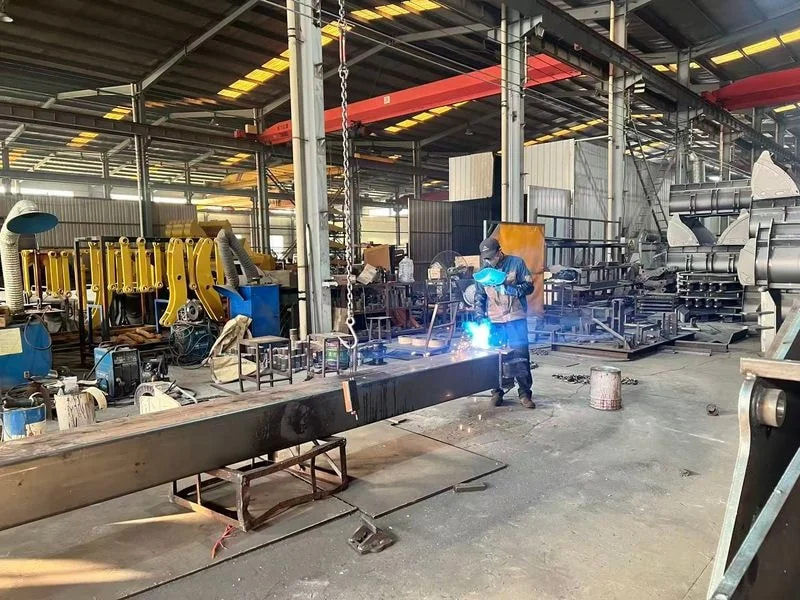
Reduce specification risk before RFQ
Real machine parameters, not a class name.
8K buyers face a real specification problem: the class label does not tell you whether T1035 or T1440 is the right starting point — and the wrong choice creates rework in the procurement cycle. Telescro starts from your working load, lift height, reach, and application, then identifies the closest canonical configuration before any quote is issued.
Keep adjacent-model decisions in one conversation
T1035 and T1440 stay in scope — both paths quoted together.
If your requirement sits between T1035 and T1440 — as many 8K-class requirements do — the fit discussion continues without restarting the whole buying process. Both models are in scope, both can be quoted, and the decision narrows based on your actual working conditions rather than a forced fit to a single SKU.
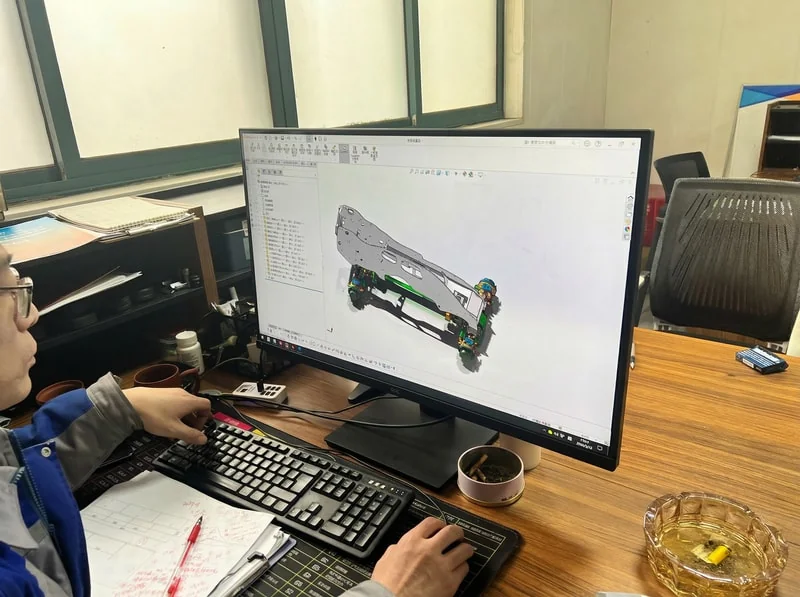
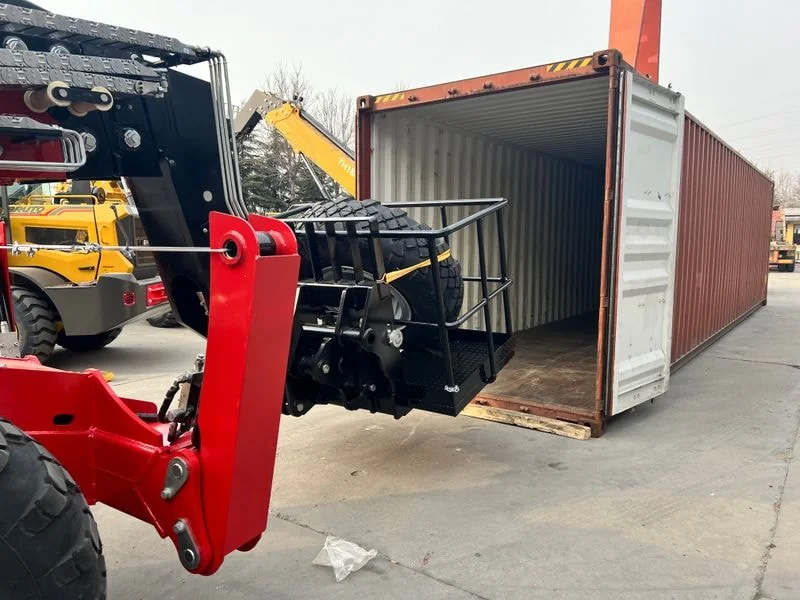
Tie the quote to the real machine, not the class label
Confirmed certifications. Known parameters. No placeholders.
Compliance documentation, destination-market requirements, and customization options follow the actual Telescro configuration — not the 8K class label. When you move into the quote stage, you are discussing a real machine with confirmed certifications and known parameters, not a placeholder spec that gets filled in later.
Share your working load, required lift height, forward reach, application type, and destination market. We will confirm whether your requirement is closer to the T1035, T1440, or a different Telescro configuration — and issue the closest available quote.
Request the Closest Telescro Quote
Tell us your working load, lift height, forward reach, application, and destination market. We will confirm whether T1035, T1440, or a different Telescro configuration is the right fit for your 8K-class requirement.

Hi, I'm Sally
Sales Manager · Telescro
"Send me your project basics and I'll come back with the closest Telescro match — T1035, T1440, or whichever fits your actual working conditions."
To assess your application
- Working load (lb or kg)
- Required lift height
- Required forward reach
- Application type & destination market
Send Your Requirements
Fields marked * are required.
8K Telehandler — Frequently Asked Questions
Common questions about 8K-class lift capacity, reach, applications, weight, class comparisons, and the closest Telescro configurations.
01 How much can an 8K telehandler lift?
An 8K telehandler is rated for 8,000 lb (3,629 kg) under best-case geometry, usually with the load close to the machine and the boom at a low angle. At full lift height or extended forward reach, usable capacity drops materially depending on the model, load center, attachment weight, and working position. Buyers should plan around the load chart at the actual lift point, not the headline 8,000 lb rating. The real question is not "What is the maximum rating?" but "What can the machine carry at my required height and reach?"
02 What is the typical lift height and reach of an 8K telehandler?
Most 8K telehandlers in the market fall into a 42–44 ft standard band, with higher-reach variants extending to roughly 54–56 ft depending on manufacturer and model. Forward reach typically falls around 28–30 ft for the common 42 ft configuration and can extend to roughly 38–42 ft on the higher-reach versions. The 42 ft band is the dominant configuration in rental fleets and general heavy commercial work. Higher-reach versions are selected when the project regularly needs more boom height, not just because more height sounds safer on paper.
03 What is an 8K telehandler best used for?
The 8K class is typically used for heavy commercial construction, industrial material handling, infrastructure staging, and multi-story jobsite work where a 6K machine runs out of margin but a 10K machine may be larger or heavier than the site requires. Common uses include structural materials, dense palletized loads, heavier equipment placement, and elevated staging where both load and reach matter. It is usually the right choice when the job consistently exceeds mid-duty handling but does not yet justify the size, cost, and transport burden of the 10K class.
04 How much does an 8K telehandler weigh?
Typical operating weight for the 8K class ranges from about 24,000 to 32,000 lb (10,886 to 14,515 kg), depending on the reach configuration, chassis design, and installed attachments. Standard 42 ft-band machines usually sit at the lower end of the range, while higher-reach variants push toward the upper end. Buyers should confirm the actual machine weight plus attachment weight before trailer selection, transport planning, or route permit review. At this class level, transport logistics are part of the buying decision, not an afterthought.
05 What is the difference between an 8K and 10K telehandler?
A 10K telehandler adds roughly 2,000 lb of rated capacity and usually moves into the 50–56 ft lift-height band, but the practical difference is larger than the number suggests. The step up also increases machine weight, footprint, transport requirement, and acquisition cost. If your 8K-class loads regularly approach the load-chart limit at the actual working position, or if your attachment package is heavy, the 10K class often becomes the more productive and safer long-term option. The decision should be based on working load at height and reach, not on the headline capacity gap alone.
06 Does Telescro make an 8K telehandler?
No. Telescro does not manufacture an exact 8,000 lb (3,629 kg) SKU. The two closest configurations in the current product line are the T1035 at 3,500 kg (7,716 lb) and 10.0 m lift height, and the T1440 at 4,000 kg (8,818 lb) and 13.5 m lift height. These bracket the 8K class from slightly below and slightly above. If your requirement falls in the 8K range, the right path is to confirm your actual working load, lift height, forward reach, and application so the project can be routed to the closer real machine configuration.
Still have a question about 8K-class fit or which Telescro configuration is closer to your project?