










2026 Telehandler Sourcing Guide
Developing Markets Edition

A practical China sourcing guide for telehandlers serving the Middle East, Africa, Southeast Asia, South Asia, and Latin America.
This guide is designed for:
- Equipment distributors and regional dealers
- Construction and project contractors
- Rental companies
- Industrial and agricultural end users
Fast response within 12-24 hours · Factory direct consultation available
The right telehandler is not the most advanced one—it's the machine that works reliably in high heat, dust, and limited service conditions.
This guide helps you balance performance, durability, maintenance, and total cost—without unnecessary complexity.
Who This Guide Is For
Equipment Distributors
Regional dealers sourcing telehandlers for local markets
Construction Contractors
Project contractors needing reliable lifting equipment
Rental Companies
Fleet operators building equipment rental inventory
Industrial & Agricultural
End users in farming, manufacturing, and logistics
Equipment Distributors
Regional dealers & distributors
Construction Contractors
Project contractors
Rental Companies
Fleet operators
Industrial & Agricultural
End users
What's In This Guide
Jump to the section that matters most to your sourcing requirements.
Typical Jobsite Conditions in Developing Markets
Telehandlers used across the Middle East, Africa, Southeast Asia, South Asia, and Latin America work day after day in heat, dust, uneven ground, and changing project environments—often with limited access to specialized service support.

Heat Is Not an Exception
- Machines run through peak heat hours daily
- Stable cooling performance is essential
- Hydraulic systems must stay responsive at high temps

Dusty & Harsh Environments
- Dust affects filters, seals, and hydraulics
- Easy-to-clean designs reduce downtime
- Less sensitivity to contamination is preferred
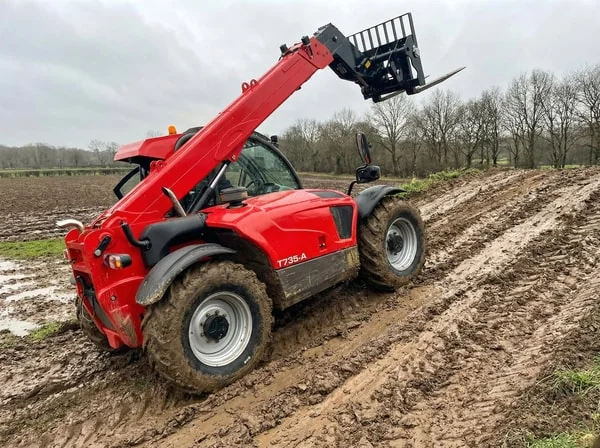
Uneven Ground Is Normal
- Unpaved surfaces, soft soil, and gravel
- Stability, axle design, and chassis strength matter
- Critical when working at height with boom extended

Mixed Operator Experience
- Operators change frequently across projects
- Forgiving machines with predictable handling
- Clear visibility and intuitive controls preferred

Maintenance Happens Locally
- Repairs by on-site teams or local workshops
- Straightforward layouts and accessible service points
- Standard tools and widely available parts
Why This Matters for Buyers
These conditions shape how buyers in developing markets evaluate a machine—and why reliability and practicality usually matter more than advanced features. The right telehandler isn't the most sophisticated one; it's the one that keeps working.
5
Key Challenges
1
Priority: Reliability
Define Your Real Lifting Requirements
Rated lift capacity is just the starting point. To choose the right telehandler, you need to define what you lift, how far you lift, and how often you do it.
Rated Capacity Is Only a Reference
Rated capacity is measured with boom retracted. Focus on how much the machine can lift at working height and reach.
Height and Reach Work Together
Forward reach matters as much as lifting height. Always consider height and reach together, not as separate numbers.
Your Typical Load Matters Most
Most jobs don't involve constant maximum loads. Match the telehandler to your daily work, not occasional peaks.
Ground Conditions Change Capacity
Uneven ground, soft soil, or slopes reduce usable lifting capacity. Allow extra margin for unpaved sites.
Choose for Daily Use
Machines chosen for daily tasks deliver better handling, lower wear, and more predictable performance.
Why This Step Makes Everything Easier
Once you're clear about lifting requirements, it becomes easier to compare load charts, evaluate configurations, and request accurate quotations.
Key Questions to Answer Before You Start
Find the Right Telehandler Model
Based on typical jobsite conditions and key specifications, the following models cover most construction, rental, and agricultural applications.
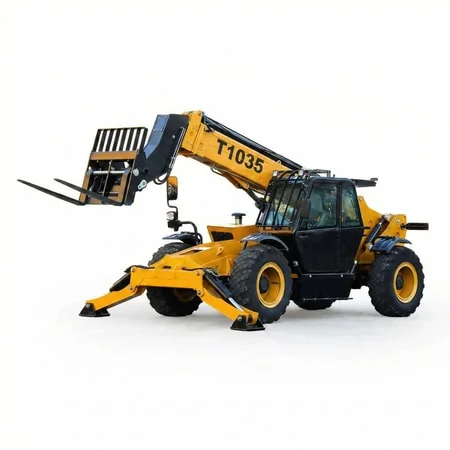
T1035
A compact and economical telehandler for lighter daily handling tasks and confined jobsites.
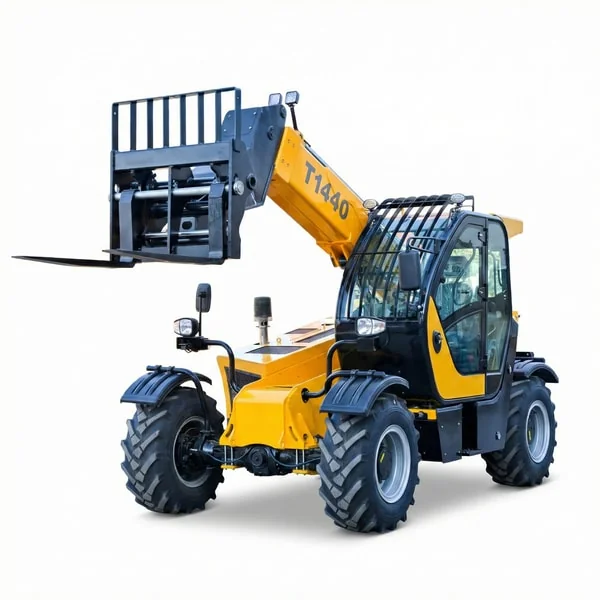
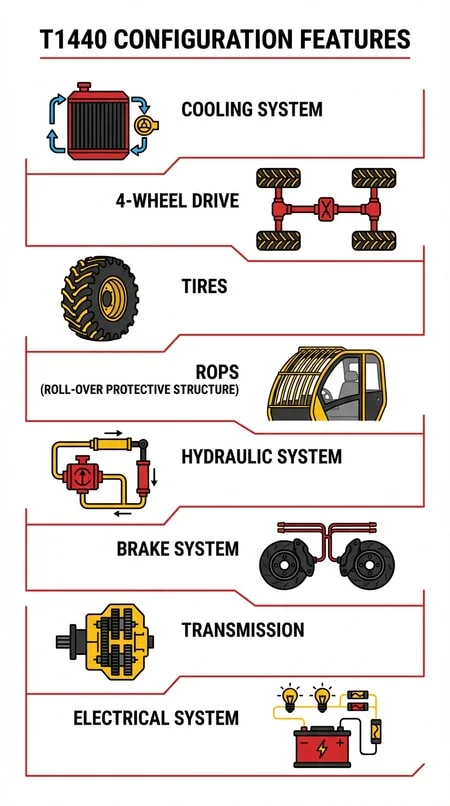
T1440
A balanced model designed for general construction and material handling applications where reach and capacity are equally important.
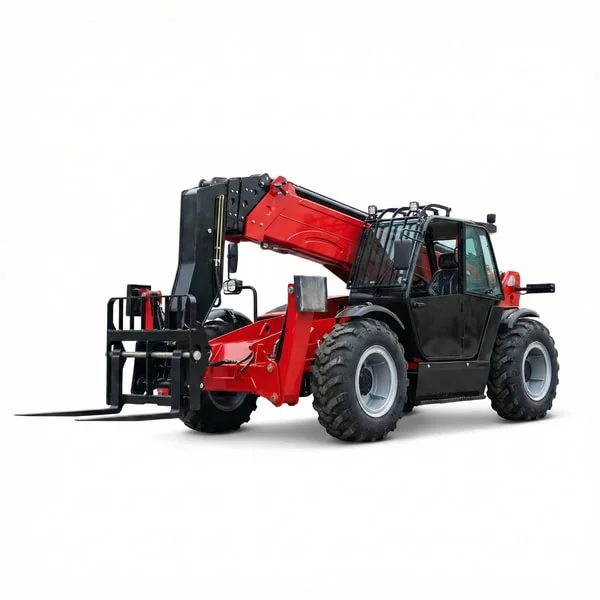
T1850
Built for higher lifting capacity and greater reach, suitable for demanding daily operations and larger jobsite requirements.

T3507
A versatile general-purpose telehandler commonly selected for construction sites and rental fleets.


Key Specifications That Actually Matter
Specification sheets can look overwhelming. Focus on these parameters that directly affect stability, usability, and long-term reliability.
Load Chart, Not Just Rated Capacity
What matters is how much the telehandler can lift at working height and reach. Always check the load chart.
Stability and Machine Weight
Wheelbase, counterweight design, and chassis rigidity all contribute to how secure the machine feels.
Hydraulic Performance
Flow rate affects lifting speed; system design influences durability. Balanced performance matters most.
Engine Power Matching
A properly matched engine delivers consistent performance without unnecessary fuel consumption.
Axles, Drivetrain, and Traction
If your sites involve loose soil, slopes, or mud, traction specs become critical to daily productivity.
Visibility and Operator Awareness
Good visibility reduces operating risk. Especially important when machines are shared by multiple operators.
Service Access and Maintenance Design
Accessible service points and simple layouts reduce downtime and impact ownership cost more than minor performance differences.
How to Use These Specifications When Comparing Machines
You do not need to analyze every detail. Focus on how these key specifications align with your typical jobs, site conditions, and maintenance capabilities. Machines that perform well across these areas usually deliver more predictable results over time.
Engine & Emission Options: Practical Choices
Emission requirements differ widely across developing markets. The key is not choosing the highest standard, but selecting an engine configuration that fits your local regulations, fuel quality, and service conditions.

Common Emission Options in Developing Markets
Depending on destination country and application, telehandlers are typically configured with engines meeting various emission standards. Chinese manufacturers offer multiple emission options to match your specific market needs.
Higher emission standards can be supplied when required, but are not assumed as default for all markets.
Why Many Buyers Prefer Simpler Emission Solutions
In regions where fuel quality varies and advanced diagnostic support is limited, simpler emission systems often provide advantages in reliability, ease of maintenance, and operating cost.
Fewer after-treatment components reduce sensitivity to fuel issues and make on-site servicing more practical for local technicians.


Choose for Your Market, Not for Appearances
Selecting an appropriate emission level is a commercial and operational decision. Many buyers focus on what is required and sustainable in their market today, while keeping flexibility for future regulatory changes.
The Right Engine Choice Supports:
- Stable operation under local conditions
- Predictable maintenance requirements
- Long-term value and total cost of ownership
Drivetrain, Axles & Tires for Rough Conditions
In many developing markets, telehandlers work on soft soil, uneven ground, slopes, and temporary access roads. Under these conditions, drivetrain choices often have a bigger impact on daily productivity than headline lifting numbers.
Focus on how well the telehandler can move, position, and stay stable on your typical sites.
4WD
Drive System
100%
Diff Lock
HD
Axles
Traction Matters More Than Speed
Four-wheel drive is not just about mobility—it affects control when carrying loads on loose or uneven surfaces. For buyers operating on dirt, gravel, or muddy ground, traction-related features directly influence safety and uptime.
Axle Strength and Load Matching
Axles are among the most heavily loaded components on a telehandler. Their capacity needs to match not only the rated lift, but also the machine weight, load position, and ground conditions. Well-matched axles contribute to stability and durability.
Differential Locks and Control on Poor Ground
On soft or slippery surfaces, open differentials can limit usable traction. Differential locks help maintain movement and control when one wheel loses grip. This feature becomes valuable on the most challenging days on site.
Tire Selection Is Not One-Size-Fits-All
Tires influence ground contact, stability, and wear. Aggressive tread patterns improve performance on loose soil, while harder compounds may last longer on mixed surfaces. Choose the right tire type for your typical environment.
What This Means for Your Purchase Decision
If your telehandler spends most of its time on rough or unprepared ground, drivetrain and axle specifications deserve close attention. Machines configured for these conditions tend to:
- Maintain better control under load
- Reduce the risk of getting stuck or losing traction
- Deliver more consistent performance across different sites
Standard vs Optional Configurations
The right configuration is not about selecting the most options—it is about choosing what supports reliability, safety, and ease of use in your market. A clear distinction helps you control cost without sacrificing performance.
Configurations Most Buyers Treat as Essential
Features commonly selected because they support stable operation across different sites and operators:
- Reinforced cooling system
High-temperature performance
- Load monitoring & safety
Safer lifting operations
- 4WD & suitable tires
Unprepared ground mobility
- Protected hydraulic lines
Dust & debris protection
- ROPS/FOPS cab protection
Operator safety standard
5
Core Features
✓
Recommended
Standard
Reliable Base
Optional
Add Value
Options Selected Based on Project or Budget
Features that add comfort or convenience, chosen based on specific needs rather than as default:
- Air conditioning upgrades
Hot climate comfort
- Rear-view camera systems
Enhanced visibility
- Advanced electronic controls
With trained operator support
- High-spec finishes & comfort
Operator experience focus
4+
Add-on Options
Flex
As Needed
How to Decide What Makes Sense for You
If your telehandler will be shared across projects or operated under tough conditions, prioritize durability and simplicity.
If the machine is dedicated to a specific site or managed by trained operators, selected upgrades may improve productivity and comfort. The most effective configurations match how the machine will actually be used—day after day.
Common Telehandler Attachments
A telehandler's versatility depends largely on the attachments it can support. Below are nine of the most commonly used attachments, covering the majority of construction, industrial, agricultural, and rental applications.

Pallet Forks
The most widely used attachment for handling palletized materials on construction and industrial sites.

General Purpose Bucket
Used for moving bulk materials such as sand, gravel, soil, or debris on construction and agricultural sites.

4-in-1 Bucket
Combines loading, grabbing, leveling, and dozing functions for maximum flexibility on site.

Lifting Hook
A simple solution for lifting suspended loads, commonly used for positioning materials or equipment.

Jib Attachment
Extends forward reach for lifting loads over obstacles or into hard-to-access areas.

Winch
Allows controlled lifting and positioning of loads where precise placement is required.

Work Platform
Used for personnel access at height for installation or maintenance tasks. Check local safety regulations.

Bale Clamp / Grab
Commonly used in agricultural applications for handling round or square bales without damage.

Fork Positioner / Side Shift
Improves efficiency when handling loads of varying widths by allowing fork adjustment without manual repositioning.
Need attachments configured for your specific applications?
Export Compliance Without Overcomplication
Export compliance is important—but it does not need to be complicated. When handled correctly from the beginning, it becomes a manageable checkpoint rather than a sourcing risk.
Clear Machine Identification
- Proper nameplates
- Serial number matching
- Document alignment
"Machine ID must match all shipping & commercial documents."
Complete Export Documentation
- Packing list & invoice
- Operation manual
- Conformity declarations
"All documents prepared before shipment."
Essential Safety Features
- Standard safety devices
- Stable operation support
- Local expectation aligned
"Safety features that match your market requirements."
Attachment Consideration
- Work platform requirements
- Additional compliance needs
- Confirm in advance
"Attachments may introduce extra requirements."
Clear Machine Identification
Proper nameplates and serial numbers that match shipping and commercial documents.
"Machine ID must match all documents."
Complete Export Documentation
Packing list, commercial invoice, operation manual, and conformity declarations.
"All documents prepared before shipment."
Essential Safety Features
Standard safety devices that support stable and controlled operation.
"Safety features aligned with local expectations."
Attachment Consideration
Work platforms may introduce additional compliance requirements—confirm in advance.
"Attachments may need extra requirements."
Need help confirming compliance requirements for your market?
How to Identify the Right Chinese Supplier
The decision is not about the machine—it is about who you source it from. Knowing what to look for helps you avoid unnecessary risk.
Market Experience Similar to Yours
Not all export experience is equally relevant. A supplier familiar with your target regions and operating conditions understands realistic configuration choices.
"Ask where the supplier's machines are actually working—not just where they have shipped to."
Consistent Models Over Wide Claims
Suppliers with stable, well-proven models deliver more value than those claiming to "customize anything."
- More predictable performance
- Fewer production changes
- Easier spare parts support
Transparency Builds Trust Early
Clear answers are often more valuable than fast answers. Suppliers who explain what is included, optional, and needs confirmation are more reliable.
"Be cautious of offers that seem complete but avoid specifics."
After-Sales Support Clarity
Support is not only about warranty terms. It includes spare parts availability, technical documentation, and response when questions arise.
- Spare parts availability
- Technical documentation
- Responsive communication
Price Is a Signal, Not a Decision
Price differences reflect more than production cost—configuration, documentation scope, testing, or support expectations.
"Consider whether the quotation aligns with your defined requirements and usage conditions."
What the Right Supplier Helps You Do
A suitable supplier does more than deliver a machine. They support your entire sourcing journey.
- Confirm configuration choices
- Avoid unnecessary features
- Clarify export documentation
- Plan delivery & operation
How to Structure an Effective RFQ
A well-structured RFQ helps you receive accurate pricing, consistent configurations, and realistic delivery timelines from the beginning.
Application & Working Conditions
Describe how and where the telehandler will be used to help suppliers recommend appropriate configurations.
Include in Your RFQ
- Primary application (construction, agriculture, industrial)
- Typical working environment (indoor, outdoor, mixed)
- Ground conditions (paved, rough terrain, slopes)
- Climate conditions (hot, cold, dusty, humid)
Why This Matters
Without application context, suppliers may quote based on different assumptions—leading to configuration mismatches or unnecessary costs.
"A telehandler for dusty construction sites needs different cooling and filtration than one for indoor warehouse use."
Factory Testing & Pre-Shipment Inspection
Before shipment, functional testing and basic inspection help ensure the machine is ready for delivery and initial operation.
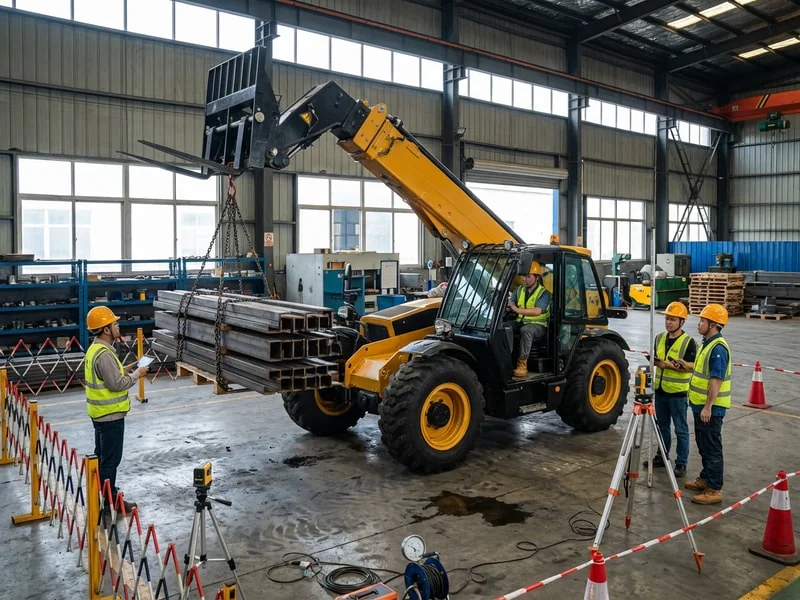
Functional Testing
Core functions such as lifting, extension, steering, and braking are tested to confirm normal operation under load.
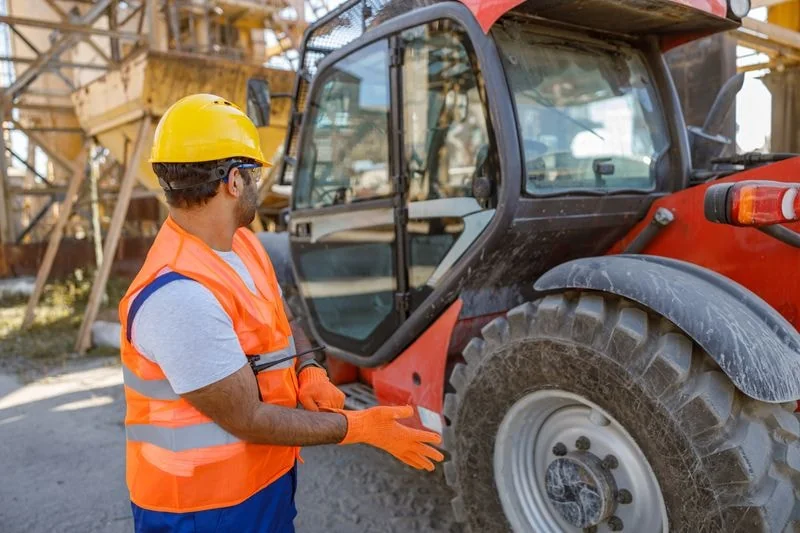
System Check & Assembly
Hydraulic systems, drivetrain components, and key assemblies are checked for proper installation and stable performance.

Configuration & Documentation
Configuration, attachments, and documentation are verified against the order before loading and shipment.
Delivery, Commissioning & On-Site Checks
Once your telehandler arrives on site, a few structured checks help ensure a smooth start and reduce the risk of early issues. This process does not require complex tools or specialist knowledge—only clear attention to the right points at the right time.

Delivery Check: Before Unloading
Before unloading, verify key items to catch any transport-related issues early:
- Check the machine for visible transport damage
- Confirm model, serial number, and attachments match the order
- Verify loose parts and accessories are included
- Review basic documentation supplied with the machine
Note: Most issues at this stage are related to transport or packing, not the machine itself.
Commissioning: First Start & Basic Functions
Before full operation, carry out a basic commissioning check to confirm readiness:
- Check fluid levels (engine oil, hydraulic oil, coolant)
- Start the engine and allow it to reach operating temperature
- Test lifting, boom extension, steering, and braking without load
- Confirm warning indicators and basic safety functions
Note: These checks help confirm that the machine is ready for normal use.


On-Site Checks: During Initial Operation
During the first days of operation, it is normal to monitor:
- Hose connections and fittings for minor leaks
- Unusual noise or vibration
- Fasteners and wheel bolts after initial working hours
- General machine response under typical loads
Note: Early attention helps prevent small adjustments from becoming larger issues later.
How This Reduces Risk After Delivery
Clear delivery and commissioning checks help you:
- Identify transport-related issues early
- Start operation with confidence
- Reduce unplanned downtime during initial use
For most buyers, this structured approach leads to faster handover and more predictable operation from day one.
Spare Parts & After-Sales Support Planning
Once your telehandler is in daily use, what matters most is how easily you can keep it running. By thinking about spare parts and support early, you reduce downtime, avoid delays, and protect your operating schedule.
Focus on the Parts You Will Replace First
You do not need to stock everything. Start with the items you are most likely to replace during normal operation.
- Engine & Hydraulic Filters
Regular replacement keeps systems clean and efficient
- Seals & O-Rings
Prevent leaks in hydraulic cylinders and connections
- Hoses & Belts
Subject to wear from heat, pressure, and movement
- Wear Parts & Bushings
High-friction components that require periodic attention
Key Benefit: Having these parts available locally allows you to handle routine maintenance without waiting for overseas shipments.
Know How Support Will Work Before You Need It
Before delivery, make sure you understand how after-sales support will be handled. Clear expectations here save time when issues arise later.
- Parts Identification & Ordering
How to find correct part numbers and place orders
- Technical Documentation
Manuals, diagrams, and maintenance schedules available to you
- Question & Issue Handling
Response channels and expected turnaround times
- Warranty & Coverage
What is included and how to make claims if needed
Remember: A good supplier makes support easy to access—not just available in theory.
Reduced Downtime
Local parts availability means faster repairs and less waiting
Predictable Costs
Plan maintenance budgets with clear pricing and availability
Direct Communication
Clear channels for technical questions and support requests
Complete Documentation
Access to manuals, diagrams, and maintenance guides
Market Priorities by Region
While many sourcing principles apply across developing markets, regional conditions still influence purchasing priorities. Climate, jobsite conditions, fuel quality, and typical applications all affect how telehandlers are selected.
| Region | Primary Priorities | Configuration Focus | Common Attachments |
|---|---|---|---|
| | High temperature performance, durability, stability | Reinforced cooling, robust hydraulics, simple emission systems | Pallet forks Buckets Lifting hooks |
| | Reliability, ease of maintenance, cost control | Simple mechanical systems, widely available parts | Pallet forks Buckets |
| | Versatility, rental suitability, compact size | Balanced performance, corrosion resistance, flexible attachments | Forks Buckets Work platforms |
| | Price sensitivity, fuel tolerance, mixed jobsite conditions | Basic configurations, fuel-adaptive engines | Forks Buckets |
| | Project-based use, terrain adaptability, consistency | Stable models, traction-focused drivetrain | Forks Buckets Jibs |
Useful Information for Buyers
Practical guides and references to help you make informed telehandler sourcing decisions.
Buying & Selection Resources
Essential guides covering telehandler specifications, comparisons, selection criteria, and key considerations before making your purchase decision.
- » How to Read a Telehandler Load Chart Coming Soon
- » Telehandler vs Forklift vs Wheel Loader Coming Soon
- » Common Mistakes When Buying Telehandlers from China Coming Soon
- » How to Choose Telehandler Attachments Coming Soon
- » Telehandler Safety Basics for Buyers Coming Soon
- » Typical Maintenance Costs of Telehandlers Coming Soon
Overseas Buyer Practical References
Practical information for international buyers covering shipping, logistics, import procedures, documentation requirements, and customs clearance guidance.
- » Typical Shipping Lead Times from Qingdao Port Coming Soon
- » Road vs Rail Transport for Central Asia Markets Coming Soon
- » What Affects Telehandler Delivery Time Coming Soon
- » Typical Import Costs Buyers Should Plan For Coming Soon
- » Understanding Incoterms for Telehandler Purchases Coming Soon
- » Common Customs Issues When Importing Telehandlers Coming Soon
- » What Documents Are Usually Required at Destination Coming Soon
- » How to Avoid Clearance Delays for Construction Equipment Coming Soon
Subscribe to our newsletter to get notified when new resources are published.
Ready to Source Your Telehandler?
Share your requirements and get personalized recommendations from our sourcing experts.
Why Contact Us?
- Direct factory pricing — no middleman
- Custom configuration for your market
- CE certified, ready for global export
- Response within 24 hours
Prefer to chat directly?
Chat on WhatsAppRequest Expert Consultation
Tell us about your project and we'll provide tailored recommendations.