










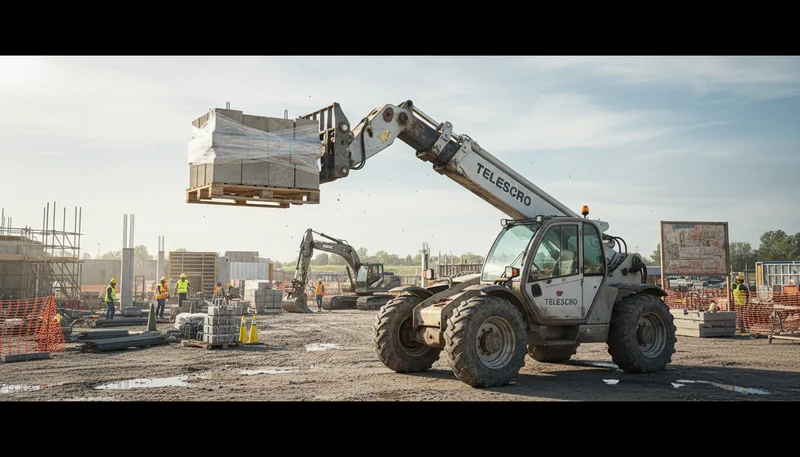
Why Telehandler Capacity Margins Shrink Over Time: Field Engineer’s Warning
Not long ago, I got a message from a contractor in Brazil puzzled by why his “4-ton plate” telehandler struggled to pick up 3.5 tons at full extension after 9,000 hours. He’d maintained it well, but the performance dip was unmistakable—and it’s far more common than people realize.
Telehandler capacity ratings are established under OEM test conditions—a level, firm surface; the specified tire size/type and inflation pressure; approved attachments; and a machine in as-new, properly adjusted condition. As operating hours accumulate, normal wear (internal hydraulic leakage, increased clearances in boom pads/pins, axle and chassis play, and reduced tire stiffness) can shrink the available performance and stability margin, even when problems are not obvious in day-to-day use. In high-hour machines, hydraulic wear may reduce the effective pressure available under load, so peak lifting performance—especially at long reach—should be verified by inspection, pressure checks, and controlled load testing, rather than assumed from the data plate alone.
Why Does Rated vs Real Capacity Diverge?
Telehandler rated capacity1 is based on factory-fresh conditions—optimal hydraulics, tight booms, new pins, and correct tire pressure. Over thousands of hours, component wear, hydraulic leakage, and tire sag quietly erode the built-in safety margin. The data plate stays static, but real safe working capacity declines until major refurbishment restores performance.

Most people don’t realize that a telehandler’s rated capacity is a snapshot of “as new” factory conditions—brand new boom, flawless hydraulics, and tires at perfect pressure. But real jobsites are tough. Over the years, every machine takes a beating—dust gets into the hydraulic circuit, tiny leaks appear, and pins or bushings start to slacken. I remember a job in Kazakhstan where a 4-ton telehandler on its fifth year was only comfortably lifting around 3.3 tons at mid-reach, not the plate value. The operator noticed it struggled on slopes and the boom drifted more than usual. That’s classic loss of real capacity from accumulated wear. Here’s what’s happening inside: when hydraulic cylinders lose pressure, the boom can’t hold the load as steady. Any slop in pivot points—booms, pins, axles—creates extra flex, which reduces the reserve safety margin built into the machine at the factory. Tire pressure and sidewall condition also hit stability hard, especially on rough ground.
Most customers are surprised when I explain that a high-hour telehandler often no longer delivers the same usable margin it had when new—even though the data plate has never changed. From what I see in the field, once machines approach 7,000–9,000 hours, their practical working margin is commonly lower than the original rating, unless major components have been rebuilt or recalibrated. The plate stays the same, but the real “buffer” gradually shrinks with wear, duty severity, and site conditions.
Based on inspections I’ve carried out across different regions and applications, the trend typically looks like this when no mid-life refurbishment has been done:
| Machine State | Practical Working Margin* | Hydraulic Condition | Boom / Pins Condition | Tires & Stability |
|---|---|---|---|---|
| Factory-fresh (0–500 h) | Near rated capacity | No internal leakage | Tight, within new-machine limits | New tires, correct pressure, full stiffness |
| ~5,000 h, normal duty | Slightly reduced margin | Minor internal seepage possible | Early measurable play developing | Some wear; pressure consistency varies |
| ~8,000 h, moderate duty | Noticeably reduced margin | Drift or pressure loss under load | Clear pin and bushing wear | Sidewall fatigue; reduced stability feel |
| 10,000 h+ or harsh duty | Significantly reduced margin | Frequent leakage or slow response | Excessive play and flex under load | High risk unless refurbished or derated |
*Practical working margin depends on maintenance quality, duty cycle, ground conditions, attachments, and calibration, and should always be confirmed by inspection and load testing rather than assumed from hours alone.
Telehandler real-world lifting capacity can be noticeably reduced due to internal hydraulic leaks and wear in pivot points, which degrade performance over time even if major components remain intact.True
Internal hydraulic leaks and worn bushings or pins introduce inefficiencies and instability, so a telehandler that is structurally sound may still underperform compared to its rated 'as new' capacity. This cumulative wear is often gradual and overlooked in day-to-day operation.
If a telehandler passes a visual inspection and has no dashboard warnings, its actual lifting capacity will always match the rated factory value.False
A clean visual inspection and a lack of error lights do not guarantee factory-level capacity. Many forms of performance loss, such as internal leakage or gradual loss of hydraulic efficiency, are not visible or electronically monitored but still affect lifting capacity.
Key takeaway: Telehandler capacity margins shrink with machine age due to accumulated wear in hydraulics, boom components, and tires. Always treat the rated capacity as a best-case figure for fresh units. Periodic validation is essential, and the practical safe capacity may fall 15–20% below the plate over an 8,000–10,000 hour lifecycle.
How Does Hydraulic Wear Reduce Capacity?
Hydraulic wear in telehandlers causes pumps, cylinders, and valves to develop internal leaks, reducing system pressure under heavy load. As internal components degrade and seals harden, a machine rated for 260 bar may only maintain 230–240 bar, resulting in up to 20% loss in effective lifting power at long reach.

Let me share something important about hydraulic wear that often gets overlooked. Many operators expect the same power year after year, but once you cross 4,000 to 8,000 hours—especially on hard job sites—the hydraulics start to lose their edge. The wear isn’t always visible. Pumps, cylinders, even those small spool valves gradually develop internal leaks as seals harden and metal surfaces get micro-scratched. You might see the boom still lifting full stroke, but under a heavy load, the system just can’t keep the pressure it held when new. For example, a unit originally rated for 260 bar can drop to 230–240 bar after heavy use. On a big project in Dubai last year, a 4-ton high-reach unit struggled lifting at full extension. Testing showed it lost nearly 15% of its real-world lifting power, all due to tired hydraulics.
From my experience, the issue becomes more pronounced in dusty or abrasive environments—such as sites in Kazakhstan or Western Australia—where contamination accelerates seal and valve wear inside the hydraulic system. Regular oil analysis2 is one of the most effective tools for detecting this kind of degradation early; sampling intervals should be set according to duty severity and OEM guidance, with higher-risk applications requiring closer monitoring.
I always tell customers to pay attention to early warning signs: slower or less consistent boom response under load, relief valve noise appearing at lower-than-expected loads, or a noticeable increase in hydraulic oil top-ups. In one case in Brazil, a customer avoided a major failure by planning a mid-life hydraulic refresh at around 6,000 hours—addressing the pump, key cylinders, and hoses—which restored much of the machine’s original lifting confidence. If safe lifting at long reach matters, staying ahead with disciplined oil monitoring, filtration, and timely intervention is far more effective than waiting for a failure to force action.
Internal leakage in worn hydraulic components means telehandlers can appear to lift normally while actually suffering from reduced real lifting capacity under maximum load.True
Hydraulic components that have developed internal leaks due to wear may still function for routine movements, but under heavy loads, pressure loss prevents the system from delivering full power to the boom, quietly decreasing the machine's practical lift margin even if stroke and movement seem unaffected.
Hydraulic wear only affects the speed of boom operation, not the telehandler's ability to lift rated loads.False
While hydraulic wear can slow down boom functions, it also causes pressure loss and reduced force transmission, which directly limits the telehandler's true lifting ability, not just the operational speed.
Key takeaway: Hydraulic wear is a leading cause of shrinking telehandler capacity margins, especially after 4,000–8,000 hours. Monitoring oil analysis, timely filter changes, and mid-life hydraulic refresh are essential to maintain safe lifting performance and minimize unplanned downtime in high-hour, harsh-duty environments.
Why Does Telehandler Capacity Margin Reduce?
Telehandler capacity margins shrink over time as boom sections, pins, bushes, and chassis joints wear and clearances increase. Increased boom deflection3 at full extension—observable on high-hour machines even without visible cracking—effectively increases load radius and alters boom geometry, reducing available stability margin at long reach. The extent of this reduction varies by model, duty cycle, and maintenance condition and should be confirmed through inspection and load testing rather than assumed from nominal ratings.
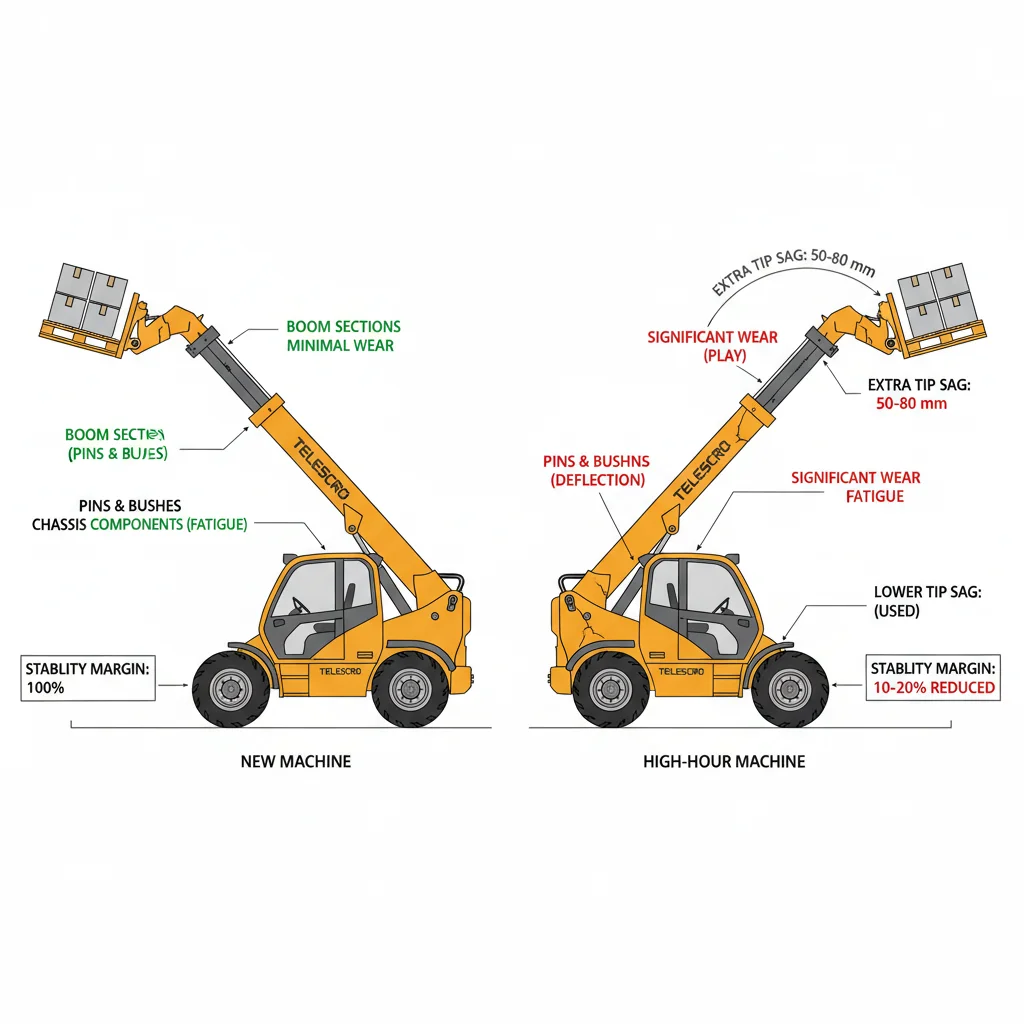
Here’s what matters most when you start seeing higher hours on a telehandler: structural play isn’t just about visible cracks; it’s hidden inside the joints, bushes, and boom sections. Over time, the steel stretches and flexes with every lift. I’ve inspected machines in Dubai that had over 8,000 hours—by then, you could measure an extra 70 mm of boom tip drop at full extension, even with no obvious damage. Every bit of play in pins or boom pads adds up. At 16 meters, that’s the difference between a safe load and flirting with the limit line on your stability chart.
Last year, a customer in Kazakhstan called about unexpected machine rocking. Turned out the main chassis joints had worn enough to let the whole machine “twist” several centimeters under a load. It wasn’t unsafe yet, but their true working margin had shrunk—capacity was already down 15% versus when the machine was new. They never overloaded, but their trusted load chart no longer matched reality. I always recommend a full load and stability test4 at least yearly, especially on units past 5,000 hours. If you see the boom bouncing or hear a “bang” stopping at full reach, act fast—that’s not normal.
The reality is, telehandler capacity isn’t a fixed number for the life of the machine. As core components wear, your working safety buffer narrows. Plan for extra inspections and, if deflection grows, think about structural repair or derating the machine internally. Your site depends on real margins, not just paperwork ratings.
Telehandler capacity margins decrease over time as wear increases clearances in boom sections, pins, bushes, and chassis joints, leading to greater movement and deflection under load even when no visible cracks are present.True
Repeated lifting cycles and long-term loading cause wear in pins, bushes, boom pads, and articulated joints. This accumulated clearance increases structural movement and effective load radius at long reach, reducing real stability and lifting margins despite the absence of visible structural damage.
Wear in telehandler joints and bushes only affects machine smoothness and does not have any impact on lifting capacity margins.False
This is false because play and wear in joints, bushes, and pins increase movement under load, reducing structural effectiveness and directly shrinking safe load margins, especially at maximum reach.
Key takeaway: Telehandler rated capacity drops in real-world use as wear accumulates in boom and chassis joints. Regular load and stability testing is essential. If boom deflection increases or the chassis shows excess movement, plan structural repairs or derate the machine in internal operating rules.
Why Do Telehandler Tires Affect Capacity?
Telehandler rated capacity requires correct tire size, type, and pressure as specified by the OEM, plus firm, level ground. Degraded, worn, or under-inflated tires (common in high-hour units) reduce stability, increasing the risk of tipping and forcing operators to derate capacity by 15–25% for safety.
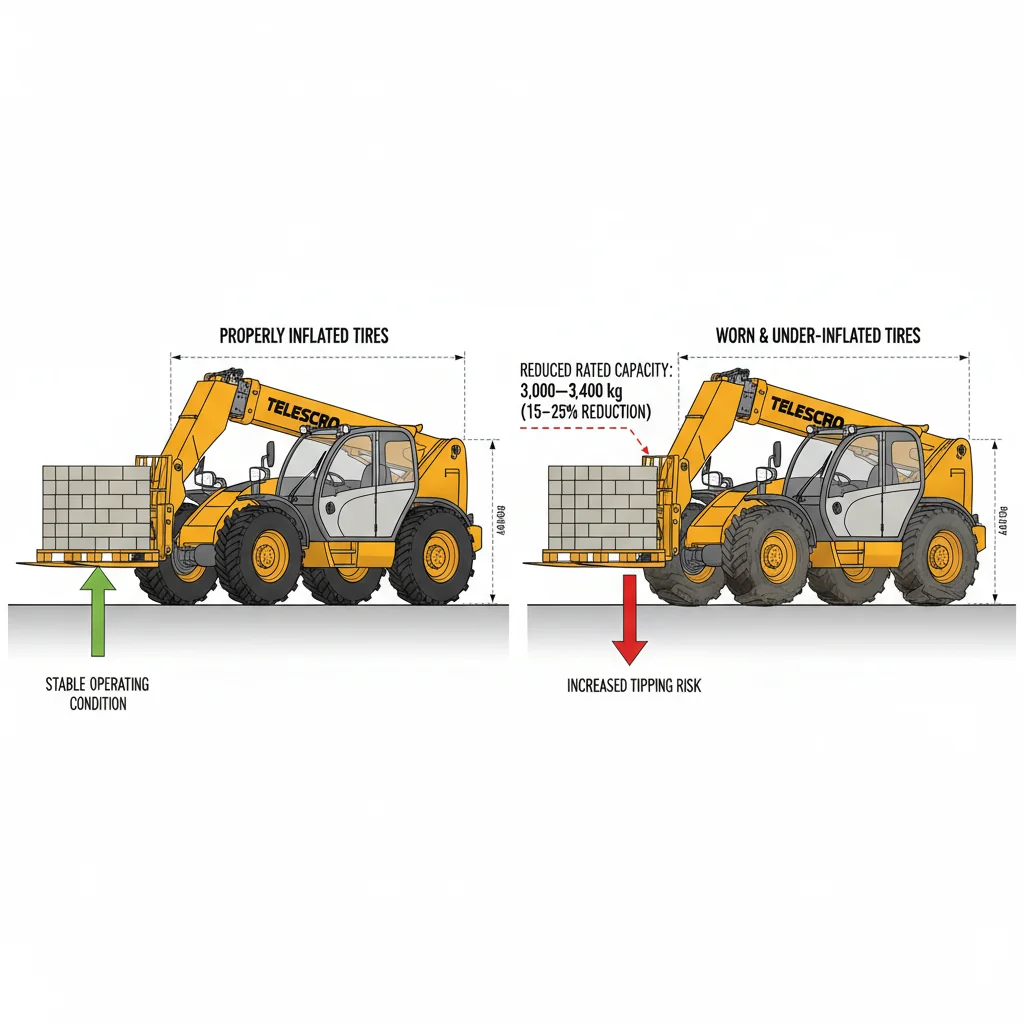
The biggest mistake I see is operators trusting the load chart without looking at their tires. Last month, a team in Kazakhstan called me after their 4,000 kg telehandler struggled to handle 2,800 kg at 14 meters of reach. When I asked about tire condition, they found two tires nearly 30% under-inflated, and one with deep sidewall cracks. The machine felt “soft” at the boom tip—and that’s not just driver nerves. Under-inflated tires let the chassis lean, which shifts the center of gravity and means the real load radius is longer than what the load chart assumes. So even with the boom indicator showing safe, it’s actually a stability risk.
Every OEM load chart is tested with new, correctly sized tires, set to the right pressure (often 8–10 bar for large units), on perfectly level ground. If your jobsite is uneven—say, loose fill in Dubai or compacted clay in Brazil—capacity drops fast. Tires that have lost stiffness or are the wrong type increase sidewall flex, letting the machine “sink” a bit under real load. I’ve seen operators derate capacity by at least 15% on high-hour units, just to avoid close calls. On sloped ground, or if ground isn’t firm, real stability can fall by 30% or more—especially on older machines where boom pads and suspension are already worn.
I always suggest checking tire pressure every shift and replacing worn tires before the busy season. If you’re running foam-filled or non-standard tires, get a new stability check. Never assume showroom specs apply on your jobsite—the ground and your tires tell the real story.
Telehandler tires that are under-inflated or damaged can cause the chassis to settle unevenly, which reduces actual lifting capacity by shifting the center of gravity outside of safe limits.True
The capacity listed on load charts assumes properly inflated and undamaged tires. When tires aren't in optimal condition, the machine can lean or flex more, causing the load to become unbalanced and decreasing the stability margin required to safely lift near maximum reach.
As long as a telehandler's tires are not completely flat, their condition has no significant effect on the safe lifting capacity listed in the operator's manual.False
Load charts are based on ideal operating conditions, including proper tire inflation and integrity. Even moderately under-inflated or worn tires can substantially change how weight is distributed and how the center of gravity shifts, impacting both stability and the real-world capacity limits.
Key takeaway: Proper tire maintenance and regular checks for correct pressure are critical for telehandler stability. Worn or under-inflated tires and poor ground conditions significantly reduce effective capacity and increase tipping risks—especially on older machines. Never assume the load chart reflects real-world limits without verifying tire and ground condition.
How Does Duty Cycle Affect Telehandler Capacity?
Telehandler rated capacity diminishes over time due to application severity and duty cycle. Machines in high-cycle, harsh environments—such as recycling plants or brick yards—experience accelerated wear to critical components, leading to faster capacity loss. Identical hour counts can conceal vast differences in real performance, underscoring the importance of reviewing operational history, not just service hours.

I’ve worked with customers in the Middle East who run telehandlers in brick yards—and their experience with “identical” machines proves how misleading hour meters can be. Two units, both showing around 6,000 hours, came in for inspection. But one had spent those hours doing occasional pallet moves on flat ground. The other lifted heavy bricks to maximum reach, 500 to 800 times a day, over rough, debris-filled surfaces. On paper, both should have comparable lifting power. In reality, the high-cycle unit already showed clear wear on its boom pads, pins, main bearing, and even hydraulic hoses—enough that its rated capacity at long reach was functionally reduced, even before the load chart limits.
This kind of accelerated aging isn’t just theory—it’s something I see year after year, especially in recycling plants and concrete factories. Frequent lifting near the top end of the telehandler’s load chart puts huge stress on the structure. Critical parts like chains, axles, and the boom all take more punishment than in lighter farm tasks or warehouse work. Machines used on poor ground or slopes age even faster, and tires show sidewall cracks and deep tread damage long before the odometer would suggest.
From my experience, it’s smart to ask not just "How many hours?" but "What kind of work did those hours include?" For harsh-duty fleets, I recommend planning partial rebuilds or derating as early as 5,000 hours, instead of waiting for catastrophic wear. And when reassigning older machines, put them on lighter lifts or shorter reaches—don’t risk them on the most demanding picks.
Telehandlers subjected to frequent, high-load duty cycles on rough, uneven surfaces are likely to experience more rapid wear in their hydraulic systems, leading to a noticeable reduction in lifting capacity well before major mechanical failures occur.True
Repeated high-stress operations cause internal components, such as pumps and cylinders, to lose efficiency from wear and fluid contamination. This degrades system performance and capacity, even though the machine may still function and the hour meter does not reflect this hidden loss.
If two telehandlers show the same hours on their meter, they will offer the same safe lifting capacity as specified by the manufacturer, regardless of how they were used.False
Hour meters only measure elapsed running time and do not account for the intensity or type of work performed. High-cycling heavy loads can cause fatigue and wear that reduces actual safe capacity, resulting in differences between machines with identical hours but different usage histories.
Key takeaway: Telehandler service hours alone are misleading when assessing remaining lifting capacity. Factoring in duty cycle, load size, reach demands, and site conditions provides a more accurate picture. High-duty applications accelerate aging, so redeployment and refurbishment schedules should be planned according to actual site usage and operational stress, not just the hour meter.
How Do Engine Habits Affect Telehandler Capacity?
Engine habits, including prolonged idling5, poor fuel quality, and irregular filter or coolant changes, steadily reduce a telehandler’s hydraulic efficiency and available shaft power. Field data and expert reports confirm capacity declines of up to 10–15% by 10,000 hours unless strict OEM-grade maintenance intervals are enforced.
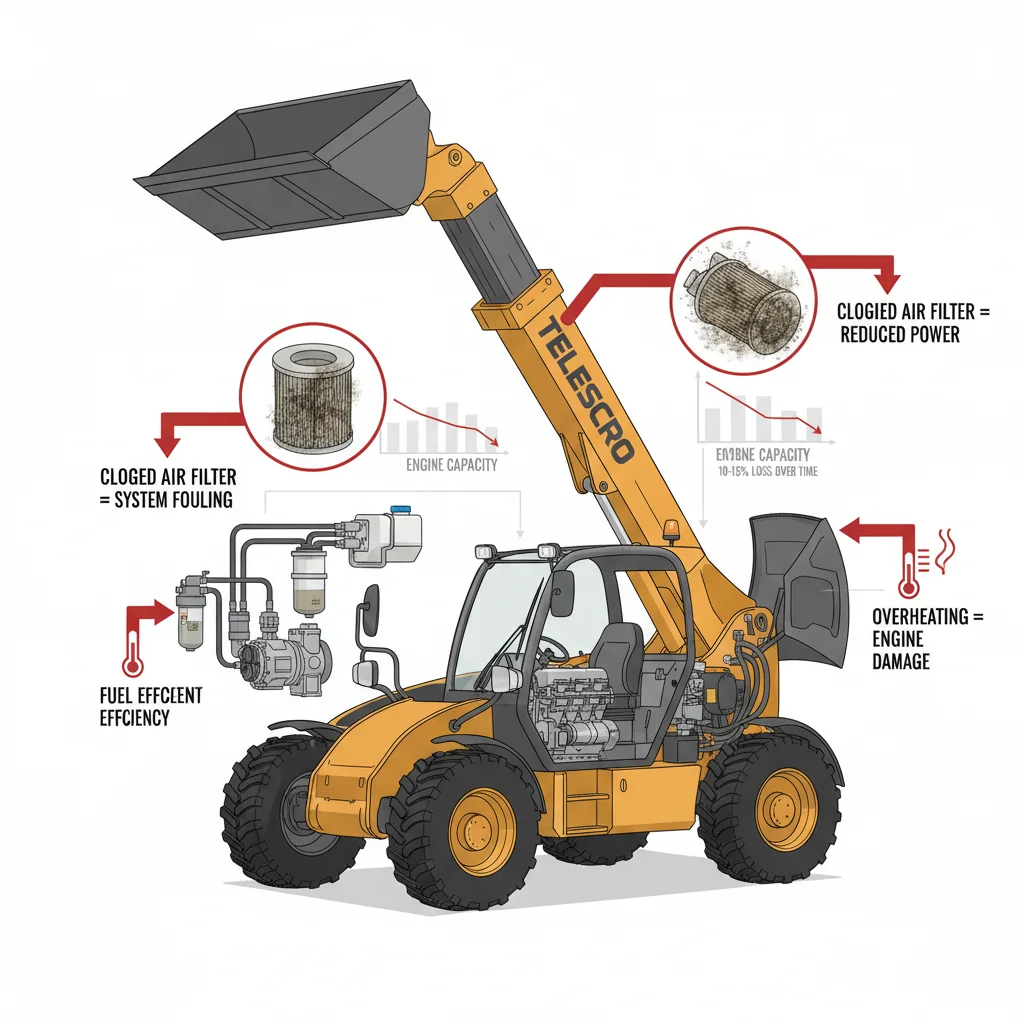
Last month, a site supervisor in Dubai called me about a frustrating issue—their 4-ton telehandler had noticeably slower hydraulics after just seven years of moderate use. This wasn’t a one-off case. They kept fuel costs low by using off-brand diesel, and their crew often left the engine running during every loading break. Over time, I’ve seen these “engine habits” come back to bite. Prolonged idling, poor fuel quality, and skipping coolant or filter changes create two big problems: less shaft power and lower hydraulic efficiency6. The end result? Even with a healthy boom, the machine struggled to lift at full reach under summer heat.
From my experience across different countries—China, Kazakhstan, and South Africa especially—telehandlers with irregular engine maintenance almost always fall short of their rated capacity by 10,000 hours. I checked the load chart for that Dubai site: with 75% boom extension, their unit should handle around 2,400 kg. But in real operation that day, the hydraulic pressure dropped, and they couldn’t safely pick up more than 2,000 kg. The supervisor even told me his operators were “guessing” safe loads by feel—never a good sign.
Disciplined engine care really matters here. I suggest logging run hours, enforcing a strict five-minute idle limit, and always using OEM-grade filters and coolant. It’s worth scheduling joint engine and hydraulic service at midlife—12,000 hours or so. When you respect the engine, you protect hydraulic performance and avoid unwanted surprise derating on the job.
Prolonged engine idling in telehandlers can contribute to reduced available engine output over time, which may affect hydraulic performance under load.True
Extended idling keeps the engine operating at low temperature and low load, which can promote soot accumulation in exhaust aftertreatment systems and incomplete combustion. Over time, this may limit available engine power and responsiveness, indirectly affecting the performance of engine-driven hydraulic systems, especially during heavy lifting or high-demand operations.
Using off-brand diesel fuel consistently will cause the telehandler’s lifting capacity rating to increase due to extra fuel additives.False
Off-brand or low-quality diesel typically contains impurities or insufficient additives, which can degrade engine components and reduce performance—not enhance lifting capacity.
Key takeaway: Disciplined engine maintenance—including timely coolant and filter changes, proper fuel quality, and controlled idle times—significantly preserves telehandler hydraulic efficiency and rated capacity over time. Neglected routine care leads to premature capacity loss, slower cycle times, and load derating in the field.
Why Do Telehandler Capacity Margins Shrink?
Telehandler capacity margins shrink over time because OEM-rated load charts and Load Moment Indicator (LMI) systems7 assume original machine condition and configuration. Wear, non-OEM attachments, tire changes, hydraulic drift8, and uncalibrated sensors make rated capacities unreliable, especially on high-hour units. Frequent LMI overrides signal a need for recalibration and physical load testing.
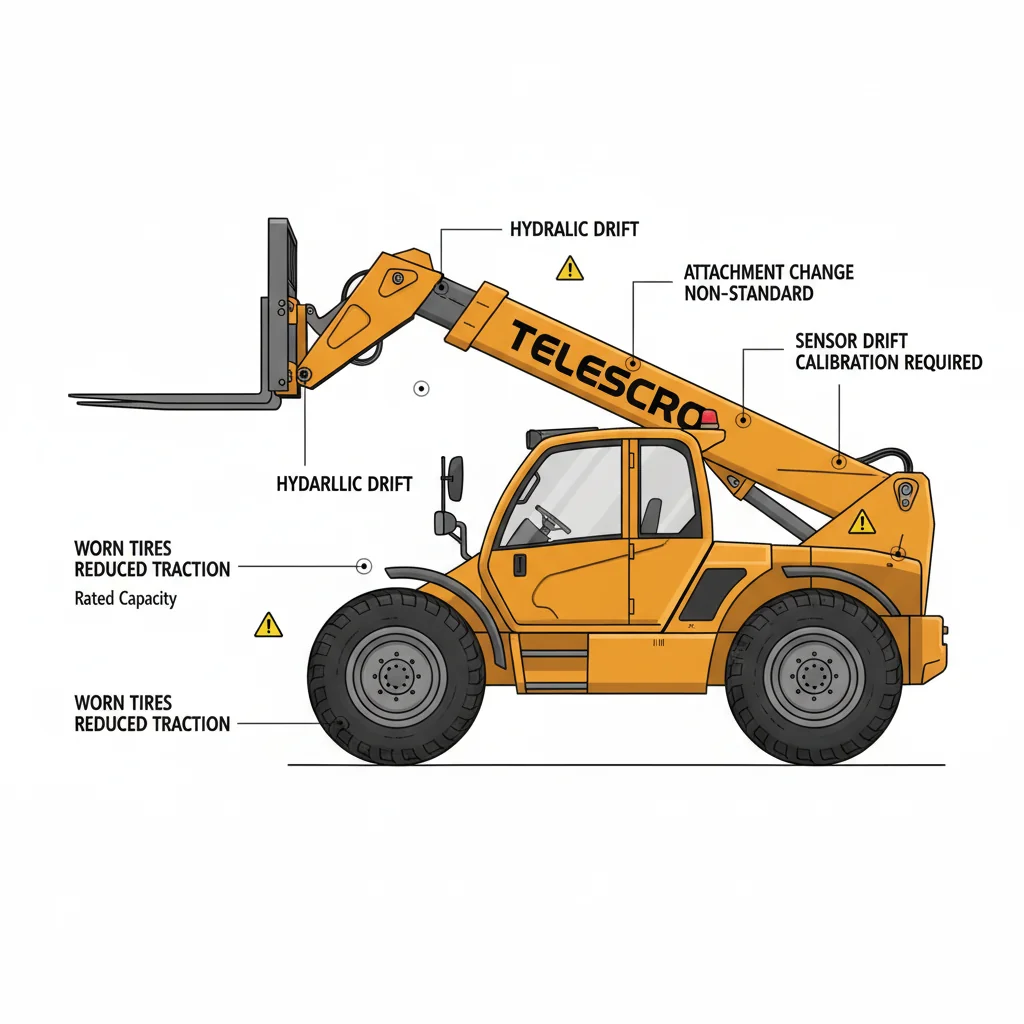
Too many teams assume that the load chart and the on-screen LMI always reflect what the machine can safely handle. In my experience, that’s only true when the telehandler is operating exactly as it was tested: level ground, original or approved components, correct tires, and a properly calibrated system. After a few years in service—and especially after working across different sites and conditions—I often start to see clear gaps between what the chart shows and what the machine can actually support.
I saw this firsthand with a customer in Kazakhstan. Their high-hour unit was still showing “in the green” on the display, but a load set down earlier than expected raised concerns. When we inspected the machine, the causes were obvious: additional boom sag compared with new condition, sensors that hadn’t been recalibrated after previous work, and replacement tires that compressed more under load than the original specification. At maximum reach, the machine no longer matched the rated chart—it simply didn’t have the same margin it once did.
From what I see in the field, every component plays a role in reliable capacity. Non-OEM forks, heavier or different attachments, and alternative tire brands may seem like small changes, but each one alters the assumptions behind the stability calculations. Over time, sensor accuracy can also degrade or fall out of calibration, particularly after major hydraulic repairs or prolonged work on rough ground. Add hydraulic drift or wear in the telescopic boom, and the display may still indicate a safe condition even though the physical stability margin has narrowed.
If operators are regularly overriding LMI warnings just to complete a lift, I treat that as a serious warning sign. In those cases, I recommend physical load checks and LMI verification on a planned interval, and immediately after major repairs or incidents. I also advise treating the chart with caution unless tires, attachments, and calibration are known to be current. Where uncertainty exists, reducing the working load is far less costly than dealing with a damaged boom, a dropped load, or an injury on site.
Telehandler capacity margins shrink over time because wear in boom pivot points and hydraulic components causes increased flex and inaccuracy in load handling.True
This is true because mechanical wear and component aging introduce more movement and less precise control, making the effective lifting capacity less predictable compared to factory-new conditions.
As long as the telehandler’s LMI display shows ‘in the green,’ operators can be confident they are within safe lifting limits regardless of the machine’s age or calibration.False
This is false because LMI systems rely on sensors and calibration that can drift or degrade over time; older machines with worn parts or poorly calibrated sensors may display safe readings even when actual capacity is reduced.
Key takeaway: Telehandler rated capacities rely on machine condition and precise calibration. As machines age and components wear, the official load chart and LMI display can become inaccurate. Regular load testing and strict calibration, especially after hydraulic or structural repairs, are essential for maintaining safe working margins.
How Should Fleets Derate Older Telehandlers?
Fleet managers should establish internal telehandler derating protocols9, since OEM plate ratings assume ‘as-new’ condition. Field practice includes load testing older units at chart limits, checking for hydraulic, chassis, or boom issues, and using inspection data to justify progressive derates—typically 10–20% as hours increase. Recording results in a ‘capacity log10‘ supports safety and compliance.

To be honest, the spec that actually matters is not stamped on the machine—it’s what each older telehandler can safely handle today, not when it left the factory. Most OEM plate ratings assume a unit is nearly new, with perfect hydraulics and no wear in the boom or chassis. But after five or six years on site, things change. I’ve seen machines in Southeast Asia—7,000 hours on the clock—lose 10-15% lifting power just from hydraulic system wear and minor frame movements that aren’t obvious from the cab.
Here’s what matters most when you’re running a mixed-age fleet: set a clear internal derating policy, tied to the machine’s hours and real test results. For example, one contractor in Brazil keeps a rolling “capacity log” for every telehandler, updated twice a year. They bring in known test weights—say 2,800 kg for a 3.5-ton class unit—and place it at maximum reach. If the machine sags, can’t hold the boom steady, or the pump pressure falls below OEM specs, that triggers a 10-20% derate until repairs are done. They don’t just estimate—they record actual boom deflection, tire condition, and even test pressures in their log.
From my experience, this kind of documentation is just as important as the inspection itself. Inspectors, insurance, and even customers want proof that a derate is based on evidence—not guesswork. I always suggest retraining operators on the updated load charts whenever you derate a unit. That keeps everyone safer, especially on complex jobs like steel erection or prefabricated panel lifts.
After several years of heavy use, a telehandler's boom and hydraulic system may develop internal wear that reduces its effective lifting margin, even if the machine passes basic visual inspections.True
Internal component degradation, such as seal wear and micro-leaks in hydraulic circuits, can gradually diminish a telehandler's real-world capacity while outward structural integrity appears unchanged. This is one reason why OEM load ratings no longer reflect actual safe handling limits over time.
Telehandlers maintain their original rated lifting capacity as long as routine maintenance is performed, regardless of age or working hours.False
Even with diligent maintenance, repeated stress, metal fatigue, and hydraulic wear can decrease a telehandler's real lifting ability over time. Factors like chassis flex, boom pin wear, and minor frame distortions cumulatively erode safety margins and should always be considered when derating older machines.
Key takeaway: Telehandler capacity declines with age and use, so relying solely on OEM ratings is unsafe for older fleets. Implement systematic load testing and a structured derating policy linked to inspection outcomes and hours, and keep detailed records to support safe operation and regulatory compliance.
Why Does Telehandler Capacity Decline?
Telehandler rated capacity shrinks as hydraulic wear, pin clearances11, tire wear, and boom fatigue accumulate. A 4 t/17 m model may only provide 3.2 t capacity after 8,000 hours. Operators face increased costs from extra lift steps or renting larger machines, often before official end-of-life.
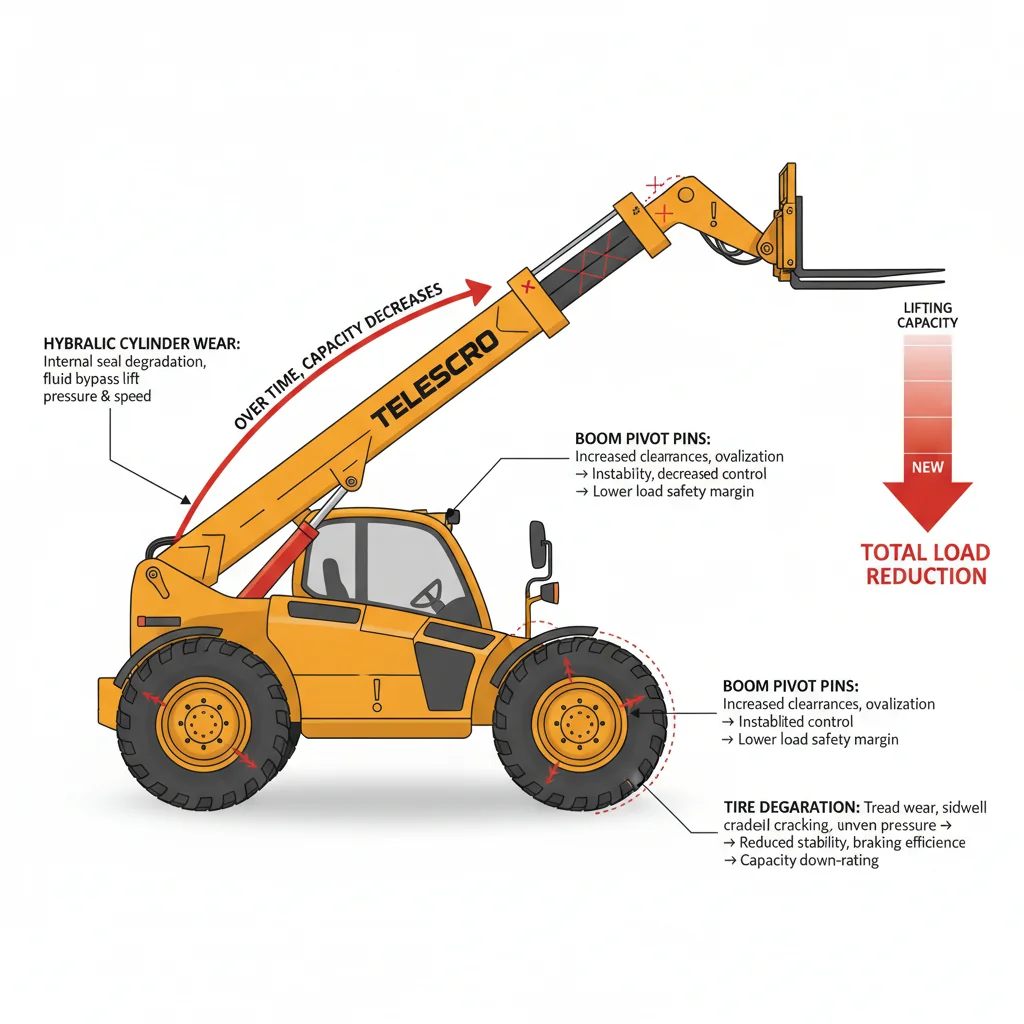
I’ve worked with customers who ran into trouble after their telehandler capacity quietly slipped over time. On a project in Malaysia, one team had a 4-ton, 17-meter machine they’d counted on for 3-ton blocks. After about 8,000 hours, that same unit struggled with anything above 3.2 tons—even though the paint and tires were still presentable. The culprit? Gradual hydraulic pump wear, increased pin-to-bushing gaps, and some subtle tire flattening—all things that creep up long before a technical “end of life.” The load chart assumes new-machine condition, on level ground, with everything set per factory spec. But jobsites are rough, and real life never hits those numbers perfectly year after year.
I always remind buyers that rated capacity isn’t a fixed number for the whole service life. Every time you see a small oil leak on a cylinder or spot extra play in the boom, capacity is already dipping. In Kenya, one client ended up renting a larger backup telehandler just to hit lifting targets mid-project. They hadn’t planned for the 20% margin shrink. That “hidden” cost—extra rental, more lift steps, or needing a crane for what the original machine used to handle—doesn’t show up in your maintenance log.
Planning ahead makes all the difference. If your fleet runs hard (over 1,500 hours a year), I suggest budgeting for a mid-life overhaul at around 5,000-7,000 hours: rebuild main cylinders, swap bushings, refresh key hoses, sometimes even tires and engine rings. That can restore 90%+ of the rated capacity for about 10–20% of the price of new. Or, when buying new, size up to ensure you still have a safe working margin after years of daily use.
Hydraulic pump wear over years of operation can gradually lower a telehandler’s actual lifting capacity, even while rated specs remain unchanged.True
Hydraulic pump wear reduces hydraulic system efficiency, resulting in lower available force for lifting as internal leakage or pressure loss increases. This degradation isn’t directly reflected on the load chart, leading to a real but hidden capacity drop.
A telehandler’s rated lifting capacity automatically increases over time as its engine parts become more broken in and efficient.False
While engine break-in can marginally improve power output early in its life, telehandler lifting capacity is determined mainly by hydraulic, structural, and stability limitations, not engine efficiency. Over time, wear typically decreases, not increases, real capacity margins.
Key takeaway: Telehandler capacity commonly declines by up to 20% well before machines appear worn out on paper, impacting workflow costs and logistics. Factoring mid-life refurbishment or upsized purchasing into planning can maintain safe margins and avoid hidden costs tied to degraded capacity.
Conclusion
We looked at why a telehandler’s rated capacity is really a “fresh from the factory” number, not a lifelong guarantee—and how wear over the years means you should expect real-world lifting ability to drop off slowly. From what I’ve seen, ignoring this is a classic “showroom hero, jobsite zero” mistake—machines that look perfect on paper can start falling short once they’ve had a few thousand hours under real loads. Before you rely on the spec plate, I always recommend rechecking safe capacity and paying close attention as your machine ages.
If you have questions about safe working margins or want to compare options for your site, feel free to reach out. I’m always happy to help you plan for reliable performance, not just impressive numbers. Every site and every machine is different—let’s get you what actually works.
References
-
Details how use conditions and component wear reduce telehandler lifting power, helping operators understand capacity limits. ↩
-
Details how regular oil analysis detects early hydraulic wear and contamination, preventing costly telehandler failures and downtime. ↩
-
Explore the technical reasons behind boom deflection and how it impacts telehandler load stability and safety margins. ↩
-
Learn why annual load and stability tests are critical to detect structural wear and maintain safe telehandler operation beyond 5,000 hours. ↩
-
Expert analysis on how prolonged idling causes engine wear and lowers telehandler capacity, with real-world maintenance tips. ↩
-
Detailed insights on how reduced hydraulic efficiency impacts telehandler lifting power and fuel consumption over time. ↩
-
Explains how LMI systems monitor load capacity and stability, reducing accidents and increasing telehandler operational safety. ↩
-
Details causes of hydraulic sensor drift, its impact on load accuracy, and maintenance methods to ensure telehandler reliability. ↩
-
Explains establishing internal derating protocols to safely manage older telehandlers beyond OEM specs, ensuring compliance and safety. ↩
-
Details how maintaining a capacity log supports ongoing load capacity tracking, boosting safety and regulatory compliance in telehandler fleets. ↩
-
Detailed insights on pin-to-bushing gap growth, its causes, and impact on telehandler load capacity and operational safety. ↩