










When Does Telehandler Rated Capacity Become Theoretical? Field Engineer’s Warning
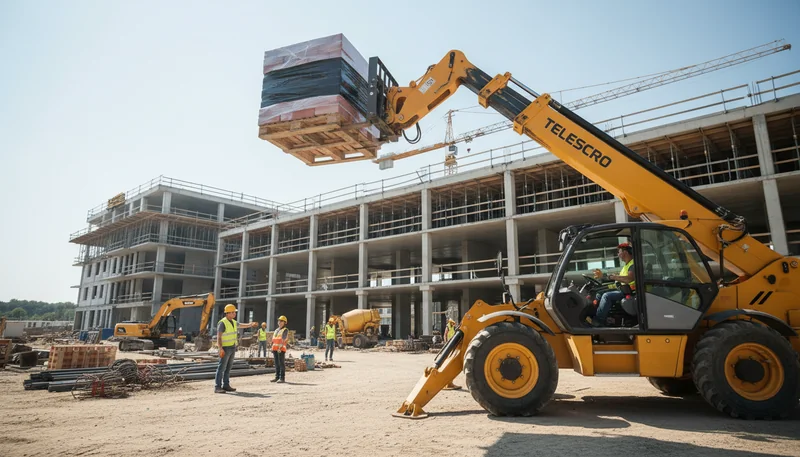
Earlier this month, a foreman in Brazil called me, frustrated that his new 4,000 kg telehandler “wouldn’t even lift half its rated load” at full reach. It’s a common story—one that catches even experienced site managers off guard when planning tight lifts on complex projects.
Telehandler rated capacity is a static reference value established under standardized OEM test and verification conditions: a new or within-tolerance machine, firm and level support, specified attachment, defined load center, and the most favorable boom geometry. In practical operation, factors such as increased boom reach or height, attachment changes, ground conditions, and load geometry progressively reduce usable lifting capacity. As reach increases, stability is governed by load moment rather than gross load weight.
When Is Telehandler Rated Capacity Theoretical?
Telehandler rated capacity is a static test reference established under specified OEM conditions: a new or within-tolerance machine, firm and level ground, straight frame, standard forks, a defined load center, and the most favorable boom geometry. This reference value is not representative across all operating configurations—actual allowable capacity must always be verified using the model-specific load chart1.
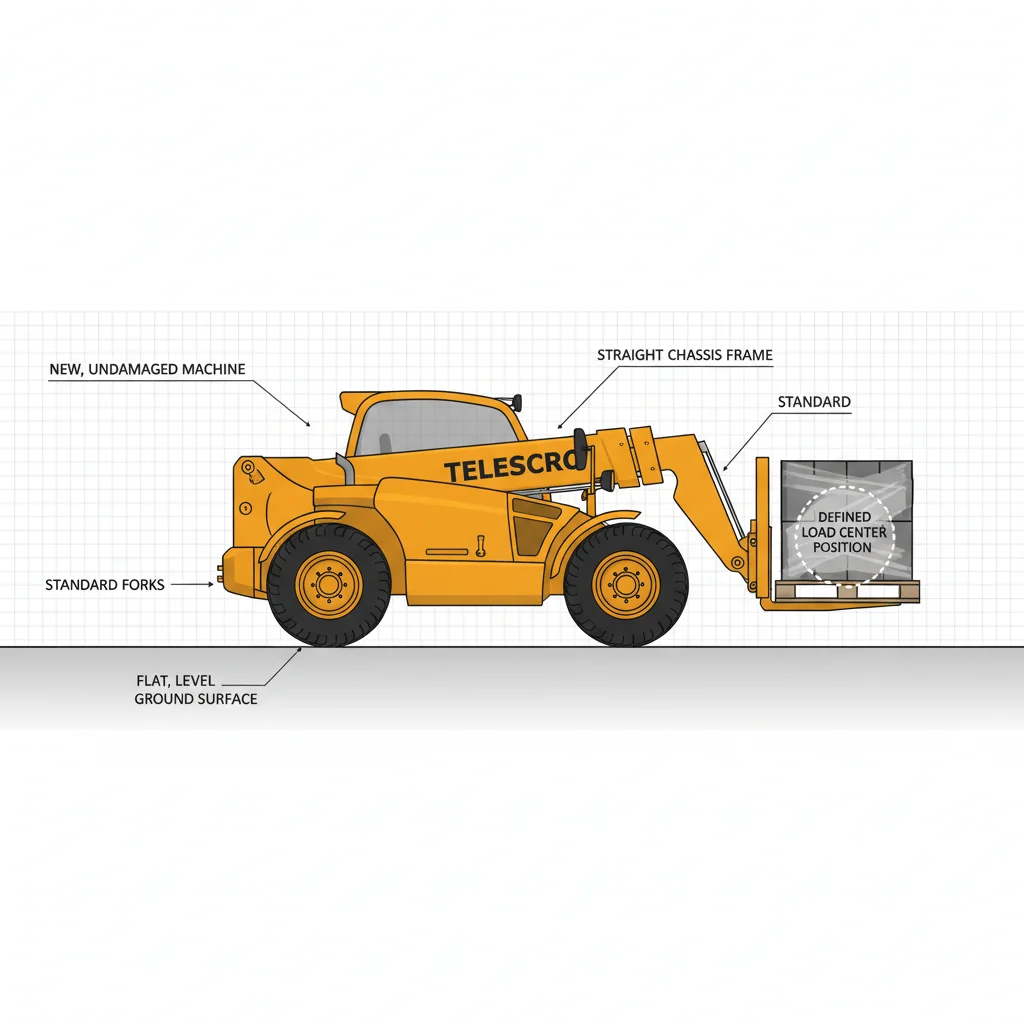
The biggest mistake I see is assuming the rated capacity number in a brochure means, “this machine can safely lift that much anywhere, anytime.” That’s simply not how it works. Rated capacity is a static rating established under standardized test and verification conditions—with the machine set up on firm, level support, in the specified configuration, using the approved attachment and the stated load center.
So while a “4,000 kg” telehandler can legitimately earn that label in the OEM’s defined configuration, it doesn’t automatically carry across the whole working envelope. I’ve seen more than one customer in Dubai try to handle heavy HVAC units at extended reach, assuming the headline figure still applied. Once we checked the model-specific load chart for their boom position and setup, it was clear the allowable capacity at that reach was far lower than the brochure number.
Here’s what matters most: as soon as you extend the boom, change height, swap forks for a bucket, or work on soft or sloped ground, the safe working capacity changes—sometimes dramatically. I worked with a team in Kazakhstan who bought a 10-meter reach model rated for 3,000 kg. But they needed to pick steel beams at 9 meters reach. On the job, the load chart showed a safe capacity of just 1,050 kg at that position—nowhere near their needs. They had to rethink the lift plan completely.
My advice? Always treat the rated capacity as a starting point. Real decisions come from reading the model-specific load chart. Don’t trust the label—verify the safe lifting number for your actual boom position, attachment, and site condition before you pick up the load.
Telehandler rated capacity only reflects laboratory conditions and ignores factors like attachment type, ground slope, and boom extension angle.True
The rated capacity is based on ideal test conditions—standard fork, level ground, and a specific load center—so it does not account for changes in working conditions such as the use of different attachments or uneven terrain, which can significantly reduce real-world lifting ability.
A telehandler can safely lift its rated capacity at any boom extension, as long as the load is within the maximum weight limit.False
Safe lift capacity decreases as the boom is extended due to leverage and stability factors; the rated capacity is only valid at specific boom angles and extensions, so extending the boom beyond test conditions reduces how much weight can be safely lifted.
Key takeaway: Telehandler rated capacity is not a universal guarantee but a design label defined under strict laboratory conditions. Real-world lifting capability changes with boom extension, height, attachment type, ground conditions, and machine positioning. Decisions must always reference the manufacturer’s detailed load chart, never just the headline rating.
When Is Telehandler Rated Capacity Only Theoretical?
Telehandler rated capacity applies only at short reach and optimal boom angle. As the boom extends forward or upward, actual capacity drops sharply due to increased load moment. At full extension or maximum height, the rated capacity is effectively theoretical; true limits are shown by the lowest figures on the load chart.

Let me share something important about telehandler rated capacity. Most buyers see a 4,000 kg or 5,000 kg figure and assume that’s what the machine can lift anywhere in its working envelope. In reality, that number only applies at minimum reach and an ideal boom angle, with the telehandler perfectly level and set up exactly as the manufacturer tested it.
As soon as the boom is extended forward or raised higher, the available capacity drops—often very quickly. The reason is straightforward: every additional meter of horizontal reach increases the load moment, which is the overturning force acting around the tipping axis at the front axle or front wheel contact line. It’s basic physics, but it’s often overlooked during bid reviews and equipment selection.
I’ve seen this play out repeatedly across Southeast Asia. Last year, a contractor in Thailand ordered a 5,000 kg telehandler expecting to place large HVAC units onto a fifth-floor structure, roughly 16 meters above ground. They selected the machine based on the headline rating, not the load chart.
On site, the reality was very different. With the boom extended close to maximum reach, the load chart showed a safe capacity of only about 1,200 kg at that height and forward reach. The HVAC units were well above that. In the end, they had to stop the lift and bring in a crane, losing both time and budget that hadn’t been planned for.
Here’s the lesson I always pass on: when you’re comparing telehandler models, start with your worst-case lift—maximum reach or maximum height—not the brochure headline. Pull the manufacturer’s load chart and check what the machine can actually handle at the exact positions you’ll be working. Ignore the “showroom hero” number; the load chart is what decides whether the lift is possible or not.
A telehandler’s rated capacity is only achievable when the boom is fully retracted and the chassis is on level ground.True
The rated capacity is determined under controlled conditions: with the boom at its minimum extension, the correct boom angle, and the telehandler parked on level terrain. Any deviation, such as extending the boom or operating on uneven ground, decreases the maximum safe lift weight due to changes in the machine’s stability and increased load moment.
A telehandler will always lift its rated capacity at any boom extension as long as the machine does not tip over.False
This is incorrect because the rated capacity is not constant throughout the boom’s range. As the boom extends, the leverage on the machine increases, which greatly reduces the actual lifting capacity well before tipping would occur. Exceeding the reduced limit at extended reach risks structural overload and instability even if the machine appears stable.
Key takeaway: Rated capacity is valid only at minimal reach and ideal boom angles. For actual site work, operators must consult the telehandler’s load chart for specific capacities at each height and reach combination—never rely solely on the headline rated capacity published in brochures.
When Is Telehandler Rated Capacity Only Theoretical (Continued)?
Telehandler rated capacity is based on ideal conditions—a standard, central load center and compact, balanced loads. When handling long, uneven, or offset loads, the effective load center increases, reducing actual lifting capacity. Brochure values become theoretical; always recalculate using the load chart and manufacturer’s adjustments for non-standard loads.

Most people don’t realize that a telehandler’s rated capacity is only reliable when the working setup closely matches the conditions used to define it. On firm, level ground, with a compact load positioned at the specified fork load center, it’s possible to approach the numbers shown on paper. But once the load is longer, uneven, or offset—an 8-meter truss, bundled ducting, or pipe racks—the assumptions behind that rating no longer hold.
Long or irregular loads shift the load’s center of gravity forward. That increase in effective load center reduces usable lifting capacity immediately, even before you extend the boom. I saw this clearly last month in Dubai. A contractor planned to lift five-meter duct bundles using a 3.5-ton telehandler. They focused on the “3,500 kg” headline figure and assumed they were covered. When we checked the actual load geometry, the effective load center was well beyond the standard fork reference. At minimum reach, the allowable capacity from the manufacturer’s data dropped to roughly two-thirds of the rated value—enough to derail their lift plan.
This isn’t guesswork. Manufacturers base capacity on a defined load center, and as that distance increases, allowable load decreases in proportion. OEM load charts and reduction tables show this clearly, but they’re often overlooked during planning. From my experience, anytime you’re handling pipes, beams, trusses, or any load that can’t sit tight against the fork heel, the brochure number becomes a reference at best. Real decisions have to be made using the actual load center and the model-specific load chart—not the catalog headline.
A telehandler’s rated capacity becomes purely theoretical when lifting an uneven or long load that shifts the center of gravity far from the fork heel, even if the terrain is flat.True
The rated capacity is calculated for a centered, compact load on level ground. An off-center or elongated load pushes the effective load center further out, reducing stability and meaning the rated capacity no longer applies as published.
A telehandler can always lift its rated capacity if the total weight does not exceed the number in the manufacturer’s brochure, regardless of load shape or fork position.False
Rated capacities are based on both weight and load position. If the load shape is long, unbalanced, or placed forward on the forks, the telehandler may become unstable and is not guaranteed to safely lift the brochure value.
Key takeaway: Rated capacity is a best-case scenario based on specific test conditions—level ground, standard attachment, and a defined load center. For any long, tall, or offset loads, brochure capacity is purely theoretical. Use conservative de-rating and always refer to the OEM load chart for effective working capacity.
When Is Telehandler Capacity Only Theoretical?
A telehandler’s base rated capacity no longer represents usable lifting limits once attachments other than standard forks and carriage are installed. Attachment weight and altered load centers2 can significantly reduce allowable capacity, in some configurations by well over half of the headline rating. For this reason, OEM guidance and safety regulations require lift planning to be based on the applicable attachment-specific load chart3, not the base machine rating shown on the data plate.
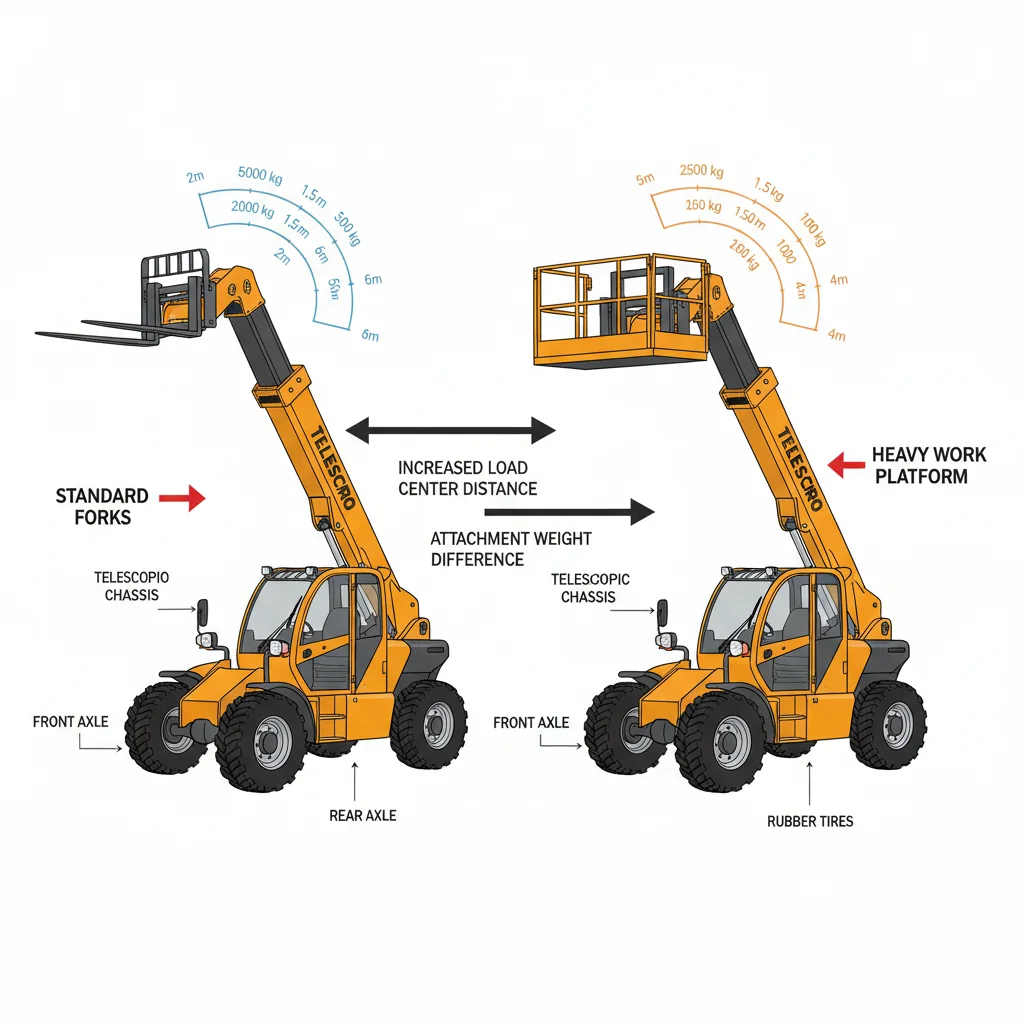
I’ve worked with customers in Dubai, Chile, and Poland who made the same mistake—trusting the telehandler’s base rated capacity, even when using heavy attachments. The load rating you see on the data plate only tells the full story if you’re using standard forks and the manufacturer’s specified load center, on level ground. The moment you swap in a material bucket, truss boom, or work platform, that headline figure becomes just a number—often meaningless for safe, real-world work.
A contractor in Chile called me last year after mounting a jib on a 4-ton telehandler. They assumed it could safely pick 3,800 kg overhead at near-full reach. In practice, the attachment’s own weight—plus the longer load center—dropped usable capacity to around 1,400 kg at the same position. That’s over 60% less than the base spec. Their mistake? Ignoring the separate, attachment-specific load chart, which every reputable manufacturer provides. You cannot estimate capacity by “feeling it out”—stability and tipping axes shift as soon as you change attachments or extend the reach.
Many buyers overlook this detail, especially when budgeting for multiple attachments. To be honest, if you’re planning to use buckets, winches, or work platforms, you should start your calculations with the lowest attachment-rated chart, not the headline spec. In Kazakhstan, I watched a crew use a man basket on a 4,000 kg telehandler—regulations limited them to just 1,000 kg, even though the base machine could lift four times that with forks. I always suggest requesting every relevant attachment’s load chart when sizing a machine. That’s how you avoid nasty surprises and keep operations both safe and legal.
A telehandler’s rated lifting capacity becomes theoretical when using a heavy attachment like a material bucket, because the attachment’s weight and shifted load center are typically not reflected in the capacity listed on the data plate.True
The rated capacity shown on the telehandler’s data plate assumes standard forks and a specific load center as tested by the manufacturer. Heavy or extended attachments move the load further from the machine’s fulcrum, reducing stability and safe lifting capacity—even if the data plate’s figure stays the same.
Telehandler rated capacity remains accurate for any attachment as long as you do not exceed the weight listed on the data plate.False
This is false because different attachments change the load geometry and the effective load center, often lowering the safe lifting capacity. The data plate rating does not account for these variations, making it unsafe to rely solely on it when using non-standard attachments.
Key takeaway: Telehandler rated capacity applies only with standard forks and carriage. Any attachment shifts the load center and adds weight, requiring use of the attachment’s load chart. Never size telehandlers by base rating if using buckets, jibs, or platforms; attachment-specific derating is essential for safety.
When Is Telehandler Rated Capacity Only Theoretical (Part 3)?
Telehandler rated capacity becomes theoretical when the machine is not set up on firm, level ground within roughly 1% tilt and correct tyre pressure. On slopes or unstable surfaces, actual stability drops dramatically—OEM load charts do not account for ground slope, so the published capacities no longer reflect real-world safety.

Last month, a contractor in Kazakhstan called me after his 4-ton telehandler nearly tipped over—yet the boom was only at 10 meters with a pallet weighing less than 2,000 kg. What went wrong? The site looked hard and level to the eye, but one tyre was sitting in a shallow rut while another side had gravel settling under the stabilizer. Even though the load chart said he should be safe, the machine wasn’t close to perfectly level, and tyre pressure was down about 15%. That small tilt was enough to shift the centre of gravity toward the low side, cutting actual stability pretty much in half. I wish more operators realized: rated capacity is only real when you’ve confirmed level ground within about 1% (that’s barely noticeable), and tyre pressures at spec. Anything less? The numbers in the brochure are just for reference, not reality.
Here’s the thing: most load-moment systems4 used on telehandlers are designed to monitor boom angle, reach, and load-related forces—not actual ground support conditions. While they can warn against overload or excessive forward reach, they generally do not account for side slopes, uneven support, or localized ground settlement. I’ve seen jobs in Chile where crews assumed everything was safe because the system stayed “green,” yet a slight side slope—barely noticeable underfoot—had already shifted the stability margin close to its limit.
I always suggest using mats or cribbing to get the machine level before lifting close to chart limits. And if the ground looks even a little questionable, plan the lift using 60–70% of the charted capacity. Rated numbers are theoretical whenever conditions aren’t textbook. That’s how you stay out of trouble.
A telehandler's rated capacity is only theoretical if the machine is not perfectly level, since even small tilts can shift the load center and risk destabilization.True
Telehandler load charts assume the machine is on a level surface; any incline or unevenness alters load distribution, significantly reducing the safe lifting capacity in practice.
Rated capacity remains fully usable as long as the load is under the maximum charted weight, regardless of minor surface or tyre irregularities.False
Load charts do not account for uneven terrain or underinflated tyres; these factors can dramatically affect stability, making the rated capacity unsafe if site conditions are less than ideal.
Key takeaway: Telehandler rated capacity assumes perfectly level, stable conditions. Even minor slopes or soft ground can halve effective capacity, while most load-moment systems fail to detect these risks. Treat chart values as theoretical whenever setup is not perfectly level, and derate capacity conservatively for safety.
When Is Telehandler Rated Capacity Only Theoretical (Part 4)?
Telehandler rated capacity is defined for static, stationary lifting conditions. When the machine is traveling, braking, turning, or operating over uneven or rough ground, dynamic forces introduce additional load effects that are not accounted for in standard load charts. In these situations, the charted capacity should be treated as an upper reference only, and working loads must be reduced to maintain a practical safety margin during movement or unstable ground conditions.

To be honest, the spec that actually matters is rarely the one printed on the sales brochure. Rated capacity on a telehandler load chart is tested under controlled, static conditions—machine perfectly level (usually less than 3° tilt), straight boom movement, no sudden stops or bumps. The moment you drive across uneven ground, brake hard, or turn sharply with a suspended pallet, those lab numbers stop matching reality. This is where I’ve seen even experienced operators get caught off guard, especially on hilly sites in Chile or the clay worksites in Indonesia.
I once had a customer in South Africa who moved 2,400 kg steel pipe sections over a rutted access road. On paper, their compact telehandler with a 2,500 kg rated capacity seemed more than enough. But between rolling bumps and a quick brake for an excavator, the machine tipped forward. Why? Simple physics—dynamic forces5. In movement, that “2,400 kg” load can act as if it’s 3,000 kg or more. Your static chart doesn’t account for real-world shock loads or shifting centers of gravity.
From my experience, the only safe way to plan lifting on the move or on rough ground is to mentally downgrade your grid chart. Treat the rated number as a theoretical maximum. I tell my customers to operate at 50–70% of rated chart value anytime the ground isn’t level, or when carrying a load during travel. Keep the boom low while driving, avoid sharp steering or sudden brakes, and always double-check that the actual load—including pallet, attachment, and dynamic effects—fits your working margin.
Telehandler rated capacity becomes theoretical when operating on uneven ground, as real-world conditions can shift the load outside the tested stability parameters.True
Load charts are based on level surfaces; any tilt or irregularity can change the center of gravity and significantly affect safe lifting capacity, making the rated capacity unachievable or unsafe in practice.
If a telehandler is equipped with outriggers, its rated capacity remains accurate in any working condition, including sloped or rough terrain.False
Outriggers only help stabilize the telehandler on level ground. They do not compensate for steep slopes, soft ground, or dynamic movement, so the rated capacity may still be unattainable in adverse conditions.
Key takeaway: Rated capacity figures in telehandler load charts are only valid under static, level, and controlled conditions. Once moving or encountering rough terrain, dynamic forces can exceed the safe operating envelope. Always reduce working limits—typically to 50–70%—when handling loads while moving, braking, or operating on non-level ground.
When Is Telehandler Rated Capacity Theoretical (Continued)?
Telehandler rated capacity is defined for calm conditions and compact loads. When wind or large, high sail-area loads—such as panels, cladding, or formwork—introduce lateral forces, the assumptions behind standard load charts no longer apply. In these situations, additional capacity reductions and conservative lift planning are required to maintain stability, based on OEM guidance and site-specific wind and load conditions.

Last year, a customer in coastal Australia called me after a close call moving pre-fab concrete panels on a nine-meter telehandler. The specs said it could handle 3,500 kg at that height, so they loaded up a 2,000 kg panel expecting a wide safety margin. But what they didn’t factor in was the 12 m/s sea breeze hitting the panel’s two-meter height—suddenly, the machine started to sway and the moment indicator alarmed. The load chart looked fine on paper, but the actual situation pushed them well past the real stability limit.
Here’s the thing: load charts assume calm weather and a compact load shape, usually with the standard fork attachment. The moment you lift anything with a large surface area—think glass cladding, steel formwork, or even plywood—the wind matters a lot. At only 8–12 m/s, even a 2 m panel can generate a side force strong enough to tip the machine or push it to the edge of stability, especially if you’re working at long reach. I’ve seen projects in Kazakhstan and Dubai stop panel lifts entirely when gusts picked up, even with high-capacity machines onsite.
If you regularly need to lift panels or materials with high “sail area,” I strongly recommend oversizing the telehandler. That means picking a higher model than your calculated needs for calm weather. Always check the manufacturer’s wind limits and derate capacity by 30–50% in moderate winds, as most safety codes suggest. My advice: plan with real-world wind and load sizes, not just the standard chart, or you’ll end up with a theoretical number and a real headache on site.
Telehandler rated capacity becomes theoretical when significant wind loads act on large panel-shaped loads, as dynamic forces from wind can greatly decrease stable lifting capacity even if the weight is within chart limits.True
Wind pressure on large, flat objects increases the overturning moment, making the safe working load lower than what the load chart predicts for still air conditions. This is why wind must be factored in for real-world operations, especially with panel-shaped loads.
As long as the telehandler's rated capacity on the load chart isn't exceeded by the load weight, environmental factors like wind or load shape will not affect safe lifting operations.False
External factors such as wind, load sail area, and shifting load center of gravity can all compromise stability and safety even when within weight limits, meaning capacity may be theoretical under certain site conditions.
Key takeaway: Telehandler load charts assume calm weather and compact loads. When lifting large panels or sheet materials in moderate wind, manufacturers and safety guidelines recommend applying significant capacity reductions—often 30–50%. Always reference OEM guidance and consider machine oversizing for high-wind or large-panel operations.
When Is Telehandler Rated Capacity Misleading?
Telehandler rated capacity is based on a new, properly maintained machine. In real-world fleets, maintenance issues and wear—such as worn booms, loose pins, and underinflated tyres—can reduce true capacity. Even minor mechanical deflection may erode the built-in safety margin, making the nominal rating unreliable on older or poorly maintained units.
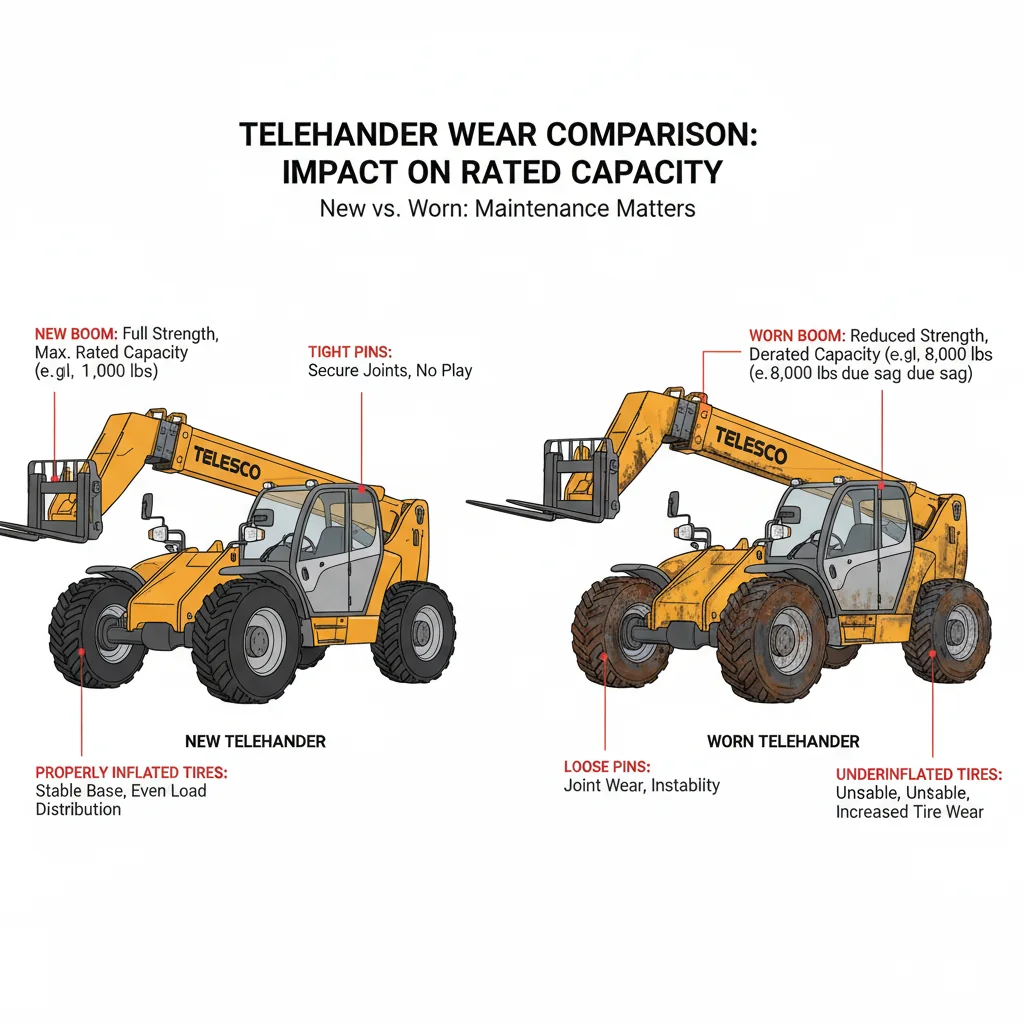
Last year, a fleet owner in Turkey sent me photos of cracked boom sections and loose boom pins on one of their 5-ton telehandlers. On inspection, I found not just surface wear, but enough mechanical deflection to visibly shift the boom alignment. That kind of wear quietly eats into your safety margin. The original load chart—based on a new, calibrated machine—no longer matched reality. Even small changes, like underinflated tyres or slack in the pins, can move the machine’s center of gravity forward. When that happens, forward stability goes down fast. The operator still saw the “5,000 kg” rating on the data plate, but in my hands, that machine felt risky above 4,000 kg depending on reach.
From my experience, many contractors run machines well past their third year without strict maintenance intervals. I saw a unit in Brazil with 15% bushing wear; it might hardly rattle when loaded at low boom angles, but that same play at maximum reach can mean several centimeters of extra deflection. That’s enough to tip from safe to marginal—especially when lifting dense loads like concrete blocks or heavy panels. The engineer’s rated capacity assumes firm, level ground, correct tyre pressure, and a factory-fresh structure. Neglect any of these, and the built-in “buffer” can disappear without warning.
I always suggest updating your pre-use inspections as your fleet ages. If you can’t document regular bushing replacements and tyre checks, be honest and derate your older units for anything critical. Your actual safe capacity is only as good as your maintenance—never just the number on the plate.
Telehandler rated capacity becomes unreliable if boom wear, pin slack, or tyre pressure deviate from factory specifications, as these factors alter the machine’s structural integrity and stability.True
Rated capacity assumes the machine is in like-new condition. Wear and changes in load-bearing components can compromise load charts because they change the telehandler's structural performance and balance, making published capacities misleading.
Once a telehandler model is rated, its load chart remains accurate throughout the machine’s life unless it experiences a major accident.False
Normal wear, including minor component degradation, small deflections, or even uneven tyre pressure, can significantly alter the actual capacity and stability performance of a telehandler, making factory load charts unreliable in used equipment even without a major incident.
Key takeaway: The rated capacity on a telehandler’s data plate assumes proper maintenance and minimal wear. As machines age or if maintenance lapses, factors like worn bushings or low tyres can quietly reduce safe lifting limits. Contractors should regularly inspect, maintain, and, if needed, derate older units to ensure safety.
When Is Telehandler Rated Capacity Only Theoretical (Part 5)?
Telehandler rated capacity becomes theoretical when planning relies on brochure data instead of the manufacturer’s load chart. Brochure values summarize optimal cases, while load charts specify position-dependent limits based on boom length, angle, and stabilizer or attachment configuration. Field engineers stress that only load charts reflect real-world operational boundaries.

Here’s what matters most when you’re sizing a telehandler for real lifts: never trust the brochure’s capacity headline alone. Brochure numbers look impressive—like “4,000 kg at 7 meters”—but they reflect perfect, flat-ground test conditions with the boom barely extended and a standard attachment. The reality I see on jobsites is different. Once you extend the boom and reach further out, the rated capacity drops sharply. The load chart, not the marketing sheet, tells you exactly how much weight you can lift at each boom angle, reach, and height.
Last month in Brazil, a site manager called frustrated because their new “4-ton” telehandler stalled at the edge of a roof extension job. I asked for their max pallet weight, placement height, and boom extension. According to the manufacturer’s load chart, at their 5.5-meter forward reach and 9-meter height, safe capacity was under 2,000 kg. So they had to rent a crane last-minute—costing two extra days plus equipment rental. I’ve seen this happen everywhere from Dubai to Kenya. The load chart is always the only true authority.
When you select a machine, always plan using your worst-case lift—the heaviest load, longest reach, or highest placement. Read across the load chart for that very position, including which attachment you’ll use. I suggest building in at least 20% spare capacity for jobsite unknowns: uneven ground, wind gusts, or slightly heavier loads. That margin converts theoretical specs into daily working reliability and keeps your lift plans on schedule.
A telehandler's rated capacity becomes purely theoretical when operating with the boom fully extended or at maximum forward reach, as real-world stability and load-limiting systems will often prevent lifting anywhere near the headline value.True
This is true because the rated capacity is established under ideal conditions, not accounting for stability limits or dynamic jobsite factors. With the boom fully extended, mechanical and safety systems significantly restrict allowable loads to prevent tip-over or structural damage.
The rated capacity listed in the brochure accurately reflects the maximum weight a telehandler can lift under any jobsite condition, regardless of boom extension or attachment type.False
This is false because the brochure capacity is based on controlled, optimal conditions and does not consider variations in boom extension, attachment used, or uneven ground. The actual safe lifting capacity is usually much lower in real job situations and must be verified with the machine’s load chart.
Key takeaway: Always use the manufacturer’s load chart—not marketing brochures—when sizing telehandlers for demanding lifts. Brochure figures reflect maximum theoretical capacity under ideal conditions, but only the load chart reliably guides safe, real-world operation at varying reach, height, and attachment scenarios.
When Is Telehandler Rated Capacity Only Theoretical (Part 6)?
Telehandler rated capacity becomes theoretical whenever key conditions deviate from OEM specifications: significant boom extension, non-standard or off-centre loads, heavy or non-standard attachments, uneven or sloped ground, wind on large loads, or load movement. In such cases, only the combination of load chart, attachment chart, and load-moment indicator reflects the true safe limit.

I get a lot of calls from site managers puzzled about why the telehandler “rated capacity” suddenly feels like a guess instead of a hard limit. When you’re working in textbook conditions—standard forks, level ground, and the boom kept retracted—the OEM number is solid. But jobsites rarely match those test conditions. The moment you start extending the boom, pushing out to 12 meters or more, or lifting a load that’s long, uneven, or swinging, that printed number isn’t reality anymore. One contractor in Brazil learned this the hard way: he was handling metal trusses in coastal winds, boom out to nearly max, and the load moment indicator started screaming before he even hit 70% of the nameplate rating.
Anytime your ground isn’t perfectly level (OEMs usually allow less than 3° tilt), or you’ve swapped forks for a heavy bucket or a longer jib, you’ve got to treat chart capacity as a theoretical max. Same thing goes when the site is soft, sloped, or if you’re stacking odd-shaped pallets that push the load center beyond the spec. In all these cases, only the combination of the load chart, correct attachment chart, and load-moment indicator, if you have it, can tell you what’s actually safe.
From my experience, I advise planning every routine lift at 70–80% of whatever capacity shows on the load chart for your exact setup. 100% capacity is “emergency-only” territory. If daily work pushes you above 80% repeatedly, your machine is probably undersized for the real job. I always tell customers: in the real world, rated capacity is an engineering number, not a promise.
Telehandler rated capacity becomes theoretical when lifting loads with non-uniform weight distribution, even if the overall load is within OEM limits.True
Non-uniform or off-center loads can shift the machine’s center of gravity, reducing stability well before reaching the printed rated capacity, making the OEM value a theoretical maximum in these conditions.
A telehandler’s rated capacity remains unchanged and reliable regardless of the type of attachment used, as long as the load does not exceed the stated limit.False
Different attachments, such as buckets or truss booms, alter the load's center of gravity and how force is distributed, often reducing the effective safe capacity below the OEM rating for standard forks.
Key takeaway: The nameplate rated capacity only applies under ideal, manufacturer-defined conditions. In real field operations with any complicating factors, always treat chart capacity as theoretical and plan lifts at no more than 70–80% of the charted value to maintain a practical, repeatable safety margin.
Conclusion
We’ve talked about how a telehandler’s rated capacity is only the starting point—it’s calculated under ideal test conditions, not real jobsite realities. From my own experience, the crews who stay productive are the ones who treat the load chart like a roadmap, not a suggestion. Don’t let a headline spec turn your machine into a "showroom hero, jobsite zero"—always take boom angle, extension, and ground conditions seriously.
If you’re unsure whether a model fits your actual lifting needs, or want insight on local parts support, just reach out—I’m happy to share what works in practice. Every jobsite has its own demands, so the right choice depends on your real working conditions.
References
-
Details the critical role of load charts in verifying safe lifting limits under varying boom extensions and attachments. ↩
-
Detail on how shifts in load center impact usable telehandler capacity and stability, vital for preventing accidents on-site. ↩
-
Explains critical safety protocols and manufacturer guidelines for accurate lifting capacity using various telehandler attachments. ↩
-
Understand the limitations of load-moment systems in detecting ground slope and their impact on telehandler operational safety. ↩
-
Expert explanation of dynamic forces impact on telehandler lifting capacity including real-world examples and safety adjustments. ↩