










What Safety Systems Must a Telehandler Have? Field-Tested Checklist for Buyers
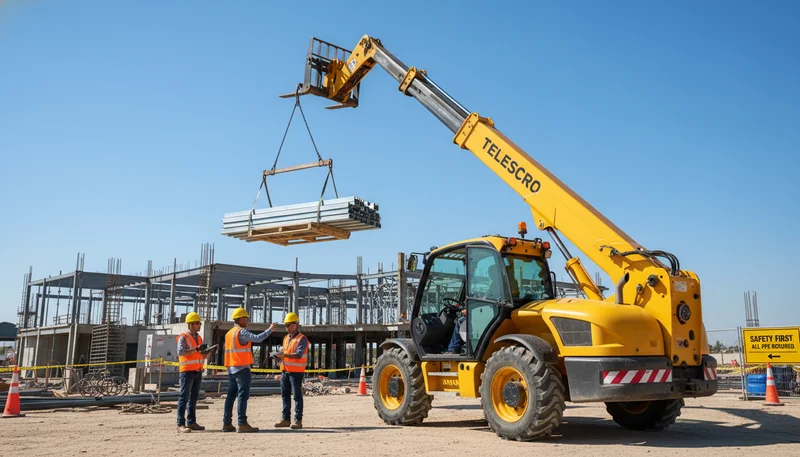
Last month, I walked a muddy jobsite in northern Italy and saw something that made me cringe—a brand-new telehandler, but the load chart was missing from the cab. The operator shrugged it off, saying, “It’s all electronic now.” That kind of thinking gets people hurt.
Essential telehandler safety systems include certified load monitoring devices—such as load moment indicators or overload protection1—capable of detecting unsafe conditions and restricting hazardous movements. Legible, attachment-specific load charts must correspond to every operating configuration, as load capacity shifts with boom angle, extension, and tool selection. Hydraulics and braking components require reliable, properly maintained circuits to secure operational safety.
What Are Essential Telehandler Load Monitoring Systems?
Mandatory telehandler safety systems include certified load moment indicators2 (LMIs) or overload protection. These monitor boom angle, extension, and weight, triggering alarms and disabling unsafe movements when limits are exceeded. Site compliance also requires current calibration certificates and clear, attachment-specific load charts in the cab, in accordance with EU and North American regulations.
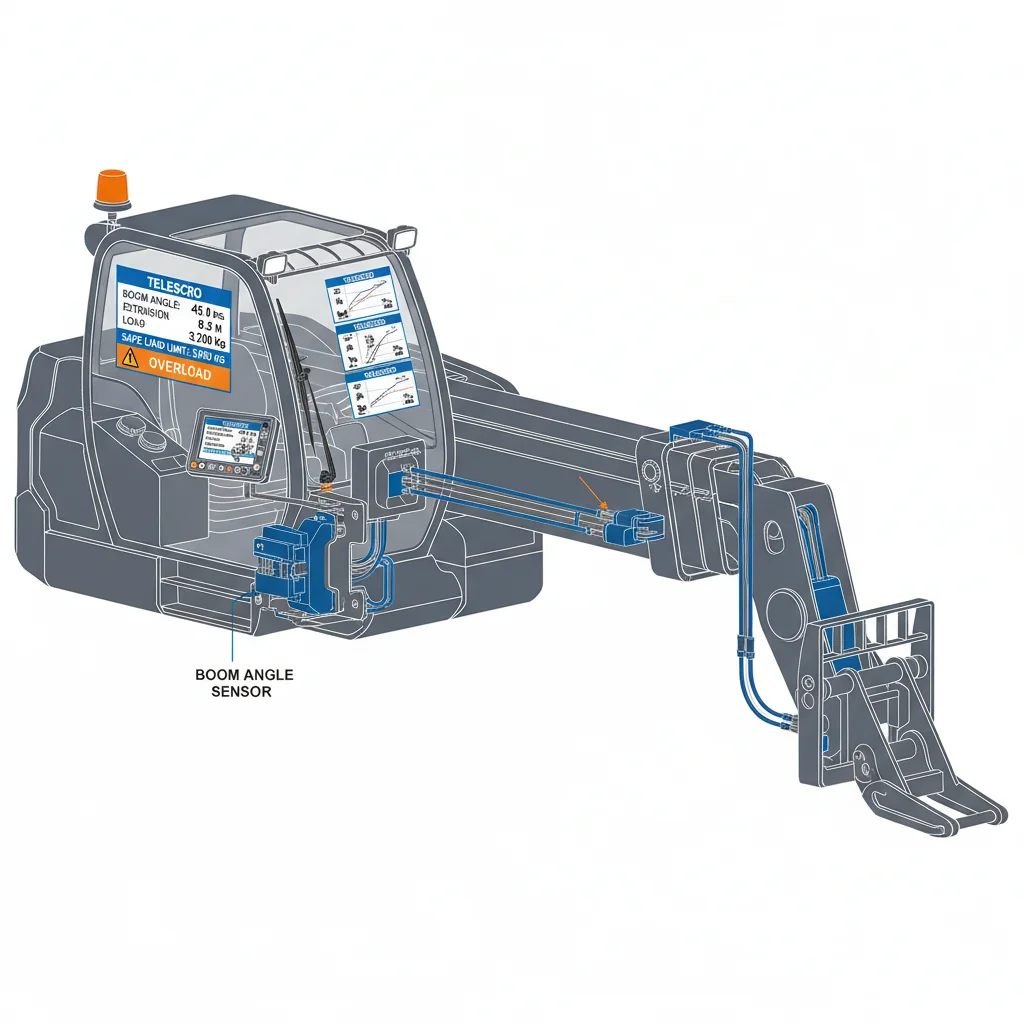
Most people don’t realize that having a certified load moment indicator3 (LMI) or overload protection system isn’t just a technical bonus—it’s non-negotiable if you want to work on any regulated site. A few years back, I supported a contractor in Dubai who ran into issues with a used 4-ton telehandler they’d imported. The machine looked good, but the LMI calibration certificate was outdated. Even worse, its alarm failed to trigger on a high-reach lift, nearly causing a tip-over with a load just under 3,000 kg at 14 meters. That near-miss delayed their project for three days until they replaced the LMI and re-certified the machine.
Here’s what these systems actually do: the LMI continuously measures boom angle, extension, and live load weight through hydraulic sensors and electronic circuits. When limits approach, the system gives both visual and audible warnings—flashing lights and loud beeps that every operator can recognize. If you ignore those signals, most machines will automatically lock out further boom extension or unsafe movement. In simple terms, the machine won’t let you risk a tip-over.
But the tech isn’t enough alone. Clear, up-to-date load charts matter just as much. I’ve seen operators in Brazil use a fork load chart while running a winch—totally different stresses on the boom. The result? Unintended overload, hydraulic pressure spikes, and an expensive service call. To be honest, I always suggest buyers check that every cab has legible, attachment-specific charts and current calibration documents. It’s this paperwork and training—not just gadgets—that keeps real sites safe.
Certified Load Moment Indicator (LMI) systems on telehandlers must be recalibrated every 12 months to ensure accuracy and compliance on regulated construction sitesTrue
Regular annual calibration of the LMI is critical because sensor drift or mechanical wear can cause inaccurate load readings, increasing the risk of overload accidents. Many regulatory bodies mandate this interval to maintain safety standards.
Telehandlers equipped with Load Moment Indicator (LMI) systems can safely operate beyond their rated capacity for short durations without risking tippingFalse
LMIs alert operators when approaching or exceeding the rated load capacity, but exceeding these limits—even briefly—can destabilize the machine, leading to tip-over accidents. No LMI system permits safe overload operation beyond the certified capacity.
Key takeaway: Telehandlers must feature certified, calibrated LMIs or overload protection systems, plus clear, up-to-date load charts for every attachment. These essentials prevent overloads and tipping, and are required under most EU and North American safety standards. Buyers should always verify documentation and operator training before purchase.
What Stability Systems Prevent Telehandler Rollovers?
Telehandlers prevent rollovers through engineered stability systems, including wide track design, low center of gravity, and deployable stabilizers or outriggers. ROPS/FOPS-certified cabs4 protect operators in case of tip-over or falling objects. Critical features such as chassis leveling5, tilt alarms, and stability indicators are mandatory on advanced models, while ground conditions greatly influence actual machine stability.

Let me share something important about telehandler stability—engineered systems matter, but site realities matter even more. Last year, a project in Kazakhstan needed to lift HVAC units weighing nearly 2,500 kg to a 16-meter roof. They started with a standard 4-ton machine, fitted with outriggers and a certified ROPS/FOPS cab. On paper, everything was by the book. But when ground thaw set in, those outriggers sank by just a few centimeters. The stability alarm triggered immediately, saving the crew from a serious rollover.
From my experience, wide track width and low center of gravity are your mechanical foundation. Deploying stabilizers is non-negotiable—make sure they’re fully extended and locked before lifting even half the rated load. Chassis leveling is something I see underused outside Europe; it keeps the frame steady even if the site isn’t perfectly flat. Anytime I visit jobsites, I check the moment indicator or stability lights. If those systems flash or beep as the boom extends, you’re close to tipping. Stop and reposition—don’t try to “just finish the lift.”
I’ve worked with contractors in Dubai who wanted to stretch their machines to the limit. With a 17-meter high-reach unit, they added only 100 kg over spec and the boom tilted—luckily, their operator cab was ROPS/FOPS-rated. That certification isn’t just a sticker; it really protects lives. My advice: prioritize machines with clear stability charts, chassis leveling, audible tilt warnings, and robust cab protection. But always run a ground check—engineered features won’t save you on unsafe terrain.
Modern telehandlers often incorporate stability alarms that activate when outriggers or tires lose firm ground contact, detecting shifts of as little as 2-3 centimeters to prevent rollovers.True
These stability alarms rely on sensors monitoring machine tilt and outrigger pressure. Even minimal ground movement, such as a few centimeters of outrigger sinking, triggers the alarm to warn operators before a hazardous condition develops.
Telehandler rollover prevention systems primarily rely on automatic engine shutdown to immediately stop operations upon detecting instability.False
While engine shutdown can be a safety feature, rollover prevention mainly depends on stability alarms and mechanical safeguards like outriggers and ROPS. Automatic shutdown is not the primary or most effective method to prevent rollovers.
Key takeaway: Telehandler stability depends on mechanical features like wide tracks, stabilizers, and certified protective cabs, supported by electronic warnings. However, ground conditions and adherence to site procedures ultimately determine rollover risk. Buyers should prioritize models with comprehensive stability systems and implement ground checks and slope limits in operational protocols.
What Attachment and Platform Safety Is Required?
Telehandlers must use only manufacturer-approved attachments6 and personnel platforms specific to the machine model. Each approved attachment requires its own load chart and compatibility documentation. Positive locking quick couplers7 with visual indicators are essential. For personnel lifting, only rigid, purpose-built platforms with dedicated anchor points, platform controls, emergency stops, and documented OEM compliance should be considered. Makeshift or unapproved platforms are prohibited.

The biggest mistake I see is crews trying to save time by using “almost fits” attachments or improvised work platforms. One project in Kazakhstan stands out—a supervisor asked if they could use a locally-welded basket on a 14-meter telehandler to lift painters up 10 meters. I refused. Why? No compatibility paperwork, no tested anchor points for harnesses, and no proper controls inside the basket. These shortcuts risk not just injury, but also site shutdowns during safety audits.
Here’s what matters most when it comes to attachment and platform safety on telehandlers:
- Manufacturer-approved attachments only: Every bucket, jib, or platform needs its own OEM documentation confirming model compatibility.
- Dedicated load charts: Each attachment changes load capacity. Use the specific chart, not just the general rating—especially when extending the boom.
- Positive locking couplers: I always check for visual indicators showing the attachment is firmly locked in place. Accidents happen when quick couplers mislead operators.
- Personnel work platforms: Only rigid, purpose-built platforms with anchor points, platform-mounted controls, and emergency stop features are acceptable. No baskets on forks.
From my experience, site inspections in Dubai and Australia now routinely demand to see attachment approval lists and proof of compliance. A customer in Dubai had to halt a project because their “universal” bucket didn’t pass audit—even though it fit the coupler. My advice is simple: verify the attachment’s approval documents and inspect anchor points before every shift. That paperwork and a quick 2-minute check can make or break site safety—and the project’s reputation.
Telehandler work platforms must have tested anchor points for fall protection harnesses rated for at least 5,000 pounds to comply with international safety standardsTrue
Certified anchor points on work platforms ensure fall arrest systems are effective and can withstand the forces generated during a fall, which typically require ratings of 5,000 pounds or more as per OSHA and similar international regulations.
Key takeaway: For telehandler safety, always require manufacturer-approved attachments and personnel platforms, each with specific load charts and compatibility statements. Only use platforms with rigid mountings, clear controls, emergency features, and tested harness anchor points. Makeshift solutions or non-compliant platforms present legal and audit risks and should be avoided.
What Safety-Critical Braking and Hydraulics Must Telehandlers Have?
Telehandlers must feature responsive service brakes, a dependable parking brake, and consistent steering throughout all speed ranges and articulation. Hydraulic system integrity—including leak-free hoses, secure fittings, and properly pressurized circuits—is essential for safe boom operations, load holding, and stabilizer deployment. Regular functional checks and prompt attention to any leaks or brake irregularities are fundamental to telehandler operational safety.
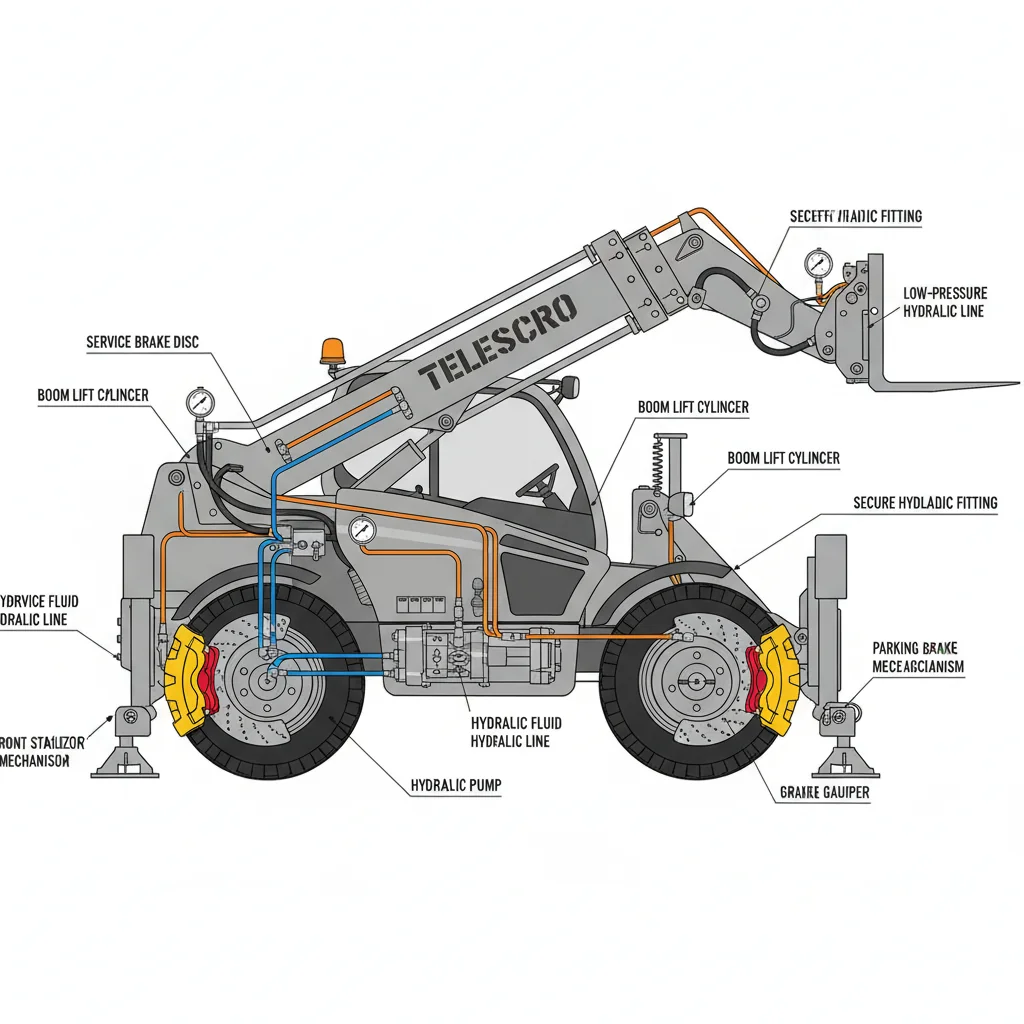
To be honest, the spec that actually matters is how fast and predictably your telehandler can stop—especially loaded, on a site that’s less than perfect. Last year, I supported a project in Kazakhstan moving precast concrete panels with a 4-ton model. On a muddy ramp, the operator reported a soft brake pedal and slow response. That’s not just an annoyance. Paired with the weight—almost 3,500 kg per lift—any delay could turn dangerous fast. Effective service brakes and a strong, easy-to-set parking brake aren’t optional on tough jobsites. If you ever feel uneven or “spongy” pedal feedback, I strongly suggest you pause and get it checked.
Hydraulics are the other half of safety that too many buyers underestimate. I’ve seen more downtime—and near misses—due to neglected hoses and leaky fittings than from anything electrical. For instance, in Dubai, a customer’s boom slowly drifted down during off-hours. The culprit? A small cylinder leak. Even minor hydraulic issues can lead to a sudden boom drop or, worse, loss of stabilizer support just as you’re finishing a heavy lift. Operators should check for damp spots around hose connections before every shift—takes just a minute and can prevent days of trouble.
When comparing models, look for clear hose routing, protective guards, and labels that help with quick inspection. Ask about recommended hose replacement intervals—some manufacturers suggest every five years for high-use machines. Don’t rely just on looks or spec sheets. I suggest asking for maintenance history samples and inspecting actual machines if possible. That’s how you avoid surprises under pressure.
Telehandlers must have a dual-circuit hydraulic braking system to ensure continued brake function even if one circuit failsTrue
A dual-circuit hydraulic brake system divides the braking mechanism into two independent circuits, so if one circuit leaks or fails, the other still provides sufficient stopping power, which is critical for heavy-load site safety.
Telehandler parking brakes rely solely on hydraulic pressure, requiring the engine to run continuously to remain engagedFalse
Parking brakes on telehandlers are typically mechanical or spring-applied multi-disc types that maintain engagement without any hydraulic pressure, allowing the machine to remain stationary safely when the engine is off.
Key takeaway: Reliable braking and leak-free hydraulic circuits are mission-critical for telehandler safety. Buyers should prioritize robust system design, ease of inspection, and manufacturer-recommended maintenance intervals to minimize unexpected failures, particularly under load or on challenging terrain. Pre-use checks and proper component access are indispensable for safe, long-term field operation.
What Safety Interlocks and Sensors Are Needed?
Telehandlers must include safety interlocks and sensors that prevent operation under unsafe conditions. Mandatory systems include boom angle and height interlocks, overload cut-outs, seat belt or operator presence sensors, and emergency stop buttons. Advanced models use dual-redundant sensors8 and protected wiring to reduce failure risks, especially for high-rise or high-risk applications.

I’ve worked with customers who assumed a simple seatbelt switch was enough to keep operators safe. Let me be clear—on any site over two stories, especially where we’re talking 12-meter or higher lifts, that’s not the case. In Dubai, I advised a contractor running a 4-ton telehandler with a 17-meter boom. His unit only had a single boom angle sensor, and no override protection on the cut-out circuit. One faulty wire later, and the operator could accidentally drive with the boom raised—dangerous on a crowded site.
Here’s what I see as the must-haves: robust boom angle interlocks9 that physically stop high-speed travel when the boom rises beyond around 45 degrees, and load moment indicators to sense and block dangerous overload situations. Operator presence systems—usually seat pressure or belt sensors—should fully disable hydraulic and travel controls if the seat is empty. I always suggest checking for dual-redundant sensors on boom angle and extension in high-reach work. If just one sensor fails, the backup keeps everyone safe. Wiring should be routed through protected looms; open wiring under the cabin is a failure waiting to happen.
Emergency stop buttons—in easy reach from the seat and ground—are expected on regulated sites, like most of Europe or Singapore. Ask for a schematic of the safety circuit, not just a sales promise. You want to see which functions the interlocks will shut down and if there’s a key-locked or code-protected override—so only site managers, not operators, can bypass. I suggest confirming these details upfront to avoid costly surprises later.
Telehandlers operating lifts exceeding 12 meters must have multiple redundant boom angle sensors integrated with an override protection system to prevent unsafe machine movementsTrue
At heights over 12 meters, relying on a single boom angle sensor poses risks of sensor failure causing unsafe operation. Multiple sensors with override circuits ensure that if one sensor or wiring fails, the system can detect inconsistencies and inhibit dangerous movements, enhancing operator and site safety.
A simple seatbelt switch alone is sufficient to prevent all unsafe telehandler operations at any lifting heightFalse
A seatbelt switch only confirms operator presence and doesn't monitor boom angle, load, or machine stability. Complex telehandler operations, especially at heights above two stories or with long booms, require multiple sensors and interlocks beyond the seatbelt to manage the machine's dynamic safety risks.
Key takeaway: Buyers should ensure telehandlers feature robust, field-tested interlocks and sensor-based safety systems. Detailed safety circuit documentation and access-controlled override protocols are essential, with higher-risk environments demanding redundant sensing and secure wiring. Inadequate or single-circuit systems may compromise operator and site safety.
What Safety Warning Systems Must Telehandlers Have?
Telehandlers require robust safety warning systems due to large blind spots. Mandatory features include a functioning reverse alarm10, horns, high-intensity work lights, rotating beacon, and properly adjusted mirrors. Increasingly, rear-view or 360-degree cameras11 are standard for enhanced visibility. On high-traffic sites, proximity sensors or pedestrian detection systems may be specified. These devices must be checked before each shift.
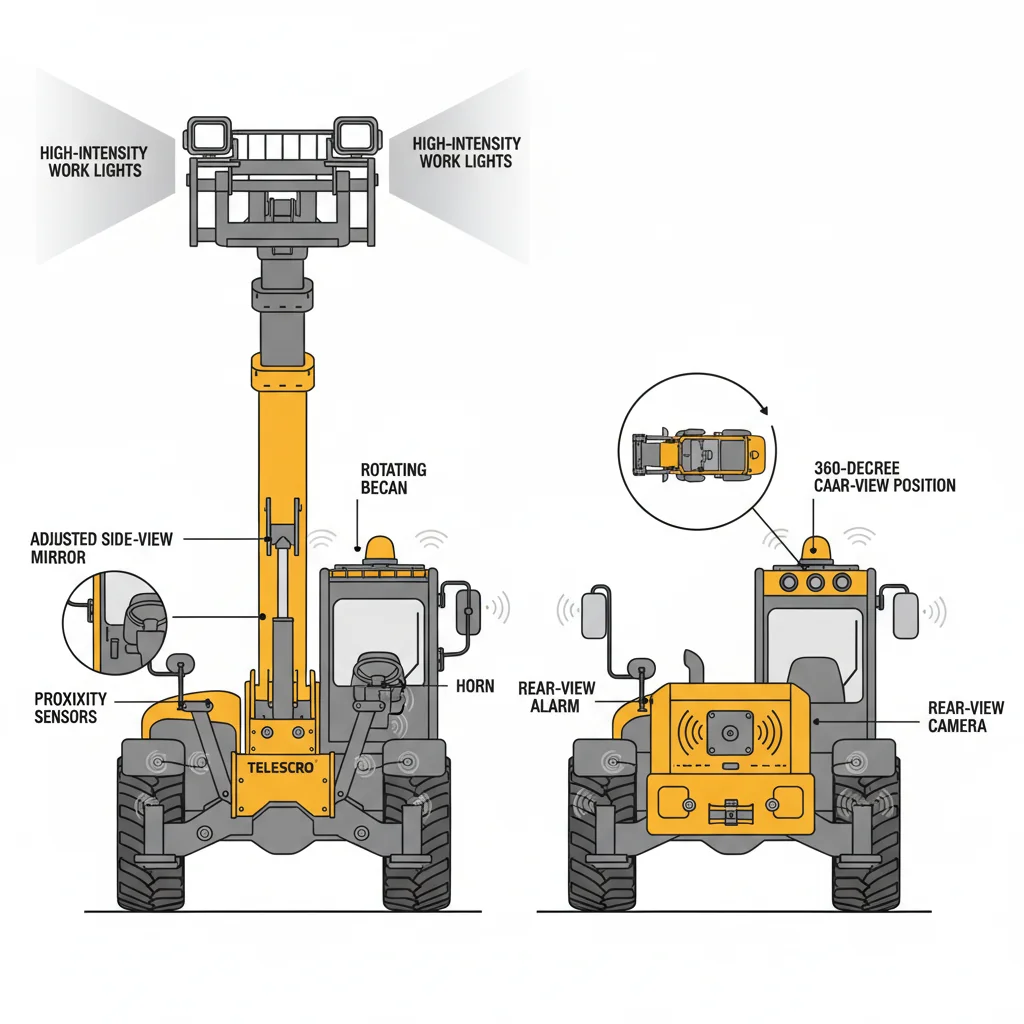
Last month, a contractor in Dubai called me after a near-miss on their crowded site. Their 4-ton telehandler was reversing around a stack of blocks, but workers didn’t hear it—turns out, the reverse alarm had failed overnight. This is exactly why reliable audible and visual warnings are non-negotiable. On jobsites with heavy foot traffic and tight spaces, I see reverse alarms, horns, high-intensity work lights, and a rotating beacon as baseline requirements. These help everyone—operators and ground crews—know what’s happening, especially with the notorious blind spots telehandlers create.
From my experience, even the best mirrors leave gaps at the rear corners—what I call the "3-meter blind spot." More contractors now ask about rear-view or even 360-degree cameras. In Brazil last year, I worked with a port facility that installed a camera system plus pedestrian proximity sensors on six 3.5-ton units. The cost was about 900 USD per machine, but it prevented several dangerous incidents in the first few months. That’s a small price for safety compared to the downtime and liability from an accident.
Regulations in most countries require daily checks before each shift. I recommend creating a simple checklist. Confirm the backup alarm sounds clearly. Test the beacon and all work lights—especially if you’re working night shifts or indoors. Check mirrors are adjusted so you can see both sides at ground level. For busier sites, consider adding ultrasonic proximity sensors or RFID pedestrian tags. It’s these details that keep crews safe—and jobs moving on schedule.
Telehandlers operating on sites with heavy pedestrian traffic must have at least a 97-decibel reverse alarm to ensure audibility over ambient noiseTrue
Safety standards and best practices recommend reverse alarms emitting around 97 dB to cut through typical construction site noise levels, ensuring pedestrians and workers can reliably hear the telehandler moving backward.
Telehandlers are legally required to have collision avoidance systems that automatically stop the machine within 1 meter of any obstacleFalse
While collision avoidance technology is available and beneficial, it is not yet a legal requirement for telehandlers, and stopping automatically within 1 meter is not a mandated safety standard.
Key takeaway: Reliable audible and visual warning systems—such as reverse alarms, beacons, and high-intensity lights—are essential for telehandler safety and regulatory compliance. Rear-view cameras and proximity sensors are recommended for sites with complex traffic. Always confirm these systems are present and inspect them before operation.
How Should a Telehandler Cab Protect Operators?
A telehandler cab must feature ROPS/FOPS certification12 to safeguard the operator in rollover and falling object scenarios. Properly designed seat belts and optional lateral restraints retain the operator within the cab’s protected area. Clearly visible gauges, load charts, and LMI displays ensure situational awareness, while integrated ergonomic layouts reduce the likelihood of missed warnings and operational errors.

Here’s what matters most when it comes to operator protection inside a telehandler cab: ROPS (Rollover Protective Structure) and FOPS (Falling Object Protective Structure) certification aren’t optional—they’re essential. These structural standards mean the cab can withstand a full overturn or heavy debris impact, directly reducing serious injury risk. I visited a jobsite in Kazakhstan last autumn where a 4-ton unit tipped while placing roof panels at 14 meters. The operator walked away with only minor bruises because the cab structure stayed intact, and his seat belt held him inside the protective envelope. That one detail made all the difference.
But it’s not just about steel and glass. From my experience, a well-designed seat belt with a secure latch, and—on some models—side restraints or high-backed seats, is critical. Without them, even a certified cab becomes a hazard. I’ve seen cases in Southeast Asia where missing or ignored restraints led to partial ejection during a rollover. That’s when a safety feature turns into a body trap.
Another element that gets overlooked is the visibility and layout of cab controls. Load charts (the diagrams that show capacity at different boom angles), load moment indicator (LMI) displays, and warning lights should be readable at a glance. I always suggest operators do an in-cab “visibility check”—forward, side, and down to the forks or attachment points. In poor light or with cluttered gauges, critical warnings get missed.
Consider pairing these engineering controls with proper PPE and site discipline. High-visibility vests and safety glasses help operators stay alert. When these details add up, true cab protection isn’t just about surviving accidents—it’s about preventing them altogether.
Telehandler cabs with integrated FOPS testing must withstand impacts from falling objects weighing up to 227 kg dropped from 3 meters, ensuring operator safety against common site debris hazardsTrue
FOPS certification requires that the cab protect operators from heavy falling objects, typically testing with a 227 kg weight dropped from 3 meters, simulating real-world impact risks on construction sites.
Telehandler cabs equipped with ROPS can safely withstand rollovers at any angle without structural failure, guaranteeing zero risk of operator injuryFalse
While ROPS cabs are designed to protect operators in rollovers, they are tested under defined criteria with specific rollover angles and loads; they do not guarantee absolute safety at any angle, as extreme conditions can exceed design limits.
Key takeaway: An effective telehandler cab includes ROPS/FOPS protection, correct seat belt and restraint systems, and ergonomic displays. This multi-layer safety approach minimizes operator injury risk during accidents, improves awareness, and supports consistent compliance with best industry safety practices.
Why Are Telehandler Inspections and Records Vital?
Routine telehandler inspections—including checks on brakes, steering, lights, warning alarms, safety systems, and structural integrity—are essential to prevent failures. Digital recordkeeping or app-based documentation creates an auditable maintenance trail for compliance with regulatory requirements, supports incident investigations, and highlights patterns for proactive repairs. Modern fleet buyers should prioritize telehandlers compatible with digital inspection platforms13 or OEM telematics for integrated safety compliance.
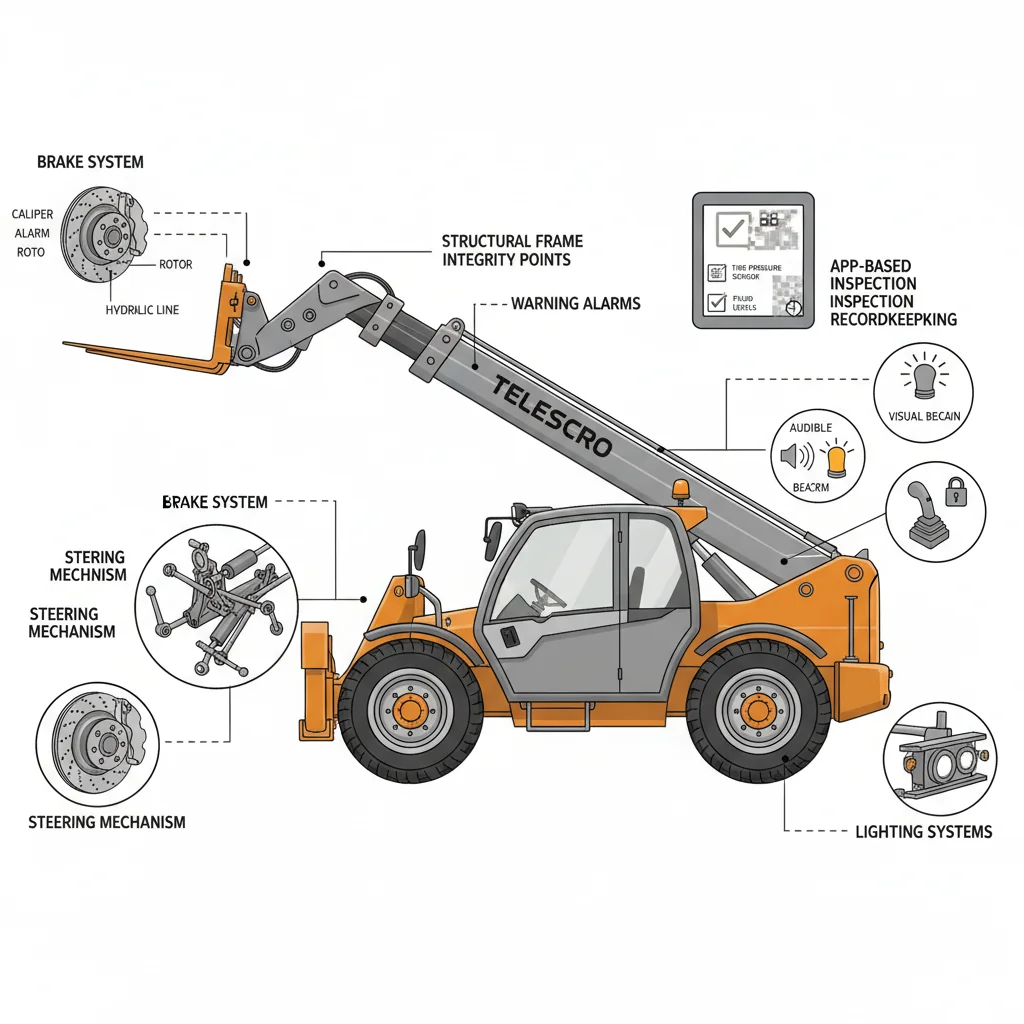
The biggest mistake I see is assuming that once a telehandler passes its annual inspection, it’s good for daily work—no questions asked. In reality, components like brakes, steering, boom locks, and hydraulic lines can develop issues overnight, especially on dusty or humid sites. Last year, a team in Malaysia sent me photos of a 4-ton telehandler with a frayed seat belt and hydraulic oil pooling under the chassis—both missed in their morning walkaround because the checklist was skipped on a busy day. The result? The load moment indicator failed to warn of an overloaded lift, and their project was delayed while they waited for replacement parts.
Regular documented checks do more than just tick a box for compliance. Whether you’re using a paper log or a tablet app linked to fleet management software, these records tell the story of that machine’s health. I’ve seen contractors in the UAE prevent costly downtime just because their maintenance technician spotted a pattern—minor hydraulic hose leaks after running for over 700 hours. They scheduled hose replacements before a major failure, avoiding both safety risks and rental penalties. Digital records also make audits smoother; regulators and insurers like to see proof of due diligence.
From my experience, the most efficient fleets today are choosing telehandlers that integrate telematics—automated digital logs, geo-fencing, and remote diagnostics. This saves time on site and flags problems before they affect operations. If you’re upgrading your fleet, I suggest looking for models that sync with your maintenance platform, and making daily digital checks part of every operator induction. That keeps jobsites safer and projects on schedule.
Telehandlers must have an automatic boom lock system that engages within 3 seconds of engine shutdown to prevent unintended boom movementTrue
Automatic boom locks are a key safety feature designed to secure the boom immediately after engine shutdown, reducing the risk of unexpected boom swing or drop, which can cause accidents during maintenance or inspection. The 3-second engagement timeframe is a common industry standard for effective safety assurance.
All telehandlers are equipped with seat belts made from Kevlar fibers to withstand twice the tensile strength of standard beltsFalse
Most telehandler seat belts are constructed from standard high-strength polyester webbing, not Kevlar, which keeps costs manageable while meeting OSHA and ANSI safety standards. Kevlar is typically reserved for specialized applications due to its higher cost and is not a standard material in telehandler seat belts.
Key takeaway: Consistent telehandler safety inspections, combined with digital or documented records, are critical for regulatory compliance, insurance claims, and effective preventative maintenance. Adoption of telematics-enabled or digitally integrated telehandlers streamlines these safety processes, making them easier to manage and audit across large fleets.
How Do Telehandlers Manage Electrical Hazards?
Telehandlers address electrical hazards primarily through clear warning decals, established minimum approach distances14, and strict operational procedures—such as mandated exclusion zones and use of trained spotters—rather than advanced built-in electronic systems. Dedicated powerline hazard training15 is often required. Some sites also integrate add-on safety devices and visual barriers to ensure compliance and operator awareness.

Let me share something important about telehandler safety near electrical hazards—most people focus on boom sensors or electronic limits, but in reality, it’s the jobsite plan and operator habits that save lives. In my first project outside China, I worked with a crew in Kazakhstan tasked to move steel trusses near active power lines. Their telehandler had bright warning decals and a solid operator cab, but the real safety came from strict exclusion zones—5 meters minimum from the lines, marked with barrier tape and heavy signage. They posted a trained spotter with a radio at all times. The crew also had to complete powerline hazard training before touching the controls.
From my experience, relying on “built-in” features alone is a risky shortcut. Most compact telehandlers—even those rated for 3,000 kg or 12-meter reach—don’t include any electronic zone limiting systems from the factory. Instead, sites may add clip-on alarms or visual limit devices, but these are only as good as the procedures around them. I always suggest buyers check that their model allows easy mounting of visual barriers, and that operator visibility from the cab is as wide as possible—some designs create blind spots over the right rear wheel or under the boom at low heights.
Environmental risks matter just as much. In Brazil, I saw how wet season rains left one site with saturated ground; the 4-ton loader almost tipped during a routine lift. The team began checking ground bearing capacity daily and followed derating charts provided in the manual for wind above 35 km/h. My advice? Factor in operator training, practical exclusion zones, and quality decals—these details protect workers far more than most realize.
Telehandlers are not legally required to have insulated booms because effective electrical hazard protection primarily relies on maintaining exclusion zones rather than equipment insulationTrue
Unlike insulated aerial lifts, telehandlers typically do not have insulated booms certified for live electrical work. Instead, OSHA and other regulators emphasize establishing and enforcing minimum approach distances (usually at least 10 feet or about 3 meters) to prevent electrical contact, making jobsite planning and operator awareness critical safety measures.
Modern telehandlers are equipped with automatic electrical hazard shutdown systems that cut power to the boom if it approaches within 3 meters of high-voltage linesFalse
Currently, telehandlers are not equipped with automatic shutdown or proximity-based electrical hazard systems. Safety depends on physical barriers, warning decals, operator training, and strict adherence to exclusion zones, rather than automated electronic intervention systems.
Key takeaway: Managing electrical and environmental hazards in telehandler operations relies on a robust combination of warning systems, site-specific operational procedures, and, where applicable, added safety devices. Buyers should prioritize models that support clear visibility, prominent hazard markings, and integration with environmental monitoring tools for optimal jobsite safety.
Which Certifications Must Telehandlers Comply With?
Telehandlers must comply with regional safety certifications such as CE (Europe) or ANSI/CSA/OSHA (North America), which include standards for ROPS/FOPS, overload protection, emergency stops, and warning devices. Buyers should verify LMI calibration certificates16, load charts, declarations of conformity, and request detailed safety documentation to ensure field and site acceptance.
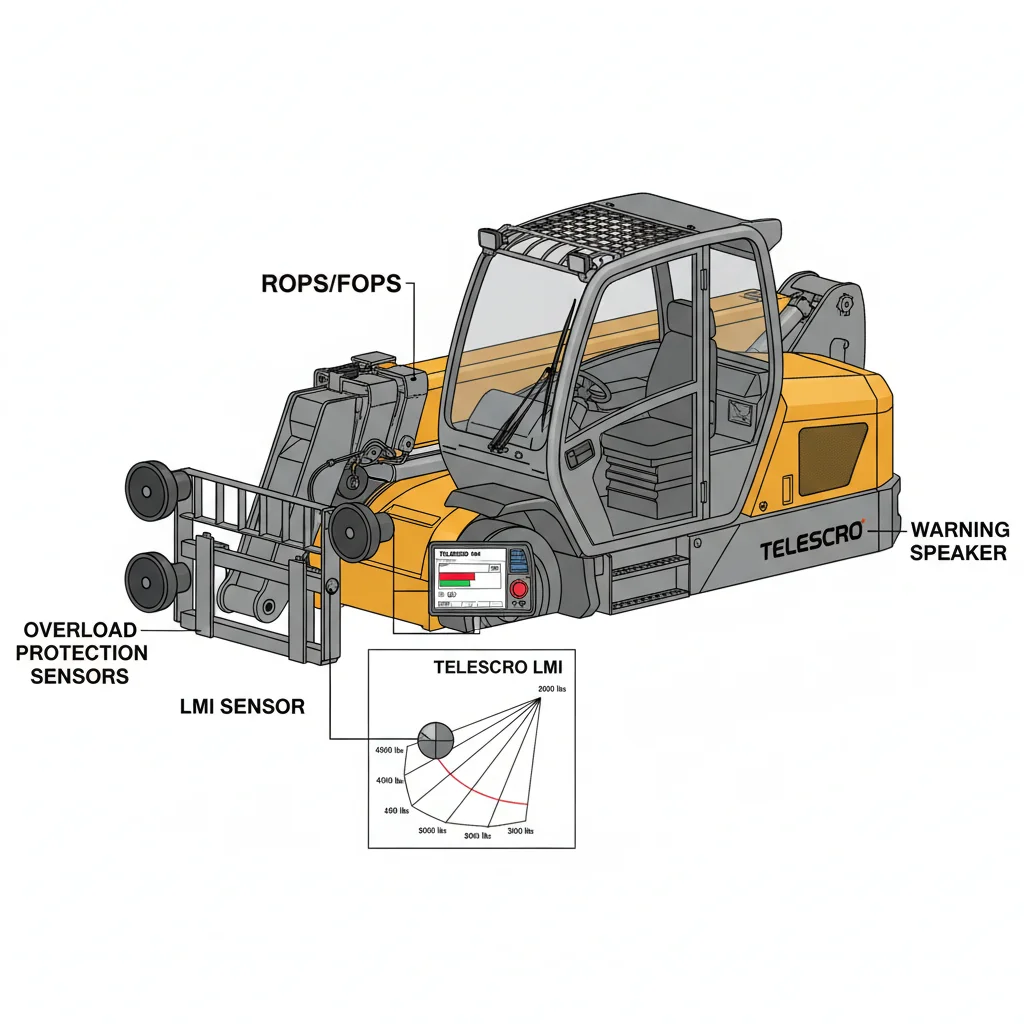
I’ve worked with customers who made this mistake—accepting a shipment, only to find out the telehandler couldn’t be used on-site because it lacked CE or ANSI-compliant documentation. In Germany last year, a civil contractor ordered a 4,000 kg, 17-meter unit from a budget supplier. On arrival, the client demanded LMI (load moment indicator) calibration certificates and an up-to-date declaration of conformity. None were supplied. They had to rent another machine for two weeks while retrofits dragged on—there went all savings, plus downtime costs. It’s critical to align your selection with the local regulatory requirements.
In the US and Canada, machines need to comply with ANSI/CSA standards and OSHA guidelines, which set expectations for ROPS/FOPS (roll and falling object protection), overload alarms, emergency stops, and warning lighting. European sites require CE-marked units with similar safeguards. Not all telehandlers—especially older or “off-brand” models—will arrive with full documentation, certified LMIs, or updated load charts.
Here’s a practical breakdown comparing key certification needs by region:
| Region | Mandatory Certification | Key Requirements | Documentation to Request |
|---|---|---|---|
| Europe | CE | ROPS/FOPS, overload warning, LMI | EC declaration, LMI certificate, load chart |
| North America | ANSI/CSA, OSHA | ROPS/FOPS, emergency stop, alarms | Certificate of compliance, LMI test, operator manual |
| Middle East | CE or ANSI (varies) | Varies by site (check contract) | Ask for both sets if unsure |
Telehandlers operating in the European Union must have a Declaration of Conformity verifying compliance with the Machinery Directive 2006/42/EC, which includes safety systems like limit load indicators calibrated to specific lifting capacitiesTrue
The Machinery Directive 2006/42/EC mandates manufacturers to provide a Declaration of Conformity, ensuring that all safety components—including load moment indicators (LMI)—meet regulated standards and are properly calibrated to the machine's rated capacity, preventing overload accidents on-site.
All telehandlers globally are required to be equipped with electronic stability control systems as part of ANSI certification standardsFalse
While ANSI standards require certain safety features, electronic stability control is not universally mandated for telehandlers. Many models rely on mechanical stabilizers and LMI systems, and requirements vary by region and machine class rather than being a global ANSI mandate.
Key takeaway: Prioritize telehandlers with full certification and up-to-date safety documentation. Relying on non-compliant or uncertified machines risks site rejection, costly retrofits, and liability exposure—potentially negating any initial savings and impacting fleet uptime and safety. Regulatory compliance should always be confirmed before purchase, not after delivery.
Conclusion
We’ve talked through the essential safety systems every telehandler should have—like accurate load monitoring and proper documentation—to keep both crews and machines protected. From my field experience, the buyers who avoid problems always double-check the load charts for every attachment and make sure operator training is in place, not just the paperwork. I’ve seen “showroom hero, jobsite zero” happen when people overlook these basics and trust impressive brochures instead of doing a few minutes of checking.
If you have questions about attachments, real-world load limits, or just want to compare options, feel free to reach out. I’m happy to share what’s worked for crews in different countries and jobsites. Every project is different—choose the safety setup that works for your team.
References
-
Learn about overload protection mechanisms that disable unsafe telehandler movements, crucial for compliance and preventing tip-overs. ↩
-
Explore how certified LMIs enhance telehandler safety by monitoring boom angle, load weight, and triggering alarms to prevent accidents. ↩
-
Understand the critical role of load moment indicators in preventing overload accidents and ensuring safe lifting operations on construction sites. ↩
-
Detailed insights on ROPS/FOPS cab standards show how they protect operators from rollovers and falling objects in telehandlers. ↩
-
Explains the technical function of chassis leveling and its critical role in maintaining telehandler stability on sloped or uneven job sites. ↩
-
Explains the importance of using OEM-approved attachments for safety and compliance, reducing injury risk and audit failures. ↩
-
Detailed insights on how visual indicator couplers ensure secure attachments, preventing accidents and equipment damage onsite. ↩
-
Explores how dual-redundant sensors enhance reliability and safety by providing backup detection in telehandler applications. ↩
-
Detailed insights on how boom angle interlocks physically prevent unsafe telehandler operations and reduce site accidents. ↩
-
Explore how reverse alarms prevent accidents by alerting workers about telehandler movements, especially in high-traffic sites with blind spots. ↩
-
Learn about the benefits of 360-degree camera systems in reducing blind spots and enhancing operator awareness on busy construction sites. ↩
-
Explore detailed standards and safety benefits of ROPS/FOPS certification that protect operators during rollovers and falling object incidents. ↩
-
Explore how digital platforms enhance telehandler inspection accuracy, compliance tracking, and proactive repair management for reduced downtime. ↩
-
Explains critical safety distances telehandler operators must maintain to prevent electrical hazards on construction sites. ↩
-
Details the necessity of specialized training to recognize electrical risks and ensure safety when operating near power lines. ↩
-
Detailed insight into LMI certification ensures telehandler safety and compliance with load monitoring standards, vital for on-site operations. ↩