










What is a Telehandler Big-Bag Lifter? Field Insights & Buyer Pitfalls
Not long ago, I helped a French vineyard switch from old pallets to a big-bag lifter for their seed and fertilizer runs. What surprised them most? How much cleaner and safer the bag handling became—no more torn loops or messy splits halfway down the row.
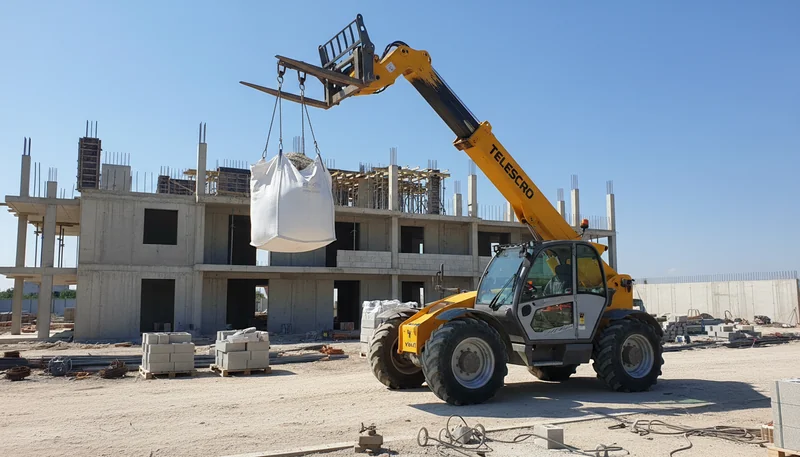
A telehandler big-bag lifter is a dedicated hook-and-frame attachment that lifts FIBC bags by their top loops from the boom head, offering a more controlled pick than forks. It is typically specified for common bag dimensions and working loads (often around 0.6–1.5 t), but the allowable load must be confirmed against the bag rating, the lifter SWL, and the telehandler load chart at the planned reach.
What Is a Telehandler Big-Bag Lifter?
A telehandler big-bag lifter is a dedicated attachment designed to safely lift and handle FIBC bulk bags by their designated lifting loops, rather than supporting them on forks. Using heavy-duty steel frames and purpose-designed hooks, these lifters improve operator visibility and reduce the risk of loop or fabric damage, while helping operators manage rated capacity compliance1 by accounting for attachment weight and load chart derating at the required reach.

Most people don’t realize just how risky it is to lift big-bags (like 1,000 kg fertilizer sacks) using bare forks. I’ve seen contractors in Dubai try this to save time—what usually happens? One missed lift, the fork rips the bag loop, and half a ton of material ends up on the ground. That’s why a telehandler big-bag lifter attachment2 makes sense. Instead of supporting the whole bag on a flat surface or stabbing it with forks, the big-bag lifter uses strong hooks set at a fixed spacing. You just connect the lifting loops directly so the bag hangs properly and the center of gravity stays predictable throughout the lift. Here’s what stands out when you use the right attachment. With a dedicated lifter, the operator gets a far better view because the bag hangs a bit forward, not squeezed right against the boom or cab. In Argentina I worked with a grain storage site using 3,000 kg-rated telehandlers and big-bag lifters. Their loading time dropped by almost half—no more damaged bags, and less operator stress. But the real lesson is about safety: the lifter’s own weight and the shifted load center both reduce the telehandler’s rated capacity. Always look up the derated numbers in your load chart before you pick up a heavy bag. I’ve had customers try to push it, and that’s when the machine gets unstable. I suggest always matching the lifter’s Safe Working Load3 to your largest bag.
A telehandler big-bag lifter attachment reduces the risk of tearing bag lifting loops by supporting the load across multiple purpose-designed fixed hooks, rather than concentrating force on fork tines.True
By using dedicated hooks positioned for FIBC lifting loops, a big-bag lifter helps spread the applied load across the bag’s intended suspension points, reducing localized stress and lowering the likelihood of loop damage compared with lifting directly on fork tines.
Big-bag lifters for telehandlers are only compatible with bags that have four lifting loops.False
While four-loop FIBCs are the most common, many big-bag lifter attachments are designed with adjustable hook spacing or alternative hook arrangements to accommodate different loop geometries and lifting configurations, rather than being limited exclusively to four-loop bags.
Key takeaway: A telehandler big-bag lifter attachment allows for safer, more predictable handling of bulk bags, minimizing risk of damaged lifting loops or dropped loads. Always ensure the lifter matches the rated capacity specifications and check the telehandler’s load chart for any derating due to attachment weight.
Where Do Telehandler Big-Bag Lifters Excel?
Telehandler big-bag lifters are most valuable in operations requiring frequent handling of flexible intermediate bulk containers4 (FIBCs), typically in the 0.5–2.0 t class depending on bag design and fill material. They allow accurate bag positioning in agriculture, construction, and industrial yards, reducing manual handling and pallet reliance while generally minimizing spillage compared with conventional fork-based or loader handling methods.
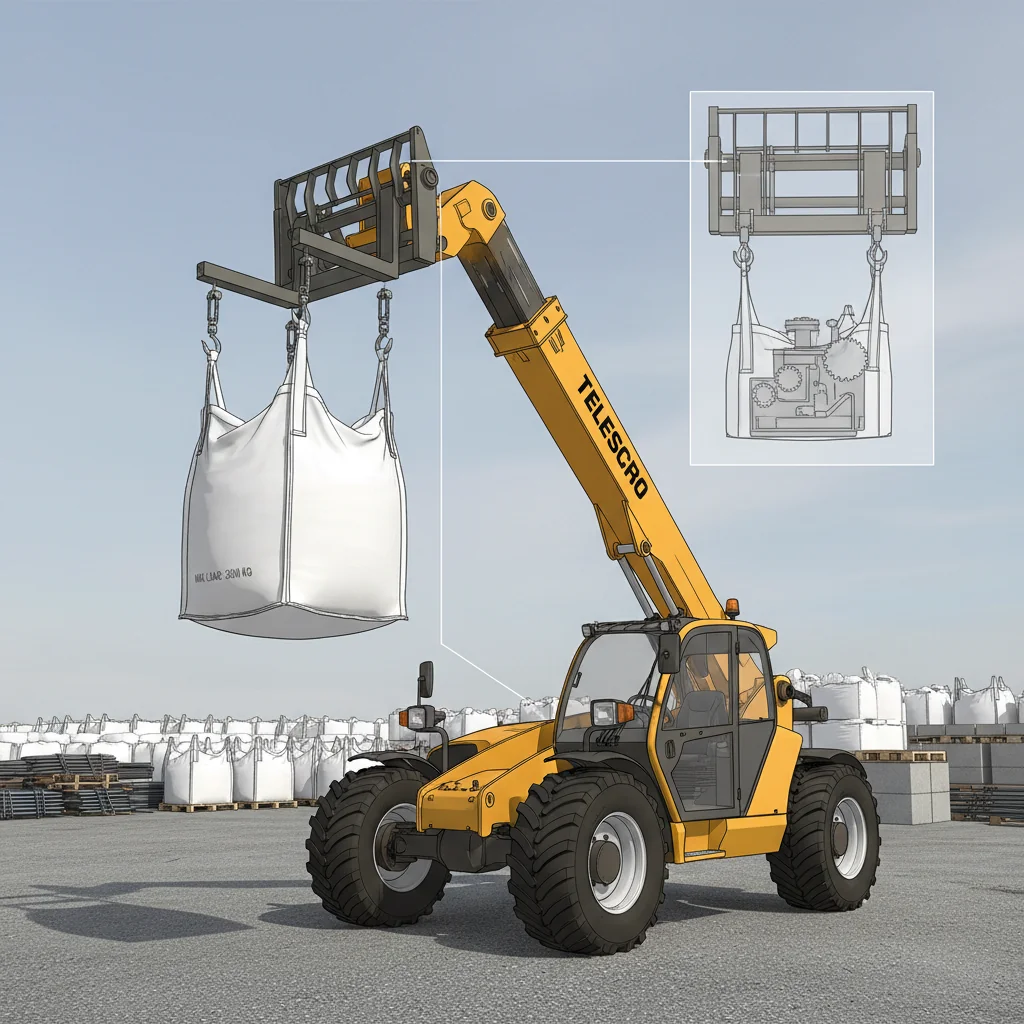
Let me share something important about where telehandler big-bag lifters really prove their worth. I still remember visiting a farm in Kazakhstan where the team needed to load multiple 1,000 kg fertilizer bags onto a spreader every hour. Before switching to a proper big-bag lifting attachment, they lost time repositioning bags with forks and clearing up spillage. With the lifter, the operator simply hooked into each bag’s loops using the telehandler boom’s full reach—no second machine or extra labor needed. The yard stayed cleaner, and the process took half the time.
In construction, I’ve seen similar gains. For example, on a Dubai jobsite, contractors needed to deliver 1.5-ton sand and cement bags directly into upper-floor mixers. Traditional loaders struggled to position bags precisely over tight spaces, and using pallets caused even more hassle—often leading to rips and wasted material. With a telehandler big-bag lifter, they positioned heavy FIBCs directly over the hopper. It reduced both manual lifting and clutter from empty pallets. One supervisor told me they saved at least two full working days on a single high-rise pour.
The precision these lifters offer comes from using the telehandler’s hydraulic circuit to control boom extension and tilt. You can align bags over hoppers or spreaders in yards with limited space—something most front-end loaders just can’t do as efficiently. I always suggest customers double-check rated capacity at their maximum working reach, since an overloaded boom is the fastest way to damage your machine—or risk safety on site. For any operation regularly moving 500–2,000 kg FIBCs, big-bag lifters are a real upgrade.
Telehandler big-bag lifters excel in uneven or soft ground conditions because the operator can stay on firm terrain while using the boom’s outreach to place or retrieve heavy bags.True
Since telehandlers have powerful booms and stable chassis, operators can load or unload materials from a distance. This minimizes the need to drive directly to difficult or unstable areas, which reduces the risk of getting stuck or damaging the ground, especially in agricultural or construction sites.
Big-bag lifters for telehandlers are primarily designed for handling loose bulk materials, like gravel or sand, rather than suspended loads.False
Big-bag lifters are specifically engineered to safely lift and transport large bags (usually with lifting loops) that contain granular or powdered materials, not to directly scoop or handle loose bulk materials. Forks or buckets are more appropriate attachments for loose material handling.
Key takeaway: Telehandler big-bag lifters deliver maximum value in operations regularly moving FIBCs between 500–2000 kg, particularly in agriculture, construction, and industrial sites. Their ability to position heavy bags accurately while reducing manual handling, pallet reliance, and spillage represents a major efficiency gain in these sectors.
How to Match Lifter and Telehandler Capacity?
Matching a big-bag lifter to a telehandler requires considering bag weight—including a 20–30% margin for overfill or moisture—lifter SWL, and actual telehandler capacity at specified working reach. Add the lifter’s own weight to total load, and always reference the telehandler’s load chart at planned outreach.
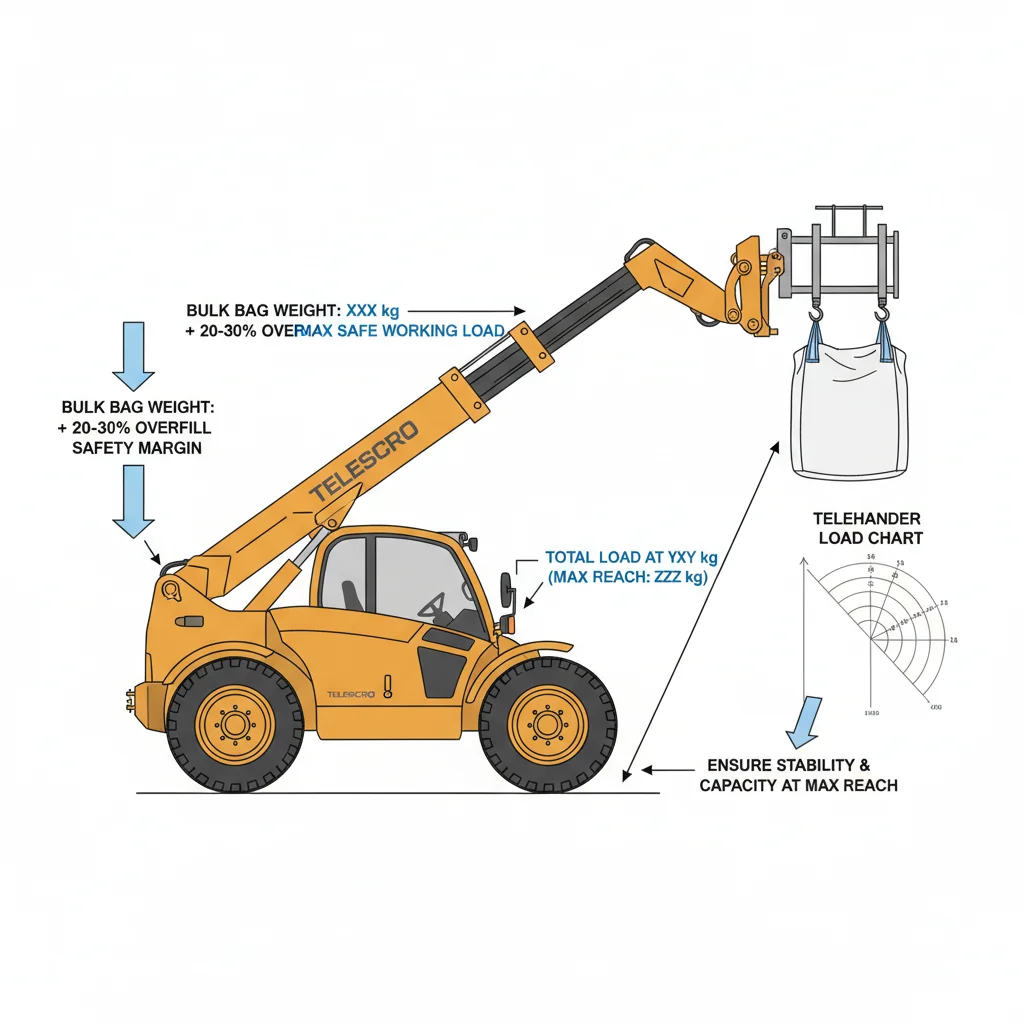
The biggest mistake I see is buyers assuming their telehandler can safely lift any big-bag lifter rated for their “maximum” capacity. That’s a shortcut to trouble. Real jobsite loads—especially construction bags—can easily run 20 or even 30% heavier than the label if you get moisture, overfill, or dense materials. For example, I’ve seen “1000 kg” sand bags in Dubai actually weigh closer to 1,300 kg each after heavy rainfall. If you’re using a lifter that can carry two bags, you’re probably looking at a real-world pick of 2,600 kg before you’ve even added the lifter’s own weight.
Here’s what matters most when matching lifter and telehandler: always add up total load, including the lifter itself. Attachment self-weight varies widely by design (single vs multi-bag, fixed vs adjustable, fork-mounted vs direct-coupled). Use the attachment data plate/spec sheet for the exact weight and load center.
That means your telehandler’s actual lifting task at the boom is now closer to 2,900–3,000 kg in the Dubai example above. The catch? Capacity typically drops significantly as outreach increases—always check the manufacturer’s load chart at the planned reach/height with the attachment’s stated load center.
I’ve seen customers in Poland run into trouble because nobody checked the load chart for that working position.
Don’t just look at numbers on paper. I always recommend taking five minutes to check the load chart at your planned working outreach—never just the “rated” sticker on the side. If the total load is close to the limit, finish the day with single-bag lifts. That flexibility beats repairs and downtime every time.
The safe lifting capacity of a telehandler with a big-bag lifter depends not just on the telehandler’s maximum rating, but also significantly on the load’s position and weight distribution.True
As the load is moved farther out from the telehandler’s center of gravity—due to the size of the bag lifter or the length of the boom—the effective safe capacity is reduced, even if the total weight is below the rated maximum. This is essential for preventing tip-overs and structural overloading.
As long as the big-bag lifter is rated for the same capacity as your telehandler, you can safely lift any load up to that number.False
The actual safe lifting capacity is affected by factors like the combined weight of the bag lifter and load, the load center, and boom extension or angle. Simply matching capacity ratings ignores these safety-critical variables and increases the risk of equipment failure or accidents.
Key takeaway: Always calculate combined bag and lifter weight—including safety margin—for the specific outreach. Cross-check this total against the telehandler’s rated capacity from the load chart. Improper matching is a leading cause of lifting incidents and downtime in bag handling operations.
Single or double-bag telehandler lifter: which?
Choosing single, double, or multi-bag telehandler big-bag lifters depends on balancing productivity, telehandler rated capacity5, and site constraints. Single-bag designs suit compact machines and precise tasks, while double and multi-bag lifters boost throughput but need higher capacity handlers and stable, level ground.

I’ve worked with farmers and contractors from Kazakhstan to Chile who all face the same question—do you go for a single-bag or double-bag lifter? The answer isn’t just about lifting more bags; it’s about matching your telehandler and jobsite. Single-bag lifters are compact, easy to maneuver, and don’t push your machine close to its stability limits. They’re perfect for 2.5 to 3-ton telehandlers, especially in smaller yards or when dropping product into seed drills or mixers where precision matters.
I’ve seen operators with only a few weeks of training get consistent results on uneven gravel, just because the single-bag frame is forgiving and less likely to rock the machine. But I also know sites, like a feedlot in Australia last year, where the customer wanted maximum productivity. They used a double-bag lifter (2 x 1,000 kg) and nearly doubled truck loading speed. The catch? Their telehandler was a 4-ton, long-wheelbase model, and their yard was flat.
The minute they tried to lift both bags on sloped ground, the machine’s stability alarms started ringing. They checked the load chart—the real capacity with the attachment and bags at full reach was down to about 60% of the nameplate. It was a wake-up call.
Here’s a summary comparison:
| Lifter Type | Best For | Telehandler Size | Bag Capacity | Key Limits |
|---|---|---|---|---|
| Single-bag | Precision tasks | 2.5–3 t, compact models | 1 × 600–1,000 kg | Lower throughput; one bag per cycle |
| Double-bag | Throughput focus | 3.5–4 t+, long wheelbase | 2 × 800–1,000 kg | Requires flat ground; reduced stability on slopes |
Double-bag lifters can push smaller telehandlers closer to their stability limits, especially when maneuvering on uneven surfaces.True
This is true because handling two big bags increases the load's weight and shifts the center of gravity forward, making smaller telehandlers more prone to instability, particularly on rough or sloped ground.
Single-bag telehandler lifters are always more productive than double-bag lifters on large farms.False
This is false because while single-bag lifters are easier to handle in tight spaces, double-bag lifters can transport more material in each cycle, making them generally more productive in large-scale operations with enough equipment capacity.
Key takeaway: Select a big-bag lifter based on jobsite layout, operator skill, and telehandler rated capacity. Single-bag models prioritize stability and precision for smaller yards; double or multi-bag frames deliver higher throughput but require larger, robust machines and careful attention to load chart limits on uneven terrain.
Why Does FIBC Bag Geometry Matter?
FIBC bag geometry—including bag width and loop-to-loop spacing—directly affects safe attachment to telehandler big-bag lifters. Incorrect hook positioning can stretch or twist loops, raising seam stress and tear risk, causing unstable swings. Properly matching hook centres to bag dimensions ensures safety, prevents damage, and improves operational efficiency during hook-on and hook-off procedures.
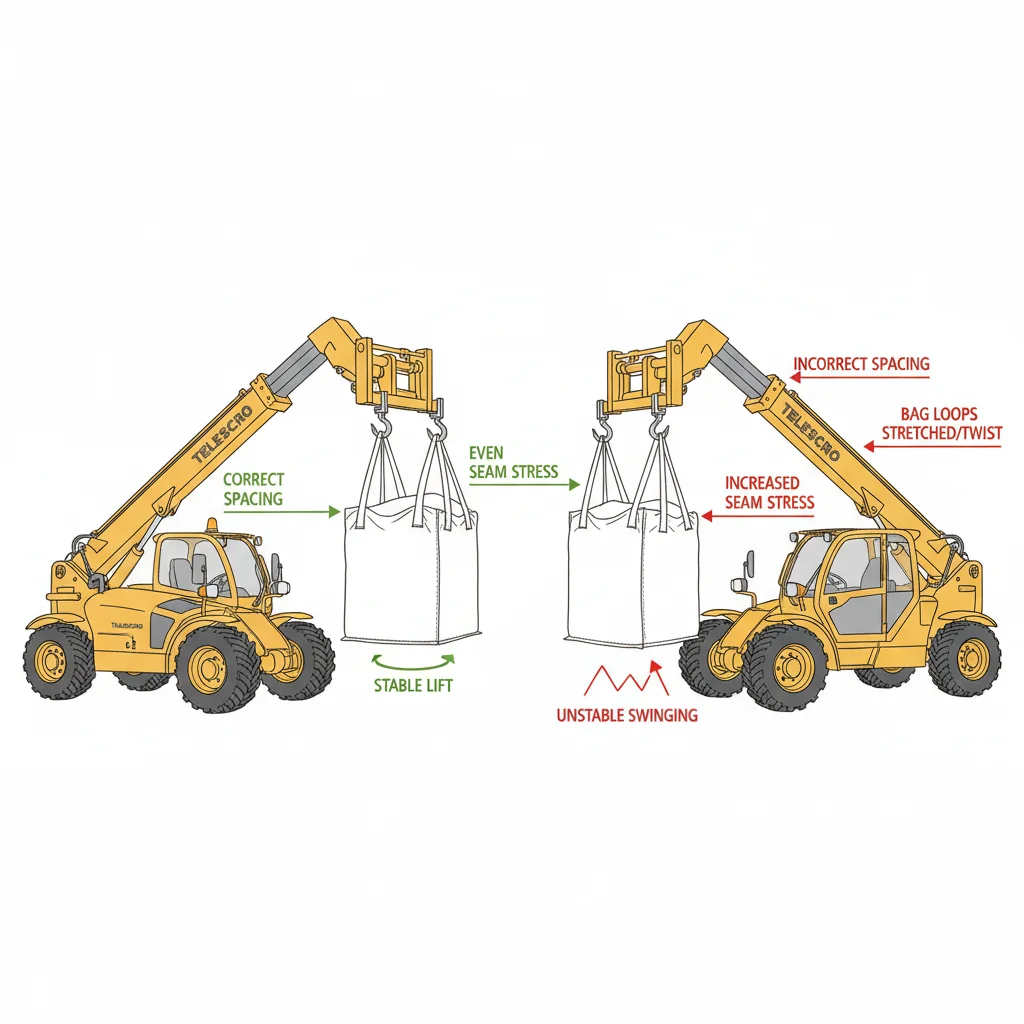
Here’s what matters most when handling FIBC bags with a telehandler: bag geometry impacts jobsite safety as much as weight or capacity ratings. I’ve seen sites in the Middle East struggle because the big-bag lifter hooks were spaced too close, only 450 mm apart, while their fertilizer bags had 800 mm between lifting loops. The result? Operators forced the loops together, causing raised seams and bags swinging off-center. One morning, a loop tore mid-lift—luckily no one was hurt, but the team lost a full afternoon cleaning up the spill and changing out bags.
From my experience, loop-to-loop spacing can range from around 400 mm on compact seed bags to nearly 900 mm on larger fertilizer or aggregate bags. If your lifter isn’t adjustable, you’ll keep fighting these geometry mismatches every time you change bag types. Stretching or twisting loops puts extra load on the bag’s seams—sometimes well above the bag’s rated limits. I always suggest checking not just your current bags, but any size your projects might use in the next year.
Here’s the detail that often gets overlooked: the height from the hook to any cross-member must let a full bag hang freely, with no chafing on the frame. In Kazakhstan, a customer used a 4-ton telehandler with a fixed-frame lifter and kept damaging bag tops because the hanging space was only 400 mm—bags needed at least 550 mm. To be honest, it’s faster and safer to spend an extra 10 minutes measuring your most common bags than risk costly bag failures or site delays. I suggest selecting a lifter with adjustable or telescopic arms if there’s any variation in your bag stock.
If the lifting hook spacing on a telehandler's big-bag lifter does not match the FIBC bag's loop geometry, the lifting forces can become uneven, increasing the risk of bag swing or seam failure.True
When the spacing does not align, loops are forced out of their intended positions. This distorts the bag and concentrates stress on seams and specific loop points, which can result in unpredictable swinging and even material failure during lifting.
Most telehandler big-bag lifters are designed to safely handle any FIBC bag, regardless of the loop spacing or bag dimensions.False
Big-bag lifters are engineered with specific hook spacing and structural limits. Using them with bags that do not match the designed loop spacing can introduce risks, including stability issues and uneven loading, which are not accounted for in universal designs.
Key takeaway: Always measure bag width, loop spacing, and loop height before selecting a telehandler big-bag lifter. Choosing a lifter with matching or adjustable hook positions preserves bag integrity, minimizes failure risk, and streamlines on-site bag handling—especially when using multiple bag types with variable geometries.
What mounting checks matter for big-bag lifters?
Telehandler big-bag lifters require careful mounting and compatibility checks. Direct-coupled types6 attach via machine-specific hitch plates, providing a more secure fit and typically preserving higher rated capacity. Fork-mounted designs7 offer versatility across platforms but may reduce usable capacity. For EU and UK markets, confirm CE/UKCA conformity and supporting documentation; in all regions, ensure the attachment is clearly marked with an SWL/WLL identification plate and correctly matched to the telehandler coupler or fork pocket dimensions.
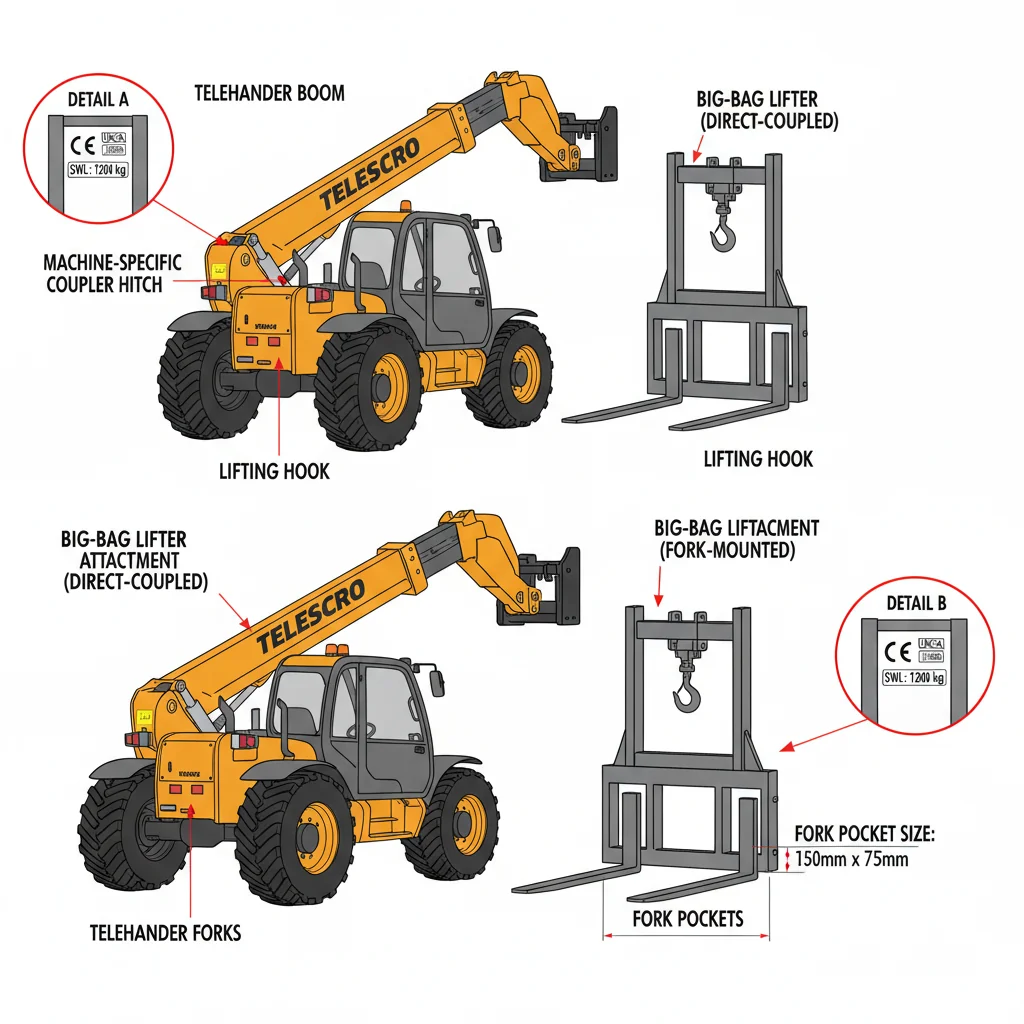
Let me share something important about mounting checks for big-bag lifters. Many buyers assume any lifting frame will fit, but there’s a big difference between direct-coupled and fork-mounted types. With direct coupling, the attachment pins onto the telehandler’s headstock—same interface as your bucket or forks—so you keep a tighter fit and maximize rated capacity. For example, last winter I helped a contractor in Dubai switch from a fork-mounted frame to a direct-coupled setup. The result? The rated capacity at full outreach improved by about 10%, and onsite swapping between bucket and bag lifter took less than two minutes.
But fork-mounted lifters do have a place, especially when several machines on site share attachments—a common scenario in European rental fleets. Fork tunnels must be sized for your forks’ width and thickness, or you’ll struggle to insert them fully, causing side shift or tilt that can make loads unstable. I’ve seen cases in Poland where a customer forced undersized forks into a heavy lifter, which bent the fork pockets and voided the load chart’s capacity. Always check fork pocket specs before you order.
To be honest, the compliance markings are the detail that often gets missed. The SWL (Safe Working Load) plate must be clearly visible, showing both the CE or UKCA mark and rated load. No plate? That’s a big red flag for site safety inspectors. I always suggest double-checking which coupler system your telehandler uses—there’s no universal fit, and a mismatched bracket can disable the locking pins or leave the attachment wobbling under load. This is about keeping operations safe and efficient, not just following rules.
Direct-coupled big-bag lifters typically allow the telehandler to retain its full rated lifting capacity compared to fork-mounted types.True
Direct coupling creates a more rigid connection with less leverage and movement at the headstock, reducing the risk of de-rating the machine and allowing it to use its maximum capacity.
All big-bag lifters are universally compatible with any telehandler without regard to mounting style.False
Compatibility depends on whether the attachment is fork-mounted or direct-coupled; mismatches can cause poor fit, reduced stability, or inoperability.
Key takeaway: Proper mounting and compatibility verification for telehandler big-bag lifters prevents unsafe modifications, ensures load security, and maintains rated capacity. Buyers must specify the exact machine interface, check regulatory markings, and review all attachment details to avoid operational errors and compliance issues.
Why use a big-bag lifter attachment?
A telehandler big-bag lifter attachment provides safer, more controlled handling of bulk bags compared to pallet forks. Tubular frames and rounded hooks prevent fabric loop damage, while integrated stops8 and stabilizers reduce slippage and swing. Operators benefit from improved visibility, faster loading cycles, and reduced risk of damaging bags, trailers, or nearby structures.

Last year, I spoke with a customer in Spain running fertilizer logistics at a large port. They were using pallet forks to unload 1,200-kg bulk bags from shipping containers. Sounds typical, but they kept losing time—three damaged bags in one week, each spilling product and blocking the yard. So why does a big-bag lifter make such a difference? Standard forks focus all the stress on two sharp edges. Even when you thread forks through the fabric loops, there’s still a huge risk—the bag can slide or roll off when the telehandler brakes suddenly or hits a rut.
A proper big-bag lifter is a lifesaver in these conditions. Here’s how it solves common problems I see on jobsites worldwide:
- Tubular frames and rounded hooks – Spread weight across a safe, wide surface, so bag loops don’t get cut or overstressed.
- Integrated stops – Stop the bag from sliding off, even during abrupt movements or when working on uneven ground.
- Stabilizers – Control swinging, making the bag much easier to position precisely—especially unloading into tall spreaders or high-sided trailers.
- Clear hanging geometry – No pallet underneath, so you get better visibility and more precise placement with less boom extension.
From what I’ve witnessed, cycle times drop by 15-20% because you reload faster and fumble less with torn bags. One client in Kazakhstan told me big-bag lifters reduced trailer damage—no more scraping against aluminum sides when lifting over 2.5-meter walls. Honestly, if you’re moving bulk bags regularly, I suggest checking the load chart with the actual attachment fitted. It’s a safer, more efficient setup every time.
A big-bag lifter attachment distributes the load evenly across the bag’s lifting loops, reducing the risk of tearing compared to standard pallet forks.True
Pallet forks focus force on just two points and can create high stress on bag loops, potentially causing failure. A purpose-built big-bag lifter supports all lifting points, minimizing concentrated stress and enhancing safety.
Using a big-bag lifter attachment makes it safe to lift bags by gripping any part of the bag, including the sides or bottom.False
Big-bag lifters are designed to attach specifically to the designated lifting loops on top of the bag. Gripping anywhere else, such as the sides or bottom, risks tearing the fabric and can result in dangerous drops or spills.
Key takeaway: Choosing a dedicated big-bag lifter attachment for telehandlers minimizes the risk of bag damage, enhances operator safety, and streamlines loading processes. This leads to better productivity, fewer costly incidents, and more precise placement—especially when repeatedly lifting heavy bags into high-sided trailers or spreaders.
What Safety Checks Are Critical for Big-Bag Lifters?
Operators must rigorously observe load limits, never exceeding the lowest rated value among the bag, big-bag lifter SWL, and actual telehandler capacity at reach. Inspect bags for UV damage9, frayed seams, or compromised loops. Hooks must take load in-line. Never stand under suspended bags; confirm headstock or forks are fully locked before operating.

Let me share something important about big-bag lifter safety that often gets overlooked on busy jobsites. Even though these attachments seem simple—just a frame with hooks—you’re dealing with lifting gear, so the standards are high. The number one rule: never exceed the lowest rated value among your bag, the lifter’s safe working load, or your telehandler’s capacity at the actual boom extension.
For example, in Qatar last year, I saw a contractor using bags marked for 1,500 kg with a lifter rated for 2,000 kg, but the telehandler could only safely lift 1,200 kg at max reach. They almost loaded 1,400 kg before I caught it.
It’s always the weakest link that determines safety—not what you think the machine “should” handle. Before every lift, take a good look at the bag itself. Bags left outside—even just a season—can suffer UV damage. Frayed seams, cut loops, or faded straps mean it’s time to swap them out.
I’ve seen otherwise careful operators in Australia lose a whole load of fertilizer because a sun-weakened loop failed at just half the bag’s original rating.
Trust your eyes; don’t risk it because “it looks fine.” Keep everyone clear of the danger zone. Never let anyone walk or stand beneath a lifted bag. Hooks need to take load in-line—if you notice the bag pulling sideways, stop and reposition the machine. Make sure the attachment is fully locked onto the headstock or forks before lifting.
A critical safety check for big-bag lifters is to verify that the attachment’s locking pins are fully engaged and securely fastened before every lift.True
If the locking pins on a big-bag lifter are not properly secured to the telehandler, the attachment can detach under load, posing a serious risk of dropped loads or equipment damage. This check is frequently overlooked but essential for safe operations.
It is safe to lift big bags as long as the weight does not exceed the telehandler’s maximum rated capacity, regardless of how far the boom is extended.False
The telehandler’s maximum rated capacity decreases significantly as the boom is extended. The safe lifting weight is determined not just by the telehandler’s maximum rating, but by its capacity at the specific boom extension and height being used. Ignoring this can lead to tipping or structural failure.
Key takeaway: Safe telehandler big-bag lifter operation requires checking bag integrity, precise hook alignment, strict load limit adherence, and attachment engagement. Operators must keep bystanders away from suspended loads and always follow manufacturer load charts and manuals to ensure compliance and safe lifting in varied site conditions.
How is a telehandler big-bag lifter maintained?
Telehandler big-bag lifters require regular visual inspections due to high cyclic loads and shock. Monthly checks should include weld integrity10, hook throat deformation11, locking pin condition, and signs of rust, especially at stress points. Hooks showing deformation must be replaced, and SWL identification plates kept legible for compliance.
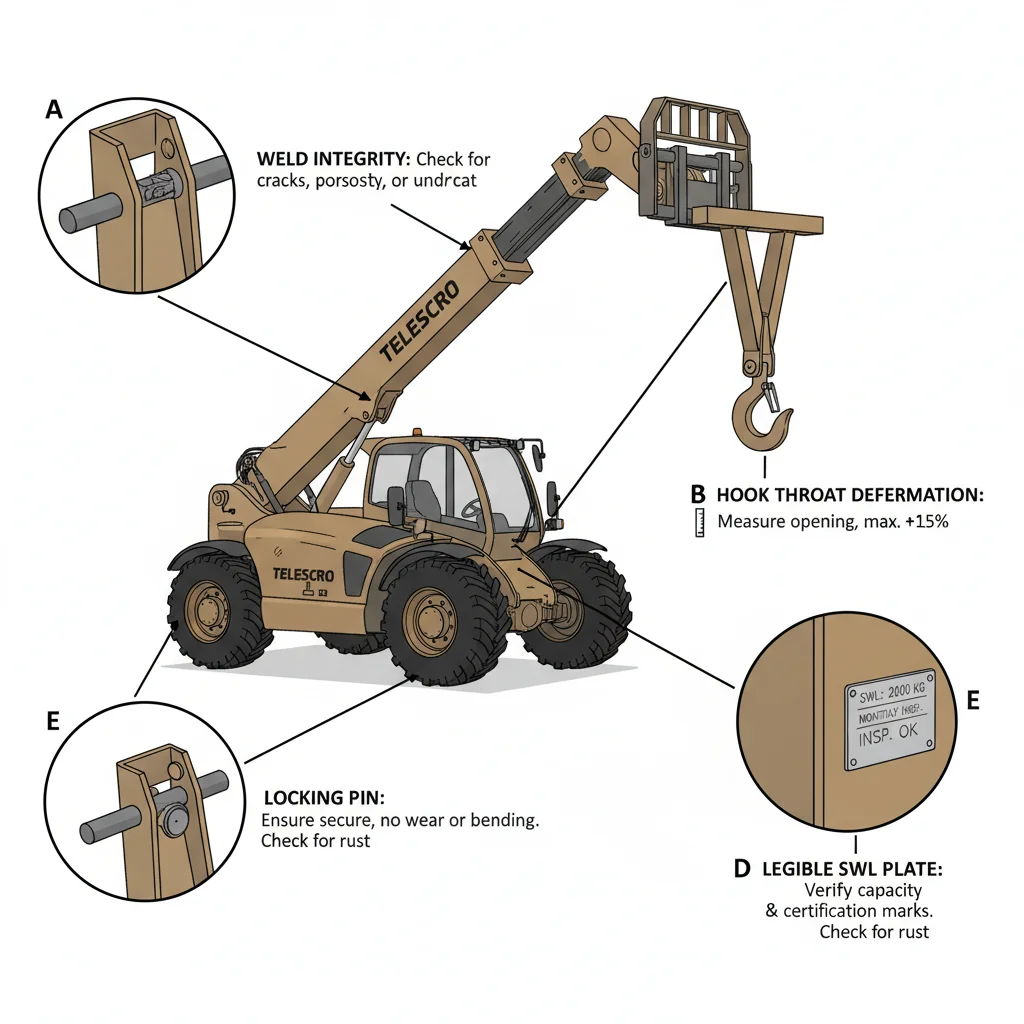
I’ve worked with warehouse crews in Dubai who thought a big-bag lifter was nearly “maintenance free” because there’s no hydraulic hose involved. The reality is, these attachments take a beating—repeated cycles, rough terrain, and sudden stops. One customer called me after noticing a thin crack in a weld at the base of the main hook. It looked minor, but with a 1,200 kg fertilizer bag on the line, that flaw could turn serious in seconds.
Every month—sometimes more often on heavy-use sites—I suggest walking through a checklist. Look over all welds, especially at joints where main beams meet hooks and brackets. Even the neatest weld beads can crack from stress over time. Next, go straight to the hook throat. If it’s stretched or showing any sign of bending, replace it instead of trying to bend it back. I’ve seen cracked hooks snap under load, usually after someone ignored subtle signs of deformation.
On farm sites in Australia, operators often switch the big-bag lifter between telehandlers. So, don’t skip the locking pins, quick-coupler lugs, and fork pockets. Any distortion, excessive wear, or loose fit means the attachment isn’t seating properly. That can lead to dangerous shifting while lifting.
Rust is another silent killer—especially around stress points and inside fork pockets. I always recommend scraping and repainting exposed steel before it spreads. And make sure the SWL (safe working load) plate stays clear and readable. If you’re storing the attachment outside, use a tarp or shed space to protect from rain and sun. Consistent, basic care does more for safety and service life than any fancy feature.
Cracks in the welds of a telehandler big-bag lifter, even if minor, can compromise the structural integrity of the attachment under heavy loads.True
A cracked weld can propagate quickly, especially under repetitive loading and dynamic forces common in big-bag handling, leading to possible attachment failure and safety hazards.
Because telehandler big-bag lifters do not use hydraulic hoses, they do not require regular inspections for structural damage or wear.False
While the lack of hydraulics eliminates hose-related issues, frequent inspections for structural cracks, deformation, and hardware wear are still essential due to the mechanical stresses and weight these attachments endure.
Key takeaway: Routine inspections—focused on welds, hooks, pins, and rust—are vital for telehandler big-bag lifter safety. Preventative maintenance extends service life by detecting early signs of distortion or corrosion. Replacement is mandatory for bent hooks; maintaining legible identification plates ensures continued regulatory compliance.
How Do Telehandler Big-Bag Lifter Specs Affect ROI?
Telehandler big-bag lifter ROI depends on selecting the correct capacity, steel grade, and coupler compatibility12 for the intended application. Pricing varies widely by market, configuration, and certification level—single-bag frames are typically lower-cost, while heavier-duty or multi-bag designs command higher prices. The main ROI gains come from reduced labor, faster handling cycles, and lower risk of bag or trailer damage. Buyers should request dimensioned drawings and appropriate proof-load or test certificates13 in line with applicable standards.

To be honest, the spec that actually matters is how the lifter frame fits both your bags and your machine. I’ve seen too many sites in Eastern Europe try to save a few hundred dollars by picking a 1,000 kg unit with the wrong fork spacing. The result? Torn bag loops and downtime while operators struggle with mismatched pockets. That quick “cost saving” easily turns into wasted man-hours—not to mention the risk of damaging a $300 big bag of seed or fertilizer. I always recommend asking for a dimensioned drawing before you sign the order. Check hook center distance and fork pocket size against your actual telehandler—don’t just trust generic specs.
One contractor in Kenya told me he saved almost two full days per month just by switching from chain slings to a double-bag quick-hitch frame. With the double-bag design (costing about $1,200 in his case), cycle times dropped nearly half—no more fighting lopsided loads, less need for extra spotters, and bags arrived on the trailer with zero rips. He said he recouped the extra cost in labor within three months.
If you’re dealing with lower-cost suppliers, proof-load test certificates (aim for 1.25 × rated capacity) and real steel grade documentation are non-negotiable. Small upcharges for OEM coupler compatibility or in-house tested welds can prevent accidents that cost far more than the difference upfront. While it’s tempting to buy the cheapest lifter, I suggest considering the value of reliability and proper certification. That’s what really protects your ROI—especially when you’re under pressure to deliver safely and on time.
Improper fork spacing on a telehandler big-bag lifter can lead to damaged bag loops and increased downtime during handling operations.True
If the fork spacing does not align with the bag's loop positions, operators may force the bag onto the lifter, which puts stress on the material and loops, risking tearing. This misfit also slows down loading and unloading, directly impacting efficiency and operational costs.
All telehandler big-bag lifters are universally compatible with any telehandler and big bag size, regardless of manufacturer.False
Lifter frames have different designs, fork spacings, and capacities, and not all are compatible with every telehandler or bag size. Using an improperly matched lifter or forks can result in unsafe lifts and damage, contrary to the claim of universal fit.
Key takeaway: Choosing a telehandler big-bag lifter based on accurate dimensions, material grade, and proper certification has direct impact on safety and operational ROI. Small upcharges for OEM compatibility and proof-load documentation can prevent costly accidents, unplanned stoppages, and long-term losses from bag or equipment damage.
Conclusion
We’ve looked at how a telehandler big-bag lifter makes bulk bag handling safer and more predictable, plus what to watch for before buying. From my experience, it’s the crew who double-check the load chart with the attachment installed—not just the max capacity—who avoid nasty surprises on site. Don’t let the numbers on a brochure turn into a "showroom hero, jobsite zero" situation.
If you still have questions about matching attachments to your telehandler or want to compare options based on your job needs, feel free to reach out. I’m always happy to share what works—and what to avoid—based on real jobsite feedback. The best choice is the one that keeps your crew productive and safe.
References
-
Explains how rated capacity compliance affects telehandler safety and performance when lifting heavy bulk bags, with load chart derating details. ↩
-
Explore technical details and practical benefits of big-bag lifter attachments for safer, efficient bulk bag handling in logistics and construction. ↩
-
Explains how SWL determines lifting safety limits, preventing overloads and accidents on construction sites with expert guidelines. ↩
-
Detailed explanation of FIBCs benefits, applications in agriculture and construction, and handling techniques to minimize waste and improve safety. ↩
-
Explore detailed explanations of telehandler rated capacity influencing safe load limits and operation efficiency in construction sites. ↩
-
Explore how direct-coupled lifters maximize rated capacity and improve safety with secure machine-specific hitch connections. ↩
-
Learn about the versatility and limitations of fork-mounted lifters, including fork pocket sizing and stability concerns on site. ↩
-
Learn how integrated stops enhance load stability by preventing slippage and improving safety during aggressive telehandler movements on uneven ground. ↩
-
Details the risks UV exposure poses to lifting bags, including weakened seams and loops that can lead to load failures and safety hazards. ↩
-
Detailed guidance on identifying weld cracks and stress points ensures safety and prolongs lifter service life under heavy cyclic loads. ↩
-
Expert insights on detecting hook deformation help prevent load failures and accidents by ensuring timely replacement of compromised hooks. ↩
-
Explains how proper coupler compatibility ensures safe and efficient handling, reducing downtime and equipment damage. ↩
-
Details the significance of proof-load certificates in verifying lifter safety and compliance, essential for risk mitigation. ↩