










What are Telehandler Pallet Forks Used For? Field-Tested Buyer Guide
It still surprises me how often I get asked, “Can’t I just use a bucket for everything?” One site in the UK last month had to repalletize 20 tons of bricks by hand—just because their operator didn’t realize what pallet forks actually unlock on a telehandler.
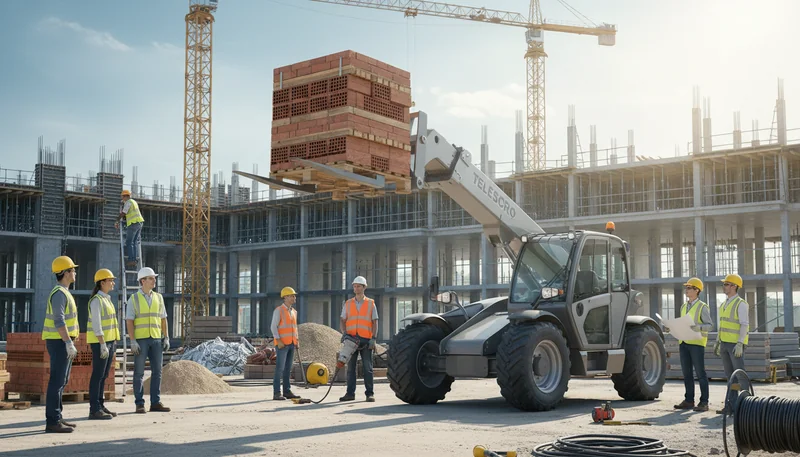
Pallet forks extend a telehandler’s capabilities by enabling precise lifting and placement of palletized or bundled materials over uneven terrain and at working heights beyond standard forklifts. Mounted on the carriage, the tines securely engage pallets carrying bricks, bagged goods, timber, or big bags, typically in the 2,000–8,000 pound range, depending on the telehandler and fork rating. With a telescopic boom, many construction-class machines can position these loads at elevated levels or over barriers—often up to around 18 meters on suitable models—helping streamline material flow and overall jobsite efficiency.
How Do Pallet Forks Expand Telehandler Use?
Pallet forks transform a telehandler from a material loader into a rough-terrain forklift1 with added reach. Mounted on the carriage, these forks lift palletized or bundled loads weighing 1–4 tons, including bricks, timber, and bagged goods, enabling precise placement at heights unreachable by standard forklifts.
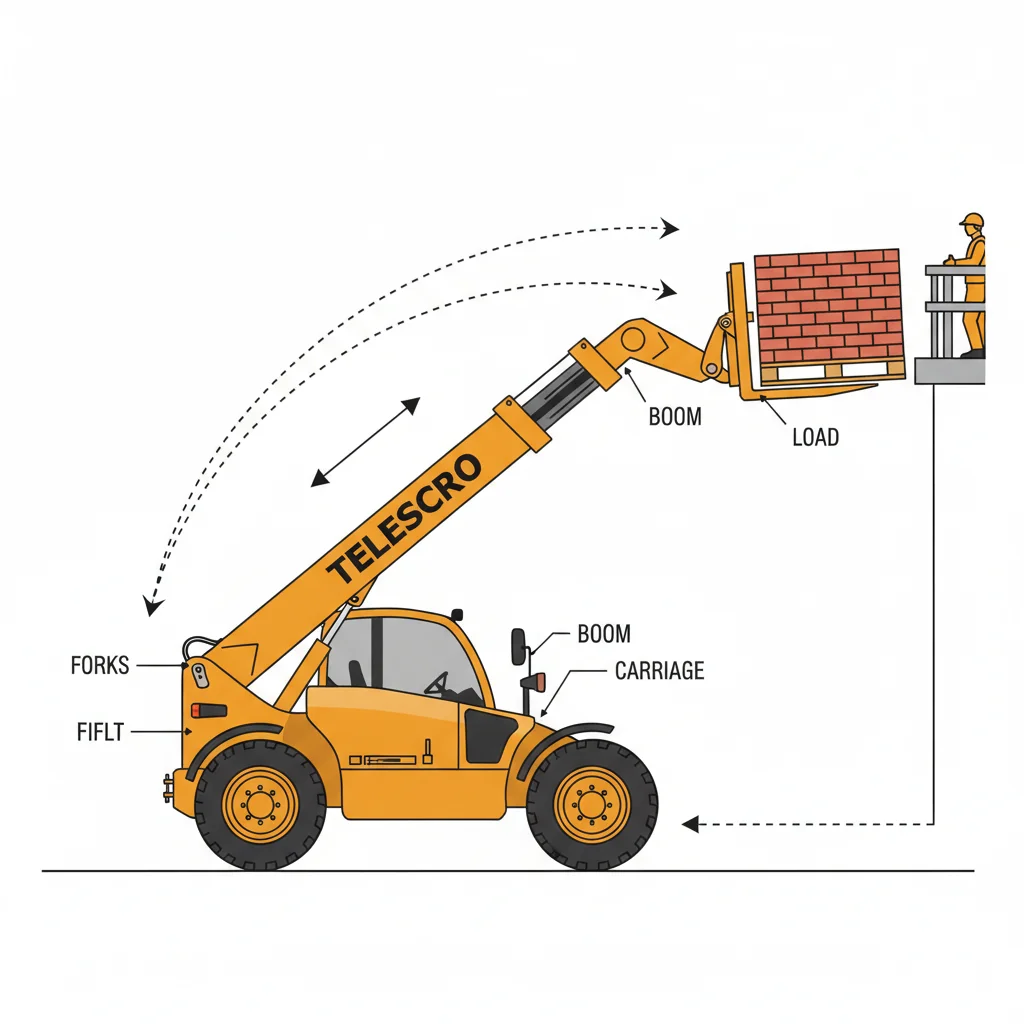
I often get asked how pallet forks really change what a telehandler can do. Let me share something important—when you add forks, you move far beyond scooping piles or handling loose material. Suddenly, one machine can unload palletized bricks straight from a flatbed, travel across muddy sites, and set them right where masons are working—sometimes 10 or even 14 meters up. Last year in Dubai, a site manager told me his telehandler with forks replaced both a small forklift and a crane for day-to-day supply work. They didn’t have time to bring in two machines for every delivery, especially over rough ground.
Here’s how pallet forks expand telehandler use on real jobsites:
- Lift a wide range of palletized loads—bricks, tiles, cement, timber, big bags—usually between 1 and 4 tons.
- Reach above standard forklifts—with booms extending 6 to 18 meters (that’s roughly 20 to 60 feet), you can place loads onto upper floors or scaffolding.
- Handle poor ground conditions—wide tires and 4-wheel drive mean you can cross gravel, mud, or uneven terrain without getting stuck.
- Position loads exactly—hydraulic side shift or fork positioners help you line up pallets without constant machine movement.
- Reduce manual labor and crane hire—one operator and machine do more, saving hours every day.
The reality is, if most of your material arrives palletized, forks make your telehandler a true all-terrain handler. I suggest always checking your load chart, since forks shift the load center2 forward and reduce rated capacity3 at maximum reach. That’s a detail even experienced buyers overlook.
Pallet forks allow telehandlers to take over many day-to-day lifting tasks that might otherwise be handled by a small rough-terrain crane, especially when lifts involve heights of up to around 14 meters and moderate outreach.True
With pallet forks, telehandlers can precisely position palletized or bulky materials at significant heights and reach, substituting for cranes on many routine site tasks when the load remains within the machine's rated capacity and the lift is planned according to the load chart.
Pallet forks on a telehandler are only suitable for handling lightweight materials under 500 kg due to stability limitations.False
Modern telehandlers equipped with pallet forks can safely lift and place loads surpassing 2,000 kg, provided operators adhere to load charts and boom extension limits. Capacity depends on the specific model and configuration, not just the attachment type.
Key takeaway: Pallet forks unlock the versatile potential of telehandlers as all-terrain material handlers. They safely lift and position heavy, palletized products at significant heights and across difficult ground, reducing manual effort and eliminating the need for additional equipment such as cranes or warehouse forklifts on construction and agricultural sites.
When Are Pallet Forks Better Than Buckets?
Telehandler pallet forks outperform buckets when handling palletized, strapped, or bundled materials such as bricks, bags, sheet goods, or big bags. Forks allow direct placement and minimize product damage compared to buckets, which are best for loose aggregates or debris and risk destroying pallets or packaging.

Let me share something important about choosing between pallet forks and buckets for your telehandler. Most people think one attachment can do it all, but from what I’ve seen across dozens of jobsites, this just isn’t true. Pallet forks are the clear winner whenever you’re handling palletized, strapped, or bundled materials like bricks, bagged cement, sheet goods, or big bags. A bucket simply can’t compete here—if you try, you’ll tear the packaging, risk spilling half the load, or damage expensive goods.
A project manager in Dubai recently called me frustrated after their crew tried offloading 60 pallets of blocks with a bucket. What happened? Half the wrapping was destroyed, and the site spent two extra days repalletizing everything by hand. Switching to forks allowed direct placement right from the truck bed to the second floor, using a 4-ton telehandler with a 17-meter boom. They finished the next 40 pallets without damage in less than a day. There’s no slinging or un-slinging like with a crane—just fork in, lift, and place.
Buckets shine with loose materials: gravel, dirt, or demolition debris. But with anything bundled, using a bucket adds unnecessary handling and waste. I always suggest checking your weekly material types—if more than half are on pallets or strapped, forks should be your default. Buckets are great, just not for the organized stuff. For smoother work and less product loss, pick the right tool for your main materials and verify with the load chart before every job.
Pallet forks can safely handle a large portion of a telehandler’s rated load while providing better load stabilization than a bucket in similar conditions.True
Because pallet forks support palletized loads from underneath and allow precise placement, they minimize shifting and reduce the risk of tipping when moving stable, bundled loads—especially when those loads are kept within the rated capacity envelope for fork use shown on the load chart.
Pallet forks are ideal for moving loose gravel and sand because their tines can scoop and contain these materials more efficiently than a bucket.False
Pallet forks lack sidewalls and a solid enclosure, making them unsuitable for loose, granular materials like gravel and sand, which would simply fall between the tines. Buckets are specifically designed to scoop, contain, and transport such materials efficiently.
Key takeaway: Telehandler pallet forks are ideal for efficiently moving bundled or palletized materials, protecting packaging integrity while enabling direct placement at the worksite. Buckets should be reserved for loose, uncontained materials. Selecting the right attachment streamlines operations and reduces material handling time and waste.
How do telehandler forks speed unloading?
Telehandler pallet forks enable crews to unload materials such as bricks, blocks, and drywall directly from trucks—including from one side—using boom reach to clear obstacles. This minimizes double-handling, reduces labor and equipment hours, and accelerates truck turnaround times versus manual or crane methods, improving material flow and jobsite efficiency, especially in space-constrained construction environments.

Most people don’t realize that telehandler forks actually handle the majority of real-world unloading on small to mid-size jobsites. Manual methods or cranes slow things down, especially when space is tight or trucks are backed up on busy roads. With forks, you can approach a delivery from the open side, stretch the boom safely over the truck bed—even with barriers or parked vehicles in front—and lift full pallets of bricks, drywall, or blocks straight to where they’re needed. I’ve watched sites in Dubai cut their average truck unloading time from over an hour to less than 25 minutes per load by swapping manual teams for a single 3.5-ton telehandler. The reduction in double-handling alone keeps the whole material flow moving, not just the unloading.
Last month, a customer in Kazakhstan called after struggling with a city tower project. Their team needed to land blocks onto a third-floor scaffold, but the main access lane was blocked each morning. The site had almost no laydown area. Instead of offloading to ground level and dragging everything upstairs, their crew used forks with a 14-meter reach to place pallets directly onto the scaffold. That freed up two laborers and let the delivery truck leave within 40 minutes. I see this play out all over: fewer workers shifting materials, less wasted machine time, and a clear, safer path around the jobsite.
Here’s what matters most—always check the rated capacity in the load chart with forks fitted, since reach and attachment weight both reduce what you can lift. Planning truck arrivals around fork access pays off quickest where laydown space is at a premium.
With a skilled operator and good access, telehandler pallet forks can unload a standard flatbed truck in well under 10 minutes, even when access is only available from one side.True
Pallet forks allow the telehandler to reach over from one side and lift entire palletized loads directly off the bed, greatly reducing unload time compared to manual methods or cranes that require repositioning vehicles or materials multiple times.
Pallet forks on telehandlers can safely transport loose sand or gravel just as efficiently as palletized loads.False
Pallet forks are specifically designed to handle palletized and strapped loads, not loose materials. Using forks for loose sand or gravel risks spillage and instability, requiring buckets or bins for proper material handling.
Key takeaway: Field-tested telehandler forks streamline construction material handling by allowing efficient, direct placement from delivery trucks to scaffolds or designated areas. This process cuts manual movement, decreases jobsite congestion, and maximizes productivity—critical benefits for contractors managing urban or restricted-space projects.
How Are Telehandler Pallet Forks Used?
Telehandler pallet forks are commonly used on farms and in material yards to handle hay and straw bales, palletized feed, seed, and fertilizer. Their extended reach4 allows stacking bales or pallets multiple tiers high, maximizing storage. In industrial and building yards, pallet forks let telehandlers move heavy loads outdoors where traditional forklifts struggle.
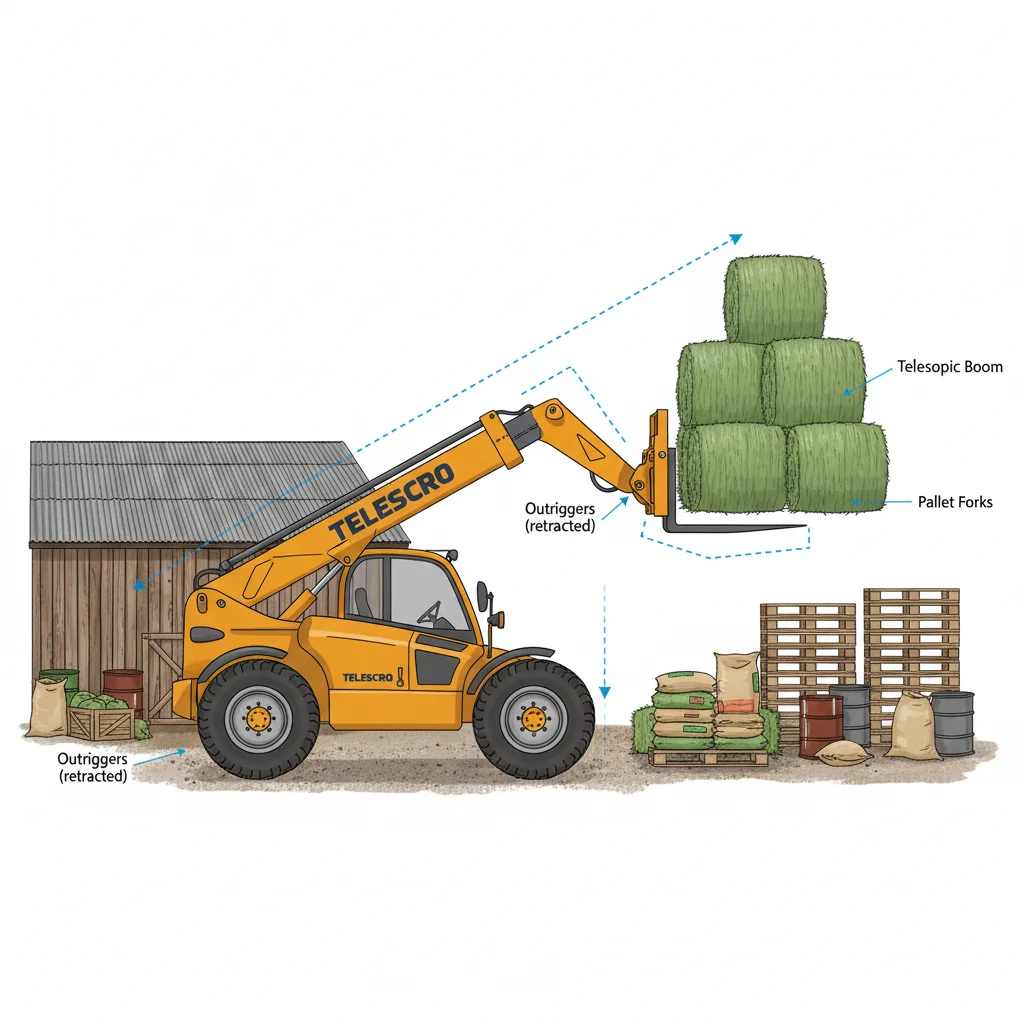
Here’s what matters most when using telehandler pallet forks: real jobs usually call for more than just lifting and moving pallets. On a dairy farm in New Zealand, I saw a 3.5-ton telehandler stack big square hay bales—sometimes two at once—five layers high inside a shed with only 3.2 meters headroom. In a compact aisle, the operator turned a tight corner, lifted 1,200 kg bales overhead, and reversed in one smooth motion. Forks made the process safer and much quicker than using a front loader or manual stacking. The farmer told me this saved at least four hours each week during the busy feed season.
In industrial yards, pallet forks turn a telehandler into something a regular forklift just can’t match. I’ve watched crews unload steel rebar bundles from trucks on gravel in eastern Kazakhstan—forklifts got stuck, but the telehandler with 400 mm ground clearance handled it with no problem. Operators could stack pallets along a fence, using the boom to reach over obstacles that blocked access for other equipment. On one site, this flexibility cut down equipment needs from three machines to just one telehandler with forks.
Typical uses for telehandler pallet forks include:
- Loading and unloading trucks—even on soft or uneven ground
- Stacking bales, pallets, or IBC tanks in barns, warehouses, or yards
- Placing materials at height—up to 14–18 meters with the right machine
- Working in tight spaces thanks to the smaller turning radius
I suggest checking the load chart for every attachment, since actual lifting capacity will often be less than the machine’s rated value shown on the nameplate. That’s a detail worth double-checking before every big lift.
Telehandler pallet forks can safely handle loads with a center of gravity up to 600 mm from the heel of the fork, which is critical for balancing non-standard materials like big square bales.True
The rated load capacity of telehandler pallet forks is based on a standard load center, often 500 or 600 mm from the fork heel. Handling large, uneven loads such as hay bales requires understanding this specification to prevent tipping and ensure stability, especially when working at height or in confined areas.
Telehandler pallet forks are only suitable for moving standard-size wooden pallets and should not be used for bulkier materials like hay bales or construction panels.False
Pallet forks are highly versatile attachments and are frequently used to handle bulky, uneven, or oversized loads—including hay bales, pipe bundles, or timber. Their ability to adjust spacing and support various load types is a key reason telehandlers are valued across industries beyond standard pallet handling.
Key takeaway: Telehandler pallet forks enable safe, efficient handling of bulky or palletized materials in agriculture and industrial settings. Their height and reach maximize stacking and storage, often replacing several less capable machines. Proper attachment selection and load chart checks are essential to maintain safe rated capacity.
Why Do Telehandler Forks Need Reach?
Telehandler pallet forks are designed for heavy pallet handling on rough, uneven terrain. Large tires, four-wheel drive, and multiple steering modes allow travel over mud, gravel, and slopes—conditions unsuitable for warehouse forklifts. The telescopic boom adds forward and elevated reach, bridging the gap between standard forklifts and cranes for multi-story or congested worksites.
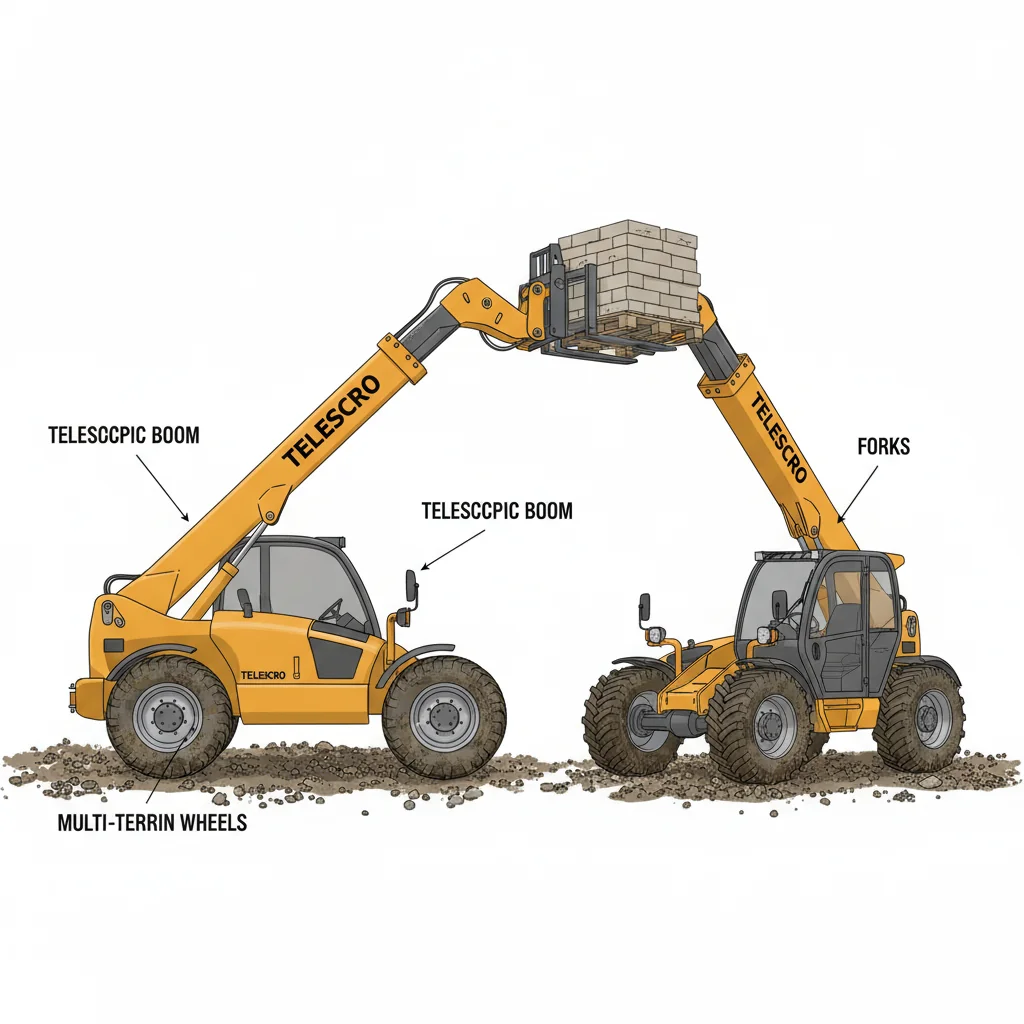
The biggest mistake I see is treating a telehandler with forks as just a “big off-road forklift.” That thinking misses why reach makes these machines so valuable—especially when jobsites are anything but flat and open. Warehouse forklifts max out on smooth concrete. But on real jobsites like in rural Vietnam or the outskirts of Dubai, you get mud, steep slopes, debris, and tight paths. Large tires and four-wheel drive get you there, but it’s the telescopic boom that changes the game. Need to unload a truck parked behind a ditch or curb? The boom lets you reach across from firm ground—no need to move the truck or regrade the site.
Last year in Kazakhstan, a contractor called struggling to place palletized bricks onto a second-story slab—around 7 meters up—with no access road along the building. Their 3.5-ton telehandler with forks and a 13-meter reach handled it easily from 8 meters away, keeping the machine on stable gravel. No crane rental required, no risky maneuvering right up to edges. The load chart told the real story: at full reach, capacity dropped to about 1,000 kg, but that matched the pallet weight. It’s a perfect example of how reach plus off-road capability saves both time and money.
If you work on crowded or undeveloped sites, the right telehandler replaces multiple machines. I always suggest reviewing the load chart at every key reach point, not just the maximum. This way, you’ll know exactly what your forks can safely handle—no guessing, no costly mistakes.
Telehandler pallet forks allow operators to precisely place loads on upper floors or scaffolding up to 17 meters away from the machine.True
The telescopic reach of telehandlers enables operators to deliver materials to elevated or hard-to-access locations, such as upper stories of buildings or behind obstacles, which is impractical with standard straight-mast forklifts.
Pallet forks on a telehandler are only suitable for moving loads horizontally and cannot handle any vertical stacking operations.False
Telehandlers can position loads both horizontally and vertically, allowing operators to stack materials at various heights due to the elevating and extending telescopic boom.
Key takeaway: Telehandler pallet forks provide unique off-road capability and significant forward and vertical reach, allowing safe material handling where traditional forklifts can’t operate. This versatility is critical for construction and contracting on unpaved, congested, or undeveloped sites—eliminating the need for additional cranes or specialized lifting equipment.
How to Select Telehandler Fork Size?
Telehandler fork size and rating should be matched to the heaviest and longest recurring loads, not just the machine’s headline capacity. For standard 1,000–1,200 mm pallets, 1,200 mm forks are typical. Rated capacity must be checked at a 500 mm load center and compared to the telehandler’s load chart.
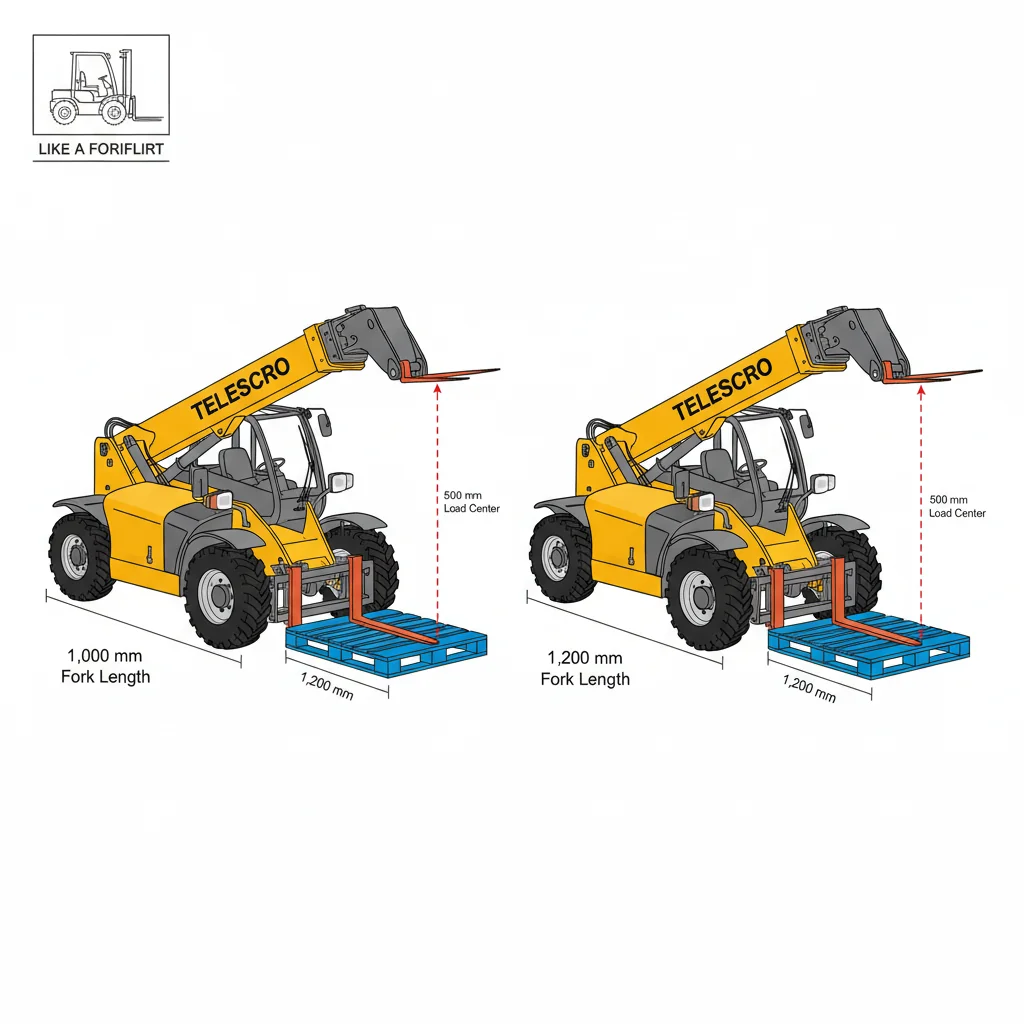
To be honest, the spec that actually matters is matching your forks to your real, daily loads—not just what the machine can supposedly lift on paper. I’ve seen buyers focus on the “headline” rated capacity, only to run into trouble when their actual pallet size or load weight didn’t fit the forks they chose. Standard 1,200 mm forks handle 1,000–1,200 mm deep pallets well, but if you’re working with longer timber bundles or panels, like we see on sites in Malaysia, you may need 1,500 mm or even 1,800 mm forks for safe support.
A few years ago, I worked with a crew in Dubai moving 3-ton marble slabs. The telehandler had a 4-ton rated capacity, but their original fork set was only rated for 2,500 kg per pair at a 500 mm load center. After one slab cracked at the tips, we checked their load chart—the forks, not the machine, were the limiting factor. We swapped to a 3,500 kg rated fork pair and made sure the forks reached at least 80% of the slab’s depth. That solved the problem and prevented more costly breakage.
I always recommend checking the fork pair’s rated capacity at a 500 mm load center against the machine’s load chart for “carriage + forks.” As the boom extends, your available lift drops fast—sometimes by half or more. Use a wider fork spacing to support as much of the pallet as possible, and keep the load tight against the carriage. That’s how you avoid nasty surprises and keep the jobsite safe.
Selecting forks that are at least 75% the length of your typical pallet load ensures both stability and reduced risk of load tipping during handling.True
When forks are significantly shorter than the pallet, the unsupported ends can sag or tip under weight, especially for loose or flexible materials. Industry standards recommend coverage of at least 75% of pallet length for proper load support and operator safety.
Using forks that exceed the length of your telehandler’s wheelbase always increases lifting capacity because the load is better balanced.False
Overly long forks actually reduce rated lifting capacity at a given reach because the load center shifts further from the machine, increasing leverage and potential for instability. Manufacturers set limits for fork length relative to load center to ensure safe operation.
Key takeaway: Pick fork length and rated capacity to match primary load types. Always verify the fork pair’s capacity at a 500 mm load center on both the forks and the telehandler load chart. Adjust fork spacing to support most of the pallet width and keep the load near the carriage for optimal stability.
What Are Critical Telehandler Fork Safety Steps?
Safe pallet fork operation on telehandlers depends on consulting the manufacturer’s load chart5, as rated capacity decreases with boom extension and low angles. Proper fork spacing to support three-quarters of the pallet, use of a load backrest6 for tall loads, and regular inspection for wear are essential safety practices.
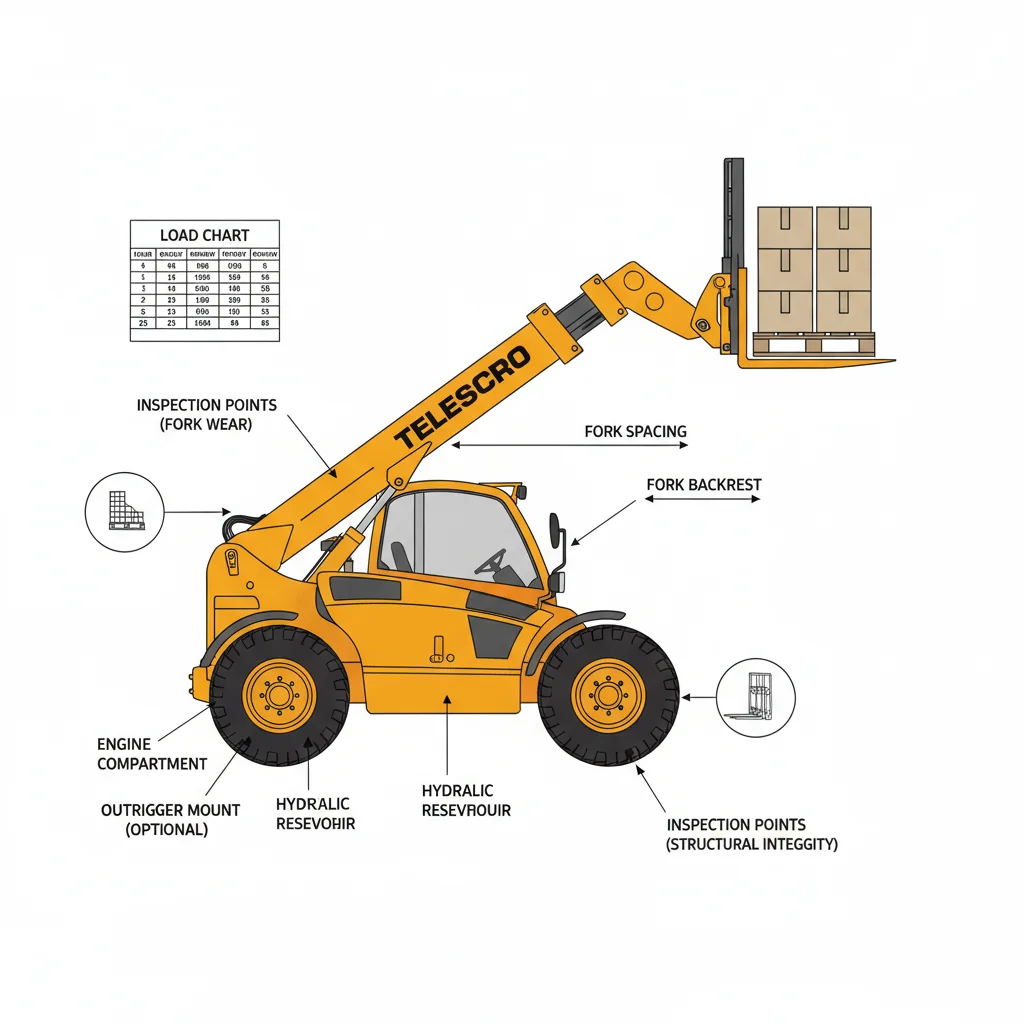
I’ve worked with customers who made the mistake of assuming the telehandler could always lift its rated maximum—only to face trouble when lifting pallets at full boom extension. One job in Dubai stands out: a team tried to move a 1,500 kg pallet to a third-floor slab with the boom nearly horizontal. They relied on the spec sheet rating, not the load chart. The telehandler tipped dangerously before the alarm even sounded.
That moment hammered in the real point—capacity drops sharply as you extend and lower the boom. The specific load chart, matched to your attachment and boom position, is what protects lives and materials. When I do jobsite walkarounds, I look for basic fork safety habits. Here are the steps I insist on, no matter the country or model:
- Always check the manufacturer’s load chart before lifting—don’t guess capacity at reach.
- Set fork spacing so both forks sit wide and support at least three-quarters of the pallet—lift evenly, never with just one fork under the load.
- Use a load backrest if you’re handling tall, loose, or unstable bundles—I see this skipped often with bricks and drywall, and it only takes one slip for a load to tumble toward the cab.
- Keep the boom low and forks just above ground when traveling, especially on rough or sloped terrain—this keeps stability high and reduces tip-over risk.
A telehandler's actual lifting capacity at maximum forward reach with pallet forks can drop to less than 35% of its rated maximum capacity shown for retracted boom.True
The rated capacity listed on a telehandler's spec sheet is typically measured with the boom fully retracted and low to the ground. As the boom is extended horizontally, leverage increases and stability decreases, causing a sharp reduction in safe lifting capacity—often to a third or less of the maximum rating, which is only clear from the load chart.
Pallet forks attached to a telehandler can safely lift loads of any size as long as they do not exceed the fork manufacturer's weight rating.False
The safe lifting capacity depends not only on the fork's strength, but also on the telehandler's load chart, load center, and boom extension. Ignoring the load chart can lead to dangerous overloading and tip-over, even if the forks themselves are rated for higher weights.
Key takeaway: Always follow the telehandler’s load chart when using pallet forks, ensure forks are correctly spaced, and inspect forks regularly. Use a load backrest for unstable loads and keep the boom low when traveling. These practices significantly reduce risk of tip-over or dropped loads.
Can Telehandler Forks Lift Awkward Loads?
Telehandler pallet forks can handle various non-palletized or awkward loads, such as bundles of drywall, plywood, wrapped insulation, or machinery with fork pockets, if properly secured and within rated capacity. Specialized attachments like side-shift carriages7 enhance precision but do not increase rated capacity. Buckets or grapples are preferred for loose or unstable materials.

Last month, a construction team in Dubai called me about moving large bundles of drywall up to the fifth floor. Their telehandler had standard pallet forks and a 3,500 kg rated capacity, but these drywall packs weren’t on pallets—just banded together. The supervisor thought the forks would work as long as the load fit between them. I explained that wasn’t enough. If the drywall shifted, it could easily slide off on uneven ground or when the boom moved. On jobs like this, I always ask operators to make sure the bundle sits flat and is strapped to the carriage before lifting, especially since just a slight tilt in the boom can cause big problems with panel loads.
Here’s what matters most—just because forks can “fit” under an awkward item doesn’t mean the lift is safe. In Kazakhstan, I helped a customer handling generators with built-in fork pockets. No pallet, but the machine was designed to handle them. The key step? Keeping the load’s center of gravity between the forks, tight against the carriage. If the weight was offset, the whole telehandler risked tipping, even though the load looked stable on the ground. They used side-shift forks, which made precision placement much easier, but I reminded them: this doesn’t boost rated capacity. The attachment’s extra weight and any shift in the load center actually reduce how much you can lift, according to the load chart. So my advice is simple.
Telehandler pallet forks are designed for loads with a rigid, well-supported base, and attempting to lift unsecured, banded materials without a pallet can easily fall short of the stability principles in ANSI B56.6.True
Pallet forks rely on the load’s rigidity and even support from below. Banded materials without a solid base may shift or collapse during lifting, increasing the risk of load drop and making it difficult to meet the stability and safe-handling practices outlined in rough-terrain forklift standards.
Telehandler pallet forks can safely lift any load within the machine's rated capacity, regardless of whether the load is palletized or not.False
Rated capacity assumes the load is stable, uniformly distributed, and properly supported by the forks—criteria that non-palletized, awkward loads often fail to meet, making such lifts unsafe even if under the weight limit.
Key takeaway: Telehandler pallet forks are versatile for stable, well-secured loads even if not strictly palletized. However, limitations exist for irregular or loose materials, where dedicated attachments provide safer handling. Always ensure the load is stable and securely supported, and reference the machine’s load chart for rated capacity limits.
Why are pallet forks standard on telehandlers?
Pallet forks are the most commonly used telehandler attachment because up to 90% of daily site work involves moving palletized materials. Forks simplify unloading deliveries, staging, feeding crews, and organizing supplies efficiently. Buckets or specialized tools are typically installed only for occasional, specific tasks.
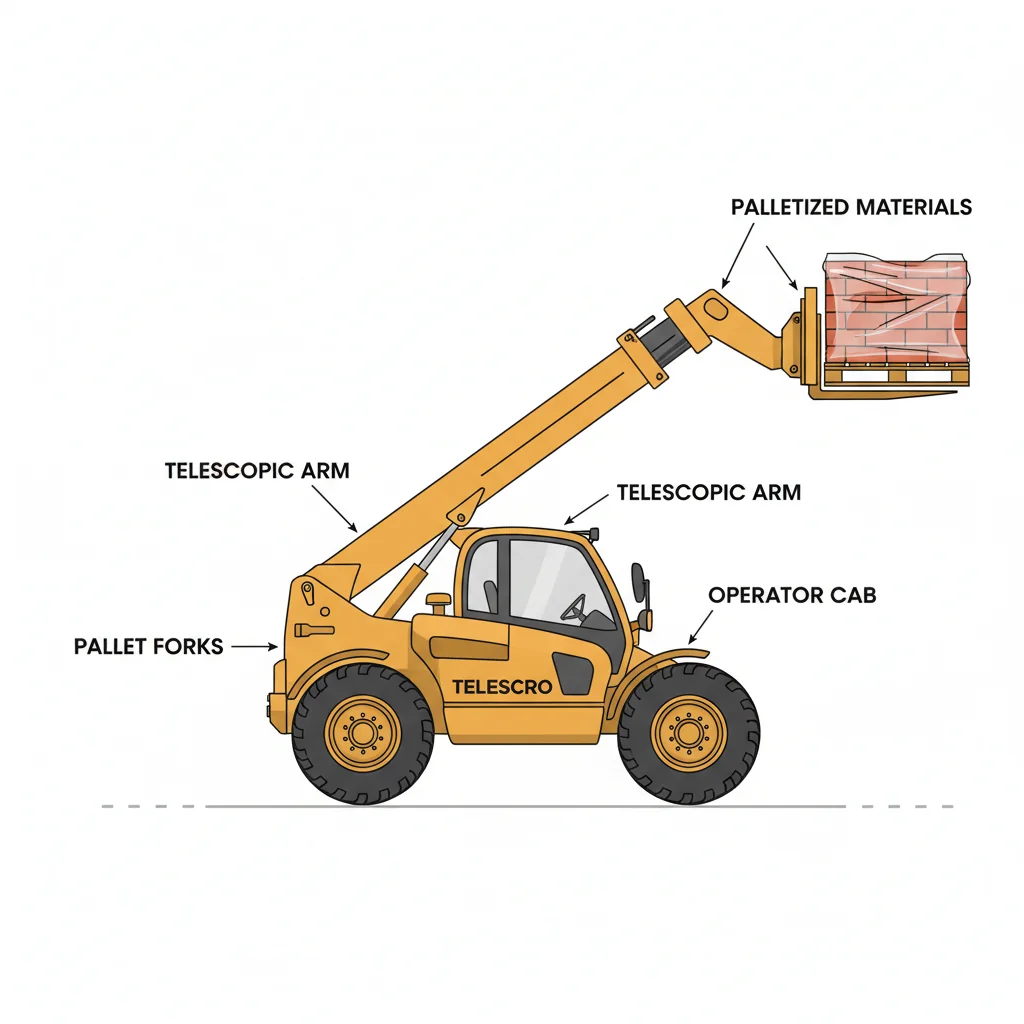
Here’s what matters most when you’re looking at telehandler attachments: pallet forks do around 80–90% of the real work on most jobsites. Whether it’s a concrete frame in Vietnam or a dairy farm in Australia, the daily tasks always come back to moving palletized bricks, blocks, bags, or feed. Even in mixed-use warehouses or export yards, I see the forks staying on for weeks at a time. Buckets or hooks only get swapped in for specific jobs like shifting bulk gravel or lifting trusses, which means your everyday productivity comes down to how quickly and safely you can load, unload, and stage materials on pallets.
Last month, a contractor in Kazakhstan told me they struggled with slow deliveries because their old forks weren’t the right size for 1.5-ton blocks. Their compact telehandler had the lift power, but the tines were too short and couldn’t fully support longer pallets—causing constant re-adjusting on every unload. Once they switched to a properly rated, 1,200 mm fork set with a wider carriage, handling speed jumped and site traffic jams disappeared. The lesson: it’s not just about having a powerful machine, but matching your fork setup to the real pallet weights and dimensions you use every day.
I always suggest buyers look at their actual delivery sizes and lift heights first. Check the load chart, especially for your heaviest pallets at maximum reach—don’t just trust headline numbers. A reliable, versatile fork setup gives you more return than most specialized attachments. Getting this right is what makes a telehandler truly productive on any site.
Pallet forks on many telehandlers are rated to handle nearly the full maximum lift capacity of the machine, whereas buckets and jibs are often derated to significantly lower values.True
Manufacturers design pallet forks and their carriages to utilize most of a telehandler’s rated load at the standard load center, because a large share of lifting tasks involves palletized materials. Other attachments like buckets and hooks have lower allowable loads due to shifting or uneven load distribution.
Pallet forks should never be used to transport loads above head height due to safety regulations that strictly prohibit elevated load handling.False
While safe operation guidelines encourage keeping loads low when moving, pallet forks are specifically designed and rated to lift loads to significant heights, especially for tasks like pallet stacking or materials placing. Regulations require caution and visibility, not a blanket prohibition on elevated loads.
Key takeaway: Pallet forks maximize telehandler productivity, especially in construction and agriculture, by handling most daily loads. Buyers should select telehandlers and fork setups tailored to the heaviest routine palettes and operational heights, as these factors define real-world value and efficiency more than specialized attachments.
Which Fork Carriage Improves Telehandler Productivity?
Fork carriage options significantly impact telehandler productivity and ease of use. Side-shift carriages allow precise fork alignment without repositioning the machine, ideal for tight spaces. Floating or swinging tines accommodate uneven ground, while a load backrest stabilizes tall loads. Quick-couplers enable rapid attachment changes, supporting efficient workflow in varying site conditions.

From my experience working on jobsites in Southeast Asia and Africa, the fork carriage you pick has a bigger impact on productivity than most buyers expect. Last year in Kenya, one customer was frustrated—his team wasted time lining up pallets because the machine kept needing repositioning. The fix was simple: we swapped to a side-shift fork carriage, which allowed about 120 mm of fork travel each way. That upgrade alone saved them at least two working hours every day, especially when unloading containers where space is tight.
Let me break down how each carriage option really performs on site—because the “right” choice depends on your work and ground conditions. Fixed carriages are rugged and cost-effective for basic pallet tasks in flat warehouses, but they limit flexibility. Side-shift models are a must for sites with racks or scaffolds within arm’s reach—fine control makes stacking much faster and safer. If you’re working in uneven farmyards or on sloped ground, go for floating tines8. They help each fork follow the terrain, so you don’t snap wooden pallets or lose material.
Here’s a quick reference table I always share when customers ask which carriage to pick:
| Carriage Type | Best Use Cases | Productivity Gain | Drawback |
|---|---|---|---|
| Fixed | Flat ground, basic pallets | Reliable, low cost | No fine adjustment |
| Side-shift | Tight spaces, racks, scaffolds | Precise alignment; faster stacking | Adds weight and cost |
| Floating/Swinging | Uneven terrain, outdoor farmyards | Protects pallets; adapts to ground | Less stable for high lifts or fast travel |
A side-shift fork carriage on a telehandler typically allows up to 120 mm of lateral fork movement each way, enabling precise pallet placement without needing to reposition the entire machine.True
Side-shift carriages give operators the ability to finely adjust fork position left or right by about 100–150 mm each direction, dramatically reducing time spent maneuvering the telehandler itself, especially in tight or uneven loading areas.
Pallet forks equipped with a tilt carriage cannot pick up irregularly shaped loads safely because the tilting function destabilizes the load.False
Tilt carriages actually help stabilize and secure irregular loads by allowing the operator to adjust the fork angle for optimal weight distribution, making them safer and more effective for varied materials.
Key takeaway: Selecting the right fork carriage—side-shift for fine positioning, floating tines for rough terrain, load backrest for stack stability, and quick-couplers for fast changes—directly improves telehandler efficiency, safety, and ease of operation across construction, agriculture, and industrial tasks. Evaluate site needs and operator visibility when choosing.
Conclusion
We’ve covered how telehandler pallet forks help you move palletized loads easily across rough terrain and at height, making tough jobs much simpler. From my own experience, the buyers who get the most value pay close attention to real-world load charts and how fast replacement parts arrive—not just impressive specs that look good in a brochure. Before you commit, I suggest checking the machine’s stability at 75% extension and asking about local parts support. Have questions about attachments or which specs really matter for your work? I’m always happy to share practical advice from jobsites across 20 countries. Every site is different—choose what actually works for your workflow.
References
-
Learn why telehandlers with pallet forks perform better on difficult ground like mud or gravel, replacing cranes and small forklifts on job sites. ↩
-
In-depth explanation of load center impact on rated capacity, helping readers understand safe lifting limits for telehandler forks. ↩
-
Expert explanation on rated capacity significance to prevent tipping and ensure safe lifting, crucial for telehandler users and operators. ↩
-
Provide an in-depth analysis of how boom extension plays a critical role in lifting, stacking, and handling materials in complex site conditions, including specific application scenarios and efficiency advantages. ↩
-
Detailed explanation of how load charts ensure safe lift capacities at varying boom extensions to prevent accidents. ↩
-
Expert insights on preventing load slippage and accidents when handling tall or unstable materials with telehandlers. ↩
-
Explore how side-shift carriages enhance precision and save time in tight spaces, boosting telehandler efficiency on varied sites. ↩
-
Understand how floating tines adapt to terrain variations to protect pallets and materials, crucial for rough site operations. ↩