










Telehandler: Which Industries Use It Most? Field Insight for Buyers
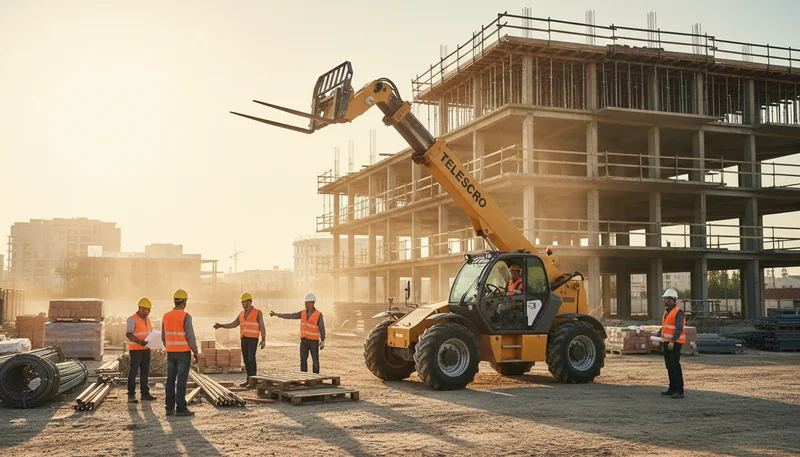
Not long ago, a logistics manager in Poland sent me photos of a telehandler stacking pipes by the rail tracks—right next to images from a dairy farm using the exact same model to move silage. It’s always fascinating to see such different industries relying on the same machine but in completely unique ways.
Telehandlers feature a telescopic boom design, enabling efficient material handling tasks across construction, agriculture, warehousing, manufacturing, mining, and utilities. Mid-range models—typically 3–5 tons with around 6–12 meters of lift height—dominate global sales because they cover core applications while maintaining maneuverability and cost efficiency. Quick-attach systems support a wide variety of attachments, transforming the base machine into a versatile platform for lifting pallets, moving bulk materials, placing loads at height, and performing maintenance tasks in environments where traditional forklifts or small cranes struggle.
Which industries use telehandlers most?
Telehandlers are essential in construction, agriculture, warehousing, manufacturing, mining, waste handling, utilities, and rental fleets. Their telescopic boom design, combined with quick-change attachments like forks and buckets, enables versatile lifting, loading, and placement of materials. Most telehandlers sold are 3–5 ton, 5–10 meter models, covering typical tasks across key industries with efficiency and flexibility.
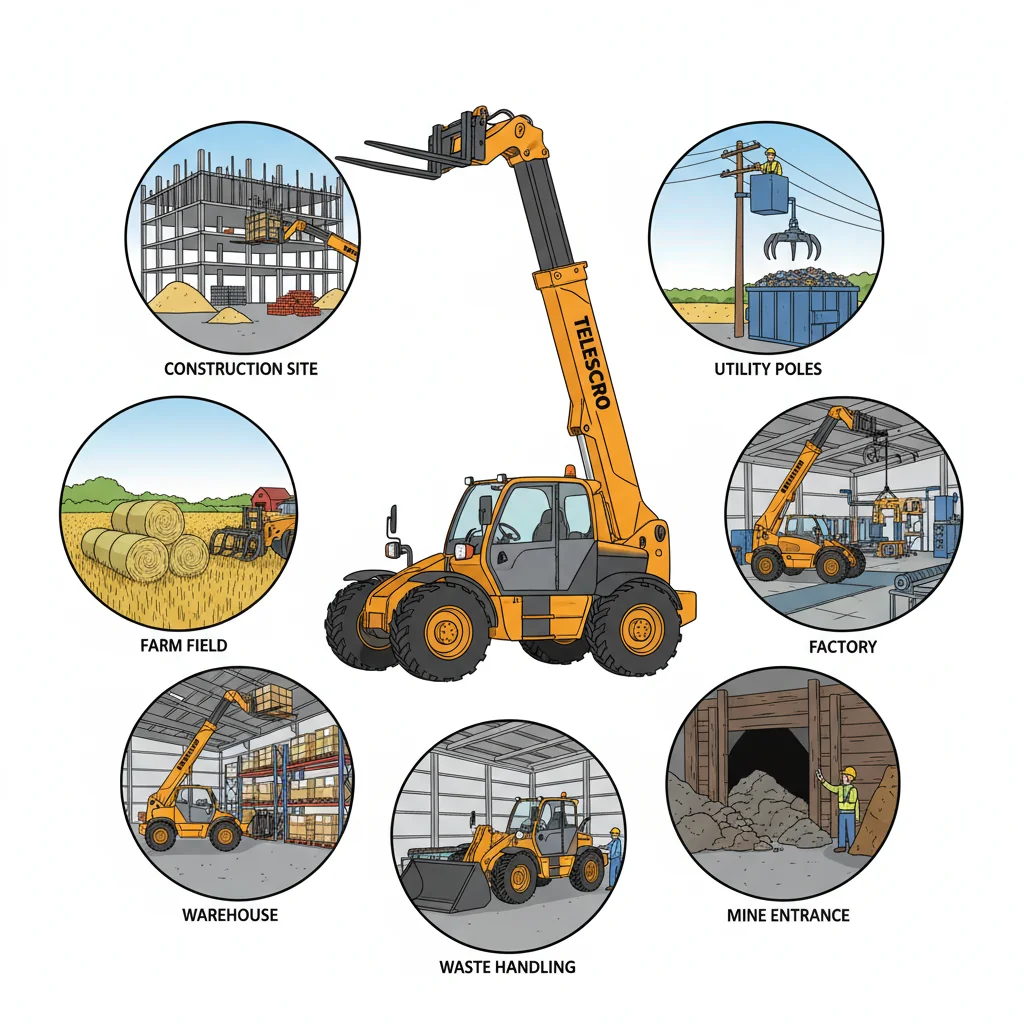
Most people don’t realize how many industries rely on telehandlers day to day. On one job in Kazakhstan, I watched a single 4-ton, 9-meter telehandler move between pouring concrete on a new hospital site, unloading steel beams, and shifting crates in the contractor’s warehouse yard—all before lunch. That flexibility is the reason these machines show up everywhere, from construction to agriculture, warehousing, and even mining.
Let me share a quick breakdown of how core industries use telehandlers and what specs fit best:
| Industry | Typical Tasks | Best-Suited Capacity | Best-Suited Reach | Key Attachments |
|---|---|---|---|---|
| Construction | Pallet lifting, roof loading | 3–4 tons | 7–12 m | Forks, buckets, jibs |
| Agriculture | Hay, feed, barn work | 2.5–4 tons | 6–9 m | Bale grabs, buckets, forks |
| Warehousing | Stacking, material handling | 3 tons | 6–8 m | Pallet forks, clamps |
| Mining | Pipe, tire, heavy load handling | 4–10 tons | 7–14 m | Tire handlers, winches |
| Waste Handling | Bulk moving, sorting | 3–5 tons | 6–10 m | Grapple buckets, buckets |
| Utilities | Overhead access, pole work | 3–4 tons | 10–17 m | Work platforms, winches |
| Rental Fleets | Multi-customer, flexible tasks | 3–5 tons | 7–10 m | Full attachment set |
Telehandlers equipped with side-shift carriages are especially valued in precast concrete manufacturing, allowing operators to precisely align heavy panels for installation.True
Side-shift capability enables fine lateral adjustments without repositioning the entire telehandler, which is critical in environments like precast concrete yards for aligning panels to tight tolerances and streamlining assembly workflows.
Telehandlers are rarely seen in the mining industry due to their limited lifting height and stability on uneven terrain.False
Telehandlers are actually used frequently in mining, especially underground operations, because of their compact footprint, versatile attachments, and ability to handle both lifting and material handling in confined, rough environments.
Key takeaway: Telehandlers are multi-industry machines, relied upon in construction, agriculture, warehousing, and more. Their compatibility with diverse attachments and optimal capacity ranges allows buyers to serve broad operational needs, maximize fleet utilization, and reduce redundancy. Choosing the right telehandler depends on job-specific loads, heights, and ground conditions—not just the industry label.
How Do Construction Sites Use Telehandlers?
Construction sites use telehandlers to unload trucks and position materials such as pallets of bricks, drywall, rebar, and formwork at heights of 5–10 meters on residential and commercial projects. Larger models with stabilizers handle heavier loads and larger components, often replacing small cranes and rough-terrain forklifts, with popular configurations including four-wheel drive and robust, mid-range booms.
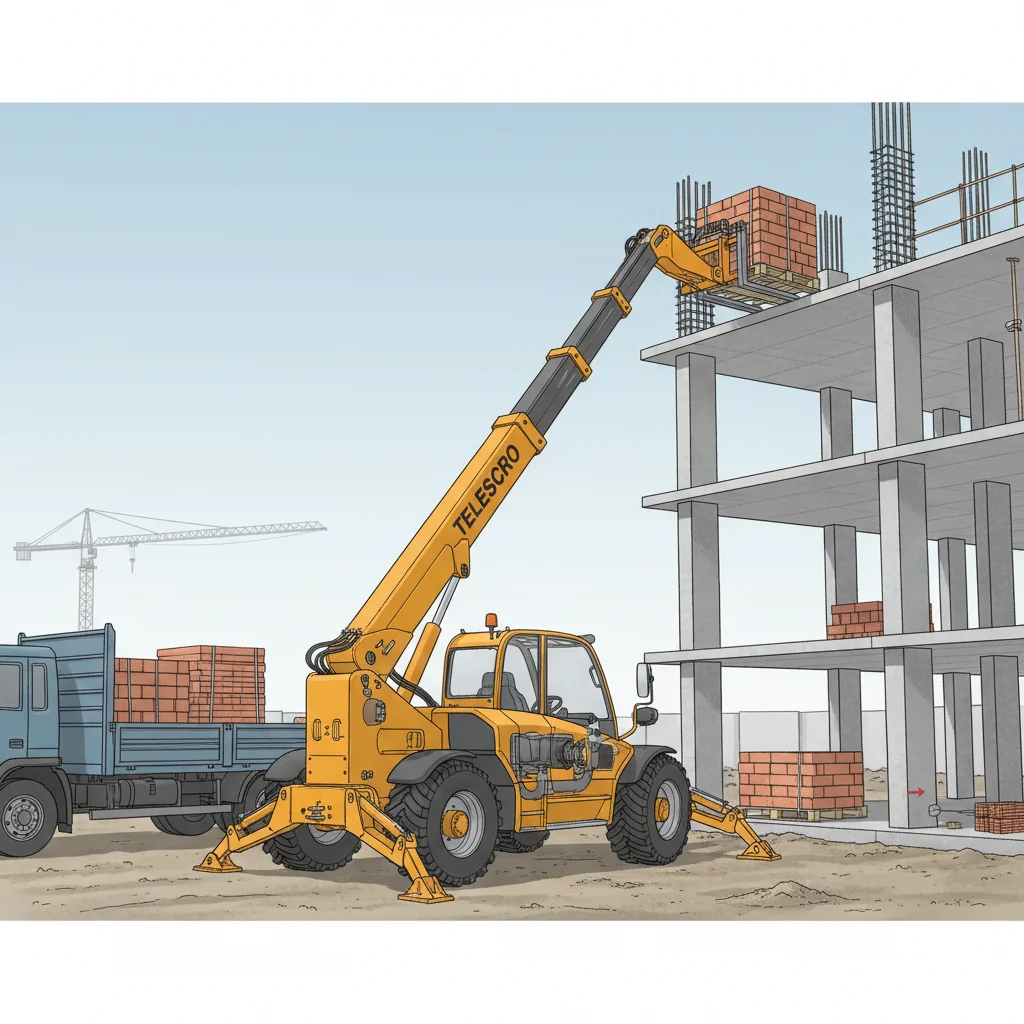
Let me share something important about how telehandlers actually get used on construction sites. Most contractors aren’t just looking for maximum height—they need reliable handling for materials across the whole site, usually within a working height of 5 to 12 meters. I’ve seen projects in Dubai where the speed of unloading and placing pallets makes a real difference. In those projects, a 3.5-ton, four-wheel drive telehandler1 with a 14-meter boom covered 90% of daily lifts—from stacks of drywall lifted to the fifth floor, to rebar bundles placed between scaffolds.
Here are the most common ways I’ve seen telehandlers used on building sites:
- Unloading delivery trucks2—Pallet forks make short work of bricks, blocks, tile, and insulation
- Placing materials upstairs—Formwork, drywall, even window frames lifted up to 10 meters
- Handling bulky objects—Rebar bundles, utility pipes, steel beams set into place safely
- Quick personnel lifts—Man baskets allow workers to reach lighting or ductwork
- Loose material moving—Buckets for sand, gravel, and site cleanup
Last year, a client in Kazakhstan replaced their aging crane for slab placement with a 4-ton mid-range telehandler fitted with stabilizers. The result? Faster workflow, less downtime for setup. Operators told me having a clear load chart and working moment indicator helped avoid overload mistakes—especially with frequent boom repositioning.
I always suggest focusing on “middle-of-the-road” specs for most jobs: rated capacity of 3-5 tons, robust boom, and strong safety systems. For new buyers, check the attachment compatibility and basic hydraulic system quality. These details mean fewer headaches later.
Telehandlers are widely used in the waste management industry for handling and moving heavy recyclable materials in transfer stations.True
In addition to traditional construction work, telehandlers are core equipment at waste processing facilities, where their lifting capacity and reach are essential for loading, sorting, and moving bulky recyclables and containers.
Only residential construction sites commonly utilize telehandlers, while commercial and industrial projects rarely require them.False
Telehandlers are actually even more critical in commercial and industrial projects, where larger, heavier materials and higher reach requirements are typical. Their versatility makes them standard on virtually all major construction sites, not just residential.
Key takeaway: Construction remains the top sector for telehandler deployment, driving demand for mid-range, highly versatile machines that balance lifting capacity and reach. Attachments and safety systems maximize utility, while robust designs and standardized specifications streamline contractor and fleet manager purchasing decisions.
How Do Telehandlers Support Agriculture Tasks?
Telehandlers in agriculture are primarily used for stacking bales, loading grain and silage, handling fertilizer bags, barn cleaning, feeding livestock, and servicing biogas installations. Compared to tractor loaders, ag-spec telehandlers provide greater reach, stronger breakout force, and improved maneuverability, making them essential for high-siding trailer loading and efficient pallet handling in compact farm environments.
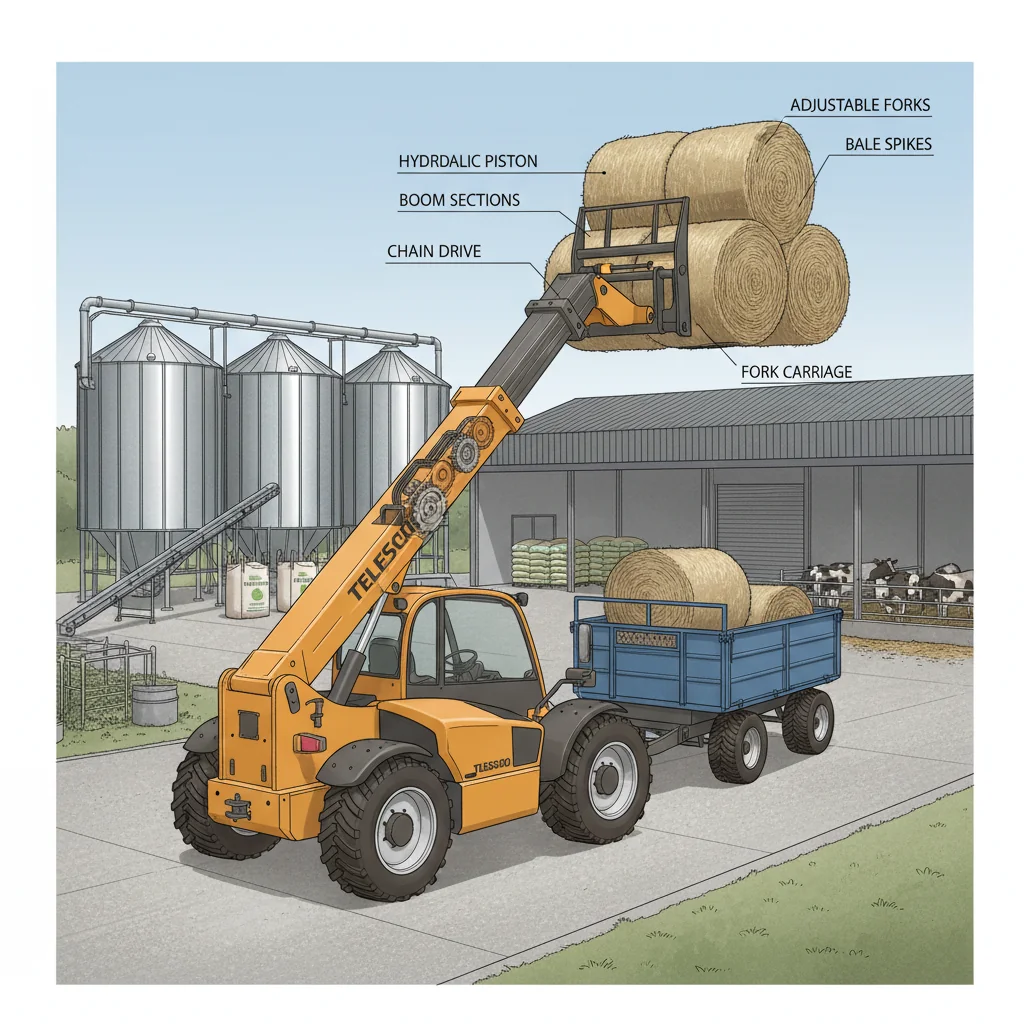
Here’s what matters most when picking a telehandler for agriculture: you need the right mix of compact size, hydraulic power, and genuine durability. Farming jobs rarely stay the same hour to hour. One minute you’re stacking hay bales up to 7 or even 9 meters, and after lunch, you’re moving a ton of fertilizer bags, then cleaning out a livestock barn. From my experience, models rated for 3 to 4 tons with a short turning radius—under 4.5 meters—work best around tight dairy yards and old barns. High-flow hydraulic circuits are a must for fast bucket work, especially when handling silage or grain. I’ve seen this make a real difference on German and Polish dairy farms—where every minute counts at feeding time.
Last year, a customer in Kazakhstan switched from an old tractor loader to a compact telehandler with a 3.5-ton capacity and 8-meter lift. He told me it cut his daily bale-stacking labor by half—the increased reach made double-stacking in storage sheds much quicker. Pallet forks and bale clamps saw daily use, but dust and manure were a battle. We recommended sealed cabs and corrosion-resistant paint. Six months later, he reported no issues, even during spring when barn debris is everywhere.
To be honest, buyers sometimes get carried away by extra boom length, chasing numbers on the spec sheet. But if you can’t make a tight corner or operate in a low-ceiling barn, that extra meter does more harm than good. I suggest reviewing your actual farm layout and material sizes. Check the load chart at your working boom height, not just the maximum. That’s where most ag operations see real productivity gains.
Telehandlers equipped with boom suspension systems can reduce operator fatigue and speed up repetitive bale stacking tasks by up to 20% in agricultural settings.True
Boom suspension absorbs shocks when driving over rough farm terrain while carrying loads, which both increases operator comfort and enables faster, smoother operation, particularly during tasks like hay bale stacking.
Telehandlers configured for agriculture always have lower maximum lift capacities than those designed for construction applications.False
Many agricultural telehandlers are rated with similar or even higher lift capacities compared to construction models; their configuration focuses on maneuverability and versatility, not strictly on limiting capacity.
Key takeaway: Agricultural operations depend on telehandlers for versatility and efficiency with heavy materials. Buyers should focus on models with compact wheelbases, robust hydraulics, and durability against corrosive barn environments to maximize productivity while maintaining agility in tight farm spaces.
How Are Telehandlers Used in Warehousing?
Telehandlers are essential in warehousing, logistics, and port environments, excelling where traditional forklifts fall short. They move and stack pallets outdoors, unload trucks in uneven yards, and access higher racking or containers. Typical units feature 3–6 ton capacities, 7–14 meter reach, and compact designs, with increasing adoption of low-emission or electric models3 for indoor or noise-restricted conditions.
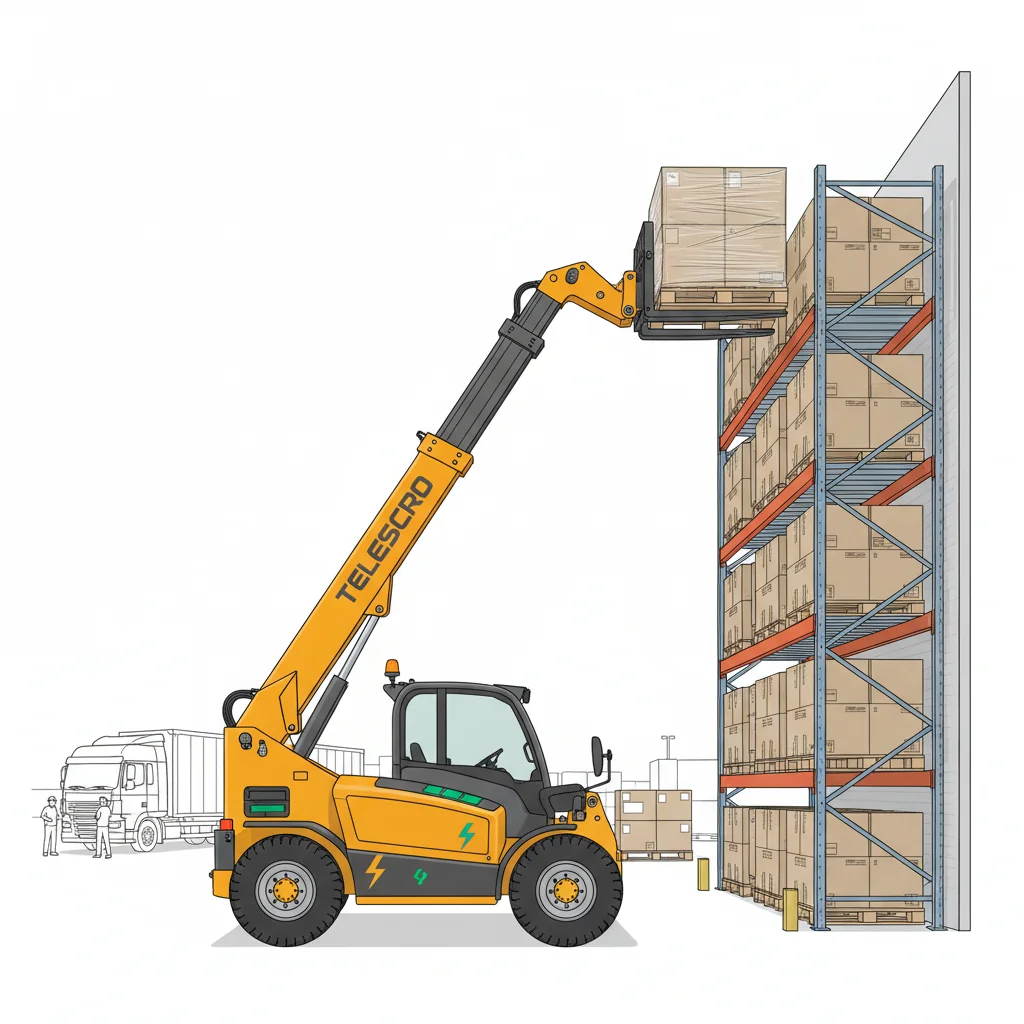
Last month, a logistics coordinator from Dubai called me struggling to move oversized pallets in an outdoor storage yard. Their standard forklifts kept getting stuck on uneven gravel and couldn’t reach the upper racks. That’s where telehandlers really shine. With ground clearance4 of around 410 mm and rated capacities from 3 to 6 tons, a single compact machine let them unload containers, stack heavy materials at 10 meters, and handle pipe bundles—all jobs that would have taken twice as long with forklifts.
It’s not just about reach or raw capacity. I always suggest looking at the actual load chart, which shows safe lifting at each boom angle and extension. On a recent port project in Kenya, the customer needed to offload heavy steel coils from flatbed railcars. Their 4-ton telehandler with a 12-meter reach and pallet-optimized forks could pick and place loads cleanly, even on sloped pavement. That off-road flexibility is why more ports and multimodal hubs now treat telehandlers as essential.
Common telehandler uses in warehousing and logistics include:
- Moving and stacking pallets where forklifts can’t access
- Unloading trucks or containers in outdoor or rough-surfaced yards
- Lifting heavy equipment or awkward loads onto higher racking
- Handling bundled materials—pipes, timber, steel—at the edge of ports
- Providing maintenance access around cranes and infrastructure
For buyers, here’s what matters most: Check visibility around the boom, especially in tight spaces. If you’ll be working indoors or in noise-restricted settings, I recommend exploring low-emission or electric units. Always verify rated capacity at your most-used height and extension—the real job gets done there.
Cold storage facilities frequently use telehandlers equipped with enclosed, climate-controlled cabs to safely handle large frozen food shipments in subzero environments.True
Cold storage logistics often require the movement of heavy, oversized pallets and containers at low temperatures. Specialized telehandler cabs with insulation and heaters help operators maintain comfort and safety during extended shifts in freezing conditions.
Telehandlers are rarely used in recycling facilities because their reach and lifting capacity are considered excessive for typical recycling tasks.False
Recycling facilities often use telehandlers to handle bulky scrap, stack bins, and load high-sided trucks. Their versatility and reach actually make them highly valuable in these operations, especially when dealing with irregular loads or working in tight yards.
Key takeaway: Telehandlers offer unmatched flexibility for warehousing and port operations, efficiently handling oversized or heavy loads in challenging terrain and hard-to-reach areas. Buyers should evaluate maneuverability, visibility, and emissions performance, especially when considering use in indoor or restricted-access settings versus traditional forklifts.
How Do Telehandlers Aid Manufacturing Plants?
Manufacturing plants use telehandlers for versatile material handling, moving molds, dies, steel sections, and finished goods across production lines and storage areas, particularly where access is challenging. Telehandlers also lift workers and tools for maintenance tasks, with preferences for precise hydraulic control5, fine inching6, and compact design over maximum reach.
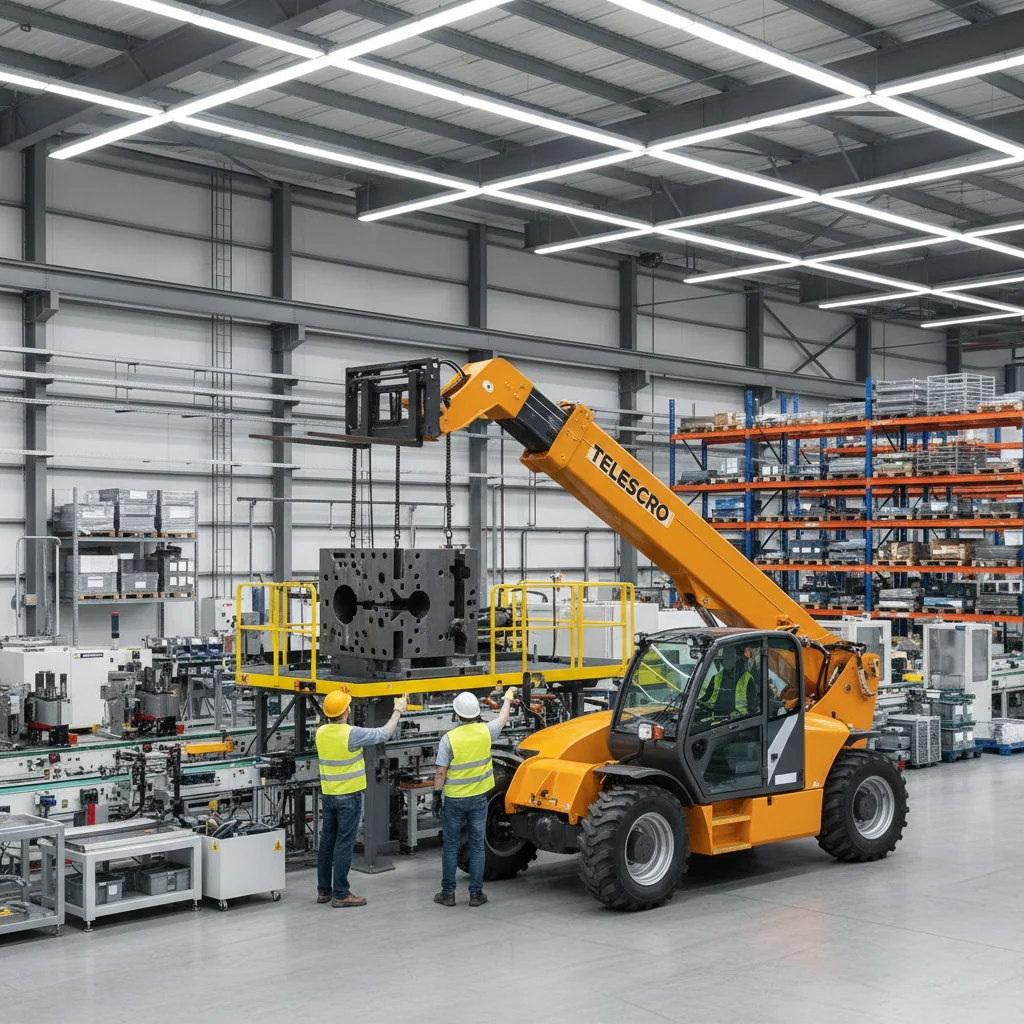
The biggest mistake I see in manufacturing is assuming a telehandler is just a “bigger forklift.” In reality, these machines combine the lifting duties of a crane, the access of a manlift, and the maneuverability of a rough-terrain forklift—all in one. Inside a plant, I’ve watched teams use a 4-ton, 12-meter telehandler to move heavy injection molds from storage racks to the press line. Tight aisles and overhead pipes? No problem—the compact frame and 4-wheel steering let operators snake through spaces a standard forklift can’t touch.
Last year, I helped a manufacturing client in Kazakhstan upgrade their material flow between indoor production and outdoor storage. Their old solution used three separate machines: an overhead crane, a forklift, and a manlift. Swapping in a single telehandler with a work platform and fork carriage not only saved them at least two full working days per month, but also reduced maintenance headaches. What surprised them most was how important precise hydraulic control and “fine inching” became when loading steel dies or machinery onto sensitive equipment. Even a small over-movement could ruin calibration, so models with smooth pilot-operated hydraulics or advanced inching pedals worked best.
For plant managers, here’s what matters most: look beyond reach and focus on features that handle dust, heat, and long hours. Robust cooling, solid filtration, and quick access points for daily checks make a real difference—especially with mixed indoor and outdoor jobs. I suggest making sure your telehandler can safely use both fork and personnel attachments, and always review the load chart at typical working heights before signing any contract. The right setup turns a telehandler into your plant’s utility powerhouse.
Telehandlers equipped with side-shift carriages allow operators in manufacturing plants to precisely position loads within ±50 mm of target racks or fixtures, reducing cycle times during mold or component changes.True
Side-shift carriage attachments enable lateral movement of the forks or load without repositioning the entire machine. In tight indoor environments, such as manufacturing plants, this precise control improves workflow efficiency when aligning heavy molds or equipment.
Telehandlers used in manufacturing plants are unable to utilize attachments like winches or buckets due to compatibility limitations specific to indoor models.False
Industrial telehandlers, including those used indoors, often have universal quick-attach systems that support a variety of attachments such as winches, buckets, and jibs. This versatility is a key reason they are preferred over standard forklifts in complex plant environments.
Key takeaway: Telehandlers in manufacturing deliver cost-effective versatility by combining the roles of cranes, manlifts, and forklifts. Their design priorities include precision controls, robust filtration, high-duty cooling, and compact size, making them well‑suited for the demanding, mixed-environment tasks common in industrial facilities.
How do heavy industries use telehandlers?
Mining, quarrying, oil and gas sectors rely on telehandlers for heavy maintenance and material handling where cranes are impractical. High-capacity machines7 (6–10+ tons) with reinforced frames, specialty attachments, and high ground clearance handle tasks like lifting tires, pipes, and components in harsh, remote, and congested sites. Durability, stability, and uptime are prioritized over extreme compactness.
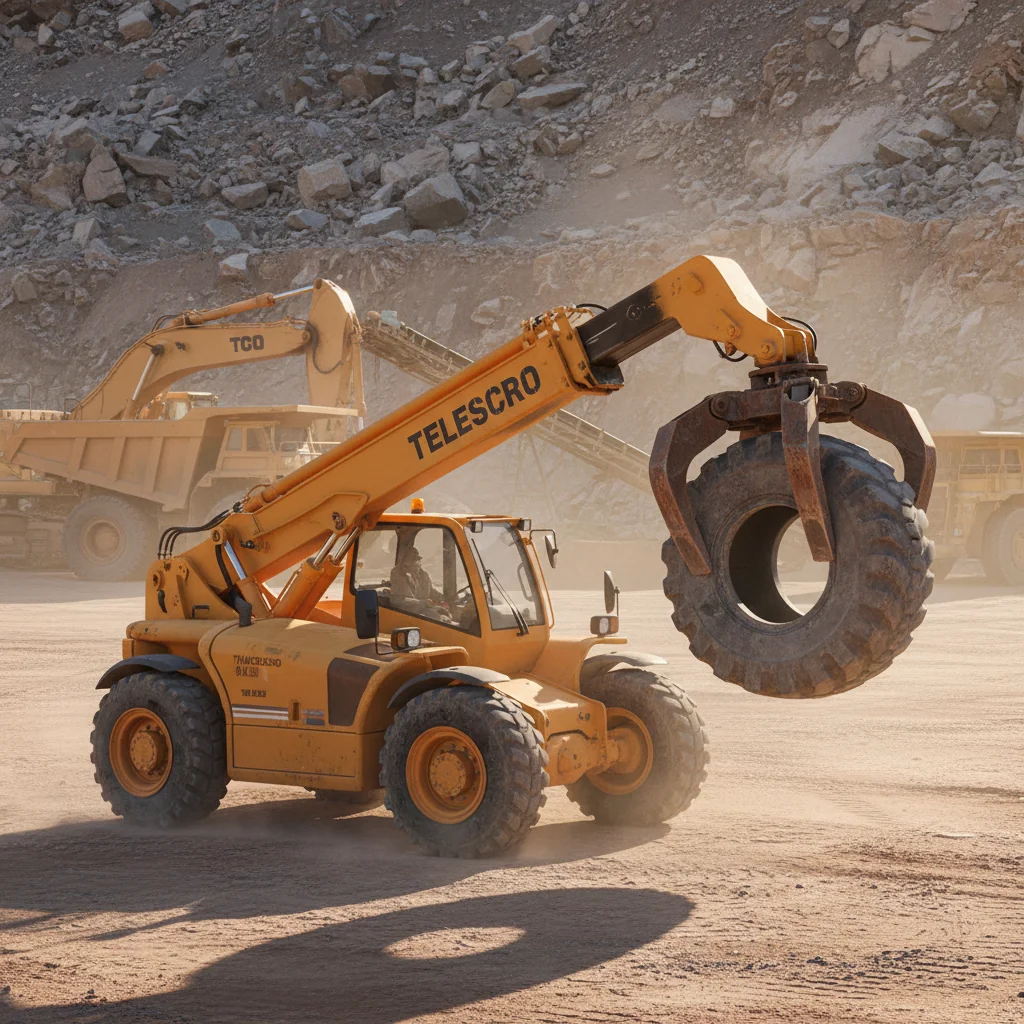
Let me share something important about telehandlers in mining, quarrying, and oil and gas—these sectors put machines through some of the toughest conditions you’ll find. I recently worked with a crew in Kazakhstan, maintaining massive dump trucks at an open-pit copper mine. They needed a 10-ton telehandler with reinforced boom sections8, not because the loads were always that heavy, but because overloading happens when terrain is unpredictable and parts are awkward to position. In these jobs, uptime means everything. If your machine is down, the whole line waits.
Daily tasks in heavy industries are more varied than most people expect. On a busy mine site, you’ll see telehandlers handling items like:
- Giant loader tires—each weighing over 3,000 kg, often swapped out in dusty, uneven yards
- Steel pipes and valves—moving 8–12 meter pipe segments to pipeline trenches or storage
- Heavy equipment components—lifting pumps, conveyor bearings, or crusher parts into place
- Personnel access—using man baskets for technicians to reach 12-meter heights safely
One key detail buyers overlook is attachments. Last year, in Western Australia, a customer needed to move both tires and pipe within the same week. We specified quick-coupler systems and a tire handler. Their old setup took hours to change tools—now it’s under 20 minutes. For these industries, I always recommend getting robust cooling and filtration systems, extra guarding, and high ground clearance (at least 400 mm) for rough ground.
To be honest, the right dealer support can make or break your operation. In remote areas, I suggest confirming parts availability and service response before committing to a machine. That’s what keeps production running, rain or shine.
Telehandlers used in open-pit mining operations often feature wide solid tires up to 24 inches thick to reduce puncture risks from sharp rock debris.True
Mining sites present extreme hazards to tires, including large, sharp fragments and constant impacts. Heavy-duty solid or foam-filled tires are specified for these applications, sometimes reaching over 20 inches in thickness, to prevent failures and reduce downtime.
Telehandlers in the oil and gas sector are exclusively equipped with spark-proof engines to eliminate ignition risks in flammable environments.False
While safety in explosive environments is critical, most telehandlers use conventional diesel engines with optional safety features like explosion-proof electricals. True spark-proof or explosion-proof engines are rare, as most telehandlers are instead restricted from high-risk zones or use strict protocols.
Key takeaway: Telehandlers in mining, quarrying, and oil and gas are selected primarily for their durability, heavy lifting power, and ability to maneuver in remote or challenging conditions. Buyers in these sectors emphasize robust machine specifications, attachments, and dealer support to ensure reliable operation and uptime in harsh environments.
How Are Telehandlers Used in Waste Operations?
Telehandlers are essential in waste, recycling, and cleanup sectors for continuous, heavy-duty handling. Equipped with buckets, grabs, or clamps, they feed shredders, move bulk waste, and manage storage piles. Compact telehandlers9 operate near sorting lines, while larger models handle yard stockpiles, requiring robust guarding, heavy-duty axles, and advanced cooling for harsh, high-impact environments.
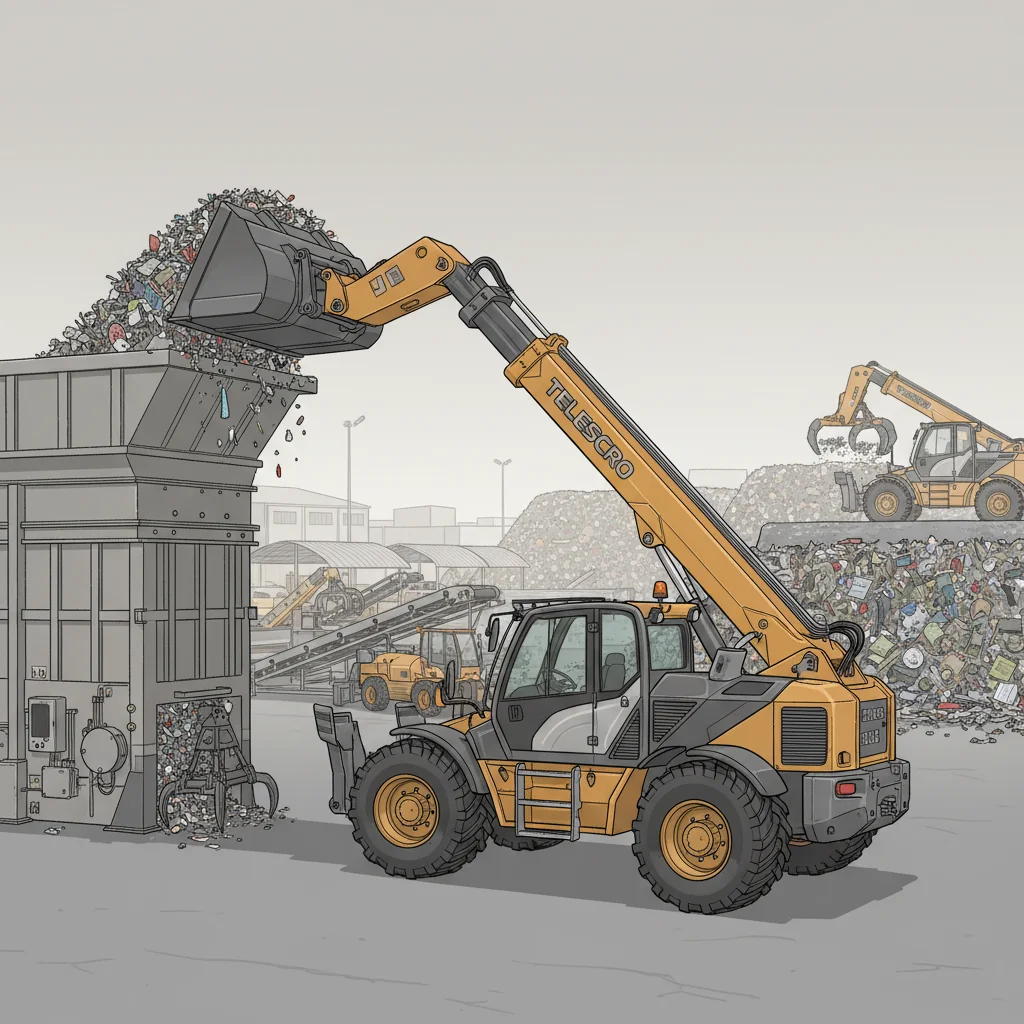
To be honest, the spec that actually matters in waste operations isn’t just lift height or flashy electronics—it’s raw survival. I’ve seen loaders break down fast in recycling yards in Brazil, but a properly specified telehandler keeps running nearly non-stop. The conditions are brutal: clouds of dust, sharp scrap metal, and the odd burst hydraulic hose if you’re not careful. If you’re managing a yard with daily loads above 3,000 kg and reach needs up to 10 meters, there isn’t another type of machine with the same reach and flexibility for feeding sorting lines or building waste piles.
Here’s how telehandlers earn their keep in waste and recycling work:
- Heavy-duty buckets—move mixed waste, manage tipping floors, or load compactors and shredders.
- Sorting grabs or clamps—pick up scrap metal, bulky debris, or green waste without climbing out.
- Continuous use—almost 24/7 duty cycles, with only quick stops for maintenance checks.
- Advanced cooling systems10—essential for long hours in dusty, hot environments.
- Stormproof guarding—protects lights, hoses, and operator cab from flying debris.
- Easy-access service points—daily cleaning of radiators, air filters, and boom guides makes a real difference.
Last year in Kazakhstan, a client swapped two aging wheel loaders for a pair of 4.5-ton telehandlers with 12-meter booms and found output jumped significantly. They could handle piles faster and safely reach the far side of stockpiles, all while keeping operators away from dangerous zones.
I always advise checking for reinforced axles, tough filtration, and operator-friendly maintenance. In jobs with endless abrasive tasks, only telehandlers built for punishment should be on your shortlist.
Telehandlers fitted with solid fill tires experience up to 60% fewer puncture-related downtime incidents in waste operations compared to those running on pneumatic tires.True
Solid fill tires are far more resistant to punctures from sharp metals and debris, common in recycling and waste yards. This not only extends operational uptime but reduces maintenance costs in harsh environments.
In waste management applications, tracked telehandlers are preferred over wheeled variants for improved mobility on compacted trash surfaces.False
Commercial telehandlers with tracks are virtually nonexistent; wheeled telehandlers dominate waste operations because tracks do not provide the same maneuverability or cost-effectiveness needed for yard work. Wheeled models are designed to handle rough, uneven waste terrain efficiently.
Key takeaway: Telehandlers deliver high productivity and versatility in waste management and recycling operations but must be specified with reinforced structural features, advanced hydraulics, and easy-access maintenance points to withstand abrasive environments and near-continuous duty cycles.
How Do Rental Fleets Select Telehandlers?
Rental companies prioritize telehandlers with 3–4 ton lift capacities and 7–12 meter reach, supporting general construction, maintenance, agriculture, and utilities. Versatility, durability, simple controls, and broad attachment compatibility are essential. Telematics, easy maintenance, road-legal options, and fast parts support ensure high fleet utilization. Over-specialization reduces rental potential across diverse customer industries.
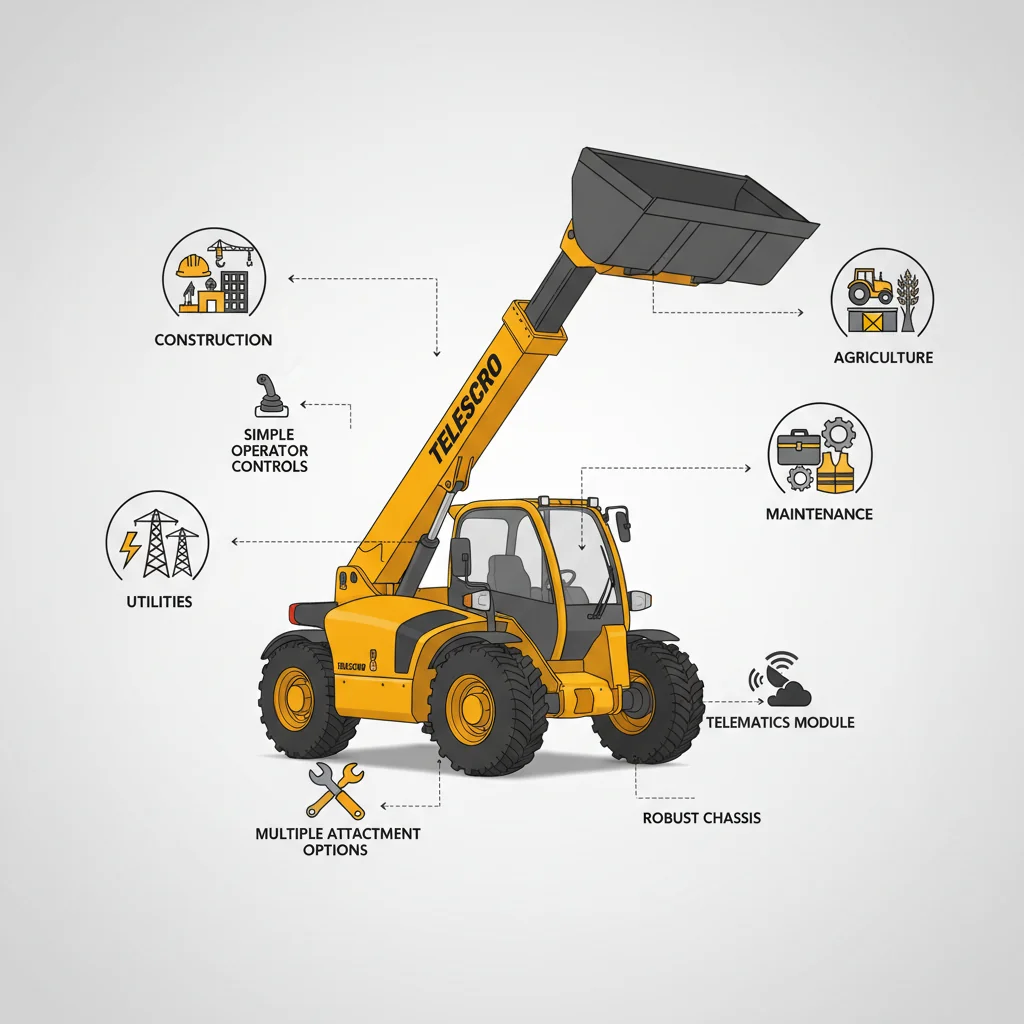
Last year, I helped a fleet manager in Kazakhstan review their telehandler options. Their rental clients included contractors, farm cooperatives, and utility crews. The most commonly requested machines? Models rated for 3–4 tons with 9- or 12-meter booms. That range handled everything from loading bricks to lifting grain bags. Road-legal configurations also made shifting units between city sites and remote farms simple. When one rental company tried adding a massive 6-ton, 17-meter machine, utilization dropped—most jobs just didn’t need that much reach or weight. They returned to the balanced spec that fit 80% of rental requests.
From my experience, versatility always wins in rental fleets. Operators may be new to telehandlers, so clear dashboard layouts and straightforward hydraulic controls are key. I’ve seen jobsites in Brazil choose units with a single joystick and auto-deploy outriggers—that reduced new user training to under 30 minutes. Telematics is another feature rental companies love. Fleet managers track location, working hours, and rough handling remotely. Many spot early faults with hydraulic pressure readings or load chart misuse, cutting downtime.
Another point—fast parts support can decide rental success. In Kenya, one client told me that waiting ten days for a simple hydraulic seal cost them three bookings. Most prefer brands that offer parts delivery in under 72 hours, even if unit price is slightly higher. If you’re running a mixed fleet, I really suggest sticking to models with standard attachments—forks, buckets, work platforms. That’s how rental companies keep machines busy across seasons and industries.
Utility companies often prefer telehandlers with 4-wheel steering and 12-meter booms for substation maintenance and pole handling.True
Telehandlers with 4-wheel steering offer excellent maneuverability in confined utility yards, and 12-meter booms provide the reach needed for overhead work such as transformer installation and pole placement, which are common tasks in the utility sector.
Construction rental fleets rarely offer telehandlers to the agricultural sector because the machines lack attachments suited for farm work.False
In fact, telehandlers are popular with farmers due to a wide variety of available attachments, such as grain buckets, bale clamps, and pallet forks, making them versatile for both construction and agricultural applications. Rental fleets frequently supply telehandlers to farms for these reasons.
Key takeaway: Rental and cross-industry fleets require telehandlers that are durable, versatile, and easy to operate, with broad attachment compatibility. Standardizing on mid-size models with robust support and telematics enhances fleet uptime and ROI. Over-specializing limits utilization; a balanced specification maximizes rental market performance year-round.
How Do Telehandlers Support Urban Niche Industries?
Landscaping, property maintenance, and event sectors increasingly rely on compact telehandlers for fast, flexible operations in confined or urban settings. These industries utilize telehandlers’ reach for placing heavy items, maintaining buildings, or assembling event structures, valuing compact dimensions, quick-attach versatility, and roadability over maximum lift capacity. Electric or low-emission models are preferred where noise or emissions are restricted.
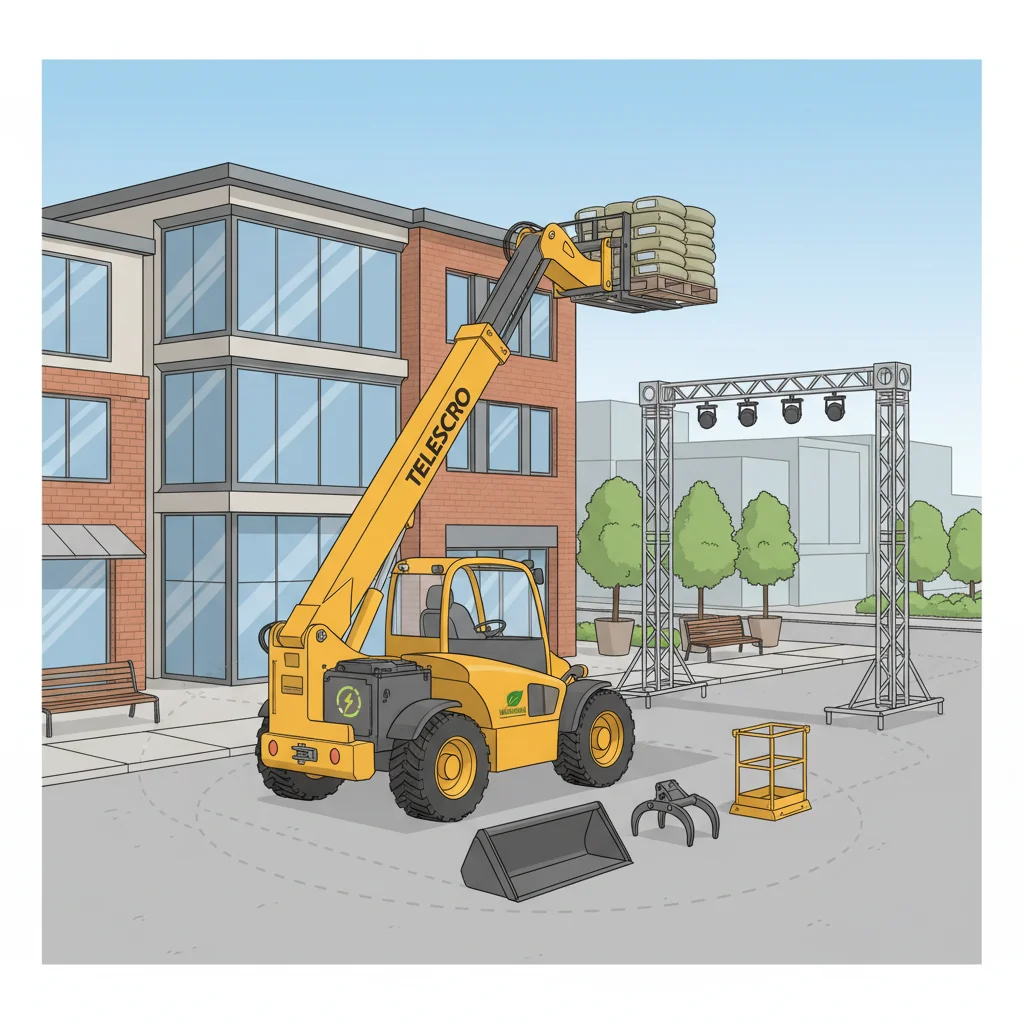
Last month, a property manager in Singapore asked me why so many landscapers are switching to compact telehandlers instead of skid steers. The answer is simple—urban sites demand a different kind of machine. Landscapers need to place trees or decorative rocks behind fences or into tight corners safely. A compact telehandler with a 4- to 6-meter boom can reach where wheeled loaders simply can’t. I’ve seen crews in Korea use 2.5-ton models to move sod pallets straight onto rooftop gardens, avoiding hours of craning or manual hauling.
For property maintenance, I notice the focus is less on raw capacity and more on quick attachment changes. On university campuses in Australia, maintenance teams rely on telehandlers with work platform attachments for building repairs or tree trimming—especially for hard-to-access facades up to 8 meters high. They swap between forks, buckets, or jibs in under two minutes thanks to hydraulic quick couplers11. Transport is also key: a road-legal compact telehandler, around 2 meters wide and under 3 tons, can move from site to site without special permits.
Event production is another niche that really benefits from telehandler versatility. I worked with an event company in Milan that rents three 3-ton, 7-meter reach telehandlers for stadium setup. Their team builds stages, lifts lighting trusses, and places grandstand frames—often in just two or three days, with frequent moves across city centers. For indoor arenas, they only accept low-emission or electric units because noise and fumes aren’t allowed.
I always suggest buyers in these sectors check for good visibility, safe personnel lifting options, and a proven load chart—capacity means nothing if you can’t safely reach your real work spots.
Vertical farming operations in dense urban centers use telehandlers with specialized attachments to install and service multi-tier grow racks up to 5 meters high.True
Urban vertical farms often require machines capable of extending into narrow aisles and reaching elevated platforms. Telehandlers with pallet forks or platform attachments provide the necessary reach and stability for installing and maintaining elevated grow systems in confined environments.
Telehandlers are primarily chosen by data center operators in cities to install and move server racks inside IT rooms due to their compact size and precision controls.False
Data center operators typically use equipment like electric pallet jacks, scissor lifts, or standard forklifts for installing server racks indoors. Telehandlers, while compact in some models, are more commonly used outdoors or for construction materials, not for maneuvering sensitive IT hardware in data halls.
Key takeaway: Compact telehandlers are essential for landscaping, property maintenance, and event production due to their maneuverability, quick attachment changes, and suitability for urban environments. Buyers in these sectors should prioritize transportability, safety features for personnel lifting, and low-emission options over extreme lifting capacity.
How Should Telehandler Specs Match Industry Needs?
Telehandler buyers should align machine specifications with industry-specific tasks by evaluating typical load type and weight, maximum lift height, ground conditions, and duty cycle. The proper pairing ensures optimal maneuverability and safety, while incorrect sizing—such as using short-boom units in high-rise work—commonly leads to operational inefficiencies and unnecessary costs. Attachments further tailor telehandlers for specialized applications.
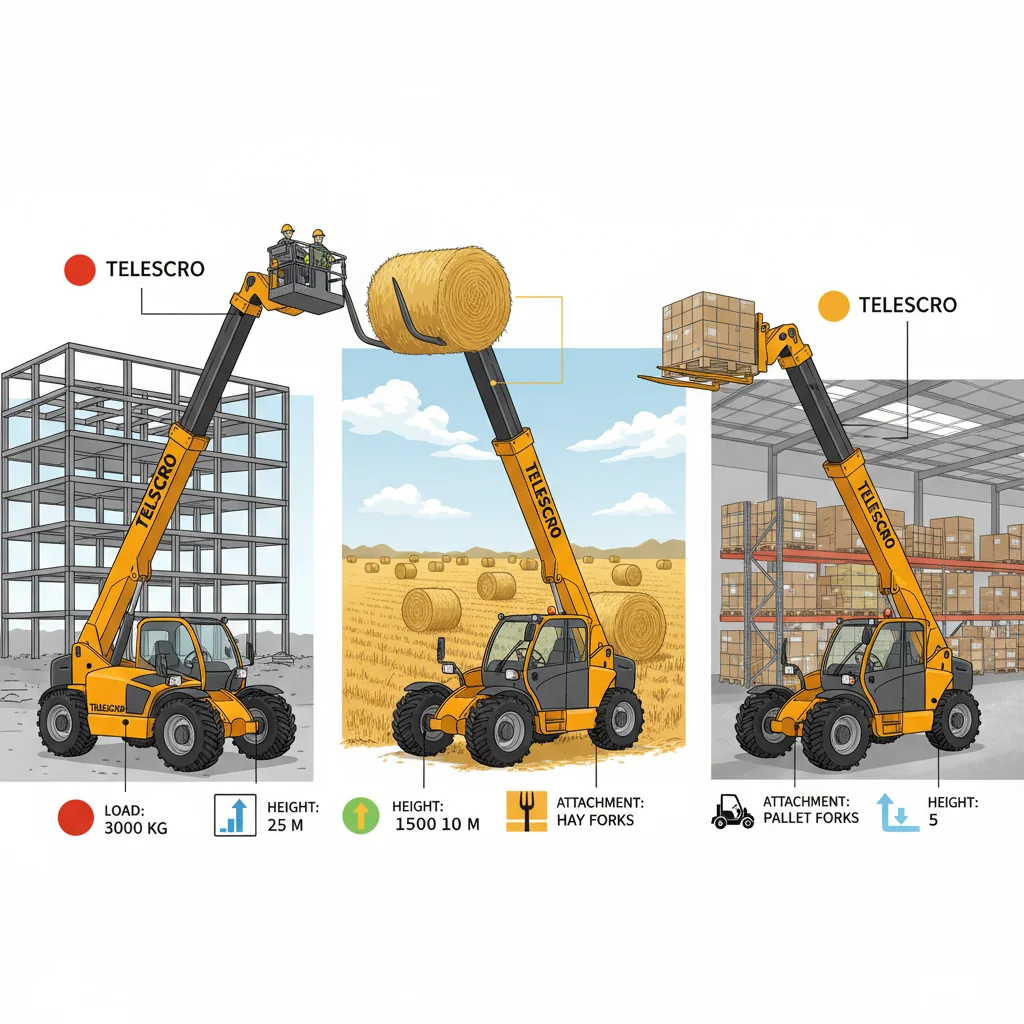
The biggest mistake I see is buyers choosing specs by copying what their neighbor uses—without thinking about their own exact jobsite needs. For example, last year I spoke with a dairy farmer in Australia who picked a 17-meter high-reach telehandler because a local construction site used one. On his farm, tight sheds and uneven ground meant he rarely extended past 9 meters, and heavy bales suffered from reduced capacity at those higher boom positions. The result? He struggled with maneuverability in small yards, paid extra for unused reach, and still needed a loader for daily feed duties.
Matching specs starts with questions: What’s your typical load—round bales, block pallets, scrap bins? How much does it weigh? How high and how often do you need to lift it? In most cases, I find telehandlers rated for 3 to 4 tons with a 7 to 14 meter boom serve construction, agriculture, and waste sites well. But real capacity depends on the load chart, not the headline number. For example, at maximum extension, you might only get 1,200 kg safely—not the full 4,000 kg.
Attachments transform a basic telehandler for all kinds of jobs. On a sugarcane farm in Brazil, a client uses a bucket for loose material, then swaps to bale spikes during harvest. In mining, tire handlers and guarding packages are critical. Ground conditions also matter—select wider tires for muddy sites and check for reinforced hydraulics if working long shifts. I always recommend asking your dealer for case studies from similar jobsites before making a final decision. That’s how you avoid costly mismatches and actually get value from your machine.
Greenhouse operations often specify compact telehandlers with a turning radius under 3.5 meters and low-profile booms to access tight rows and fit beneath 2.2-meter clearance doors.True
Greenhouse agriculture requires maneuvering in confined spaces and under low roofs, so these operations commonly demand smaller, agile telehandlers with design modifications tailored for restricted environments.
Oil and gas industry telehandlers typically prioritize maximum lift height over load capacity, routinely specifying booms above 20 meters for pipe yard operations.False
In oil and gas, telehandlers are more often used for heavy lifting and material handling at ground level or moderate heights, so specifications emphasize higher lifting capacity and stability rather than extreme reach.
Key takeaway: Matching telehandler specs to actual operating requirements—considering load, height, ground conditions, and frequency of use—prevents costly misalignment and maximizes machine value. Attachment selection transforms a basic telehandler into an industry-specific solution, while environment options and peer case studies help fine-tune equipment choice for maximum productivity.
Conclusion
We’ve looked at how telehandlers fit into different industries and why their flexibility makes them valuable on so many jobsites. From my experience, the buyers who make the best decisions don’t just chase the biggest lifting spec or lowest price. They check the load chart at real working heights and make sure they won’t get caught in "parts roulette" when something needs repair. If you have questions about attachments, load capacities, or how to avoid downtime, feel free to reach out—I’m happy to share what’s worked for customers in all kinds of environments. Every site has its own demands, so the right choice comes down to matching machine to your day-to-day reality.
References
-
Explore how four-wheel drive telehandlers improve stability and maneuverability, making them ideal for diverse and rough site conditions. ↩
-
Learn how telehandlers using pallet forks speed up unloading materials like bricks and drywall, boosting site productivity and safety. ↩
-
Explore how low-emission and electric telehandlers reduce noise and pollutants, ideal for indoor and noise-restricted environments. ↩
-
Understand how telehandlers’ ground clearance enhances maneuverability on rough terrain, preventing machinery from getting stuck. ↩
-
Explores how precise hydraulic control enhances telehandler safety and efficiency in delicate manufacturing tasks with expert insights. ↩
-
Detailed explanation of fine inching technology, its role in precise load placement, and how it improves telehandler performance in tight spaces. ↩
-
Learn the advantages of high-capacity telehandlers handling large loads and tough jobs, improving uptime in harsh, remote sites. ↩
-
Explore how reinforced boom sections enhance telehandler strength and durability under heavy loads and rough terrain in mining operations. ↩
-
Explore how compact telehandlers enhance operations in tight spaces with versatile attachments and easy roadability for urban projects. ↩
-
Explains how advanced cooling systems extend telehandler durability and performance under extreme heat and dust in waste yards. ↩
-
Understand the efficiency gains from hydraulic quick couplers enabling fast attachment swaps, crucial for multi-tasking in property maintenance. ↩