











Telehandler vs Wheel Loader
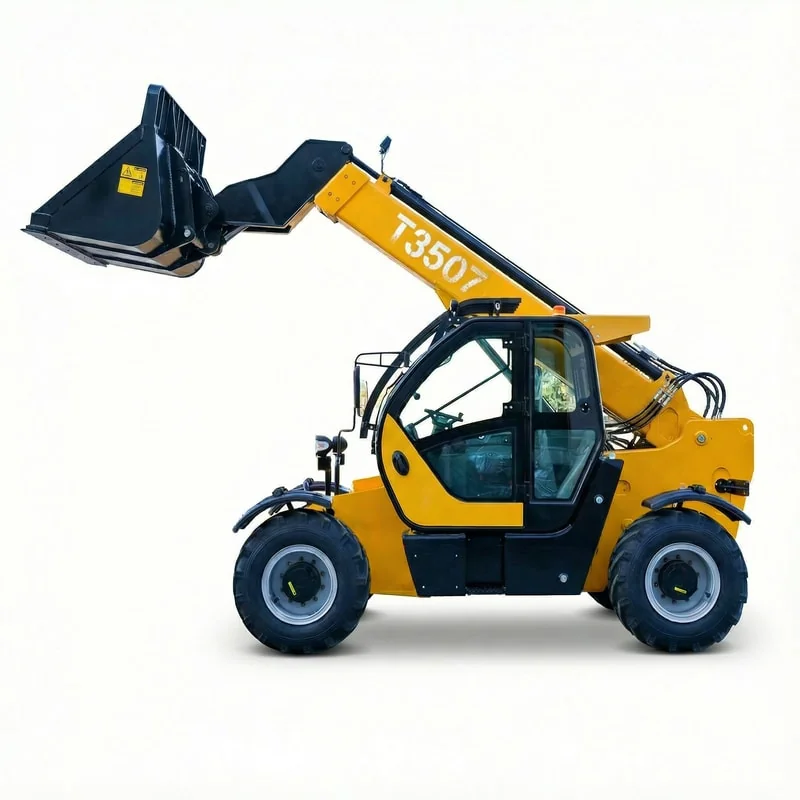
High Reach · Multi-Purpose
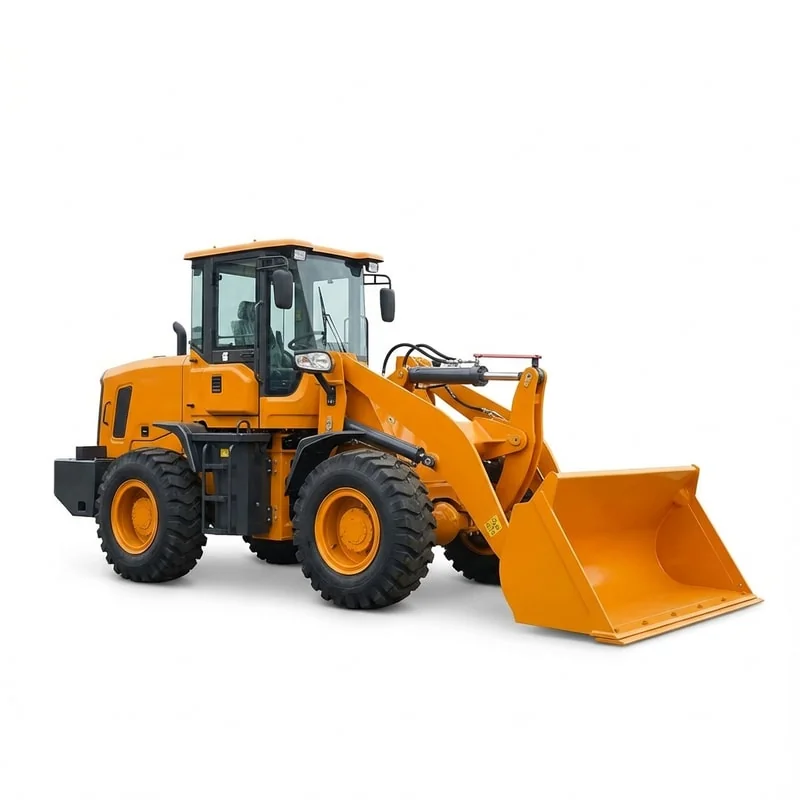
Ground-Level Loading
Which Machine Delivers Better Value for Your Operation?
Choosing between a telehandler and a wheel loader affects your lifting capability, jobsite flexibility, and overall operating cost. Understand the real differences before investing in new equipment.
Modern telehandlers now reach up to 17m lifting height with 4,000kg capacity — combining lifting, loading, and multi-attachment versatility in one machine.
On This Page
Navigate to any section to find the information you need.
Key Differences Between a Telehandler and a Wheel Loader
Choosing between a telehandler and a wheel loader starts with understanding how each machine is engineered and what type of work it is designed to perform. Although both machines are used for material handling, their structure, lifting geometry, and application focus are fundamentally different.
Quick Technical Comparison
| Feature | Telehandler | Wheel Loader |
|---|---|---|
| Primary Function | Lifting & placing at height | Ground-level loading & earthmoving |
| Max Lift Height | Up to 17 meters | Typically 3–4 meters |
| Max Load Capacity | Up to 5,000 kg | 3,000–7,000 kg (model dependent) |
| Forward Reach | Yes (extendable boom) | No |
| Attachment Compatibility | 20+ types (forks, bucket, jib, clamp, etc.) | Primarily bucket-based |
| Multi-Function Capability | HIGH | MEDIUM |
| Best For | Construction, agriculture, industrial lifting | Bulk material handling |
Structural Design Differences
Telehandler Design
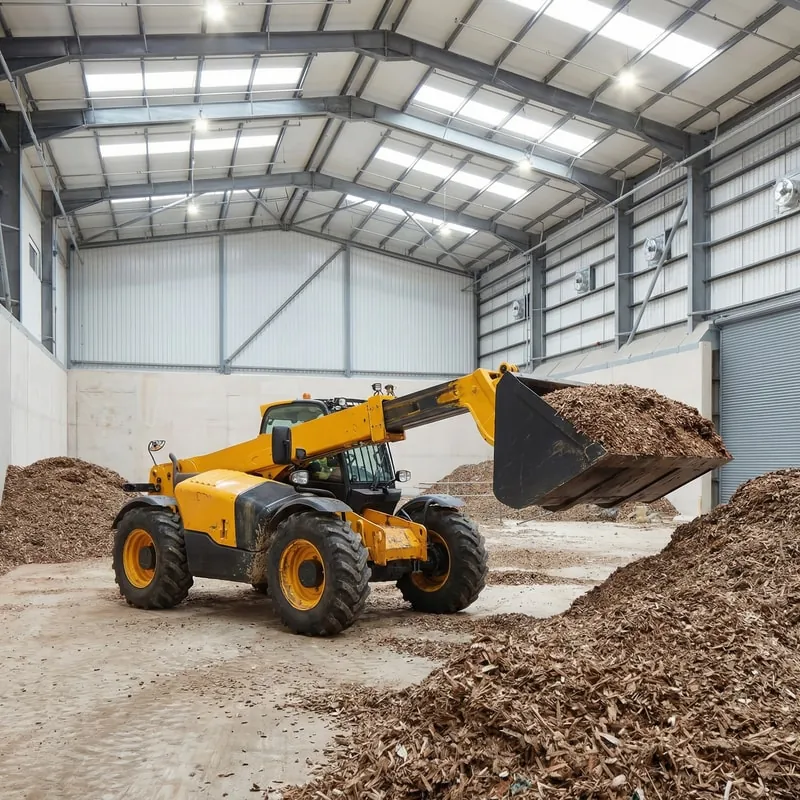
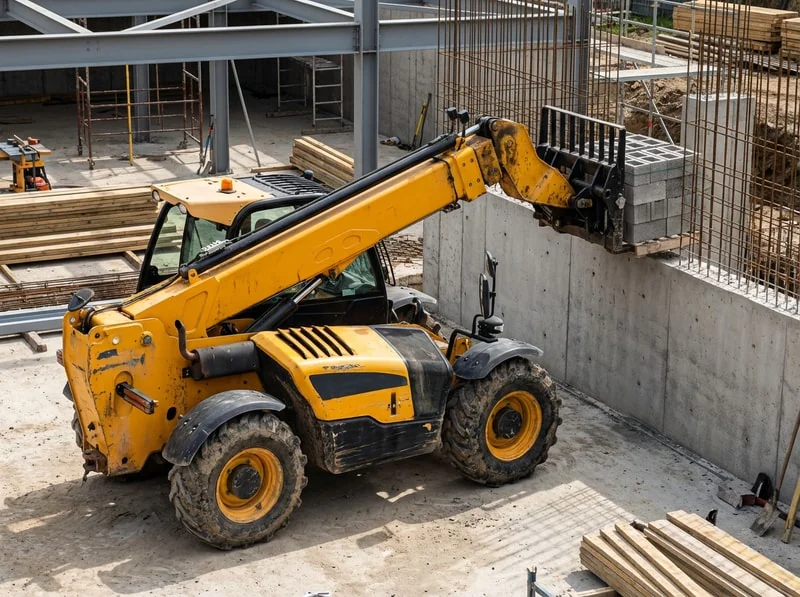
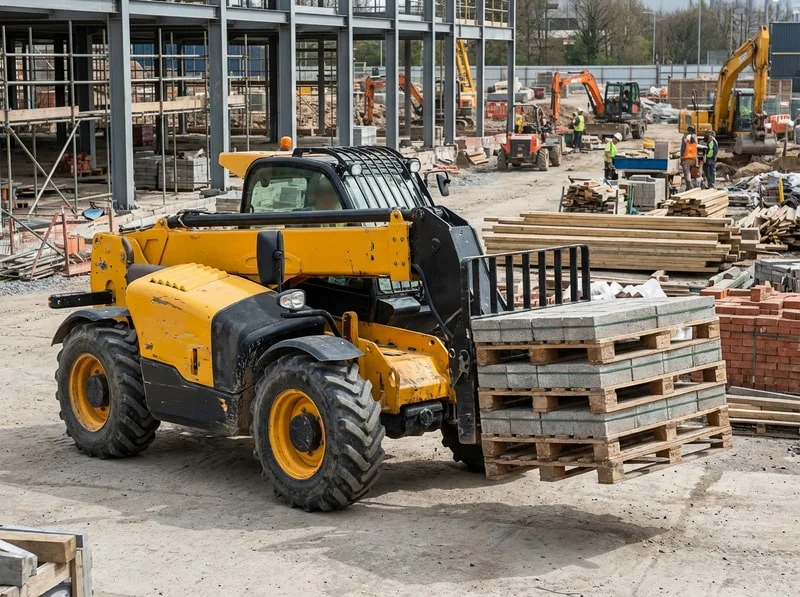
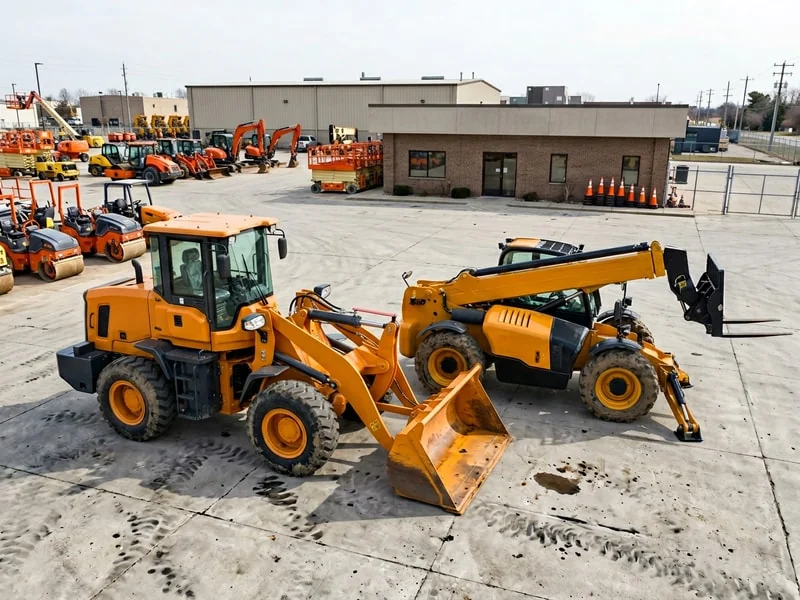
A telehandler is built around a telescopic boom structure that allows vertical lifting and forward reach. This design enables operators to place materials on upper floors, rooftops, scaffolding, or over obstacles.
Because of its boom geometry, a telehandler can perform lifting tasks that a standard wheel loader cannot safely achieve.
Wheel Loader Design
A wheel loader uses a front-mounted loader arm and bucket configuration. The design prioritizes breakout force and cycle speed rather than lift height.
In applications focused purely on digging and bulk loading, wheel loaders remain highly efficient.
Functional Focus Comparison
The core distinction can be summarized as:
If your priority is height, reach, and versatility, a telehandler offers greater operational flexibility.
If your priority is continuous bucket loading and earthmoving efficiency, a wheel loader is often more suitable.
Understanding this structural and functional difference is essential before evaluating price or brand.
Choosing the Right Machine for Your Type of Work
Before comparing specifications, the most important question is how the machine will actually be used on your site. Both telehandlers and wheel loaders are capable material-handling machines, but they are designed for different types of tasks.
Your daily work environment — whether it involves lifting materials to height, handling bulk materials, or operating in tight spaces — will strongly influence which machine delivers better productivity.
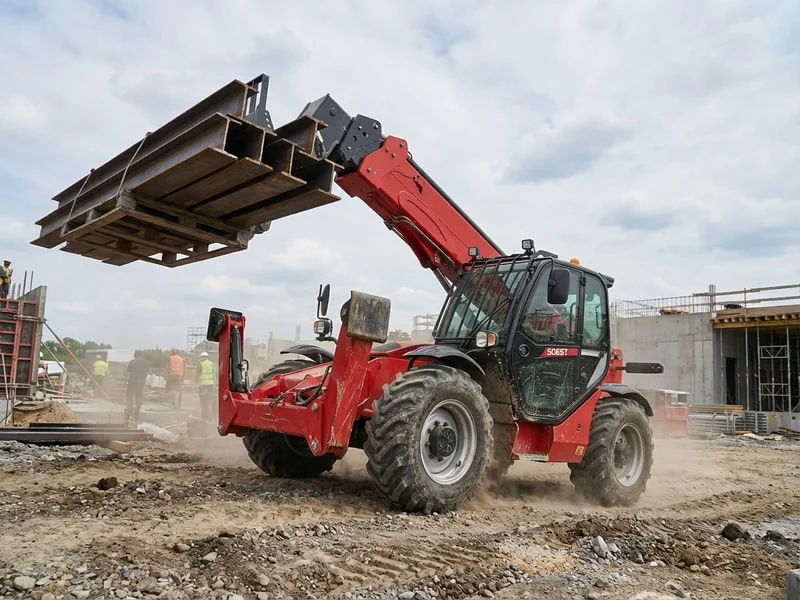
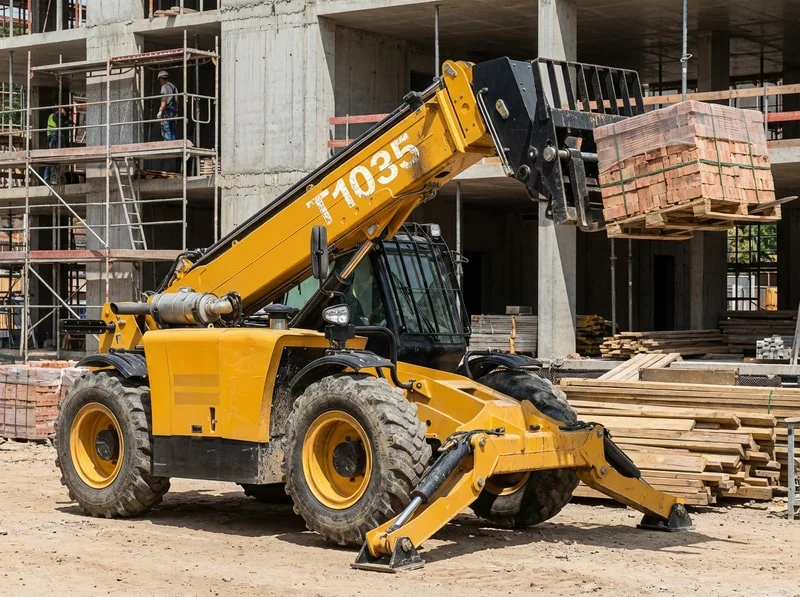
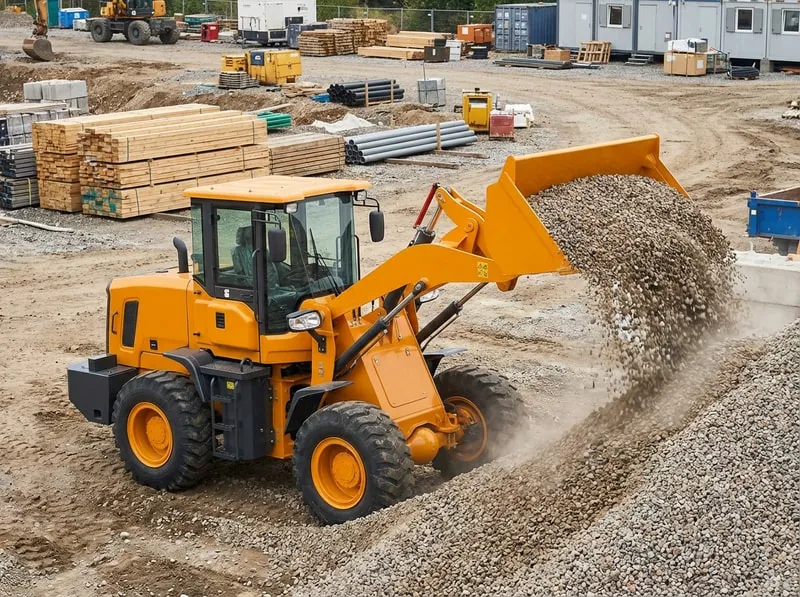
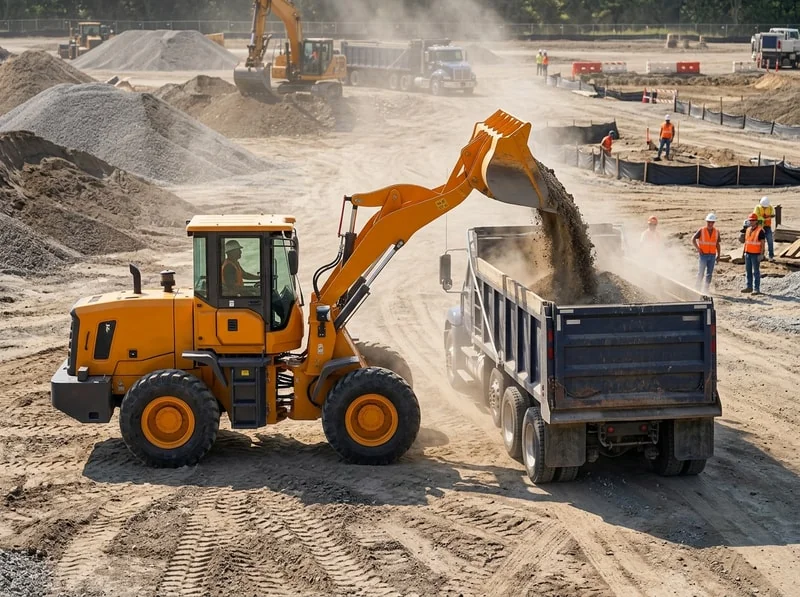
Construction sites often require machines that can both move materials efficiently and position them exactly where they are needed.
When to Choose a Telehandler
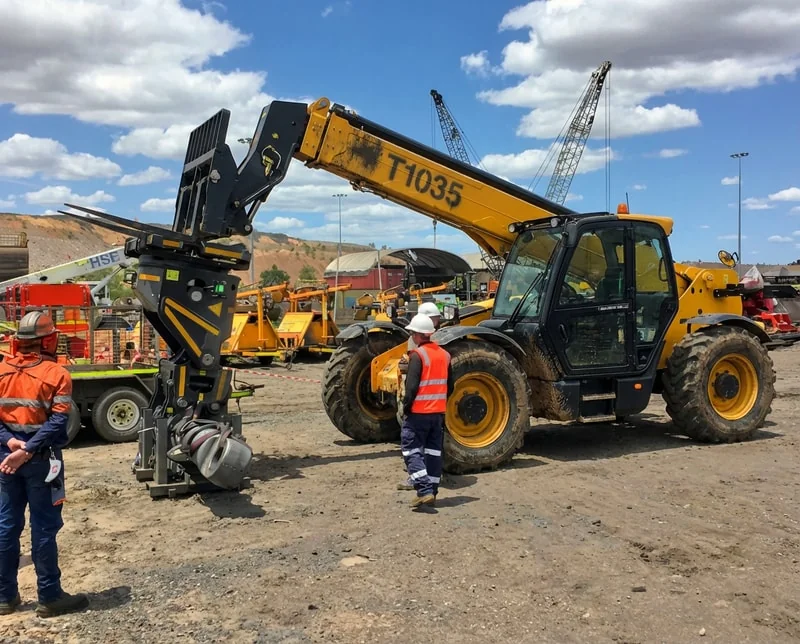
If your projects involve multi-story construction, scaffolding work, or rooftop material placement, a telehandler provides clear advantages. Its telescopic boom allows you to lift pallets of bricks, cement, or tools to upper floors and reach over obstacles such as fences or temporary structures.
When to Choose a Wheel Loader
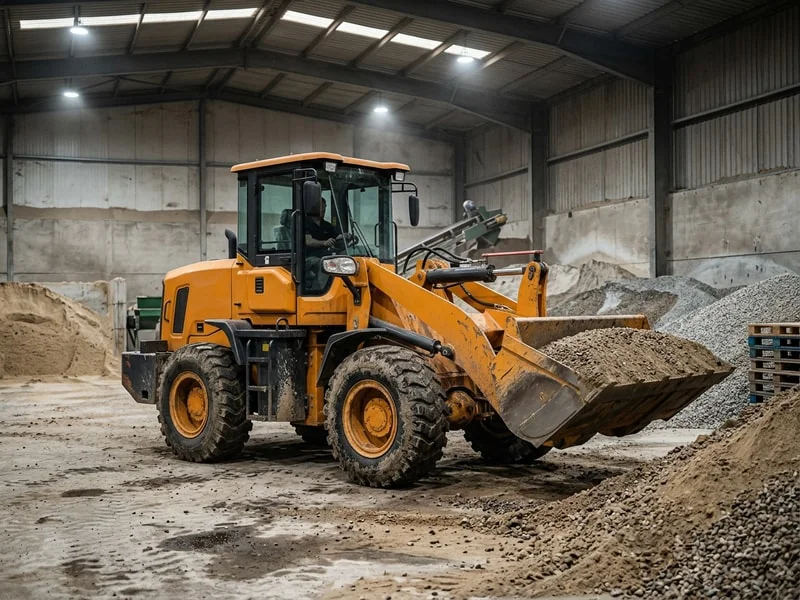
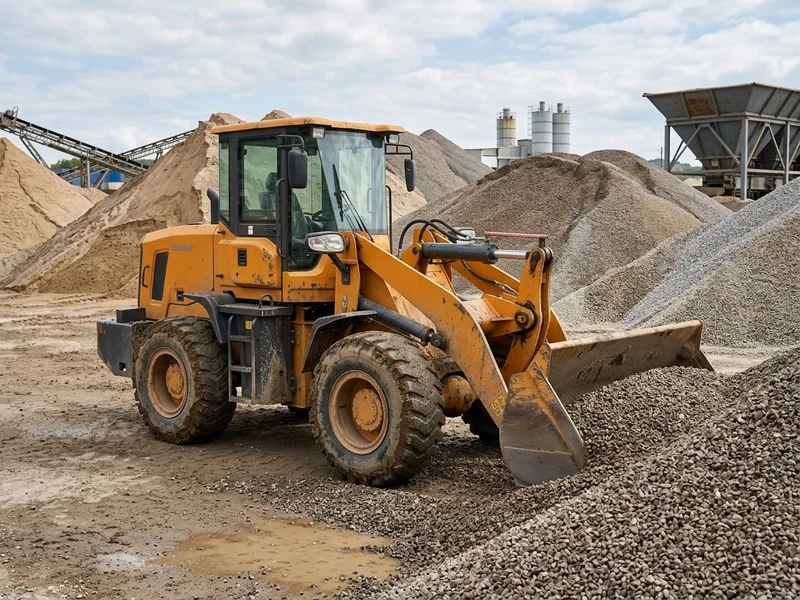
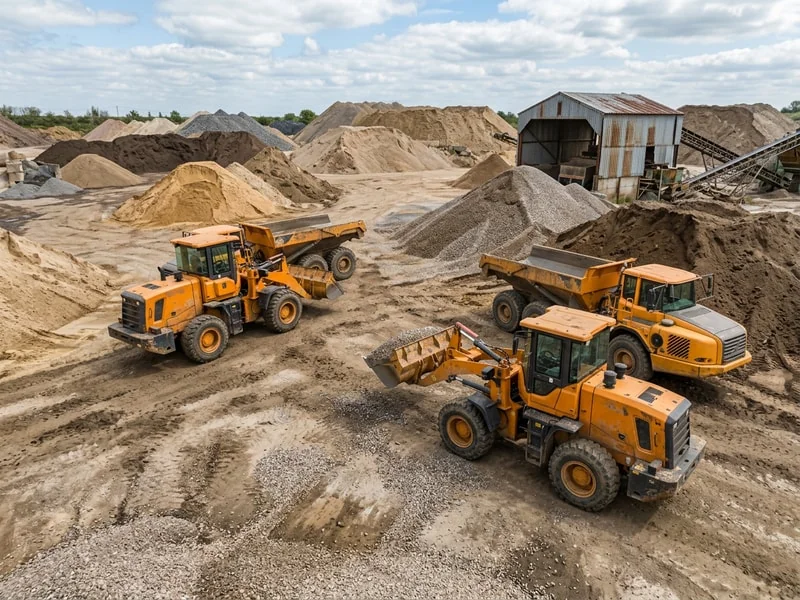
Wheel loaders are designed primarily for ground-level loading and earthmoving. They excel at loading sand, gravel, or soil into trucks and managing stockpiles on large construction sites.
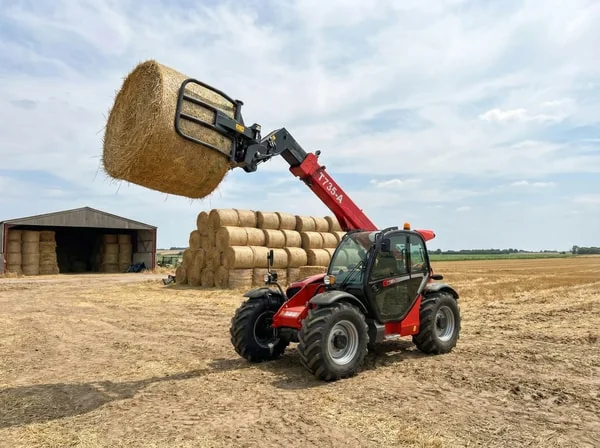
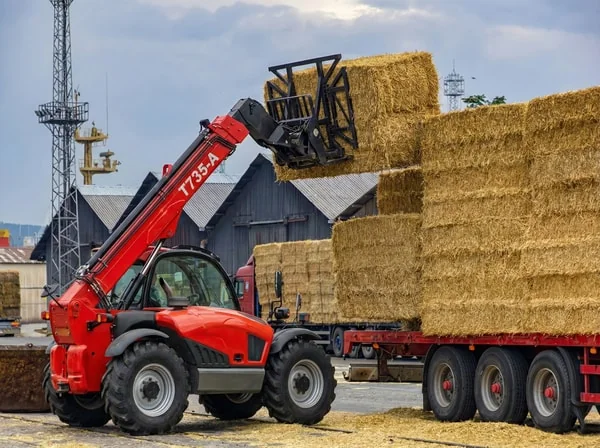
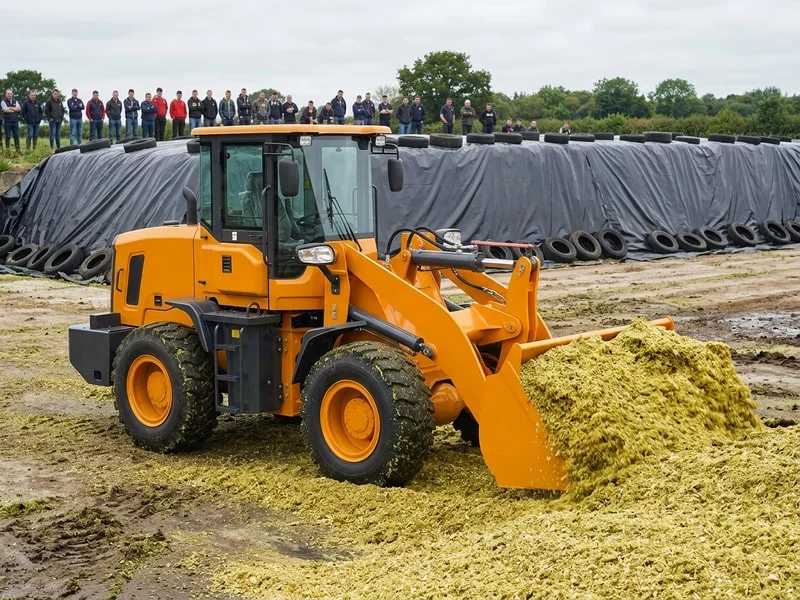
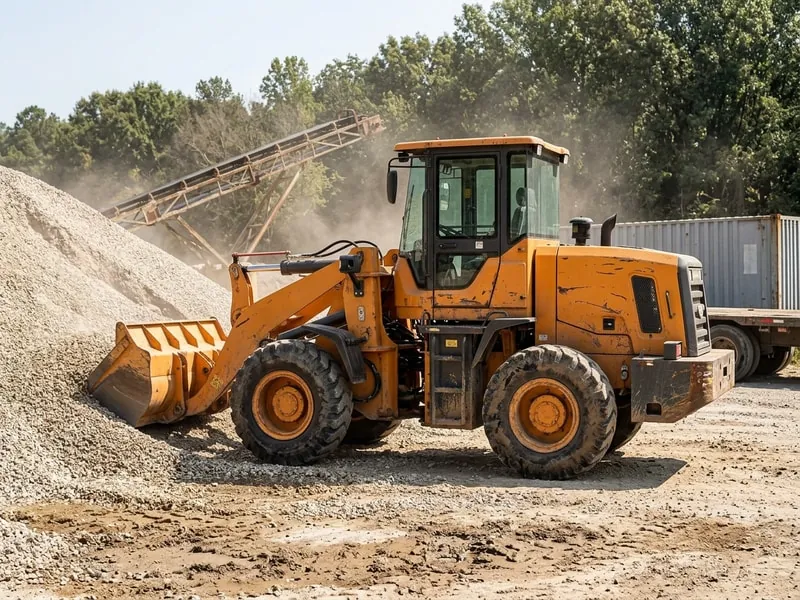
In agricultural environments, equipment is often expected to handle a wide variety of tasks throughout the year — from harvest season to winter feeding work.
When to Choose a Telehandler
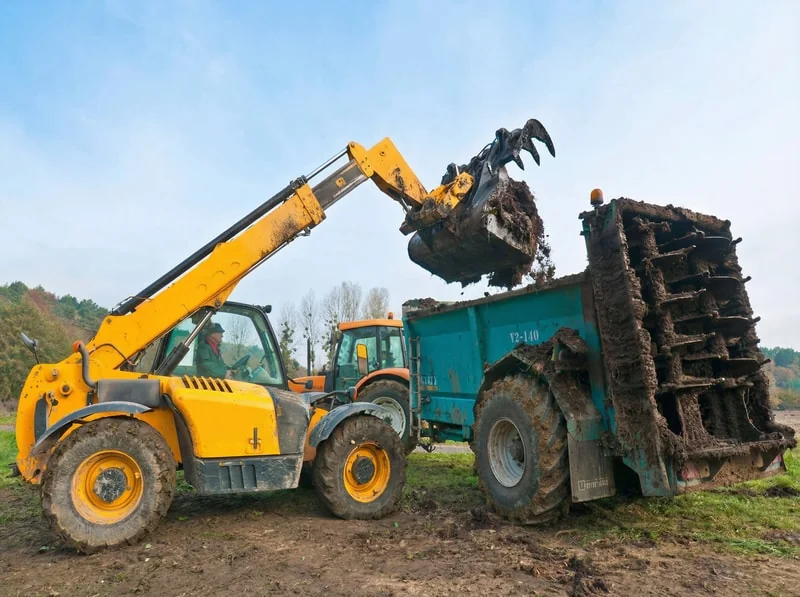
Particularly useful when your operation involves stacking hay bales, loading feed into storage areas, or placing materials inside barns. The extended boom helps maximize storage space at height, and specialized attachments allow one machine to support multiple agricultural activities.
When to Choose a Wheel Loader
Frequently used on farms for pushing silage, handling large volumes of loose materials, or cleaning yards and feed areas. Strong breakout force and bucket design make them efficient for moving heavy bulk materials over short distances.
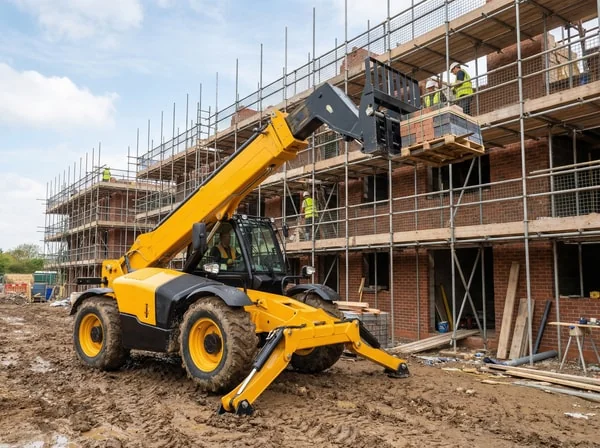
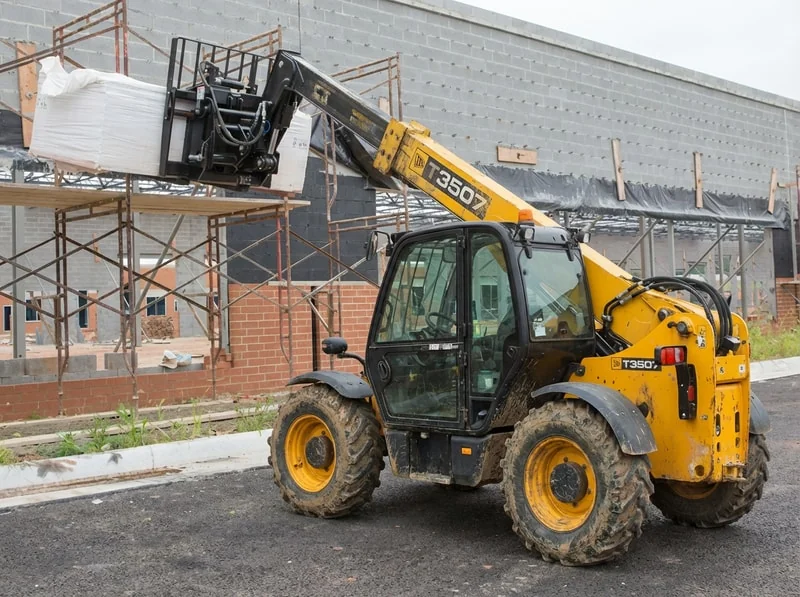
Many industrial operations require equipment that can handle both outdoor material movement and occasional lifting tasks across large yards, factories, and ports.
When to Choose a Telehandler
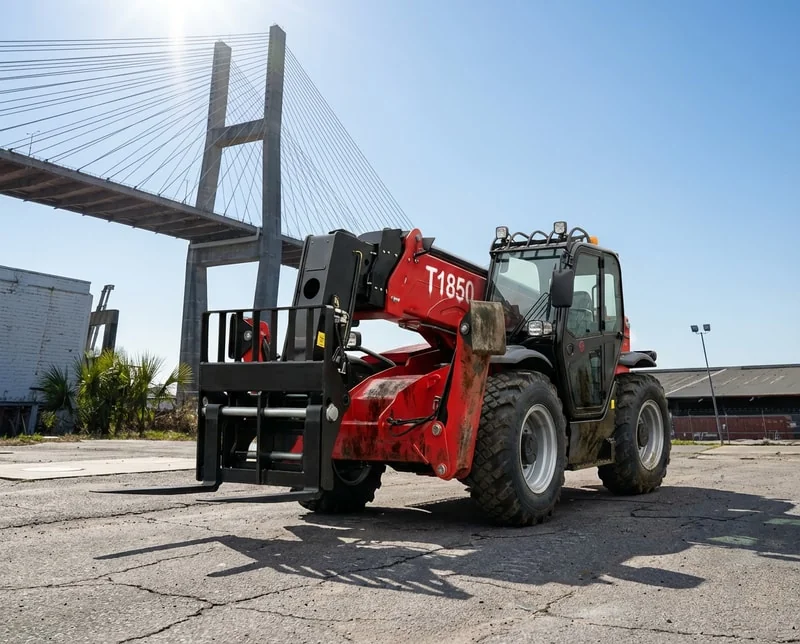
If your facility frequently moves palletized goods, building materials, or equipment components, a telehandler functions similarly to a forklift while offering much greater reach and terrain capability — ideal for large yards, ports, or construction supply facilities.
When to Choose a Wheel Loader
Commonly used in industrial environments involving bulk materials such as aggregates, scrap metal, coal, or sand. Bucket capacity and fast loading cycles make them ideal for stockpile management and continuous truck loading.
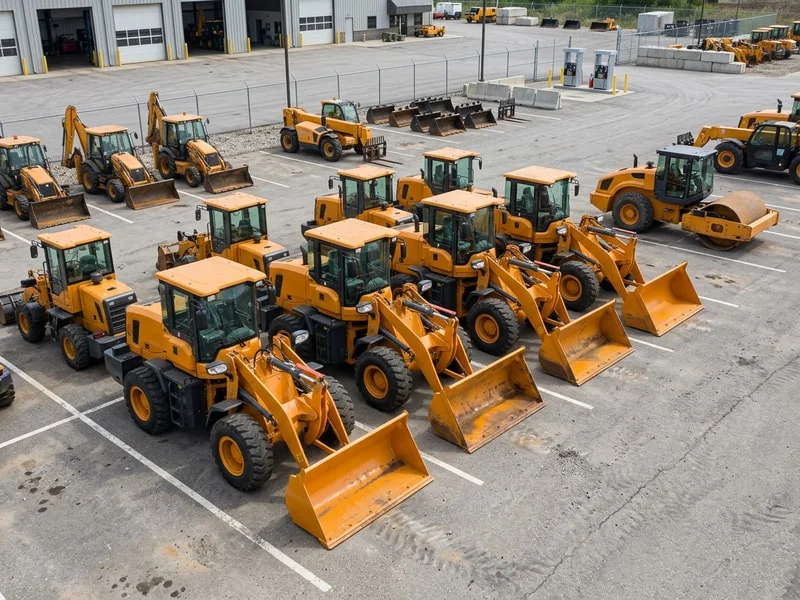
For rental companies, equipment selection is often driven by utilization rate and application range. Versatility directly impacts return on investment.
Telehandler for Rental Fleets
Telehandlers serve multiple industries — construction, agriculture, maintenance, and industrial handling. With a variety of attachments, one unit performs tasks that might otherwise require several different machines, increasing rental demand across customer segments.
Wheel Loader for Rental Fleets
Popular in rental fleets serving regions where earthmoving, quarry work, or bulk material handling are common. Their durability and loading efficiency make them reliable assets with strong demand in these focused markets.
Not sure which machine fits your application? Share your working environment and lifting requirements — we'll recommend the right solution for your operation.
Investment and Operational Efficiency
Choosing between a telehandler and a wheel loader is not only about purchase price. The real value of a machine is determined by how efficiently it performs daily tasks, how many types of work it can handle, and how much equipment you need on site.
The following factors help you evaluate which machine delivers better long-term operational value.
3.1 Initial Equipment Investment
Lifting, reaching & multi-purpose handling across different conditions
Repetitive loading cycles & bulk material movement
Purchase price is only one part of the decision. The real comparison should include how many tasks the machine can perform in daily operations.
3.2 Fleet Efficiency: One Machine, Multiple Tasks
Pallet lifting, placement at height, bucket loading, equipment handling
Effective for bucket loading, but generally limited to fewer task variations
Using one multi-purpose machine can reduce equipment investment and simplify jobsite management.
3.3 Jobsite Productivity
Lifting, positioning & reaching difficult locations
Repetitive loading & earthmoving operations
Choosing the right machine for the job can significantly improve workflow efficiency and reduce unnecessary handling steps.
3.4 Operating Efficiency and Equipment Utilization
Flexible equipment supporting a wider range of applications
Specialized equipment optimized for loading efficiency
Higher equipment utilization can improve return on investment over the machine's working life.
Want to understand the real cost difference between a telehandler and a wheel loader for your operation? Share your requirements and we'll provide a detailed comparison.
When a Wheel Loader May Be the Better Choice
A telehandler is a versatile machine, but it is not the best answer for every operation. Use the checklist below to honestly evaluate whether a wheel loader fits your actual work better.
How to use this checklist:
Mainly Bulk Loading & Stockpile Work
Why: Wheel loaders are purpose-built for fast bucket cycles and bulk material handling.
Seldom Need Lift Height or Forward Reach
Why: If height/reach isn't needed, you pay for capability you won't use.
Maximum Pushing Force or Heavy Earthmoving
Why: Wheel loaders are optimized for breakout force and repetitive earthmoving.
Long Repetitive Loading Shifts
Why: Specialization wins when tasks rarely change.
Extremely Rough or Abrasive Sites
Why: In harsh bulk-material environments, a loader is often the more practical primary machine.
Loose & Heavy Materials — Not Palletized
Why: Wheel loaders are naturally efficient for moving loose material and managing piles.
Simple Maintenance & Basic Operator Training
Note: A telehandler can still work well in remote areas if you truly use its height/reach and attachment versatility.
Which Machine Fits Your Operation?
A wheel loader is likely the better primary machine for your operation.
A telehandler typically delivers better overall value and flexibility.
Many customers run a loader for bulk work + a telehandler for lifting/placement.
Before requesting a quote, prepare these 4 points:
Main Material Type
bulk / pallet / mixed
Max Lift Height
needed (if any)
Typical Daily Tasks
your top 3
Ground Conditions
flat / rough / quarry
Still deciding? Share your daily tasks, material type, and site conditions — we'll help you determine whether a telehandler or wheel loader is the right fit.
If a Telehandler Fits Your Operation — Here's What We Offer
Based on the comparisons above, if your work involves lifting to height, multi-attachment handling, or operating across varied jobsite conditions, a telehandler is likely the stronger choice. Our range covers capacities from 1.2 tons to 5.0 tons, serving agriculture, construction, and emission-regulated markets.
Each model can be configured to match your specific application. Select a model to view full specifications — or request a quote directly.

T4512
1.2 t · 4.5 m Compact Telehandler
Ideal for urban construction, interior handling, and space-restricted sites. Compact footprint with easy transport logistics.

T625-A
2.5 t · 6 m Agricultural Telehandler
Optimized for farm material handling and confined agricultural environments. Balanced reach and capacity for daily operations.
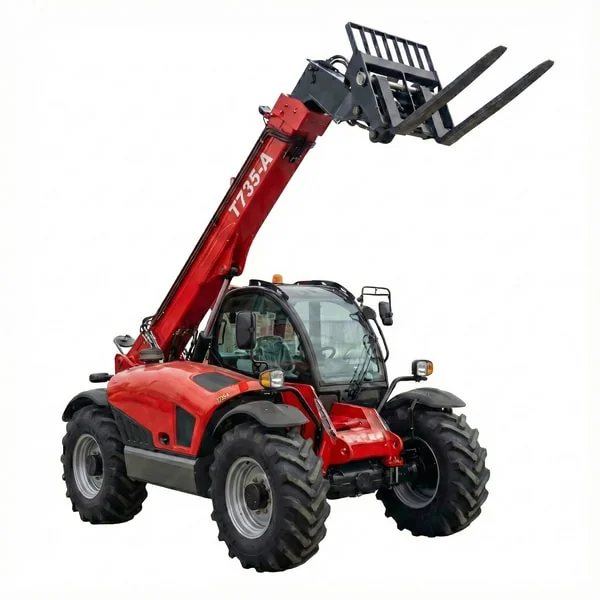
T735-A
3.5 t · 7 m Agricultural Telehandler
Designed for intensive farm handling and feed operations. Stable lifting performance with upgraded hydraulic configuration.
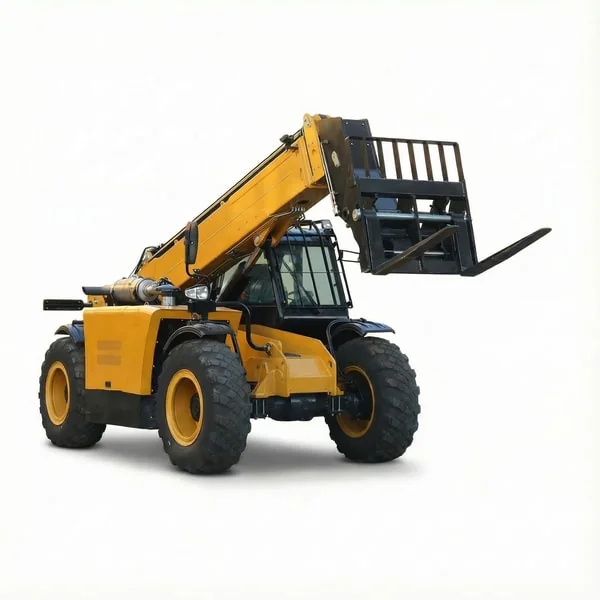
T3507
3.5 t · 7 m Telehandler
Compact yet capable for construction and industrial material handling. A versatile entry point across multiple applications.
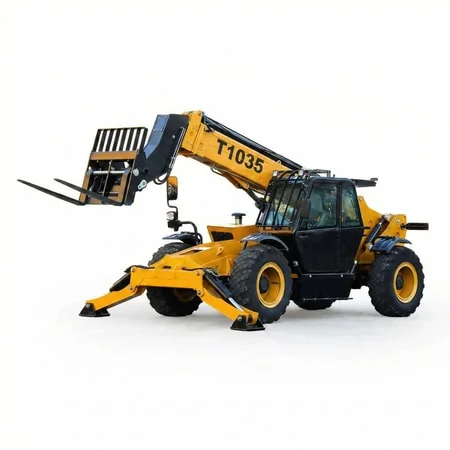
T1035
3.5 t · 10 m Telehandler
Mid-reach telehandler for construction sites, warehouses, and general contracting. Strong balance of reach and load capacity.
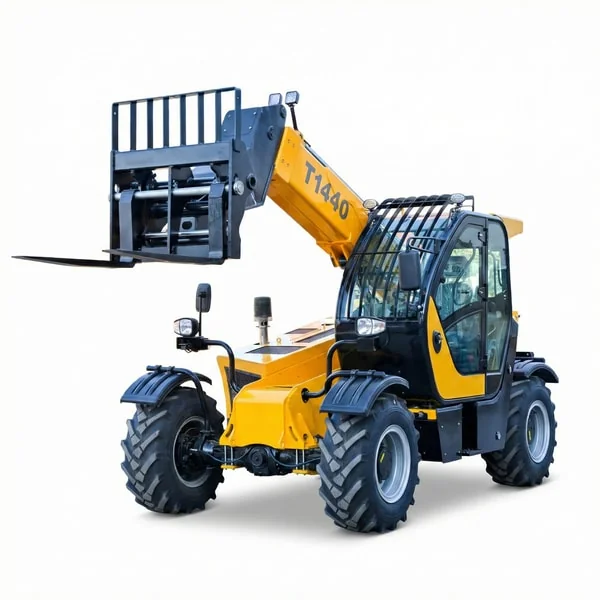
T1440
4.0 t · 14 m Telehandler
Extended reach model for demanding construction lifting and high-rise material placement applications.
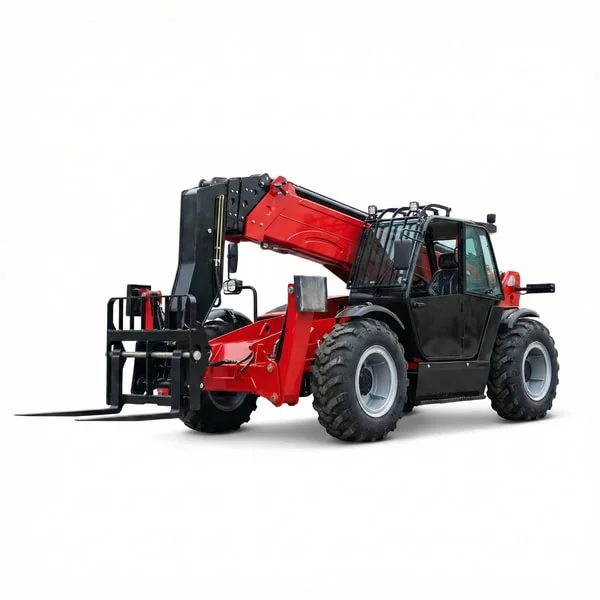
T1850
5.0 t · 18 m Telehandler
High-capacity solution for large-scale construction, infrastructure projects, and heavy material handling.

TH1840
4.0 t · 17.5 m · EPA Compliant
Configured with EPA-certified powertrain for North American and emission-regulated markets.
Not sure which model matches your working conditions? Talk to Sally — share your application details and we'll recommend the right configuration.
Which Machine Fits Your Operation?
A Quick Decision Guide
Answer the questions below based on your daily work. If most of your answers fall into one column, that machine is likely the better fit for your operation.
Mostly Telehandler
A telehandler will likely provide better flexibility and productivity for your operation — especially if your work involves height, reach, or varied tasks.
Mostly Wheel Loader
A wheel loader may be the more efficient choice for your main tasks — particularly for bulk loading, earthmoving, and stockpile work.
Mixed Results
Many contractors use both machines to cover different types of work — a loader for bulk tasks and a telehandler for lifting and placement.
Not sure which machine fits your jobsite? Tell us about your project and our engineers will recommend the most suitable equipment for your operation.
Frequently Asked Questions
Common questions from equipment buyers evaluating telehandlers and wheel loaders for their operations.
Still have questions about choosing the right machine? Let's discuss your specific requirements.
Valuable Resources
Reference materials to support your equipment selection, pricing evaluation, import planning, and long-term operations.
Selection & Sourcing
Choosing the right equipment for your application
Telehandler or Forklift?
Equipment selection comparison
2026 Sourcing Guide
Step-by-step evaluation reference
China Telehandler for Agriculture
Farm-specific sourcing from China
Telehandler for Construction
Building & infrastructure applications
China Telehandler for Rental Company
Rental fleet sourcing from China
Logistics & Maintenance
Shipping, import & aftercare
Import & Customs Guide
Documentation for overseas purchases
Shipping Time Reference
Production and transit timelines
Container Loading Cases
Real shipping examples
What Affects Telehandler Price?
Cost factors & pricing transparency
Wear Parts & Consumables
Maintenance planning reference
Ready to Choose the Right Machine?
Now that you've compared telehandlers and wheel loaders, let's discuss the right configuration for your specific operation.

Hi, I'm Sally.
Sales Manager at Telescro
I can help you with:
- Choosing between telehandler models based on your application
- Configuration comparison across different capacity ranges
- Attachment recommendations for your type of work
- Shipping cost estimates and delivery timelines to your region
- Factory-direct pricing with transparent cost breakdown
No commitment required. Share your working conditions and requirements — I'll recommend the right machine and provide a clear, itemized quotation you can evaluate at your own pace.
Request a Telehandler Quotation
Describe your operation — Sally will respond with a detailed recommendation within 24 hours.