










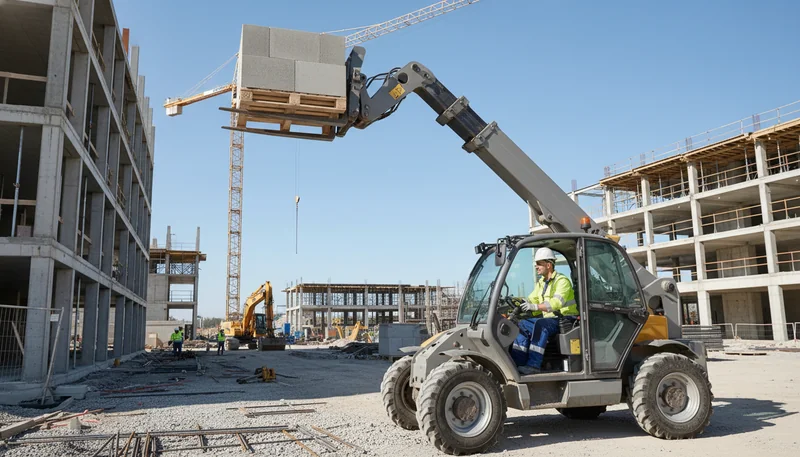
Telehandler Rated Performance: How Operator Habits Make or Break Output (Field Guide)
A site manager from Brazil told me his two “identical” telehandlers performed like two completely different machines, even though the specs matched. What he didn’t suspect: a big chunk of that difference came down to how each operator handled the day-to-day basics.
Operator technique can have a major impact on telehandler throughput and perceived performance in day-to-day site work. Load charts and rated figures are established under controlled conditions and assume correct setup and disciplined operation, but productivity can vary noticeably based on how operators handle positioning, movement, and cycle planning. Unsafe or inefficient habits—such as traveling with the boom extended, unnecessary repositioning, neglecting pre-use checks1, or aggressive driving—can reduce stability margin, force conservative operation, and on many machines may trigger load management warnings or function limits.
How Do Operator Habits Impact Telehandler Output?
Operator habits directly influence telehandler productivity, and it is common to see meaningful differences in output between otherwise identical machines. Rated performance assumes optimal setup and operation, yet field observations and fleet monitoring show that approach planning, coordinated boom movements2, and minimizing unnecessary idling often have a greater effect on completed work cycles than hardware differences alone, while also influencing fuel consumption and overall efficiency.

Most people assume that when output drops, the solution is a bigger telehandler—but in many cases, that’s not the real issue. What I see far more often on site is an operator habit gap. Last year on a logistics project in Chile, two crews were running the same 4-ton, 14-meter telehandlers to handle concrete blocks. Both machines were serviced, calibrated, and mechanically identical. Yet one crew completed close to 60 loading cycles per shift, while the other averaged around 40. The difference wasn’t the equipment. One operator planned approach routes carefully, positioned the telehandler to minimize repositioning, and avoided unnecessary idling throughout the shift.
One of the biggest productivity killers I see is fragmented boom movement. Some operators lift, stop, extend, stop, then make multiple fine corrections. Each pause costs seconds and adds fuel burn. On a mining-support site in northern Chile, telematics showed that the top-performing operator consistently combined lift and extension into a single, smooth motion. Compared with other operators on the same machine, his average cycle time was about 20% shorter. Fuel use dropped as well, because the hydraulic system was working in a steadier, more efficient flow rather than repeated start-stop spikes. Small habits—such as creeping forward several times instead of repositioning once—compound into significant time loss over a full shift.
For fleet managers, I always recommend watching for repeated stops, high idle percentages, and excessive micro-corrections. Before assuming a machine is under-spec’d, look at how the operator plans the approach, aligns the forks, and times boom movements. Targeted coaching focused on smoother operation and better setup can lift productivity by 20–30% without changing the telehandler model. From what I’ve seen, reviewing basic telematics data is often the fastest way to determine whether you’re dealing with a specification problem—or simply an operator effect.
Efficient operator habits, such as planning approach routes and minimizing repositioning, can substantially increase telehandler cycle times without altering the machine's mechanical or rated capabilities.True
Operator habits directly affect productivity by reducing wasted motions and downtime. Even if two telehandlers have identical specifications and are in the same condition, better operating techniques streamline processes and increase completed cycles per shift. The rated performance defines the ceiling, but skilled operation determines how close a machine comes to it.
Operator habits have no measurable effect on telehandler output as long as the equipment is properly maintained and meets its rated specifications.False
Telehandler output is influenced not only by mechanical condition and rated specifications but also by operator behavior. Inefficient planning, unnecessary repositioning, and fragmented boom movements can significantly reduce productivity even when the machine itself is fully serviceable.
Key takeaway: Differences in telehandler output are often driven by operator behavior rather than equipment limitations. Improving approach planning, reducing idle time, and encouraging smooth, coordinated boom movements can raise productivity by 20–30%—without investing in a larger or higher-capacity machine.
Can Operator Habits Impact Telehandler Capacity?
Unsafe or improper operator habits—such as turning with a raised or extended boom, beginning lifts on uneven ground, or traveling before the chassis is properly leveled—can trigger a telehandler’s stability and load-management systems to automatically derate usable capacity. This leads to restricted or interrupted hydraulic functions, making the machine appear “underpowered” even though it remains within its nominal rated capacity on paper.
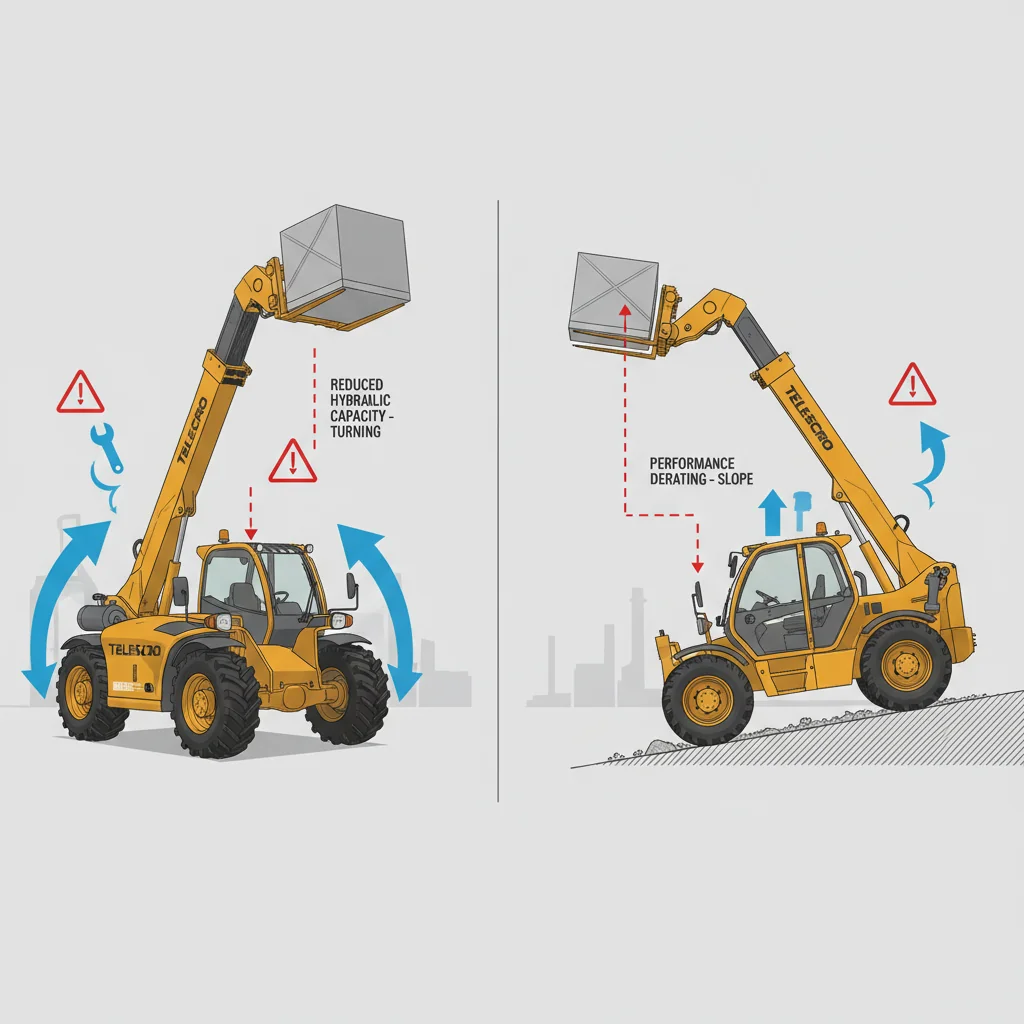
Let me share something important about operator habits—these can make or break your telehandler’s actual performance. Just last year, I helped a project in Kazakhstan where the operator kept turning with the boom raised and half-extended. The telehandler was a 4-ton, 17-meter unit, so on paper, plenty strong. But every time they took a sharp turn with a pallet at mid-reach, the control system instantly derated the hydraulics. They thought the machine was “too weak for real site work.” Actually, the problem was technique, not hardware.
Here’s why this matters. Modern telehandlers are equipped with load-moment indicators and stability control systems that continuously monitor boom angle, extension, and chassis attitude. If a lift begins on uneven ground or the machine is operated with chassis twist, the system detects elevated risk and automatically limits or cuts hydraulic functions. It makes no distinction between being “under” the rated load—its response is driven by geometry, not brochure capacity. I’ve seen this clearly on sites in Brazil, where contractors complained that “the boom won’t extend at height,” only to discover the machine was operating outside the manufacturer’s level tolerance, typically around ±3°. On a 7° cross-slope, the load chart no longer applies—the rated capacity is invalid, regardless of the weight shown on paper.
The key habits keep things smooth: always set up on level ground, travel with the boom low and retracted, and check the load chart before tackling anything unusual. Cutting corners—like driving with a raised load or side-loading—leads to system derates and long-term wear. I always tell site managers: good operator discipline prevents “mysterious” lost capacity and unnecessary downtime. Take those extra seconds to level out and verify your setup. It pays off every time.
Operators who frequently travel with the boom partially raised and extended can trigger a telehandler's load management system to derate hydraulic functions, reducing effective lifting performance.True
Telehandlers are equipped with sensors and stability systems that monitor boom position and load moment. Unsafe operator habits, such as traveling or turning with a raised and extended boom, can prompt the machine’s electronics to reduce hydraulic output to avoid tipping or overloading, which reduces the practical capacity and perceived performance.
When an operator consistently exceeds the recommended speed limits during sharp turns, the telehandler will automatically increase its lifting capacity to compensate for momentum.False
Telehandlers do not increase their rated capacity in response to operator speed or maneuvers. In fact, exceeding recommended speeds, especially during turns with a raised boom, increases instability and can lead to automatic safety interventions that lower machine capacity or stop operation to prevent accidents.
Key takeaway: Operator setup and handling directly affect a telehandler’s usable capacity. Adhering to best practices—level chassis, low/retracted boom during travel, load chart consultation before non-routine lifts—ensures operation remains close to rated performance and reduces risks from unnecessary derating or stability issues.
Do Pre-Use Checks Affect Telehandler Output?
Consistent daily pre-use checks are critical for maintaining a telehandler’s rated performance. Quick inspections of tires, forks, hydraulics, and surroundings help operators identify issues before they impact stability or lifting capacity, especially at full reach. Neglecting these steps leads to gradual performance loss and increased downtime.

The biggest mistake I see is operators skipping daily pre-use checks because “the machine ran fine yesterday.” It’s tempting, especially on a busy jobsite. But I’ve worked with teams in the UAE and South Africa who learned—sometimes the hard way—that a missed five-minute walk-around can mean big trouble by mid-week. Even experienced crews have lost half a shift tracking down a slow hydraulic leak or wasted time angry about a low tire that nobody noticed at the start of the day.
Here’s what matters most when you want to protect your telehandler’s rated capacity and minimize downtime: small defects compound very quickly. Even something as basic as low tire pressure3 can significantly reduce forward stability at full boom extension. In practice, under-inflated tires increase tire deflection and effectively move the machine’s center of gravity forward, which can cut usable capacity by hundreds of kilograms at maximum reach. Bent or cracked forks create a similar problem by shifting the load center outward, making the telehandler less stable—especially above 10 meters, where small geometry changes have an outsized effect.
I saw this clearly last year on a project in Peru, where a 4-ton telehandler struggled to place 1,800 kg loads at full reach. The machine itself was mechanically sound, but one front tire was roughly 20% under-inflated. Once pressures were corrected, the stability warnings eased and lifting performance returned to expected levels. Before that fix, the site suffered slower cycle times, repeated operator complaints, and two unnecessary service call-outs in a single week.
That’s why I always recommend embedding a simple, consistent LMRA (Last Minute Risk Analysis) or pre-use check into every shift. A solid five-minute inspection should cover:
- Tire pressure and tread damage
- Forks and attachments—look for cracks, bends, or dirt buildup
- Hydraulic hoses—watch for leaks or drips
- Pins and locks—ensure they’re secure
- Warning lights on the dash
- Ground and surroundings for hazards
These daily steps keep performance as close as possible to what the load chart shows. It’s the cheapest insurance you’ll ever buy against lost capacity and wasted time.
Consistently skipping pre-use inspections can cause gradual loss of telehandler lifting capacity due to unnoticed tire pressure drops or hydraulic leaks.True
Tire underinflation and hydraulic issues both reduce a telehandler's ability to lift rated loads safely and efficiently; without daily checks, these problems often go undetected until performance is affected.
Operator pre-use checks have little to no impact on the long-term performance of a telehandler, since modern machines are built to compensate for minor faults automatically.False
While telehandlers are robust, they do not self-correct issues like low tire pressure or small leaks. Neglected faults accumulate and lead to inefficiency, breakdowns, and reduced overall output.
Key takeaway: Embedding a five-minute walk-around into every shift preserves rated capacity, reduces unplanned downtime, and maintains telehandler performance close to OEM load chart specifications. Small defects such as low tire pressure or damaged forks directly impact stability, especially at maximum reach.
Do Operator Habits Affect Rated Capacity?
Yes—operator habits directly affect how long a telehandler can actually sustain its rated capacity in daily operation. While rated capacity is defined under ideal test conditions, real-world operator behavior determines whether the machine continues to deliver that performance over time. Consistent issue reporting, disciplined operation, and proper preventive maintenance4 help preserve hydraulic efficiency, boom alignment, drivetrain integrity, and tire condition. In contrast, aggressive driving, delayed fault reporting, and harsh operating techniques accelerate wear, leading to early loss of smoothness, precision, and usable lifting performance—well before the machine reaches its nominal service life.

Most buyers think rated capacity is a fixed number tied only to design and certification. In reality, operator habits determine how long a telehandler can continue operating close to that rated capacity in daily use.
A load chart assumes a machine that is mechanically sound: correct tire pressure, tight pins and bushings, smooth hydraulic response, and a boom that tracks straight under load. Operator behavior directly influences whether those assumptions remain true after 1,000, 2,000, or 4,000 operating hours.
I’ve seen this clearly in fleet comparisons. On a project I supported in Brazil, a contractor ran two identical 4-ton, 18-meter telehandlers on similar duty cycles. One operator logged minor issues early—small hydraulic noises, slight steering play, slow boom response—and maintenance addressed them immediately. That machine was still lifting smoothly and predictably after 3,800 hours. The second unit, operated more aggressively with little issue reporting, developed jerky boom motion and drivetrain harshness before 2,000 hours, even though loads and applications were comparable.
This matters because wear does not change the nameplate rating—but it erodes the machine’s ability to reach that rating safely and smoothly. Aggressive habits such as hard braking, rapid direction changes, shock-loading pallets, or traveling fast over uneven ground accelerate wear on tires, axle pivots, boom pads, pins, and bushings. As tolerances open up, stability margins shrink. Operators then experience earlier alarms, reduced hydraulic speeds, and less precise control at height—what many describe as “lost capacity,” even though the rated number hasn’t changed.
Basic discipline makes a measurable difference. Respecting speed limits, using the inching pedal for placement, avoiding shock loads, and maintaining simple fault logs cost almost nothing compared to premature axle or boom repairs. I’ve seen axle rebuilds pulled forward by two years or more simply due to rough operating habits. Once boom play increases, accurate placement at height becomes harder, and operators are forced to work further inside the load chart than originally planned.
Operators who consistently monitor for early warning signs, such as unusual hydraulic noises, can extend a telehandler’s period of smooth and precise lifting beyond what is typically expected from the manufacturer's rated service hours.True
Early detection and resolution of minor faults prevents the escalation of wear and functional degradation, maintaining lifting accuracy and reliability longer than if issues are ignored.
Operator behavior has little effect on a telehandler’s rated capacity during its operational life, as long as the machine receives scheduled maintenance.False
Rated capacity assumes ideal conditions, but improper operation—such as rough handling or ignoring small faults—can accelerate wear, leading to decreased performance or earlier loss of lifting precision, regardless of standard maintenance schedules.
Here’s the key point buyers should understand: rated capacity assumes a well-maintained machine operating within its original mechanical tolerances. Operator skill and care are what keep the telehandler close to that condition over its service life. Establishing clear operating rules and simple reporting procedures protects not only uptime and safety, but also the machine’s long-term ability to perform at its rated level.
Do operator habits affect telehandler performance?
Yes — operator ergonomics and fatigue management directly affect whether a telehandler can sustain its rated performance through a full shift. Poor posture and fatigue reduce control precision and slow boom coordination, while proper ergonomics and basic fatigue management help operators maintain smoother movements and consistent cycle times. Research on operator ergonomics5 and fatigue management6 shows that reduced strain lowers error rates, helping machines operate closer to their rated capability.
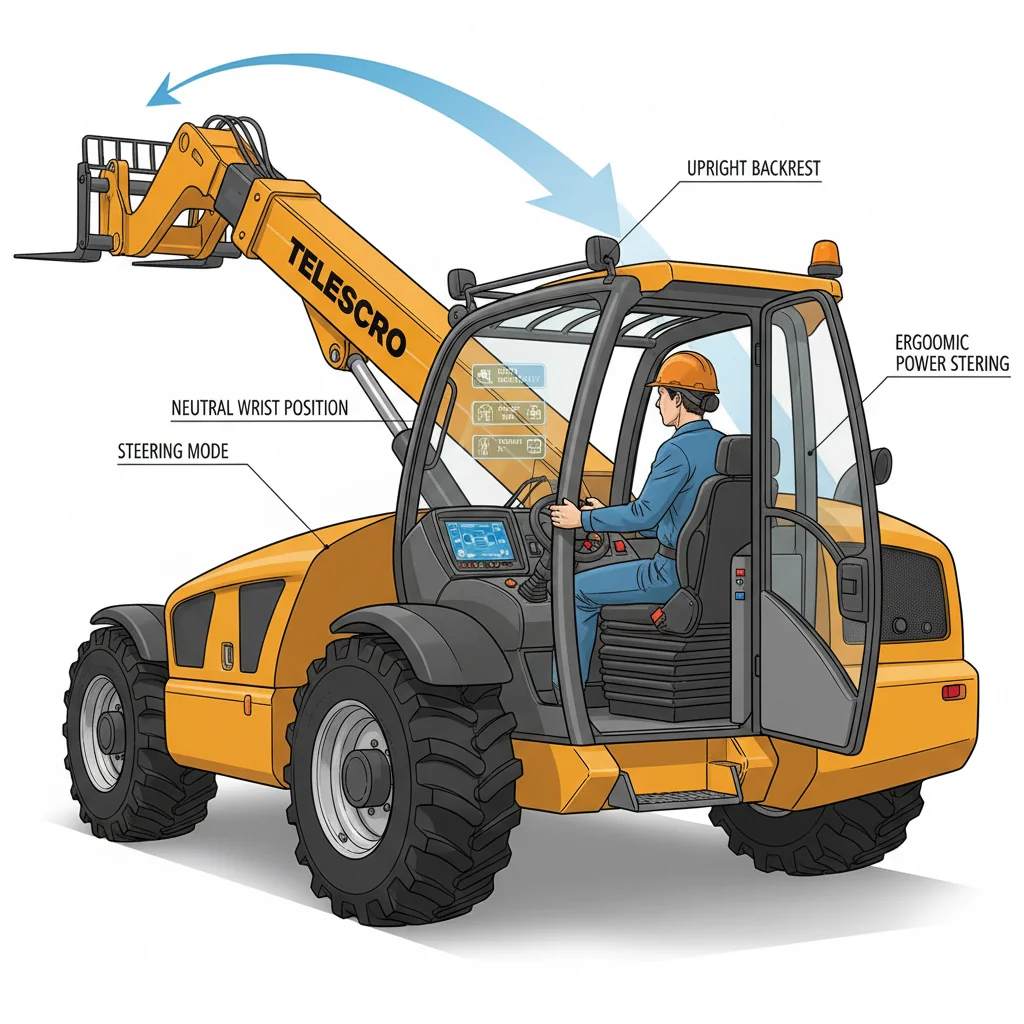
Here’s what matters most when talking about telehandler performance: operator habits are just as important as the machine’s specs. I’ve seen a skilled operator on a 3.5-ton unit with a 14-meter boom consistently outperform a less-trained driver using a larger machine. The reason often comes down to posture and using built-in assists. For example, a jobsite in Dubai tracked their crews for a month—teams with ergonomics training and micro-break routines kept output steady across 10-hour shifts, while others slowed down after six hours. That’s not luck. It’s muscle memory and fatigue management at work.
Last year in Kazakhstan, I helped a contractor troubleshoot boom jerkiness and excessive cycle times. Their operators gripped the steering wheel so tightly their wrists were swollen by midday, and almost none of them used the boom suspension. Once they started using proper seat adjustments and took micro-breaks every hour, their productivity improved. Boom control got noticeably smoother by the third week, and they saw fewer missed picks, especially on the afternoon shift. It doesn’t matter if your telehandler has a high-tech hydraulic circuit—if the operator’s exhausted, precision drops.
Managers sometimes dismiss these details as “comfort issues,” but the impact is real. I always suggest including ergonomics in your operator training—teach proper posture, demo features like moment indicators and power steering, and encourage regular stretching. You’ll see tighter bucket control, safer loads, and more even cycle times right up to shift-end. For jobsite productivity, operator habits shouldn’t be an afterthought—they’re a core part of getting your machine’s rated output.
Operator habits such as regularly checking and adjusting tire pressure can noticeably affect telehandler stability and load chart compliance.True
Proper tire pressure is crucial for maintaining the safe operation envelope of a telehandler. Underinflated or unevenly filled tires may compromise machine stability, causing misleading indications on load charts and potentially reducing maximum effective capacity even if the machine itself is unmodified.
The telehandler’s rated performance is determined solely by manufacturer specifications and is unaffected by operator technique or work habits.False
While manufacturer specs set maximum capabilities, real-world performance is often limited or enhanced by how the operator uses the equipment. Poor habits, like abrupt control inputs or ignoring ergonomic best practices, can lead to inefficiencies and even compromise machine safety, whereas good habits optimize the machine’s rated abilities.
Key takeaway: Ergonomic operator habits and regular micro-breaks are critical for sustaining rated telehandler output. Training operators to use assists, adjust seating, and manage fatigue can narrow productivity gaps and lower error rates across shifts—making ergonomics a throughput and safety issue, not just a comfort concern.
How Do Training Methods Influence Telehandler Output?
Telehandler operator habits are more consistently improved through on-the-job coaching supported by video demonstrations than through one-time classroom training alone. When managers apply telematics data7 to guide targeted coaching—such as reviewing idle time, harsh braking, or inefficient movement patterns—variation in operator performance typically decreases. This approach helps operators work closer to rated output limits while reinforcing load chart compliance and safer driving behavior, without changes to the machine itself.
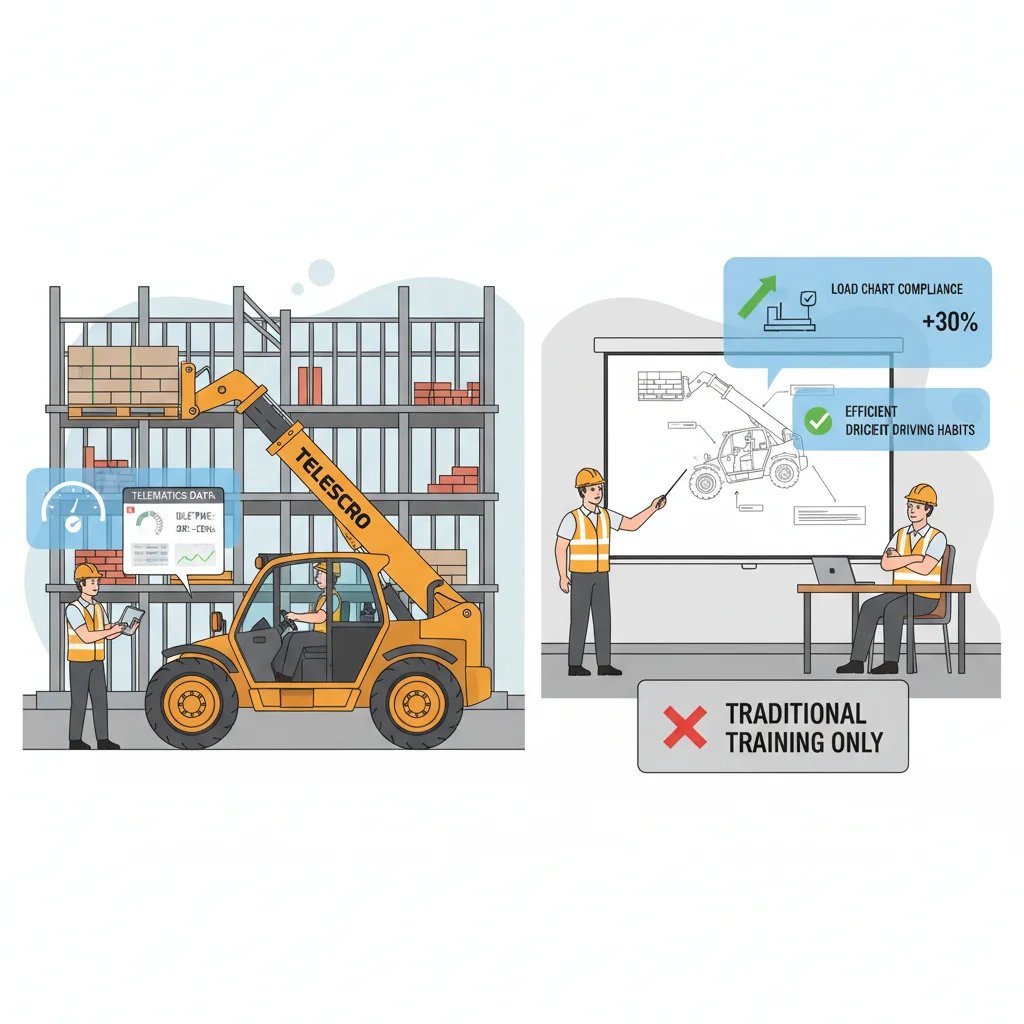
Last month, a contractor in Dubai asked me why their telehandler operators couldn’t match the productivity of another team on the same site. They were running almost identical 4-ton, 14-meter machines, but output varied by nearly 30%. The real difference? Operator training and feedback style—not the equipment. The site with higher output used short, weekly video-based refreshers alongside daily jobsite coaching, while the lower performer relied on a single launch-day classroom training. Over time, these habits make all the difference in fleet efficiency.
Here’s what actually shapes telehandler operator habits and output on real jobsites:
- Visual learning: Operators retain more from video demonstrations of real maneuvers—like boom lowering during travel or combining extension and lift—than from static classroom slides.
- On-the-job coaching: Supervisors giving practical reminders while standing beside the machine catch mistakes early and help operators build muscle memory.
- Telematics-based reviews: Managers who use data—such as idle time, cycles per hour, or harsh brake events—can coach on specific issues, not vague complaints.
- Monthly feedback sessions: When crews run short monthly debriefs, comparing harsh movement rates or idle percentages, most operators improve within weeks without new equipment investment.
On one recent project in Kazakhstan, the team’s average idle percentage dropped from over 40% to just above 20% after two months of targeted feedback and follow-up. That led to more loads moved each shift and fewer near-miss overloads. My advice: don’t underestimate simple, regular coaching. Embedding training into daily routines, backed by real machine data, closes performance gaps and keeps everyone working safely within the rated load chart.
Real-time on-site feedback during daily operations can lead operators to develop more efficient load handling sequences, directly improving telehandler work cycle times.True
Continuous coaching enables operators to adjust and optimize their actions in response to actual site challenges, rather than relying solely on theoretical knowledge, which enhances practical performance.
Once an operator completes initial classroom training on a telehandler, further on-the-job coaching has no significant effect on their rated machine output.False
Ongoing feedback and refresher training help correct inefficient habits and reinforce best practices, which can substantially impact real-world productivity even after formal instruction.
Key takeaway: Embedding visual training and regular, data-driven feedback into daily operation enables telehandler operators to adopt safer, more efficient habits. This approach rapidly improves fleet-wide output, reduces risky events, and strengthens compliance with load charts—without requiring investment in new machines or advanced AI systems.
Should Telehandler Specs Reflect Operator Habits?
Yes — telehandler selection should reflect typical operator habits, not only laboratory test figures. Where machines are frequently used near maximum reach or by mixed-experience crews, allowing a 10–15% capacity buffer8 and choosing models with clearer stability feedback—such as graphical load charts9—helps maintain consistent uptime and safer operation across varied operators, compared with relying solely on headline capacity ratings.
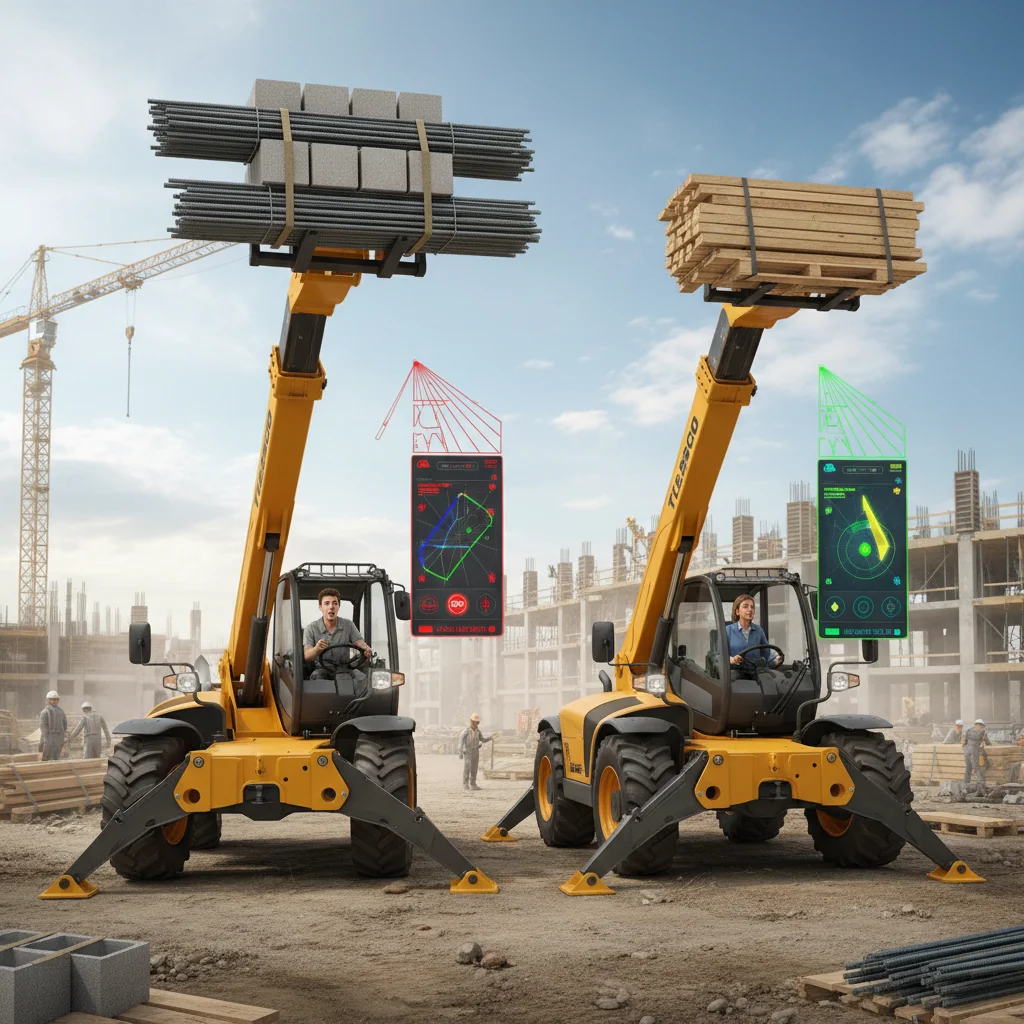
I’ve worked with customers who made this exact mistake—selecting telehandlers based on ideal test figures, without considering how their crews actually operate on site. In Chile, a contractor once selected a 4-ton telehandler because the load chart showed it could handle around 2,000 kg at a 14-meter reach under test conditions. On site, however, their operators routinely worked near maximum extension, with loads that were slightly off-center and repositioned frequently. Within the first week, the overload warning was triggering repeatedly, and productivity dropped noticeably. On paper, the rated capacity was sufficient—but there was no margin for everyday setup variation or less precise load placement.
From my experience, if operators spend a significant amount of time working close to full extension, the machine needs a real operating buffer at that boom angle and load radius—not just a brochure maximum. Allowing roughly a 10–15% capacity margin helps absorb common site realities such as minor tire pressure loss, uneven pads, or a slightly swinging bucket or pallet. Without that margin, the machine is constantly pushed into protective modes, which frustrates operators and slows work.
I’ve seen this play out clearly on sites in Peru and Colombia. Crews using telehandlers with clearer graphical load charts and audible stability feedback spent less time fighting alarms and guessing limits, especially where operator skill levels varied. Simply improving how clearly the machine communicates its stability limits reduced downtime and unnecessary repositioning.
For projects where less experienced operators handle loose or shifting materials—such as aggregate, bales, or bulk bags—features like boom suspension or automatic frame leveling help compensate for imperfect technique. The goal isn’t to lift more weight on paper, but to lift reliably and predictably every day. In practice, many “we need a bigger machine” complaints disappear once specifications are aligned with real operator habits instead of laboratory scenarios.
Operator habits such as frequent off-center loading or running the boom at maximum extension can cause a telehandler to trip its overload protection well before the rated capacity is reached.True
Telehandler rated capacities are determined under controlled, ideal conditions with centered loads and minimal boom extension. When operators regularly work with less-than-ideal positioning or load distribution, it reduces the actual safe working capacity, causing overload alarms to activate sooner.
If a telehandler is rated to lift a certain weight at maximum reach, it will always perform to that rating on any construction site, regardless of how operators use the machine.False
Real-world operator habits—like uneven ground, tilted booms, off-center loads, or dynamic movements—can all decrease lifting performance and cause machines to underperform compared to lab-rated specifications. Operator behavior directly impacts actual capacity and safety.
Key takeaway: Telehandler performance and productivity depend on matching machine capacity, stability features, and attachment choices to typical operator habits—not just test conditions. Accurate spec’ing helps avoid unnecessary upgrades and maximizes site output, especially with varied skill levels or challenging loads.
Conclusion
We’ve seen how much operator habits—like movement planning and machine idling—can change telehandler performance on real jobsites. It’s rarely about the machine itself. In my experience, most crews can get better results just by focusing on smoother movement patterns and cutting down on unnecessary repositioning. Don’t let impressive showroom specs turn into a "showroom hero, jobsite zero" situation—what counts is how the machine works in everyday conditions.
If you have questions about optimizing workflow, choosing attachments, or adapting telehandler use for your team, feel free to reach out. I’m always happy to share what’s worked for crews across different countries and site conditions. Every site is different—choose what actually works for your workflow.
References
-
Explore expert advice on how consistent pre-use inspections enhance telehandler stability, safety, and reduce costly downtime. ↩
-
Understand how optimizing boom movements can reduce cycle time by 20% and lower fuel consumption through smooth, combined actions. ↩
-
Learn how low tire pressure can reduce lifting capacity and stability, supported by real-world case studies and technical insights. ↩
-
Provides detailed insights on how regular upkeep prevents premature wear, ensuring telehandlers maintain optimal lifting performance and durability. ↩
-
Explores how proper posture and ergonomics reduce strain and increase efficiency, offering practical insights for improving telehandler operations. ↩
-
Details the effects of fatigue on operational errors and cycle times, highlighting strategies like micro-breaks to enhance productivity and safety. ↩
-
Learn how metric-driven coaching using telematics data reduces idle time and unsafe movements to increase productivity and safety. ↩
-
Explains why adding a 10–15% capacity buffer prevents overload alarms and downtime, improving onsite telehandler reliability. ↩
-
Details how intuitive graphical load charts help diverse skill crews avoid overloads and enhance machine uptime across job sites. ↩