










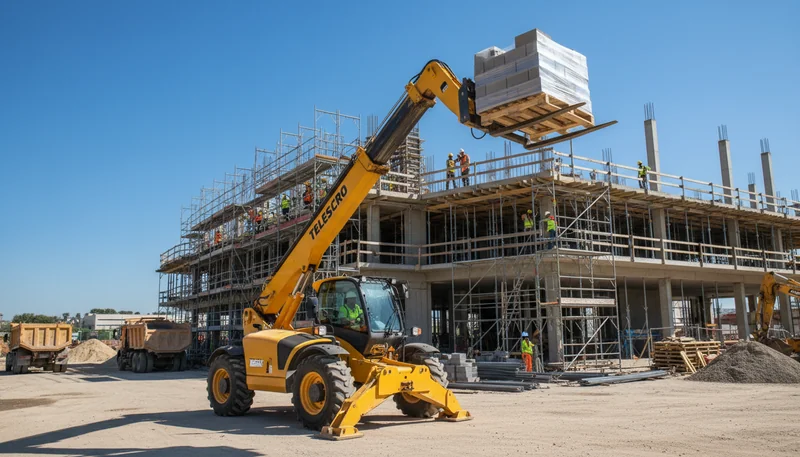
Telehandler Quote: Specs You Must Provide (Expert Field Guide)
Just last month, I had a site manager from Ireland send me three different forklifts he was considering—none of which could actually lift his roof trusses safely at the span he needed. Turns out, it’s not just about “how much it lifts,” but how, where, and with what attachments.
Specifying a telehandler for quoting requires exact details on anticipated loads, including maximum weight with attachments, load center distance1, and required lift height and outreach. Suppliers use this information to cross-check load charts, ensuring safe performance for specific scenarios. Separate reporting of vertical lift height2 and maximum forward reach is essential, along with comprehensive site condition data—such as surface type, gradients, and clearance dimensions.
What Load Details Ensure Telehandler Accuracy?
Precise telehandler selection relies on detailed load information: specify the maximum load weight including any attachments, the exact load center distance from the fork heel or attachment plate, and the maximum lift height3 and outreach required. Suppliers match this data to a telehandler’s load chart, confirming safe operation for the intended scenario.
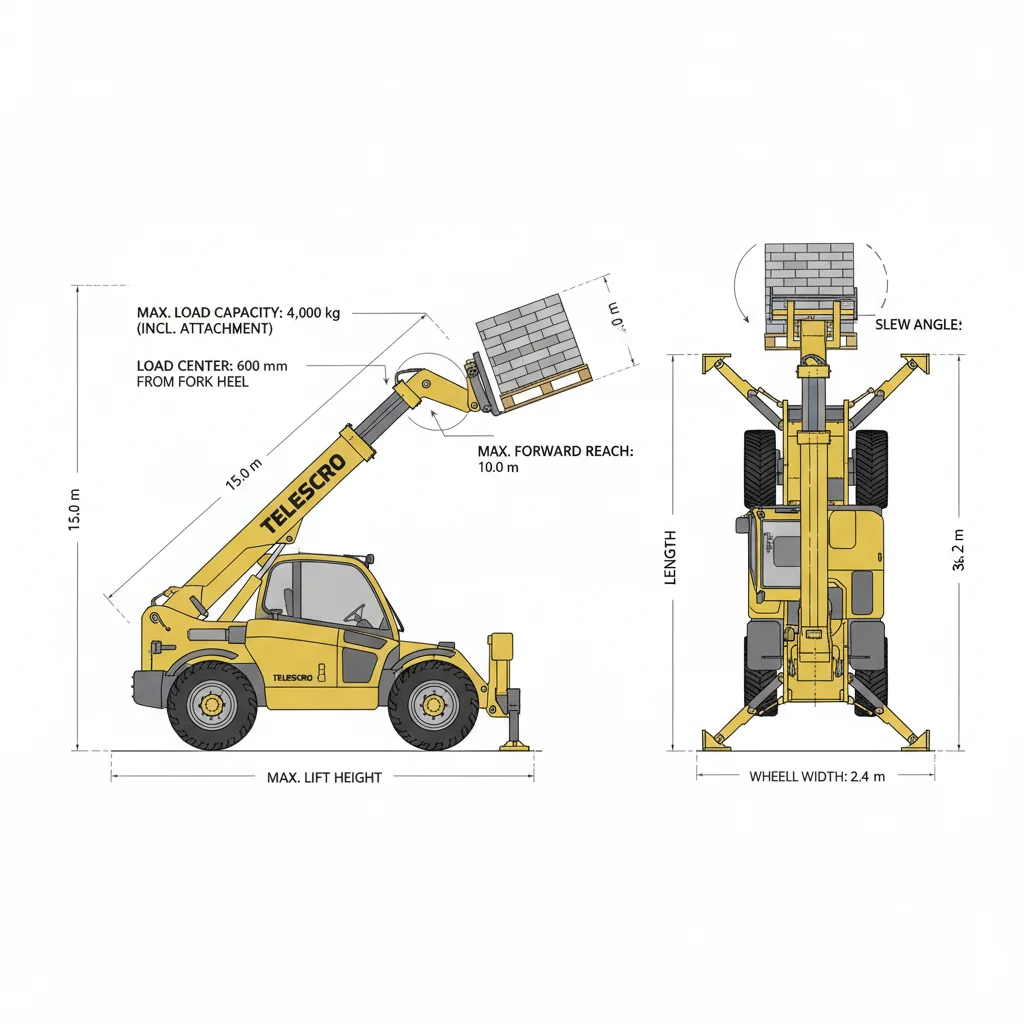
Most people don’t realize that load details drive every telehandler decision—and missing just one can cause big headaches. Let me share something important about real-world jobsites. A client in Kazakhstan needed to lift concrete blocks, each just under 2,800 kg, to the top floor of a six-story build. They thought a 3-ton machine would do the job. When I asked for the load center and actual lifting point, it turned out they planned to reach 10 meters out at a 12-meter height. According to the load chart, that 3-ton telehandler could only safely handle about 1,500 kg at that reach—not even close. They almost under-specified, which would have meant extra rentals and lost days on site.
Here’s what matters most: always give your supplier four key details. First, the exact load weight including anything attached—forks, bucket, even workers in a basket. Second, tell them the load center distance—often between 600 and 1,200 mm. Third, specify your maximum lift height and also the maximum outreach at which you’ll lift that weight. Finally, explain what the actual load is—like a dense pallet, fragile steel truss, or man basket.
Capacity drops off sharply as you reach further or higher—sometimes cutting in half between minimum and maximum positions. Guessing doesn’t work. I always suggest asking your supplier to check your scenario against the machine’s load chart and confirm it in writing. It’s the safest way to avoid tipping risks, overspending, and the “showroom hero, jobsite zero” problem I see far too often.
Specifying the load center distance—typically the horizontal distance from the telehandler’s fork face to the load’s center of gravity—is critical for accurate lifting capacity assessmentsTrue
Telehandler lift charts are based on load center distances; if this isn’t provided or is underestimated, the machine’s rated capacity at given reach and height can be significantly overstated, risking tip-over or structural failure. For example, a 2.8-ton load at a 600mm load center may reduce capacity by 20-30% if the actual load center is 1,200mm.
Providing only the total weight of the load is sufficient for telehandler selection since telehandler capacities are rated at standard load centersFalse
Total load weight alone is insufficient because telehandlers have variable capacities depending on load center distance and reach height. Without load center and lifting point details, the machine chosen may not safely handle the load at the required reach or height, leading to unsafe conditions or operational delays.
Key takeaway: Supplying exact load weight, center distance, lift height, and reach allows suppliers to cross-check needs with telehandler load charts. Comprehensive details prevent dangerous under- or over-specifying and ensure jobsite safety and efficiency by aligning machine capacity with actual application requirements.
How Should Lift Height and Reach Be Specified?
Specifying telehandler requirements demands separate, precise figures for maximum vertical lift height and maximum horizontal reach4 from the machine’s front. Suppliers use these dimensions, not just nominal model ratings, to match lifting capacity at the required working position—ensuring safe operation and correct selection between standard, high-reach, or rotating telehandlers.
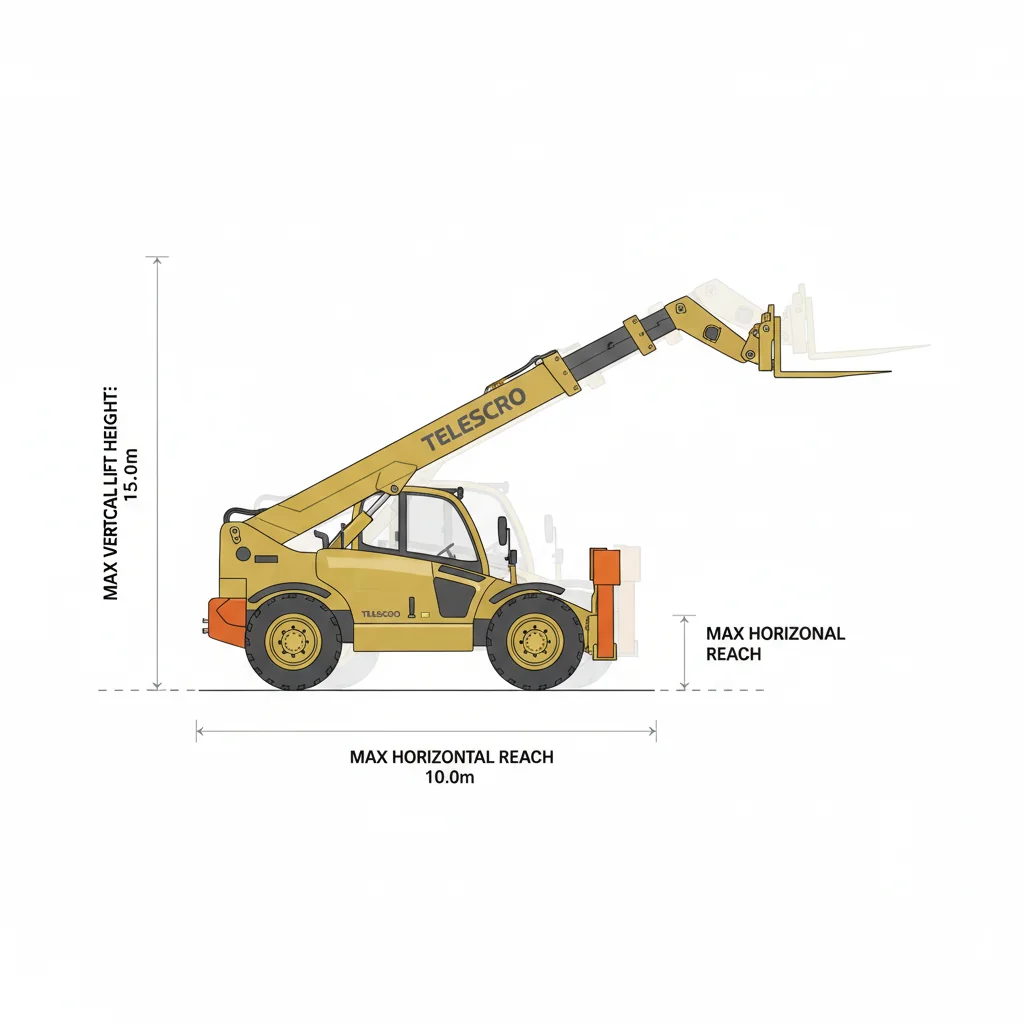
Let me share something important about specifying telehandler height and reach—this detail trips up even experienced buyers. Vertical lift height and horizontal reach aren’t the same. The specs you see on product sheets might show 17 meters of height or 13 meters of reach, but what really matters is where your load needs to go. For example, if you need to place materials onto a roof 10 meters high and 5 meters back from the building edge, the supplier needs both these numbers—not just the highest point.
I worked with a contractor in Dubai who ordered a high-reach machine “just to cover all bases”—21 meters of vertical lift and 16 meters forward reach on paper. But most of their lifts landed around 8 meters high and 6 meters out, with no need for a rotating unit. By overspecifying, they spent at least 30% more on rental costs over six months. When I checked their daily requirements, a standard 4-ton telehandler with 13-meter lift and 9-meter reach would have handled 95% of the work—and offered better maneuverability.
To be honest, the spec that actually matters is: “What weight do you need to place, at what height and at what outreach?” The load chart (that’s the chart showing safe lifting capacity at each position) is your friend here. I suggest supplying three clear numbers to your dealer every time:
- Maximum vertical lift height required
- Maximum forward reach needed from the front tires
- Typical “working band” (for example, most lifts at 9–11 meters high, 4–6 meters out)
That approach avoids both underpowering and overpaying for features you’ll never use.
When specifying lift height and reach for a telehandler quote, providing both the vertical height and horizontal reach measurements ensures the equipment can accurately place loads at combined positions, such as 10 meters high and 5 meters back from a building edgeTrue
Telehandler specs list maximum vertical lift and maximum horizontal reach separately because the working envelope is three-dimensional; knowing just one dimension doesn’t guarantee the machine can reach a specific point at a given height and setback, which is critical for precise load placement.
Specifying only the maximum vertical lift height is sufficient when requesting a telehandler quote since horizontal reach rarely impacts material placement on construction sitesFalse
Horizontal reach is just as important as vertical height because loads often need to be placed not directly overhead but offset from the machine; ignoring horizontal reach can result in selecting a telehandler unable to place materials where required.
Key takeaway: Always provide clear, distinct values for both maximum lift height and forward reach needed, along with a typical working range. This allows suppliers to match the right telehandler model to the job and avoid over- or under-specifying—saving costs, time, and ensuring site safety.
Which Site Conditions Affect Telehandler Specs?
Jobsite and ground conditions—such as indoor versus outdoor environments, ground stability, terrain severity, and wind exposure—determine crucial telehandler specifications. Suppliers require details on surfaces like concrete, mud, or silage, as well as gradients and obstacles, to recommend suitable drive systems, tires, and safety features like 4WD5, oscillating axles6, or non-marking tires.

Here’s what matters most when matching telehandler specs to actual site conditions: you need to describe exactly where and how the machine will work. I’ve seen a team in Dubai select a 3.5-ton high-reach unit for warehouse fitouts—solid choice for clean concrete, but they struggled when half the job shifted outdoors over soft sand. Machines bogged down, lost traction, and operators reported three hours lost per day. Site photos or a quick floor plan would’ve flagged the 4WD and rough-terrain tire requirements.
If you’re running jobs in humid climates or silage yards, like some clients I helped in Brazil, the story changes. Muddy tracks, deep ruts, unsteady silage clamps—here, you can’t compromise on aggressive tread, oscillating axles, and extra ground clearance (at least 400 mm). One farm crew even welded on their own scraper bars to keep mud clear, but this just can’t compare with a purpose-built rough-terrain telehandler. The details you share—indoor vs outdoor, slope percentage, soft ground, wind exposure (especially above 10 meters)—directly affect what drive system, tire type, and even engine type I’d recommend. For example, indoor work in food warehouses often demands non-marking tires and lower emissions—sometimes full electric if ventilation’s tight.
Here’s a quick comparison to show how site differences drive spec decisions:
| Site Condition | Key Spec Needed | Example Solution |
|---|---|---|
| Indoor (ventilated) | Low emissions, tight turning | Electric/Hybrid, compact chassis |
| Muddy/silage, rutted | Traction, clearance | 4WD, rough-terrain tires, 400+ mm clearance |
| Steep ramps (>15%) | High torque, braking control | Hydrostatic drive, load-management systems |
Selecting a telehandler without 4WD for operations on loose or soft ground like sand can reduce daily productivity by up to 20-30%True
Telehandlers without four-wheel drive struggle with traction on soft surfaces, causing frequent bogging and operational delays. This directly impacts utilization rates, often resulting in significant time losses during daily tasks.
Telehandlers with higher reach capabilities always perform better in outdoor rough terrain conditions regardless of their drive configurationFalse
While reach is important, telehandler performance on rough terrain primarily depends on features like 4WD, tire type, and chassis design rather than reach capability alone. High reach units without appropriate terrain adaptability can lead to poor traction and stability issues outdoors.
Key takeaway: Detailed descriptions of jobsite and ground conditions enable suppliers to recommend telehandlers with appropriate drive systems, tires, and safety features, reducing the risk of machine failure or non-compliance on site.
What Site Dimensions Should Be Measured?
Suppliers require precise access and space measurements to select compatible telehandlers. Critical dimensions include the narrowest doorway or gate width7, lowest clearance height, tightest turning spaces, and any ceiling or overhead obstructions. Also report slab, ramp, or floor weight limits. Clear, accurate data prevents machine misfit, last-minute swaps, transport issues, or costly site delays.
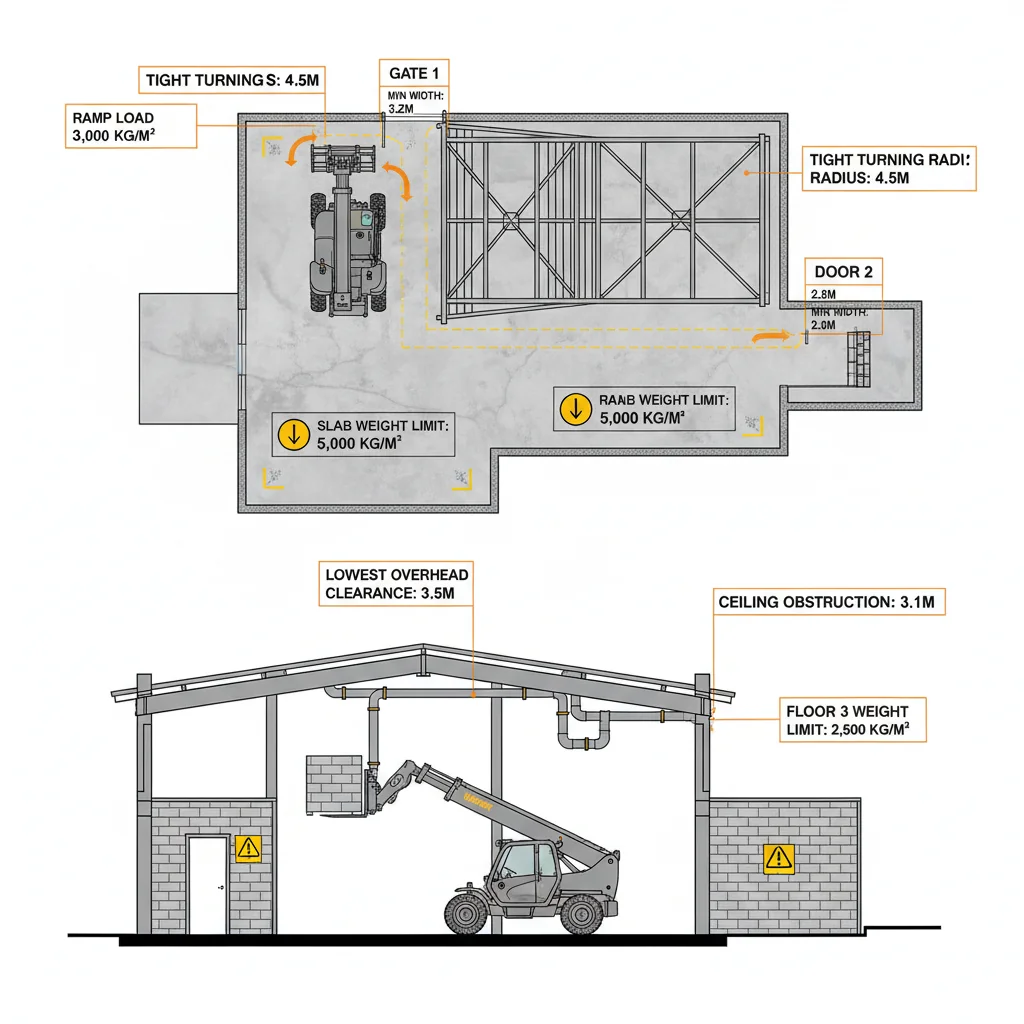
The biggest mistake I see is site managers guessing measurements or relying on “should be fine” instead of verifying the actual space. I’ve worked with a contractor in Dubai whose team measured only the main gate, about 2.5 meters wide, but forgot a security post with a narrow archway inside the compound—just 2.1 meters. Their telehandler got stuck on delivery day. Result? Two wasted days and extra transport costs8 for a swap. It’s frustrating for everyone. That’s why it’s critical to map the entire access route—from roadside to work zone—checking the narrowest width and lowest overhead point, not just the obvious entrances.
From my experience, compact telehandlers usually need at least 2.2 meters of width and height to move comfortably, while larger units can exceed 2.5 meters. Also, watch for tight corners. I spoke with a customer in Kazakhstan who sent me a quick video of their loading yard. I could see there was barely 6 meters between stacked containers. That ruled out any full-size 9-meter machine—they needed a unit with a turning radius9 under 4.5 meters.
Don’t overlook weight limits. Some sites in Brazil have suspended slabs that only hold 6,000 kg. I always ask customers for these details. If you’re not sure, just snap a photo or draw a quick sketch with lengths and heights marked. Photos or drawings speed up the recommendation process and eliminate surprises. I suggest double-checking tricky areas before you commit to a machine. This step alone often prevents costly delays.
When specifying site dimensions for a telehandler quote, including the clear height of overhead obstacles within the entire travel path is critical, not just gate width, because telehandler booms often extend upward beyond chassis height.True
Telehandlers have variable boom lengths and heights that can exceed the machine’s basic dimensions. If overhead clearances like tunnels or security archways are not measured along the entire route, the machine may get stuck despite fitting through gate widths horizontally. This can cause costly delays and equipment damage.
Only the width of the main site entrance needs to be measured for telehandler delivery, as telehandlers can always maneuver around smaller internal structures once inside the compound.False
Telehandlers have limited maneuverability and large turning radii, especially with raised booms or loads. Ignoring narrow internal structures like security posts or archways risks the telehandler getting stuck. Comprehensive measurement of the entire access route, including internal passages, is essential to avoid delivery failures.
Key takeaway: Supplying exact access, turning, height, and weight-bearing measurements—plus visual aids—lets suppliers immediately identify models that will operate safely and efficiently on site, avoiding delivery errors and project delays.
What Specs Needed for Telehandler Applications?
Providing telehandler specifications requires detailing primary tasks, materials handled, and needed attachments—such as pallet forks, bale spikes, or rotating carriages. Specify load types and sizes, boom type, quick coupler10 needs, and if extra hydraulic circuits or powered attachments are required. Always include attachment weights11 and mention future add-ons to ensure proper compatibility and avoid retrofits.

From what I’ve seen, the biggest headaches start when buyers give only general job descriptions—like “moving bricks” or “lifting materials.” That’s not enough. A customer in Kazakhstan told me they needed a telehandler for a mix of cement bags and steel pipes. But during the first week onsite, it turned out they also had to lift 2-meter-wide prefab panels. None of their original attachments fit properly. So, before choosing specifications, get very specific about your daily work.
Start by listing your primary applications and every material you’ll move. This helps determine the right attachments. For example, jobs in construction often need:
- Pallet forks for bricks or cement bags
- Jib or winch for roof trusses or small lifting tasks
- Work platform/man basket for personnel lifts
- Buckets for loose material (sand, gravel)
- Rotating carriage if you need precise placement
Also, clarify your load types and sizes. Are you lifting 1-ton hay bales, 2,000 kg steel coils, or just 500 kg pallets? Always include attachment weight in your calculations. I’ve seen a 3.5-ton telehandler rated for 15 meters, but with a man basket attached, the real safe load dropped to less than 600 kg—easy to overlook if you just check spec sheets.
Quick couplers save time changing tools—important on fast-paced jobsites. If you’ll add powered attachments, specify if you need extra hydraulic circuits now. And from my experience, mention any planned upgrades, like a man basket, so suppliers can set up the correct coupler and hydraulics. Getting these details clear saves you costly retrofits later.
When specifying a telehandler, providing the maximum lifting height and load capacity for the heaviest and largest attachment anticipated ensures proper machine and attachment compatibility.True
Telehandlers must be matched not only to load weight but also to attachment dimensions, such as wide prefab panels, since oversized attachments affect lifting dynamics and stability, making max height and load critical details to specify.
A telehandler’s engine horsepower rating is the most critical specification to provide for ensuring attachment compatibility on a jobsite.False
Engine horsepower affects machine power but does not directly determine attachment compatibility, which depends more on attachment type, lift capacity, reach, and hydraulic flow specifications rather than horsepower alone.
Key takeaway: Clear articulation of telehandler applications, precise attachment requirements, and all relevant technical details—such as load types, equipment compatibility, and planned future add-ons—significantly streamlines quoting, prevents costly retrofits, and ensures optimal equipment specification from suppliers.
Which Telehandler Specs Should Be Listed?
Core telehandler specs to provide include preferred power source (diesel, electric, hybrid), engine power range and usage hours, drive and steering type12, transmission choice13, width and height restrictions, and tire type. Noting any brand or component preferences further streamlines supplier recommendations for the best-fit machine.
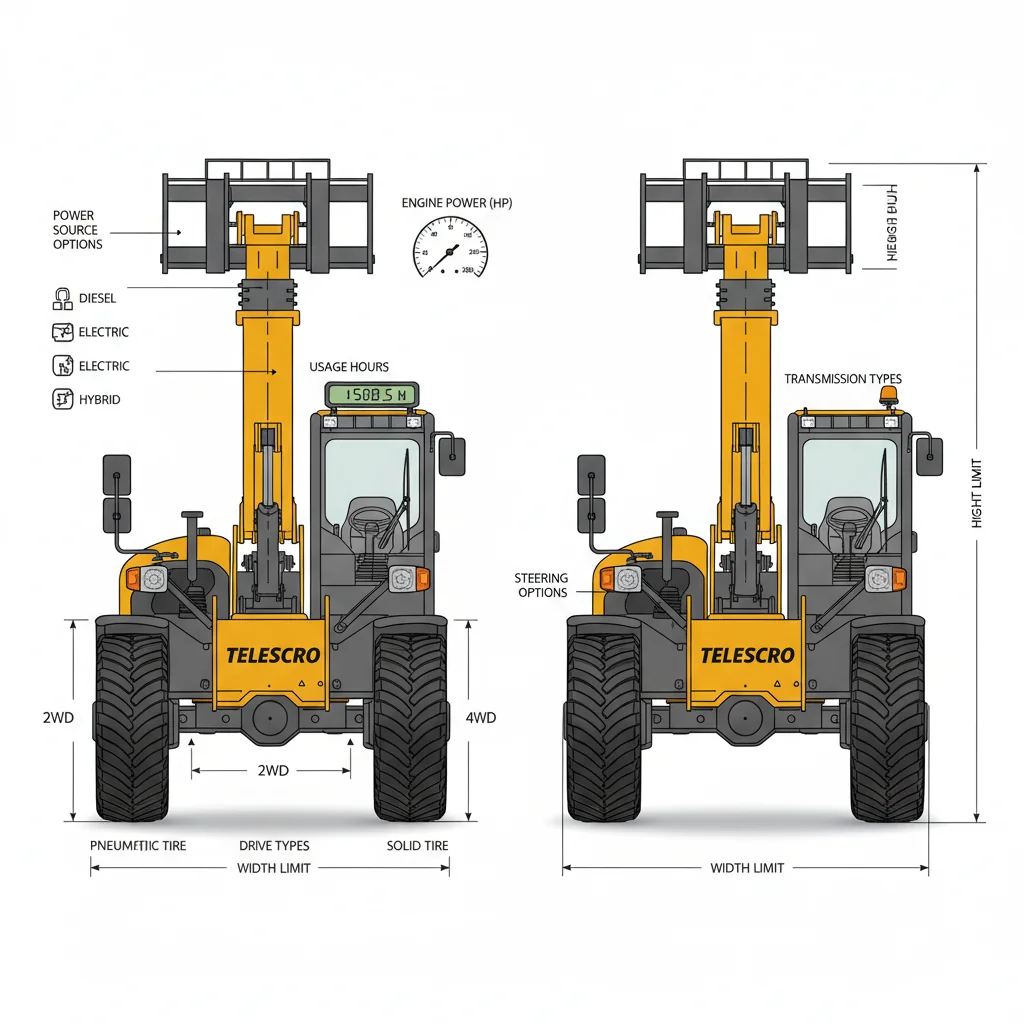
To be honest, a lot of telehandler buyers focus on lifting height and forget the details that actually affect daily work. I dealt with a customer in Kazakhstan last winter who needed a machine for a livestock facility. Their restriction? The barn doors were only two meters high. Even though they wanted a 3,500 kg capacity, most high-lift models were simply too tall to enter—turning the whole shortlist upside down. That’s why I always recommend giving suppliers a full spec wish list, not just “capacity and reach.” Useful details include your preferred power source—diesel for long outdoor shifts, electric for zero-emission sites, or even hybrid to satisfy local regulations. Stating the engine power range (let’s say 75–120 hp) and expected usage hours per day helps match the duty cycle.
In muddy or uneven conditions, I’ve seen 4WD and 4-wheel steering save hours of maneuvering time—especially in tight sites like those I visited in Dubai. Transmission also matters: hydrostatic units shine with precision work, while torque converter and powershift are better for heavy-duty or repetitive site moves. Don’t forget tires—rough-terrain types for sites like South Africa’s mines, or non-marking for warehouses. Component preferences can simplify maintenance later; for example, I know several European contractors who specify a certain hydraulic circuit layout for faster repairs.
Including the telehandler's collapsed height specification is crucial when purchasing for facilities with restricted door clearances, as even machines with adequate lift capacity may be unusable if too tall to enter.True
Collapsed height determines whether the telehandler can physically pass through site constraints like barn doors or garage entrances. Buyers often focus on lift height and capacity but overlook transport or stowed dimensions, which can invalidate otherwise suitable models. Providing this spec ensures the selected machine fits operational environments.
Specifying the telehandler's maximum engine RPM is the most important factor for determining daily work efficiency and should be prioritized over lifting height or reach.False
While engine RPM affects overall engine performance, telehandler efficiency and suitability are more directly influenced by lifting height, reach, load capacity, and hydraulic flow rates. Engine RPM alone does not dictate operational capability and is rarely the primary spec buyers prioritize for job-specific needs.
Key takeaway: Supplying a detailed specification wish list—including power, transmission type, dimension limits, and any preferred brands—ensures suppliers match telehandler models not just by load and reach but by actual application needs, minimizing costly mismatches and maximizing operational efficiency.
What Safety and Compliance Specs Are Needed?
Telehandler suppliers require detailed safety, certification, and compliance data, including applicable country or regional standards (such as CE marking or EPA/Tier 4), site-specific rules (like ROPS/FOPS, LMI, emergency stops), and whether lifting personnel is involved. Operator certification status and requests for training or certified operators must be specified. Inspection certificates and load chart confirmations are also essential.
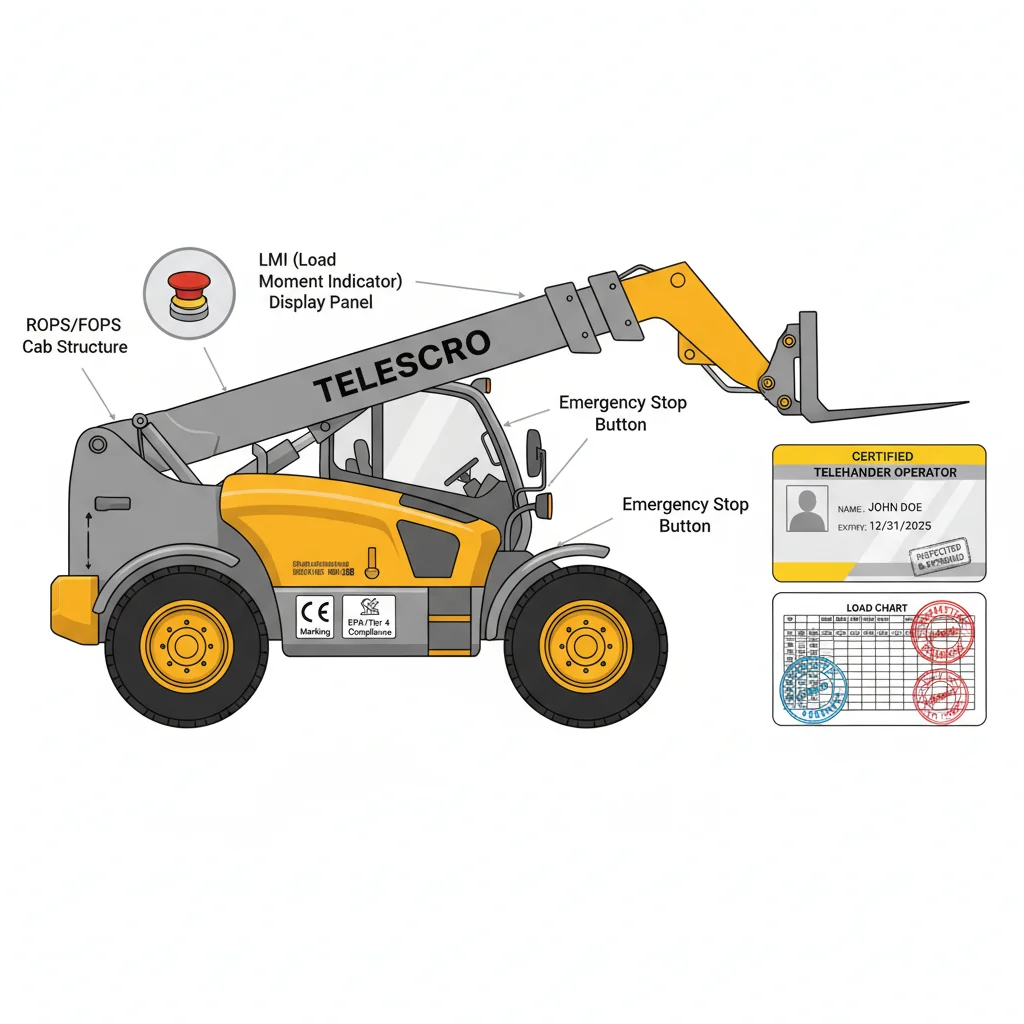
Last month, a site manager in Dubai sent me a quote request with just “7-meter telehandler, 3,000 kg.” Easy to overlook, but he left out critical compliance details—and in the UAE, site safety inspectors are strict. The project needed a unit with a load moment indicator (LMI), a certified ROPS/FOPS cab14 for roll-over and falling object protection, and up-to-date inspection certificates. I’ve seen jobs shut down for a day—sometimes more—when those documents or features aren’t in place.
Some markets have extra layers. In Europe, CE marking is not optional, and on a project in France last year, the customer needed a telehandler with both a seat-belt interlock and beacon lights to meet local codes. The supplier’s first option was missing a reversing alarm and failed the pre-delivery audit, causing a costly two-day delay. I always suggest listing every required feature up front: LMI, overload cut-out, emergency stops, camera systems, even small items like reflective tape if your site demands it.
Don’t forget the personnel lift scenario. If you plan to use a man basket, the rules get even tighter. One contractor in Kenya needed official confirmation that their 4-ton telehandler matched the load chart at full extension with the man basket attached—otherwise the insurance would be void. I recommend always specifying whether lifting people is on your task list. And if your team needs certified operators, tell the supplier so training or certified staff can be factored in. These upfront details keep equipment on site, not stuck in quarantine or audit hold.
In the UAE, telehandlers must have a Load Moment Indicator (LMI) calibrated specifically for their maximum boom extension and load capacity, not just a generic LMI model.True
LMIs must be accurately calibrated for the specific telehandler’s maximum reach and load parameters to ensure accurate real-time load monitoring; generic LMIs can give false warnings or fail to prevent overload conditions, which is critical for compliance and site safety.
Telehandlers in the UAE are required to have an automatic fire suppression system installed as part of their standard safety compliance.False
While fire suppression systems can enhance safety, they are not a mandated compliance requirement for telehandlers in the UAE; primary requirements focus on certified ROPS/FOPS cabins, LMIs, and valid inspection certificates.
Key takeaway: Clearly outline all relevant safety codes, site rules, operator requirements, and applicable certifications when requesting a telehandler quote. This approach ensures legal compliance, reduces downtime risk, and helps suppliers deliver equipment that passes audits and meets the exact jobsite needs.
What Specs Should Telehandler Quotes Detail?
A comprehensive telehandler quote must provide a fully itemized breakdown: base machine (make, model, year or usage hours), individual attachment pricing15, transport costs (delivery, collection, mileage limits), insurance, damage waivers, training or operator fees, and surcharges for overtime or special periods. Detailed quotes expose high-capacity model premiums and minimize unplanned costs by clarifying minimum hire and ancillary fees.

Let me share something important about telehandler quotes—I’ve seen even experienced project managers trip up here. A price per day or week sounds straightforward, but the real cost is always in the details. For example, a client in Kazakhstan once called me shocked by the final invoice on a 4-ton, 14-meter unit. What happened? Hidden transport charges for 150 extra kilometers, unlisted attachment costs for a bucket and jib, and a weekend overtime fee. Their “cheap” quote ended up 30% higher than another supplier’s all-in price.
A proper quote should separate the base machine—make, model, year, and, for used units, total operating hours. That matters. I’ve seen two 12,000-pound (about 5,500 kg) machines of the same model rent at different rates based only on age or hours. Next, I always suggest asking for attachment costs line by line. A common fork carriage is one thing, but a hydraulic winch or man basket can double the daily rate.
Don’t overlook the extras. Delivery and collection should outline each trip, including any limits (like up to 50 km free, then extra per km, plus waiting charges if unloading is delayed). Insurance, damage waiver, even fees for spilled oil or muddy returns—these can creep in. If you need operator training, or if your job runs into overtime or holidays, clarify those surcharges. Compact units might look affordable, but I’ve seen projects in Brazil where transport on rough rural roads doubled the final bill versus a bigger model running in the city.
Compare every line—base rate, every attachment, every extra. That’s the only way to avoid budget shocks and choose the right tool for your real costs on site.
Quotes for telehandlers should specify the rated lift capacity at maximum boom extension, not just the machine's base capacity, as lift capacity often decreases significantly at longer reachesTrue
Telehandlers experience a drop in lift capacity as the boom extends horizontally, due to leverage effects. Therefore, quoting only the base capacity can mislead buyers about the machine's true handling ability at working range. Accurate specs must include capacity charts or rated loads at key boom lengths.
Transport charges for telehandlers are usually included in the base rental price and do not typically increase based on distanceFalse
Transport fees vary widely and are often excluded from base rental rates. They frequently depend on distance, requiring additional costs for extra kilometers or remote delivery locations, which can significantly affect total project expenses.
Key takeaway: Always obtain a fully itemized telehandler quote detailing machine specs, attachment costs, transportation, insurance, and all additional fees. Comparing all-in costs across suppliers prevents unexpected upcharges and ensures accurate project budgeting, especially for high-capacity, high-reach, or compact units requiring specialized handling or transport.
What Vendor Info Maximizes Telehandler Uptime?
Request detailed telehandler vendor information, including accreditations (such as ISO standards), documented maintenance regimes16, average breakdown response times17, backup machine availability, local parts support for key brands, and warranty terms. Evaluating beyond price helps identify suppliers prioritizing rapid service, proven reliability, parts availability, and compliance — minimizing costly telehandler downtime.

A lot of buyers look only at price and delivery time, but that’s rarely what keeps a telehandler working day after day. I’ve seen too many projects—especially in regions like Kazakhstan—stopped cold for a week because the vendor didn’t have the right hydraulic pump in stock. It’s why I always suggest asking for full details on the vendor’s accreditations and support. Are they certified to ISO standards? Are they part of a respected rental association? If they are, you know their service regime is at least audited and consistent. Take maintenance regimes. Don’t settle for a one-line answer. Get their typical service interval—250 hours is standard, but I’ve seen some stretch it to 400, which usually spells trouble. Check if they do pre‑delivery inspections (look for stamped checklists).
In Brazil, I supported a client with three compact 2.5-ton units—fast turnaround and proof of monthly checks meant their machines stayed on rent for months without unplanned downtime. What happens when something fails on site? Ask for their average breakdown response time and if they offer backup machines. On one large job in Kenya, a supplier promised 48-hour support; actual response was over four days, with no spare machine available. That bottleneck cost them at least two days of crane rental. I also recommend confirming if they have local stocks for common parts—especially for engine and hydraulic brands you prefer for easier servicing. Don’t forget to clarify warranty terms for both rentals and purchases. Read what’s included.
Vendors certified to ISO 9001 typically demonstrate better parts availability for critical telehandler components like hydraulic pumps, reducing unplanned downtime by up to 30%True
ISO 9001 certification indicates a vendor follows strict quality management and inventory control processes, ensuring key spare parts are stocked and service response times are minimized, which helps maintain telehandler uptime on site.
Requesting a vendor's compliance with ISO 26262 is essential when purchasing telehandlers to guarantee hydraulic system reliabilityFalse
ISO 26262 relates specifically to functional safety of electrical and electronic systems in road vehicles, not construction equipment hydraulic systems, so it is irrelevant for telehandler component reliability.
Key takeaway: Assessing a telehandler vendor’s accreditations, maintenance records, service response, supported brands, and warranty terms offers better value than focusing solely on price. Well-supported suppliers reduce downtime risk, ensuring machines remain operational, compliant, and safe—often saving on long-term repair and productivity costs.
Why Disclose Telehandler Climate and Usage Data?
Providing detailed information about operating temperatures, environmental conditions, daily usage hours, and anticipated future requirements enables telehandler suppliers to recommend appropriate options, such as specialized cooling systems18, filtration, hydraulic circuits, and cab features. Accurate climate and usage data ensure specifications match both current and evolving operational needs, reducing the risk of premature obsolescence or costly retrofits.
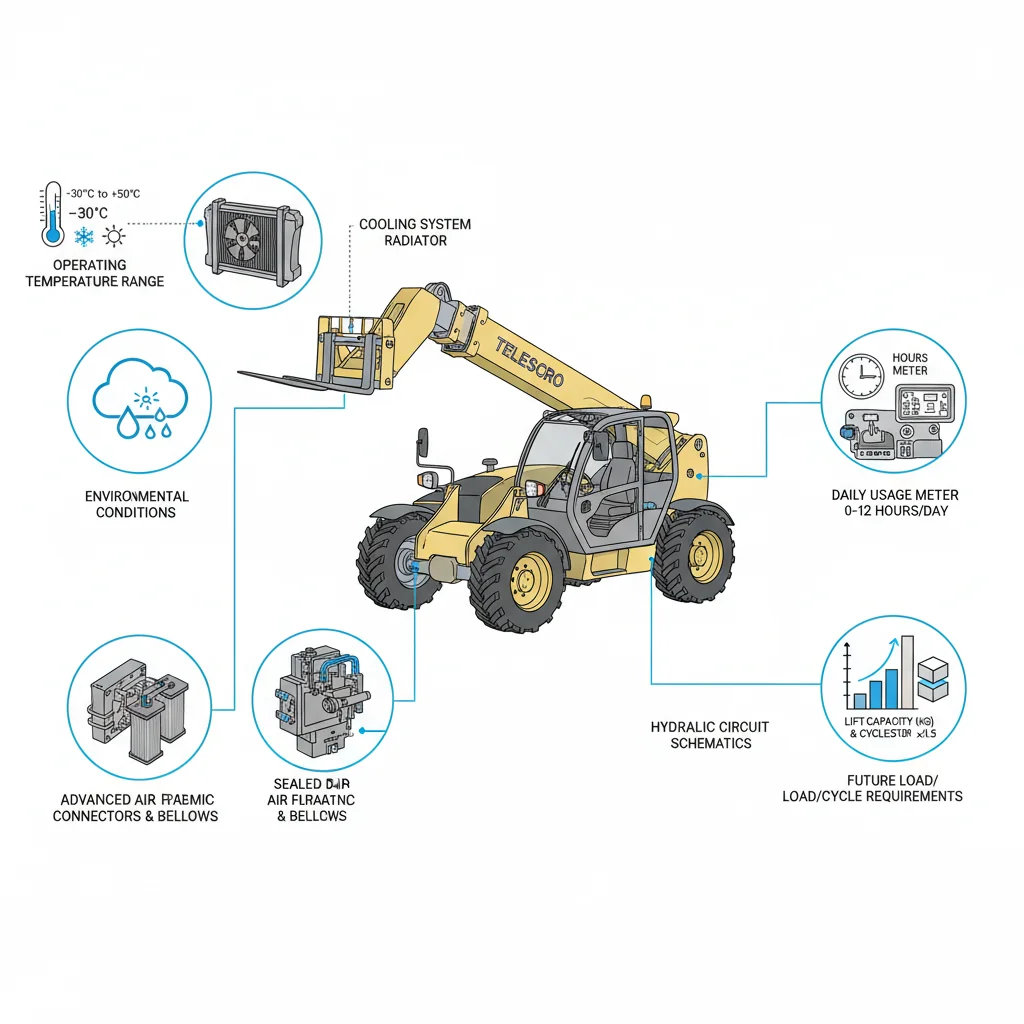
I’ve worked with customers who made the mistake of only sharing their site address, hoping the telehandler would just “work anywhere.” That approach rarely ends well. A few months ago, I supported a mining operation in Kazakhstan. They faced freezing −25°C mornings in winter and extreme dust year-round. Because they gave me precise site temperatures and daily usage estimates—roughly 10 hours each shift—I could recommend a 4-ton telehandler with block heater, arctic hydraulic oils, and heavy-duty filtration19. Without those upgrades, downtime from clogged filters and cold starts would have cost them thousands.
I often get questions about cab comfort and protection. But the real factor is what’s outside the glass. If your site faces 40°C summers like one project in Saudi Arabia, a basic cab isn’t enough. Extra insulation and powerful air-conditioning become essential—not a luxury. One customer tried to save by skipping these details. Three months later, operators refused to use the machine during peak heat, and productivity dropped fast.
Daily and annual usage hours make a huge difference, too. Machines running more than 2,000 hours a year need enhanced cooling, service access, and often extended warranties. I saw one fleet in Brazil buy standard-duty machines for high-shift work. By year two—what I call the “second-year surprise”—maintenance costs jumped, and they needed retrofitted parts just to keep up.
If you’re considering future attachments—like winches or rotating carriages—share those plans early. Adding extra hydraulic circuits or electrical connectors during build costs less than retrofitting. I suggest listing not only what you need now, but also what might be needed later. That way, your machine can keep up with your changing site—not the other way around.
Providing site-specific climate data, including minimum winter temperatures and dust levels, allows telehandler suppliers to recommend specialized components like arctic hydraulic oils and block heaters to ensure reliable operation in extreme conditionsTrue
Extreme temperatures and environmental factors significantly affect telehandler performance and longevity. Arctic-grade oils maintain hydraulic fluid viscosity at low temperatures, while block heaters prevent engine cold starts, reducing wear and downtime. Dust exposure necessitates heavy-duty air filtration to protect internal systems. Specifying these conditions upfront enables tailored equipment selection.
Including the exact site address in the quote request is sufficient for telehandler vendors to automatically configure the machine with appropriate climate adaptations and usage featuresFalse
Telehandler vendors cannot reliably determine local climatic and operational conditions solely from the site address. Factors like daily temperature fluctuations, dust levels, and shift usage hours critically influence equipment specifications and must be explicitly communicated to ensure correct configuration and avoid failures in unique environments.
Key takeaway: Sharing precise climate, site, and usage details with suppliers enables tailored telehandler specifications, including essential protective, hydraulic, and cab features. Factoring in future operational changes avoids costly upgrades and ensures the chosen machine remains fit for purpose throughout its service life.
Conclusion
We’ve talked about which specs matter most when requesting a telehandler quote—like precise load weight, center point, max height, and reach. The details you provide set the foundation for a safe and efficient match.
From my experience, the best decisions happen when buyers look beyond flashy max specs and really study the load chart for their actual working positions. Don’t let "showroom hero, jobsite zero" become a headache for your team—small misses in the quoting stage can cause big troubles later on.
Need advice on matching a machine to your site, or have questions about load charts and parts support? I’m always happy to help—just reach out if you want a no-pressure consultation. Every jobsite has its own reality—choose what works for yours.
References
-
Explains how load center distance affects telehandler capacity and operational safety, crucial for proper machine selection. ↩
-
Explains how vertical lift height impacts telehandler selection and safe operation, helping buyers avoid costly overspecification. ↩
-
Details the role of lift height in telehandler operation, helping users match equipment to jobsite requirements safely. ↩
-
Details how horizontal reach influences operational efficiency and rental costs, guiding users to optimize machine choice for their tasks. ↩
-
Explore how 4WD improves traction and performance on unstable or challenging surfaces for safer, more efficient telehandler operation. ↩
-
Learn technical insights on oscillating axles enhancing ground contact and machine stability in varied jobsite conditions. ↩
-
Explains how precise doorway width measurement prevents telehandler delivery issues and costly site delays. ↩
-
Detailed insights on hidden transport fees and mileage limits that can significantly increase telehandler rental expenses. ↩
-
Details how turning radius limits telehandler selection in tight spaces, improving operational efficiency. ↩
-
Details how quick couplers speed up attachment swaps and enhance operational efficiency on construction sites. ↩
-
Explains how accurately calculating attachment weights ensures safety and compatibility, preventing costly retrofits on site. ↩
-
Explores how 4WD and 4-wheel steering improve maneuverability and efficiency on tight or uneven construction sites. ↩
-
Details how hydrostatic, torque converter, and powershift transmissions impact precision, efficiency, and heavy-duty use. ↩
-
Learn expert insights on ROPS/FOPS cab standards that protect operators from roll-over and falling objects in construction sites. ↩
-
Explains how itemized attachment costs prevent unexpected charges and help accurately compare rental quotes for telehandlers. ↩
-
Explore detailed maintenance schedules and best practices critical for maximizing telehandler uptime and reducing costly downtime. ↩
-
Understand how rapid breakdown response times minimize project delays and ensure continuous telehandler operation on construction sites. ↩
-
Explore how specialized cooling systems prevent overheating and improve telehandler reliability in extreme temperature conditions. ↩
-
Learn about heavy-duty filtration’s role in reducing downtime by protecting telehandler hydraulics from dust and debris. ↩