










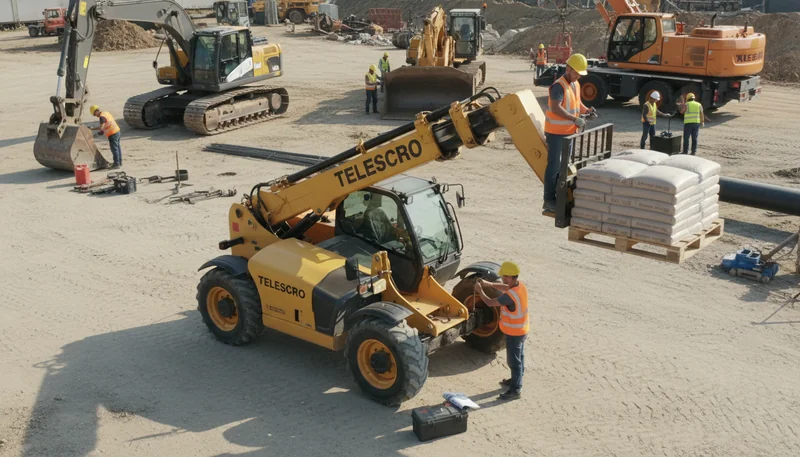
Telehandler Preventive Maintenance: Field-Tested Routine to Avoid Costly Failures
A few months ago, I got a late-night call from a site manager in Saudi Arabia—his telehandler’s boom wouldn’t retract, and the job was on hold. The culprit? Skipped daily checks and missed greasing. It’s often the simplest routines, neglected, that lead to the biggest headaches.
Preventive maintenance for telehandlers centers on daily pre-start inspections, thorough lubrication of boom and pivot pins, and strict adherence to fluids and filter schedules. Boom sections, pins, and hydraulic systems experience high loads, vibration, and environmental exposure, making early detection and proper greasing essential for longevity. Tyre pressure1 and condition, brake and steering function, and hydraulic hose integrity directly impact machine safety and uptime.
What Are Essential Telehandler Pre-Start Checks?
Essential telehandler pre-start checks include inspecting engine oil, hydraulic oil2, coolant, and fuel levels; looking for leaks under the machine; checking tyre pressure and condition; examining boom sections for cracks or damage; ensuring forks and locking pins are secure; and testing all cab controls, lights, brakes, alarms, seat belt, and safety decals for proper function.
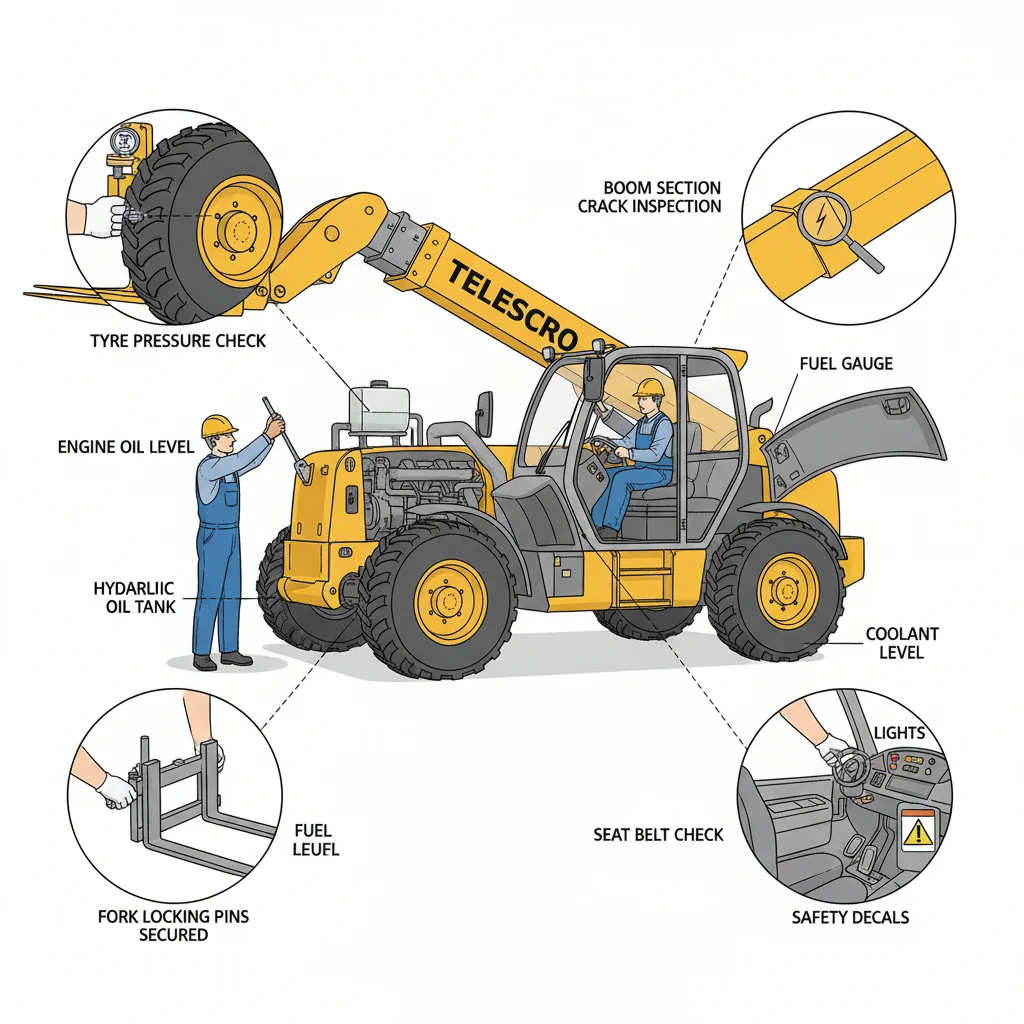
Most people don’t realize how fast small issues on a telehandler can become major safety risks. Just last month in Dubai, a customer ignored a slow tyre pressure loss on a 3-ton telehandler. By noon, that tyre was nearly flat—right as he lifted a pallet of blocks at full 10-meter extension. He got lucky, but tyre blowouts at height can lead to dropped loads or machine instability. That’s why I always suggest starting every shift with a focused walk-around. Check the engine and hydraulic oil levels first. Low oil starves the hydraulic pump, cutting lifting power or—worse—burning out the pump.
I’ve seen a failed lift hose in Brazil leak several liters in minutes, shutting down the site for a day. Coolant and fuel are just as important; running short can overheat the engine or leave you stranded, especially on remote sites. Look under the machine for wet spots. Even a small leak often signals a cracked fitting or worn seal in the hydraulic circuit. Next, move to the tyres. I recommend using a gauge—don’t trust a visual check alone. Inspect for cuts, sidewall bulges, and debris like rebar, which I’ve pulled from tyres in Kazakhstan. Examine the boom for any cracks or dings, even hairline cracks.
At full extension, flaws become weak points. Make sure forks and locking pins are straight, engaged, and not forced—never bend them back “just to get through the day.” Finally, test all in-cab controls—brakes, steering, horn, backup alarm, warning lights, seat belt, and interlocks.
Telehandler tyre pressures should be checked every two hours during continuous operation to prevent sudden blowouts at heightTrue
Tyre pressure loss can be gradual but critical; checking every two hours during heavy use helps detect leaks before they compromise load stability or cause blowouts, especially when working at full boom extension.
Engine oil levels in telehandlers only need to be checked once a month since oil degradation happens slowly in construction environmentsFalse
Engine oil levels and condition should be checked daily or pre-shift because telehandlers operate under heavy load and dusty conditions, which accelerate oil degradation and risk engine damage if neglected.
Key takeaway: Mandatory daily pre-start checks on telehandlers significantly reduce the risk of on-site failures such as tyre blowouts, oil leaks, and dropped attachments. Consistent inspections, combined with compliance to logging requirements, play a vital role in maintaining both operational safety and regulatory adherence.
Why Is Telehandler Boom Lubrication Vital?
Regular lubrication of telehandler boom sections, pivot pins, and couplers is essential because these components endure high loads and exposure to contamination. Insufficient greasing accelerates metal wear, causing joint seizure or sloppy movement. Proper greasing, recommended every 8–10 hours by most OEMs, prevents costly failures and ensures reliable performance under heavy-duty conditions.
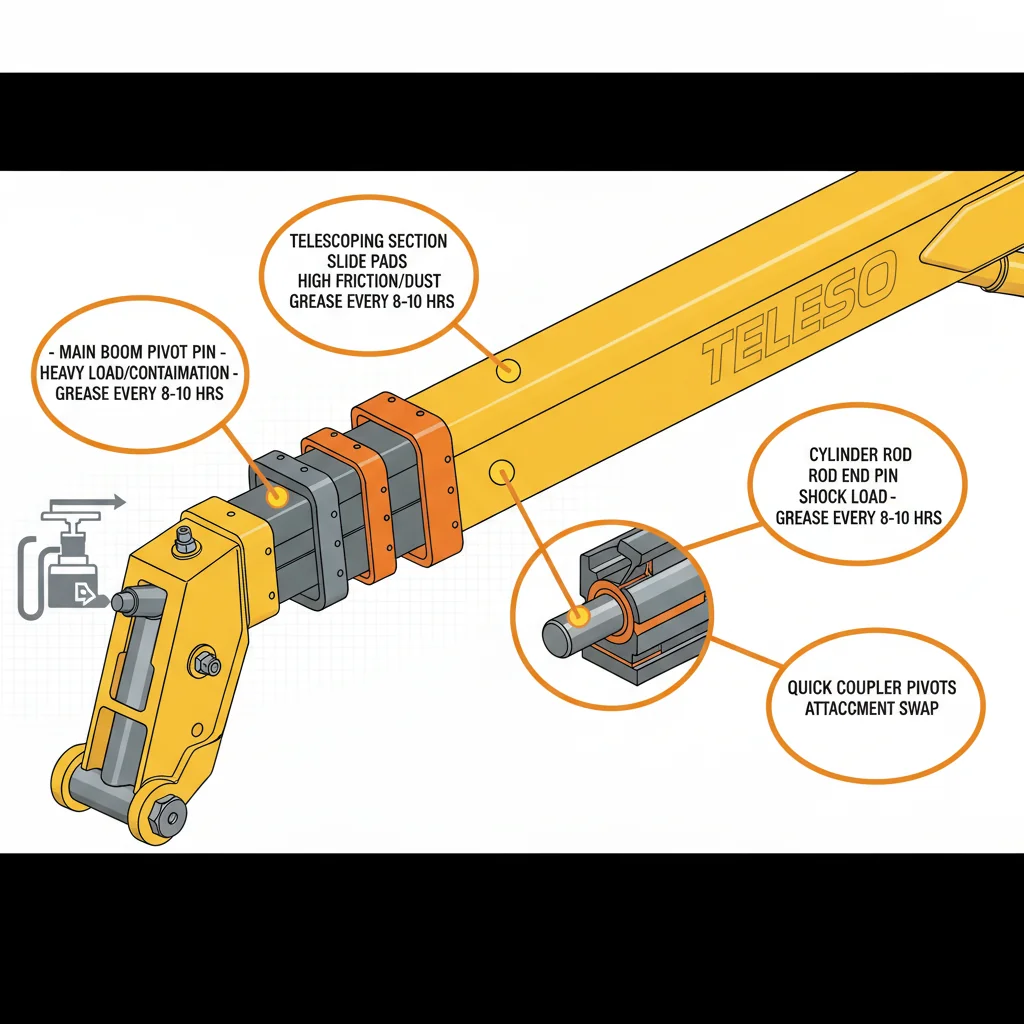
Let me share something important about telehandler boom lubrication that too many operators overlook. The moving sections of a boom, plus all the pins and couplers, take the brunt of heavy loads and dust day after day. I’ve worked with customers in places like Dubai, where fine sand gets everywhere, and even one missed greasing can start to grind away metal inside a week. In Kenya last year, a contractor forgot to grease a main boom pivot on a 4-ton telehandler. The machine seized up after just four days, and the repair cost them over $2,000—not counting downtime. Compare that to about $8 and 15 minutes’ effort for daily greasing.
Without fresh grease, the metal-on-metal wear accelerates. You’ll see tight joints first—then suddenly it’s sloppy boom movement that feels unsafe. In extreme cases, pins seize entirely. From my experience, industry-standard models with 14- to 18-meter booms all need regular lubrication: pivot pins, telescopic sections, and attachment couplers. Most manuals recommend greasing every 8–10 hours of operation, and it’s not just a suggestion—on busy sites, that means once every shift. Wet or dusty sites? I’d double that frequency.
Technical tip: Always purge old, dirty grease out until you see clean lubricant at the seals. That’s how you keep grit and water from staying trapped inside the joint. I suggest building greasing into your end-of-shift routine. That simple habit means your machine is protected for the next day and won’t surprise you with costly, avoidable failures. The investment is minimal, but the payoff is huge.
Regularly lubricating telehandler boom pivot pins every 50 operating hours can extend their service life by up to 30% by preventing premature metal wear and corrosionTrue
Frequent greasing minimizes friction and prevents abrasive dust from grinding down metal surfaces, significantly prolonging component durability under heavy load conditions.
Using synthetic grease instead of standard lithium-based grease universally eliminates the need for any further mechanical inspections on telehandler boomsFalse
While synthetic grease can improve lubrication performance, it does not replace the need for mechanical inspections. Regular inspections are crucial to detect wear, cracks, or other issues that lubrication alone cannot prevent.
Key takeaway: Consistent greasing of telehandler booms, pins, and couplers minimizes the risk of severe component failures, reduces repair costs, and ensures optimal machine performance. Industry practices confirm that neglecting this simple routine is one of the fastest ways to cause expensive, avoidable damage to critical structural joints.
How should telehandler fluids and filters be managed?
Telehandler longevity hinges on managing engine oil, hydraulic fluid3, coolant, and fuel quality to OEM specifications. Level checks every 50 hours and oil/filter changes every 250 hours are industry standard. Using improper fluids or cheap filters risks catastrophic internal wear, overheating, and pump failure—potentially requiring $5,000+ repairs. Only approved viscosity, additive packages, and filter types ensure optimal performance.
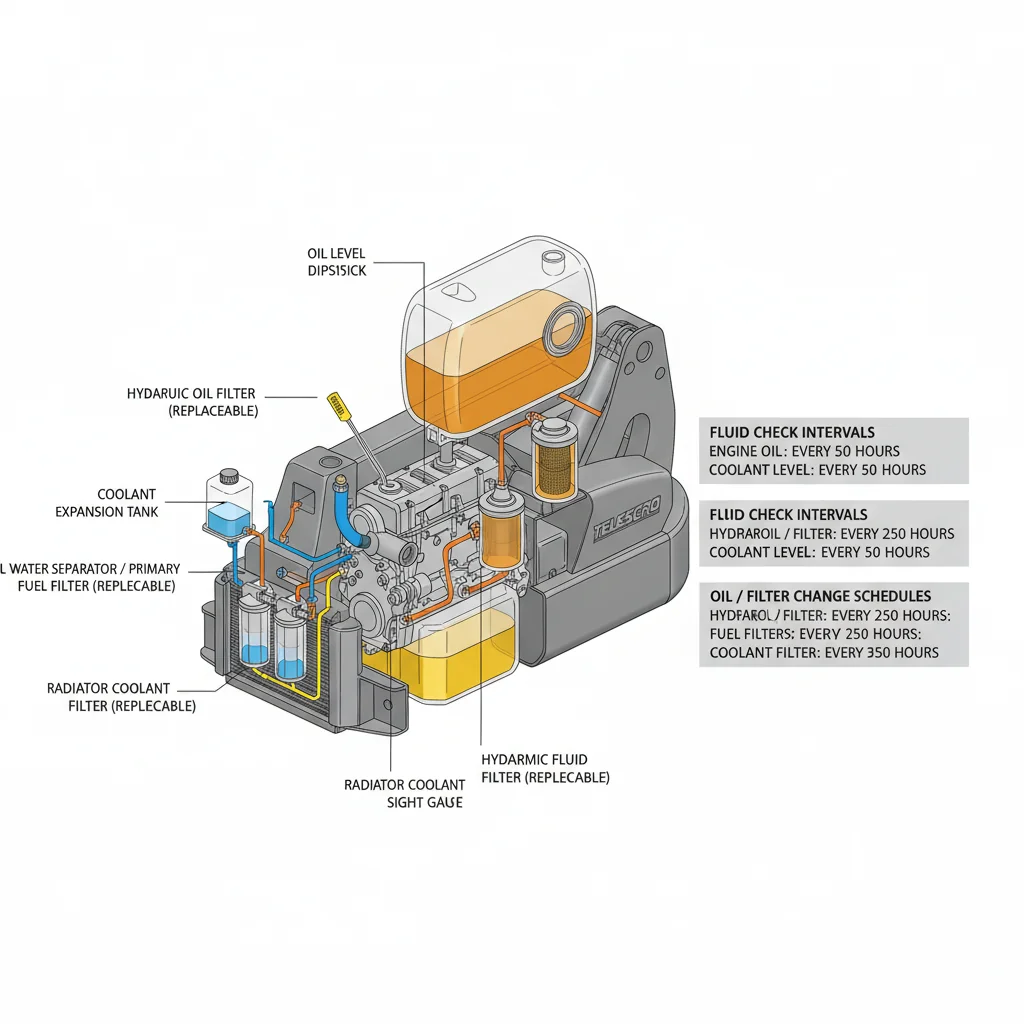
The biggest mistake I see is crews waiting too long between oil and filter changes—thinking it’ll save money. Let me give you a real jobsite example. In Dubai, a fleet owner pushed engine oil changes4 on three 4-ton telehandlers from the recommended 250 hours to almost 400. Within a year, two machines had major hydraulic pump failures. Those repairs cost him over $6,000 each, plus ten days with two machines out of service. That downtime cut his monthly rental income almost in half. If I had to point to root cause, it was poor fluid management. Hydraulic oil had picked up fine dust and water, which the generic filters just couldn’t handle.
From my experience, sticking to manufacturer specs is non-negotiable. Modern telehandlers—especially high-reach units with electro-hydraulic controls—run on tight tolerances. Using the wrong viscosity or skipping additive packages can wreck seals, corrode cooling systems, or clog fine-pitch fuel injectors. On a recent job in South Africa, a customer used a “universal tractor fluid” instead of OEM-recommended hydraulic oil.
The result? The boom drifted under load and the main cylinder started leaking within months. I always suggest budgeting for genuine or at least OEM-quality fluids and filters. They aren’t cheap, but usually amount to just 2–3% of yearly running costs. That’s a small price to keep a $60,000 machine healthy.
Quick tip: Check all fluid levels every 50 hours, and swap filters on schedule—sooner if you’re working in dust or heat. Watch filter indicators and don’t ignore warning lights. Consistency here will save you thousands in the long run.
Extending engine oil and filter change intervals beyond 300 hours can significantly increase the risk of hydraulic pump failures in telehandlers.True
Delaying oil and filter changes beyond manufacturer recommendations allows contaminants to accumulate, reducing lubrication quality and causing premature wear in sensitive hydraulic components like pumps, as evidenced by costly failures when intervals were pushed from 250 to nearly 400 hours.
Using synthetic engine oils in telehandlers eliminates the need to ever change hydraulic filters.False
Synthetic oils can improve engine lubrication but do not prevent contamination buildup in hydraulic systems; hydraulic filters still require regular changes to remove particles and avoid damage to pumps and valves.
Key takeaway: Rigorously follow OEM intervals and specifications for telehandler fluids and filters, budgeting for genuine-quality consumables as a preventative investment. Neglecting these standards risks major repairs and downtime, while proper maintenance typically accounts for just 2–3% of annual operating costs and can prevent up to 20% in unexpected failures.
How Is Telehandler Hydraulic Health Maintained?
Telehandler hydraulic health requires routine inspection of hoses, fittings, and seals for cracks, abrasion, leaks, and blistering. Operators must monitor for sluggish boom response, jerky movement, or discolored oil, conduct weekly fluid checks, and follow scheduled oil and filter changes. Prompt leak repair, cleanliness, and attention to pressure changes prevent system failures and costly downstream damage.
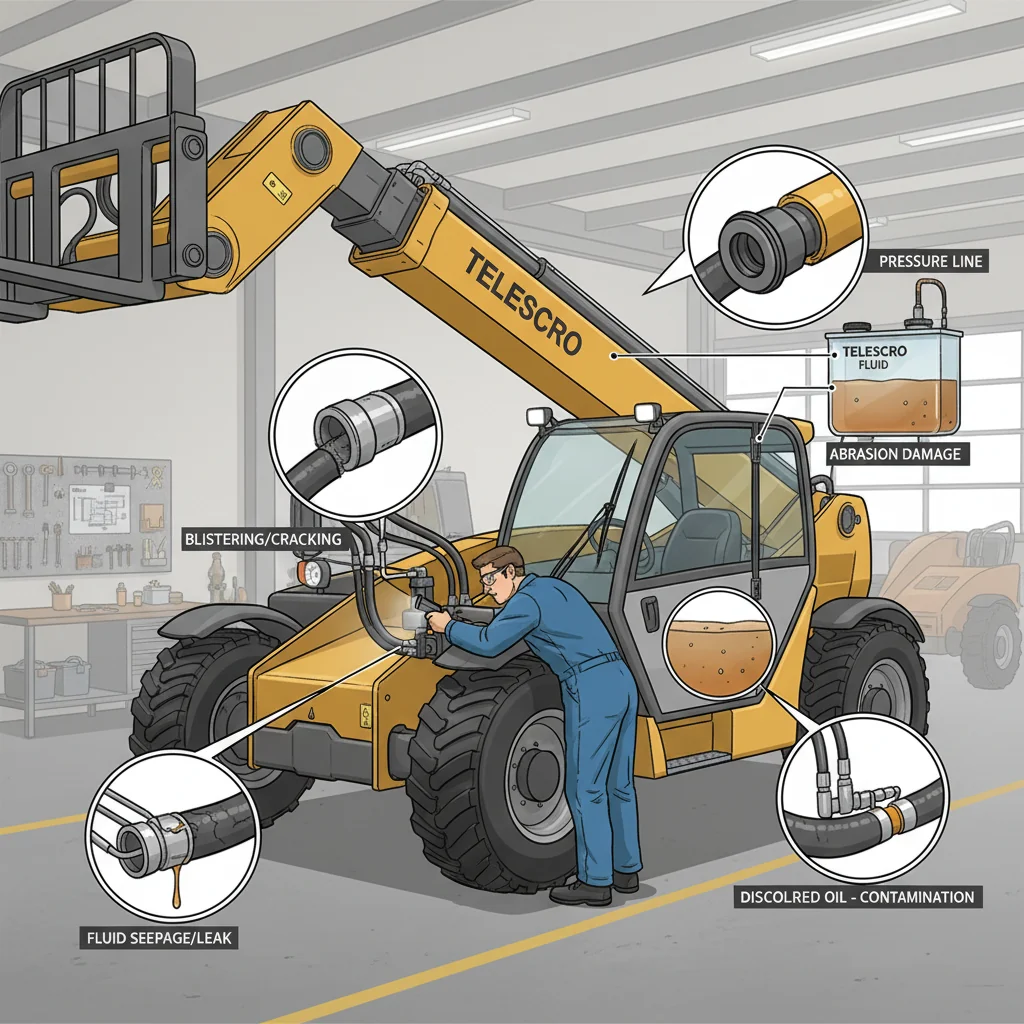
I’ve worked with customers in Kazakhstan and Dubai who learned the hard way—hydraulic issues can shut down a whole project. One contractor in Dubai was running a 4-ton telehandler with a 17-meter reach. They ignored a small oil drip under the boom, thinking it could wait until the next service. Within two weeks, that drip turned into a blown hydraulic seal5. They lost three full days and spent close to $2,000 on emergency repairs, plus downtime penalties. That’s why I always emphasize early detection.
Every week, I suggest operators take ten minutes to check all hoses, fittings, and cylinder seals for cracks or abrasion. Don’t just look—run your hand (with gloves) along flex points and connection ends. If you feel even a hint of moisture, act fast. Small leaks attract dust and grit, which then circulate through the hydraulic circuit and wear out key components like pumps and control valves. A $400 hose today can prevent a $2,500 cylinder and harness job tomorrow.
Pay close attention to boom response and steering. Signs like jerky movements, slow lifting, or milky oil usually mean air or water has entered the system. I saw a team in Kenya who skipped their fluid check for a month. By the time they noticed performance issues, contaminated oil had already damaged the pump.
Cleaning all breathers and caps, replacing hydraulic filters around every 500 to 1,000 hours, and pressure testing if you see any drop in speed—these are simple habits that go a long way. Prompt repairs protect your crew and budget. Trust me, hydraulic failures rarely wait for a quiet day—they tend to hit when you can least afford it.
Regularly checking hydraulic fluid for contamination and maintaining fluid cleanliness above ISO 18/16/13 standards can extend telehandler hydraulic component life by up to 30%True
Hydraulic fluid contamination accelerates wear on pump and valve components; adhering to strict cleanliness levels reduces abrasive damage and premature seal failures, significantly improving system longevity.
Replacing hydraulic hoses annually regardless of condition is essential to prevent telehandler hydraulic failureFalse
Hydraulic hoses are designed for flexible service lives based on usage and conditions; unnecessary annual replacement ignores wear indicators and can increase costs without improving reliability when proper inspections and pressure tests are performed.
Key takeaway: Early detection and prompt repair of hydraulic issues in telehandlers, along with regular checks of hoses and fluid, are crucial for preventing major failures. Scheduled maintenance and immediate response to leaks help minimize costly downtime and protect both safety and equipment longevity.
How should telehandler tires and brakes be inspected?
Telehandler tires must be inspected before each shift for correct pressure per OEM specifications, sidewall damage, cuts, exposed cords, and uneven wear signaling alignment issues. Brakes require testing for firm, even response without pulling or spongy feel. Steering checks should confirm smooth, clunk-free movement lock-to-lock, with immediate action if defects are found.
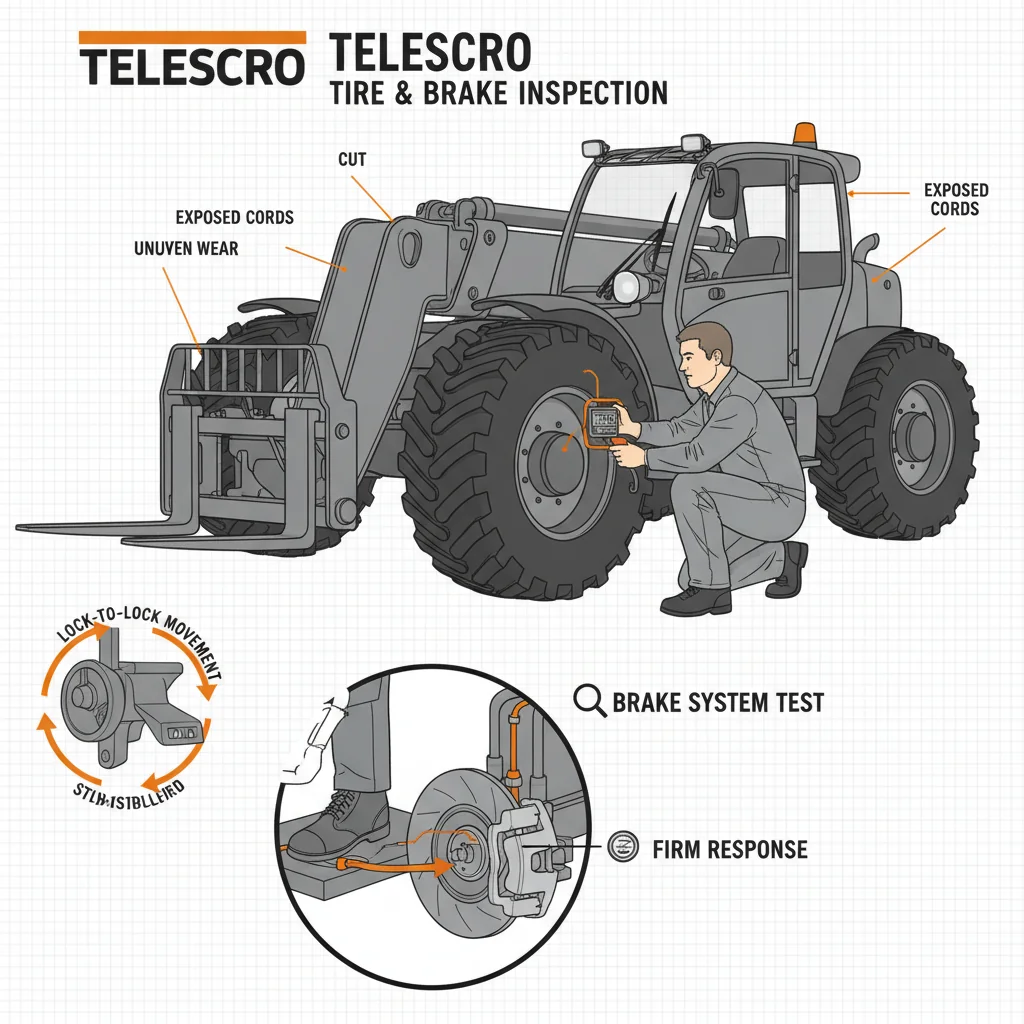
Here’s what matters most when checking telehandler tires and brakes: these are your frontline safety systems, especially when carrying loads on rough terrain or lifting high. I’ve seen operators in Dubai overlook a simple tire pressure6 check, only to end up sidelined for two days with a blown tire—replacement costs can easily top $1,000 and shut down tight-schedule projects. Always verify tire pressures match the manufacturer’s spec before each shift. Under-inflated tires heat up fast and wear quickly, which can lead to sudden failure. Take a close look for any cuts, bulging, or cords showing on the sidewall. Uneven tread wear often points to alignment or suspension problems—ignore this and you’re gambling with both machine stability and operator safety.
For brakes, I recommend testing both service and parking brakes while moving slowly in a clear area. The pedal should feel solid, not spongy. If the machine pulls to one side or you notice delayed stopping, park it immediately and call for a deeper check. In Brazil, one customer ignored a slight brake fade7, planning to fix it “after lunch.” That telehandler rolled into a scaffold—fortunately no injuries, but it took them out of rotation for three days and racked up costly repairs.
Steering checks are just as critical. Turn the wheel lock-to-lock—there shouldn’t be any clunking or excessive play. Smooth steering response keeps you in control, especially in tight sites or heavy traffic. Any abnormal feeling or noise? Don’t wait until the job is done. I always suggest a quick inspection before every shift—it’s five minutes that can prevent weeks of downtime.
Telehandler tires should be inspected for cuts or embedded debris weekly, as these can cause pressure loss that leads to sudden tire failure during high-load operationsTrue
Small cuts or foreign objects can compromise tire integrity, causing leaks or blowouts under heavy load or rough terrain. Regular weekly inspections help identify problems before they escalate, reducing downtime and costly replacements.
Brake pads on telehandlers only need to be checked annually because telehandler brakes are designed to self-adjust and have extended wear intervalsFalse
Telehandler brakes do not self-adjust automatically and can wear faster under frequent use or heavy loads, especially in rough terrain. Checking brake pads at least monthly or per manufacturer guidelines is critical for safety and performance.
Key takeaway: Consistent, detailed checks of telehandler tires, brakes, and steering before every shift can prevent expensive breakdowns and accidents. Early detection of underinflation, wear, or faults ensures machine stability and safety, especially when operating on uneven ground or at road speed.
How Do Hour-Based Service Intervals Prevent Failures?
Hour-based service intervals structure telehandler maintenance at key milestones—usually 100, 250, 500, and 1,000 engine hours. Early intervals focus on thorough inspections, while later ones require oil, filter, driveline, and hydraulic checks. Adhering to prescribed schedules prevents wear-related failures, preserves warranties, and adapts to harsher conditions by shortening intervals as needed.
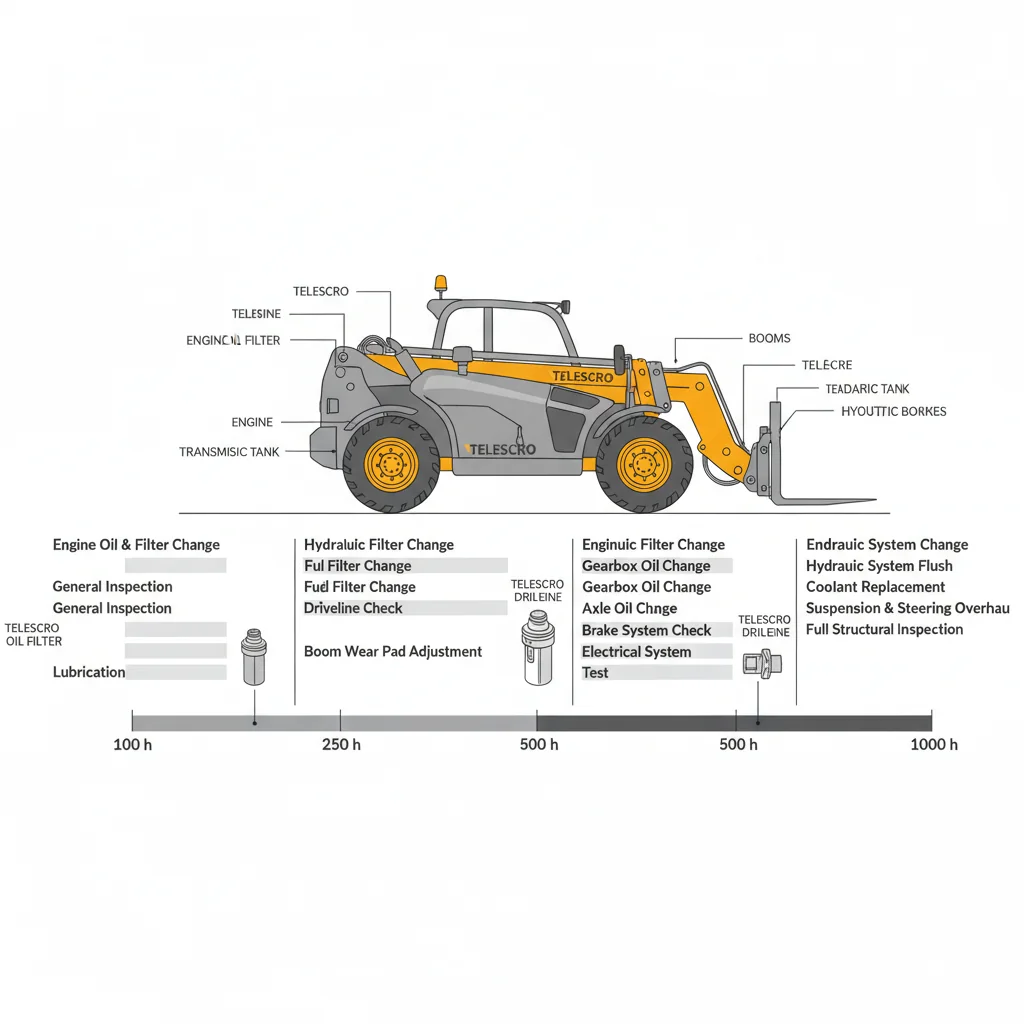
To be honest, sticking to hour-based service intervals might feel like just another box to tick, but it’s the main reason some fleets run for years without major failures. I’ve seen this clearly when working with clients in Saudi Arabia’s rental sector. They run high-reach 4-ton telehandlers with 17-meter booms in desert conditions—lots of dust, heat, and long hours. Machines that followed the OEM’s 250- and 500-hour schedules, including engine oil, hydraulic filter, and driveline inspections, ran smoothly season after season. The few who wanted to “stretch” past 500 hours usually ended up with sudden hydraulic leaks or overheating—often at the worst time, like mid-way through a concrete pour.
Here’s what happens under the surface. Early 100-hour checks are small but critical; technicians catch loose hoses or early-stage leaks around the boom pivot or steering circuit. During 250-hour service, oil analysis can reveal material wear—metal shavings in the filter, for example, can warn of gear damage before breakdown. By the 1,000-hour mark, skipping hydraulic system maintenance8 almost guarantees sticking cylinders or reduced lifting speed due to clogged screens.
I once worked with a demolition crew in Brazil who ignored these intervals. Their telehandler operated in heavy rubble, so dust clogged the air filter after just 80 hours. They lost a full week to engine repairs—mainly because they didn’t shorten intervals in harsh conditions.
My honest advice? Use the engine-hour meter as your guide, not just the calendar. Adjust intervals—sometimes by 30%—if you’re in extreme dust, mud, or corrosive environments. Small investments in scheduled checks can save weeks of costly downtime.
Strict adherence to OEM-recommended 250- and 500-hour service intervals is critical because it ensures timely replacement of hydraulic filters and engine oil, which prevents abrasive dust particles common in desert environments from causing premature wear on key componentsTrue
Following these specific hour-based intervals incorporates preventative measures accounting for operating conditions like dust and heat. Regular oil changes and filter replacements prevent contamination buildup and reduce the risk of hydraulic and engine failures.
Service intervals for telehandlers can be safely extended beyond 1000 hours during heavy-duty use, as modern fluids and filters have improved durability regardless of operating conditionsFalse
While improved fluids and filtration have enhanced performance, extending service intervals beyond OEM recommendations, especially in demanding environments with dust and heat, increases the risk of component degradation and failures due to contamination and fluid breakdown.
Key takeaway: Strict adherence to hour-based service intervals is essential for telehandler reliability and warranty protection. Customizing schedules for harsh environments and monitoring engine hours closely are proven strategies for averting costly downtime and unplanned failures.
How Should Telehandler Attachments Be Maintained?
Telehandler attachments require a rigorous preventive maintenance routine, including daily visual inspections for cracks, bent tines, worn heels, loose welds, deformation, and missing locking devices. Quick-coupler engagement9 and locking pins should be verified. At 100-hour intervals, operators should conduct detailed checks on mounting points and pin bores for damage or wear. Damaged attachments must be removed from service immediately.
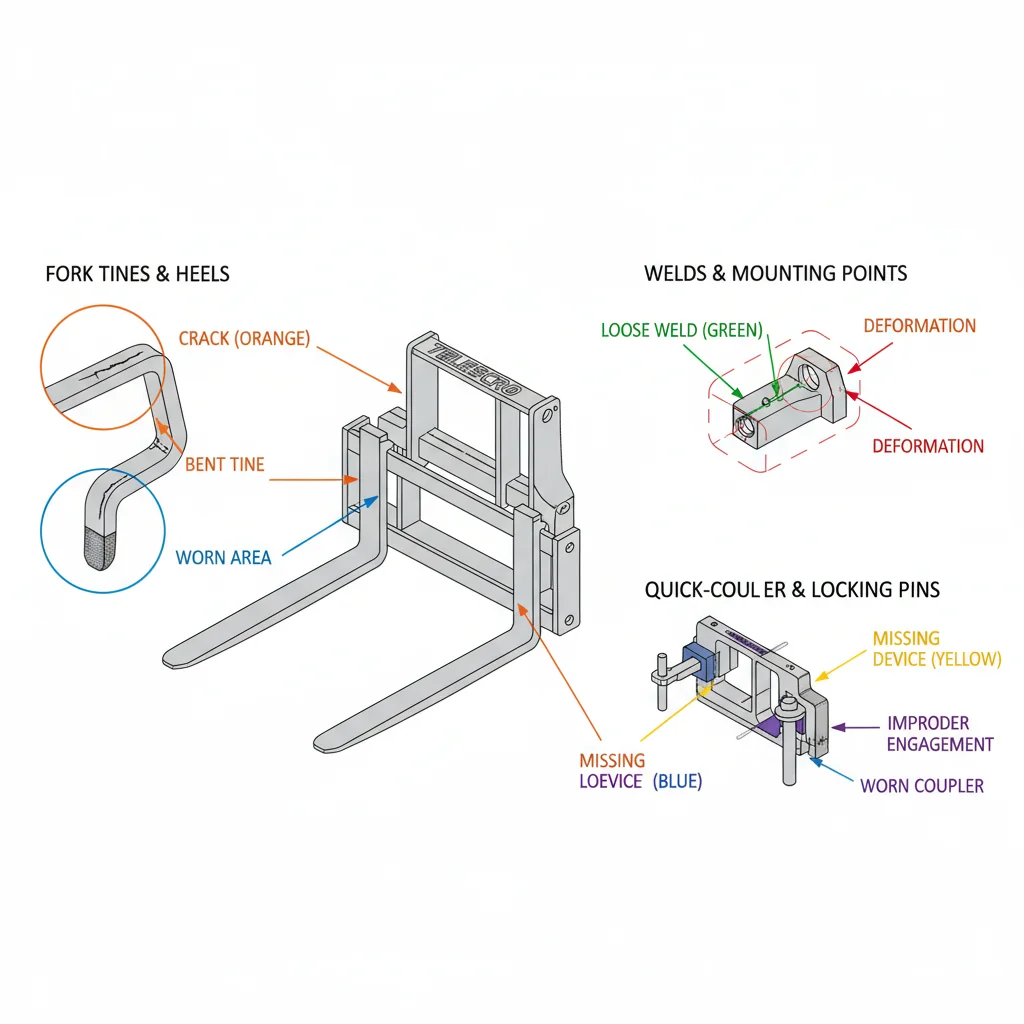
Last month, a project manager in Dubai called about mysterious load shifts on their 4-ton telehandler. The real culprit turned out to be worn fork heels and a cracked quick-coupler—something that could’ve been caught with better preventive maintenance. Attachments take the full load stress, day after day, and over time even the toughest steel shows fatigue.
A solid routine starts with daily walkarounds. Pay close attention to high-stress areas—especially on forks and jibs. Look for these common issues:
- Cracks or bent tines – even a small fracture can grow quickly under repeated loads.
- Worn heels and edges – when steel at the heel thins out, the fork loses strength fast.
- Loose or missing locking devices – I’ve seen a pallet drop in Malaysia because a locking pin vibrated loose.
- Deformation or twisted structures – this is a warning sign that the attachment suffered an overload or side impact.
Every 100 operational hours (or as recommended by your attachment supplier), dig deeper. Remove the attachments and check the mounting points, pin bores, and structural welds for elongation or fatigue. In mixed fleets, use a separate checklist for each attachment type—buckets, grippers, hooks—because each has unique wear points.
If you spot serious wear, take that attachment out of service immediately. I always suggest tagging damaged pieces clearly to avoid confusion. Preventive care isn’t just paperwork—it prevents dropped loads, protects the boom and carriage from shock, and keeps the whole site safer. A five-minute check each shift saves major headaches later.
Inspecting fork heels for wear greater than 5mm during daily walkarounds can prevent load shifts by maintaining proper engagement between the fork and attachmentTrue
Fork heels experience significant stress and wear, and exceeding a 5mm wear threshold compromises the fork's ability to securely hold loads, increasing the risk of dangerous load shifts if not identified early.
Lubricating the attachment quick-coupler monthly is unnecessary as modern quick-couplers are maintenance-free due to advanced corrosion-resistant coatingsFalse
Despite advanced coatings, quick-couplers endure constant mechanical stress and environmental exposure, requiring regular lubrication—ideally weekly or per manufacturer guidelines—to prevent cracks and ensure safe operation.
Key takeaway: Preventive maintenance of all telehandler attachments and their locking systems—with daily checks and regular detailed inspections—significantly reduces the risk of dropped loads, tip-overs, and structural damage. Use dedicated checklists for each attachment type and remove damaged items immediately to keep operations safe and equipment reliable.
How Do Cleanliness and Visibility Impact Reliability?
Cleanliness and visibility are critical telehandler reliability controls. External washing prevents mud, dust, and debris from hiding cracks, leaks, or loose fasteners, exposing faults early. Clean radiators and coolers avoid overheating and engine wear. Clear windows, mirrors, lights, and readable safety decals ensure safe operation, reducing risks of overloading and collisions.
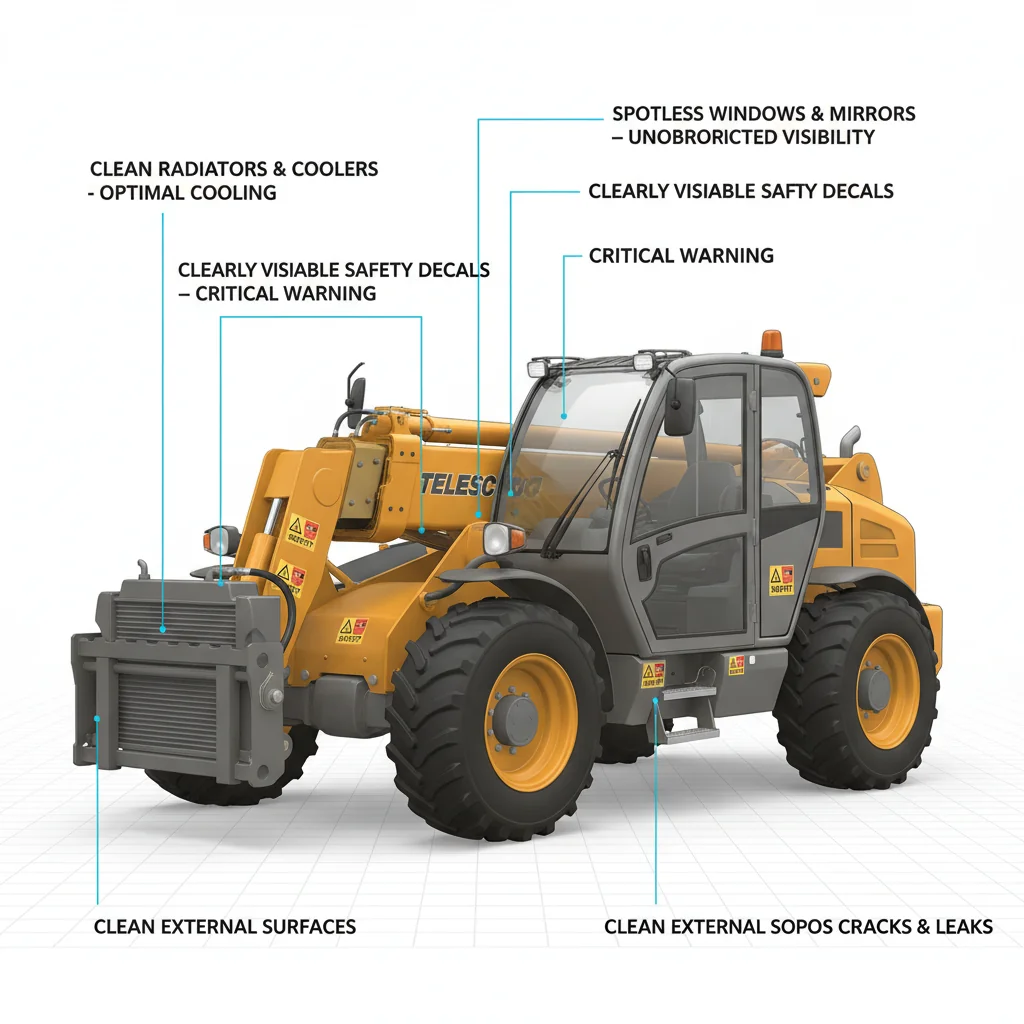
One thing I notice again and again is how overlooked cleaning routines are when it comes to telehandler reliability. I visited a site near Nairobi last rainy season—mud everywhere. Their 4-ton, 16-meter telehandler worked double shifts. But after a week, the crew missed a hydraulic leak10 at the boom base. Why? Thick mud had caked over the fittings and welds, masking a slow drip. When the machine started losing pressure fast, they had to stop work and call for urgent repairs. Regular washing—especially after long days in wet or dusty environments—can save days of downtime by exposing leaks and cracks early.
I’ve seen similar issues inside the cab. When windows and side mirrors fog up or get splashed with muddy water, the operator’s field of vision shrinks fast. In Brazil, a customer ran a compact 3-ton unit during sugarcane harvest. Chaff stuck to every surface, clogging both the radiator and blocking the backup camera. Engine temps shot up, and one operator bumped a stack because he could barely see through the side glass. That near-miss cost the team a pallet of bricks and set them back half a day. Keeping radiators and coolers clean isn’t just about performance—it directly affects engine lifespan and operator safety.
To be honest, adding a five-minute blow-off and window wipe at the end of each shift pays off. I always suggest checking that load charts and safety decals remain readable. If you can’t see them clearly, you’re risking overloaded lifts or accidental collisions. It’s a simple habit, but it prevents costly surprises.
Regular cleaning of the telehandler's boom base and hydraulic fittings can prevent undetected leaks that might cause pressure losses within 48 hours of initial damageTrue
Mud and debris can mask slow hydraulic leaks, which deteriorate pressure rapidly; maintaining cleanliness allows for early visual inspections, preventing major failures within a short time frame.
Visibility enhancements like rearview cameras eliminate the need for any physical inspection of hydraulic components during daily telehandler maintenanceFalse
While cameras improve operator visibility, they cannot replace hands-on inspection for hydraulic leaks or component wear, which require close physical assessment to reliably detect issues.
Key takeaway: Regular cleaning of a telehandler and its cab not only exposes hidden maintenance issues but also optimizes performance and operator safety. Routine washing and inspection prevent heat and contamination failures, ensuring longevity, efficiency, and fewer unexpected breakdowns in demanding field environments.
How Do Maintenance Records Prevent Telehandler Failures?
Detailed maintenance records help telehandler owners identify wear patterns, schedule preventative actions, and document all service activities—including hours, parts replaced, and critical inspections. This systematic approach supports warranty compliance, improves reliability, and optimizes service intervals, minimizing unexpected failures and total cost of ownership. Qualified technicians and trained operators further enhance preventive maintenance outcomes.
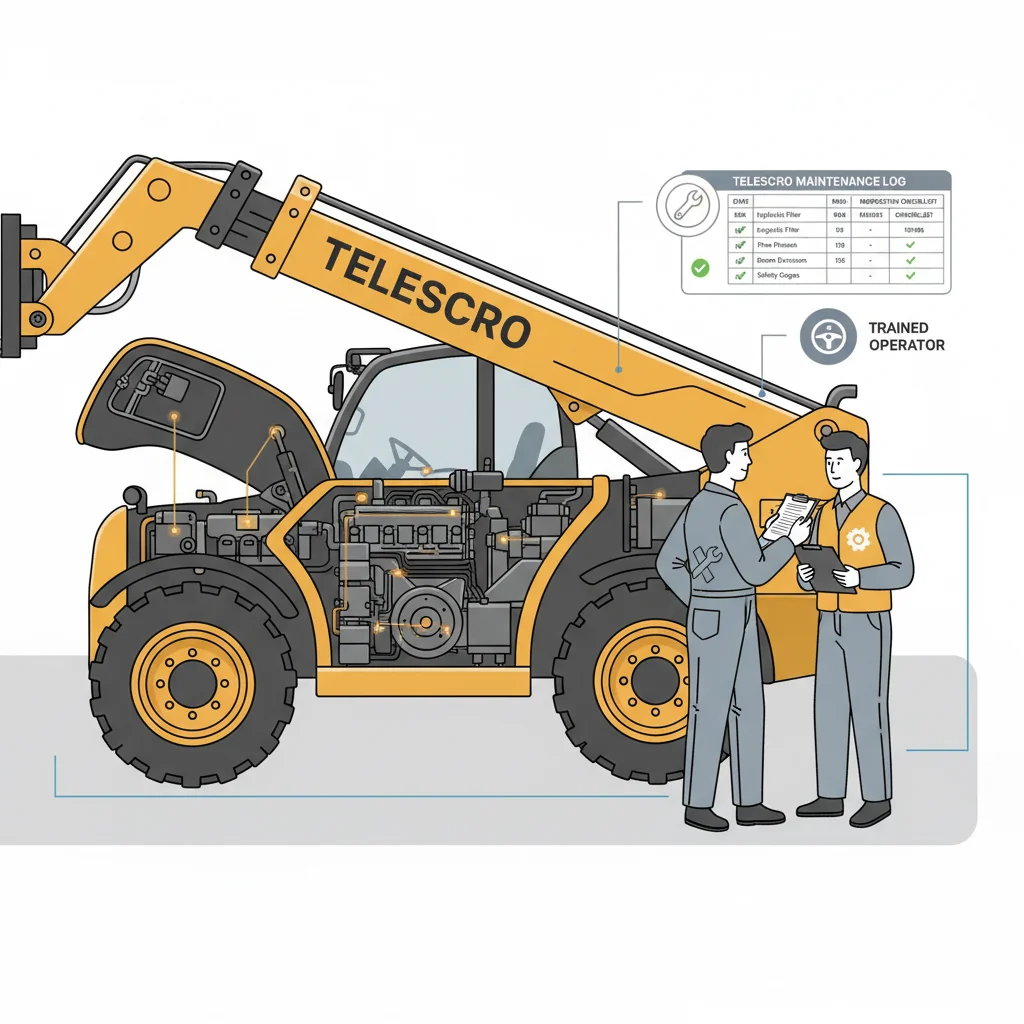
Most people don’t realize how powerful a simple maintenance record can be for telehandler fleets. One project in Kenya stands out—my customer tracked every oil change, filter replacement, and hose inspection for a pair of 3.5-ton telehandlers. After two years, their records showed a recurring hydraulic leak every 600 hours on one machine. With this data, they brought in a technician to check the hydraulic circuit and found a worn seal before a major failure took out the whole pump assembly. They saved at least two weeks of downtime and a costly repair. I always tell customers: the more detail you include—service hours, which parts were replaced, even who did the inspection—the better you get at spotting patterns before things break.
Operator habits matter too. In Brazil, a customer had several new operators who skipped pre-shift checks. Their logbook showed inconsistent tire pressure readings and missing boom inspections. Within four months, that 14-meter unit developed uneven tire wear and boom latch issues. After a training refresher and stricter record-keeping, breakdowns dropped sharply. I can’t stress enough: trained operators and clear logs prevent mistakes like using the boom as a forklift ram or running with low hydraulic fluid, both of which I’ve seen lead to expensive repairs.
Proper storage is another overlooked detail. Machines left in the open, especially in humid regions, end up with corroded electrical connectors and early seal failure. I suggest storing telehandlers under cover, on solid ground. For seasonal shutdown, follow the OEM’s guidelines: battery care, coolant level checks, and lifting tires off the ground when possible. These habits protect your investment and boost resale value over the machine’s life.
Regularly replacing hydraulic seals every 600 operating hours can prevent catastrophic pump failures by eliminating early-stage leaks before they escalateTrue
Tracking maintenance at set intervals, like 600 hours, helps identify patterns such as seal wear causing leaks; proactive replacement based on such data stops leaks from progressing into full pump damage, enhancing telehandler reliability.
Telehandlers with electronic hydraulic control systems do not require routine hose inspections because software diagnostics will automatically detect all potential leak pointsFalse
While electronic diagnostics can signal some hydraulic issues, they cannot detect all hose wear or small leaks; manual hose inspections remain critical to identify wear, cracks, and potential failure before software alerts occur.
Key takeaway: Consistent preventive maintenance, including meticulous record-keeping, qualified servicing, operator training, and proper storage, significantly reduces costly telehandler failures, extends machine life, and maximizes resale value. These organizational practices can matter just as much as routine mechanical tasks for long-term operational success.
How Do Maintenance Checklists Boost Compliance?
Maintenance checklists standardize telehandler servicing, transforming memory-based inspections into repeatable, auditable routines. Daily and scheduled, component-specific forms—supported by OEM guidelines—improve compliance and reduce oversight. Digitized checklists in CMMS apps11 enable schedule tracking, reminders, and defect management, while visual tags facilitate rapid status checks across shifts, improving preventive maintenance outcomes and operational reliability.
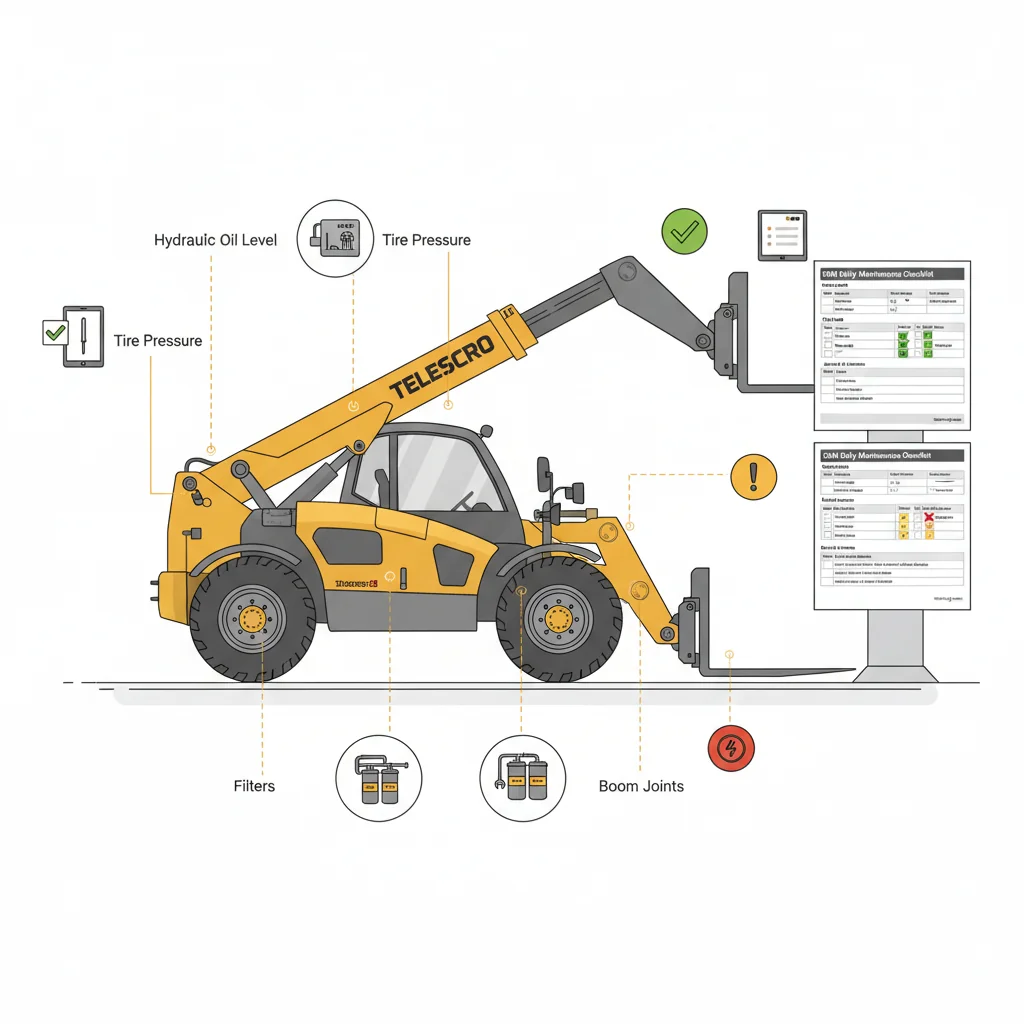
Last week, I spoke with a project manager in Brazil who thought their team was on top of maintenance—until a failed boom sensor caused two days of downtime. The issue? Their pre-shift checks weren’t consistent. Relying on memory, different operators “remembered” different steps. This is where standardized maintenance checklists make a real difference. When you have clear forms listing items like hydraulic fluid, tire condition, control levers, warning lights, and boom structure, every shift covers the same critical points—no skipping, no guessing. For scheduled servicing at 100, 250, or 1,000 hours, following OEM-based checklists means engine, drivetrain, and electrics get the attention they actually need.
To be honest, I always suggest going digital if your fleet has five or more telehandlers. In Kenya, one contractor saved at least two full working days each month just by using CMMS apps to schedule reminders and log completed work. Instead of searching paper records or missing a hydraulic leak for weeks, their system tracks defects and overdue items automatically. This creates a real-time history for each machine—so if a pump fails at 1,500 hours, you know if it was overdue, or just unlucky.
Visual tags are another simple, practical tool. I’ve seen teams in Kazakhstan mark grease points with colored cable ties—green means serviced, red signals overdue. It’s immediately clear, even for crews with limited English or on rotating shifts. In short, standard checklists and digital tools boost compliance, catch problems early, and build data you can actually use. I suggest reviewing your current checklist—does it cover what actually fails on your jobsite?
Regularly inspecting the boom structure and its welds during preventive maintenance can detect fatigue cracks early, preventing potential catastrophic failure.True
Repeated stress and heavy loads cause metal fatigue over time; early detection of cracks through detailed inspections avoids unsafe conditions and costly downtime by allowing repairs before failure occurs.
Replacing hydraulic fluid annually, regardless of operating hours, is necessary to maintain telehandler efficiency and prevent system damage.False
Hydraulic fluid replacement intervals depend on operating hours and conditions, not fixed calendar time. Changing fluid based solely on annual schedules can be unnecessary and wasteful if fluid analysis shows no degradation.
Key takeaway: Consistent use of standardised and digitised maintenance checklists significantly improves telehandler preventive maintenance compliance, reduces oversight risk, and generates actionable data for operational and budgeting decisions. Visual tagging aids swift team communication, especially for multi-shift or multilingual crews, driving reliability and reducing costly failures.
Why Calibrate Telehandler Safety Systems Regularly?
Electronic safety systems on telehandlers, including load moment indicators (LMI), boom angle sensors, and interlocks, require regular calibration to function accurately. Annual calibration and post-repair recalibration are recommended by both OEMs and industry standards. Improper calibration can result in unsafe lifting or unnecessary operational disruptions, undermining safety and operator confidence.
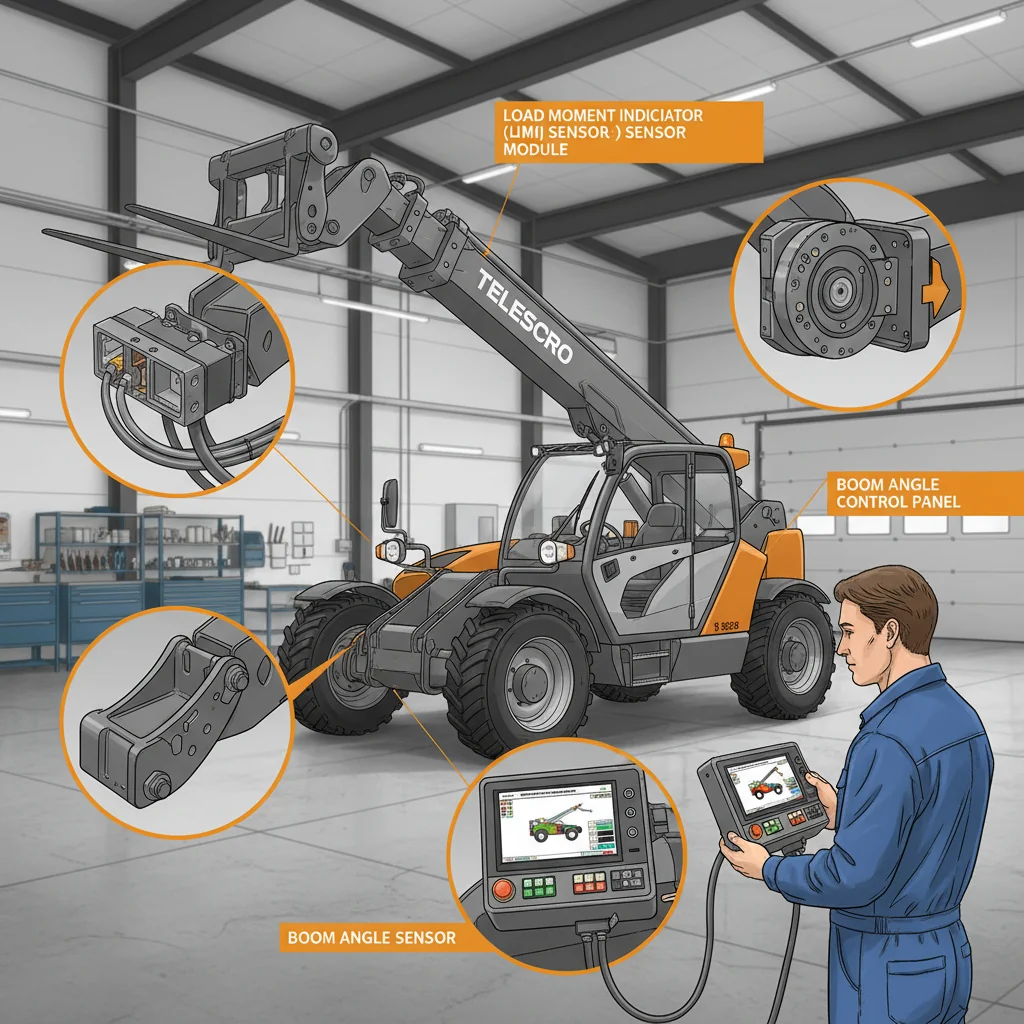
I’ve worked with crews in Brazil and Saudi Arabia who ran into trouble because safety systems weren’t properly calibrated. In one case, a 4-ton telehandler with a 14-meter boom started shutting down lifts well below its rated chart. The operator lost trust in the load moment indicator (LMI), and the team bypassed it just to finish the job. This is a situation I never want to see. An out-of-spec LMI can swing both ways—either silently allowing an overload or stopping you when the lift is perfectly safe.
Most electronic systems, like LMI, boom angle sensors, and hydraulic interlocks, depend on precise calibration to give accurate readings. I often remind customers: these sensors measure fine tolerances—just a 2-degree boom angle error can mean hundreds of extra kilos on the hook. Annual calibration isn’t just an industry formality; it’s how you keep the machine’s built-in safety net reliable. After major repairs—like changing a cylinder or sensor—recalibration is a must. I’ve seen a project in Dubai nearly lose two working days because a replacement sensor wasn’t recalibrated, and every lift was blocked by “false positive” lockouts.
In practice, I suggest adding functional safety system tests to your normal service plan. Test the LMIs, all limit switches, and interlocks. Record the results. Use a technician certified for your machine and the proper calibration tools—no guesswork. When your safety systems work as intended, operators have confidence and the equipment stays protected. Skipping this step usually leads to much bigger headaches down the line.
Regular calibration of the load moment indicator (LMI) is necessary because even a 1-2% deviation can cause premature lift shutdowns or unsafe load acceptance, compromising job site safety.True
LMIs rely on precise sensor data and calibration to accurately detect load and boom positions; small calibration errors can lead to false alarms or failure to detect overloads, risking equipment damage or accidents.
Telehandler safety systems only need calibration every 5 years because their electronic components are highly stable and rarely drift over time.False
Safety systems including LMIs experience sensor drift, mechanical wear, and environmental impacts that can alter accuracy within months or a year, requiring more frequent calibration than a 5-year interval to ensure reliability.
Key takeaway: Regular calibration and functional testing of electronic safety systems like LMIs and interlocks are essential to prevent both unsafe and premature shutdowns. This helps maintain operational safety, protects equipment, and ensures compliance with OEM and industry guidelines, reducing the risk of costly failures on-site.
Conclusion
We’ve looked at how daily pre-start checks and consistent inspection routines can make a real difference in avoiding breakdowns and costly failures with your telehandler. From what I’ve seen on jobsites, skipping the basics—like checking tyres and fluid levels—often leads to what I call a “second-year surprise” with unexpected maintenance bills once the warranty runs out. Staying on top of the routine can save you time, money, and headaches down the road. If you have questions about setting up the right maintenance schedule or logging inspections, feel free to reach out. I’m happy to help based on what’s actually worked for crews across different conditions. Every site has its own challenges—choose the routine that truly fits your workflow.
References
-
Understand the risks of low tyre pressure, including stability loss and tyre blowouts, with advice on accurate pressure monitoring for safe lifting. ↩
-
Explore how hydraulic oil level and quality affect lift performance and prevent costly pump failure on telehandlers, with expert safety tips. ↩
-
Detailed insights into managing hydraulic fluid to prevent pump failures and costly repairs, ensuring telehandler reliability on job sites. ↩
-
Explains the impact of timely engine oil changes on avoiding major mechanical failures and minimizing downtime in telehandler operations. ↩
-
Detailed insights on hydraulic seal failure causes, prevention techniques, and repair costs critical for avoiding costly downtime. ↩
-
Explains how correct tire pressure prevents blowouts and costly downtime, ensuring safety and reliability in rough terrains. ↩
-
Details the risks of brake fade, symptoms to watch for, and essential maintenance tips to maintain braking safety and performance. ↩
-
Expert guidance on hydraulic checks and common failure points that ensure smooth operation and avoid sudden leaks or overheating. ↩
-
Details expert guidance on verifying quick-coupler engagement and locking pins to avoid load shifts and attachment failures. ↩
-
Explains how cleaning routines reveal hidden hydraulic leaks, preventing costly downtime and urgent repairs in telehandlers. ↩
-
Discover how CMMS apps streamline maintenance tracking, schedule reminders, and defect management to boost operational reliability. ↩