











Telehandler vs Forklift:
Which Machine Is Right for Your Job Site?
Many buyers compare prices first — and later realize they chose the wrong machine.
This guide helps you decide before you invest.
Machine Comparison
Which One Fits Your Job?
Compare real applications, site conditions, and total cost — not just specifications. Choose the machine that fits your job, not the one with bigger numbers.
- Understand when a telehandler outperforms a forklift
- See which terrain and applications favor each machine
- Avoid buying the wrong machine and wasting your budget
Telehandler vs Forklift:
Key Differences That Affect Your Job Site
These two machines are often compared by price — but the real differences appear when you look at how they are used on site.
| Comparison Factor | Forklift | Telehandler |
|---|---|---|
| | Indoor, flat surfaces | Outdoor & indoor job sites |
| | Low to medium (up to 6m) | Medium to very high (up to 18m) |
| | No | Yes (up to 13m) |
| | Flat concrete only | Rough, muddy, uneven ground |
| | Warehousing, factories | Construction, agriculture, industry |
| | Limited options | 20+ attachments available |
| | Single-purpose only | Can replace multiple machines |
| | High for outdoor projects | Lower for mixed applications |
↑ Scroll horizontally on mobile to see full comparison
See the Difference in Real Working Conditions
The environment decides which machine fits — not the spec sheet.
Forklift Environment
Indoor, controlled, flat surfaces
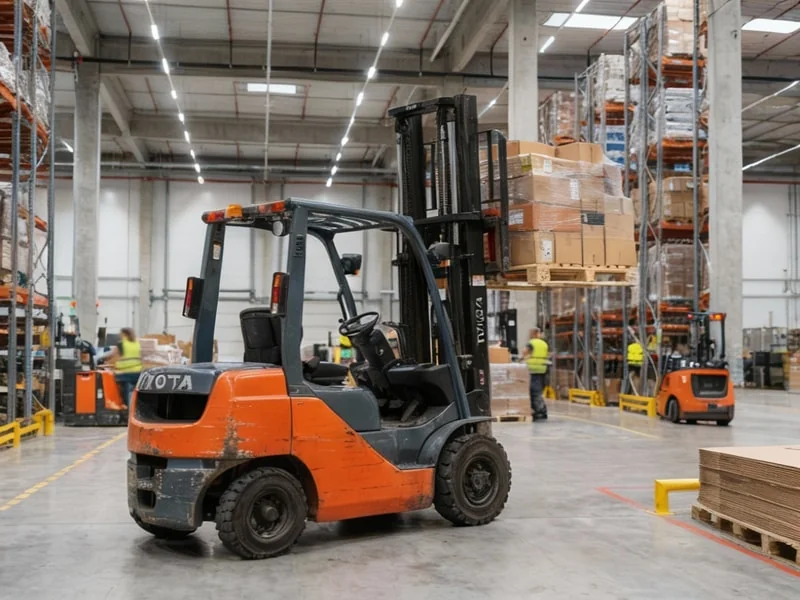
Best for: Controlled warehouse environments with smooth concrete floors
Telehandler Environment
Outdoor, rough terrain, variable conditions
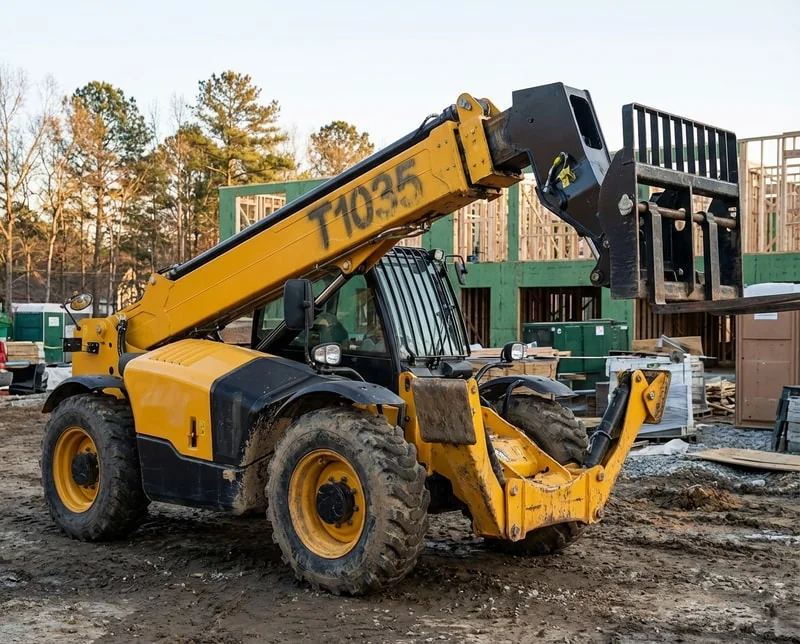
Best for: Job sites with uneven ground, mud, and outdoor conditions
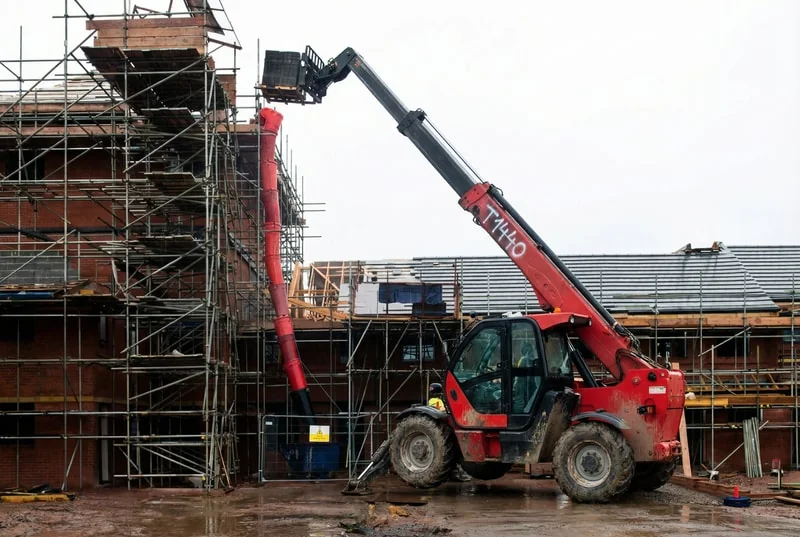
High Reach Capability
Telehandlers reach up to 18m — forklifts max out around 6m
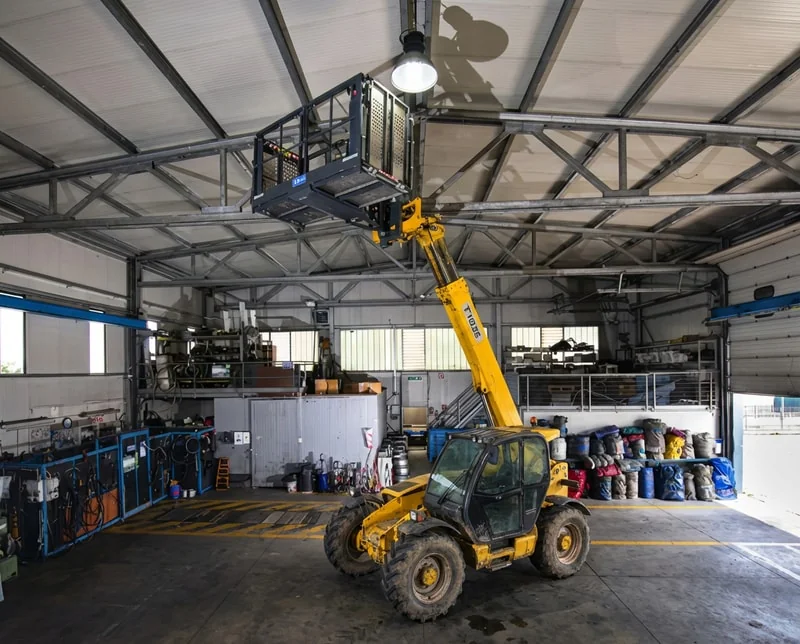
One Machine, Many Jobs
20+ attachments turn one telehandler into a multi-purpose workhorse
Key Takeaway
If your work involves outdoor sites, uneven terrain, or lifting above 6 meters, a telehandler is likely the better investment. A forklift excels in controlled warehouse environments with flat floors and lower lifting needs.
What Buyers Really Ask When Comparing
Telehandler and Forklift
Most buyers don't ask these questions directly — but they strongly affect the final purchase decision.
Not Sure Which One Fits Your Job?
Answer These Questions First
Most wrong equipment choices come from unclear job requirements.
Use the quick guide below to see where your application fits.
Working Environment
Your work is mainly outdoors, on uneven, muddy, or sloped ground
Recommendation
A telehandler is usually the safer and more stable choice
Lifting Height & Reach
You need to lift materials to upper floors, scaffolding, or over obstacles
Recommendation
A telehandler offers the height and forward reach a forklift cannot provide
Single-Purpose Operation
Your operation involves only pallet handling, indoors, on flat concrete floors
Recommendation
A forklift is often more efficient and cost-effective
Multi-Purpose Needs
You want one machine to handle lifting, loading, positioning, and multiple tasks
Recommendation
A telehandler can often replace several single-purpose machines
Future Growth
Your projects may grow in height, complexity, or terrain difficulty
Recommendation
Choosing a telehandler early can help avoid upgrading too soon
Visual confirmation: Do these scenarios look like your job site?
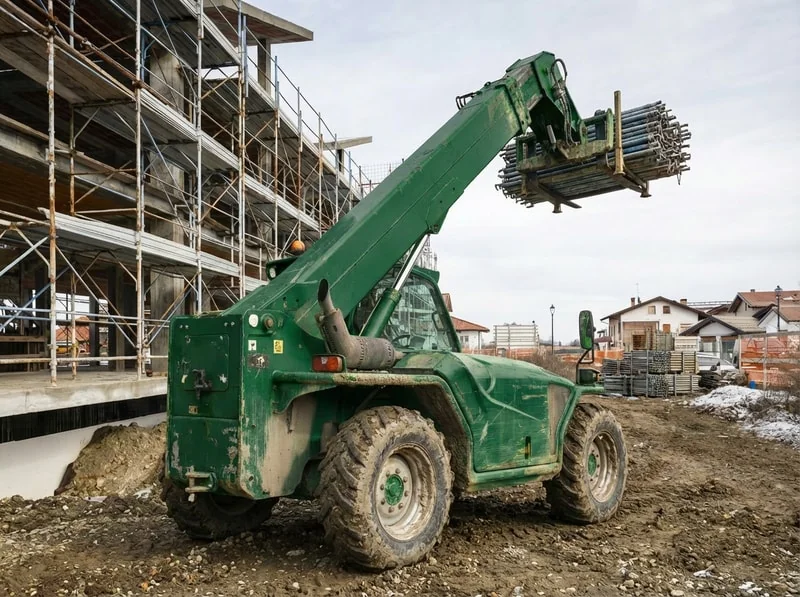
→ Telehandler recommended
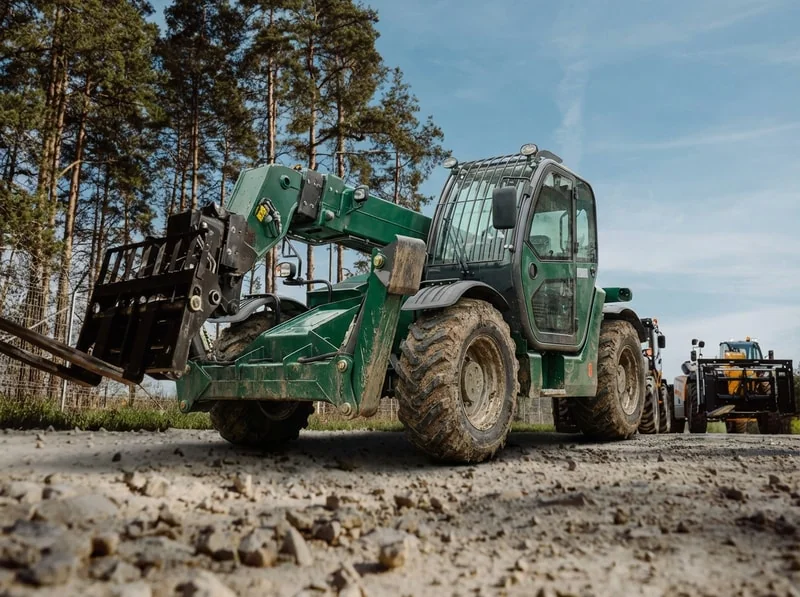
→ Telehandler recommended
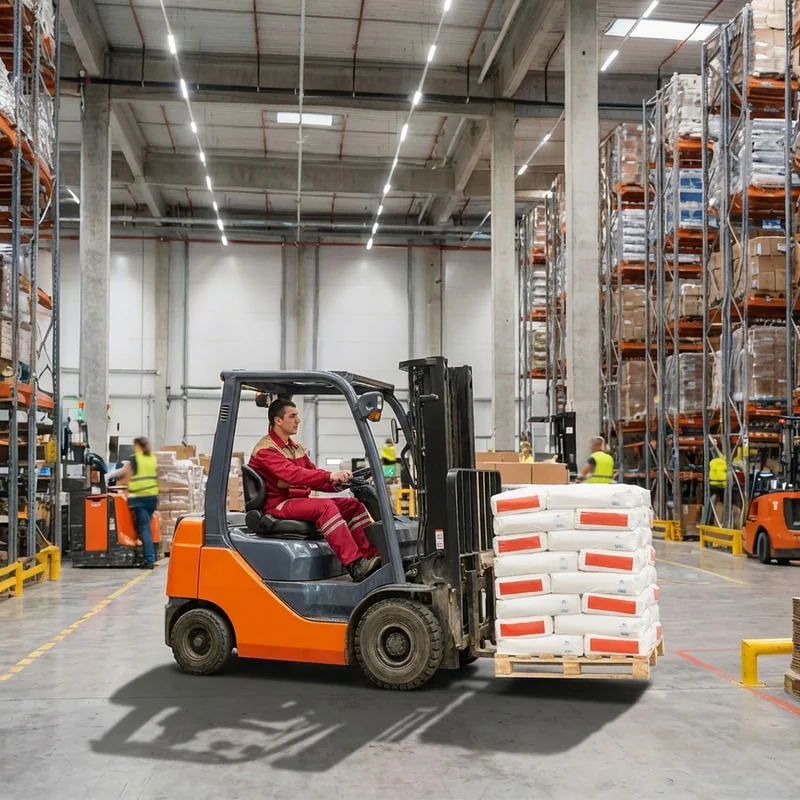
→ Forklift may be better
Still not 100% sure?
Send us your job site conditions — we'll tell you which machine fits better. No commitment, no pressure.
Here's What We Manufacture
If your decision points toward a telehandler, these are the models we build — from compact farm units to high-reach construction machines. No pressure to choose now. Just options worth knowing.

T4512
1.2 t Mini Telehandler
Compact 4.5 m telehandler for confined spaces, light-duty material handling, and urban job sites.

T625-A
2.5 t Agricultural Telehandler
Upgraded 6 m agricultural model with imported components, designed for daily farm operations and confined areas.
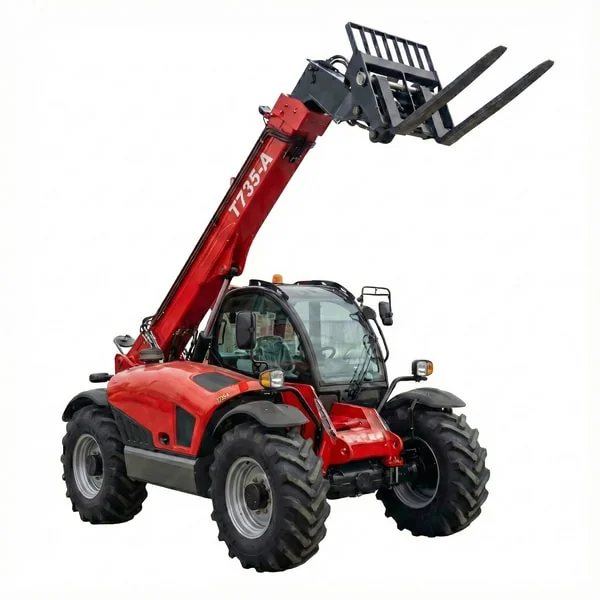
T735-A
3.5 t Agricultural Telehandler
Upgraded 7 m agricultural telehandler with imported configuration, ideal for intensive material handling on farms.
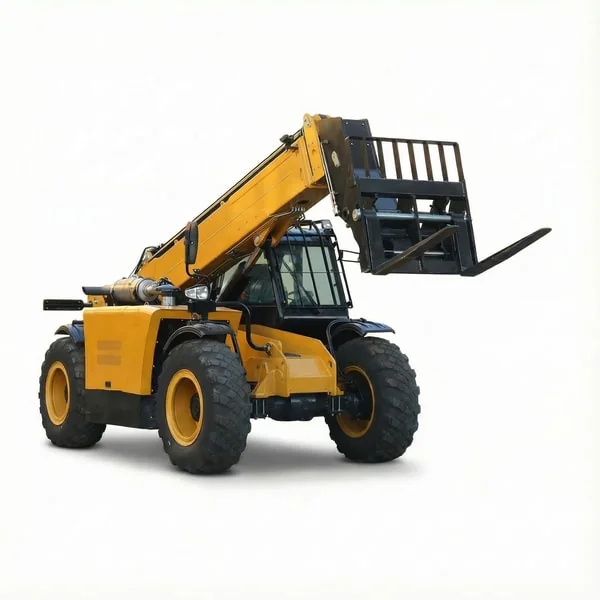
T3507
3.5 t Telehandler
Compact 7 m telehandler for construction and industrial handling, offering a practical balance between size and lifting capacity.
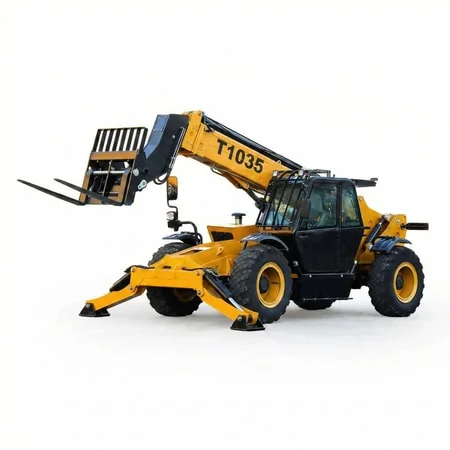
T1035
3.5 t Telehandler
Versatile 10 m telehandler designed for construction sites, warehouses, and general material handling applications.
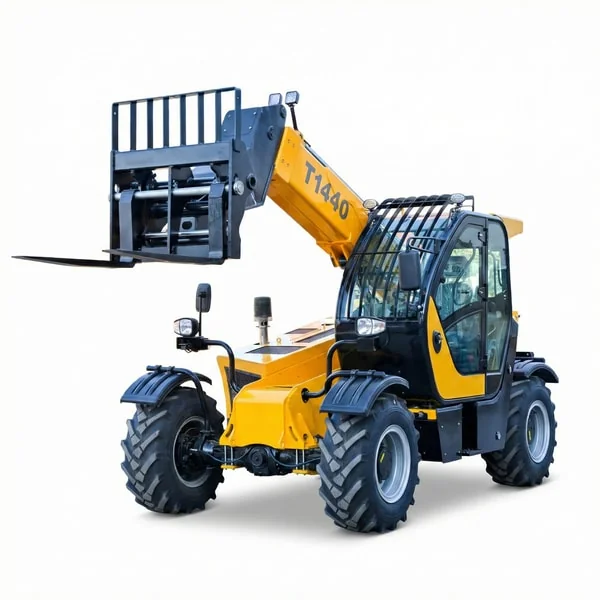
T1440
4.0 t Telehandler
Heavy-duty 14 m telehandler providing increased reach and lifting performance for demanding construction and industrial use.
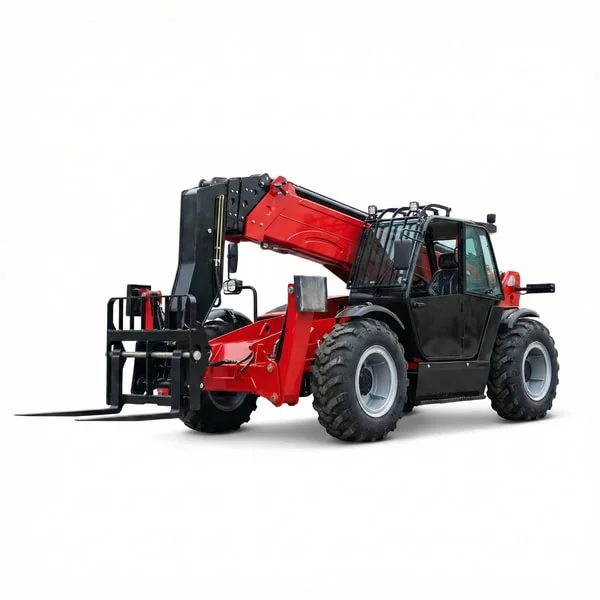
T1850
5.0 t Telehandler
High-reach 18 m telehandler built for large construction projects and rental fleets requiring maximum lifting capacity.

TH1840
4.0 t Telehandler · EPA Compliant
17.5 m telehandler designed for North American market with EPA-compliant powertrain for construction and rental applications.
Not sure which model fits your job site?
Tell us your lift height, load weight, and working conditions — we'll recommend the right match. No obligation, just clarity.
Why Many Buyers Upgrade from Forklift to Telehandler
When job conditions change, equipment limitations become visible very quickly.
Height and Reach Are No Longer Optional
Once materials need to be placed at height or over obstacles, forklifts quickly reach their limits. Telehandlers are designed for vertical lifting and forward reach from the start.
Real Job Sites Are Uneven and Unpredictable
Forklifts perform best on flat, controlled surfaces. Telehandlers remain stable and productive on rough, muddy, or sloped ground.
One Machine Instead of Several
Using forklifts together with cranes or loaders increases coordination and downtime. Telehandlers often combine these tasks into a single machine.
Avoid Replacing Equipment Too Early
Many buyers choose forklifts based on today's needs. As projects grow, they are forced to upgrade sooner than expected.
Safety Becomes a Decision Factor
Operating forklifts outside their intended conditions increases risk. Telehandlers are engineered for outdoor work, height, and load stability.
Facing Similar Challenges?
We've helped buyers in your situation find the right machine. Let's talk.
Height and Reach Are No Longer Optional
Once materials need to be placed at height or over obstacles, forklifts quickly reach their limits. Telehandlers are designed for vertical lifting and forward reach from the start.
Real Job Sites Are Uneven and Unpredictable
Forklifts perform best on flat, controlled surfaces. Telehandlers remain stable and productive on rough, muddy, or sloped ground.
One Machine Instead of Several
Using forklifts together with cranes or loaders increases coordination and downtime. Telehandlers often combine these tasks into a single machine.
Avoid Replacing Equipment Too Early
Many buyers choose forklifts based on today's needs. As projects grow, they are forced to upgrade sooner than expected.
Safety Becomes a Decision Factor
Operating forklifts outside their intended conditions increases risk. Telehandlers are engineered for outdoor work, height, and load stability.
Facing Similar Challenges?
We've helped buyers in your situation find the right machine.
Want to Go Deeper?
Whether you're still weighing your options, leaning toward a telehandler, or ready to plan your purchase — these guides cover what to look for, how importing works, and what to expect long-term.
- Still comparing? The Buying Guide walks through key decision factors
- Leaning toward telehandler? See how importing and shipping actually works
- Planning long-term? Check wear parts and maintenance expectations
Buyer Resource Library
Reference materials for your decision
Telehandler Buying Guide
Step-by-step evaluation reference
Latest Import Guide
Documentation & customs process
Wear Parts & Consumables
Maintenance planning reference
Container Loading Cases
Real shipping examples
Shipping Time Reference
Production & transit timelines
Talk With a Real Person

Hi, I'm Sally.
Sales Manager at Telescro
You can reach out if you'd like help with:
- Confirming whether a telehandler actually fits your job site conditions
- Helping you decide between models if you're leaning toward telehandler
- Clarifying specs that matter most for your specific application
- Answering questions that came up while reading this guide
- Discussing next steps — no pressure to commit
There's no pressure to place an order. You can simply share your situation and questions, and we'll take it from there.
Send a Message
Share your questions or requirements — I'll respond within 24 hours.