










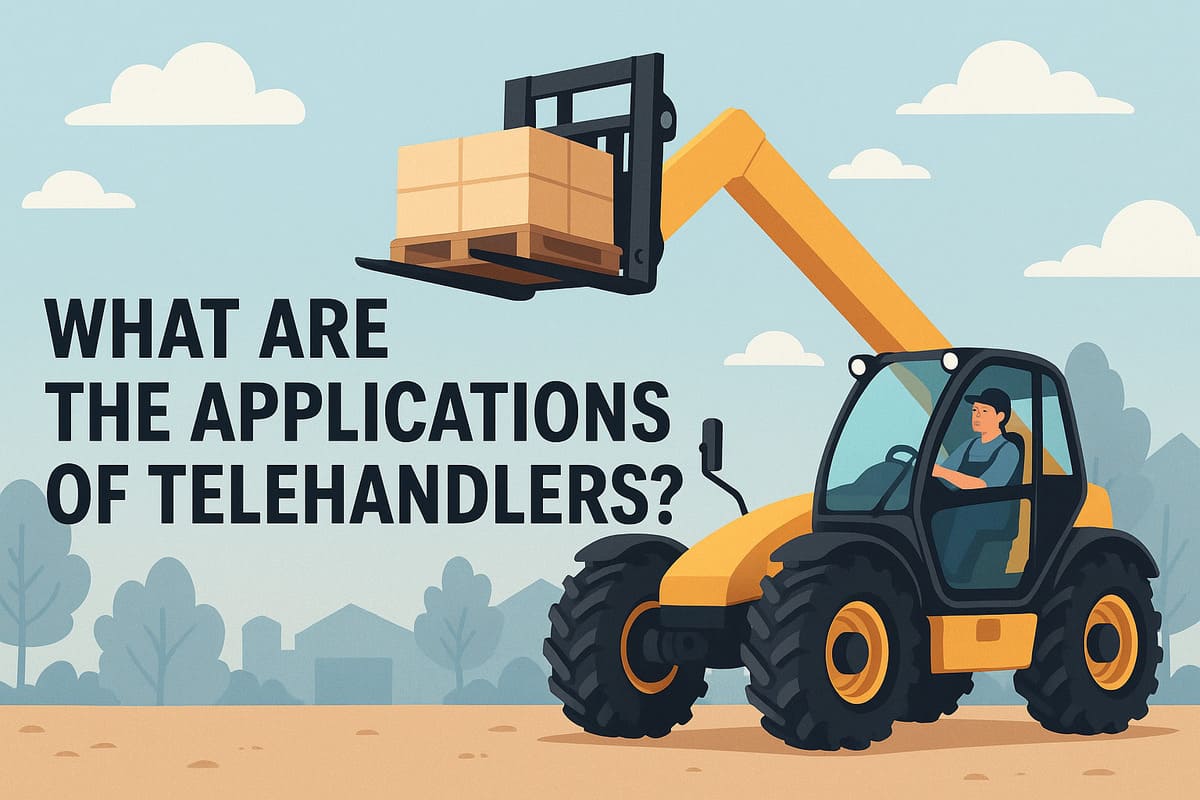
Many people see a telehandler for the first time and wonder: is it a forklift, or a crane? The confusion often leads to missed opportunities in real work.
A telehandler combines the lifting power of a forklift with the reach of a crane. Its versatility makes it essential across construction, agriculture, industry, and many specialized applications.
When I first worked with this machine, what surprised me most was how many jobs it could handle with just a change of attachment. In this article, I will walk you through its core and extended applications so you can see why many call it the “multi-tool” of material handling.
Key Takeaway: Where Can a Telehandler Be Used?
To help you quickly understand the wide scope of telehandler applications, here is a structured summary that brings together the main and extended use cases:
| Application Field | Typical Tasks | Value Delivered |
|---|---|---|
| Material Handling | Pallet transfer, truck unloading, warehouse stacking | Faster logistics and safer handling |
| Construction | Lifting bricks, steel, prefabricated panels, roof frames | Efficient building support and time savings |
| Agriculture | Hay bale stacking, feed transport, fertilizer handling | Versatility for farm operations |
| High-Reach Maintenance | Roof repair, glass cleaning, utility installation | Safe access to elevated areas |
| Site Cleaning | Debris removal, waste transport, recycling | Quick project closure and site readiness |
| Landscaping | Soil transport, stone placement, tree transplanting | Precision work for gardens and parks |
| Mining & Quarry | Ore handling, equipment movement | Reliable performance in rough terrains |
| Earthmoving | Backfilling, ground leveling, trench work | Backup support for small-scale excavation |
| Forestry | Log stacking, branch cutting, timber handling | Safer wood processing and storage |
| Snow Operations | Road clearing, construction site access | Year-round usability in winter climates |
| Light Lifting/Hoisting | Beams, light structures, small equipment | Cost-effective crane alternative |
| Event Setup | Stage installation, lighting, sound system lifting | Flexible support for temporary projects |
This overview shows why many call the telehandler a “multi-tool” for heavy equipment. With one base machine and the right attachment, you can adapt to dozens of different tasks across industries, reducing costs and maximizing efficiency.
What Are the Core Applications of a Telehandler?
Many people hesitate before investing in a telehandler because they are not sure if one machine can truly cover different types of work. That uncertainty often leads to wasted budgets.
The core applications of a telehandler include material handling, construction, agriculture, high-reach maintenance, and site cleaning, making it a versatile machine across multiple industries.

1. Material Handling and Loading
When I first saw a telehandler1 in a warehouse yard, what impressed me most was how easily it lifted pallets to upper racks. Traditional forklifts could not reach that height, and cranes were too expensive for routine tasks. The telescopic boom solved both problems. By extending forward and upward, it allowed safe stacking of bricks, steel beams, or heavy pallets exactly where they were needed. This precision reduces damage to goods and saves space in storage areas. On top of that, the ability to unload directly from trucks without extra equipment simplifies logistics and cuts handling time.
2. Construction Work
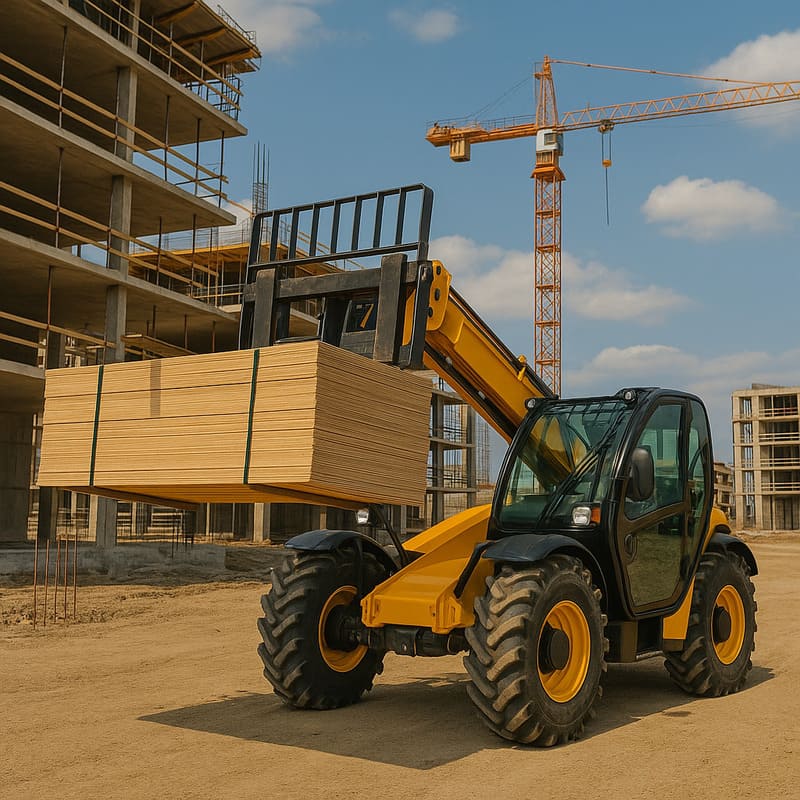
Construction sites are always busy with constant movement of materials. I have watched telehandlers carry roofing panels, prefabricated frames, and heavy blocks across uneven terrain without slowing down. What makes them valuable is their combination of strength and reach. Instead of setting up a crane for every lift, operators can move materials to higher floors in minutes. This reduces project delays and lowers equipment rental costs. For small or medium-sized projects, this flexibility can mean the difference between staying on schedule or falling behind.
3. Agriculture
On farms, tasks are never the same from day to day. One morning you may be stacking hay bales, and in the afternoon moving fertilizer. I have seen farmers rely on telehandlers because they work well in muddy, uneven fields where other machines get stuck. Their rough-terrain tires2 and strong lifting power make handling feed, machinery, or harvested crops far easier. More importantly, by switching attachments, the same machine can transport bales in the morning and load grain in the afternoon. That versatility saves both time and fuel compared to using separate tractors and loaders.
4. High-Level Maintenance and Access
I once observed a team using a telehandler3 with a safety basket to replace broken glass panels on a tall building. Instead of renting specialized lifts, they used the telehandler they already had on site. This adaptability is powerful. Whether maintaining roofs, repairing utility poles, or installing lighting systems, the long reach of the boom ensures workers can access hard-to-reach spots safely. Combined with modern safety attachments, it reduces risks associated with ladders or scaffolding while improving speed of repair.
5. Site Cleaning and Maintenance
At the close of a project, cleaning up is just as important as construction itself. I have seen telehandlers fitted with buckets and grabs remove piles of debris in a fraction of the time manual crews would take. Waste, scrap, and leftover materials can be cleared quickly, preparing the site for inspection or the next phase. Instead of hiring additional loaders or specialized equipment, one machine can handle demolition waste one day and recycling collection the next. That ability to adapt makes project closure faster and more efficient.
Structured Overview of Core Applications
| Application Field | Typical Tasks | Key Attachments Used |
|---|---|---|
| Material Handling | Pallet stacking, truck unloading, precise placement | Forks, pallet handlers |
| Construction | Material lifting, roof frame installation, prefabrication support | Buckets, jibs, platforms |
| Agriculture | Hay bale stacking, feed transport, farm tools handling | Bale clamps, buckets, forks |
| High-Level Maintenance | Worker lifting, façade repairs, utility access | Safety basket, jib, platform |
| Site Cleaning | Waste removal, debris handling, recycling prep | Buckets, grabs |
Why Consider Using Telehandlers?
From what I have seen, the biggest strength of a telehandler is not just raw lifting power but its adaptability4. You can unload a truck in the morning, lift workers for repairs at noon, and clear debris by evening. For you, that means fewer machines to buy, less downtime, and better use of resources. This combination of versatility and efficiency5 is why telehandlers have become a core machine in construction, agriculture, and industrial sites worldwide.
What Are the Extended Applications of a Telehandler?
Some people think a telehandler is only for construction or agriculture. I thought the same at first. But after seeing it in more industries, I realized its scope goes far beyond the basics.
Telehandlers extend their usefulness to landscaping, mining, earthmoving, forestry, snow removal, light lifting, and even event setups, proving their adaptability in both mainstream and niche markets.
6. Landscaping and Groundwork
I once watched a landscaping crew use a telehandler to move soil, gravel, and decorative stones. The precision of the boom allowed them to place materials exactly where needed without damaging the surroundings. For tree transplanting or positioning heavy garden structures, this machine saves significant time and manual labor.
7. Mining and Quarry Operations
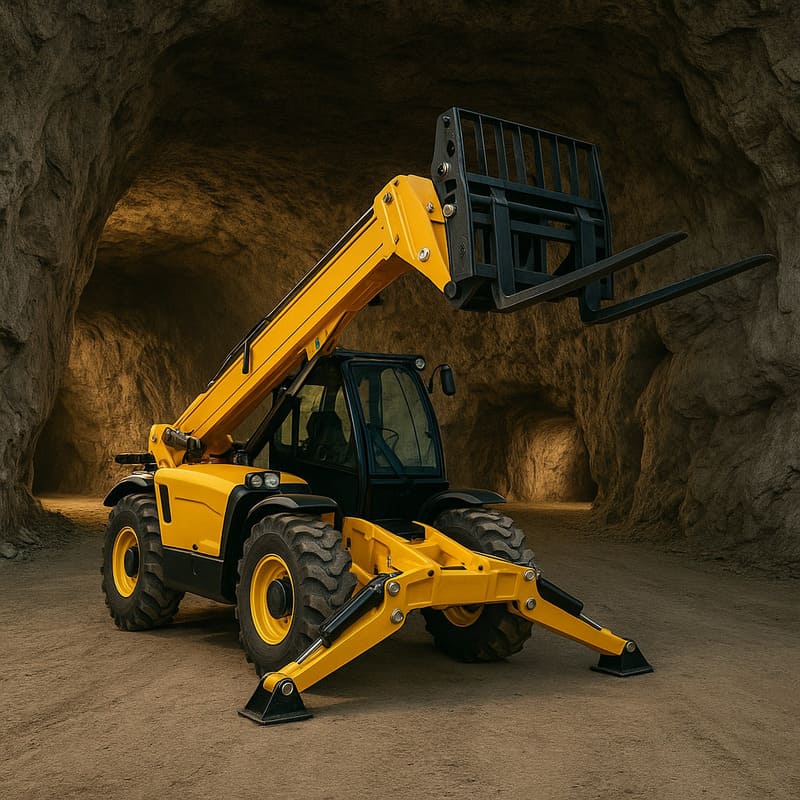
In mining areas, conditions are rough and unpredictable. Telehandlers equipped with heavy-duty tires and reinforced attachments can transport ore, support drilling equipment, or move spare parts across uneven ground. I have seen them play an essential role in keeping operations running without needing multiple specialized machines.
8. Earthmoving Support
With a bucket attachment, a telehandler6 works like a loader. Operators use it for backfilling trenches, leveling ground, or moving loose soil. While it cannot replace a dedicated excavator, the ability to perform light earthmoving tasks makes it a valuable backup. On small projects, this often eliminates the need for an additional loader.
9. Forestry and Tree Care
Forestry is another area where versatility counts. A telehandler fitted with grabs or forks can lift cut logs, stack timber, or assist in pruning tall branches. I once saw it used in a forest clearing project where its reach helped workers cut and lower dangerous high branches safely.
10. Snow Removal
In colder regions, a telehandler7 becomes a snow-clearing tool8. By attaching a snow blade or blower, operators clear roads, driveways, or construction sites efficiently. What impressed me most was seeing the same machine that stacked hay in summer handle snow in winter—a true year-round asset.
11. Light Lifting and Hoisting
By using a jib or winch, a telehandler can take on light crane duties. This is especially useful on sites where setting up a full crane is impractical. I once observed it lifting beams during a small warehouse project. The job was completed without bringing in extra lifting equipment.
12. Events and Large Installations
A less obvious but fascinating use is in event management. Telehandlers assist in setting up stages, installing lighting rigs, or lifting sound equipment. Their ability to handle bulky items and place them at height makes them ideal for temporary projects where speed and flexibility are critical.
Overview of Extended Applications
| Application Field | Typical Tasks | Key Attachments Used |
|---|---|---|
| Landscaping | Soil, gravel, tree transplant, stone setting | Buckets, forks, grabs |
| Mining & Quarry | Ore handling, parts transport, equipment move | Heavy-duty forks, buckets |
| Earthmoving | Backfilling, leveling, soil transport | Buckets |
| Forestry | Log stacking, pruning, timber handling | Grabs, forks, clamps |
| Snow Operations | Road clearing, site access | Snow blade, snow blower |
| Lifting/Hoisting | Light crane work, material hoisting | Jib, winch |
| Event Setup | Stage, lighting, sound equipment | Forks, platforms, jib |
For me, these extended applications show why a telehandler is often called a “Swiss army knife” of equipment. You are not locked into one function. By changing attachments, the same machine adapts to seasonal needs, new projects, or unexpected site demands. This flexibility not only reduces the need for multiple machines but also maximizes your return on investment.
4 Key Advantages of Telehandlers
When I first started looking deeper into telehandlers, I noticed one important trend: companies did not just buy them for lifting. They invested because these machines solved multiple problems at once.
The key advantages of telehandlers include multifunctionality, maneuverability, quick attachment changes, and higher safety and efficiency, delivering strong value for companies across different industries.
Multifunctionality That Reduces Costs
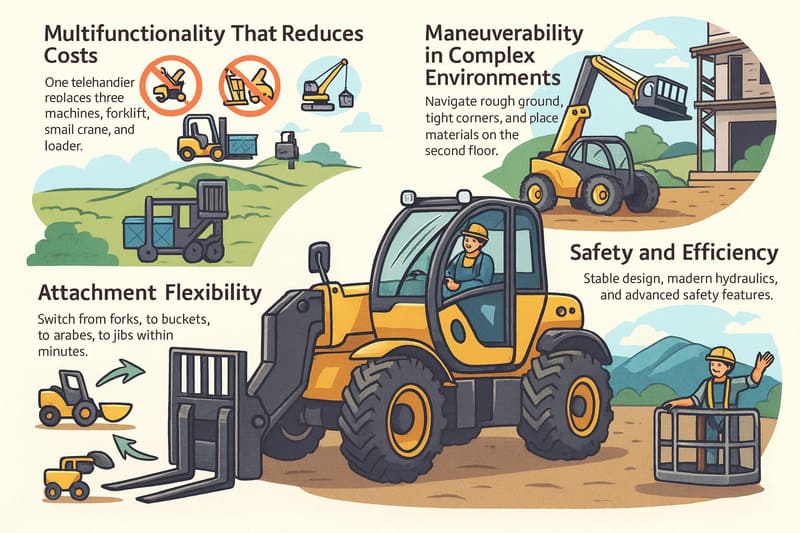
I have seen projects where a single telehandler replaced three separate machines—a forklift, a small crane, and a loader. The ability to handle different tasks with one unit lowers purchase costs, reduces maintenance expenses, and saves storage space. For you, that means a lower total cost of ownership9 without compromising on capability.
Maneuverability in Complex Environments
Construction sites and farms often have rough ground, tight corners, and limited access. Telehandlers are designed to handle these conditions. I once watched a machine navigate through a narrow site alley, extend its boom, and place materials on the second floor without any issues. That agility makes work faster and reduces the need for multiple repositioning steps.
Attachment Flexibility
The real power of a telehandler lies in its quick attachment system10. Switching from forks to buckets, from grabs to jibs, takes only minutes. I remember observing one operator who unloaded pallets in the morning, then changed to a work platform in the afternoon to help workers repair overhead structures. This adaptability makes the machine useful across industries without long downtimes.
Safety and Efficiency
Safety is always a concern when lifting heavy or awkward loads. With telehandlers, operators benefit from stable designs, modern hydraulic systems, and advanced safety features. I have seen how improved visibility cabins, load monitoring, and safety baskets reduce risks for both materials and workers. When work is safer, it is also more efficient because there are fewer interruptions.
Structured View of Advantages
| Advantage | How It Works | Value Delivered |
|---|---|---|
| Multifunctionality | Performs tasks of forklift, crane, loader | Reduces equipment costs |
| Maneuverability | Works in rough terrain and tight spaces | Faster and more flexible operations |
| Attachment Flexibility | Quick-change system for tools and accessories | Adapts to different industries |
| Safety & Efficiency | Modern control, load monitoring, safety gear | Reduces risk, improves productivity |
Why These Advantages Matter
From what I have seen, the value of telehandlers goes beyond single applications. Their strength lies in combining different roles into one machine that is adaptable and reliable. For businesses, this means fewer machines to manage, better resource use, and the confidence that one investment can serve multiple industries. Once you add in safety improvements11 and reduced costs, the decision to adopt telehandlers becomes much easier to justify.
What Is the Future of Telehandler Applications?
When I talk with industry peers, one question always comes up: where are telehandlers heading next? Many already see them as essential, but new demands are shaping how these machines evolve.
The future of telehandler applications points toward more specialized attachments, smarter operation systems, and greener power solutions, expanding their role as multipurpose equipment across industries.
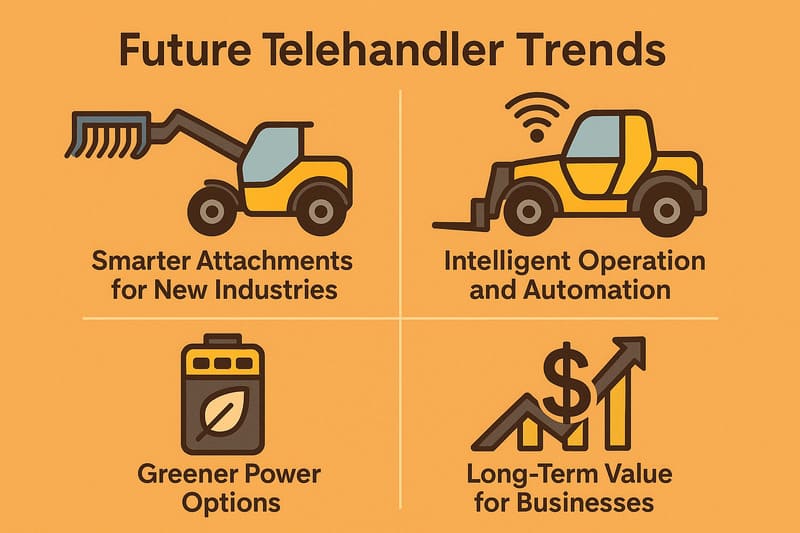
Smarter Attachments for New Industries
I have noticed how customers increasingly ask for attachments tailored to very specific needs. It is not just about forks or buckets anymore. For example, agriculture requires bale handling tools, while utilities need lifting platforms with enhanced safety systems. In the future, I expect to see attachments designed for recycling plants, renewable energy projects, and even urban construction where space is limited. This trend means one telehandler could adapt to entirely new industries without redesigning the core machine.
Intelligent Operation and Automation
Another trend I find exciting is the rise of telematics and semi-automation. Modern telehandlers already feature load monitoring and precision controls, but we are moving toward smarter machines. Imagine operators receiving real-time performance data on a tablet or remote monitoring systems that predict maintenance needs before breakdowns occur. These technologies not only improve safety but also cut downtime, which is critical for any business relying on equipment to meet deadlines.
Greener Power Options
Sustainability is a growing factor in equipment decisions. I have seen interest rise in electric and hybrid models12 designed to reduce emissions and fuel costs. On construction sites in urban areas, where noise and pollution are restricted, electric telehandlers could become the standard. Over time, this shift will help companies meet environmental regulations while still enjoying the performance telehandlers are known for.
Long-Term Value for Businesses
Looking ahead, I believe telehandlers will not only remain versatile but also become more specialized, more intelligent, and more eco-friendly. For you, that translates to machines that adapt to changing project needs, meet safety and environmental standards, and deliver long-term value. The role of telehandlers as “all-in-one job site tools” will only grow stronger as these innovations take hold.
Key Takeaways on the Future
| Trend | What It Brings | Value for You |
|---|---|---|
| Smarter Attachments | Industry-specific tools | Wider range of applications |
| Intelligent Operation | Telematics, automation, predictive data | Safer and more reliable performance |
| Greener Power Solutions | Electric and hybrid engines | Lower emissions, reduced fuel costs |
From traditional construction and agriculture to future-ready applications, telehandlers continue to evolve as one of the most practical machines in heavy equipment. Their adaptability, combined with upcoming trends in technology and sustainability, ensures they will remain central to how industries handle material movement and site operations.
Summary
From what I have seen, the telehandler has grown far beyond its early image as a “forklift with a boom.” Today, it supports industries ranging from construction and agriculture to landscaping, forestry, and even event setups. Its real strength lies in versatility: one machine that adapts with attachments, navigates difficult terrain, and delivers safe, efficient performance. Looking to the future, smarter tools, automation, and greener engines will only extend its value. For any business that wants flexibility and long-term reliability, the telehandler has proven to be an essential investment.
-
Explore this link to understand how telehandlers enhance efficiency and versatility in various industries. ↩
-
Discover the advantages of rough-terrain tires for telehandlers, especially in challenging agricultural environments. ↩
-
Explore this link to understand how telehandlers enhance efficiency and safety in construction projects. ↩
-
Understanding telehandler adaptability can help you maximize efficiency and versatility on your job site. ↩
-
Exploring this topic will reveal how telehandlers can save you time and resources in various applications. ↩
-
Explore this link to understand the versatility of telehandlers in various applications, enhancing your knowledge of landscaping and construction. ↩
-
Explore this link to understand the versatility of telehandlers and their applications across different sectors. ↩
-
Discover the efficiency of snow-clearing tools and their importance in maintaining safety during winter months. ↩
-
Understanding the total cost of ownership helps you make informed decisions about equipment investments and long-term savings. ↩
-
Exploring the quick attachment system can reveal how telehandlers enhance productivity and versatility on job sites. ↩
-
Discover insights on how telehandlers contribute to safer work environments, reducing accidents and enhancing productivity. ↩
-
Discover the advantages of electric and hybrid models, including sustainability and cost savings, which are crucial for modern construction practices. ↩