










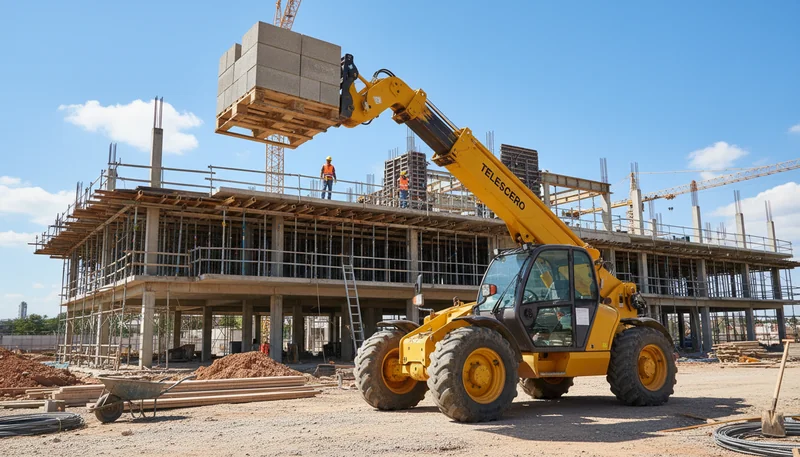
Telehandler EXW vs FOB: Field Guide to Choosing Without Costly Mistakes
A few months ago, a buyer in Brazil was shocked when his “bargain” telehandler ended up costing nearly 15% more than planned. Why? He picked EXW, not realizing just how far his responsibility stretched beyond the factory gates—right into logistics headaches and unexpected fees.
Choosing between EXW (Ex Works) and FOB (Free On Board) terms when sourcing telehandlers from China fundamentally alters the point at which cost and risk transfer from seller to buyer. EXW places the bulk of logistical and risk responsibilities on the buyer as soon as the equipment is ready at the factory, including inland transportation, export customs, and port handling. FOB covers these China-side steps, shifting risk and cost to the buyer only once the telehandler
Where Do EXW and FOB Risks Start?
In telehandler shipping, EXW (Ex Works) means the buyer assumes cost and risk once the telehandler is made available at the seller’s facility, covering loading, inland transport, and export procedures. FOB (Free On Board) transfers cost and risk to the buyer only after the telehandler is loaded onto the vessel at the named port.

Last month, a customer in Dubai called after discovering serious damage to his 4-ton telehandler during transport from the factory to port. He’d chosen EXW, thinking it saved money. But the hidden catch? Once the unit left our factory gate in Suzhou, every risk—including damage during truck loading or even a customs delay—was his responsibility. I’ve seen this trip up buyers from Kenya to Brazil. With EXW, the moment your machine is ready at the factory, that’s the handover. Loading onto the first truck, inland hauling to Shanghai port, queueing for export clearance—all of it falls on you.
FOB works differently. The seller manages inland trucking, customs, and crucially, crane loading onto the vessel. Your cost and risk only begin when the telehandler is safely on deck, secure for its ocean journey. Last year, a contractor in Kazakhstan chose FOB for their high-reach 18-meter unit (valued at over $120,000). Their team avoided a four-day customs holdup that could have cost thousands in demurrage because the seller handled export clearance directly. That shift makes a real difference, especially when moving heavy equipment—these telehandlers can weigh 12 tons or more.
To be honest, I always suggest buyers clarify exactly where risk passes hands, especially with equipment valued over $50,000. The point of transfer affects insurance, claims, and even customs paperwork. Getting it wrong can mean you’re left with repair bills or lost delivery time—sometimes both. For peace of mind, I suggest reviewing your contract’s terms line-by-line before settling on EXW or FOB.
Under EXW terms, the buyer assumes all risks including loading damage, customs delays, and inland transportation costs right after the telehandler leaves the factory gateTrue
EXW (Ex Works) places maximum responsibility on the buyer, meaning once the equipment is available at the seller’s premises, the buyer bears all risks and costs associated with loading, transport, and export procedures, which can lead to unforeseen expenses or damage during these stages.
FOB terms transfer risk to the buyer only after the telehandler successfully passes customs clearance at the destination portFalse
FOB (Free On Board) risk actually transfers to the buyer once the equipment is loaded onto the vessel at the shipping port, not after customs clearance at the destination. The seller handles export clearance and inland transport to the port, minimizing buyer risk during initial stages.
Key takeaway: Understanding where cost and risk transfer in EXW and FOB contracts is crucial for telehandler buyers. This distinction directly impacts liability for damage, delays, and insurance needs from factory to vessel, helping avoid potentially costly mistakes in international equipment procurement.
How Do EXW and FOB Affect Telehandler Costs?
EXW (Ex Works) typically lists only the base telehandler price, excluding origin logistics such as factory-to-port transport, export paperwork, and local fees. These extra costs can add 10–15% or more per unit. FOB (Free On Board) bundles all origin logistics into one price, leveraging seller-negotiated rates for potentially lower overall landed cost.

Let me share something important about EXW and FOB pricing, especially for telehandler buyers outside China. On paper, EXW always looks cheapest. But it’s only the cost to pick up the telehandler at the factory gate—nothing else. I’ve had buyers in Brazil and Nigeria call me after realizing their “bargain” 3-ton, 13-meter unit ended up costing far more than their original quote. Why? They forgot to factor in $800–$1,500 just for inland trucking, export paperwork, Chinese customs declaration, and local agent handling near Shanghai or Tianjin ports. One customer in Kazakhstan received an invoice from a local agent for storage and customs delays—it added an extra 12% to their landed cost, just because of missed paperwork timing.
FOB works differently. The seller sorts out all the local logistics—trucking from the factory to port, export taxes, documentation, and port handling. You get one bundled price, and typically it’s lower than if you try arranging each service yourself as a one-off. Most Chinese suppliers move dozens of heavy machines per month, so they get bulk rates from hauliers and forwarders. I’ve seen this save $300–$500 per telehandler, especially on larger 4-ton or high-reach 18-meter models.
If you compare only the EXW price1 tag, you might think you’re saving money. But I suggest always asking for a full cost breakdown. It’s common for the “hidden” China-side costs to add 10–15% or more. FOB gives you a clearer picture—fewer surprises and usually less hassle.
FOB pricing typically includes inland trucking to the port, export customs clearance, and loading costs, which can add $800–$1,500 to the telehandler’s price compared to EXWTrue
FOB (Free on Board) pricing bundles additional logistics and export costs up to the port of shipment, shielding buyers from having to arrange and pay separately for inland transport and export procedures in China, unlike EXW pricing which only covers factory pickup. This can significantly affect the total landed cost.
Choosing EXW pricing always results in a lower overall cost for telehandler buyers because it is the base factory price without any extra feesFalse
EXW only covers the machine pickup at factory, requiring buyers to manage and pay separately for inland trucking, export clearance, customs, and loading, which can cumulatively exceed the initial savings compared to FOB pricing, making EXW often more expensive in total landed cost for international buyers.
Key takeaway: EXW quotes may appear cheaper for telehandlers but often omit significant China-side logistics and administrative fees. FOB pricing, which incorporates local transport and export paperwork, provides a clearer estimate of the true landed cost, often saving buyers unexpected expenses and costly miscalculations.
Which Incoterm Matches My Telehandler Experience?
EXW suits experienced buyers with in-house logistics teams or trusted China freight agents who handle equipment pick-up, export procedures, and consolidation. FOB is safer for first-time importers, as the seller manages export clearance and local transport. Selecting the right Incoterm depends on logistics expertise and local network strength.

Here’s what matters most when picking between EXW and FOB: your team’s real logistics skills and the partnerships you have on the ground in China. I’ve seen buyers in Kazakhstan with excellent freight agents manage EXW shipments smoothly—even for bulky 4-ton telehandlers over 7 meters long. Their local partner handled truck pick-up, export paperwork, and port loading in under three days. But I also know a client in Brazil who tried EXW for their first order. They didn’t have a reliable agent, lost days sorting customs documents, and nearly missed vessel cut-off. That’s why the right choice isn’t about price alone.
Let’s break down what you handle with each option:
| Incoterm | Who Handles Export Steps | Buyer Logistics Needed | Best For |
|---|---|---|---|
| EXW | Buyer (with agent) | High | Experienced importers with trusted local support, multi-supplier consolidation |
| FOB | Seller | Moderate | First-time buyers, limited China contacts, busy project teams |
If your company runs a sourcing office in Shanghai or already brings in other heavy machines, EXW gives you real control over shipping schedule, carrier choice, and shipment bundling—crucial if you consolidate loads from several suppliers. But for many contractors new to importing, especially with oversized equipment, FOB is safer. On a recent project in Kenya, a client saved at least two full working days because the seller arranged export clearance and local trucking—no delays with unfamiliar port procedures.
Choosing EXW terms requires the buyer’s team to manage all export customs clearance and inland transport from the factory, which can add 3 to 5 days to delivery times if their agents aren't experiencedTrue
Under EXW (Ex Works), the buyer is responsible for all logistics starting from the seller’s factory including export clearance. Without skilled local agents, delays in handling export paperwork and arranging transport, especially for large telehandlers over 7 meters, are common and impact delivery schedules.
FOB terms always result in lower overall shipping costs for telehandlers compared to EXW because the seller negotiates better port handling fees in ChinaFalse
While FOB (Free on Board) places responsibility on the seller for export clearance and loading, it does not guarantee lower shipping costs. Buyers with strong logistics networks can often secure cheaper inland transport and export handling under EXW, making FOB potentially more expensive depending on the local agent’s efficiency and freight rates.
Key takeaway: Choose EXW if logistics know-how and reliable local partners are in place to oversee complex inland transport and export steps. For new importers or those lacking such resources, FOB significantly reduces risk by delegating these challenging processes to the seller.
How do EXW and FOB affect customs duties?
EXW requires buyers to manage Chinese export documentation, licenses, and customs duties, increasing paperwork complexity and risk. Under FOB, sellers handle all export formalities and documentation, reducing buyer workload and origin-port issues. Import customs duties remain buyer’s responsibility under both terms. Buyers should obtain a detailed written allocation of all export and import obligations.

Most people don’t realize that the way you choose between EXW and FOB goes far beyond who pays for trucking to the port—it directly shapes your paperwork, risk, and timing. I’ve helped buyers in Brazil and South Africa who chose EXW for “cost savings” and ended up stuck managing Chinese export documentation from thousands of kilometers away. For example, one customer ordered a 3.5-ton telehandler with 12-meter reach, expecting a routine pickup in Shanghai. Instead, the shipping agent needed an export license, correct HS code, and original machinery certificates—none supplied by the manufacturer under EXW. The cargo sat at port for almost a week, with daily storage fees adding up fast. Eventually, they paid a local logistics team to sort it out, but costs totaled nearly $1,800—wiping out any price advantage.
On the other hand, with FOB, the seller takes full responsibility for export clearance in China. That means they prepare the export licenses, complete customs declarations, and handle all origin-port charges before the machine is loaded on the vessel. I’ve seen this save buyers in Kenya and Kazakhstan a lot of stress, especially when special permits or machine inspections are involved. You still handle import customs duties in your own country, but you avoid 90% of the red tape on the China side.
Here’s my advice: Always ask for a written breakdown showing who covers export documents, port fees, licenses, and customs declarations. I suggest triple-checking these details before signing a contract. Relying on assumptions or a single Incoterm leaves too much to chance, and the administrative hold-ups aren’t worth the risk.
Under EXW terms, buyers must handle all export customs documentation, which can delay international shipments by an average of 7-14 days if they lack local expertiseTrue
EXW places full responsibility for export procedures on the buyer, who often needs to navigate complex Chinese export paperwork. Without local agents or knowledge, this can significantly delay shipping and increase risk.
Using FOB terms means the seller is responsible for arranging inland trucking from the factory to the buyer’s warehouseFalse
FOB only obligates the seller to deliver goods on board the vessel at the named port of shipment; responsibility for inland freight beyond loading onto the ship remains with the buyer unless otherwise agreed.
Key takeaway: Choosing EXW shifts complex export documentation and customs risks to the buyer, while FOB assigns origin-side formalities to the seller, simplifying the process. Always secure written clarification of who handles licenses, declarations, and port fees, as assumptions often lead to costly misunderstandings.
What Are Telehandler Insurance Risks for EXW vs?
EXW requires the buyer to bear risk and arrange insurance from the factory gate, covering loading, inland transport, and any delays or losses en route. FOB shifts risk to the buyer only once the telehandler is loaded on board the vessel; however, verifying the seller’s inland insurance coverage and documentation is essential to avoid unexpected liability.

The biggest mistake I see is buyers overlooking where insurance risk truly shifts in international shipments. Many assume once a telehandler leaves the factory—say, in Jiangsu Province—the worst is over. That’s not the case, especially under EXW (Ex Works) terms. With EXW, the moment your machine rolls past the factory gate, every risk is yours. I’ve seen a 3.5-ton high-reach unit get a cracked boom just from rough forklift handling during loading. It cost the buyer in the Philippines nearly $5,000 in unexpected repairs—insurance only helped because he arranged coverage from pickup. If you go with EXW, don’t just insure ocean transport. Cover the whole inland leg, including loading, and expect delays or potential storage charges if customs paperwork gets held up. FOB (Free On Board) is different. Here, the seller shoulders risk and insurance until the telehandler sits firmly on the vessel at the port—often Shanghai or Ningbo. Only when the boom and chassis are secured aboard ship does risk shift. For shipments to Kenya, I’ve seen delays at the port cause confusion about who pays for damages from a crane dropping a unit one meter. The contract said FOB, but the seller’s insurance coverage had a sky-high deductible and only paid half the amount.
Under EXW terms, the buyer assumes full insurance risk the moment the telehandler leaves the factory gate, including damages during internal handling like forklift loadingTrue
EXW shifts all responsibility and risk to the buyer immediately upon the goods exiting the supplier's premises, so any damage occurring during loading or transport from that point is the buyer's liability.
Choosing FOB over EXW completely eliminates the buyer's insurance risk until the telehandler is delivered to their siteFalse
FOB only transfers risk to the buyer once the telehandler is loaded onto the vessel; however, there are still risks during inland transport to the port and unloading at destination, which can expose the buyer to insurance responsibilities depending on contract specifics.
Key takeaway: Choosing EXW means carrying full risk from factory gate, including loading and inland transport, while FOB limits risk to when the machine is loaded onto the vessel. Always verify the seller’s insurance coverage and require proper documentation to prevent disputes or unexpected costs during the transfer process.
How to Compare EXW vs FOB Telehandler Quotes?
To accurately compare EXW and FOB telehandler quotes, first obtain an EXW price to determine true equipment cost excluding local logistics. Request the corresponding FOB quote2 for the same model and port. The percentage difference reveals the seller’s markup for inland freight, export clearance, and port fees. Evaluate if the markup is competitive or excessive versus independent logistics offers.

Most buyers jump straight to the FOB quote and never break down the real numbers. But if you want a transparent comparison, you have to look at EXW and FOB side by side. A contractor in Kenya contacted me last year—he’d received an EXW price for a 4-ton telehandler with 13-meter reach at $28,000, and an FOB Mombasa quote for the same machine at $30,500. That difference, $2,500, covered everything from factory to vessel: inland trucking, export customs, and port handling. Was it a good deal? We dug deeper.
I always recommend using a table like the one below to make the differences clear:
| Term | Price Quoted | What’s Included | Logistics Covered | Risks for Buyer |
|---|---|---|---|---|
| EXW | $28,000 | Equipment only | None | All |
| FOB | $30,500 | Equipment + Inland logistics, export clearance, port fees | Up to loading on vessel | Freight after port |
In this case, we checked three local forwarders in Kenya. Their combined inland and port handling offers ranged from $1,600 to $2,400. That means the seller’s $2,500 markup was slightly high. Sometimes, sellers leverage relationships with port agents or drivers and actually save buyers money versus slow outside logistics—but not always. I suggest you compare at least three independent quotes for every shipment. That’s how you catch hidden charges before you commit. For a fair deal, keep logistics and equipment quotes separate, and always run the numbers side by side.
When comparing EXW and FOB telehandler quotes, a $2,500 increase from EXW to FOB often reflects comprehensive inland trucking, export customs clearance, and port handling costs rather than just shipping chargesTrue
FOB pricing includes all costs up to loading the telehandler onto the vessel, covering inland transport to port, export documentation, and handling fees, which collectively can increase the cost significantly compared to EXW that only covers the factory pickup price.
FOB quotes for telehandlers always exclude inland trucking costs, which must be negotiated separately regardless of the port locationFalse
FOB pricing specifically includes inland transportation to the port of shipment as well as export customs and port handling; inland trucking costs are generally bundled in FOB terms and are not separate charges.
Key takeaway: Separate equipment and logistics costs when evaluating EXW versus FOB quotes for telehandlers. Calculate the seller’s markup on FOB pricing and compare with independent freight options. Verifying at least three freight quotes ensures a transparent landed cost and prevents hidden cost shifts often overlooked when selecting EXW terms.
When Is EXW or FOB Better for Telehandlers?
Choosing EXW or FOB for telehandler shipments depends on both buyer and supplier locations relative to major seaports and their respective logistics networks. EXW often benefits buyers near seaports with strong carrier relationships, while FOB leverages the supplier’s local trucking contracts and terminal expertise, especially when manufacturers are port-proximate.

The biggest mistake I see is buyers choosing EXW just because it’s the default on a quote, without thinking about their own logistics strengths. Take a project I worked on in Kazakhstan last year. The buyer’s warehouse sat only 15 kilometers from their main seaport, and they had a local forwarder who handled hundreds of construction machines every month. With EXW terms, they arranged their own pickup, combined shipping with two other units, and shaved at least $900 off the inland logistics bill for each 4-ton, 17-meter telehandler. That much flexibility and savings isn’t always possible if the supplier’s factory is several hundred kilometers inland, though.
To be honest, FOB really comes into its own when the supplier’s plant is near a major port—think Shanghai or Tianjin. I’ve seen Chinese manufacturers move heavy equipment to port for less than $300 a unit because they’ve got long-term deals with local truckers and terminal teams. In contrast, some buyers who tried to arrange pick-up on their own got hit with delays and extra handling fees because they didn’t know the right contacts or the local process. For bulkier models (over 8 tons or over 8 meters in length), the savings from a supplier-managed inland move can make a real difference.
So here’s what I suggest: map out which side has the better local logistics network. If your team can handle the port and local customs like a pro, EXW is usually in your favor. If not, let the supplier manage up to FOB—their network often gets it done faster and cheaper.
Choosing EXW can save significant inland transport costs if the buyer’s logistics network is highly efficient and located close to the shipping port, as coordination and consolidation can reduce expenses by over $800 per unitTrue
EXW places responsibility for inland transport on the buyer, allowing those with local logistics strengths and proximity to ports to optimize shipping schedules and consolidate loads, thus achieving cost savings that FOB terms won’t offer.
FOB always results in lower total shipping costs for telehandlers compared to EXW, regardless of the buyer’s local logistics capabilitiesFalse
FOB includes seller responsibility up to the vessel loading point, which can increase costs if the buyer’s local logistics are strong and close to the port. In such cases, EXW can be cheaper by leveraging efficient local handling and consolidation strategies.
Key takeaway: Select EXW if the buyer has a robust local logistics network near the seaport; choose FOB when the supplier’s operational base is close to the port and can secure better inland rates. Always align the Incoterm with the party offering the greatest local freight advantage.
How Does Supplier Reliability Affect EXW vs FOB?
Supplier reliability plays a critical role in deciding between EXW and FOB trade terms for telehandlers. Trustworthy manufacturers or traders with proven export experience can manage FOB seamlessly, minimizing origin risks. When dealing with untested suppliers, EXW allows buyers to control logistics, inspection, and loading—protecting heavy equipment from damage with direct contractor oversight.

I’ve worked with customers who made costly mistakes by trusting untested suppliers with FOB shipments3. In one case, a team in Kazakhstan ordered a 3.5-ton telehandler with 13-meter reach. The trader claimed years of experience but fumbled export paperwork and failed to supervise proper loading. The machine arrived with boom cylinder damage and a cracked mirror. Their loss? At least $1,800 for urgent repairs and two weeks of downtime. To be honest, supplier reliability impacts much more than just peace of mind—it affects who takes charge at every stage. When I deal with a factory that ships telehandlers every month, especially larger models over 7 tons, I’m confident doing FOB.
These suppliers know how to block and brace equipment using heavy-duty wood and steel bands. They handle port congestion, manage customs clearances, and get the bills of lading right the first time. I’ve seen shipments leave Shanghai on schedule and arrive in Kenya without a hitch. But with a new supplier, I suggest using EXW. That lets you (or your forwarder) inspect the equipment, confirm serial numbers, and supervise lashing to avoid frame twist or hydraulic leaks. Some buyers bring their own lifting contractor, costing $200 to $350 extra—cheap compared to damage risk on a $40,000 machine.
Here’s a quick comparison:
| Factor | Reliable Supplier (FOB) | Untested Supplier (EXW) |
|---|---|---|
| Origin Risk | Supplier minimizes risk | Buyer controls loading |
| Inspection | Factory handles | Buyer/agent oversees |
| Export Paperwork | Usually complete | Often missing or incomplete |
Choosing FOB terms typically requires thorough verification of the supplier’s export handling capabilities to avoid damage during loading, as liability shifts once goods are on board the shipTrue
Under FOB (Free On Board), the seller is responsible for goods until they are loaded onto the vessel, making their export handling competence critical to prevent damage prior to shipment and reduce unexpected repair costs. Supplier reliability thus directly impacts equipment condition on arrival.
With EXW terms, the supplier is responsible for all export documentation and transportation risks until the telehandler reaches the buyer's siteFalse
EXW (Ex Works) terms place minimal responsibility on the seller; the buyer handles export clearance, transportation, and associated risks from the supplier’s premises onward, meaning the buyer must manage and coordinate export logistics to avoid delays or damage.
Key takeaway: The experience and dependability of a telehandler supplier should influence the choice between EXW and FOB shipping terms. Proven exporters streamline FOB shipments, but with unfamiliar suppliers, EXW offers greater control over logistics, loading, and inspection—lowering the risk of costly transport-related damage.
How Do Export Duties Differ EXW vs FOB?
Under EXW, the buyer is responsible for all export duties, taxes, and customs fees in China, whereas with FOB, the seller manages export clearance and pays related costs. Export duty rates, VAT rebates, and incentives may affect the total cost, especially for telehandlers classified under varying HS codes.

To be honest, a lot of buyers get tripped up by the differences between EXW and FOB when it comes to export duties—and it’s not just about who picks up the machine at the factory gate. I had a customer from Kazakhstan last year who wanted to save on costs by shipping EXW, thinking it was simpler. But when his forwarder hit him with extra export processing fees, VAT payments, and customs prep charges in China, his “cheaper” route ended up costing more than the bundled FOB offer.
Let’s make it clear with a simple comparison:
| Term | Who Pays Export Duties? | Who Handles Export Clearance? | Access to VAT Rebate/Incentives? | Impact on Buyer Cost |
|---|---|---|---|---|
| EXW | Buyer | Buyer (or their agent) | Usually NO | Higher, less transparent |
| FOB | Seller | Seller | Usually YES | Often lower, more predictable |
For telehandlers—especially 3-ton or 4-ton models with 14–18 meter reach—the HS code classification in China makes a huge difference.
Some codes allow VAT rebates up to 13%. If your seller ships FOB, they’re handling export clearance, accessing any VAT refunds, and often passing some savings along. When you go EXW, you might pay every fee in full, miss out on export incentives, and have little leverage on the cost. I always suggest getting your customs broker to clarify the exact HS code and confirm if any rebates or export incentives apply for your machinery.
Under EXW terms, the buyer is responsible not only for freight costs but also for all export clearance procedures, including export duties and VAT, which can significantly increase the total cost compared to FOBTrue
EXW places the entire export responsibility on the buyer, who must handle export documentation, duties, and taxes at the seller’s country before shipment, often resulting in unexpected fees and administrative burdens that are typically bundled into FOB pricing.
FOB shipping terms mean the seller must pay all export duties and VAT, regardless of the buyer's location or the final destination of the telehandlerFalse
While FOB requires the seller to clear the goods for export and load them onto the vessel, the buyer generally assumes responsibility for all costs and risks from the point of loading, including subsequent VAT payments and import duties in the destination country, making the seller not liable for all such taxes.
Key takeaway: Choosing EXW or FOB directly affects who pays Chinese export duties and eligibility for incentives. FOB terms often allow sellers to leverage VAT refunds or rebates, potentially lowering overall costs for telehandler buyers. Consulting suppliers and brokers ensures clarity on cost responsibilities and savings opportunities.
When is EXW better for telehandler routing?
EXW terms provide greater flexibility for routing and shipment consolidation, especially when sourcing telehandlers and related equipment from multiple suppliers. Freight forwarders can collect from several factories, consolidate at a warehouse, and select optimal ports or schedules, reducing cost and transit time. FOB restricts pre-carriage options to suppliers’ preferences at the named port.

A lot of buyers only look at initial shipping quotes, but they don’t realize how much control EXW terms actually give you over your delivery schedule and costs. For example, last year I worked with a project manager in Brazil who ordered four 4-ton telehandlers—plus several hydraulic attachments—from different Chinese suppliers. Instead of letting each factory handle shipment under FOB, he arranged EXW so his freight agent collected all units, consolidated them in a Shenzhen warehouse, and booked space on a direct sailing from Yantian port. The result? He avoided split deliveries, saved at least two weeks on total transit time, and cut freight costs by about 8%.
From my experience, EXW works best when you’re sourcing multiple machines or parts across factories. Your forwarder can optimize truck routes so nothing sits waiting at the port. If one supplier delays a day or two finishing the load, it’s far easier to adjust schedules in the warehouse than chase paperwork at a congested terminal. That flexibility really helped a customer in Kenya last year who was importing three high-reach (18-meter) telehandlers in early rainy season. Warehouse consolidation let them choose the only available guaranteed-sailing vessel—crucial with project deadlines piling up.
Technically, the pre-carriage leg is where most surprises happen: missed cutoffs, weight miscalculations, or even wrong hydraulic oil draining before customs. When you control the pick-up, those issues are fixable before the goods leave the factory gate. I suggest discussing with your agent whether EXW-based routing could save you that “second-year surprise” of hidden demurrage charges and schedule slippage.
EXW shipping terms can reduce overall telehandler delivery costs by up to 10% when coordinating multiple shipments through a single freight forwarder for consolidationTrue
By using EXW, buyers can control pickup timing and choose cost-effective consolidation points, reducing redundancy in shipping fees and improving negotiation leverage with freight agents, which can lower total delivery expenses significantly.
FOB terms always ensure faster delivery of telehandlers compared to EXW because the supplier handles all logisticsFalse
While FOB means the supplier manages shipment to the port, it does not guarantee faster delivery. EXW allows buyers to optimize routing and scheduling through their own freight agents, which can often result in quicker, more flexible delivery times tailored to project needs.
Key takeaway: For buyers managing multiple telehandler shipments or combining equipment from different vendors, EXW terms enable coordinated pickups, consolidation, and optimal route selection, helping reduce logistics costs and minimize schedule risks compared to FOB, where suppliers control initial transport to the port.
Conclusion
We’ve walked through the key differences between EXW and FOB when buying a telehandler, looking at how costs and risks shift hands. From what I’ve seen across different countries, the most successful buyers take time to understand exactly where their responsibilities start and end—it’s not just about the listed price, but who covers insurance, transport, and any surprises along the way. If you only focus on upfront cost, you might end up playing "parts roulette" later when something needs fixing far from the factory. If you want a detailed breakdown or have questions on what fits your project, feel free to reach out—I’m always happy to share real jobsite examples. Every situation is unique, so the right choice depends on your actual workflow.
References
-
Detailed explanation of EXW pricing, highlighting cost exclusions and how it affects telehandler purchase decisions and logistics planning. ↩
-
In-depth guide on understanding FOB quotes, including included logistics costs and how to compare with local freight offers for better deals. ↩
-
Understand common pitfalls in FOB shipping for telehandlers, including export paperwork errors and loading supervision issues from untested suppliers. ↩