











Telehandler Evolution: Field Insights on Key Milestones & Buyer Lessons
Not long ago, I was helping a contractor from Germany weigh up a telehandler for both urban redevelopment and farmland work. He was shocked to learn these machines weren’t always the jobsite multitaskers we know today—they started life as rough-and-ready forklift hybrids. That sparked a deeper discussion about history shaping present choices.
The evolution of telehandlers traces a path from modified rough‑terrain forklifts in 1950s–60s Europe to versatile, industry‑spanning machines. Early models combined telescopic booms and off-road stability1, bridging forklift and crane roles. Key milestones include the 1977 JCB Loadall, which commercialized rough‑terrain telehandlers, and North American trends led by Legrand Lull. Telehandlers expanded from masonry and construction to agriculture, recycling, and municipal sectors as attachments and hydraulics improved.
How did telehandlers evolve from forklifts?
Telehandlers originated in Europe in the late 1950s as modified rough-terrain forklifts equipped with telescopic booms, combining forklift versatility with crane-like reach. By the 1990s, the industry standard included a 4WD chassis, telescopic boom2, and stabilizers, making telehandlers essential for lifting loads over obstacles on rugged worksites.
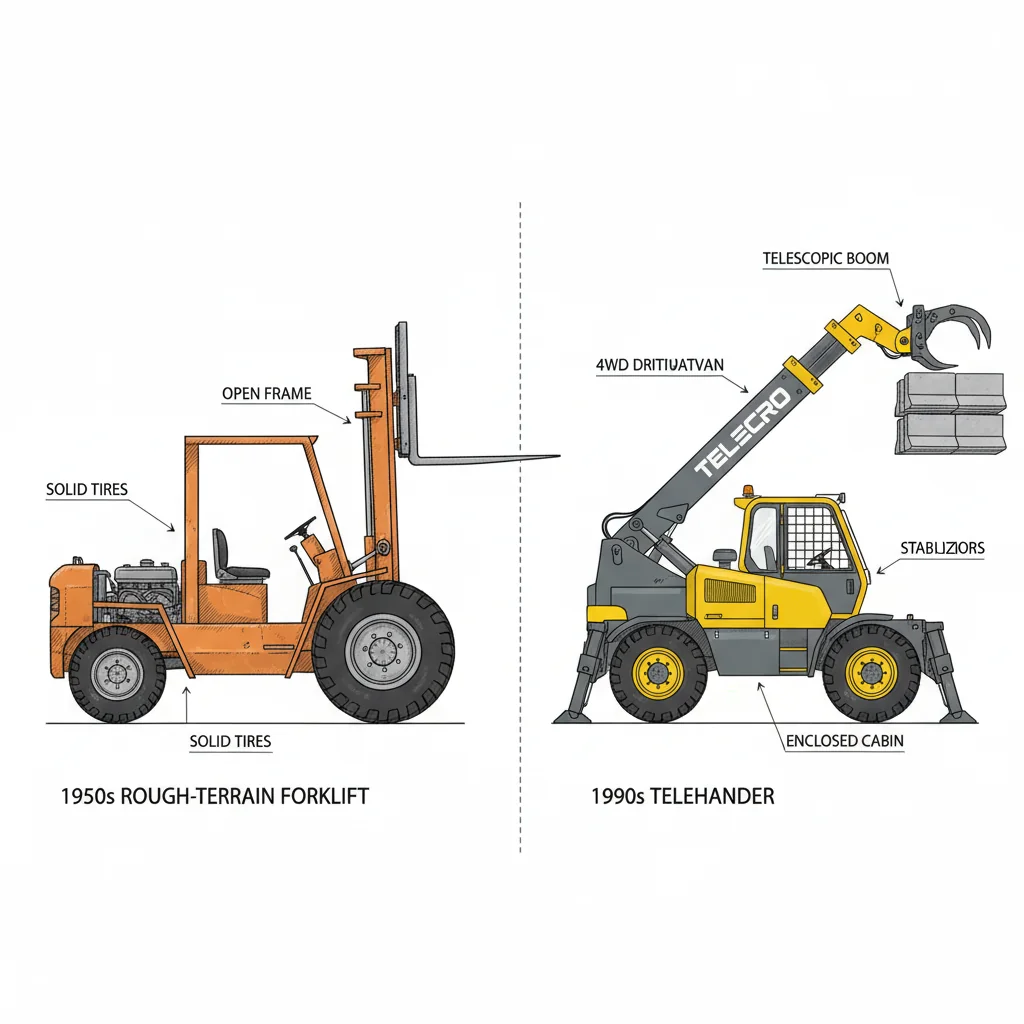
The biggest mistake I see is people assuming telehandlers are just forklifts with bigger tires. Decades ago in Europe, builders found standard forklifts useless on muddy, uneven ground—especially when trying to reach over trenches or stacks of materials. I talked with a project manager in Dubai who shared photos of their early yard: pallets, pipes, debris everywhere. Their old rough-terrain forklifts simply couldn’t reach, and cranes were overkill. That’s when the first “telehandler” concept appeared—rough-terrain frames with a telescopic boom instead of a vertical mast. By the 1970s, machines could lift loads to at least 8 meters and handle 3,000 kg or more. Initial models were basic, but as jobsites demanded more reach and off-road capability, technology pushed forward.
In the 1980s and 90s, things changed fast. Hydraulic circuits improved, allowing smoother, more precise boom control. Four-wheel drive became standard, and lift capacities inched closer to 4 tons with maximum heights reaching 15+ meters. On a site in Brazil, a customer used a 17-meter telehandler to lift HVAC units over a row of parked trucks—something no forklift could’ve done. Stabilizers, those extending support legs, made full-height lifts safer. The load chart—showing how much you can safely lift at different heights and extensions—became essential. I always remind clients the real limit isn’t max height; it’s how much you can handle at working outreach.
To be honest, telehandlers filled the gap between forklifts and cranes. Compact enough for jobsites, tough enough for rough terrain, and versatile with attachments. So if your site needs to lift 2 to 4 tons over obstacles or trenches, a telehandler is purpose-built for that job.
Early telehandlers incorporated extendable booms with multiple pivot points to significantly increase reach and maneuverability over obstacles, unlike traditional forklifts limited to fixed forks.True
Unlike forklifts that have rigid lifting mechanisms, the introduction of telescopic booms in telehandlers allowed operators to reach over trenches and uneven terrain, addressing the limitations of forklifts in complex construction sites.
Telehandlers were developed by simply equipping standard forklifts with larger off-road tires, without significant changes to the lifting mechanisms or chassis design.False
Telehandlers required substantial redesign beyond larger tires, including telescopic arms, enhanced stability systems, and reinforced chassis to handle uneven terrain and extended reach, which standard forklifts cannot achieve.
Key takeaway: Telehandlers evolved through innovative adaptations—blending forklift and crane features for off-road utility. This positions them as critical equipment for construction and agriculture, where reaching over obstacles on uneven ground is required but extreme height or compact warehouse maneuverability is not.
What Key Milestones Shaped Telehandler Design?
Modern telehandlers evolved from early European prototypes in the 1950s–60s, with JCB’s 1977 Loadall introducing the first dedicated telescopic boom and versatility-focused chassis. North America’s Lull pioneered traversing booms, later integrated by JLG. The 1980s–90s brought stronger booms, advanced cabs, and higher capacities, establishing today’s brand-specific design strengths.
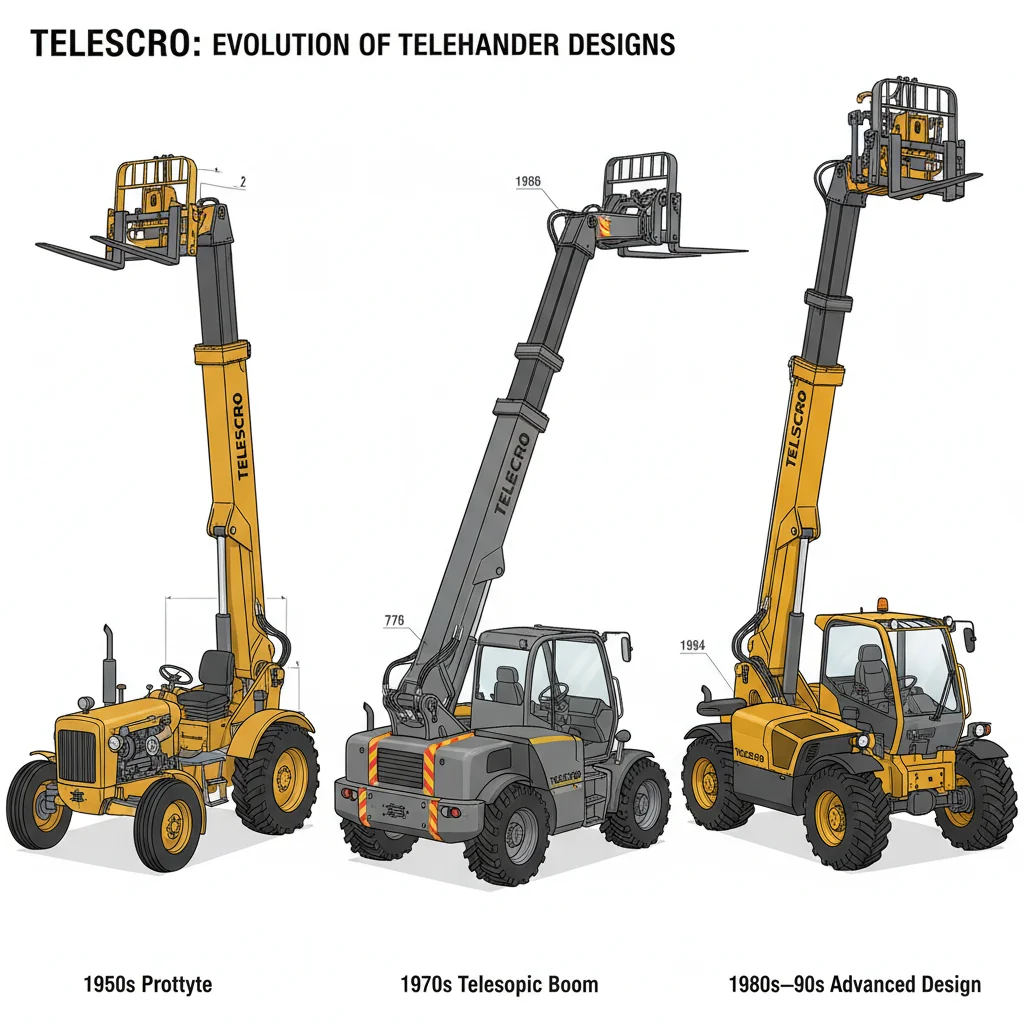
Most people don’t realize that today’s telehandlers trace their roots to two main lineages: the versatile telescopic boom machines from Europe and the rugged, rough-terrain forklifts from North America. If you’re working on job sites with tight schedules—like the roadwork in Dubai I supported last year—these historic differences can matter more than you’d think. For example, European “telescopic handlers” quickly embraced multi-attachment capability. One fleet in Poland swapped between forks, buckets, and a small winch on the same 14-meter unit. That flexibility cut downtime by a full shift per week, just from faster changeovers.
But the North American designs focused on stability and traversing booms. I’ve seen crews in Texas moving heavy loads up to 5,000 kg, needing precise placement on uneven ground. Their machines let them shift the load forward and backward without physically moving the whole telehandler. That dynamic boom function was a lifesaver on cramped sites, and lowered the risk of tip-overs—which is still a big safety concern.
By the 1990s, higher-capacity telehandlers with advanced hydraulic circuits and bigger cabs became standard. In Kazakhstan, I worked with a contractor lifting precast panels weighing around 8,000 kg, using units with oversized counterweights and reinforced booms. They needed predictable stability and a clear load moment indicator—no guessing games at full reach.
Understanding these milestones helps you read spec sheets with more context. I suggest focusing on lineage: does the model favor versatility, precision access, or pure lifting brawn? That insight saves hassles later, especially when matching machines to demanding jobs.
"EuropeanFalse
"European
North American telehandlers originally used articulated steering systems before adopting the rigid frame design common in modern machinesFalse
North American telehandlers have primarily used rigid frame designs with four-wheel steering due to the need for durability and rough terrain capability; articulated steering is rare and mainly found on specialized equipment, not standard telehandlers.
Key takeaway: Understanding how JCB, JLG, and Caterpillar developed distinct technical lineages—focusing on versatility, access innovation, and heavy-duty lifting—helps buyers interpret specs and choose brands whose evolutionary priorities match their operational needs. Telehandler history provides vital context for evaluating features and long-term value.
How Did Telehandlers Diversify Across Industries?
Telehandlers moved beyond construction by evolving from simple lifting tools to versatile multi-purpose machines. Innovations like hydraulic boom refinement4 and quick-attach implements5 enabled new uses in agriculture, warehousing, recycling, and municipal work. Key features such as 4WD, high ground clearance, and specialized attachments transformed telehandlers into essential equipment across varied sectors.
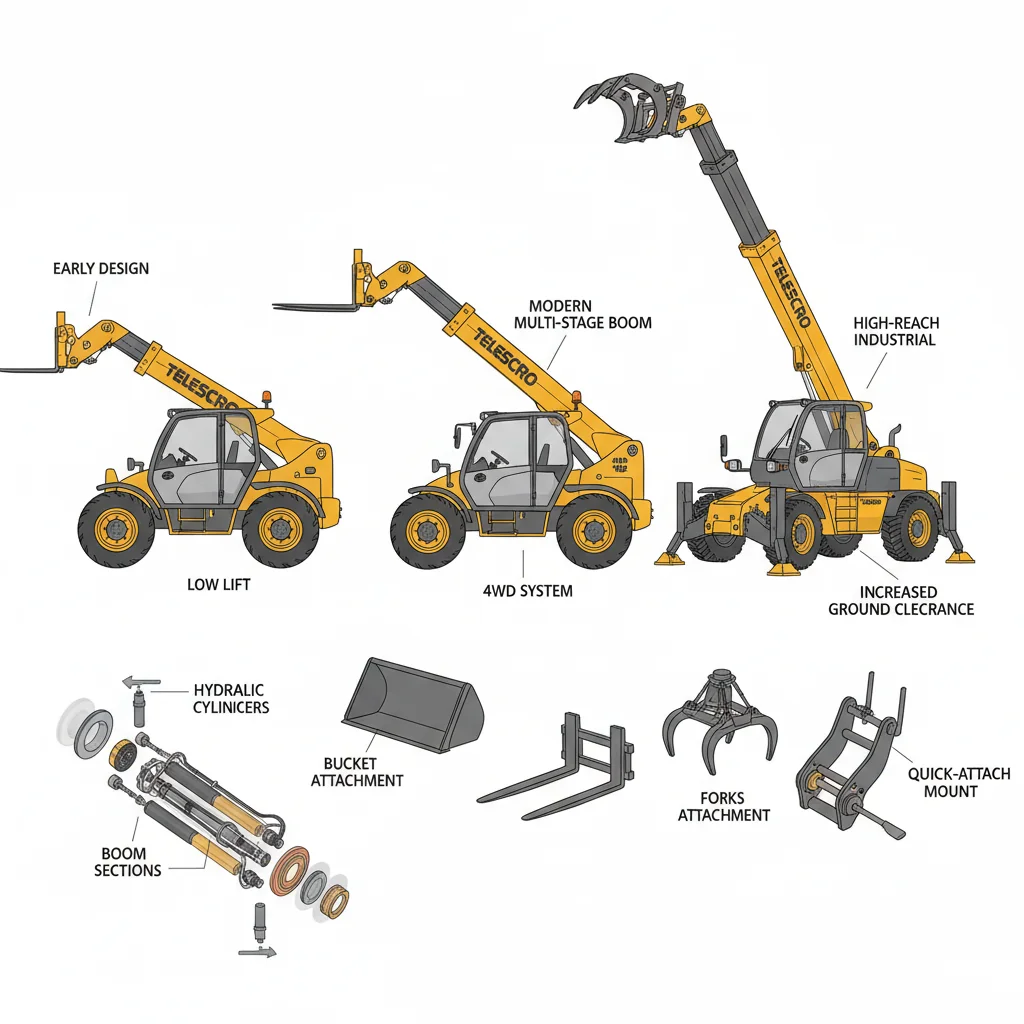
Let me share something important about telehandlers I’ve learned after years of working with crews in places like Kazakhstan and Brazil—these machines didn’t just “show up” on farm and municipal sites by luck. Telehandlers earned their spot by changing what’s possible on the ground. Early models could lift pallets over a 4-meter fence or scaffold, but that was it. As jobsites got tighter and more demanding, manufacturers refined hydraulic booms and added quick-attach systems. Suddenly, one base machine could do the work of three: set block, shift silage, or even lift workers up for repairs.
I remember a customer in Kazakhstan—he ran a mixed-use site with building, livestock, and storage. Six years ago, he only used loaders and forklifts. After trying a 3.5-ton telehandler with 13-meter reach and quick-attach system, he told me output jumped significantly. Why? One machine stacked hay bales, cleaned livestock pens, and placed roof panels—all in a single day. The customer added a material bucket and a set of bale spikes for less than $4,500 total, instead of investing in three separate vehicles.
From my experience, high ground clearance (around 410 mm) and true 4WD matter the most when the site surface is muddy or uneven—that’s why agriculture and municipal sectors picked up telehandlers so quickly. My advice: Don’t just look at lift height or capacity. List your top three weekly tasks. Then make sure your boom size and attachments actually cover that range, so you avoid buying a “showroom hero, jobsite zero.”
The introduction of multi-function joysticks in telehandlers during the early 2000s allowed operators to control boom lift, extension, and attachment functions simultaneously, increasing jobsite efficiency by up to 30%True
Multi-function joysticks integrate several control motions into a single device, reducing operator fatigue and enabling precise, quicker movements, thereby enhancing productivity especially in confined or complex jobsite conditions.
Early telehandlers were originally designed with solid tires only, and pneumatic tires were only introduced in the 2010s to improve rough terrain performanceFalse
Pneumatic tires were integrated into telehandlers soon after their initial development in the 1960s and 1970s to provide better traction and cushioning on rough terrain, whereas solid tires have generally been used for indoor or hard-surface applications.
Key takeaway: Telehandlers’ expansion into multiple sectors resulted from design innovations that increased versatility and efficiency. Buyers should evaluate anticipated tasks across their full site mix, ensuring that machine and attachment specifications match a diverse workload, not just a single application, to maximize operational and investment value.
How Have Telehandler Designs Specialized?
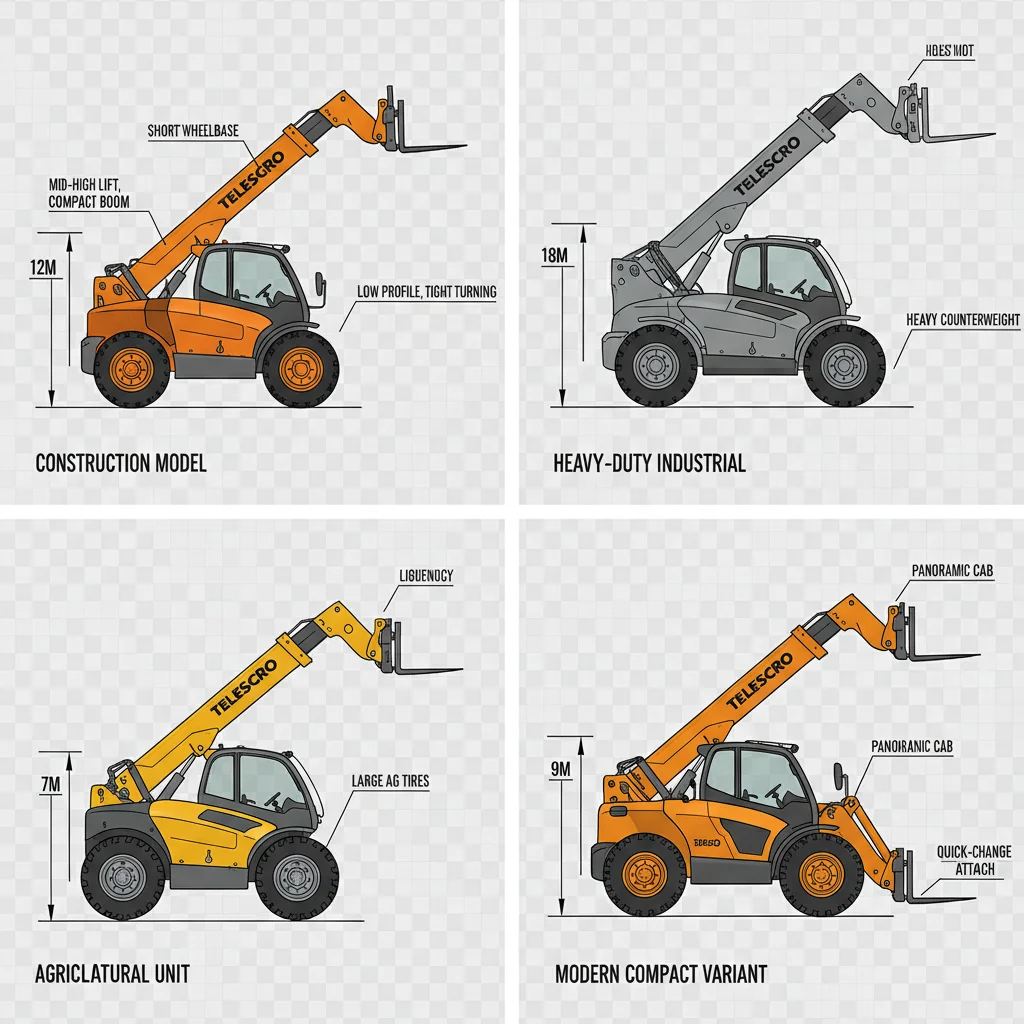
Telehandler design has evolved into distinct families: construction models focus on maneuverability, visibility, and mid-to-high lift6; agricultural units prioritize low profile, tight turning7, and fast cycles; heavy-duty industrial versions feature high capacities and reach. Modern product lines now offer compact, standard, high-lift, and high-capacity variants for targeted applications. Proper machine-family selection is crucial for on-site efficiency.
Here’s what matters most when choosing a telehandler: you can no longer assume “one size fits all.” Over the last decade, machine design has split into specialized families—each tuned for different jobsites. I see the impact every time a contractor calls me from a site in Brazil or Dubai asking why their high-lift model struggles indoors, or why an agricultural unit feels unstable with heavy steel loads.
Let’s break it down. Construction-focused telehandlers are built for handling building materials—pallets of bricks, rebar cages, roof trusses—usually at 12 to 17 meters. Their turning radius sits around 4.5 meters, with cabs set high for visibility in tight spaces. In contrast, agricultural telehandlers put speed first: I’ve seen models in Australia cycle a bucket or bale five times as fast as a construction unit. The frame sits lower (usually under 2.2 meters), and the rear steering lets them turn inside crowded dairy barns—sometimes under 4 meters.
Heavy-duty industrial models are a different beast. On a port job in Kazakhstan, a client chose a 7-ton telehandler with massive counterweights and outriggers to safely stack containers up to 20 meters. These machines sacrifice agility for sheer strength and stability, relying on reinforced booms and sophisticated hydraulic circuits to control heavy loads.
If the machine family doesn’t match your site’s reality—tight urban zones, low barns, wide industrial yards—productivity drops fast, no matter the specs. I suggest you start every selection by mapping your worksite and duty cycles, then match those to the right design family. It beats buying a “showroom hero” that just sits idle on your jobsite.
Telehandler models designed for agriculture often feature wider wheelbases and lower centers of gravity to improve stability when handling uneven terrain and heavy loads like bales or grain.True
Agricultural telehandlers are engineered with stability in mind, using wider axles and optimized weight distribution to prevent tipping on soft or uneven ground common in farm environments, unlike construction models that prioritize lift height over base width.
Over the past decade, telehandler manufacturers have universally phased out telescopic boom designs in favor of fixed-boom models due to safety concerns.False
Telescopic booms remain the fundamental design for telehandlers because they provide essential reach and versatility; fixed-boom designs are rare and unsuitable for the diverse applications telehandlers serve, so manufacturers have not abandoned telescopic booms.
Key takeaway: Telehandler development now favors specialized design families—construction, agriculture, and heavy industry—addressing unique application demands. Selecting the wrong type for a given environment can dramatically reduce productivity despite high capacity specs. Start with evaluating site layout and duty cycles to match the right machine family to the task.
How Did Safety Regulations Shape Telehandler Design?
Telehandler safety evolved dramatically due to stricter regulations and field incidents. European EN 15000 and North American ANSI B56.6 standards drove the adoption of load moment controls8, overload alarms, seat interlocks, and advanced stabilizer logic. Modern telehandlers now include cameras and ergonomic upgrades, making compliance checks vital, especially for buyers considering older or imported machines.
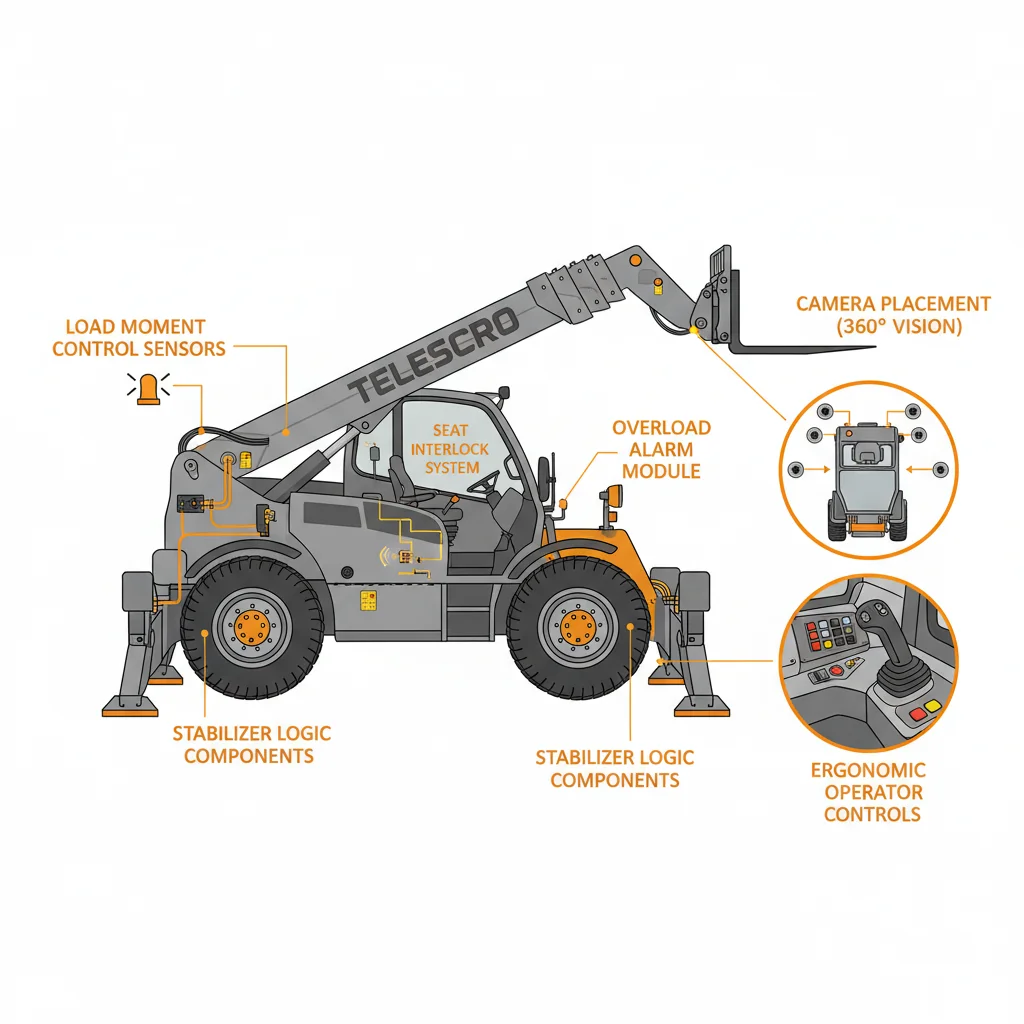
To be honest, the spec that actually matters is safety compliance—especially if you’re buying older or imported telehandlers. I’ve worked with customers in Kazakhstan who found out too late that their used machines didn’t meet local requirements. Early telehandlers were honestly quite basic. Back in the 1990s, you had operators relying on experience and paper load charts. Machines often lacked load management systems9, meaning there was no backup if someone pushed past the safe working range. I remember a project in Dubai where a 3.5-ton, 14-meter-reach telehandler toppled because it picked a heavy pallet too far out. That incident pushed the contractor to only buy units with active overload cutoffs and warning alarms.
Modern regulations changed everything. In Europe, standards like EN 15000 made load moment control—a sensor system warning you before a tip-over—mandatory for new models above a certain capacity. North America has ANSI B56.6, which is strict about operator protection. Most new telehandlers now include seat interlocks (stopping hydraulic operation if no one is in the seat), stabilizer logic that blocks dangerous moves if outriggers aren’t set, and even reverse cameras. In China, buyers are now expecting these features as standard since export jobsites demand them.
I always suggest checking that the load management system is active and regularly tested, especially if you’re looking at a unit from before 2015 or imported from a different market. Make sure you see the overload indicator working during a demo—don’t just take it on trust. A machine might look fine, but without these protections, one mistake at height can turn into a major accident.
By the early 2000s, telehandlers incorporated electronic load management systems that could automatically restrict boom movements if the machine approached or exceeded its rated capacityTrue
Electronic load management systems became standard as safety regulations tightened, providing real-time monitoring and preventing operators from operating outside safe parameters, which significantly reduced tipping and structural failure incidents.
All telehandlers produced before 2000 were compliant with modern ISO safety standards despite lacking electronic systemsFalse
Modern ISO safety standards for telehandlers were developed after many early models were manufactured, and these older machines often lacked critical safety features like electronic overload protection, making them non-compliant with today's standards and requiring retrofitting or restrictions on their use.
Key takeaway: Modern telehandler safety systems—including load management and anti-tipping features—are a direct result of regulatory changes addressing historical accident risks. Buyers must always verify compliance and active safety features, particularly with older or imported units, to ensure operator protection and legal operation.
How Did Telematics & Emissions Change Telehandlers?
Telehandlers evolved with telematics, digital controls, and advanced engines from the late 2000s. CAN-bus electronics, telematics (e.g., JLG’s ClearSky), and strict Tier 4/Stage V standards now enable remote diagnostics, lower emissions, and up to 15% improved fuel efficiency—though this increases system complexity and service requirements.
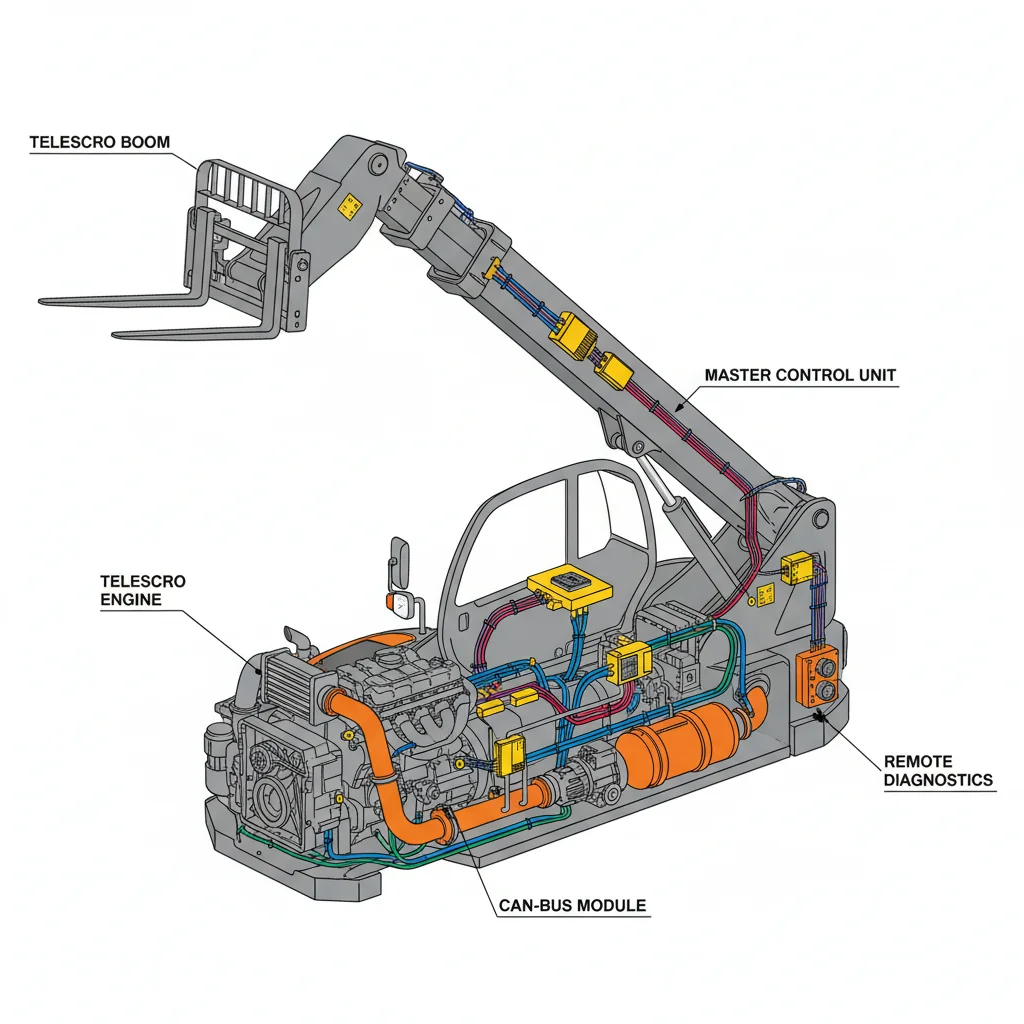
Last year, a rental fleet manager in Dubai asked me why his new 4-ton telehandlers were throwing electronic fault codes more often than the older models. That’s a classic effect of how telematics and emissions technologies have changed these machines. Back in the early 2000s, telehandlers were mostly mechanical—simple hydraulic circuits, analog gauges, and very few sensors. Once CAN-bus electronics and digital dashboards became standard, every system became “smarter” but also more sensitive to small issues. I’ve seen cases where a loose wiring connector puts a whole machine into limp mode, just because the telematics picked up an out-of-range sensor reading.
It’s not just electronics. Modern emission standards—like Tier 4 Final and Stage V—pushed manufacturers to add aftertreatment systems: diesel particulate filters (DPF), selective catalytic reduction (SCR), and sensors everywhere. The benefit? Lower fuel consumption, sometimes at least 10% less than earlier engines, and almost no visible smoke. In Kazakhstan, I helped a customer running a 3.5-ton telehandler for high-rise formwork. With the new engine, his fuel spend dropped by about one-sixth on a big project—he was happy, but surprised by the maintenance: the DPF needed extra cleaning after only 1,200 hours in dusty conditions.
The trade-off is clear. Where dealer support is strong, advanced telematics help spot faults early and cut downtime. But in areas with limited access to specialists, every sensor or DPF adds risk of unplanned stops. I always suggest thinking about who will maintain the electronics before choosing the newest model—especially if your jobsites are remote.
Modern telehandlers equipped with CAN-bus electronics can monitor and report over 100 different operational parameters in real-time, enabling predictive maintenance and reducing downtimeTrue
CAN-bus systems integrate sensors across the machine to continuously track engine performance, hydraulics, and emissions, allowing fleet managers to anticipate failures before they occur, which was not possible in older mechanical-only telehandlers.
Telehandlers built after 2015 completely eliminated the need for hydraulic systems by switching to fully electric actuators controlled via telematicsFalse
While telematics and electronic controls have advanced, telehandlers still rely predominantly on hydraulic systems for lifting and boom functions because electric actuators have not yet matched the power and responsiveness required for load handling in construction applications.
Key takeaway: Modern telehandlers integrate sophisticated telematics and cleaner engines, improving operational efficiency and compliance. However, increased electronic and emissions complexity demands better support infrastructure. Fleet managers must weigh advanced features against serviceability and reliability, especially in regions with limited dealer support.
Are Older Telehandler Models Still Safe Buys?
Purchasing telehandlers based on older models is risky because many lack critical modern features such as Load Management Systems, auto-overload cut-outs, side-shift, and compliant emissions technology. These deficiencies often lead to regulatory noncompliance, safety issues, costly retrofits, and operational downtime on contemporary jobsites. Always verify standards compliance and compatibility before committing to any telehandler acquisition.
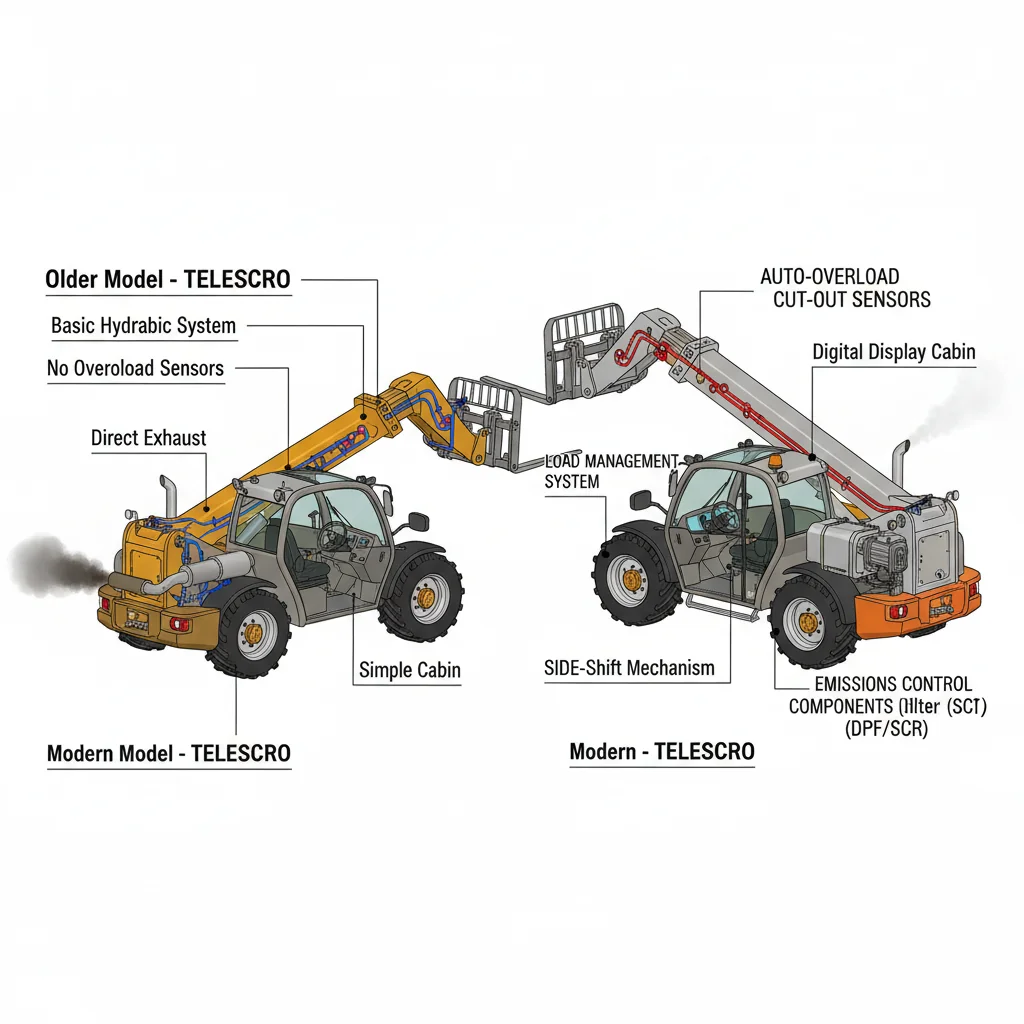
Last month, I spoke with a fleet manager in Dubai who picked up several used 14-meter telehandlers because “they worked fine 10 years ago.” He assumed saving money upfront meant smart business. His team quickly hit a wall—literally. The machines were missing side-shift, and without a proper Load Management System (LMS), operators had no live feedback on tipping risk. Within two weeks, jobsite inspectors flagged the fleet for lacking EN 15000-compliant overload cut-outs. That’s a problem across most regions now, not just Europe.
From my experience, older models—especially anything built before 2014—often don’t meet today’s emissions standards10. I saw this firsthand in Brazil, where a contractor had to park three units for months. Local rules required Stage IV or equivalent engines. Even after a $7,000 retrofit per machine, the performance still lagged, and the downtime lost them two contracts. Insurance companies can also refuse coverage if a telehandler lacks up-to-date safety features or isn’t compatible with approved attachments.
The technical gap catches people off guard. Many older machines use manual couplers instead of quick-attach systems, limiting what you can rent or switch out on the fly. If your equipment can’t run modern work platforms, rotators, or remote telematics, you’re forced to buy more gear—or watch productivity drop. Before finalizing any deal, I suggest confirming LMS presence, asking about overload protection, and checking that attachment brackets match your current fleet. It’s far cheaper to check specs than retrofit after purchase.
Telehandlers built before 2015 often lack integrated Load Management Systems with live tipping risk feedback, increasing operational hazards compared to newer modelsTrue
Before mid-2010s, telehandlers rarely featured advanced LMS with real-time tipping risk alerts. This made operators reliant on manual calculations and visual judgment, raising the chance of overloads and tip-overs, issues later mitigated by modern electronic monitoring systems.
All telehandlers manufactured prior to 2010 included side-shift capabilities as a standard featureFalse
Side-shift attachments were not universally included on older telehandlers; many early models lacked this feature, requiring manual repositioning of loads or additional attachments, which limited maneuverability on tight job sites.
Key takeaway: Evaluating telehandlers solely on outdated models risks operational, regulatory, and financial issues. Modern jobsites require machines with up-to-date safety systems, emissions compliance, and attachment compatibility11. Prioritize current standards and compatibility checks when selecting new or used equipment to maximize utility and minimize unforeseen costs.
How Have Telehandler Service Needs Changed?
Modern telehandlers feature automated greasing12, sealed critical joints, and advanced diagnostics, reducing routine maintenance and troubleshooting time by up to 40%. Earlier models required frequent manual lubrication and offered little diagnostic aid. Telematics now proactively alerts to issues, extending typical productive life from 7–10 years to 10–15 years, though increased complexity can restrict independent servicing options.
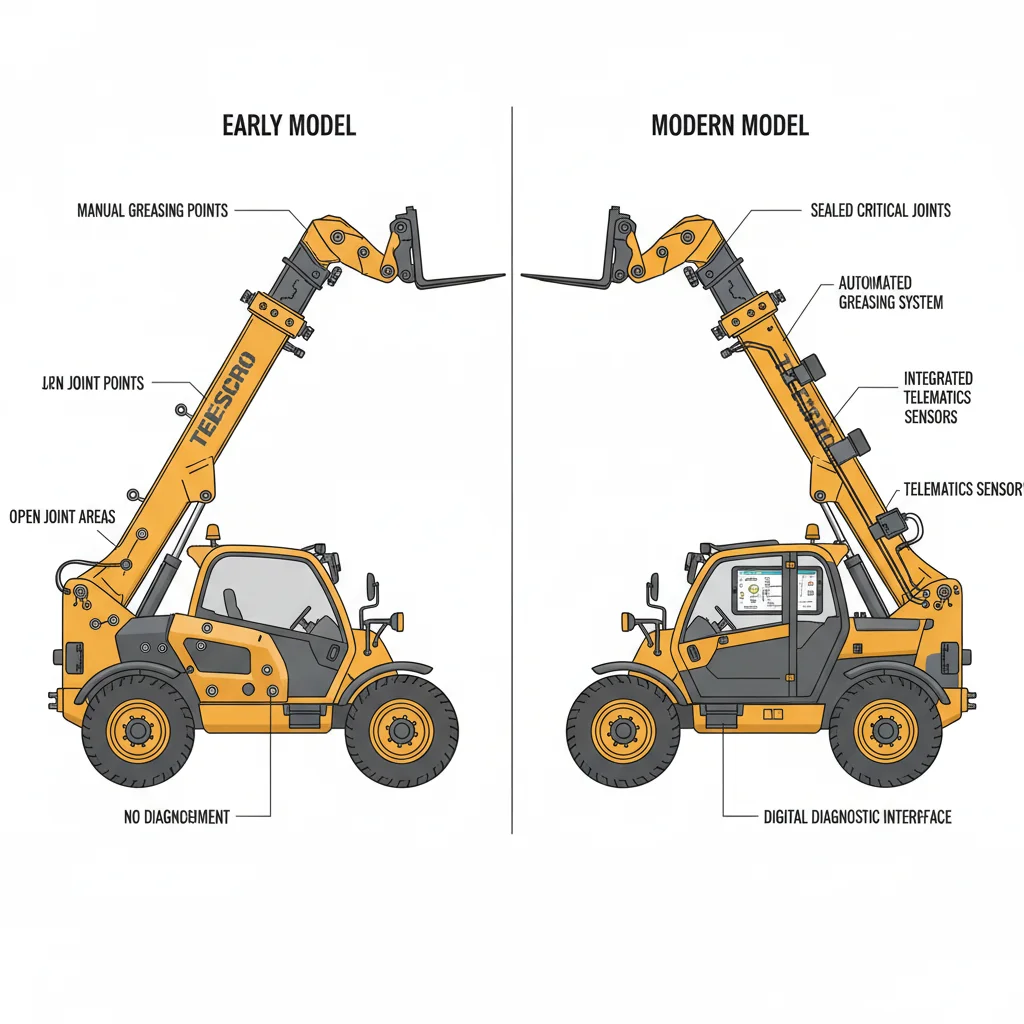
The biggest mistake I see is assuming all telehandlers are still as easy to maintain as those older, rugged models. Years ago, if something squeaked, you just grabbed a grease gun and worked through every pin—no diagnostic tools needed. Machines lasted about 7–10 years of hard use, but only if you kept up with this constant manual work. Now, with automatic greasing systems and sealed boom joints, servicing intervals are much longer. I’ve seen teams in Kazakhstan benefit from automated lubrication—they reported at least two full working days saved every month just from skipping manual greasing routines.
Today’s models often include on-board diagnostics13. For example, a contractor in Kenya emailed me when his 4-ton high-reach machine showed an error code. He just plugged in a handheld diagnostic reader, pulled the fault code, and found a loose hydraulic pressure sensor. The fix: 20 minutes, not hours of trial and error. These diagnostic ports can cut troubleshooting time by around 40%. Plus, telematics modules now send maintenance alerts directly—helping schedule small repairs before they turn into major breakdowns.
But with this technology comes complexity. In Dubai, a customer bought a 3.5-ton telehandler for their remote oil site. When an electronic sensor failed, only the authorized dealer had the required software to reset it. They waited five days for service—costing them both time and money. For operations far from support centers, I always suggest checking if independent mechanics can access diagnostic tools and if consumable parts like filters and hydraulic hoses are locally available. That small detail can make or break uptime on a remote job.
Modern telehandlers commonly use automatic greasing systems that can extend service intervals up to 50% compared to manual lubrication methodsTrue
Automatic greasing systems deliver precise amounts of lubricant at regular intervals directly to critical points, reducing wear and the need for frequent manual maintenance, thereby significantly lengthening service intervals.
The design of sealed boom joints in contemporary telehandlers eliminates the need for any lubrication during the entire machine lifecycleFalse
Although sealed boom joints reduce the frequency of lubrication by protecting components from contamination, they still require periodic servicing to maintain proper function and prevent premature wear over the machine's lifecycle.
Key takeaway: Advances in telehandler maintenance, diagnostics, and durability have significantly reduced downtime and improved longevity. However, buyers should consider the potential challenges of proprietary software and dealer dependencies, especially for remote operations, and prioritize models with accessible service and parts support when making a purchase decision.
Why Do Telehandler Attachments Change Over Time?
Telehandler attachments and coupler standards have evolved to support greater versatility, with early machines often using fixed or brand-specific carriages. Advances introduced quick-attach systems and complex hydraulic circuits, enabling use of modern powered tools. Compatibility now varies widely by brand and region, impacting attachment investment and fleet integration.
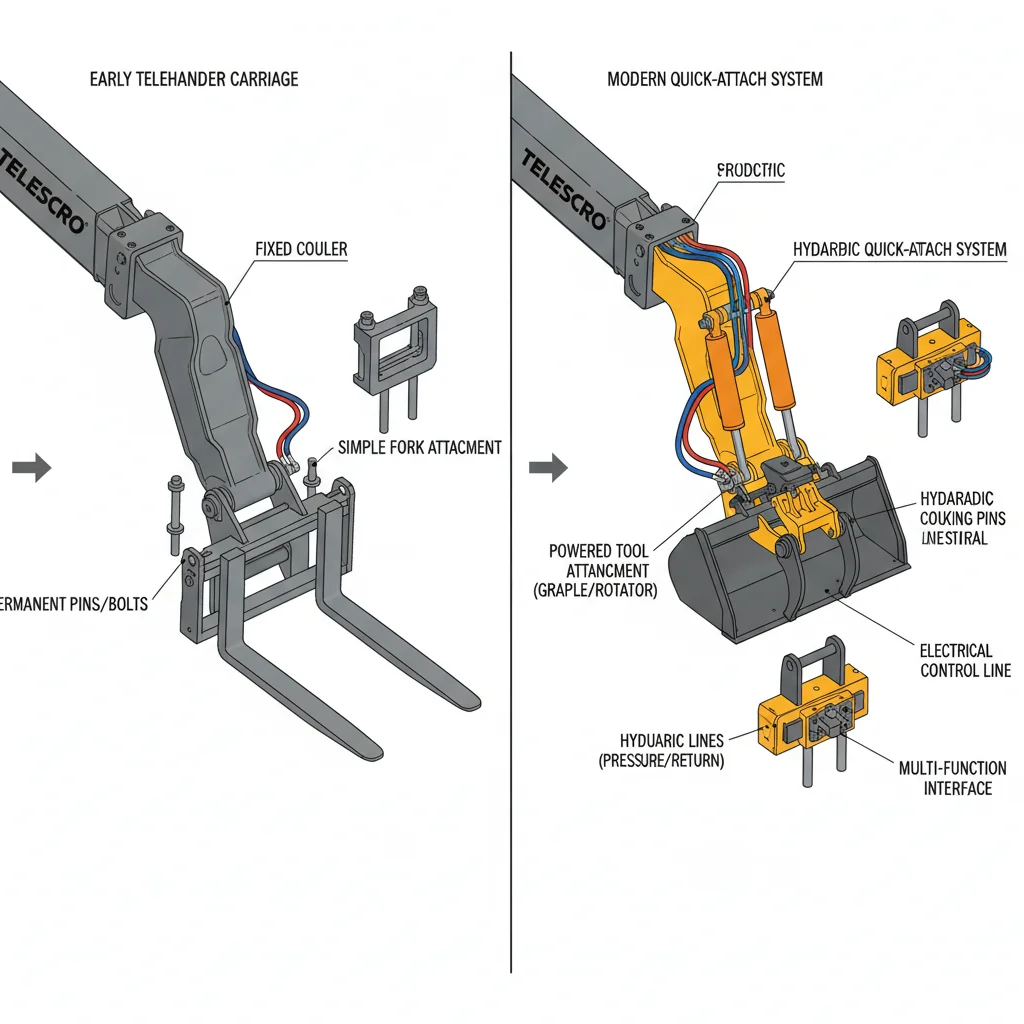
I’ve worked with customers who made this mistake more than once—assuming old attachments will work on their new telehandler. That’s rarely the case. Over the past decade, attachment design shifted from fixed, brand-specific carriages to universal quick-coupler systems. In practice, what looks “universal” still hides a lot of variation, especially if you’re combining machines from different regions or generations. For example, I helped a team in Dubai last year who bought two new high-reach units for a tower project, expecting to use the forks and buckets from their older fleet. The problem? Their attachments were compatible only with a single-pin manual lock style, while the newer machines used a hydraulic quick-latch14 with different pin spacing. Swapping systems delayed operations by three days and cost them about $2,400 in custom adapters. Attachment standards evolve as jobsites demand more versatility. Here’s why you see the changes: – Increased tool variety – Modern telehandlers support attachments like winches, clamps, and platforms, not just forks and buckets. – Faster changeover – Quick-attach couplers (manual and hydraulic) make switching tools safer and faster—under two minutes in many cases. – Hydraulic complexity – More attachments need auxiliary hydraulic lines, with higher flow and pressure. Early machines rarely offered this. – Regional differences – Europe and North America standardized on different coupler types, so cross-border compatibility is still a headache. – Push for multi-brand fleets – Construction firms mix brands to lower costs, but this often means adapters or full attachment replacement.
Over the last decade, telehandler attachment carriages evolved from fixed, brand-specific mounts to universal quick-coupler designs, but true cross-brand compatibility still requires checking specific ISO standard conformity, which varies between regions.True
Attachment systems did shift towards universal quick-couplers; however, different brands and regional standards (like ISO 23682) mean that not all quick couplers are interchangeable without verifying compliance, especially for machines made in different decades or markets.
Since 2015, most telehandler manufacturers have completely abandoned fixed carriages in favor of a single universal coupling system to ensure full interchangeability of attachments worldwide.False
Despite a trend toward universal quick-couplers, many manufacturers still produce telehandlers with fixed or brand-specific carriages, and no single universal system dominates globally, as regional and brand differences persist to this day.
Key takeaway: Telehandler attachment systems have transitioned from brand-specific, fixed solutions to adaptable, quick-attach mechanisms with advanced hydraulic demands. Before buying new models or expanding fleets, it is critical to inventory and check tool compatibility to avoid unexpected costs from mismatched couplers or hydraulic requirements.
How Do Regional Telehandler Origins Impact Selection?
Regional telehandler development histories shape today’s machine features, from off-road stability and reach in European models to North America’s construction-driven innovation and China’s cost-focused manufacturing. Buyers encounter differences in design philosophy, attachment compatibility, and long-term parts support, making regional background a critical factor when evaluating telehandler options for reliability, serviceability, and suitability to specific applications.
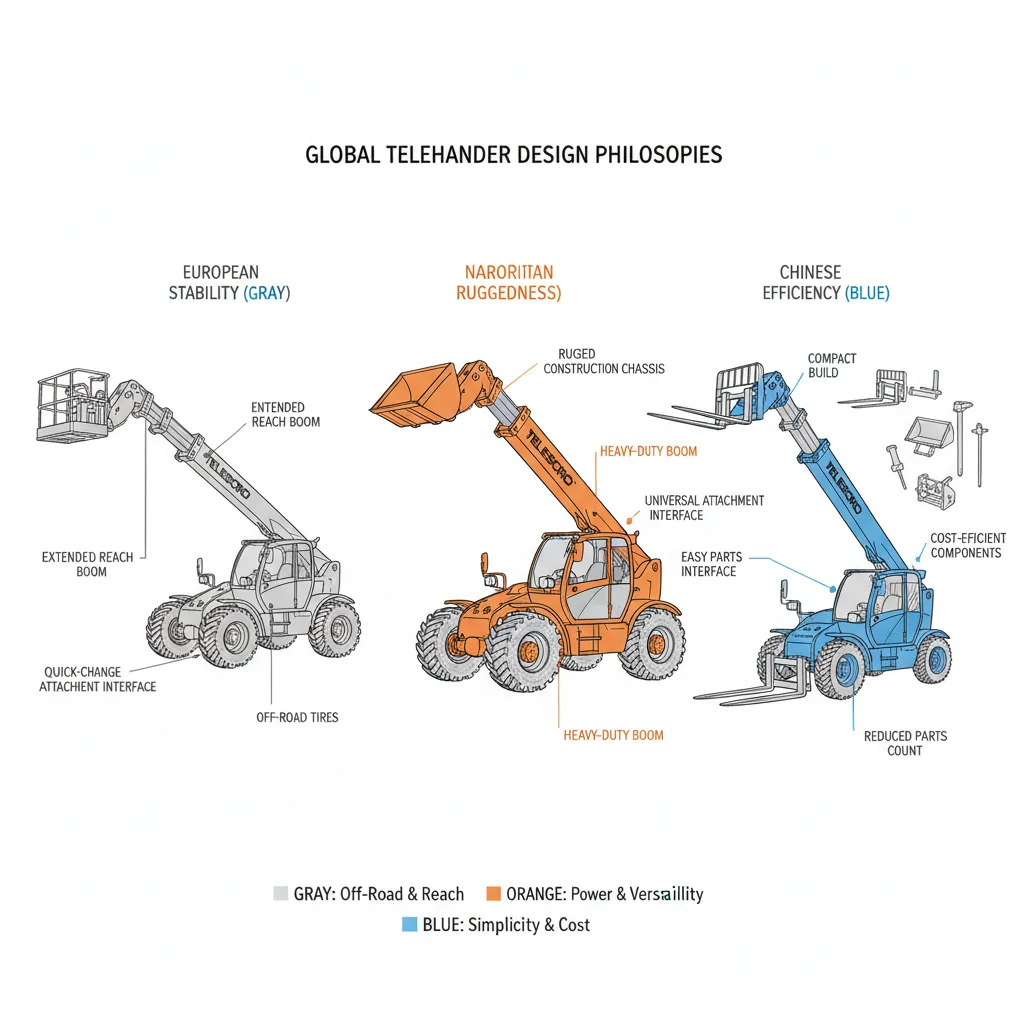
When people ask me why machines from Europe, North America, or China feel so different, I remind them that telehandler “DNA” comes from unique jobsite demands. Take Europe—telehandlers there were first used on muddy farm fields and tight village sites. That’s why you’ll see compact units with low-profile frames, smooth hydrostatic transmissions, and high ground clearance—features that handle uneven terrain and narrow spaces. In Germany, I visited a dairy farm running a 3-ton model with under 4-meter turning radius. Their team swears by the maneuverability. But, replacement parts? They arrive in days from a dense network of dealers.
Now, compare that to North American machines. There, most jobs revolve around heavy construction materials—brick packs, steel beams, big prefab sections. Their telehandlers evolved from rough terrain forklifts, so you get stronger booms, robust frame leveling, and higher capacities. I worked with a contractor in Texas who lifts 2,700 kg at over 13 meters. His rental fleet values multi-brand attachment compatibility—everything from buckets to truss booms slots right in. And when something does break, operators rely on well-established service networks for next-day hydraulic pump deliveries.
Then there’s China. Here, affordability drives design. You’ll often find 3-4 ton models with 12-15 meter reach priced 15-30% below European equivalents. That’s attractive for big projects in Kazakhstan or Dubai where budgets can be tight. I always advise buyers to confirm local parts stock and long-term support—some dealers excel, while others play what I call “parts roulette.” Before choosing, check how regional strengths match your project’s real-world needs.
European telehandlers often feature hydrostatic transmissions to provide smoother, variable speed control suited for navigating tight village sites and uneven farm terrainTrue
Hydrostatic transmissions allow for precise speed adjustments without gear changes, which is ideal for the slow, controlled maneuvering required on European farms and in confined spaces, differentiating them from typical North American geared transmissions.
North American telehandlers are typically designed with significantly higher ground clearance than European models to accommodate large-scale agricultural fieldsFalse
While North American telehandlers are generally larger for heavy-duty applications, they do not prioritize higher ground clearance over European models; actually, European telehandlers often have higher ground clearance to handle muddy and uneven terrain associated with smaller farms and rural sites.
Key takeaway: Recognizing how telehandler origins shape platform design, support networks, and attachment ecosystems is crucial for sound fleet decisions. European and North American machines excel in reliability and aftermarket support, while Chinese units often prioritize lower prices but may require extra scrutiny regarding long-term service and parts commitments.
Conclusion
We’ve explored how telehandlers have taken the best from forklifts and cranes, making them essential for jobsites that need reach and flexibility on rough terrain. From what I’ve seen, too many buyers fall for impressive showroom specs and end up dealing with "parts roulette"—unexpected downtime because critical spares aren’t available locally. Before settling on a machine, I suggest taking a good look at the load chart at your real-world working extension and double-checking how quickly you can get parts in your area. If you have questions about matching a telehandler to your tasks, or want a practical comparison for your site, just reach out—I’m always happy to share what works on actual jobsites. Every project is different; the right choice is the one that fits your workflow.
References
-
Explore how off-road stability impacts telehandler safety and efficiency in rough terrain, with expert insights on design features. ↩
-
Provide a detailed explanation of the design principles of the telescopic boom and its key role in enhancing lifting capacity and operational flexibility—suitable for industry professionals seeking to understand technological advancements. ↩
-
Explore how quick-attach systems enable faster attachment changeover and enhance telehandler jobsite flexibility with modern tools. ↩
-
Explore technical insights into hydraulic boom improvements that enhance telehandler precision, reach, and versatility across industries. ↩
-
Detailed explanation of quick-attach systems that enable rapid tool changes, boosting telehandler efficiency and multi-tasking ability. ↩
-
Explore how mid-to-high lift telehandlers improve handling of building materials with detailed lift height specifications and use cases. ↩
-
Understand the benefits of tight turning radius for telehandlers operating in confined agricultural spaces, enhancing efficiency and safety. ↩
-
Explores how load moment controls prevent tip-overs by monitoring load limits, crucial for safe telehandler operation in construction. ↩
-
Comprehensive insights into how Load Management Systems enhance telehandler safety by monitoring tipping risks and preventing overload accidents. ↩
-
Detailed explanation of emissions standards compliance, retrofitting challenges, and their effects on operational downtime and regulations. ↩
-
Learn the technical aspects of attachment compatibility and how it influences telehandler versatility and jobsite productivity. ↩
-
Explains how automated greasing systems reduce manual work and extend maintenance intervals, saving time and costs for operators. ↩
-
Shows how on-board diagnostics cut troubleshooting time by 40% with real-world examples, enhancing machine uptime and efficiency. ↩
-
Understand the differences and advantages of hydraulic quick-latch over manual locks for efficient telehandler attachment changes. ↩