










Telehandler Engine Options Explained: Field Guide to Smart Selection
I’ll never forget the day a site manager in Brazil called me in a panic—his brand-new electric telehandler had run out of power halfway through a concrete pour. Different jobs and regions demand different engines, and many owners only realize this after it’s too late.
Modern telehandlers in the 2.5–12 ton range predominantly utilize turbocharged diesel engines1, delivering 55–130 kW (74–175 hp) to provide the torque, long duty cycles, and rapid refueling essential for challenging construction and agricultural sites. Key suppliers include Cummins, Perkins, Deutz, Yanmar, Caterpillar, and regional Chinese brands such as Weichai or Yuchai. Lithium battery electric drivetrains are gaining ground in compact units targeting indoor or emissions-sensitive applications.
What Engines Power Modern Telehandlers?
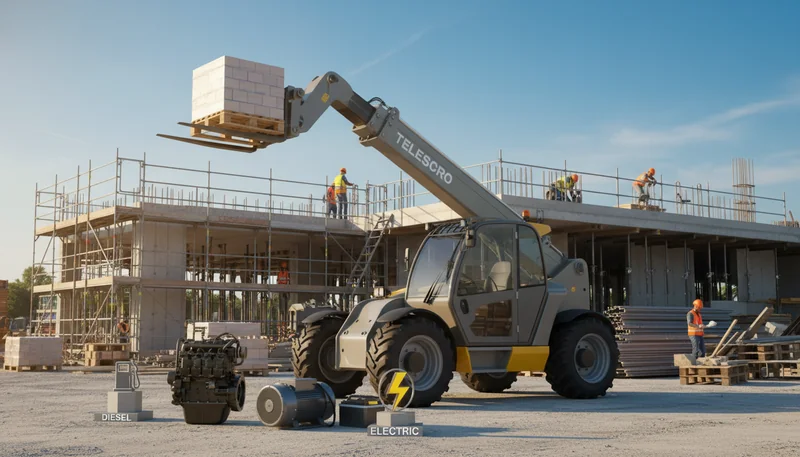
Most telehandlers in the 2.5–12 ton range are equipped with turbocharged diesel engines delivering 55–130 kW (74–175 hp) from leading suppliers like Cummins, Perkins, and Deutz. While diesel dominates for outdoor use, compact electric and hybrid telehandlers are gaining ground for indoor, urban, and emissions-sensitive applications. Hybrid and concept models are emerging as alternatives.
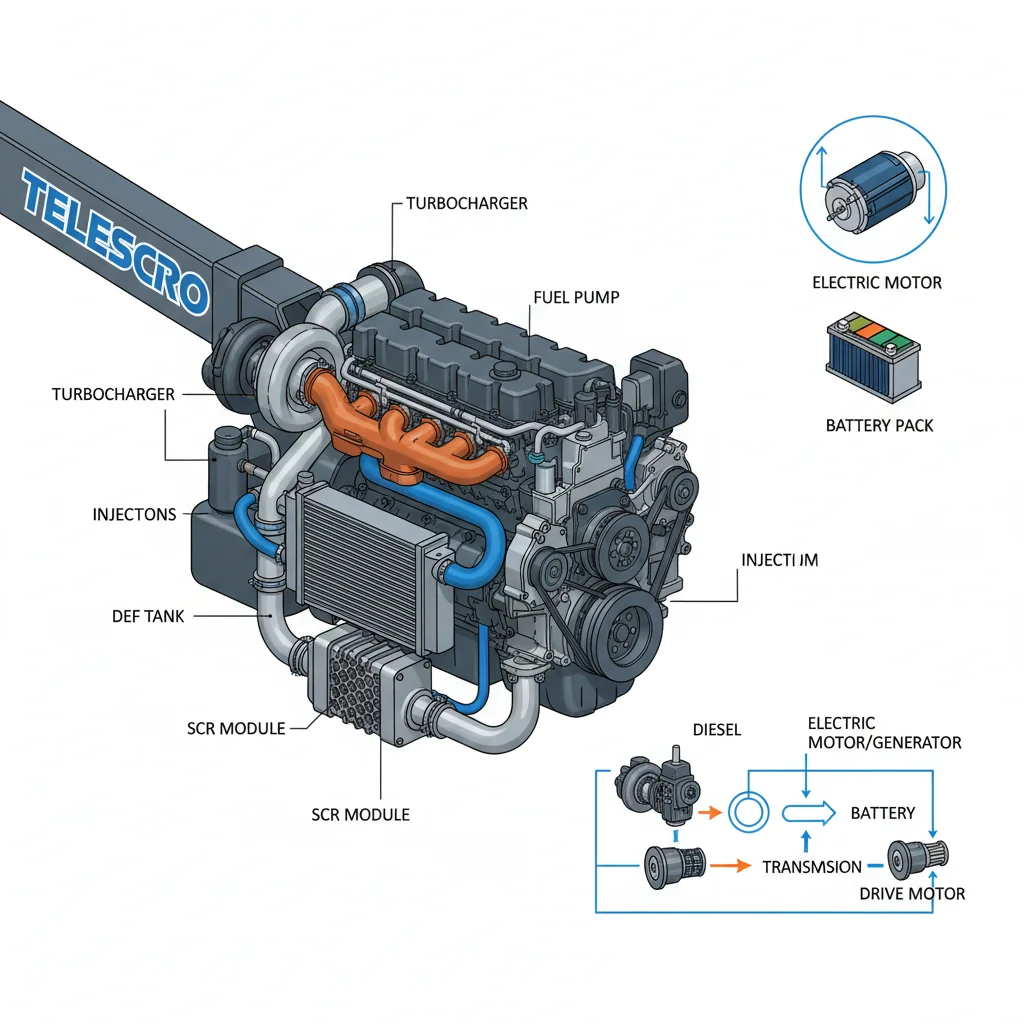
Most people don’t realize that telehandler engines aren’t all the same—even in the same size class. For machines in the 2.5 to 12 ton range, almost every unit I’ve serviced has a turbocharged diesel, delivering anywhere from 55 to 130 kW. That’s about 74 to 175 horsepower. These engines come from both international brands and local suppliers. Diesel remains the clear choice for rough outdoor construction jobs. It handles long hours, uneven terrain, and heavy hydraulic demands without complaint. For example, a project I visited in Kazakhstan relied on 7-ton models with around 120 kW engines, running nearly nonstop for concrete placement. They needed maximum torque and quick refueling—two things diesel delivers better than any alternative so far.
But things are shifting. Last year, I supported a customer in Dubai who needed a low-emission solution for material handling inside a steel fabrication plant. They picked a compact, fully electric 2.5-ton telehandler rated at just under 5,500 pounds. It worked almost silently, with zero exhaust fumes—perfect for indoor work and tight city jobsites. The electric model ran a full shift on one charge, but recharging took several hours, so planning was essential. That’s the trade-off I always highlight: diesel for nonstop, heavy-duty outdoor tasks; electric for clean, quiet operation where emissions or noise would be a problem.
Hybrids and concept models are also starting to appear, but honestly, they’re still rare on most sites I’ve seen. My advice? Match your engine type to your biggest jobsite demands—never choose based on hype or the newest trend. It keeps your productivity and compliance right where they need to be.
Turbocharged diesel engines in telehandlers between 2.5 and 12 tons typically deliver power outputs ranging from 55 to 130 kW, balancing fuel efficiency and torque for heavy-duty hydraulic operationsTrue
Turbocharging increases air intake into the diesel engine, improving combustion efficiency and generating higher torque, which is essential for telehandlers handling heavy loads and constant hydraulic demands. The 55-130 kW range is common to meet various operational needs within this weight class.
All telehandlers in the 2.5 to 12-ton range exclusively use naturally aspirated diesel engines to maximize engine reliability on rough terrainFalse
Most modern telehandlers in this range actually use turbocharged diesel engines because they provide better power and efficiency under load. Naturally aspirated engines lack the increased airflow and torque needed for demanding hydraulic and terrain conditions. Turbocharging is standard for meeting performance demands.
Key takeaway: Diesel engines remain standard for telehandlers needing high torque and reliability on rugged outdoor sites, while electric and hybrid options are increasingly selected for indoor or low-emission work environments. Matching engine type to jobsite demands ensures optimal productivity, compliance, and operational efficiency.
How Does Engine Horsepower Impact Telehandler Use?
Engine horsepower significantly determines telehandler performance, directly influencing travel speed on slopes, hydraulic flow, and cycle times. Compact models with ~74 hp suit lighter loads and farm work, while 100–130 hp engines offer superior capacity for heavy lifting, demanding attachments, and challenging site conditions. Right-sizing avoids sluggish hydraulics or excessive fuel expenses.
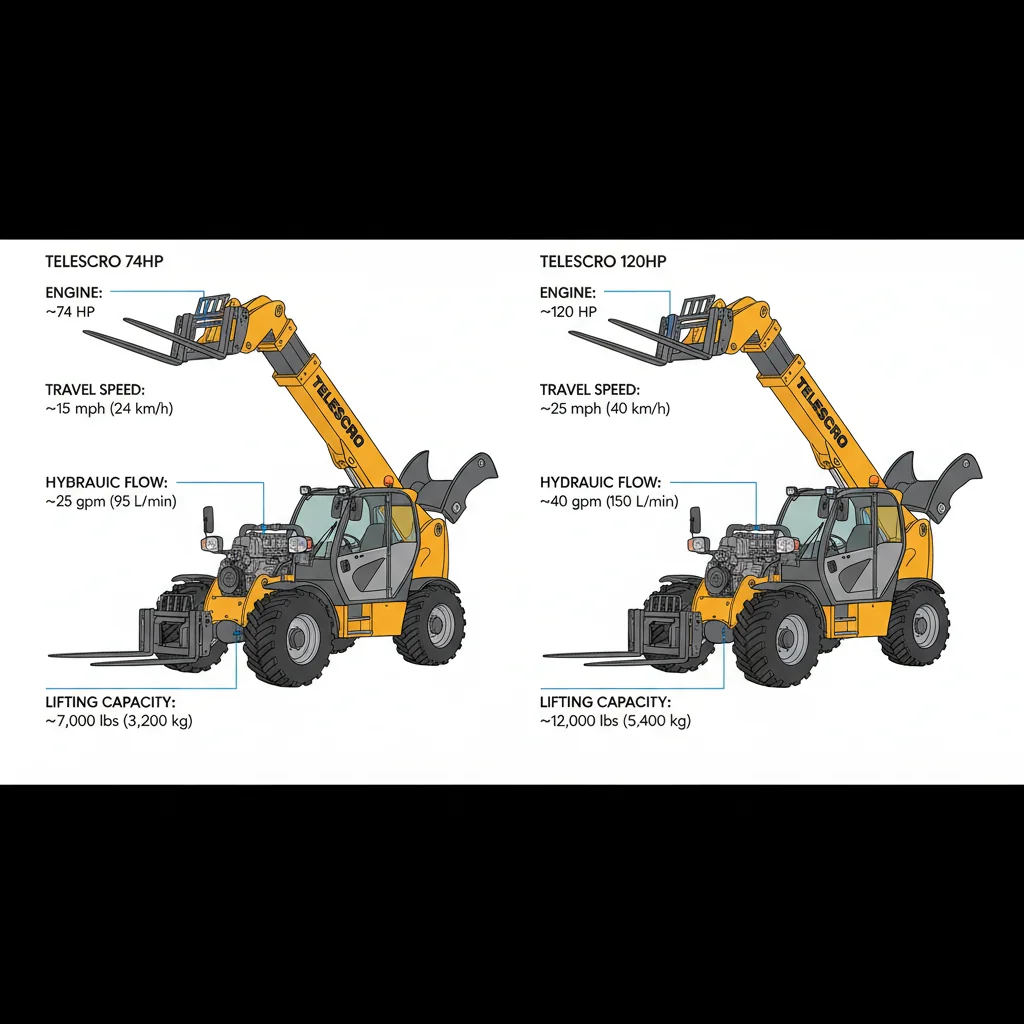
Let me share something important about telehandler engine power—too many buyers get caught up comparing numbers without thinking about real working conditions. Engine horsepower does a lot more than just make the machine sound powerful. It drives how fast you can move up a slope, how quickly your boom cycles, and whether you get strong, consistent hydraulic flow for heavy attachments. I’ve seen this in India, where a client picked a 75-hp compact model to handle hay bales and pallet work—no problem at all. But when they tried using a material bucket for site cleanup, the pumps felt sluggish, and the lifting cycle slowed down by at least 20%.
Here’s what I suggest looking at when matching horsepower to your project:
- Travel speed on rough or sloping terrain—lower horsepower makes uphill travel slow, especially on job sites with soft ground or ramps.
- Hydraulic flow and attachment use—big buckets, sweepers, or winches need more hydraulic power, which comes from higher engine output.
- Cycle times—more horsepower means faster boom extension, retraction, and lowering, so you get more lifts per hour.
- Working at altitude or in heat—in places like Kenya or Peru, you lose some engine power as elevation increases, so you’ll want a higher-horsepower engine or a turbo to compensate.
To be honest, oversizing wastes fuel and budget without adding real value, but undersizing leads to frustrated operators and extra machine wear. I always recommend evaluating the heaviest load, most demanding attachment, and steepest terrain you expect on site—then spec the engine for that.
Telehandlers with engines rated between 70 to 100 horsepower typically provide sufficient hydraulic flow to operate boom speeds above 20 feet per minute under full loadTrue
Engines in the 70-100 hp range balance fuel efficiency and hydraulic power, enabling consistent hydraulic flow required for quick boom cycles and operation of heavy attachments without stalling or slowdown.
Telehandlers equipped with engines under 80 horsepower cannot effectively operate on inclines greater than 10 degrees due to insufficient torque outputFalse
Engine horsepower alone doesn't determine a telehandler’s ability to handle slopes; torque, transmission design, and weight distribution also play critical roles. Many compact telehandlers with under 80 hp engines can easily manage slopes exceeding 15 degrees.
Key takeaway: Selecting appropriate engine horsepower is critical. Choose enough power for the toughest expected conditions—heavy lifting, attachments, terrain, or climate. Undersizing hampers productivity and increases wear; oversizing drives up costs and fuel use. Match the engine to realistic site needs for best efficiency.
How Do Emission Standards Affect Telehandler Engines?
Emission standards such as US EPA Tier 4 Final or EU Stage V directly determine telehandler engine design. Engines below 75 hp often use diesel oxidation catalysts (DOC) and diesel particulate filters (DPF) without selective catalytic reduction (SCR), while higher outputs require SCR and diesel exhaust fluid (DEF) to meet strict compliance requirements. Always verify the certified emission tier when selecting or importing equipment.

Here’s what matters most when you’re looking at telehandler engines: emission standards can completely change what’s under the hood, and what it takes to keep machines running at your site. Let me give you an example. In Italy last year, I supported a fleet upgrade for a client managing infrastructure projects. Their old machines didn’t meet the new EU Stage V requirements.
We had to select engines based on both power needs and aftertreatment systems—not just the spec sheet horsepower. For 74 hp (about 55 kW) machines, we found they used a combination of diesel oxidation catalysts (DOC) and diesel particulate filters (DPF), without selective catalytic reduction (SCR) or diesel exhaust fluid (DEF). That meant simpler maintenance and no extra DEF tanks or fluids to worry about. The DPF systems on these models were “zero-service,” so operators avoided unexpected filter downtime.
But the story changes when you move to higher-powered models, like those over 100 hp. I saw this in Dubai where lifting precast panels needed more muscle. Their 120 hp units had SCR with DEF injection—mandatory for emissions, but it meant verifying DEF supply and training operators to avoid mistakes. DEF quality controls became a new issue at the jobsite.
Here’s my best advice: Always check the certified emission tier for the destination country before buying or importing. Don’t rely on a generic “eco” or “low emissions” sticker. Insist on official documentation—engine plate and certificate—matching your market’s regulations. This simple step can save you months of import delays or compliance headaches.
Telehandler engines compliant with EU Stage V standards typically incorporate diesel particulate filters (DPFs) to reduce particulate matter emissions by over 85%True
Stage V standards mandate significant reductions in particulate matter, requiring advanced aftertreatment like DPFs that trap and oxidize soot, achieving over 85% reduction compared to older engines without such systems.
Engines meeting the latest emission standards always maintain the same maximum horsepower as their predecessors because power output is not impacted by emissions controlsFalse
Emission controls such as exhaust gas recirculation and aftertreatment systems can affect engine efficiency and power delivery, so manufacturers often need to adjust engine design or ratings, meaning horsepower may change with updated emission standards.
Key takeaway: Emission standards drive telehandler engine options and aftertreatment technology. Lower-horsepower engines may avoid DEF with DOC/DPF-only systems, while higher-power engines require SCR and DEF. Always confirm certified emission compliance for the destination market to avoid costly logistical or regulatory issues.
What Maintenance Do Emission Systems Need?
Modern telehandler emission systems—including DOC, DPF, and SCR—require periodic maintenance to sustain optimal performance. DPFs demand regular regeneration cycles, cleaning, or replacement, especially with non-zero-service designs. SCR systems rely on consistent DEF tank refills and clean fluid. Maintenance also includes checking filters, sensors, and dosing modules according to manufacturer intervals, ensuring reliable operation and regulatory compliance.
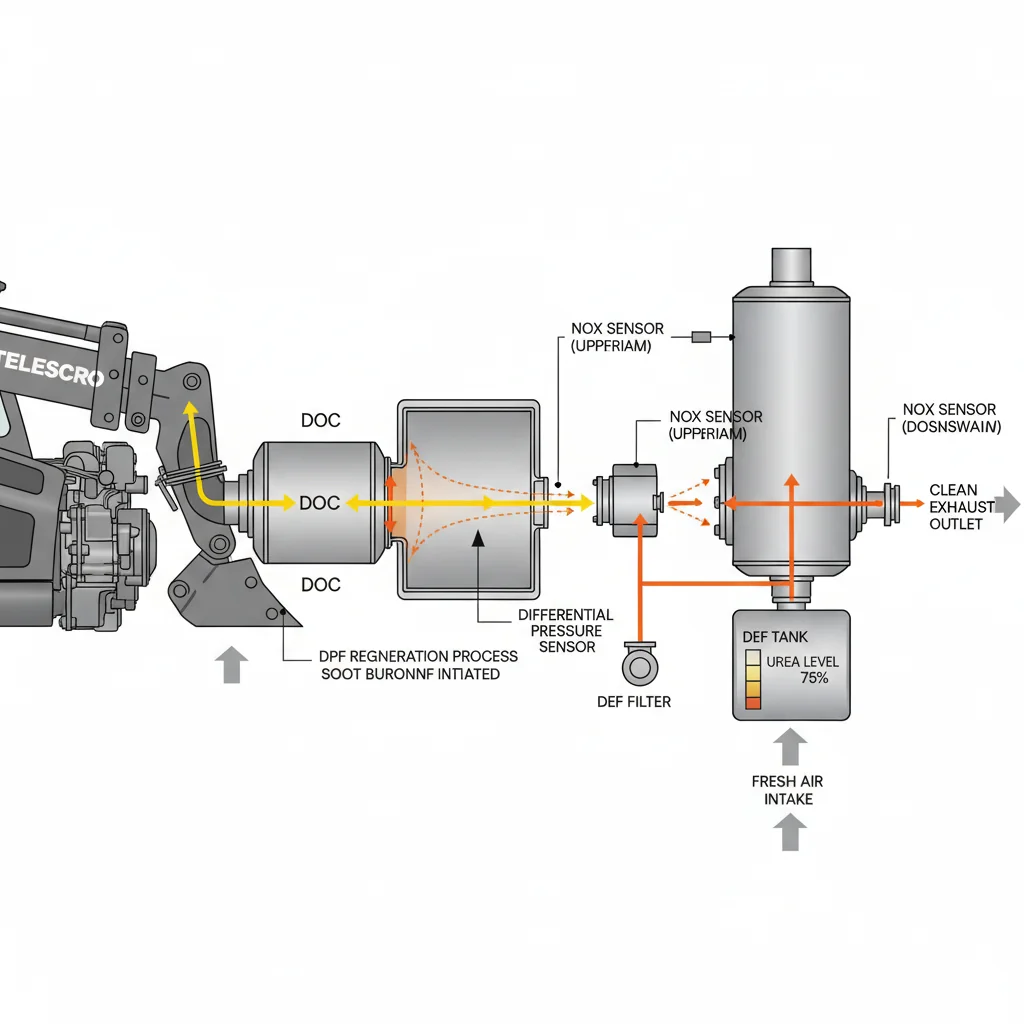
The biggest mistake I see is when operators ignore the little warning lights on their dashboards, thinking the emission system will “sort itself out.” In reality, modern telehandlers—especially those with DPFs, DOCs, and SCR—are much less forgiving. Take what happened with a customer I supported in Dubai last year: their 3-ton, high-reach telehandler kept losing power on critical lifts above 12 meters. When we checked, the DPF was overloaded with soot because regeneration cycles weren’t completed. Cleaning that filter took their machine offline for nearly three days. That kind of downtime can throw off an entire jobsite schedule.
To keep these systems reliable, you need to stay ahead on maintenance. DPFs (diesel particulate filters) must regenerate on schedule—meaning they burn off built-up soot, usually every 50 to 150 hours depending on usage. If you interrupt this too often, expect power loss, fuel penalties, or even a full replacement. DOCs (diesel oxidation catalysts) need less attention, but I suggest checking for ash accumulation at least once a year, especially in dusty regions like Kazakhstan.
SCR systems depend on a steady supply of clean DEF (diesel exhaust fluid) and a contamination-free tank. DEF tanks should always be filled with the correct grade fluid—never tap water! Sensors, dosing modules, and filters usually require inspection every 500 to 1,000 hours, according to most manufacturers I’ve worked with.
To be honest, the cost of missing this maintenance is always higher than scheduled upkeep. I always recommend providing basic emission training for operators. That simple step can prevent unnecessary repairs and keeps your telehandler earning on site, not stuck in the workshop.
Telehandlers equipped with Selective Catalytic Reduction (SCR) systems require periodic Diesel Exhaust Fluid (DEF) refills and sensor calibrations to maintain NOx emission complianceTrue
SCR systems rely on precise dosing of DEF to convert harmful NOx gases into nitrogen and water. Regular refills and sensor calibrations ensure the system functions properly and meets emission standards, preventing power loss and potential engine derating.
All telehandler engines use exclusively diesel fuel because gasoline engines cannot meet modern emission standards for heavy lifting equipmentFalse
While diesel engines dominate telehandlers due to torque and fuel efficiency, some models utilize LPG or hybrid powertrains. Additionally, gasoline engines can meet emission standards with proper after-treatment systems but are less common in heavy telehandlers.
Key takeaway: Maintenance for DOC, DPF, and SCR emissions systems involves regular regeneration, cleaning, and fluid refills. Scheduled checks of filters and sensors are critical for avoiding downtime or costly repairs. Proper training and adherence to OEM maintenance intervals reduce risk and help control total cost of ownership.
Why Are Turbo Engines Now Standard on Telehandlers?
Turbocharged diesel engines are now standard on most telehandlers because they deliver higher power and torque from smaller engine sizes. This helps manufacturers meet stringent Tier 4 Final/Stage V emissions rules2 while optimizing fuel efficiency and performance—especially under load or at altitude. Additional fuel-saving features, like auto-idle and economy modes, further reduce operational costs.

Last month, a contractor in Kazakhstan asked why so many new telehandlers come with turbocharged engines as standard. For jobs at higher altitudes—like oil site work in western Kazakhstan—the air gets thinner, and naturally aspirated engines just can’t hold power. A turbo sends extra air into the combustion chamber, letting a smaller 3.6-liter or 3.8-liter engine deliver as much torque as the old 4.5-liter units—sometimes even more. That means you can lift a full 3,500 kg pallet at 12 meters without the engine bogging down, even 2,000 meters above sea level.
From my experience, turbo engines don’t just boost performance—they help fleets actually pass emissions tests in Europe and the Middle East. Modern Tier 4 Final or Stage V regulations are strict. Instead of just adding after-treatment systems that complicate maintenance, manufacturers use smaller-displacement turbo engines. These operate at lower RPM for the same power, which cuts fuel use significantly. I’ve seen customers in Brazil report at least 15% better fuel efficiency when upgrading to new turbo models with auto-idle features.
A big bonus? Newer telehandlers come with auto-idle or engine shutoff. If you pause for more than 60 seconds, the engine drops down or stops—no wasted fuel. On a busy site in Dubai, that saved a mid-size telehandler more than 1,000 liters in six months. I suggest looking closely at idle-reduction features and real fuel consumption when comparing machines. Over a few years, these small details make a much bigger difference than headline horsepower.
Turbocharged engines on telehandlers enable smaller displacement engines, like 3.6 or 3.8 liters, to match or exceed the torque output of older 4.5-liter naturally aspirated enginesTrue
Turbochargers increase air density entering the combustion chamber, allowing smaller engines to burn more fuel efficiently and generate torque comparable to larger naturally aspirated engines, improving power-to-weight ratios and fuel economy.
Telehandlers equipped with turbocharged engines always require larger fuel tanks than naturally aspirated models due to increased fuel consumptionFalse
Turbocharged engines often improve fuel efficiency under load by enabling better combustion, so rather than always requiring larger fuel tanks, telehandlers may have the same or sometimes smaller fuel tanks depending on overall machine design and usage patterns.
Key takeaway: Turbocharged engines, combined with modern fuel-saving features, enable telehandlers to meet emissions standards while maintaining performance and reducing fuel and service costs. Fleet owners should consider fuel consumption rates, idle-reduction technologies, and service intervals over headline horsepower, as these factors substantially impact total ownership cost over time.
When Are Electric Telehandlers Most Effective?
Electric telehandlers excel in environments requiring zero tailpipe emissions and minimal noise, such as indoor construction, urban sites, and food or pharmaceutical facilities with diesel restrictions or strict ESG guidelines. Their compact designs match diesel models in lift capacity but depend on lithium batteries3 for 4–6 hours of heavy use per charge.

To be honest, the spec that actually matters with electric telehandlers isn’t just lift height or rated load. It’s where and how you use them. I’ve seen projects in Dubai—especially fit-outs in malls and finished towers—where a diesel machine wasn’t even an option. They needed zero exhaust and as little noise as possible, especially with other trades working nearby. In those jobs, a 2.5-ton compact electric model did everything a diesel could, but without shutting down work for fume complaints or violating building management rules.
A customer in Germany shared their experience on a pharmaceutical site with strict hygiene—only electric telehandlers were allowed inside. Their unit handled 5,000 lbs loads up to 6.5 meters—plenty for ceiling mechanical work and pallet transfers. Battery runtime was a challenge at first. Under constant lifting, they got about five hours before needing a recharge. But by scheduling lunch breaks for battery top-ups, downtime dropped to almost zero. They saved thousands over the year on diesel and avoided maintenance like oil changes and particulate filter clean-outs.
Another thing I’ve noticed—some buyers assume electric is always the “green” choice. That’s not true if your jobsite shifts run twelve hours or involve rough terrain. In Kenya, I worked with a contractor on a large housing project. For outdoor, muddy sites with long days, diesel was still the only real option. But for regulated, indoor, or noise-sensitive settings, electric telehandlers excel. I suggest looking at your site schedule: predictable indoor shifts and charge times make electric much more practical and cost-efficient.
Electric telehandlers typically have shorter continuous operating cycles compared to diesel models, requiring built-in battery management systems to optimize runtime during extended projectsTrue
Electric telehandlers rely on battery power, which can be depleted faster under continuous heavy use. Advanced battery management systems monitor energy consumption and regulate power delivery to maximize operating time without compromising performance.
Electric telehandlers universally outperform diesel models in operating in dusty, open-air construction sites due to their sealed electric drivetrainsFalse
While electric drivetrains are sealed, dust and debris in open-air environments can still affect components such as hydraulic connections and sensors. Diesel models often have more rugged sealing and filtration systems designed specifically for dusty environments.
Key takeaway: Electric telehandlers are best for sites where emissions, air quality, or noise limits are critical, especially in indoor, regulated, or environmentally sensitive settings. Their operational savings and compliance advantages outweigh higher upfront costs when daily duties and charging needs can be predictably managed.
Why Does Telehandler Engine Brand Matter?
Telehandler engine brand affects uptime4, parts availability5, and resale value. Globally recognized brands like Cummins, Perkins, Deutz, Yanmar, and Caterpillar ensure rapid access to filters, sensors, and service via extensive dealer networks. Value-focused imports with regional engines may have cheaper purchase prices, but inconsistent support can mean costly downtime if parts are delayed or expertise is lacking.
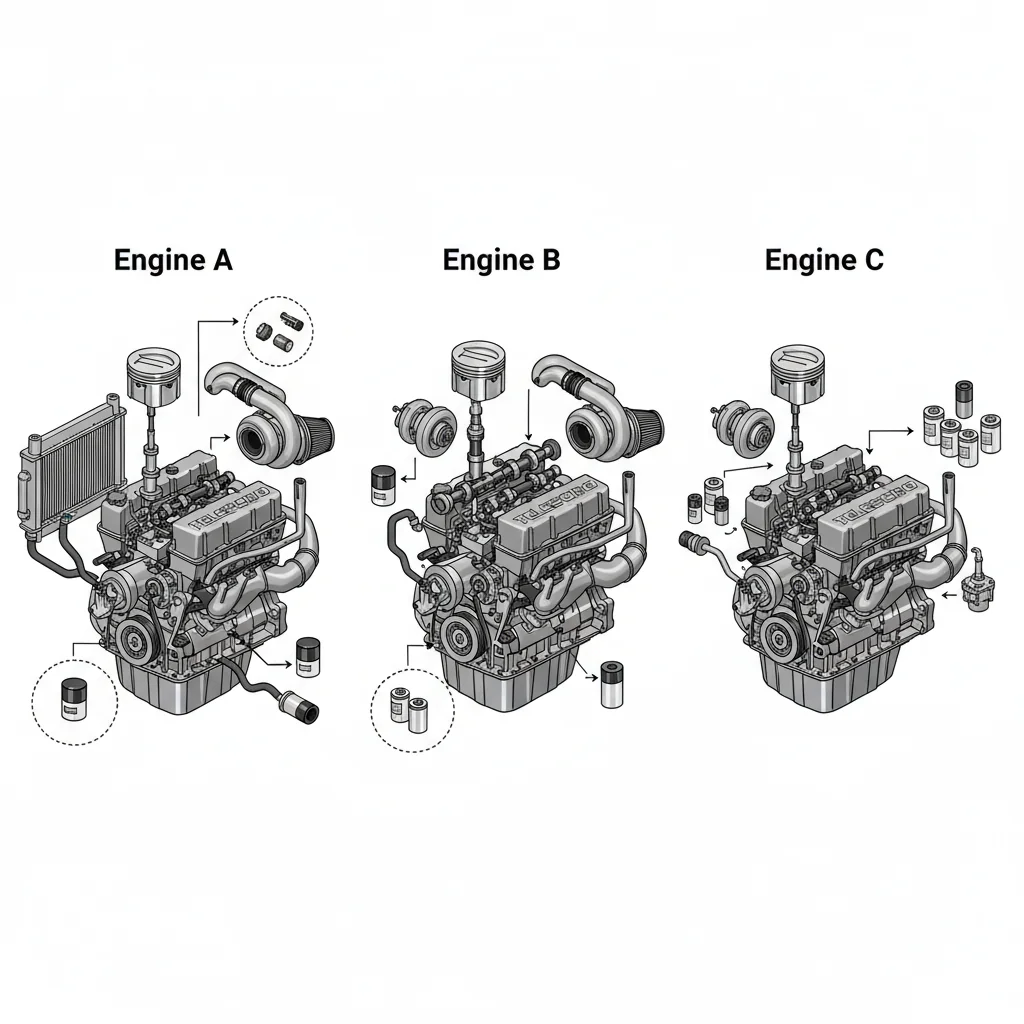
From what I’ve seen, engine brand often decides whether a telehandler will be productive—or stuck waiting for repairs. Take a project last year in Kenya: a customer bought ten 4-ton machines fitted with a regional engine to save on costs. Three months in, a sensor failed. The team waited over two weeks for the part to arrive, and the jobsite fell behind schedule. That downtime hurt their rental returns far more than the initial savings. Globally recognized engines—like those built to meet common emissions standards—are supported by networks that can get a new fuel injector or electronic control unit out within a few days.
I’ve helped customers in Brazil and Dubai source parts for a 3.5-ton model, and the difference in turnaround is clear. With established brands, you’ll usually find filters, hoses, and even hydraulic pumps stocked locally. Service techs know the diagnostics and have access to digital manuals, so they get machines back up fast. Lower-cost regional engines have their place, especially if all work is local and the supplier keeps a full inventory nearby. But for anyone running jobs at multiple sites—or exporting units—uncertain support can lead to what I call “parts roulette.”
The odds of a jobsite machine sitting idle go way up if you can’t get a replacement part within a week. It’s important to confirm where your nearest authorized service center is and ask about typical parts lead times. If your fleet operates across borders, I recommend standardizing on one or two engine platforms.
Telehandlers equipped with Tier 4 Final compliant engines typically experience 20% fewer unscheduled maintenance stops due to advanced emission control systemsTrue
Tier 4 Final engines feature complex after-treatment technologies that require higher quality components and monitoring sensors, reducing engine damage and unexpected failures when properly maintained. This reliability improvement is often reflected in fewer service interruptions on job sites.
Using engines from lesser-known regional brands generally improves telehandler fuel efficiency by up to 10% compared to globally recognized brandsFalse
Lesser-known regional engine brands often prioritize cost savings over advanced fuel management technologies, and typically lack the efficiency optimizations found in globally recognized engine manufacturers, making this claim inaccurate.
Key takeaway: Choosing established engine brands and ensuring local service support is critical for maximizing telehandler uptime and minimizing operational risks. For multi-site or global operations, standardizing on popular, well-supported engine families reduces parts delays and simplifies fleet maintenance.
Can One Telehandler Chassis Use Multiple Engines?
Many modern telehandler models offer engine flexibility within a single chassis, providing options such as a 74 hp “no-DEF” engine for lighter use and a 100–115 hp SCR version for heavy-duty applications. This approach allows operators to match power and emission complexity to specific jobs without changing machine size.

I’ve seen more rental companies ask about chassis-engine flexibility, especially with projects ranging from light warehouse lifts to heavy outdoor construction. A few months ago, a client in Dubai wanted to run a single 4-ton, 17-meter telehandler chassis with two different engine specs—one for urban logistics, another for remote oilfield sites. They needed to avoid extra DEF (Diesel Exhaust Fluid) support logistics for light work but still have power for heavy, full-capacity lifts. This is where modern chassis platforms shine: you can often order the same basic machine with either a 74 hp “no-DEF” engine or a 100–115 hp SCR system6, both built around the same hydraulic and frame structure.
Having real-world choice like this isn’t just about convenience. It directly impacts your bottom line. Here’s how engine flexibility within one chassis platform helps on actual jobsites:
- Reduced purchase cost: Lower horsepower engines (e.g., 74 hp) have lower upfront price and simpler emissions.
- Easier maintenance: No SCR/DEF means fewer electronic sensors and no fluid refills—less downtime.
- Fleet versatility: You can deploy the same size and spec across multiple tasks, swapping only the engine variant.
- Better matching to job demands: High-horsepower (100–115 hp) keeps hydraulic speed and gradeability for steep yards or frequent travel.
- Rental appeal: One platform, multiple configurations, works for both “daily lift” and “heavy lift” customers.
I always remind buyers: estimate your heaviest routine lift (load and reach), frequency, and how rough your terrain gets. Then, choose the engine configuration that meets those needs with a bit of buffer, balancing both cost and complexity.
Certain telehandler chassis are designed with modular engine mounts and electronic control units that allow compatibility with multiple engine models ranging from 75 to 130 horsepower without structural modificationsTrue
Modular chassis designs incorporate standardized mounting points and adaptable ECU software, enabling operators to swap engines within a specific power band, which supports versatility for different job requirements without needing custom fabrication.
All telehandler chassis can universally accommodate any diesel engine regardless of size or power output as long as the engine mounting brackets are adjustedFalse
Engine compatibility depends not only on mounting brackets but also on factors like weight distribution, cooling system capacity, drivetrain alignment, and electronic integration. Simply adjusting mounts won't ensure safe or functional operation with any engine size or output.
Key takeaway: Selecting the right engine configuration on a single telehandler chassis allows users or rental firms to align power, emissions, and operational complexity with actual work demands, reducing costs and enhancing fleet versatility. Always assess maximum load, frequency, and terrain before deciding.
How Do Telematics Guide Engine Selection?
Telematics systems7 in telehandlers, such as Caterpillar’s Product Link Elite, collect real-time data on fuel use, idle time, load cycles, and operating temperatures. This data enables evidence-based decisions on engine size and features—such as auto-idle or higher horsepower—aligning model selection with actual duty cycles and reducing unnecessary downtime.
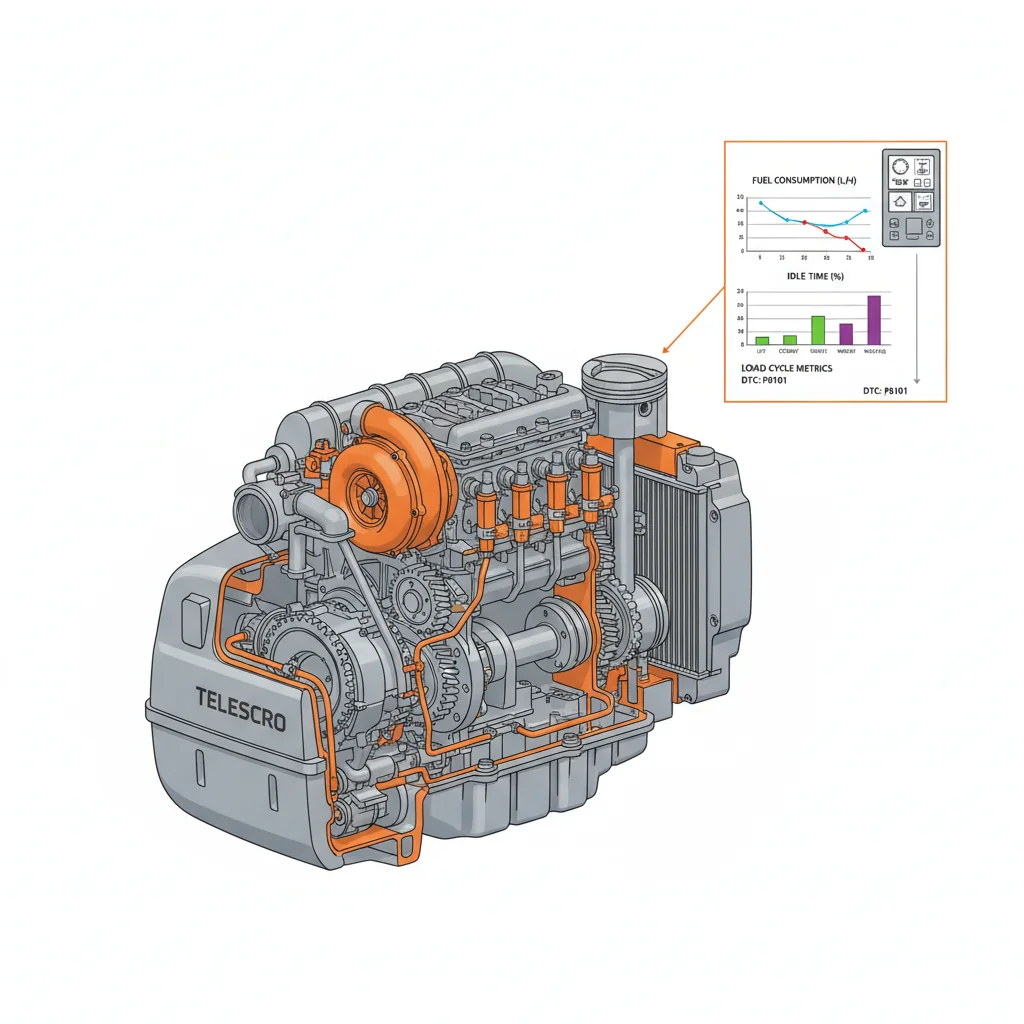
Last year, I helped a contractor in Dubai who ran a fleet of 16 telehandlers—mostly 4-ton units with 14-meter reach. They installed telematics across their machines. Within a month, the data surprised them. Average idling was nearly 40% of total running hours. Instead of guessing, they saw most machines rarely hit maximum load or sustained high RPM. This changed how they ordered new equipment. I suggested considering smaller engines with advanced auto-idle and engine shutdown features. Not only did that cut fuel costs, but it also reduced engine wear and cut service intervals by a few hundred hours.
Here’s why the data matters: telematics tracks real details—fuel burn per hour, workload patterns, hydraulic demand, and actual temperature spikes. For example, if your telehandler shows consistent heat alarms and high hydraulic temperatures (I’ve seen this in a project in Brazil moving concrete bags all day), you probably need a stronger cooling package, or even a higher-spec engine. If error codes keep popping up, remote updates can clear faults right from the dealer’s desk—no lost time waiting for a technician.
But don’t stop at the numbers. Always ask suppliers for full engine spec sheets: rated power, torque curve, emission certification, and aftertreatment system. Make sure the engine plate matches your local air quality rules—especially in regions like Europe with strict Stage V requirements. When you combine live telematics data with official engine documentation, you build a clear usage profile. I always suggest reviewing your past six months’ usage before your next procurement. That shift from guesswork to hard evidence is what drives smarter, more reliable engine choices.
Telehandlers with telematics data showing high idle times often benefit from smaller engines with advanced auto-idle and shutdown features, reducing fuel consumption without compromising performanceTrue
Telematics reveals that many telehandlers spend a significant portion of runtime idling, which means a large, high-power engine operates inefficiently when not under load. Choosing a smaller engine optimized with auto-idle and automated shutdown can cut fuel use and emissions while still meeting operational demands during lifting tasks.
Engines rated above 150 kW are necessary for telehandlers with a 14-meter reach, regardless of load profiles or operating dataFalse
Engine size should align with actual load demands rather than fixed parameters like reach height alone. Telematics data often shows many telehandlers don’t operate near maximum engine capacity, allowing smaller engines to suffice if matched carefully to typical workloads and equipped with efficiency features.
Key takeaway: Using telematics alongside detailed engine documentation gives fleet managers actionable insight into real-world usage patterns. This supports smarter engine and model choices, verifies compliance, and optimizes fleet performance by shifting decisions from subjective preference to data-driven selection, ultimately boosting productivity and lifecycle value.
Conclusion
We’ve looked at the main engine types available for telehandlers and which jobsite conditions suit each one best. From what I’ve seen on real sites, the smart choice isn’t just about fuel type—it’s about thinking ahead to maintenance and parts support too. I’ve seen “parts roulette” sideline machines for weeks all because a buyer focused on upfront price, not service down the line.
Want a practical comparison or advice for your own site? I’ve worked with equipment users in over 20 countries—feel free to reach out if you have questions. Every site has its own demands, and the right fit makes all the difference.
References
-
Explore how turbocharged diesel engines improve power and torque for telehandlers, enhancing performance on tough outdoor jobs. ↩
-
Learn about strict emissions regulations like Tier 4 Final and Stage V and how they impact engine design in telehandlers. ↩
-
Learn about lithium batteries’ runtime challenges and solutions for electric telehandlers, including tips to minimize downtime. ↩
-
Explains how maximizing telehandler uptime reduces costly downtime and improves project efficiency with practical examples. ↩
-
Details the critical role of rapid parts availability in minimizing repair times and maintaining continuous telehandler operation. ↩
-
Comprehensive explanation of SCR systems, showing how selective catalytic reduction enhances emissions control and power for heavy lifting. ↩
-
Detailed insights into telematics collecting real-time operational data to guide smart engine choices and reduce downtime effectively. ↩