










Telehandler Engine Brands: How They Really Affect Price & Buyer Mistakes
Last month in Poland, a client was convinced that choosing a “big name” engine would double his telehandler price. It’s a misconception I hear from Brazil to South Africa—most buyers fixate on the engine badge, not realizing where the real costs come from.
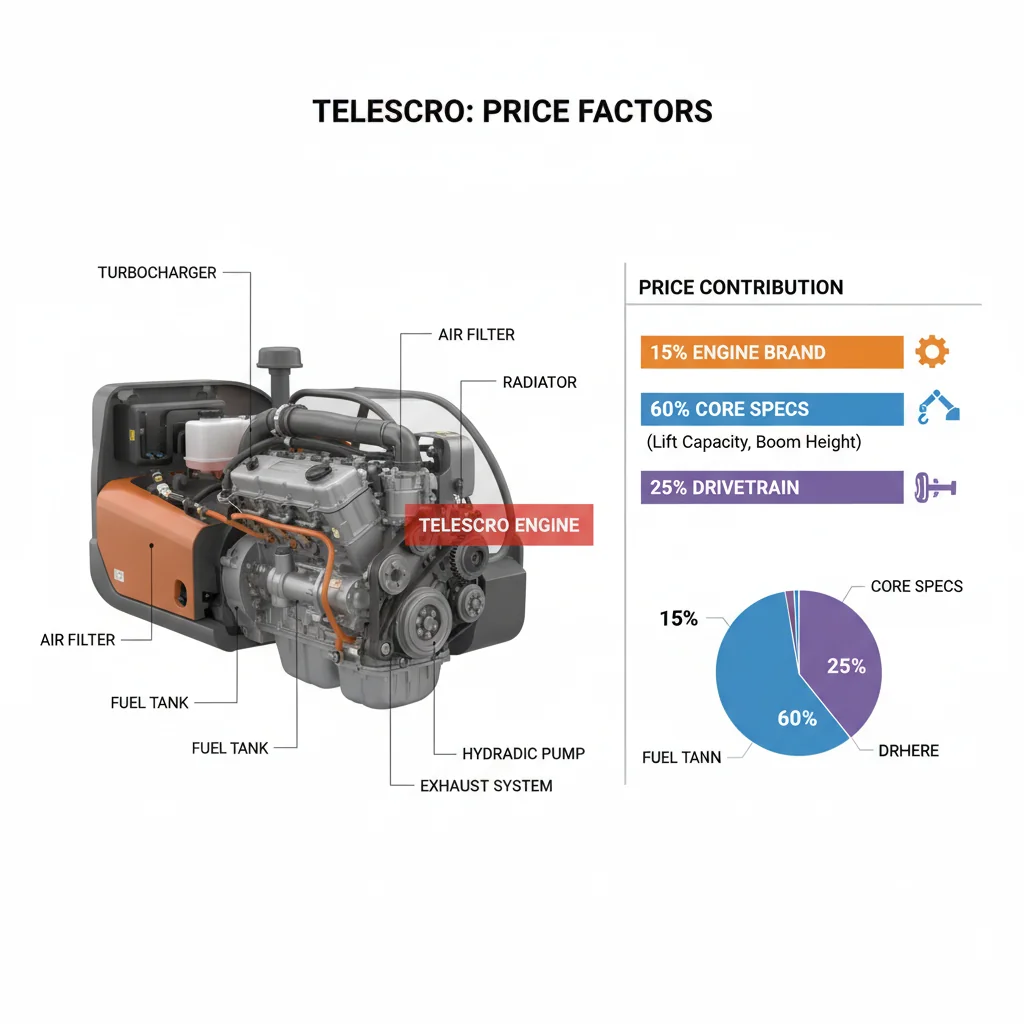
Market analysis shows that telehandler engine brand typically accounts for only about 15% of price variance. Core specifications—such as lift capacity1, boom height, and drivetrain2—carry considerably more weight in determining cost. For example, a Cummins engine may add $3,000–$5,000 over a Yuchai within the same capacity class, yet overall pricing between brands is often similar. Engine brand plays a bigger role in long-term costs, influencing service intervals3, reliability, and resale value.
Do Engine Brands Significantly Affect Telehandler Price?
Engine brand accounts for only about 15% of telehandler price variation. Core specifications such as lift capacity and boom height explain around 60% of price differences, while drivetrain makes up 25%. On average, premium engines like Cummins may add $3,000–$5,000, but price differences within a capacity class are usually slight.
Most people don’t realize that engine brand is only a small part of the telehandler price equation. Let me share something important—last year in Kenya, one client asked if switching from a regional diesel engine to a “world-famous” brand would dramatically affect total project cost. I ran the numbers for them: for a 4-ton, 14-meter reach machine, the engine upgrade meant an extra $4,000. But the drivetrain type and lift spec variations between models in the same class often ran closer to $8,000–$12,000. That’s a huge difference.
To be honest, I see buyers focus on engine labels and miss what actually matters. On-site in Dubai, a customer insisted on a premium engine for reliability—fair enough, but the hydraulic circuit and transmission strategy had a bigger day-to-day impact. Two similar units, both 6,000 lb max capacity and 15-meter booms, performed almost identically despite different engines. The biggest factor for them was actually a better moment indicator (the system that warns of overload), not the logo on the engine block.
When you budget, here’s what I always suggest: lock in your must-have specs first—working height, rated load, and whether you need a powershift or hydrostatic drivetrain. Once you’ve shortlisted a few models, then compare engine options for local support and fuel efficiency. Engine brand can be a tie-breaker—not your starting point. I recommend verifying long-term parts availability4 and checking if your site mechanics are familiar with that engine. It’s a detail, not the driver.
Upgrading to a premium global engine brand in a 4-ton, 14-meter telehandler typically adds about $4,000 to the machine cost, which is often less than the price variation caused by changes in drivetrain type or lift specifications.True
In real-world pricing, engine brand upgrades affect the telehandler cost modestly—around $4,000 in this case—while drivetrain configurations and lifting capabilities can vary pricing by up to $8,000, making engine brand a secondary factor in total price.
Switching from a regional diesel engine to a well-known global engine brand will usually double the price of a 4-ton, 14-meter telehandler due to higher manufacturing and maintenance costs.False
Engine brand upgrades cause only a modest price increase (e.g., around $4,000), not a doubling of the machine cost. Major price differences come more from drivetrain and lift capacity variations than from engine brand alone.
Key takeaway: When budgeting for a telehandler, focus on core specs like lift capacity, boom height, and drivetrain first. While engine brand influences price, it’s a secondary factor, impacting cost and value far less than primary specs. Engine selection should fine-tune performance and support, not drive purchase decisions.
Do Telehandler Engine Brands Impact Total Cost?
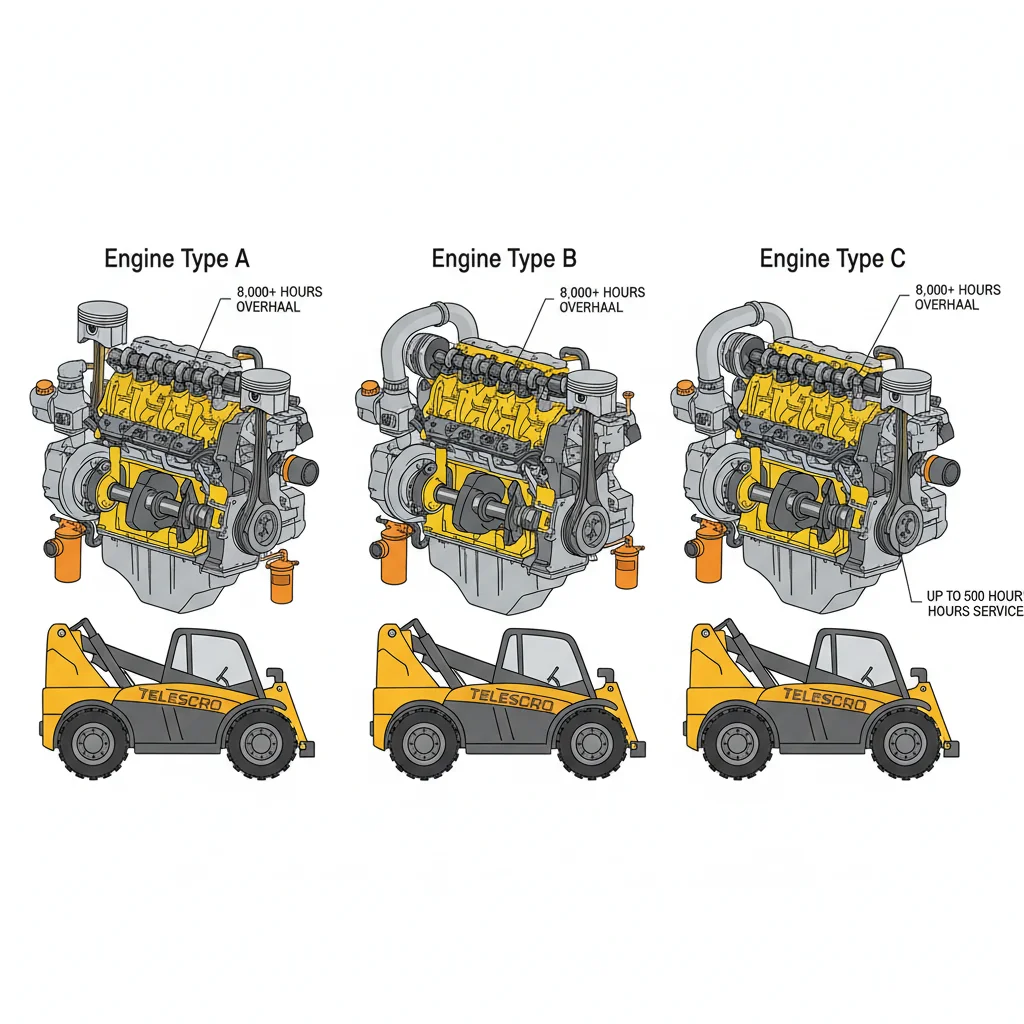
Telehandler engine brands significantly affect total ownership cost rather than initial purchase price. Premium engines like Cummins, Deutz, and Perkins offer longer overhaul intervals5 (8,000+ hours) and extended service intervals (up to 500 hours), reducing downtime and maintenance costs. Recognized brands also enhance resale value by 10–15% compared to lesser-known engines, assuming comparable machine hours and condition.
Let me share something important about engine brands and real telehandler costs. Last year, a client in Kazakhstan asked why their 3.5-ton telehandler, which seemed like a great deal up front, became a headache after three years. Their unit ran a local engine brand. At first, maintenance looked simple. But after 2,000 hours, the machine needed its second major service—new filters, timing adjustments, valve checks—while the loaders I supplied with higher-end engines in the UAE were still running on basic oil changes at that point.
From my experience, premium engines really shine in long-term costs. It’s not just about fancy service stickers. Take a 4-ton telehandler with a recognized global engine: oil change intervals stretch to 500 hours or more. Lower-tier engines, especially in regional machines, often call for service every 250 hours. For a fleet running 1,500 hours per year, that’s three stops versus six. Each full service costs at least $400 in labor and parts where I work. Over five years, that difference easily outweighs the $3,000–$5,000 extra you might pay for a better engine up front.
One more point—machines with known engines hold their value across markets. I’ve seen resale prices in Dubai and Vietnam run 10% higher, simply because buyers trust parts availability and overhaul history. Still, if you’re a farmer using your telehandler just 300 hours per year, this premium may not be worth it. I suggest mapping your annual usage before choosing the engine spec. It makes all the difference long term.
Telehandlers equipped with premium engine brands often exhibit 20-30% longer intervals between major overhauls due to higher quality components and advanced engine management systemsTrue
Higher-end engines typically use superior materials and technologies such as electronic fuel injection and better cooling systems, which reduce wear and optimize performance, extending the time before costly major services are needed.
The initial cost difference between a telehandler with a local engine brand and one with a premium engine brand is negligible and does not impact long-term total ownership costsFalse
While upfront prices may appear similar, premium engine brands usually command higher initial costs but lower maintenance and downtime expenses over time, resulting in lower total cost of ownership, unlike local brands that may incur frequent repairs and reduced machine availability.
Key takeaway: Premium engine brands increase telehandler value by extending overhaul and service intervals, which lowers long-term maintenance costs. They also retain more value at resale. However, buyers with low annual usage may not recoup the upfront premium, so engine selection should match expected machine utilization.
How Do Engine Brands Impact Telehandler Costs?
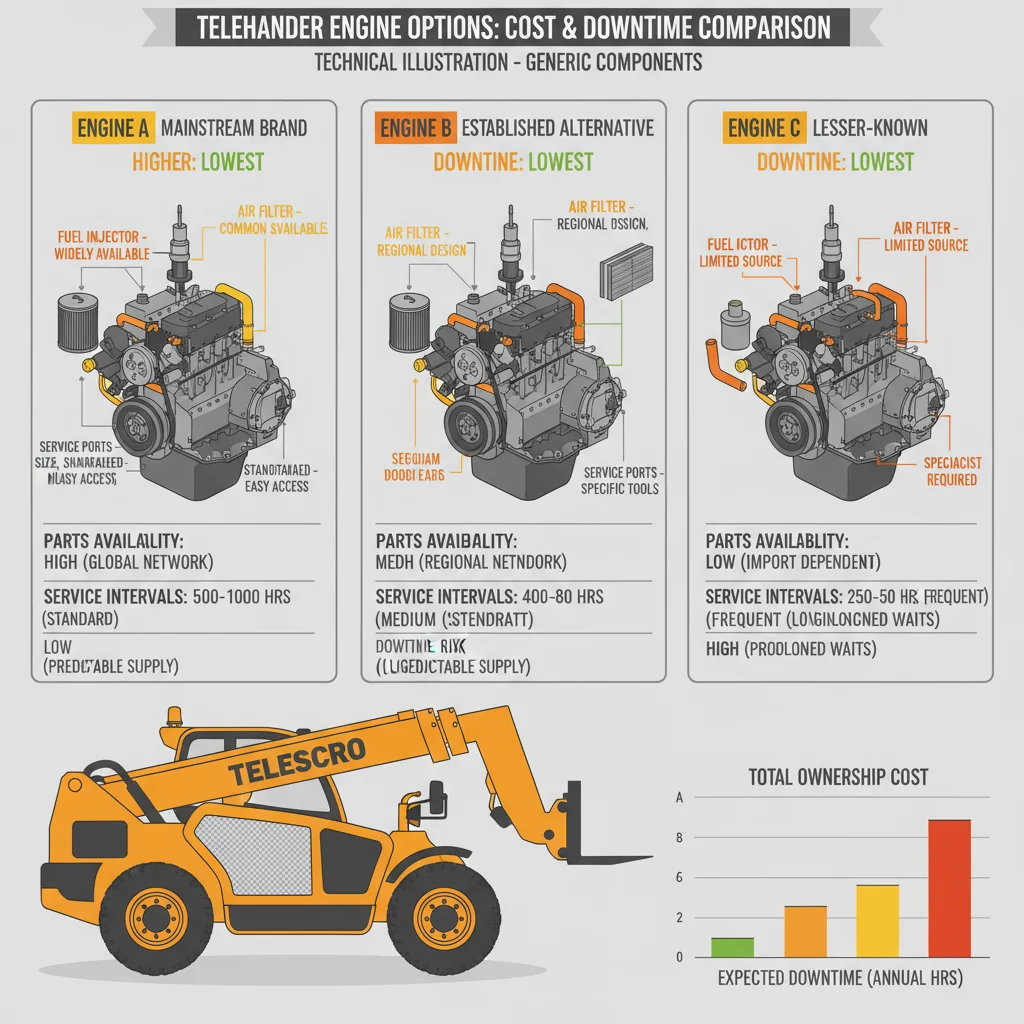
Engine brand selection directly affects telehandler operational costs due to parts availability, service intervals, and downtime risk6. Mainstream engines like Cummins, Deutz, and Perkins offer extensive dealer networks and faster access to spares, reducing potential downtime. Lesser-known brands can lead to expensive delays, especially on rental fleets or remote sites, diminishing initial savings.
The biggest mistake I see is buyers focusing only on engine price, not what happens when you need service. Take a customer I supported last year in Kazakhstan. They chose a 4-ton telehandler with a lesser-known engine brand to save about $3,000 upfront. After six months, a fuel injector failed. The problem? No local stock. They waited nearly three weeks for the part to arrive from overseas. That downtime cost them a full contract’s profit—far more than the initial savings.
Here’s what matters most when selecting an engine for your telehandler: look beyond just horsepower and fuel efficiency. Ask how many authorized service centers are within a reasonable distance. For common engines, you’ll find filters, sensors, and pumps stocked in nearly every regional dealer. Technicians already know the diagnostic systems. For regional brands, even small issues—like a coolant leak or sensor fault—can mean shipping parts across borders and waiting weeks. I’ve seen jobsites in Brazil and the Middle East stop entirely until spares arrive, especially when the machine is being used around the clock on rental fleets.
Service intervals matter, too. Some engines require oil and filter changes every 500 hours; others, just 250 hours. If you run a fleet, more frequent service means double the technician hours and more scheduled downtime. Over a year, these small details turn into real extra costs. I always suggest checking with other owners in your country about real-world downtime. In my experience, paying slightly more for a well-supported engine saves a lot more in the long run.
Telehandlers equipped with globally recognized engine brands typically experience 20-30% faster repair turnaround times due to extensive local parts availability and technician trainingTrue
Well-established engine brands maintain broader distribution networks and certified service centers worldwide, allowing faster access to critical components and skilled repairs, significantly reducing machine downtime compared to lesser-known brands.
Choosing a telehandler with a lesser-known engine brand usually results in 10-15% lower total ownership costs within the first two years, despite potential delays in part availabilityFalse
While upfront savings on lesser-known engine brands can be attractive, hidden costs like extended downtime from scarce spare parts and unavailability of qualified service personnel often cause higher total ownership costs in the medium term, outweighing initial benefits.
Key takeaway: Prioritizing well-supported engine brands with established parts and service networks minimizes unplanned downtime and long-term ownership costs. Although cheaper or obscure engine brands may reduce upfront expenditure, limited regional support and longer service intervals often increase operational and maintenance expenses, which can outweigh initial savings—especially for rental companies or sites with continuous telehandler usage.
How Do Emissions Tiers Affect Engine Cost?
Emissions tier is a primary cost factor in telehandler engines, with Tier 4 Final/Stage V diesel engines—such as those from Cummins, Deutz, and JCB EcoMAX—adding approximately $2,000–$5,000 over older Tier 3 models. This is due to advanced aftertreatment (DPF, SCR, EGR) and electronic controls required for global regulatory compliance.
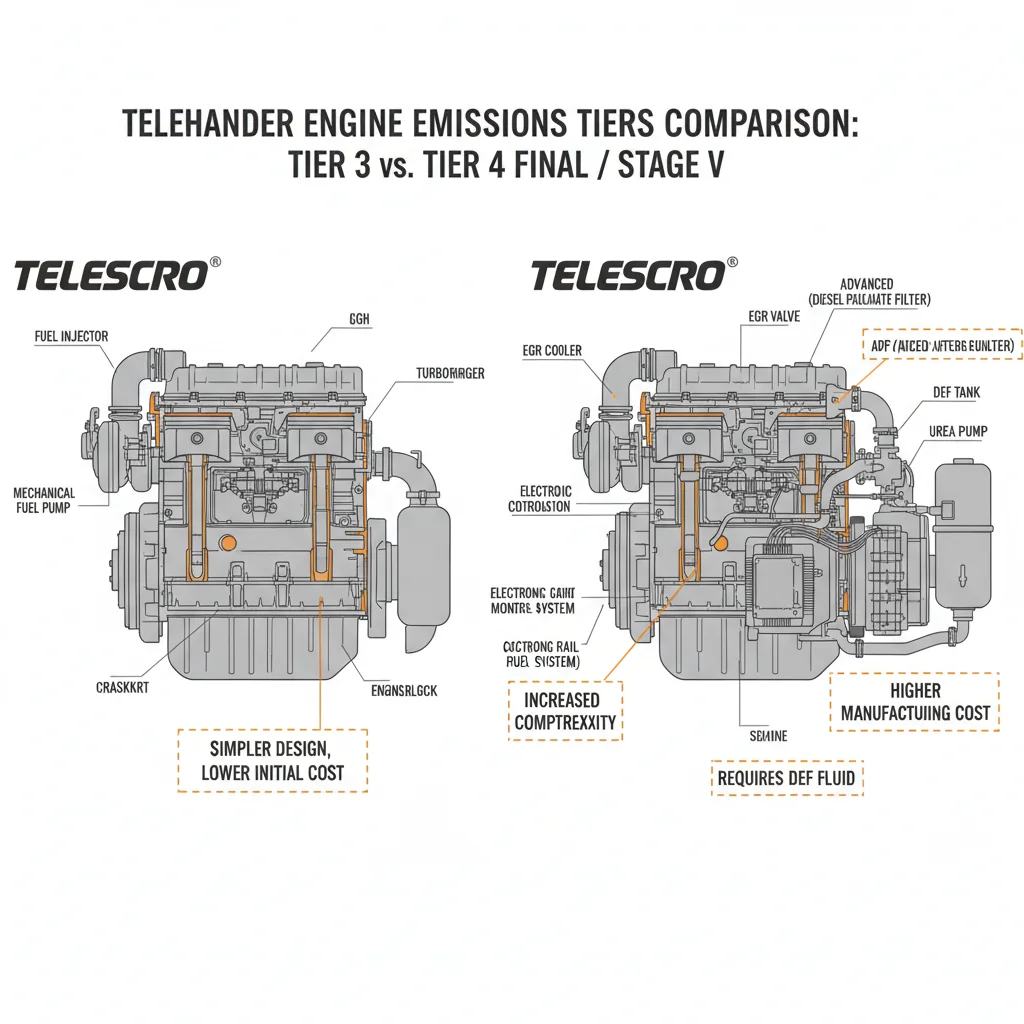
I’ve worked with customers who underestimated just how much emissions compliance can shift a telehandler’s total cost. For example, in Dubai, a contractor asked why the latest 3.5-ton, 13-meter reach model cost nearly $4,000 more than the older machines he’d used before. The reason? The new units had Tier 4 Final engines7 with aftertreatment systems8—like diesel particulate filters (DPF) and selective catalytic reduction (SCR)—which are now required in many countries.
To be honest, there’s no real way to avoid this extra expense if you want to operate legally in North America or Europe. Most telehandler brands now use very similar Tier 4 Final or Stage V setups, so the engine price gap from emissions is mostly standard—usually in the $2,000 to $5,000 range. That cost mainly comes from extra sensors, control modules, and components for emissions control, not from better lifting ability or fuel savings. I’ve seen buyers in Kazakhstan go for cheaper, non-compliant engines, only to find out local authorities refused registration. One customer had to replace the entire engine after import—doubling his initial “savings.”
Here’s what matters most when you’re choosing an engine: always verify the emissions tier on the serial plate, and make sure the engine has up-to-date certification paperwork. Without these documents, insurance companies and resellers can reject the machine, or you’ll face delays at customs. I suggest budgeting a bit more up-front for a compliant engine, especially if you plan to sell or move equipment overseas later. It’s a small investment that saves a lot of hassle.
Telehandlers equipped with Tier 4 Final engines typically increase the machine's base price by about $3,000 to $5,000 due to the integration of advanced aftertreatment systems like DPF and SCRTrue
Tier 4 Final compliance necessitates costly emissions control technologies such as diesel particulate filters and selective catalytic reduction systems, which add complexity and expense to the engine, thereby raising the overall telehandler price.
The choice of engine brand has negligible effect on telehandler price since emission standards standardize engine designs across manufacturersFalse
Different engine brands have unique technologies, aftertreatment strategies, and warranties, which can significantly influence the cost of engines and, consequently, the telehandler's total price, even under the same emissions tier requirements.
Key takeaway: While emissions standards significantly influence engine cost, most telehandler brands for regulated markets offer similar Tier 4 Final/Stage V technology. The real risk lies in using non‑compliant engines, which can prevent registration, insurance, or resale. Always verify the engine’s emissions documentation for legal operation and resale value.
Does Engine Brand Affect Telehandler Price?
Telehandler purchase price is influenced more by power type—diesel, electric (with lithium-ion batteries), or dual-fuel—than by engine brand. Electric models typically cost 15–25% more due to battery costs, while dual-fuel units carry a $4,000–$7,000 premium. Within diesel variants, configuration features impact pricing more than differing engine brands.
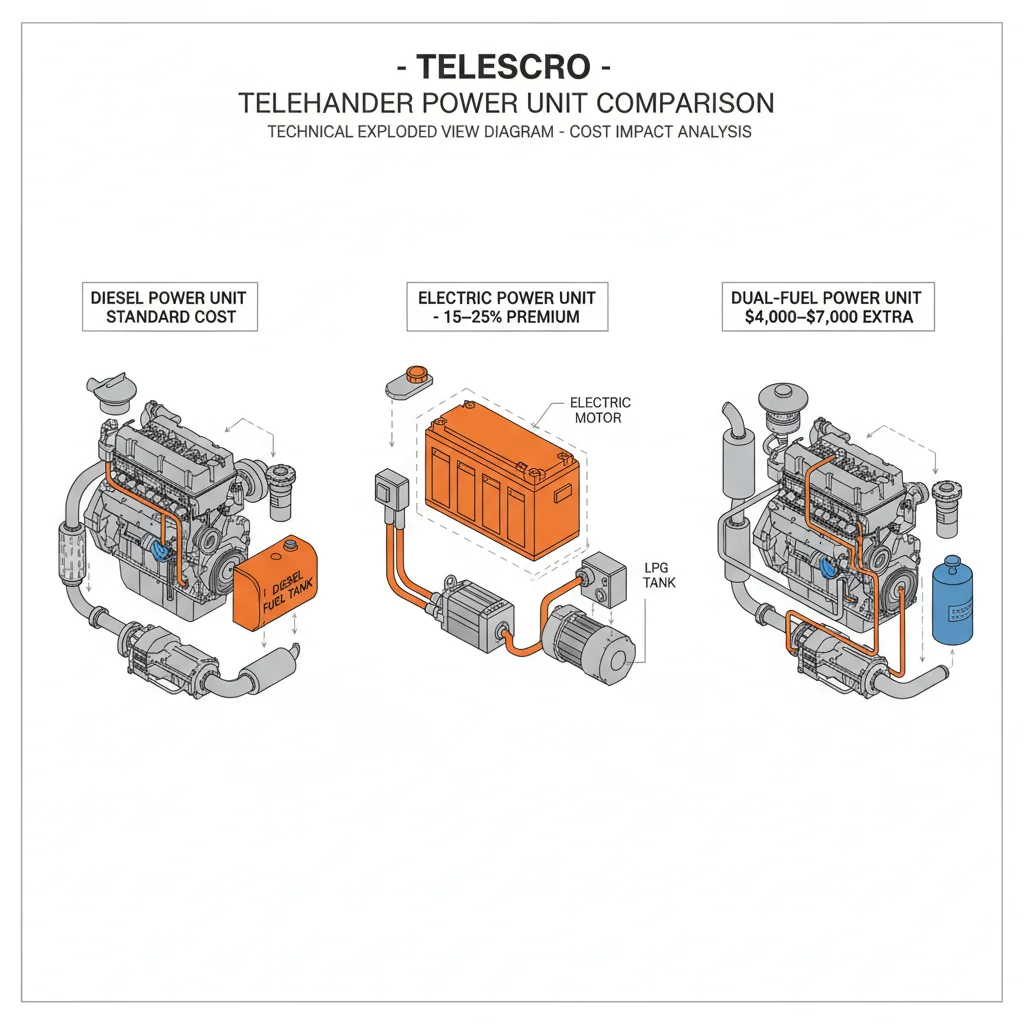
To be honest, the spec that actually matters is the power source—not the engine brand. In the last year, I worked with a contractor in Dubai who compared a compact 2.5-ton electric telehandler9 to a diesel model with almost identical lift capacity and boom reach. The electric machine cost about 18% more, mainly because of its lithium battery (around 20 kWh). The diesel option was cheaper up front, but both machines used engines from well-known brands. The price gap had nothing to do with which brand was under the hood.
I’ve seen the same story in Brazil, Kenya, and Vietnam—buyers focus on brand, but on-site costs follow the fuel type. Dual-fuel units (gasoline/LPG) sit in a small niche, typically costing an extra $4,000–$7,000 over a similar diesel. It’s the battery packs, fuel systems, and emissions controls that drive up the price, not whether you’re looking at a European or American engine maker. Even within diesel machines, I’ve noticed that going from 2WD to 4WD on a 3-ton model or adding all-wheel steering makes a bigger dent—sometimes $3,000–$8,000—than swapping between two reputable engine brands.
Here’s my advice: Decide your power type and drive system first. Check your real needs for range, refueling, and maintenance. Once that’s clear, compare engine brands based on local parts support and reliability. Price won’t shift much between similar engines, but service headaches can cost you far more down the line. Consider the whole support picture—not just the badge on the block.
The choice of an electric telehandler with a 20 kWh lithium battery can increase the initial purchase price by around 18% compared to a diesel model with a similarly branded engineTrue
Electric telehandlers incur higher upfront costs mainly due to expensive battery technology; despite similar engine brands and performance specs, the battery accounts for the price difference rather than the engine itself.
Telehandler price variations of over 15% are primarily driven by differences in engine brand reputation and certification levelsFalse
Engine brand reputation has minimal impact on telehandler pricing compared to power source technologies like electric batteries; price gaps are more influenced by powertrain type and component costs than branding or certifications.
Key takeaway: Power source and configuration—such as electric versus diesel or 4WD versus 2WD—determine telehandler price far more than engine brand. Buyers should select fuel type and configuration first, then compare engine brands for support and reliability, as brand-related price differences are typically minor in compact and mid-range classes.
How Should Work Environment Guide Engine Choice?
Telehandler engine brand selection must align with the intended work environment. In high-dust or extreme climates, premium brands like Deutz or Perkins typically provide advanced filtration10, cooling, and cold-start features11, minimizing downtime and wear. For light-duty or moderate conditions, mid-tier engines can offer comparable reliability at lower costs when annual usage is below 500 hours.
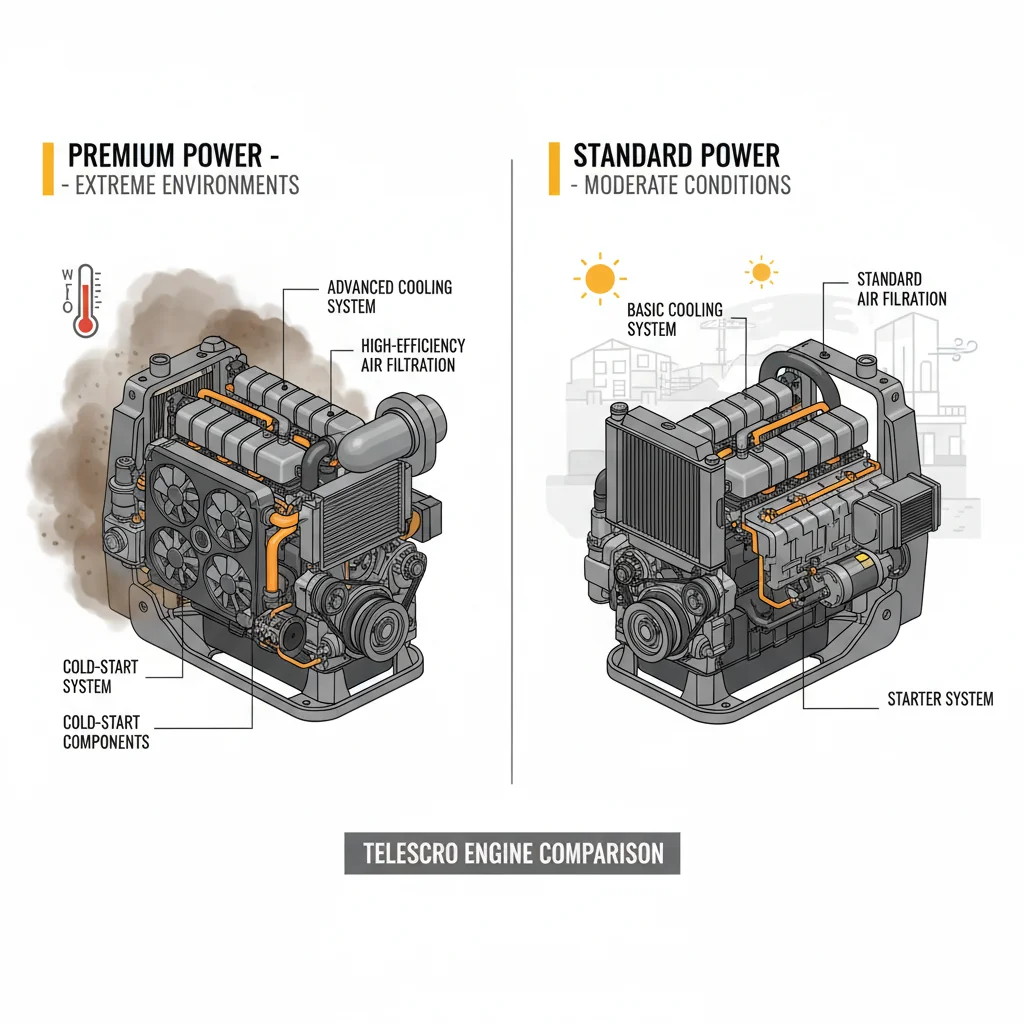
Last month, a contractor in Kazakhstan reached out after their telehandler struggled through a winter project. Their site saw overnight temperatures drop to minus 25°C. The problem? A lower-cost engine from a regional brand couldn’t handle cold starts, even with multiple attempts and preheaters engaged. They lost almost three hours every morning—a huge impact when deadlines are tight in freezing conditions. That’s exactly the type of scenario where paying for a premium engine makes sense. Premium options usually include stronger cold-weather filtration, preheat systems, and fuel pumps built for harsh climates.
Other times, jobsite dust is the main enemy. I’ve seen this in Dubai and northern China, where aggregate yards stir up clouds all day. Fine dust quickly clogs basic air filters, so high-end engines stand out—they come with advanced dual-stage filtration and cooling packages. In one case, a 4-ton telehandler racked up almost 1,200 hours in dense dust but only needed minor filter maintenance. Less robust engines in those conditions often fail before year two. That’s the “second-year surprise” a few of my customers faced—unexpected repairs just after warranty.
For quiet jobs—light farm work or warehouse lifts—there’s no need to overspend. If you plan less than 500 hours a year in clean environments, I usually suggest a reliable mid-tier engine. You still get good uptime at a lower price. In every case, think about where the machine will work, how hard it will run, and what kind of support network fits your location. Spec for reality, not just the brochure.
Engines from premium international brands often feature advanced cold start technology that can reduce start time delays by up to 50% in sub -20°C environmentsTrue
Premium engines incorporate design elements such as improved fuel injection systems and integrated block heaters that optimize combustion during extreme cold starts, significantly reducing delays compared to lower-cost regional engines.
The engine brand has no effect on telehandler price differences because all engines must meet the same emissions and efficiency standards globallyFalse
While emissions standards are regulated, engine brands differ in manufacturing quality, technology, and reliability, which directly influence the telehandler’s overall cost and performance, especially in demanding environments.
Key takeaway: Align engine brand with actual jobsite conditions and intensity. Specialized environments demand premium engines for longevity and reliability, while less demanding applications can benefit from lower-cost, reputable brands without sacrificing uptime. Avoid overpaying for features that exceed real-world requirements to maximize ROI.
Do Engine Brands Impact Used Telehandler Prices?
Telehandler engine brands have less influence on used equipment pricing than factors like service history12, operational hours13, and maintenance condition. Comparable models—such as Caterpillar and JCB with four-cylinder diesels—vary in price mainly due to age and maintenance rather than engine brand. Mainstream engines do offer resale benefits, but condition and records drive value.

From what I see in the field, most buyers put too much weight on engine brands when looking at used telehandlers. I get why—it’s easy to recognize a known logo and assume it guarantees value. But after nearly a decade in this industry, I can tell you: real jobsite value mostly comes down to condition, hours, and service history. Last year, a customer in Dubai debated between two 4-ton, 14-meter units—one with a mainstream European diesel, the other with a lesser-known brand. The price difference was almost $8,000, despite both engines running well. In the end, the cheaper unit had full maintenance records, lower hours (just over 2,200), and a clean diagnostic report—so it actually held up better over the next six months.
If you’re comparing two similar machines, focus on these essentials:
- Verified operational hours – Actual working time is critical. Lower hours often mean less wear on hydraulics, transmission, and the boom structure.
- Complete service documentation – Records of regular oil, filter, and hydraulic changes, plus major overhauls, tell you it’s been cared for.
- Engine health check – I always inspect for leaks, unusual smoke, and get scan data if possible. Consistent compression numbers are a green flag.
- Local parts and support – Mainstream engines do make sourcing spares and finding mechanics easier. Quicker repairs mean less downtime.
Engine brand is useful as a tiebreaker when all else matches. But day-to-day reliability and lower long-term costs come from proof of good maintenance, not just a popular badge. Double-check records, run a proper inspection, and only then think about the logo on the engine block.
Engine brand recognition rarely influences resale value by more than 5% if maintenance records and hours are equivalentTrue
In the used telehandler market, buyers often overvalue prestigious engine brands, but studies show that factors like machine condition, operating hours, and comprehensive service history have a much greater impact on final price, typically overshadowing brand premiums beyond a small margin.
Telehandlers equipped with lesser-known engine brands consistently depreciate faster than those with mainstream European diesel enginesFalse
Depreciation is primarily driven by usage, maintenance, and market demand rather than engine brand alone; lesser-known brands with proven durability can retain value similarly to mainstream engines when properly maintained.
Key takeaway: On the used telehandler market, price is driven primarily by condition, hours, and maintenance records—not engine brand. While mainstream engines can benefit future resale, buyers should focus on verified hours, documented service history, and diagnostic results. Treat engine brand as a secondary factor when other variables are similar.
How Do Engine Brands Impact Compliance Risks?
Telehandlers marketed with counterfeit or uncertified engines can expose buyers to severe compliance and warranty risks. Validating the engine serial number and emissions certificate directly with the engine OEM is essential. Lacking proper documentation, these machines may be excluded from regulated jobsites and lose insurability, severely diminishing operational value and resale options.

Here’s what matters most when thinking about engine brands and compliance risks with telehandlers: the wrong engine can quietly cause expensive trouble later. I still remember a situation last year in Dubai—a customer ordered a 4-ton telehandler with a “world famous” engine at a price that seemed almost too low. What arrived looked perfect on the outside, but the engine number didn’t match any record in the official OEM database. No emissions certificate, no tier compliance. When the project’s main contractor ran their own verification, that machine never got past the gate.
It’s more common than you’d think, especially in price-driven markets. Sellers may promise an engine that sounds reputable, but unless you check the actual serial number and emissions docs directly with the engine manufacturer, you’re taking a big risk. I always suggest asking for a clear photo of the engine plate and the emissions certificate before money changes hands. Use the engine maker’s website or customer service line—it usually takes 24-48 hours to get a confirmation.
If you can’t show valid documentation, several things can happen. Insurers might reject your coverage, or worse, refuse a claim if there’s an accident. Large projects—especially those in Europe, the US, or the Middle East—often require documented compliance with CE or EPA standards. Without this, you can’t work on those sites, which instantly drops your machine’s value and makes it difficult to resell.
To protect your investment, build serial-number and emissions checks into every buying process. It’s a small step that safeguards your reputation—and your wallet.
Engines from well-established brands often come with verified Tier 4 emission certifications, reducing the risk of costly compliance failures on telehandlersTrue
Reputable engine manufacturers provide certified documentation proving emission standards compliance, which is critical for meeting local regulations and avoiding project delays or fines.
The brand of engine has no impact on the resale value or compliance risk of telehandlers, so choosing a cheaper unverified engine is always cost-effectiveFalse
Using unverified or unofficial engines can lead to non-compliance with emission standards, causing legal penalties and significantly reducing resale value due to distrust and certification issues.
Key takeaway: Verifying engine authenticity and compliance certification with the original manufacturer is essential to avoid invalid warranties, rejected insurance claims, and barred jobsite access. Serial-number and emissions checks should be standard in every telehandler buying process, protecting investment value and ensuring legal, efficient operation.
Conclusion
We’ve looked at how engine brands do influence telehandler pricing, but only after you’ve locked in your main requirements like lift capacity and boom height. From what I’ve seen, buyers who focus too much on engine make often fall into “parts roulette”—they’re stuck waiting weeks for spares while the project sits idle. I always recommend checking the local support network for any engine you’re considering and making sure your core specs truly fit the job.
Need help sorting out which combination makes sense for your conditions? I’ve worked with customers in over 20 countries—feel free to reach out and I’m happy to help with no pressure. Every site has its own demands—choose with your real workflow in mind.
References
-
Explore how core specs like lift capacity explain 60% of telehandler price variation and impact project budgeting decisions. ↩
-
Learn why drivetrain accounts for 25% of telehandler price differences and how it affects machine performance and costs. ↩
-
Details the impact of extended service intervals on reducing maintenance frequency and labor costs in telehandlers. ↩
-
Explore how easy access to spare parts minimizes downtime and reduces operational costs in telehandler maintenance. ↩
-
Explains how longer overhaul intervals reduce downtime and maintenance costs, key for telehandler lifecycle management. ↩
-
Understand how downtime risk impacts project profitability and equipment efficiency with real-world examples. ↩
-
Explore how Tier 4 Final engines increase telehandler prices due to advanced emissions tech and regulatory compliance costs. ↩
-
Learn about aftertreatment systems like DPF and SCR that reduce emissions but add cost and complexity to telehandler engines. ↩
-
Explore the higher upfront costs tied to lithium-ion batteries and understand the long-term savings of electric telehandlers in construction. ↩
-
Learn how advanced filtration systems protect engines from dust damage, extending service life and improving reliability in harsh jobsite conditions. ↩
-
Explore the technical design and benefits of cold-start features that ensure reliable operation in freezing temperatures, reducing downtime. ↩
-
Explores why detailed service records increase resale value by proving proper maintenance and reliability over time. ↩
-
Explains how lower operational hours correlate to less wear and longer machine lifespan, impacting pricing decisions. ↩