










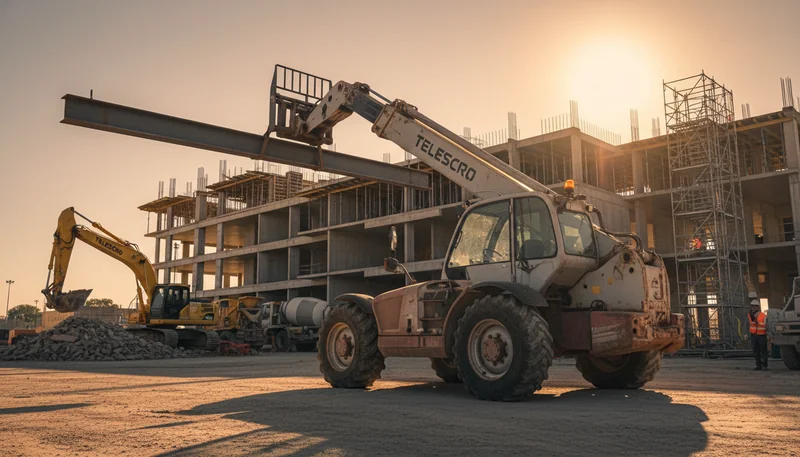
Telehandler Capacity: How Aging Components Undermine Real Lifting Power (Field Guide)
A few months ago, I watched a crew in Brazil trying to lift a 2.5-ton pallet with a 10-year-old telehandler that “should” have made it look easy. Instead, the boom stalled halfway out—and that wasn’t the only surprise waiting for them on site.
Telehandler load charts represent ideal, as-new machine performance under the manufacturer’s specified setup and inspection conditions—correct hydraulic function, tight pin-and-bushing tolerances within service limits, OEM-specified tires, and operation on firm, level ground. As components age, verified safe lifting capacity can fall below the nameplate value, especially at long reach or in harsh duty cycles, as hydraulic wear, structural deflection, and degraded tires progressively reduce stability and force margins—often without obvious warning.
Does Telehandler Age Reduce Lifting Capacity?
Telehandler rated capacity1, as shown on the nameplate and load chart, is established for a new or properly maintained machine operating under ideal conditions. As hydraulic, structural, and mechanical components wear over time, the verified safe lifting capacity can decline—particularly at maximum reach—often becoming noticeably lower than the original rating in high-hour machines or under harsh operating conditions.

The biggest mistake I see on jobsites is assuming the load chart never changes as a telehandler gets older. Rated capacity—what you see on the data plate—is for a machine that’s basically fresh from the factory: full hydraulic pressure, tight pins, original tires, and no structural fatigue. But I’ve worked with plenty of 4-ton class machines in the Middle East that started struggling with 3,200 kg loads after 6,000 hours, especially if jobsites were dusty and maintenance skipped a few intervals.
One customer from Kazakhstan pushed their 17-meter unit believing it could always lift to spec. After seven years, the boom had noticeable flex, the hydraulic circuit2 developed small leaks, and the front axle bushings wore loose. When they finally load tested, real capacity at full extension was down almost 20%. The operator noticed the machine stalling when trying to place roof panels at max reach—dangerous, but predictable when you know how wear creeps up everywhere: hydraulic seals, boom welds, even just tire changes can throw off stability.
The reality is that effective lifting capacity often declines well before a telehandler shows obvious end-of-life signs. Under harsh operating conditions and without regular inspection or verification, safe working capacity can fall noticeably below the original rating as hours accumulate. The load chart should therefore be treated as a baseline reference, not a lifetime guarantee. I recommend incorporating periodic load verification into the maintenance program for higher-hour machines, rather than waiting for a stall, instability, or near-miss. Regularly checking actual lifting performance and adjusting operating limits accordingly is key to maintaining safe and predictable operation.
As telehandlers age, wear in hydraulic components and slack in structural joints can significantly decrease their practical lifting capacity, even if the load chart remains unchanged.True
Real-world lifting capacity depends on the condition of key systems. Deteriorating seals, reduced hydraulic pressure, and increased pin play can all limit safe lifting, causing performance to degrade over time regardless of the factory rating.
As long as the telehandler passes its annual inspection, its lifting capacity remains exactly as listed on the original load chart.False
Inspections confirm basic safety but do not restore original mechanical tolerances or hydraulic pressures. Over time, minor undetected wear or fatigue can erode lifting performance even if the machine is certified for use.
Key takeaway: Telehandler capacity is not static over its life. Worn hydraulic systems, loose pivots, tire changes, and fatigue can significantly reduce real-world lifting performance. Operators and fleet managers must regularly load test and inspect older machines, adjusting usage and limits to actual verified capacity, not just the original load chart.
How Does Hydraulic Wear Reduce Lifting Power?
Hydraulic wear in telehandlers—caused by pump degradation3, leaking seals, or drifting relief valves4—reduces effective system pressure. Because lifting force is a function of hydraulic pressure and cylinder area, any sustained pressure loss directly lowers available lifting capability. In higher-hour machines or those with poor oil and filter maintenance, this reduction can become operationally significant, particularly during heavy lifts or long-reach operation.
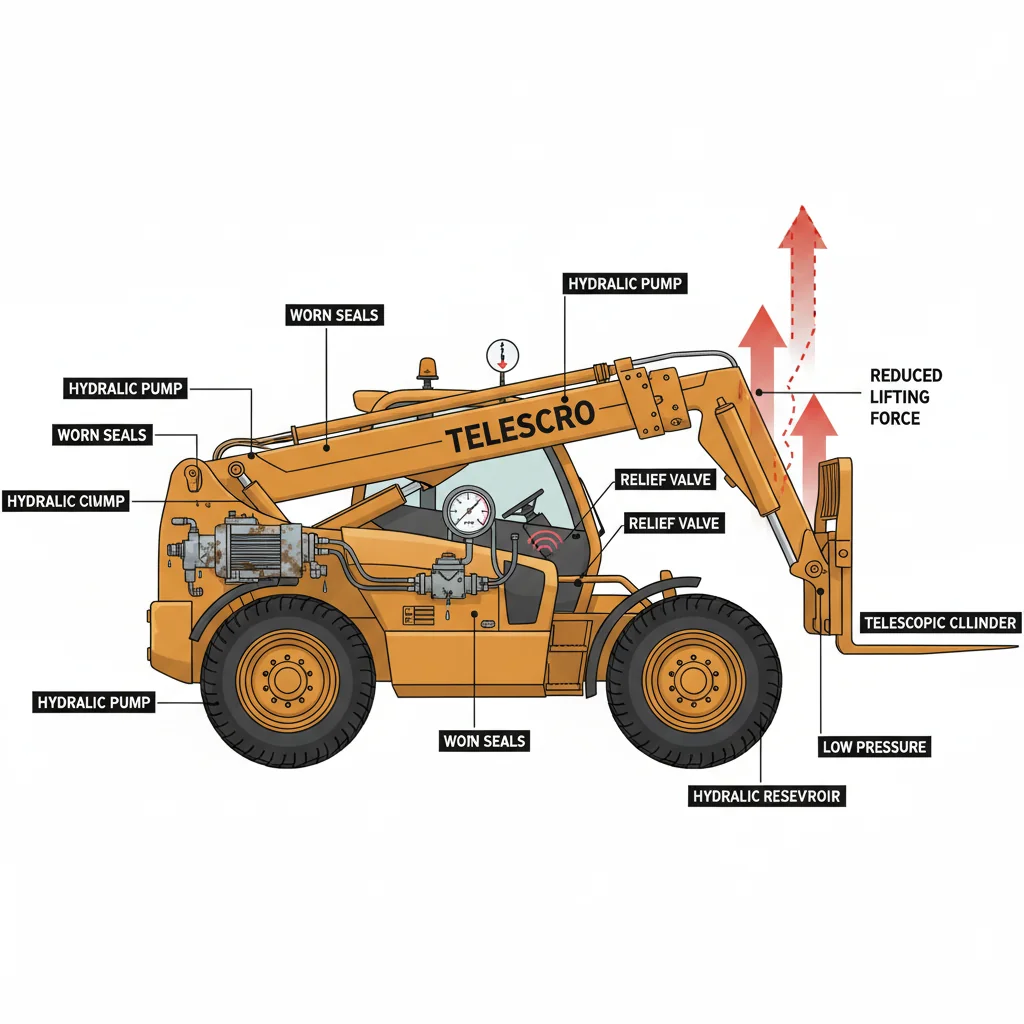
Let me share something important about hydraulic wear that I see all the time on real jobsites. Lifting power in a telehandler is directly tied to hydraulic pressure—without enough pressure, rated capacity drops fast. I remember a project in Dubai where a 4-ton unit, after years of sand exposure, could barely lift 3.2 tons at full outreach. The pumps and seals hadn’t been serviced. Every time the operator boomed out, the machine slowed and the boom crept slightly downward. That’s clear evidence of pressure loss.
In technical terms, the lifting force comes from system pressure multiplied by the area of the lift cylinder. If the pump or relief valve gets worn, you lose pressure. For example, a model designed for 260 bar pressure may only deliver 210 bar under load if the system’s aging or oil’s dirty. That means about a 19% drop in available force. From my experience, this isn’t rare—10–20% capacity loss is common after 4,000–5,000 dusty, hot hours, especially if oil and filters aren’t changed per schedule.
The practical impact? Slow boom speeds, warning beeps from moment indicators, and operators forced to back off on tough lifts. Jobsites in places like Kazakhstan and Western Australia, where dust is everywhere, see this much faster. My honest advice: test system pressure at operating oil temperature at least once a year. Keep oil clean, swap filters at 250–500 hours, and replace worn hoses and seals before you see symptoms. You can restore a lot of lost power—making the machine safer and more productive.
Aged or worn hydraulic pumps and seals in a telehandler can cause internal leakage, leading to a substantial drop in hydraulic pressure and a real-world reduction in lifting capacity, even if the display shows normal pressure readings.True
As hydraulic components wear, internal leakage increases, meaning that pressure generated may not be fully transmitted to the cylinders. This pressure loss causes telehandlers to struggle with their rated loads, and displays may not always capture these internal inefficiencies.
Hydraulic wear in a telehandler primarily affects travel speed, not its lifting performance, as lifting capacity is determined solely by the boom’s structural strength.False
While structural strength sets the maximum possible load, lifting power in telehandlers depends on the hydraulic system delivering sufficient pressure and flow. Hydraulic wear affects both lifting and boom extension, not just travel or movement speed.
Key takeaway: Regularly test hydraulic pressure at working temperature, maintain clean oil, replace filters proactively, and renew seals/hoses per OEM guidelines. Restoring hydraulic system health can recover significant lifting power lost to age-related component wear—preserving equipment safety, rated capacity, and operational efficiency.
Can Boom Wear Reduce Telehandler Capacity?
Yes, structural wear in the boom and chassis can measurably reduce a telehandler’s real lifting capacity. Over 5,000–8,000 operating hours, worn boom pads, ovalized pins, and linkage degradation increase boom deflection5 and side play, altering the effective geometry assumed in the load chart and reducing both stability and rated capacity at maximum reach.
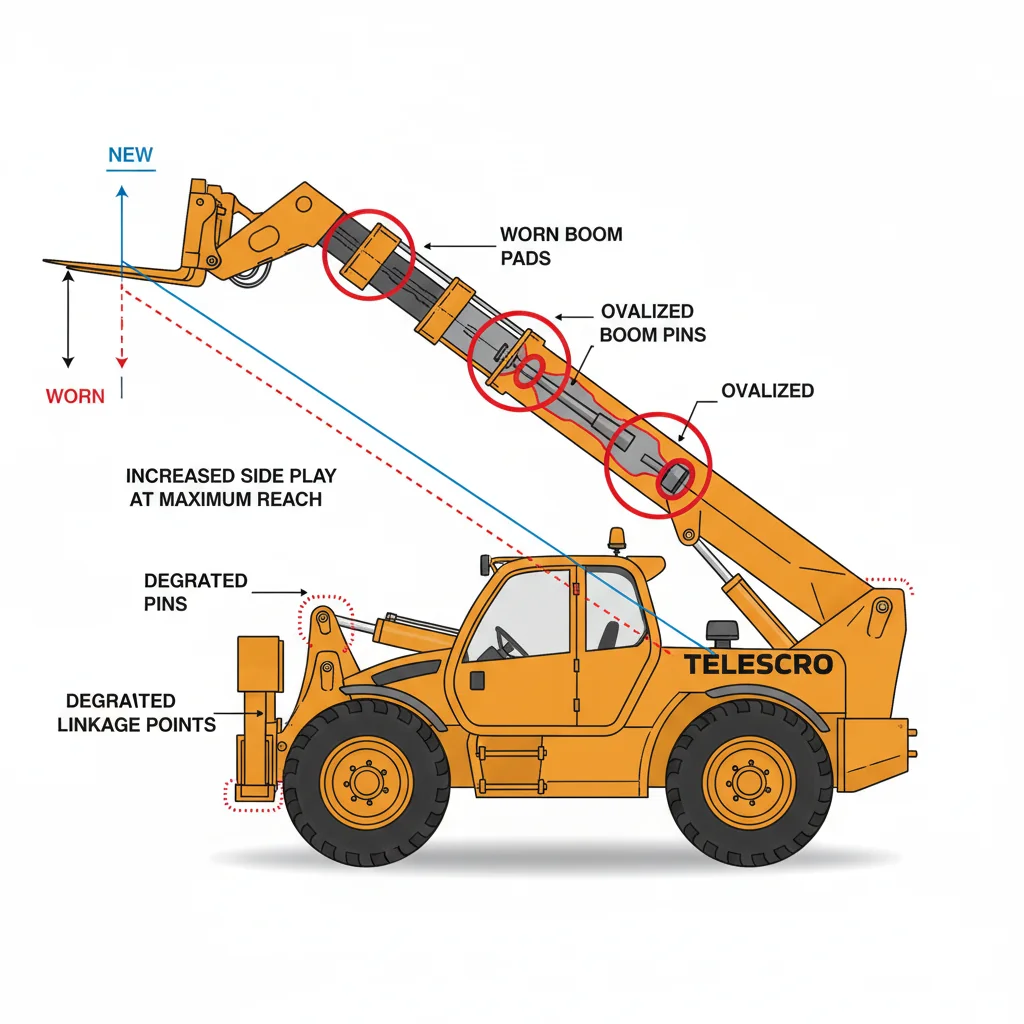
I’ve worked with many customers, and one job in Kazakhstan stands out. The operator reported that his 4-ton telehandler felt unstable when handling loads at full extension, even though the load chart indicated the lift should have been within limits. A follow-up inspection showed the machine had accumulated close to 8,000 operating hours.
Closer examination revealed that the boom wear pads were significantly worn, and the pins at the main boom head had begun to ovalize. Individually, these issues appeared minor, but together they introduced additional movement in the boom structure. This allowed greater flex under load, causing the load to hang slightly farther forward than intended. At approximately 17 meters of reach, the machine’s effective lifting performance was noticeably reduced compared with its original rating, particularly at maximum extension.
What many operators assume is that capacity remains unchanged until a visible failure occurs. In practice, capacity degradation usually happens gradually. Increased side play in the boom, greater deflection under load, and small but cumulative changes in boom geometry all reduce stability margins in ways the original load chart does not account for. Once this occurs, the manufacturer’s published capacity values are no longer a reliable indicator unless structural tolerances are restored.
In more advanced cases, especially on machines operating in dusty or abrasive environments such as parts of Dubai or northern China, I have also observed early-stage weld cracking or localized bulging near boom hinge points. To avoid unexpected derating, inspections should focus on practical warning signs: checking for lateral twist with the boom fully extended, measuring side play at the boom nose, and observing any boom drop when the control lever is held in neutral.
Excessive wear on boom pads and pivot pins can lead to increased flex in the boom structure, which in turn can reduce a telehandler's effective load capacity even if the machine's load chart appears within limits.True
Wear in critical components introduces additional movement and instability, which can cause the load to hang farther out or the boom to deflect more under load. This reduces real-world stability and capacity, even though the manufacturer's chart does not account for this degradation.
As long as a telehandler's load chart is followed, worn boom pads and pins have no effect on its lifting capacity or stability.False
The load chart assumes the machine is in good mechanical condition. Worn components disrupt designed tolerances and structural integrity, potentially leading to unsafe operating conditions and decreased capacity even when staying within charted limits.
Key takeaway: As telehandlers age, accumulated structural wear changes the boom’s stiffness and linkage geometry. This wear increases flex and side play, causing older machines to act as if they are in a lower tonnage class at long reach. Inspect and maintain critical boom components to avoid unseen derating.
Do tires affect telehandler lifting capacity?
Telehandler rated capacity assumes OEM-specified tires—correct size, ply rating, and inflation pressure—operating on firm, level ground. Worn, under-inflated, mismatched, or non-OEM tires alter the machine’s stance and forward stability, particularly at maximum reach. In field conditions, degraded tires combined with uneven or soft ground can significantly reduce the verified safe working capacity compared with the original rating.

Most people don’t realize that telehandler rated capacity is only valid when the machine sits on tires that match the manufacturer’s exact specs—size, ply, and pressure—not just any tire that fits the rim. I’ve seen crews in Kazakhstan push right to the limit on muddy ground, using old, mismatched tires. They aimed for a 3.5-ton lift, but with soft, under-inflated tires and uneven soil, the machine started to lean at less than 2.7 tons. The reality is, tire condition directly affects the stability line—the front axle contact points—so even slight differences throw off the tipping calculation.
From my experience, big problems start when operators skip daily tire checks. One project in Dubai had a 4-ton rough-terrain telehandler on site. After two months in the sun, the tires were cracked, with tread worn nearly bald. The customer called me after the machine felt “spongey” moving 3,000 kg at full reach—stability alarm triggered, even though the load was under the rated spec. When we measured, tire pressure6 was almost 30% below the OEM minimum. That reduced the safe working limit enough to matter, especially with uneven surfaces compounding risk.
I always tell fleet managers: stick with OEM-recommended size and ply, and never guess on tire pressure. Avoid switching to heavier solid tires unless the load chart allows. Machines look fine in the yard, but on a rough or sloped site, the difference between safe and unsafe can be one soft tire. Check pressures daily. If you see deep cuts or worn sidewalls, replace them before trusting any capacity number.
Telehandler lifting capacity can be significantly reduced if tire pressure is below the manufacturer's recommended specification, even when the tires are otherwise in good condition.True
Proper tire pressure is essential for distributing weight evenly and maintaining stability, which directly impacts the maximum safe lifting capacity. Lower-than-recommended pressure causes additional flex in the sidewall and deformation under load, compromising both the rated load and the telehandler’s balance, particularly on uneven ground.
As long as a tire fits the telehandler's rim, its brand, size, and ply rating have no effect on the machine's lifting capacity.False
Tire size, ply rating, and manufacturer specifications are critical to maintaining the telehandler’s rated capacity. Using tires that do not exactly match these specs can alter the machine’s stability, flotation, and structural support, leading to unsafe lifting conditions and a reduction in real-world lifting ability.
Key takeaway: Telehandler lifting capacity is only valid when manufacturer-specified tires are used, correctly inflated, and operated on firm, level ground. Tire condition and ground support have a direct influence on stability and real-world lifting performance. Regular tire inspection and pressure checks are essential, especially when working near rated limits or at long reach.
Can Load Charts Be Trusted on Older Telehandlers?
Telehandler load charts are valid only when the machine remains in sound mechanical condition consistent with the manufacturer’s assumptions. As hydraulics, structural components, and tires age or degrade, originally assumed safety margins can be reduced. For higher-hour or older machines, periodic proof load testing7 is a recognized method to verify actual lifting capability; relying solely on the original load chart without such verification carries increased operational risk.

Last month, I got a call from a contractor in Kazakhstan—they wanted to lift precast panels weighing almost 2,000 kg with a 10-year-old 3.5-ton telehandler. The operator checked the load chart and said, “No problem.” But when they attempted a trial lift at nearly full boom extension, the machine struggled. The boom deflected more than expected, and the hydraulic circuit couldn’t hold the load steady. That’s the hidden risk: load charts only reflect what’s possible if your telehandler is close to factory condition, including all major components—hydraulics, boom, tires, even the frame.
This isn’t just theory. As telehandlers age, high-pressure hoses get softer, cylinder seals leak, and structural welds can develop tiny fatigue cracks. Tires lose shape, reducing ground stability. I’ve seen machines that “passed” inspections but failed when actually tested at 90–100% of rated capacity, especially at maximum reach. Most standards—whether EN 1459, ANSI or OSHA—make it clear: you, as the owner, are responsible for machine condition. The load chart mounted on the cab is not a free pass if you know there are issues.
For higher-hour or older telehandlers, I recommend incorporating proof load verification into the planned maintenance program. Using calibrated test weights, focus on the most critical boom positions—particularly maximum extension and forward reach, where structural and hydraulic loads are highest. If the machine cannot lift and hold the intended working load without excessive boom deflection, drift, or instability, capacity should be restricted or corrective maintenance carried out. Lifts should not be planned at the chart limit until actual lifting performance has been verified under controlled conditions. This practice significantly reduces operational risk on aging fleets.
Load charts on older telehandlers may not account for reduced capacity caused by component wear, such as boom section deflection and weakened hydraulics.True
Load charts are developed under the assumption that the machine is in optimal, as-new condition. Over time, factors like boom pin wear, fatigue, and hydraulic inefficiencies can alter the real-world capacity, especially at extended reaches or with heavier loads, resulting in potential instability that the original chart does not reflect.
As long as the load is within the charted rating, an older telehandler will always perform exactly as predicted, regardless of age or maintenance history.False
Older telehandlers may experience wear in structural and hydraulic components that impairs their load-handling ability. The actual safe capacity can decrease with use and lack of proper servicing, making strict adherence to an original load chart potentially unsafe.
Key takeaway: Load charts on older telehandlers may overstate safe capacity if components have degraded. Owners must periodically verify lifting capability with proof load tests and avoid planning lifts at 100% of charted values until actual performance is confirmed. Maintenance is essential—charts do not compensate for wear.
How to Measure Actual Telehandler Capacity?
On-site telehandler capacity can be evaluated through a combination of field checks: a hydraulic system pressure test8 at operating oil temperature, detailed structural inspection of the boom and joints9, and a functional load cycle test using a known test weight. Deviations from OEM pressure specifications or abnormal boom behavior during these checks indicate degradation and a corresponding reduction in real lifting capability.
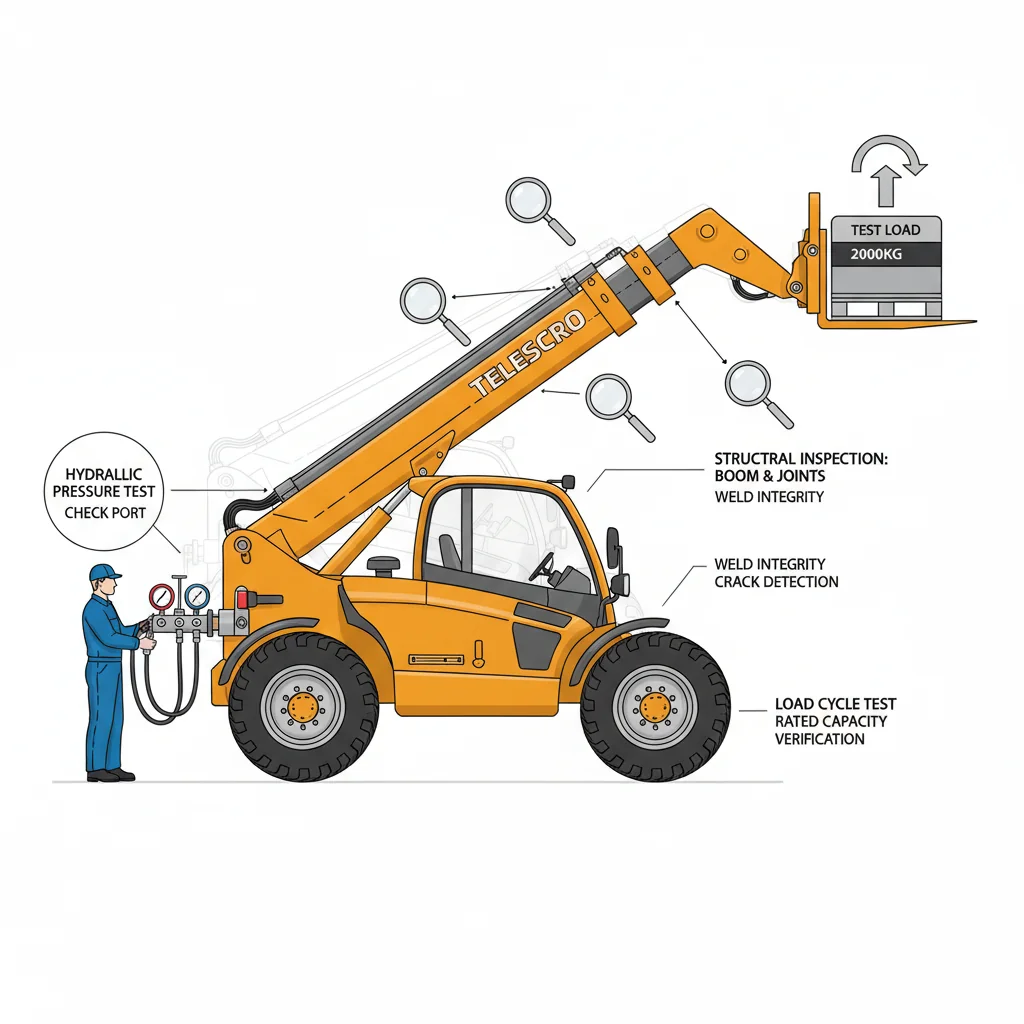
Here’s what matters most when you want to understand a telehandler’s real lifting capability: laboratory specifications and load charts do not tell the full story. In field operation, actual lifting capacity often drops below the published rating as machines age and components wear. That is why I recommend verifying capacity through three targeted checks rather than relying solely on documentation.
The first step is a hydraulic performance check. During a fleet review in Dubai, the team connected a pressure gauge to the boom lift circuit and measured system pressure at operating oil temperature, after 20–30 minutes of normal work. One 4-ton, 17-meter unit measured more than 12% below the manufacturer’s specified pressure, indicating wear in the pump and main lift cylinder seals. Losses at this level are enough to materially affect lifting performance, particularly at higher reach.
The second step is structural stability inspection. I recommend closely observing the boom under load—looking for cracks, plate wear at welds, and excessive movement around pin joints or the carriage. In this case, the same machine showed noticeable boom sway with a 2,000 kg pallet at partial extension. Worn boom pads on one side had increased lateral movement, a clear sign that structural wear was affecting stability and should be addressed before further heavy lifting.
The final step is a functional load cycle test. Lift a known, calibrated load, extend the boom through its working range, and observe behavior under sustained load. Watch for cylinder creep, delayed response, or abnormally slow cycle times. These symptoms often confirm hydraulic or structural wear that is not immediately visible during static inspection.
Aging hydraulic cylinders or worn boom pivot points can significantly reduce a telehandler's actual lifting capacity compared to its original load chart rating.True
Over time, internal wear in hydraulic systems and mechanical joints can lower structural integrity and allow for excessive flex or drift, which translates into reduced ability to safely lift the loads specified by the manufacturer.
If a telehandler passes a simple visual inspection, its actual lifting capacity will always match the lab-tested capacity on the load chart.False
Visual inspection alone cannot detect internal wear or minor leaks inside hydraulic systems or stress fractures in structural components. These hidden issues often reduce real-world capacity even if the machine appears fine externally.
Key takeaway: Actual lifting capacity of aging telehandlers can be systematically evaluated outside a lab using targeted hydraulic, structural, and load tests. Regular field assessments help detect capacity loss early, ensuring safe operation and more accurate pricing for used units or annual fleet reviews.
When should telehandler capacity be derated?
Telehandler rated capacity should be reassessed or derated when technical issues—such as chronic low hydraulic pressure10, repeated boom or chassis repairs11, visible structural distortion, or persistent instability—make the original plate rating unreliable. In practice, fleets may limit allowable loads, reassign the machine to lighter-duty applications, or carry out corrective repairs, based on verified performance rather than relying solely on the original rated capacity.

From my experience, the question of when to derate a telehandler’s capacity always comes up after a few years of heavy use or a set of tough repairs. It’s not just about what’s on the data plate. I’ve worked with a fleet manager in Dubai who had two 4-ton telehandlers with similar hours—around 9,000 each. One still handled full loads confidently, but the other struggled with chronic low hydraulic pressure and visible twist in the chassis. For that second machine, sticking to the original load chart would be wishful thinking.
A machine that’s gotten multiple boom or chassis repairs isn’t guaranteed to keep its factory stability. I saw this in Kazakhstan: a contractor kept using a high-reach unit for heavy block lifts after several weld repairs along the boom base. Eventually, their moment indicator tripped every other lift, and one day the boom started leaning slightly under max-load. They derated to 60% of plate capacity on all jobs after that—and immediately stopped using full boom extension. The alternative would’ve been constant risk or extra rentals every time.
Key technical signs? If you notice weak hydraulic response (like slow boom lift at normal engine RPM), instability even on level ground, or repeated repairs in key structural areas, your rated capacity is no longer realistic. I always suggest reviewing your jobsite’s actual lift weights and history before making the call. Sometimes a $3,000 pump or a new set of boom pins brings capacity back close to 100%. But if you’re always pushing the limits, plan for derating or swapping the unit out. It’s safer—and typically cheaper in the long run.
A telehandler’s rated lifting capacity should be derated if there is noticeable chassis distortion or persistent low hydraulic pressure, even if the data plate lists the original capacity.True
Chassis damage and hydraulic issues can impair the structural integrity and lifting ability of a telehandler, making its real-world safe capacity lower than what is indicated on the manufacturer’s plate. Relying solely on the data plate without considering wear or mechanical problems can create serious safety risks.
Telehandler capacity only needs to be derated after the machine reaches its maximum operational hours, regardless of its condition.False
Capacity should be assessed based on the actual mechanical condition of the telehandler, not just total hours. Damage, wear, or repairs can all affect capacity before maximum hours are reached, making regular inspection and testing essential.
Key takeaway: Persistent technical faults or visible structural damage require treating the telehandler’s plate capacity as unrealistic. Derating, targeted repairs, or retirement may be more cost-effective than risking downtime or additional equipment rental. Use utilization history and actual lift weights to guide sound capacity and investment decisions.
Do Telematics Systems Prevent Telehandler Capacity Loss?
Telematics and onboard weighing systems help fleets monitor how telehandlers are actually used by tracking duty cycles, overload events12, shock loads, and alarm frequency. While these systems do not prevent mechanical wear on their own, they enable earlier intervention—such as operator retraining, task reassignment, and targeted maintenance—which can significantly slow the rate at which effective lifting capacity deteriorates over time.

Operators often underestimate that capacity loss is driven less by age alone and more by repeated misuse that goes uncorrected. In fleets where telematics alerts are actively reviewed, overload or shock events typically trigger follow-up actions, ranging from correcting lift techniques to scheduling hydraulic or structural inspections. In contrast, fleets that ignore warning data often only respond after performance has already degraded, by which point wear in booms, pins, or hydraulic components is well established.
I have worked with fleets where disciplined use of telematics data helped maintain more consistent lifting performance over long service lives. When overload alarms, excessive boom angles, or repeated high-impact events were addressed promptly, machines showed fewer unplanned repairs and more predictable behavior at rated reach. Conversely, I have also seen operations where frequent overload events and long periods without sensor recalibration coincided with early loss of effective capacity and growing reliance on conservative operating limits.
For buyers evaluating used equipment, telematics records are a valuable due-diligence tool. Reviewing overload frequency, shock events, and calibration history of load-moment indicators or onboard weighing systems provides insight into how the machine was actually operated. Where such data shows repeated high-stress events or poor calibration discipline, it is prudent to assume additional wear and verify real lifting capability before relying on original load chart values.
Telematics systems can help identify repeated overload events that accelerate wear in key load-bearing components, indirectly preventing capacity loss if corrective action is taken promptly.True
When telematics captures overload or misuse incidents, maintenance teams can investigate and address underlying causes before components such as boom sections or hydraulic cylinders degrade, preserving the telehandler's rated capacity over a longer period.
A telematics system can automatically adjust the telehandler’s rated capacity to compensate for wear and aging components without operator intervention.False
Telematics systems can monitor and report usage data or flag issues, but they cannot physically alter the machine’s calibration or capacity ratings. Adjustments for wear-related capacity changes must be made manually by qualified technicians after inspection.
Key takeaway: Telematics systems do not eliminate telehandler capacity loss, but they provide visibility into misuse and high-stress operation. Fleets that actively respond to telematics data can slow wear-related capacity degradation, improve safety margins, and extend productive service life. Ignoring this data allows capacity loss to accumulate unnoticed, increasing operational risk and reducing asset value.
Do electrical faults reduce telehandler capacity?
Aging electrical and control components in telehandlers can directly impact safe lifting capacity. Faulty wiring, corroded terminals, weak batteries, or malfunctioning sensors can cause intermittent errors, disable safety interlocks, or force automatic derating13. Such issues may prevent full boom extension or allow dangerous overloads, undermining actual lifting performance despite nominal rated capacity.

I’ve worked with customers who underestimated just how much a small electrical fault could throw off their lifting jobs. Last year, a team in Dubai started having problems with their 4-ton telehandler. At first, they blamed the hydraulics when it wouldn’t break past 10 meters of reach, even though the rated chart allowed it. Turned out the real problem was much simpler—worn wiring and a corroded sensor for the load moment indicator14. The control system flagged an overload even when lifting less than 2,000 kg. That forced the machine into automatic derating mode, cutting their working capacity by nearly half. I see these “phantom errors” more and more as fleets get older or work in humid, coastal areas.
Here’s what matters most when you’re managing a mixed fleet: electrical system health is just as important as mechanical condition. Weak batteries might not stop the engine, but they’ll cause voltage drops that confuse boom sensors or shut down safety interlocks. On one site in Kazakhstan, a dying battery caused random boom lockouts in the morning but ran fine later in the day—until they finally checked the wiring harness and found water damage.
Neglecting electrical maintenance directly affects lifting potential and safety. I always recommend regular checks: clean battery terminals, look for cracked insulation (especially at boom pivots and articulated joints), and test limit switches at least once a year. Never bypass a malfunctioning sensor to “get the lift done”—I’ve seen jobs end with tip-over incidents you don’t want to talk about. Checking electronics is capacity management, not just box-ticking.
Electrical faults in telehandler sensors or wiring can cause the control system to falsely limit lifting capacity, even when the mechanical components are fully functional.True
Modern telehandlers rely on load moment indicators and electronic sensors to monitor capacity and stability. Faulty wiring or damaged sensors can send incorrect signals to the control unit, which may activate safety cutouts or limit performance as a precaution, even though the machine's structure is not actually compromised.
As long as the hydraulics are operating correctly, electrical faults cannot impact the telehandler’s maximum rated lifting capacity.False
Electrical systems play a key role in monitoring and controlling lifting operations. Even with fully functional hydraulics, electrical issues—especially in sensors and control modules—can restrict or interrupt a telehandler's ability to lift to its rated capacity due to automatic safety responses designed to prevent potential hazards.
Key takeaway: Electrical system health is crucial for maintaining a telehandler’s safe rated capacity. Regular inspection of batteries, wiring, and electronic limiters is a vital part of capacity management for fleet managers. Neglected electrical faults often trigger conservative auto-derating or permit unsafe operation—both directly undermine real-world lifting capability.
Conclusion
We looked at how aging parts—like hydraulics, pins, and even tires—can quietly reduce the lifting ability of your telehandler over time. It’s easy to trust the original load chart, but I’ve seen many machines turn into "showroom heroes, jobsite zeros" because nobody checked real capacity as components wore out. If you haven’t already, I suggest doing a proper load test and adjusting your limits as needed. This extra step can save a lot of headaches (and safety risks) down the road. Need a second opinion or have questions about keeping older machines safe and productive? I’m happy to help—just reach out anytime. The right checks now keep your site running smoothly later.
References
-
Detailed insights on how OEM-specified tires impact telehandler stability and lifting limits, crucial for safe operation on various terrains. ↩
-
Details the impact of hydraulic circuit health on load stability, critical for preventing failures during heavy lifts on telehandlers. ↩
-
Explore how pump degradation reduces hydraulic pressure and lifts capacity, with technical insights and maintenance tips for telehandlers. ↩
-
Understand the impact of relief valve wear on system pressure and lifting force, supported by real-world examples and technical explanations. ↩
-
Explore detailed effects of boom deflection on stability and lifting capacity in telehandlers, backed by real-world operating data and expert analysis. ↩
-
Explains how under-inflated tires reduce telehandler stability and lifting capacity, backed by real-world examples and field data. ↩
-
Explains how proof load testing ensures safety by verifying load capacity on aging telehandlers beyond factory guarantees. ↩
-
Detailed guide on testing hydraulic pressure under hot oil conditions to detect wear and real lifting capacity losses. ↩
-
Explains how inspecting welds, cracks, and pin joints prevents structural failures and maintains safe lifting operations. ↩
-
Explore detailed causes and solutions for chronic low hydraulic pressure to maintain telehandler performance and avoid costly downtime. ↩
-
Learn expert criteria for derating telehandler capacity after boom or chassis repairs to ensure safety and operational stability. ↩
-
Learn about the impact of overload events on telehandlers and how early detection through telematics prevents damage and downtime. ↩
-
Explore how automatic derating limits telehandler capacity for safety and the impact of electrical faults triggering this mode. ↩
-
Understand how load moment indicators prevent overloads by monitoring lifting conditions, essential for telehandler safety. ↩