










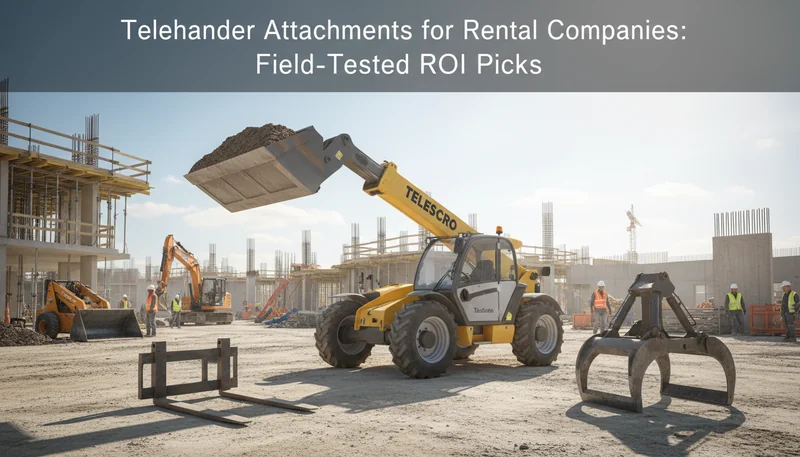
Telehandler Attachments for Rental Companies: Field-Tested ROI Picks
Not long ago, a rental fleet manager from Turkey called me frustrated—half his telehandler attachments sat unused all year. Meanwhile, contractors kept asking why simple buckets and forks were always out. I’ve seen this scenario play out everywhere from Canada to Malaysia.
Rental data consistently shows that a small assortment of telehandler attachments delivers the highest utilization and fastest payback for fleet owners. Core tools—such as pallet forks1, general-purpose buckets2, lifting jibs, and work platforms—enable a single machine to handle diverse site tasks. Pallet forks and buckets alone typically achieve over 60% annual utilization and recover purchase costs within 18–24 months. Attachment compatibility3 across brands and modular, multi-platform designs are critical factors for maximizing fleet flexibility and minimizing equipment idle
Which Telehandler Attachments Maximize Rental ROI?
Pallet forks and general-purpose buckets consistently deliver the highest revenue and utilization rates for rental telehandler fleets, achieving over 60% annual utilization and recouping purchase costs within 18–24 months. Specialized attachments like truss booms, jibs, and lifting hooks rent less frequently but command premium rates and boost overall package value.
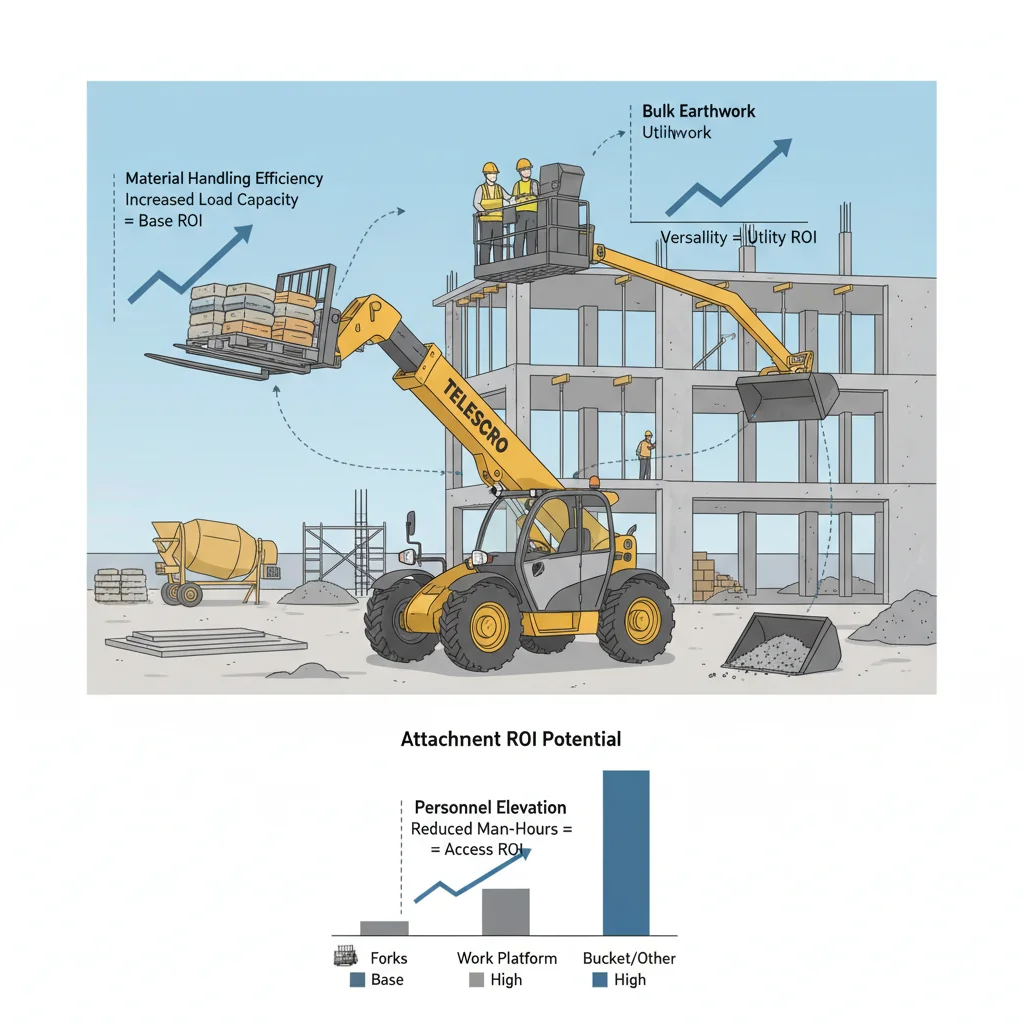
Most people don’t realize that two attachments—pallet forks and general-purpose buckets—do about 70% of the heavy lifting in a rental telehandler fleet. I’ve seen this firsthand working with customers in Dubai and South Africa. Forks are the core for moving pallets of bricks, block, or construction materials. A standard 4-ton telehandler with 13-meter reach typically lifts around 2,500 kg on forks at mid-boom extension. On the other hand, buckets turn the same machine into a loader for sand, gravel, or loose debris—essential for sites with limited equipment budgets.
One customer in Kenya told me their buckets were rented out almost constantly during roadworks, recouping the cost in just over 18 months. Let’s compare how these top attachments stack up for rental ROI:
| Attachment | Usage Rate (Annual) | Avg. Daily Rate | Payback Period | Typical Tasks |
|---|---|---|---|---|
| Pallet Forks | 60–70% | Moderate | 18–24 months | Material pallet handling |
| General-purpose Bucket | 55–65% | Moderate | 18–24 months | Loose material loading |
| Truss Boom/Jib | 15–25% | High | 24–30 months | Lightweight craning, truss handling |
| Lifting Hook | 10–18% | High | 24–36 months | Lifting slung loads |
| Work Platform | 20–30% | Premium | 28–36 months | Personnel elevation |
To be honest, I always suggest tracking attachment usage closely. In Kazakhstan, one rental company realized their truss booms sat idle ten months a year, despite higher daily rates.
Pallet forks on a 4-ton telehandler with 13-meter reach can typically lift around 2,500 kg at mid-boom extension, making them ideal for handling heavy construction materials efficiently in rentalsTrue
This capacity is based on actual load charts for standard telehandlers, and understanding the reduced capacity at mid-boom extension helps rental companies optimize equipment use and attachment selection for improved ROI.
Installing specialized bulk handling buckets instead of general-purpose buckets always maximizes rental fleet ROI by doubling the hourly throughput of material movementFalse
While specialized buckets may improve efficiency for certain materials, general-purpose buckets cover a wider range of tasks and applications, offering better flexibility and utilization that typically results in higher overall ROI for rental fleets.
Key takeaway: Rental fleets should prioritize high-utility attachments—pallet forks, buckets, and essential lifting tools—when building or expanding inventory. These maximize both utilization and return on investment, while more specialized attachments should be evaluated for profitability or offered as value-adding niche options.
Why Are Forks and Buckets Essential Attachments?
Pallet forks and buckets are indispensable telehandler attachments for rental fleets due to their universal application in construction, industrial, and agricultural sectors. These tools offer high utilization rates, simple maintenance, and rapid ROI—often within 18–24 months—making them a standard, profitable investment for equipment rental companies.
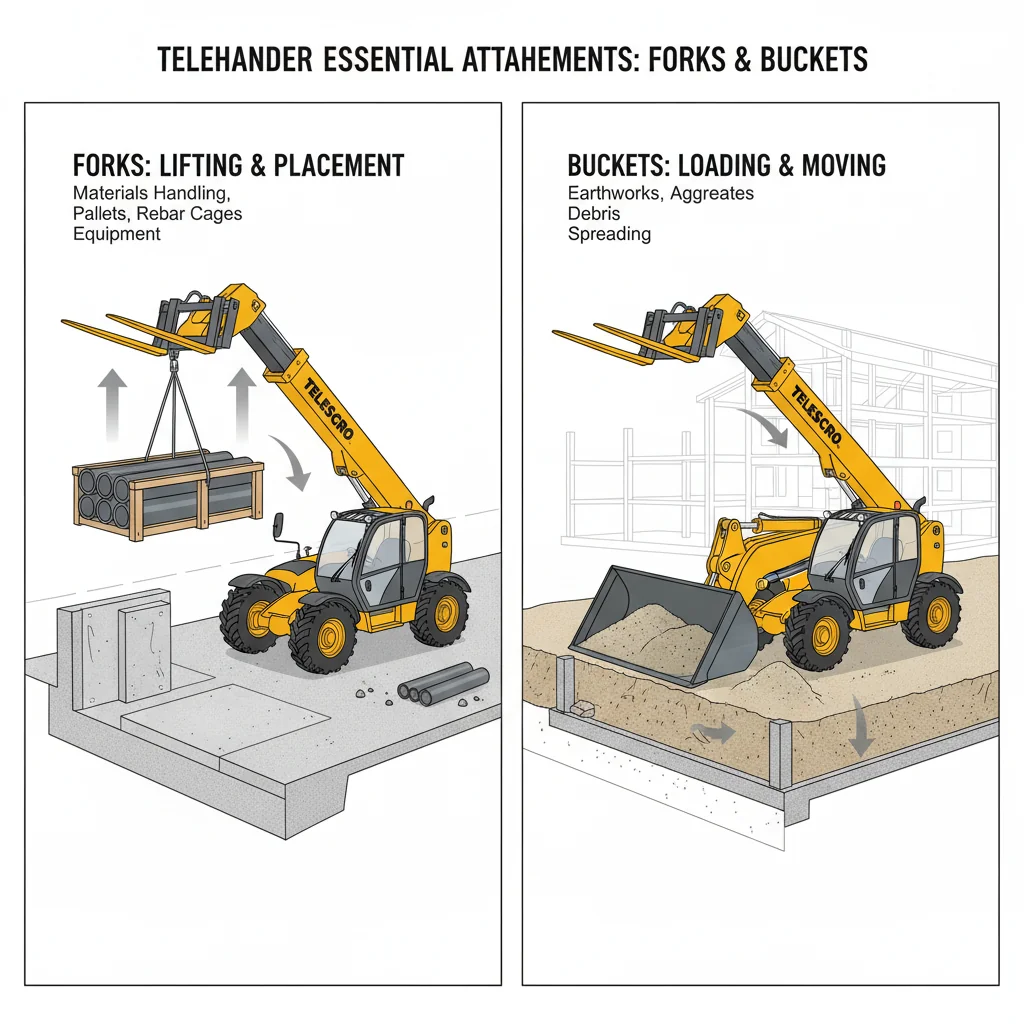
Let me share something important about forks and buckets—they’re the reason telehandlers stay busy, no matter the jobsite or season. Across 20 countries, almost every rental customer starts with forks for moving palletized loads, bricks, or block. But buckets come up next for cleanup, handling material, and minor excavation. Last year, a contractor in Kazakhstan rented four 4-ton telehandlers from us. Their jobs ranged from unloading cement to shifting crushed stone. Forks handled most of the work, but as soon as the weather turned wet, buckets were suddenly in demand for site backfilling and drainage work.
Within three days, every unit had both a fork and a bucket attached—full utilization, no downtime. Here’s why these two attachments matter so much for your fleet:
- Universal demand: Forks and buckets are requested for nearly every rental, from building sites to farms to factories.
- Rapid return: Typical rental rates allow payback on these attachments in 18–24 months, sometimes faster in peak construction season.
- Simple maintenance: Main wear items are easy to spot—fork tips, bucket floors, and cutting edges—so basic checks keep them operating.
- Multiple configurations: I always suggest carrying several fork lengths and different bucket sizes; a compact telehandler needs a light 1-cubic-meter bucket, while a 4-ton machine can handle up to 2 cubic meters safely.
- Boosts upsell revenue: Many rental companies in Brazil bundle forks as standard, then offer buckets as an upgrade—this can add 10–15% margin per machine.
Fork attachments are the primary choice for rental customers in over 20 countries because they enable the handling of palletized loads, bricks, and blocks with a standard load capacity and precision unmatched by bucketsTrue
Forks provide a stable platform specifically designed for lifting and transporting palletized materials, which makes them indispensable for rental fleets serving diverse construction and landscaping sites worldwide. Their design allows consistent load distribution and safer handling of standardized loads.
Buckets are rarely rented by contractors because they are ineffective for cleanup or minor excavation tasks compared to specialized loadersFalse
Buckets are crucial for cleanup and material handling on jobsites, offering versatility for loading loose materials, minor excavation, and site maintenance tasks. Their widespread rental usage among contractors proves their effectiveness and importance beyond just forks.
Key takeaway: Stocking pallet forks and buckets ensures maximum utilization and rapid payback for telehandler rental fleets, as these versatile, durable attachments are in constant demand across construction and agriculture. Prioritizing a range of fork sizes and at least one general-purpose bucket per machine boosts fleet ROI and customer satisfaction.
Why is attachment compatibility vital for fleets?
Attachment compatibility significantly boosts rental fleet ROI by increasing attachment utilization. Diverse telehandler brands use varying quick-attach and coupler systems; attachments suited only for one make reduce usage and productivity. Fleets maximize profits by investing in multi-brand-compatible attachments or adapter plates, ensuring broader inventory deployment and minimizing idle assets. Fleet mapping and coupler standardization4 are essential steps.
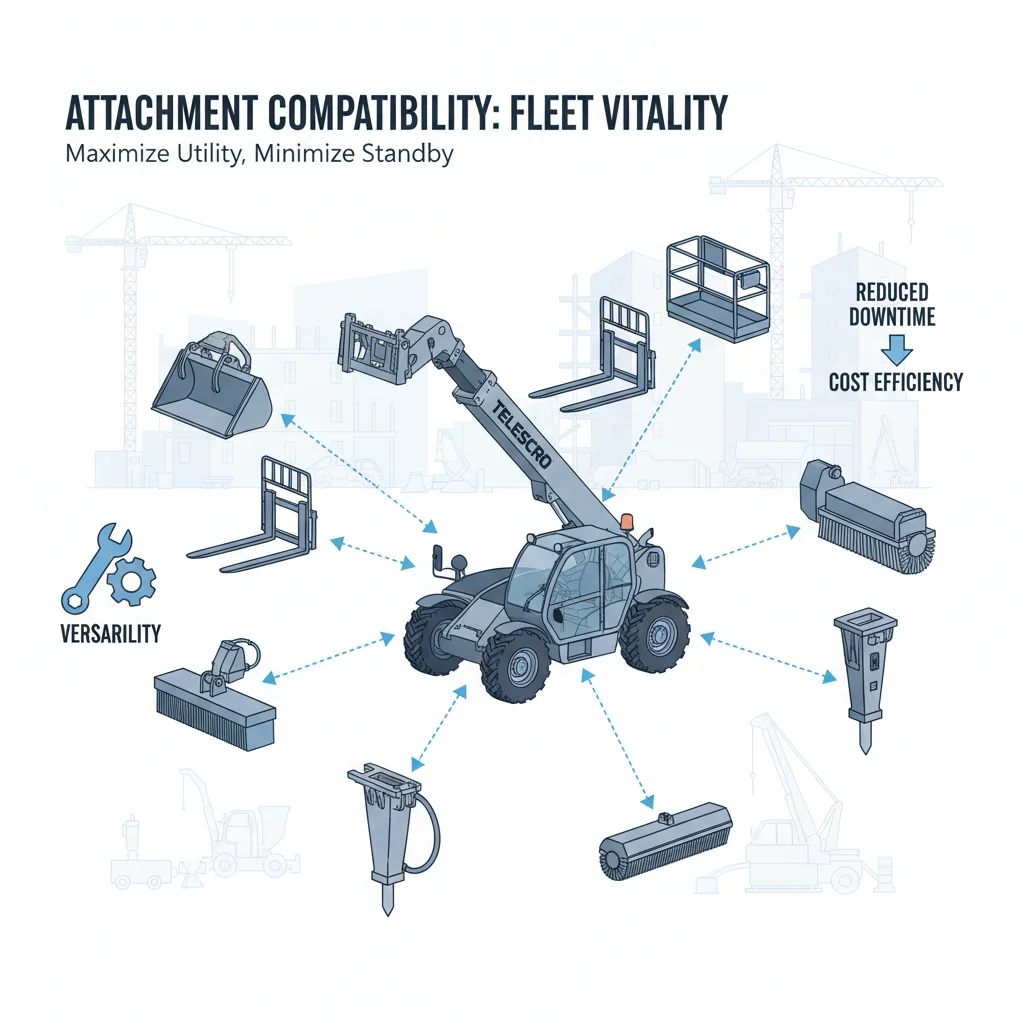
Here’s what matters most when managing a telehandler fleet—attachment compatibility isn’t just a minor detail. It’s a real profit driver. I’ve visited yards in Turkey where more than ten expensive buckets sat unused for months. Why? Each fit only a specific brand’s coupler. Meanwhile, the general-purpose forks—compatible across three brands—were constantly out on hire. It’s frustrating to see valuable steel gathering dust because of mismatched couplers or overlooked hydraulic fittings.
Attachment compatibility protects your investment in several ways:
- Increases utilization rates – Compatible tools are always moving out the gate, not collecting rust.
- Minimizes idle assets – Single-brand attachments often sit unused, bleeding value over time.
- Reduces replacement buying – Fewer, smarter investments in versatile attachments cut long-term costs.
- Expands customer reach – You can serve clients running different telehandler models with just one attachment type.
- Simplifies logistics and training – Operators only need to learn one or two coupler styles, making swaps quicker and safer.
Last year, I worked with a fleet manager in Kenya overseeing 22 telehandlers—four different brands, three coupler types. Their team mapped out every model, then ordered adapter plates and focused new purchases on the most common quick-attach system. Within six months, attachment utilization jumped by at least 25%. Their rental revenues increased without adding a single machine.
I always suggest documenting your fleet’s couplers and verifying hydraulic compatibility before every attachment purchase. A bit of extra planning up front avoids costly, idle inventory down the road.
False
"ISO
"AllFalse
"Hydraulic
Key takeaway: Prioritizing attachment compatibility across telehandler brands ensures higher asset utilization, drives greater rental revenue, and minimizes costly equipment idleness. Standardizing on a few coupler types and using adapters where practical allows rental companies to serve more customers with fewer attachments.
How Do Modular Attachments Improve Fleet Flexibility?
Modular telehandler attachments7 greatly enhance fleet flexibility by supporting multiple tool types—such as augers, sweepers, and buckets—through universal quick-attach systems. Cross-platform compatibility allows rental companies to deploy one base machine for diverse tasks, reducing asset redundancy and maximizing utilization while enabling customers to consolidate equipment needs and minimize transport and rental costs.

The biggest mistake I see is rental fleets tying themselves down with too many specialized attachments. Last year, I worked with a client in Dubai who had over a dozen buckets, but most only fit their older machines. That meant every time a contractor needed both a sweeper and a bucket, the manager had to juggle machines or send an extra truck—wasting time and money. When they switched to a 3-ton compact telehandler with universal skid-steer quick-attach, suddenly those buckets, forks, and sweepers could all be used across multiple units. What really boosts flexibility is modular, cross-compatible attachment design.
For example, in Kazakhstan, a rental customer replaced three specialized machines (an auger, a broom, and a general bucket loader) by combining a compact telehandler with modular attachments. Their equipment on-site dropped from four machines to two, cutting transport costs by nearly 30%.
Here’s where modular systems make the real impact for fleet utilization:
- Universal quick-attach plates – swap between buckets, brooms, augers, or rakes in minutes.
- Fork carriages with adjustable forks – support multiple pallet sizes without stocking extra carriages.
- Buckets with bolt-on edges and teeth – change from bulk material to heavy digging with just an impact wrench.
- Auxiliary hydraulic circuits – power rotating brushes, four-in-one buckets, or trenchers without extensive upgrades. From my experience, every extra machine idling in your yard eats into ROI.
Modular attachments with universal skid-steer quick-attach systems allow rental fleets to use a single telehandler model to operate over 80% of their attachment inventory, drastically reducing downtime and transportation costs.True
Universal skid-steer quick-attach systems standardize attachment interfaces, enabling telehandlers to quickly swap buckets, forks, and sweepers regardless of their original manufacturer, which enhances utilization and minimizes the need for multiple machine types in rental fleets.
Using modular attachments with different coupling standards on the same telehandler can cause permanent hydraulic system damage due to incompatible pressure settings.False
Modular attachments designed for telehandlers are engineered to be compatible with hydraulic systems within specified pressure ranges; mismatched couplers typically won't cause permanent damage but may result in operational limitations or require adapters rather than irreparable harm.
Key takeaway: Investing in telehandlers and attachments with modular, cross-compatible designs boosts ROI for rental companies. This approach allows a single machine to handle varied tasks, increasing attachment utilization and serving diverse customer needs while avoiding excess inventory and capital investment in specialized equipment.
Which Telehandler Attachments Deliver Highest Rental ROI?
Specialty telehandler attachments—such as adjustable spreader bars8, extendable jibs9, truss booms, and winches—yield premium rental rates by converting units into mobile crane solutions for steel erection, rooftop work, and light industrial duties. Despite lower utilization than standard forks or buckets, their higher billing, strategic inventory, and proper customer training make them profitable, field-tested choices for rental fleets.
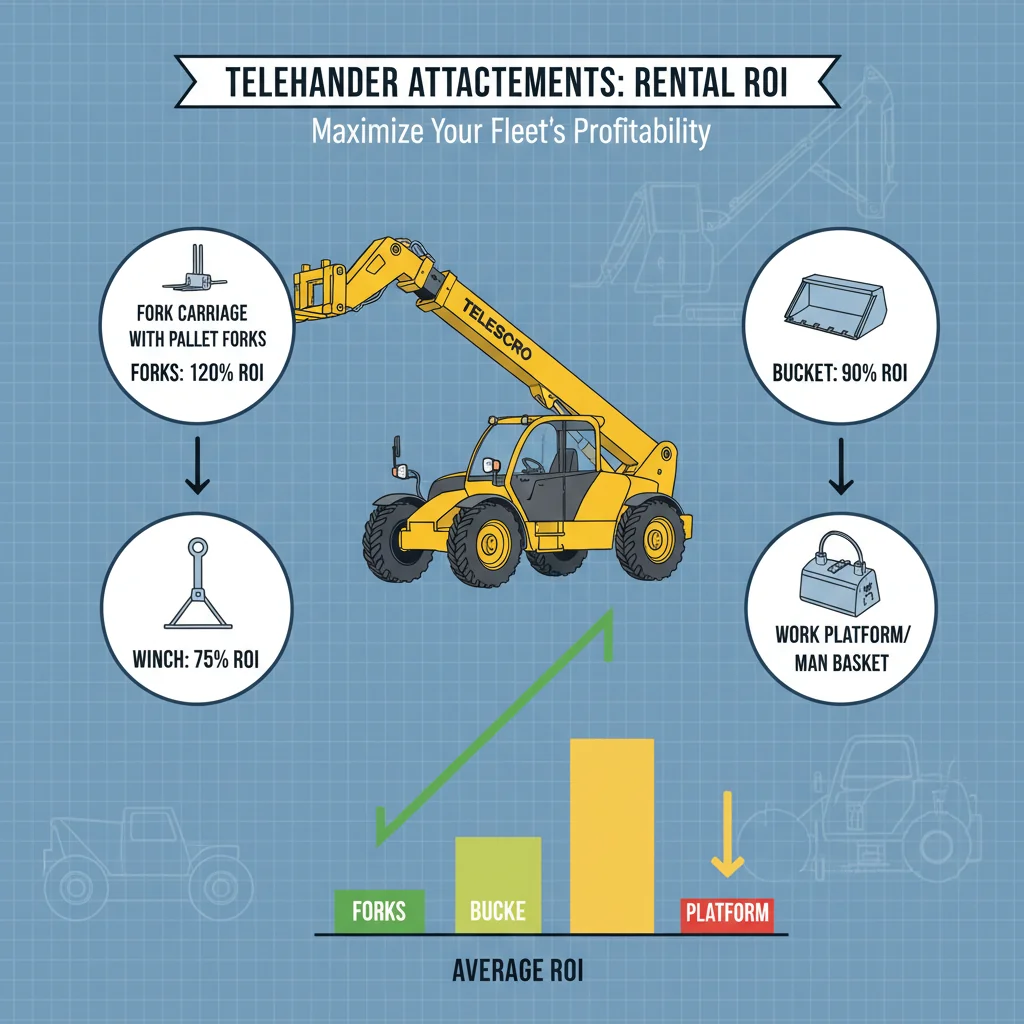
Last month, a steel contractor in Dubai called me with a common question: which telehandler attachments actually justify their higher rental rates? The answer isn’t just about price—it’s about jobsites where a full-sized crane is overkill, but precise lifting is still essential. In my experience, specialty lifting tools are the margin drivers that help rental fleets stand out. Let’s break it down with real rental returns. Adjustable spreader bars and extendable jibs constantly deliver, especially on steel frame buildings or rooftop installs.
For example, on a 14-meter telehandler, an extendable jib rated for 2,000 kg can lift HVAC units or trusses safely to the seventh floor—where basic forks just can’t. One customer in Kazakhstan rented a truss boom for a month, paying almost double the rate of a standard bucket. Even though the utilization was only about 60% of the month, the higher daily rental more than made up for lower turnover. Winch attachments, while less common, are perfect for vertical lifts in tight spaces; I’ve seen these used on elevator shaft projects in Singapore, saving at least two working days versus manual hoisting.
Here’s a quick comparison to illustrate ROI differences:
| Attachment Type | Typical Use Cases | Avg. Daily Rate | Utilization (%) | Margin Impact |
|---|---|---|---|---|
| Spreader Bar | Steel erection, cladding work | High | Medium | Substantial |
| Extendable Jib | Roof truss, HVAC, light lifting | High | Medium | Substantial |
| Truss Boom | Precast, structure assembly | High | Low–Medium | Moderate–High |
Extendable jib attachments on telehandlers can increase rental ROI by up to 30% because they enable handling of loads at greater distances without requiring larger equipmentTrue
Extendable jibs add versatile reach, allowing operators to place materials precisely without moving the telehandler itself, reducing jobsite setup time and increasing utilization rates, which directly boosts rental profitability.
Masonry bucket attachments consistently deliver the highest rental ROI because they are essential for all types of telehandler lifting tasksFalse
Masonry buckets are specialized for moving loose materials like mortar or bricks and are less frequently rented than lifting-specific attachments; versatile lifting tools like spreader bars typically generate higher returns due to broader jobsite applicability.
Key takeaway: Stocking a focused range of high-margin telehandler lifting attachments enables rental providers to command premium rates and meet niche project needs efficiently. With correct pricing and staff training, these tools can drive profitability while reinforcing fleet versatility where crane access is impractical or overkill.
Are Man-Baskets Worth the Regulatory Hurdles?
Man-baskets and work platforms for telehandlers deliver high rental margins and replace the need for separate boom lifts on many access jobs. However, regulatory compliance is complex, requiring certified load-holding valves10, interlocks, and adherence to CE, ANSI, or GB/T standards11. Documentation and training gaps expose rental fleets to fines and liabilities, making due diligence essential before fleet additions.
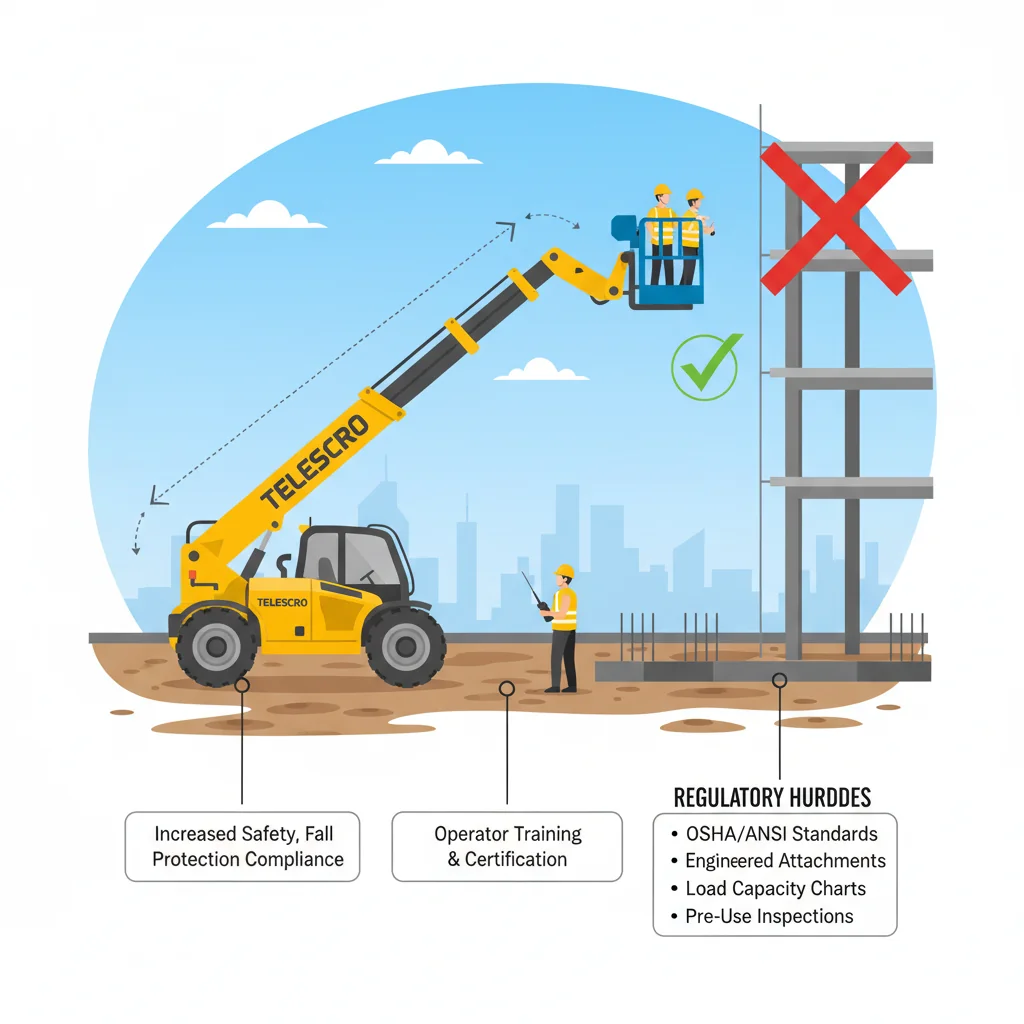
To be honest, the paperwork and technical requirements for man-baskets have frustrated even some of my long-term rental partners. In Singapore last year, one client added ten new work platforms to their telehandler fleet—hoping to tap into local demand for high-bay warehouse maintenance. They ran into problems right away. The platforms passed CE compliance, but operators weren’t trained for the extra interlocks and the load-holding valves failed an annual inspection. The result? Two platforms out of service for nearly a month and a surprise fine from the local regulator.
This kind of setback is more common than most expect. Regulatory standards like CE, ANSI, or GB/T go much further than just stickers on the platform—they demand dual-line hydraulic circuits, moment indicators, and sometimes even tilt alarms. I’ve seen factory-supplied documentation get “lost” after just a month in a busy fleet. When you add up extra inspection costs and operator training, it’s easy for a rental company to underestimate the real overhead. But the upside is real. In Kazakhstan, man-basket jobs usually rent at premium rates—20-30% higher than standard forks or buckets—especially if you offer bundling with a mid-reach (12-14 meter) telehandler rated for 3,000 kg.
My suggestion? If you plan to add man-baskets, make sure your inspection schedule and operator handbooks are airtight. Define which jobs you’ll allow (no tree work, if local rules forbid it). Sourcing compliant kits and controlling documentation keeps you out of trouble—and those higher rental margins actually make it to your bottom line.
Man-baskets used as telehandler attachments often require annual inspections of load-holding valves due to heightened safety risks that go beyond standard lifting attachmentsTrue
Man-baskets introduce additional safety components like load-holding valves and interlocks to prevent falls or uncontrolled descent, necessitating rigorous annual inspections to comply with workplace safety regulations.
Man-baskets can be freely added to any telehandler without operator retraining if the platforms meet CE compliance standardsFalse
Even if man-basket platforms meet CE compliance, operators must receive specific training for the unique interlocks and safety features to ensure safe operation and regulatory compliance, as these are not covered by platform certification alone.
Key takeaway: Man-baskets and work platforms offer excellent ROI and strong customer demand if sourced with full regulatory compliance. Rental companies should factor in strict inspection and operator training requirements, as non-compliance carries serious liability. Profitability hinges on bundling, local market demand, and careful management of documentation and safety standards.
Which Telehandler Attachments Boost Rough-Terrain ROI?
Rough-terrain telehandler attachments—such as wide fork carriages12, heavy-duty buckets13, truss brooms, winches, and trash hoppers—enable efficient material handling, cleanup, and transport on challenging sites where standard machines fail. These field-tested tools increase rental fleet utilization, capture niche contractor demand, and support extended rental periods on remote energy, infrastructure, and civil works projects.
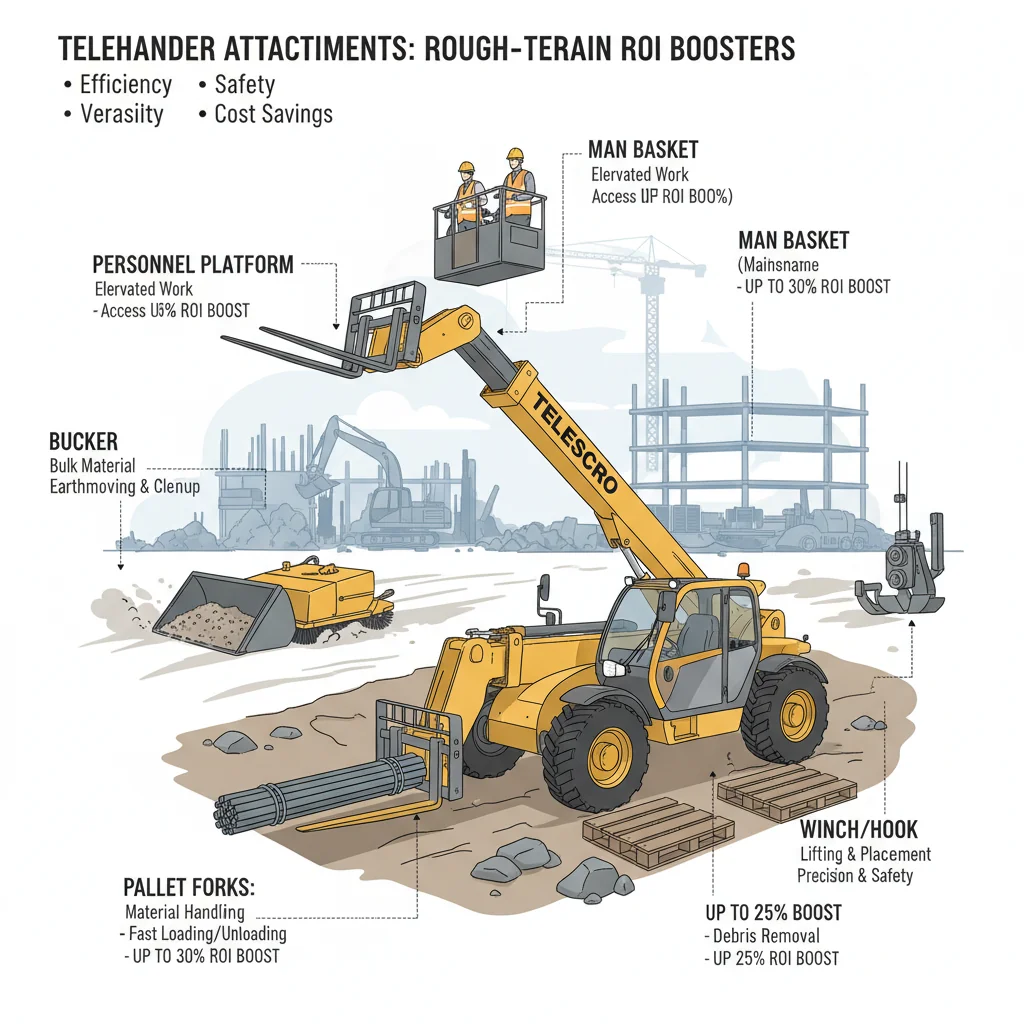
Let me share something important about rough-terrain telehandler attachments—contractors in places like Kazakhstan or remote Australia aren’t just looking for basic forks. They want machines that can handle everything the job throws at them: mud, debris, uneven haul roads, tricky loads. I’ve seen rental companies lose out because they only offered standard pallet forks, while their competitors came in with a full kit.
Here are the rough-terrain attachment packages that drive real ROI on hard-access jobs:
- Wide fork carriages – Stabilize longer steel, pipes, or timber up to 3 meters across. Essential for wind farm and civil projects.
- Heavy-duty buckets – Move aggregates, spoil, or loose debris. In Brazil, one customer used a 1.3-cubic-meter bucket to clear washouts after rain—saved at least two days per week compared to hand cleanup.
- Truss brooms – Clean haul roads and staging areas fast. Especially popular for infrastructure jobs with tight dust control regulations.
- Winches and lifting hooks – Handle vertical lifting tasks where cranes can’t access. I always suggest verifying your hydraulic circuit delivers enough flow—at least 90 L/min—for smooth winch performance.
- Trash hoppers – Quick site cleanup, cuts down labor needs on remote builds.
Here’s a quick side-by-side:
| Attachment | Key Use | Typical Capacity | Where It Shines |
|---|---|---|---|
| Wide Forks | Long/awkward loads | Up to 5,000 kg | Wind/solar sites, pipework |
| Heavy Bucket | Loose material/debris | 1.0–1.5 m³ | Energy/civil cleanup |
| Truss Broom | Road cleanup | — | Site sweeping, debris control |
Rough-terrain telehandler attachments with integrated hydraulic rotators can increase rental utilization by enhancing load positioning versatility on uneven terrainTrue
Hydraulic rotators allow operators to easily adjust load orientation without repositioning the entire machine, which is especially beneficial on rough or sloped ground, reducing cycle times and expanding task capability in rental fleets.
Standard pallet forks alone provide sufficient versatility for rough-terrain telehandlers in remote, challenging environments, making additional attachments unnecessary for most rental operationsFalse
In rough terrain, pallet forks lack the adaptability needed for handling debris, uneven loads, or non-palletized materials; supplemental attachments like bucket loaders, grapples, or side-shifters significantly enhance a telehandler’s operational range and rental appeal.
Key takeaway: Rental companies that supply specialized rough-terrain telehandler attachment packages unlock stronger utilization and appeal to contractors handling remote, challenging projects. Stocking wide forks, truss brooms, buckets, and winches positions fleets as one-stop solutions and supports higher rates and longer-term agreements, particularly in energy and large civil works segments.
How Do Ag Attachments Boost Rental ROI?
Telehandler agricultural attachments, such as manure buckets, grain buckets14, and bale spikes15, align with regional crop calendars to capture peak seasonal demand. Rental companies maximize ROI by deploying these tools during planting, harvest, and feeding periods, then repurposing base machines for construction applications in the off-season, thus maintaining consistent fleet utilization and revenue streams.
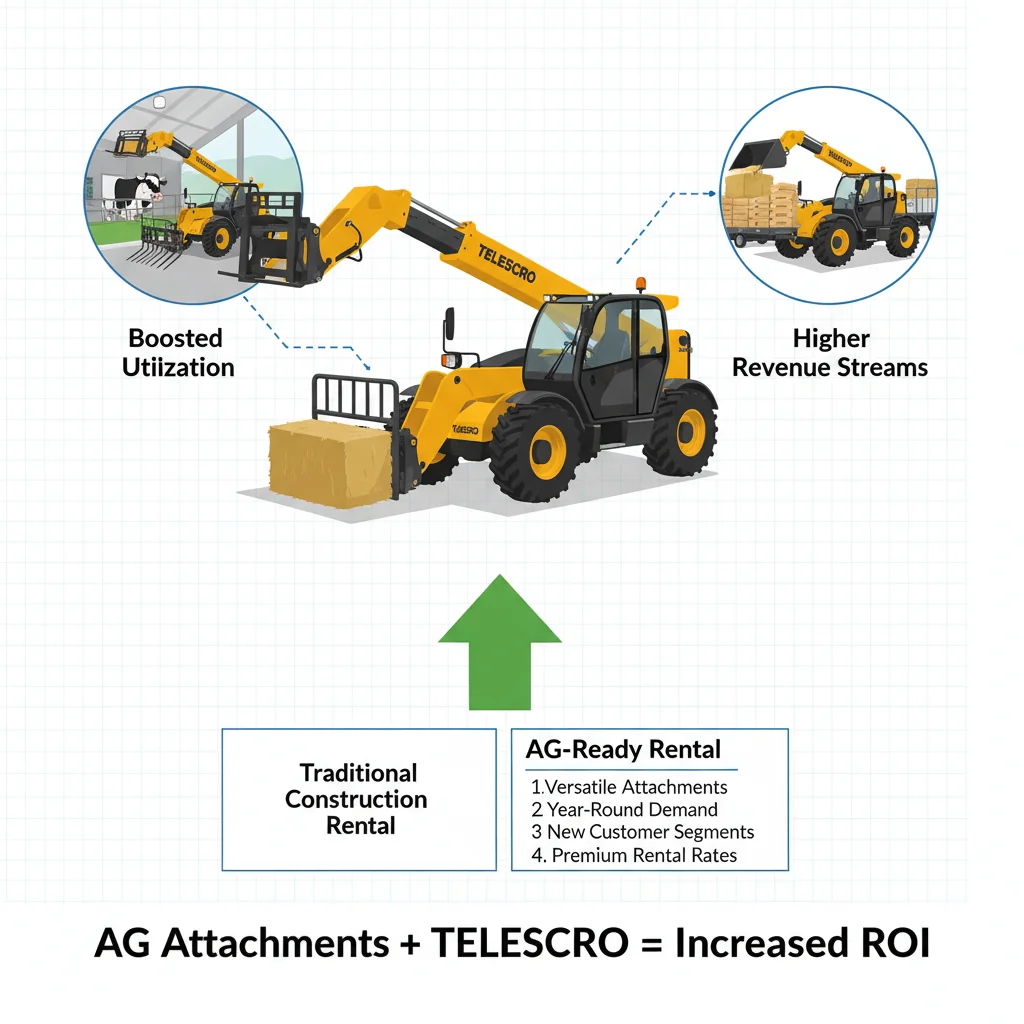
I’ve worked with rental companies in Kazakhstan and Australia who missed out on high-margin months because they underestimated how much timing matters with ag attachments. The rental ROI isn’t just about having more tools in your yard—it’s about matching those manure buckets and bale spikes to the crop cycle. I’ve seen base telehandlers sit idle half the year, but once we added the right attachments before wheat harvest or silage season, utilization shot up. When planting and feed seasons roll around, farmers need machines that can tackle multiple tasks in quick succession.
Here’s how agricultural attachments can directly boost your rental ROI:
- Bale spikes and bale clamps – High demand during feed and hay seasons; keeps units out for weeks at a time.
- Grain and silage buckets – Essential for harvest; I’ve seen machines in Brazil go from 40% to nearly 90% utilization once grain buckets arrived.
- Manure and general-purpose buckets – Useful as soon as livestock feeding or mucking starts; extends rental periods beyond just planting and harvest.
- Wrapping and handling tools – Specialized forks and clamps are vital for large dairy operations, especially in peak feed cycles.
- Quick coupler kits – Switching from ag to construction applications becomes a half-hour task—not a half-day job—so your fleet moves fast.
From my experience, the most successful rental businesses pair their inventory with regional calendars. In northern China, shifting units between grain harvest and municipal projects kept annual utilization above 85%. I suggest coordinating with local co-ops to forecast which tools will be needed and when. The right attachments—at the right time—unlock year-round revenue instead of seasonal spikes alone.
Manure handling attachments can increase telehandler rental utilization by up to 40% during peak agricultural seasons when aligned with crop cyclesTrue
By equipping telehandlers with manure buckets or bale spikes timed with manure spreading or harvest periods, rental companies experience significantly higher utilization rates, as these attachments directly meet crop-specific operational needs. Managing timing ensures telehandlers are not idle during critical agricultural tasks.
All telehandler attachments designed for agriculture are interchangeable across different telehandler brands without requiring calibration or adjustmentFalse
While many attachments look similar, agricultural telehandler attachments often have brand-specific fitments and hydraulic or electronic controls that require calibration or adjustment; using non-compatible attachments can reduce performance and safety, making universal interchangeability inaccurate.
Key takeaway: Seasonal demand for telehandler agricultural attachments presents a lucrative revenue opportunity for rental companies in farming areas. By timing inventory with local crop cycles and shifting machines between ag and construction markets, businesses can achieve high utilization rates and improved year-round ROI.
Should Telehandler Attachments Be Rented Separately?
Many rental companies now offer telehandler attachments as standalone rentals, targeting customers who own telehandlers but seek specialized tools like truss booms, brooms, or platforms. This model expands the customer base and revenue, but requires strict compatibility management, transparent catalogs, and different rental terms to accommodate diverse equipment and minimize misuse risks.
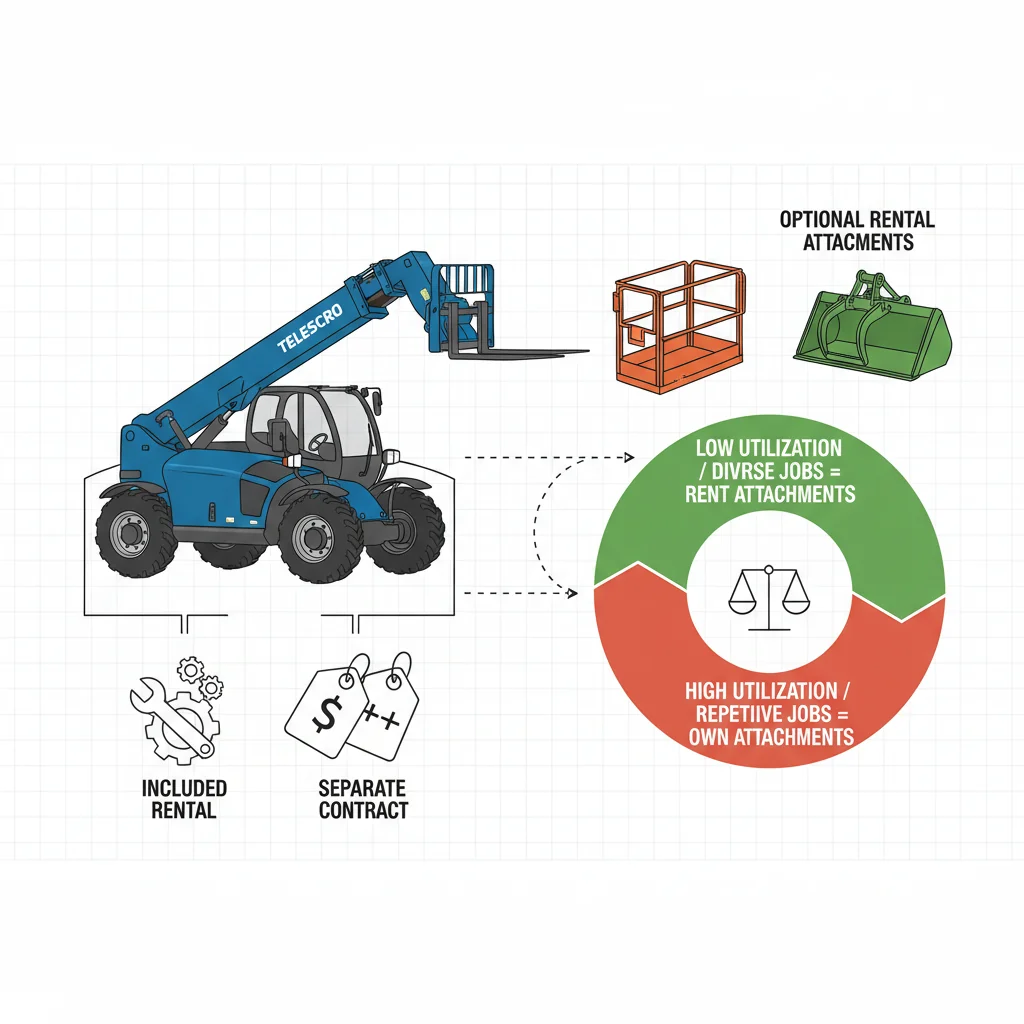
I’ve worked with customers who rented just an attachment, thinking it would be as simple as picking up a bucket of paint. It rarely is. For example, a contractor in Malaysia needed a truss boom for only three days to set HVAC units. They owned a 4-ton telehandler with a hydraulic quick coupler16—so they thought any truss boom from the rental yard would fit. Problem: the attachment’s hydraulic hoses didn’t match their coupler ports. They lost half a day retrofitting connections onsite. These technical mismatches are more common than you might expect, especially when rentals cross brands or older machines get paired with new tools.
From my experience, renting attachments separately can work well, but only if you treat it as a true standalone business. You need transparency and solid documentation—otherwise, you’ll spend more time fielding “Does this work with my model?” calls than actually renting attachments out. Jobsite downtime is expensive. Attachment-only rentals17 might look like easy money, but there are real risks if you skip the details.
Here are a few critical steps to make separate attachment rentals successful:
- Publish detailed compatibility notes: List telehandler brands, models, and coupler types for each tool.
- Set different rental terms: Implement higher damage deposits, and shorter minimum rentals to discourage misuse or neglect.
- Provide quick-reference load charts: Attachments like platforms or winches change safe capacity—having these charts available reduces risk.
- Track attachment-only utilization: Separate billing helps you analyze demand and spot underused tools.
I suggest starting with high-demand attachments and building out as you learn your local market’s needs. Focus on clarity, not just convenience.
Telehandler attachments with standardized SAE quick couplers significantly reduce onsite setup time, as these couplers are designed to be universal across most rental fleet models.True
Standardized SAE quick couplers enable rapid attachment changes without custom hydraulic fittings or adapters, minimizing downtime and compatibility issues commonly encountered during rentals.
Any telehandler attachment labeled as 'universal fit' will always be compatible with every telehandler model regardless of hydraulic or electrical hookups.False
Despite 'universal fit' claims, many telehandler attachments require matching hydraulic port sizes, coupler types, and electrical connections that vary by manufacturer and model, causing incompatibility without proper adapters or retrofitting.
Key takeaway: Renting attachments separately lets rental businesses reach telehandler owners needing occasional specialty tools, creating a new revenue stream. Success depends on clear compatibility documentation, catalog transparency, and refined rental policies to address attachment-specific risks and usage patterns.
What Features Boost Telehandler Attachment Durability?
Telehandler rental attachments must withstand heavy, inconsistent use. Essential durability features include thick wear plates, high-quality welds, protected hydraulic cylinders and hoses18, and reinforced quick-attach points19. Universal or adjustable designs like bolt-on edges and adjustable forks simplify maintenance and reduce inventory requirements. Regular checks for damage and adherence to grease schedules are vital to prevent early failure and costly downtime.

Telehandler rental attachments must withstand heavy, inconsistent use. Essential durability features include thick wear plates, high-quality welds, protected hydraulic cylinders and hoses, and reinforced quick-attach points. Universal or adjustable designs like bolt-on edges and adjustable forks simplify maintenance and reduce inventory requirements. Regular checks for damage and adherence to grease schedules are vital to prevent early failure and costly downtime.
Key takeaway: Specifying robustly built, easily serviceable attachments, combined with consistent inspections and staff training, enables rental companies to maximize equipment uptime and extend attachment lifespan. Attention to reinforced construction, universal designs, and maintenance schedules directly improves both return on investment and renter satisfaction.
Reinforced quick-attach points with gusseted steel bracing can increase telehandler attachment lifespan by up to 30% under rental use conditionsTrue
Gusseted steel bracing distributes stress more evenly around the quick-attach interface, minimizing weld fatigue and metal deformation, which significantly enhances durability in high-cycle rental environments.
Hydraulic cylinders on telehandler attachments are typically designed without protective guards because their steel housing is sufficient to prevent damage during regular rental useFalse
Hydraulic cylinders are vulnerable to impact from debris, which can cause seal damage and leaks; therefore, protective guards are essential to protect them and extend attachment service life, especially in rental fleets exposed to varied conditions.
Key takeaway: Specifying robustly built, easily serviceable attachments, combined with consistent inspections and staff training, enables rental companies to maximize equipment uptime and extend attachment lifespan. Attention to reinforced construction, universal designs, and maintenance schedules directly improves both return on investment and renter satisfaction.
When to Choose Hydraulic or Mechanical Attachments?
Hydraulic attachments, such as grapple buckets and rotating forks, offer enhanced functionality but require telehandlers with auxiliary hydraulic circuits and correct pressure/flow compatibility. Mechanical attachments like forks and buckets are simpler, cost-effective, and suit 70–80% of typical rental fleet tasks, making them preferable for standard equipment unless specialized needs justify hydraulic upgrades.
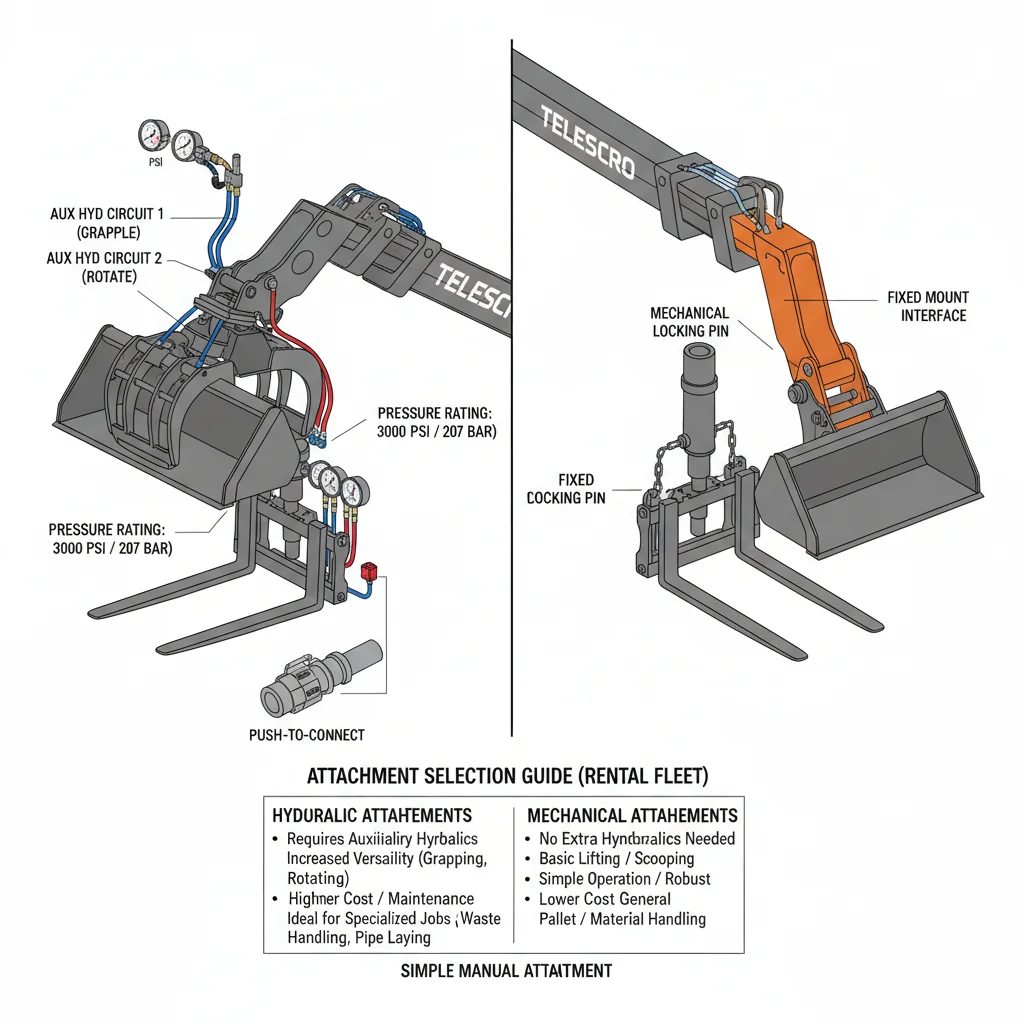
Hydraulic attachments, such as grapple buckets and rotating forks, offer enhanced functionality but require telehandlers with auxiliary hydraulic circuits and correct pressure/flow compatibility. Mechanical attachments like forks and buckets are simpler, cost-effective, and suit 70–80% of typical rental fleet tasks, making them preferable for standard equipment unless specialized needs justify hydraulic upgrades.
Key takeaway: Most rental fleets benefit from prioritizing mechanical attachments, which cover the majority of job requirements with fewer complications. Hydraulic attachments can expand capability but suit only those fleets with adequate hydraulic specs or strong market demand. Upgrading select units for hydrualic use helps maximize ROI without widespread retrofitting.
Mechanical attachments typically cover 70-80% of tasks in rental fleets due to their versatility and lower operational complexityTrue
Mechanical attachments like standard forks and buckets are sufficient for the majority of common handling tasks, reducing the need for specialized hydraulic functions and simplifying fleet maintenance and compatibility concerns.
Hydraulic attachments are generally less expensive to maintain than mechanical attachments because they have fewer moving partsFalse
Hydraulic attachments involve complex components such as cylinders and hoses that require regular inspection and potential replacement, generally leading to higher maintenance costs compared to simpler mechanical attachments with fewer wear-prone parts.
Key takeaway: Most rental fleets benefit from prioritizing mechanical attachments, which cover the majority of job requirements with fewer complications. Hydraulic attachments can expand capability but suit only those fleets with adequate hydraulic specs or strong market demand. Upgrading select units for hydrualic use helps maximize ROI without widespread retrofitting.
How Do Logistics Impact Telehandler ROI?
Logistics costs significantly affect telehandler attachment profitability. Bulky or heavy equipment increases storage demands, complicates handling, and heightens damage risk during transport. Larger attachments often require specialized racking, bigger trucks, and more delivery time. Ignoring these hidden costs can result in misleading projected margins, making certain attachments appear profitable when, in practice, they underperform financially.

Logistics costs significantly affect telehandler attachment profitability. Bulky or heavy equipment increases storage demands, complicates handling, and heightens damage risk during transport. Larger attachments often require specialized racking, bigger trucks, and more delivery time. Ignoring these hidden costs can result in misleading projected margins, making certain attachments appear profitable when, in practice, they underperform financially.
Key takeaway: Factoring transport, storage, and handling logistics into total cost calculations ensures more accurate ROI projections on telehandler attachments. Standardizing stackable attachments, investing in protective racking, and adjusting rental rates to reflect handling complexity protect profitability and minimize unexpected expenses.
Telehandler attachments exceeding 500 kg often necessitate specially designed transport racks and limit the number of units per delivery, increasing logistics costs by up to 20%True
Heavy or bulky attachments require reinforced racks and larger vehicles, reducing delivery batch sizes and raising transport frequency, which cumulatively drives up logistics expenses that impact ROI significantly.
All telehandler attachments can be stored and transported without specialized equipment or modifications, keeping logistics costs negligible regardless of size or weightFalse
Attachments that are large or heavy typically need customized storage solutions and dedicated transport methods, increasing handling complexity and logistics costs that must be accounted for to avoid overstated profitability.
Key takeaway: Factoring transport, storage, and handling logistics into total cost calculations ensures more accurate ROI projections on telehandler attachments. Standardizing stackable attachments, investing in protective racking, and adjusting rental rates to reflect handling complexity protect profitability and minimize unexpected expenses.
Conclusion
We’ve looked at which telehandler attachments deliver the most value and utility for rental fleets—pallet forks, buckets, and core lifting tools come out on top. From my experience, rental companies that focus on the practical, everyday attachments see the best long-term returns and fewer headaches with downtime. It’s easy to get drawn in by specialized gear, but I’ve seen many end up sitting idle—what I call “showroom hero, jobsite zero.” If you want help sorting out which attachments fit your market, reach out—I’m happy to share what’s worked across different regions and jobsites. Every rental operation is unique, so choose attachments that really make sense for your customers.
References
-
Explore how pallet forks achieve top utilization and fast cost recovery in rental telehandler fleets, boosting efficiency and ROI. ↩
-
Understand how general-purpose buckets increase rental usage by converting telehandlers into loaders, essential for limited budget sites. ↩
-
Explore how attachment compatibility boosts fleet ROI by increasing utilization and reducing idle assets in multi-brand telehandler operations. ↩
-
Learn how standardizing couplers simplifies logistics, enhances asset deployment, and maximizes profits across diverse telehandler brands. ↩
-
Learn how universal quick-attach systems maximize utilization and allow cross-platform compatibility for streamlined rental fleets. ↩
-
Learn when hydraulic attachments enhance functionality and how to match them to telehandlers with proper hydraulic specs for better ROI. ↩
-
Explore expert insights on modular attachments that reduce equipment redundancy and cut transport costs by enabling versatile fleet use. ↩
-
Explore the versatility and premium rental potential of adjustable spreader bars in telehandler applications, boosting profitability on diverse jobsites. ↩
-
Learn how extendable jibs safely enable precise lifting at height, enhancing telehandler rental returns despite lower utilization rates. ↩
-
Explore the critical role of load-holding valves in safety compliance and operational reliability for telehandler work platforms. ↩
-
Learn the detailed regulatory requirements and safety standards that govern man-basket usage under CE, ANSI, and GB/T certifications. ↩
-
Explores how wide fork carriages stabilize long loads, vital for civil and wind farm projects demanding safe material handling. ↩
-
Details how heavy-duty buckets speed up debris removal and aggregates handling, boosting efficiency on challenging remote sites. ↩
-
Learn how grain buckets can dramatically raise telehandler utilization from 40% to nearly 90%, optimizing rental ROI during harvest. ↩
-
Explore how bale spikes meet high demand in feed and hay seasons, boosting rental periods and fleet utilization effectively. ↩
-
Detailed insights on how hydraulic quick couplers impact attachment fitting and prevent costly on-site retrofit delays. ↩
-
Expert analysis of challenges and best practices for managing standalone telehandler attachment rentals to minimize jobsite downtime. ↩
-
Detailed explanations on protecting hydraulic components to prevent early attachment failure and reduce costly downtime in rental fleets. ↩
-
Explore expert insights on how gusseted steel bracing in quick-attach points extends telehandler attachment lifespan by up to 30%. ↩