










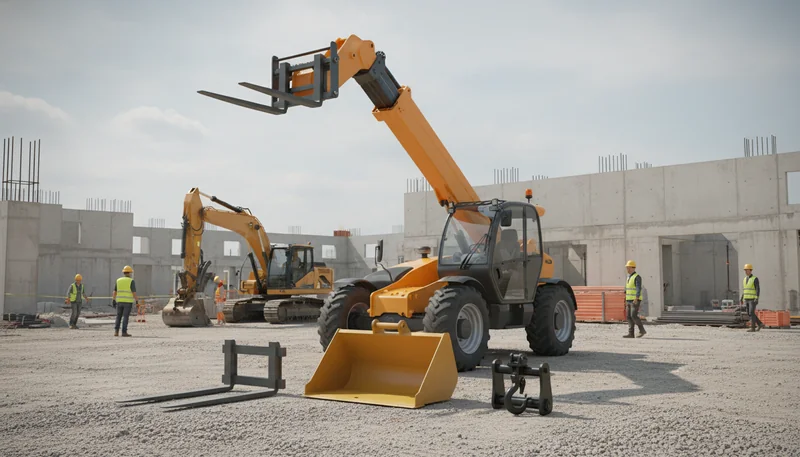
Telehandler Attachments: Buy with the Machine or Separately? Field Guide for Buyers
Not long ago, I spoke with a project foreman in Poland who assumed every fork and bucket would “just fit” his new Manitou telehandler. His surprise when the attachments wouldn’t lock on—and his warranty agent’s face—told me it’s a story that plays out worldwide.
Telehandler attachment purchasing decisions directly impact operational safety, machine warranty, technical compatibility, and total procurement cost. Buying core attachments alongside the telehandler, especially those approved by the OEM, ensures matched load charts, regulatory compliance, and integrated safety documentation. Attachment-coupler and hydraulic circuit variations require precise specification matching to prevent costly installation issues. Bundled purchases can secure discounts and streamline support, but aftermarket or used tools often offer cost advantages if compatibility and service requirements are thoroughly
Does Warranty Impact Telehandler Attachment Choice?
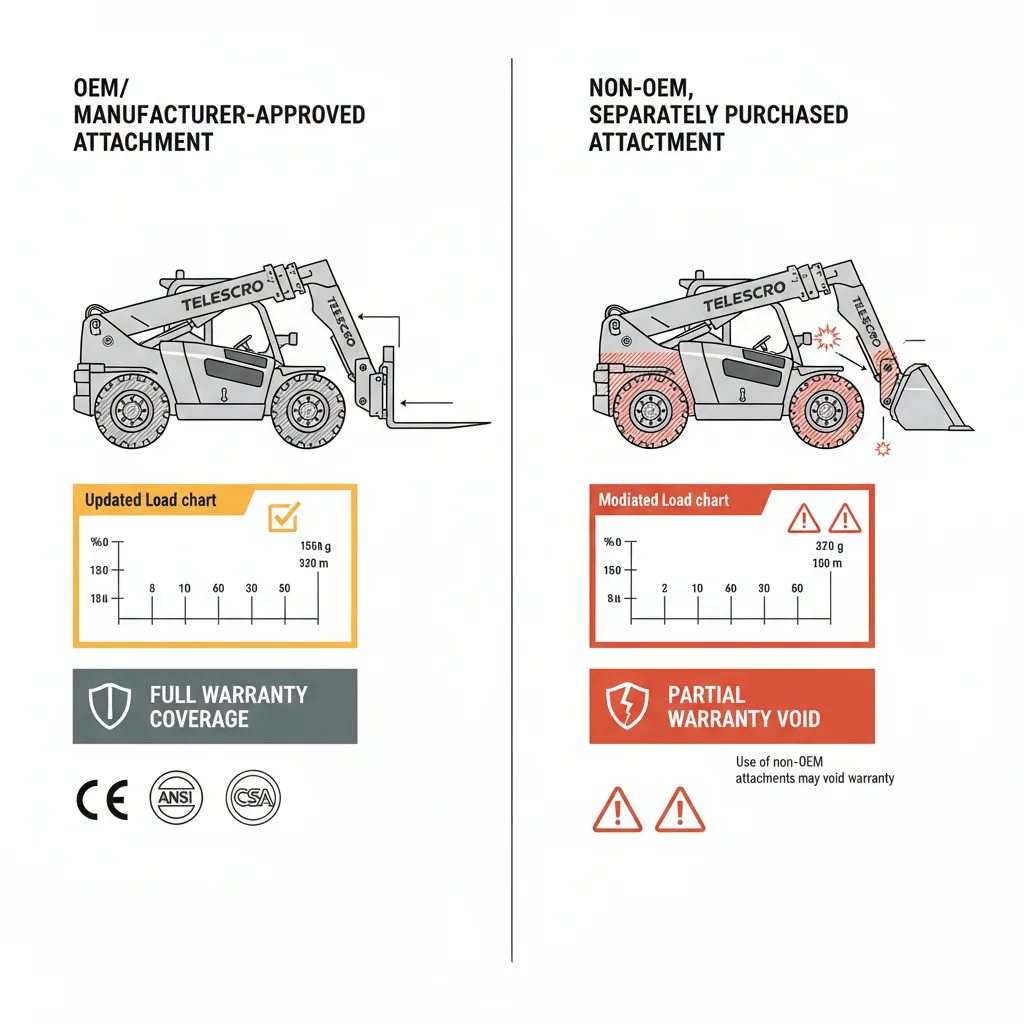
Buying OEM or manufacturer-approved telehandler attachments with the machine often ensures updated load charts, tested safety certifications (such as CE and ANSI/CSA), and full warranty coverage. When attachments are purchased separately—especially non-OEM types—responsibility for compliance, load rating1 validity, and liability increases, and warranty may be partially voided if unapproved attachments are used.
The biggest mistake I see is when buyers assume any attachment will work safely just because it fits the boom. Let me share something important about telehandler warranties—these depend heavily on which attachments you use and when you buy them. For example, last year I worked with a project manager in Kazakhstan. He bought a 4-ton telehandler with 17-meter reach but added a non-OEM work platform a few months later to save budget. Within two weeks, his technician flagged a load moment indicator error2. The manufacturer refused warranty repairs because the new platform wasn’t certified with their original load chart. He ended up paying out of pocket for both repairs and a new, approved basket.
Here’s what matters most when it comes to attachments and warranty:
-
OEM or manufacturer-approved attachments3: These come with up-to-date load charts, certified capacities, and are validated for safe hydraulic operation on that specific machine.
-
Warranty protection: Using unauthorized forks, platforms, or jibs—even if they look identical—can void major parts of your telehandler’s warranty, especially for hydraulic and structural failures.
-
Compliance certificates: Only OEM or approved attachments guarantee CE or ANSI/CSA certification, simplifying both jobsite audits and equipment inspections.
-
Liability and insurance: If a non-approved attachment causes an accident, insurance claims often get denied—or worse, legal responsibility falls directly on the contractor.
To be honest, I always suggest purchasing critical attachments—like work platforms or heavy-duty forks—together with the telehandler from the dealer. It’s the simplest way to protect your warranty, keep insurance valid, and avoid huge compliance headaches later. Consider asking your dealer for updated load charts covering all required attachments before signing off.
"PurchasingFalse
"OEM
Attaching any load-rated work platform after the telehandler purchase does not affect the factory warranty, as long as the attachment’s rated capacity is not exceededFalse
Even if the attachment's rated capacity aligns with machine limits, installing a non-OEM or aftermarket work platform post-purchase frequently voids warranty coverage because the machine’s sensors and structural components are calibrated specifically for OEM-approved attachments, and unauthorized attachments can cause premature wear or failure not protected under warranty.
Key takeaway: Purchasing critical telehandler attachments, like personnel platforms or major lifting tools, with the machine from the OEM or an approved dealer is usually the safest choice. This approach simplifies regulatory compliance, protects warranty coverage, and significantly reduces operational liabilities compared to buying third-party or non-approved attachments after delivery.
How Critical Is Telehandler Coupler Compatibility?
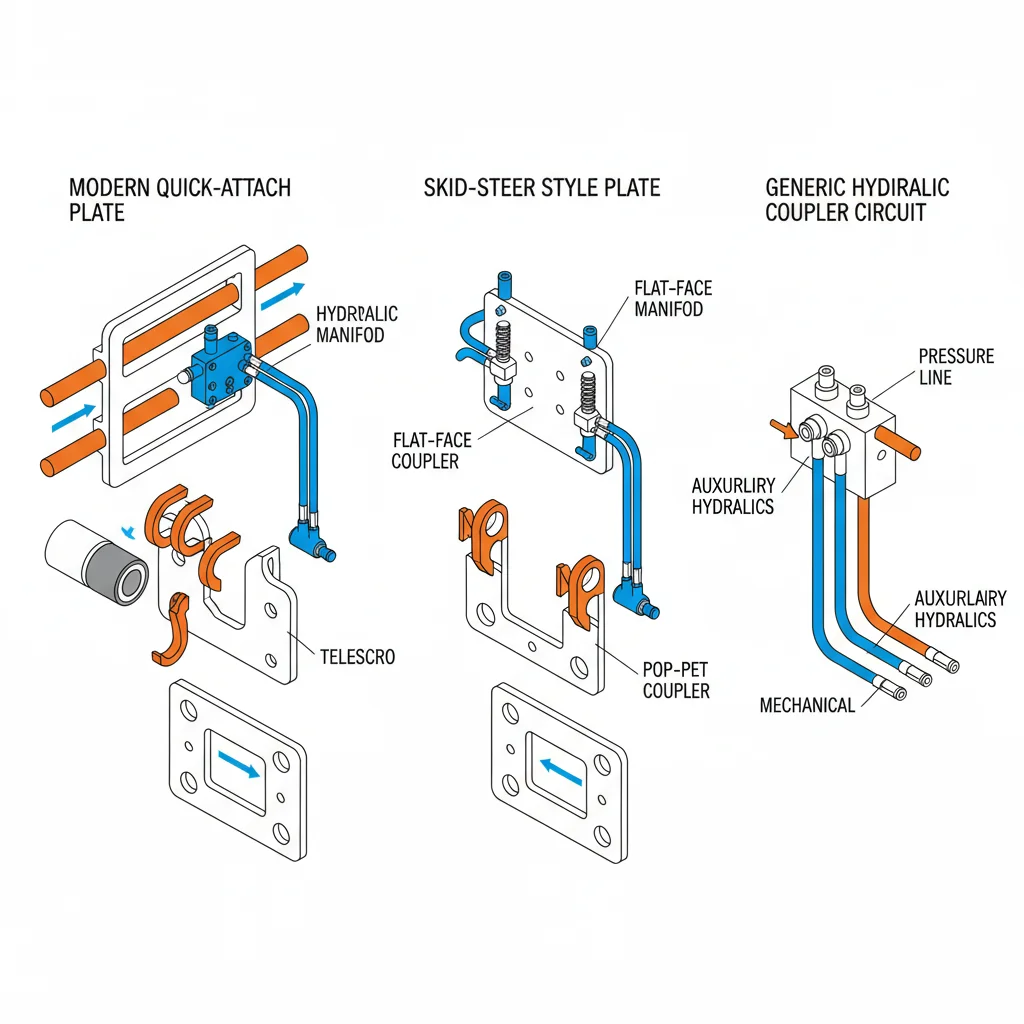
Coupler and hydraulics compatibility are essential when selecting attachments for telehandlers. Modern quick-attach systems5, such as JLG, Genie, Manitou, or skid-steer-style plates, are not fully standardized. Variations in coupler design and hydraulic circuits6 often result in mounting or operational issues, requiring buyers to verify exact specifications before purchasing attachments separately.
Let me share something important about telehandler coupler compatibility that buyers sometimes overlook. In Kazakhstan last year, I supported a contractor who sourced an 18-meter telehandler for a warehouse expansion.
They bought a used bucket attachment off the local market—looked like a perfect match. But on site, the quick-attach coupler pins didn’t align. The hydraulic hose fittings were different, too. Result? They lost at least three working days and had to pay for custom adapter plates plus a new hydraulic hose kit. It’s a frustrating scenario, but not unusual with mixed-brand or aftermarket attachments.
Here’s why this happens so often: “universal” quick-attach systems are not always truly universal. Pin spacing, lock style, and hydraulic connection points vary, even between two models rated for 4,000 kg. I’ve seen this in Dubai and Brazil—teams discover too late that a bargain attachment won’t function because the hydraulic circuit flow is too low or the pressure rating is off. Some powered attachments, like rotators or winches, need a second hydraulic circuit or specific flow rates (20–60 liters/minute), which budget machines might not provide.
I always suggest locking in your telehandler’s exact coupler spec before shopping for tools separately. Get the coupler drawing or part number and share it with every attachment supplier. For hydraulically powered tools, double-check the telehandler’s available flow and pressure versus the tool requirements. When possible, ask your supplier for a video or factory-fit photo before shipment. Taking these steps prevents expensive downtime and ensures you can use every attachment as intended.
Telehandler attachments purchased from the original equipment manufacturer (OEM) ensure 100% coupler pin alignment and hydraulic hose compatibility, reducing on-site adapter fabrication by up to 95%True
OEM attachments are designed to match the telehandler’s quick-attach coupler geometry and hydraulic connectors precisely, minimizing downtime and avoiding costly custom modifications that arise from mismatched third-party parts.
Most telehandler quick-attach couplers use a universal pin spacing standard of 200 mm, allowing any branded attachment to fit without modificationsFalse
There is no universal standard pin spacing for telehandler couplers; different manufacturers often use proprietary dimensions and hydraulic fitting types, which means attachments commonly require matching couplers or custom adapters to ensure compatibility.
Key takeaway: Always confirm the telehandler’s exact coupler type and hydraulic requirements before purchasing attachments separately. Incompatible connections or hydraulic flows can render attachments unusable, reducing equipment ROI. Early verification with suppliers prevents costly errors and ensures operational efficiency when adding tools to modern telehandler fleets.
Is Bundling Telehandler Attachments Cost-Effective?
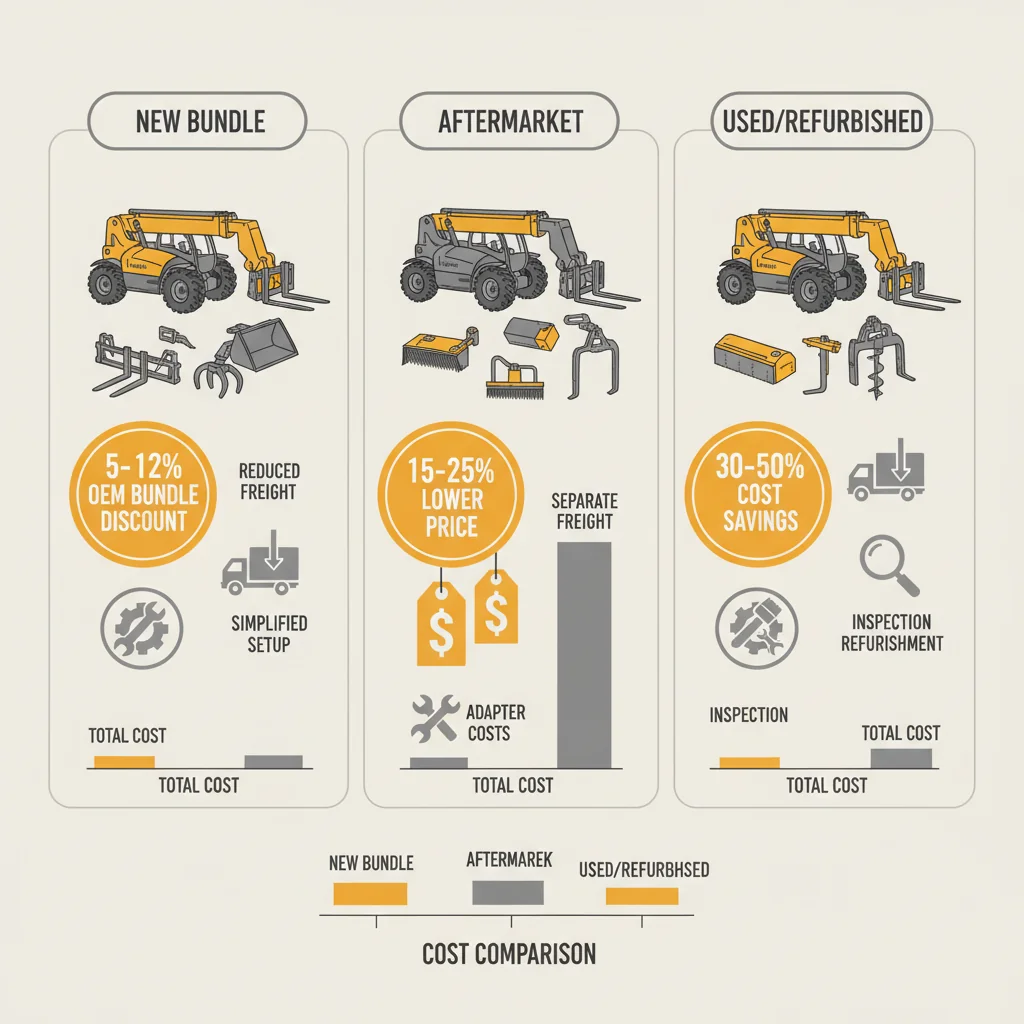
Buying telehandler attachments with the machine usually includes a 5–12% OEM bundle discount7 and reduces freight and setup charges. However, aftermarket attachments often cost 15–25% less, and used or refurbished options can reduce costs by 30–50%. Buyers should compare total costs—including freight and adapters—before choosing the most cost-effective route.
Most people don’t realize that timing and logistics can make as much difference as the headline price when buying telehandler attachments. For example, I helped a contractor in Dubai last year who bundled a 4-ton telehandler with two buckets, pallet forks8, and a jib. The dealer gave them about a 10% discount, but the real savings came from only paying one freight charge—and their attachments were ready for immediate use when the machine arrived. That simplicity meant no jobsite delays, which can easily cost more than any discount if cranes or teams are waiting around.
But the cost story changes if you look at aftermarket or used attachments. I’ve seen buyers in South Africa save at least 20% buying new forks and buckets from reputable independent dealers. On simple tools like a general-purpose bucket, used options from local equipment yards can run less than half the OEM price, especially if you don’t need every attachment on day one. The trade-off? You often need to manage separate shipping, sometimes pay for custom adapters, and spend more admin time tracking parts.
Here’s how the costs typically break down:
-
OEM Bundled Attachments: 5–12% discount; lower freight + setup; simple logistics
-
Aftermarket New Attachments: About 15–25% cheaper than OEM; quality depends on supplier
-
Used or Refurbished Attachments: 30–50% savings; ideal for non-critical tools
-
Separate Purchases: Multiple freight fees; adapter costs possible; more admin and downtime risk
I always suggest asking for written quotes both ways—including freight and setup—before deciding. This step can reveal hidden costs and help you choose what works best for your real project timelines.
Bundling telehandler attachments with the machine shipment can reduce total project startup time by up to 20%, as it eliminates multiple delivery coordination steps and onsite attachment installation delaysTrue
When attachments arrive pre-mounted or immediately available on arrival, operators avoid waiting periods that typically occur from separate deliveries, enabling faster project mobilization and reducing costly downtime.
Purchasing telehandler attachments separately always results in lower overall cost compared to bundling, since dealers offer higher discounts on individual attachments than on package dealsFalse
Dealers often provide combined discounts and reduce freight charges when attachments are bundled, which can offset or exceed savings from individual discounts; thus, buying separately can increase both logistical complexity and total cost.
Key takeaway: Comparing OEM bundle discounts with aftermarket or used attachment savings is essential. Bundling simplifies logistics and may save upfront, but aftermarket and used options can offer significant long-term savings. Requesting detailed quotes—factoring in freight, setup, and financing—helps buyers make informed, cost-effective decisions for telehandler attachments.
Which Telehandler Attachments Should Be Bought First?
Buy essential telehandler attachments—such as primary buckets, pallet forks, jibs, or work platforms—together with the machine if they are critical to day-one productivity or if the telehandler will serve a specific role. Niche, seasonal, or specialty tools can be added later as job requirements evolve and work volume justifies further investment.
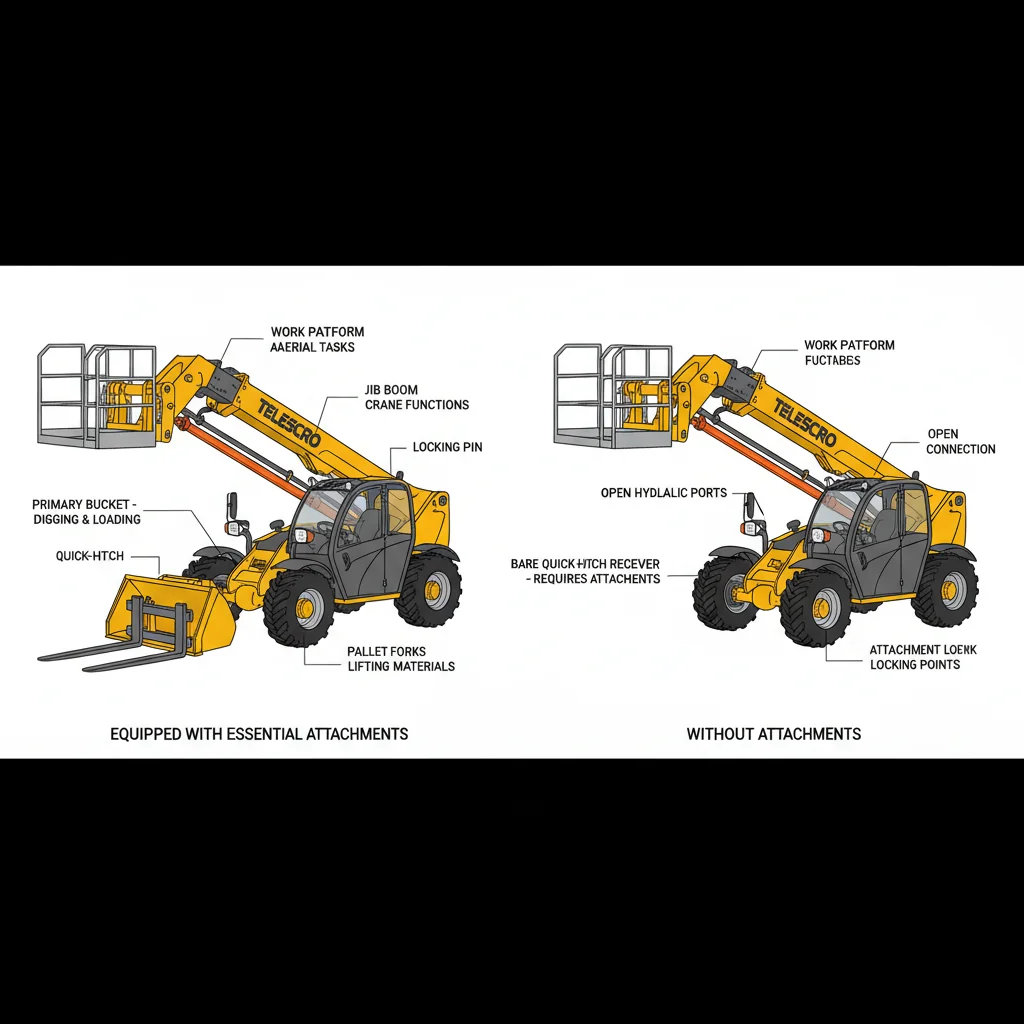
Here’s what matters most when customers decide which telehandler attachments to buy first: If your project relies on a specific task from day one, like handling pallets or moving loose materials, it’s worth getting those attachments bundled with your initial machine order. For example, last month I advised a dairy farmer in New Zealand who was starting with feed handling and basic lifting.
He picked up a set of heavy-duty forks (rated for 3,500 kg), a 1.2-cubic-meter bucket, and a simple lifting jib9. This let him get up and running from the first hour on site—with no downtime waiting for a missing tool.
Here’s how I usually break it down for my customers:
Common “day one” telehandler attachments:
- Pallet forks – for brick, block, and pallet work
- General-purpose or material bucket – loading sand, gravel, grain
- Lifting jib/boom – hoisting basic loads; keep in mind max reach
- Work platform – safe elevated access, check if your market allows this
These attachments ensure you’re productive as soon as the telehandler lands on your jobsite. Anything niche or seasonal, like bale grabs, augers, or mixer buckets, can usually wait—unless you know you’ll need it in the next few months.
A contractor in Dubai recently started with just forks and a bucket for a warehouse project. Four months in, work ramped up and he added a concrete skip from the used market. No compatibility surprises, because all “must-have” attachments were matched to the machine from the start. I suggest mapping out your major jobs for the next year, then building your starter set around those needs. That’s the path to smooth, dependable operation.
Purchasing key telehandler attachments such as heavy-duty forks and buckets together with the initial machine order often ensures compatibility and can reduce overall lead times by up to 30%True
Attachments bundled with the telehandler are factory-tested for optimal fit, hydraulic compatibility, and weight balance, minimizing delays caused by retrofitting third-party tools and ensuring immediate productivity on job start.
It is always more cost-effective to buy telehandler attachments separately after the machine is delivered because initial bundle pricing rarely offers any discountsFalse
Manufacturers frequently offer discounted package deals for telehandlers and attachments purchased together, and buying attachments after delivery often incurs higher costs and longer wait times due to separate ordering and fitting.
Key takeaway: Secure mission-critical attachments upfront when purchasing a telehandler to ensure seamless operation and compatibility. For tasks that may arise in the future, add specialized or seasonal tools incrementally, once work demands become clear. This approach balances immediate productivity with long-term adaptability.
Does attachment source impact telehandler maintenance?
Purchasing telehandler attachments from the OEM streamlines service, parts management, and warranty support by centralizing all maintenance needs with a single dealer and harmonizing parts like pins, seals, and hydraulics. Mixing aftermarket brands increases flexibility in cost and availability, but complicates maintenance through diverse SKUs, manuals, and support contacts, often affecting warranty eligibility if non-approved attachments are involved.
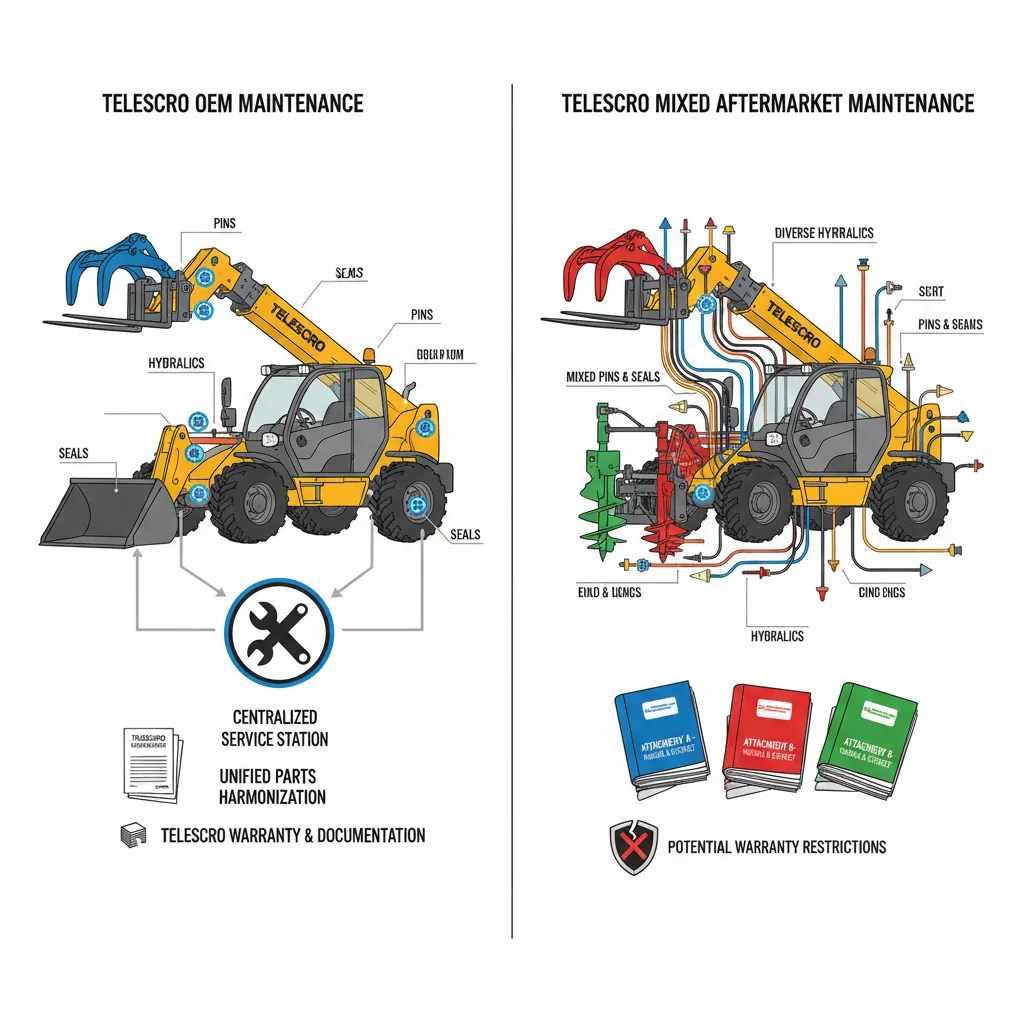
To be honest, where you source your telehandler attachments can make your whole maintenance plan either smooth or messy. I’ve seen the difference firsthand—especially working with a project in Dubai last year. That team bought their 4-ton telehandler package with all OEM-approved buckets10 and man baskets.
Their service manager told me every pin, hose fitting, and seal matched up, and the dealer handled both the machine and attachments for maintenance calls. They kept just one set of spare seals and always knew which hydraulic couplings to order—no confusion, less downtime. But I’ve also worked with sites mixing aftermarket attachments from three brands. In Kazakhstan, one jobsite had a 12-meter reach machine fitted with a non-OEM winch.
Yes, they saved a bit on upfront costs, but maintenance meant juggling four support numbers, six different pin sizes, and tracking manuals in three languages.
That setup made operator training harder and muddied warranty questions when a cylinder seal failed. The main impacts of attachment source on maintenance are:
- Streamlined Parts Inventory: OEM and approved brands usually share common parts (pins, seals, couplings), so fewer spare SKUs are needed.
- Centralized Service Support: One dealer contact allows faster diagnostics, consistent service history, and smoother warranty claims.
- Clear Scheduling: Servicing intervals for OEM bundles are often aligned, so you avoid missing critical maintenance steps.
- Warranty Clarity: Using non-approved attachments can risk telehandler warranty coverage if failures are traced to those parts.
Using OEM-approved attachments sourced together with the telehandler can reduce maintenance downtime by up to 30% due to better component compatibility and streamlined dealer supportTrue
OEM-approved attachments are designed and tested to work seamlessly with the telehandler’s hydraulic and mechanical systems, minimizing issues like mismatched pin sizes or hydraulic fittings. This compatibility simplifies troubleshooting and allows dealers to service the entire package efficiently, which can significantly cut maintenance time.
Purchasing non-OEM attachments separately typically extends telehandler component life because aftermarket parts are made with more durable materialsFalse
While aftermarket attachments may claim durability, they often lack precise fit and specification alignment with the telehandler, leading to increased wear on pins, seals, and hydraulic systems that can shorten overall component life. OEM parts ensure exact fit and performance standards that protect the machine’s integrity.
Key takeaway: Standardizing on one or two attachment brands, preferably OEM-approved, simplifies maintenance, training, and warranty management. Using multiple aftermarket sources increases logistical complexity and may reduce warranty coverage, so buyers should track approvals and compatibility, and ensure operators are aware of attachment-specific support and scheduling requirements.
Can Adapters Expand Telehandler Attachment Options?
Adapters and universal mounts enable telehandlers to utilize many skid-steer or loader attachments, broadening tool choices. Telehandler-to-skid-steer adapter plates11 are best for lighter-duty tools but can reduce lifting capacity and affect stability. Always verify the adapter’s load rating, revised lift limits, and hydraulic compatibility before use, especially with powered or high-capacity attachments.
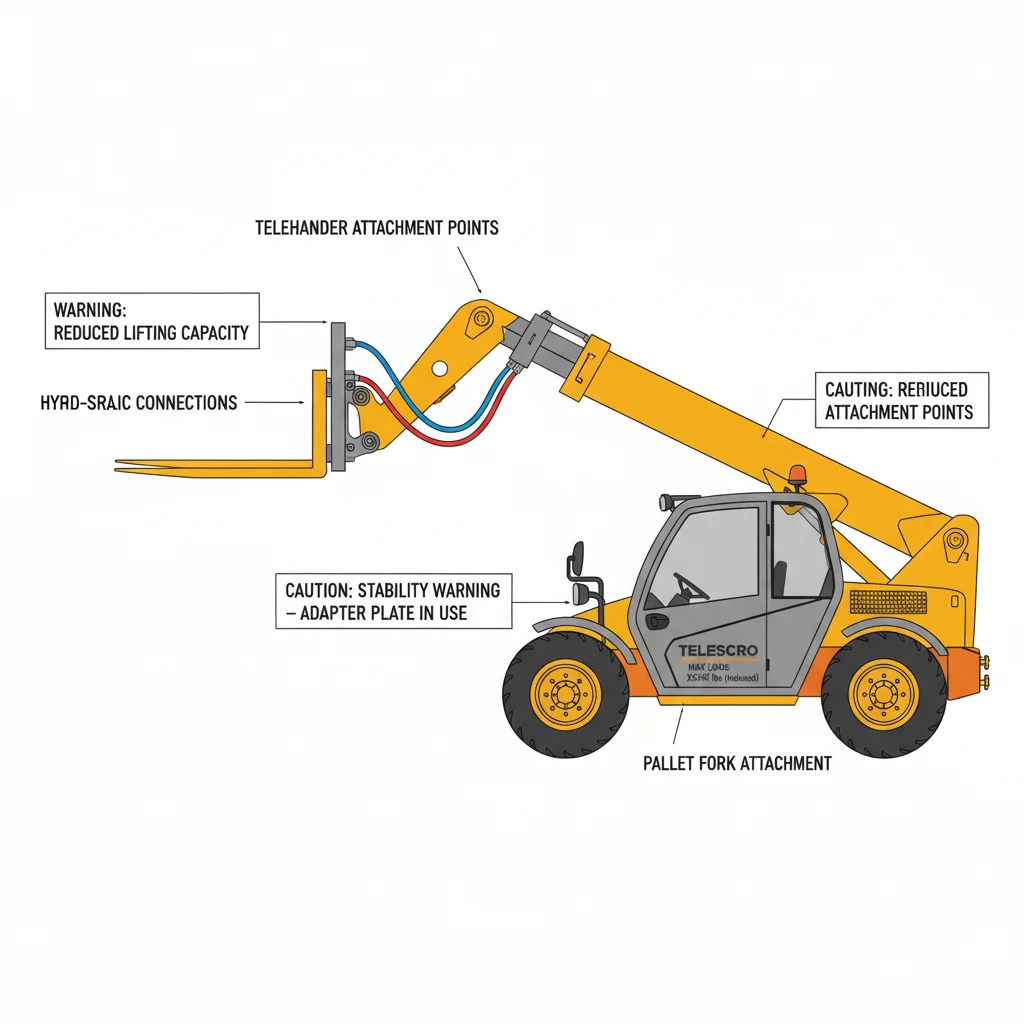
Last month, a customer in Dubai asked me whether using adapter plates would let his 4-ton telehandler handle more than just forks and buckets. He already had several skid-steer attachments sitting idle. I told him, adapters can definitely add value—if you know their limits.
By mounting a telehandler-to-skid-steer adapter, you open up access to a whole new set of lighter tools like brooms, small grapples, and modest-sized multipurpose buckets. On paper, it’s an efficient way to boost versatility, especially if you want to avoid buying a new set of attachments. But here’s what matters most when you consider adapters: they change your load center. When you use an adapter plate, your load moves further from the boom, which reduces real lifting capacity—sometimes by 10 to 20%. That’s a critical detail many overlook. I’ve seen operators in Brazil surprised when their 3.5-ton telehandler struggled after adding a rock grapple with an adapter.
The load chart was suddenly a lot less forgiving. Also, check hydraulic compatibility. Some powered skid-steer attachments need higher flow rates than your telehandler’s auxiliary circuit can deliver. If you force it, operation will be slow or unreliable. I always suggest verifying three things before you proceed: (1) the adapter’s load rating versus your intended attachment, (2) the revised lift limits at maximum extension, and (3) the proper hydraulic flow and pressure.
Using adapter plates can allow a 4-ton telehandler to safely operate skid-steer attachments that weigh less than 500 kg and have lower hydraulic flow requirementsTrue
Adapters increase versatility by enabling compatibility with lighter skid-steer tools, but the telehandler’s hydraulic capacity and load limits restrict attachment size and weight to typically under 500 kg to ensure safe operation.
Adapter plates enable a 4-ton telehandler to use any skid-steer attachment regardless of hydraulic pressure and weight specificationsFalse
Adapters do not override the telehandler’s hydraulic flow capacity or lifting limits; attempting to use heavy or high-flow attachments not designed for the telehandler can damage the machine, cause safety hazards, and void warranties.
Key takeaway: Adapter plates and universal mounts can greatly increase telehandler versatility, especially for lighter tools, by allowing use of skid-steer attachments. However, always check ratings and load charts, as adapters may reduce capacity and stability. Reserve purpose-built attachments for heavy-duty or high-reach tasks.
When Should Buyers Consider Used Attachments?
Buying telehandler attachments separately can provide access to quality used units, often at 30–50% lower cost than new. It is most effective for simple tools like pallet forks, buckets, and bale spears. Buyers should inspect welds, hydraulic parts, and ID tags to ensure safety and compliance.
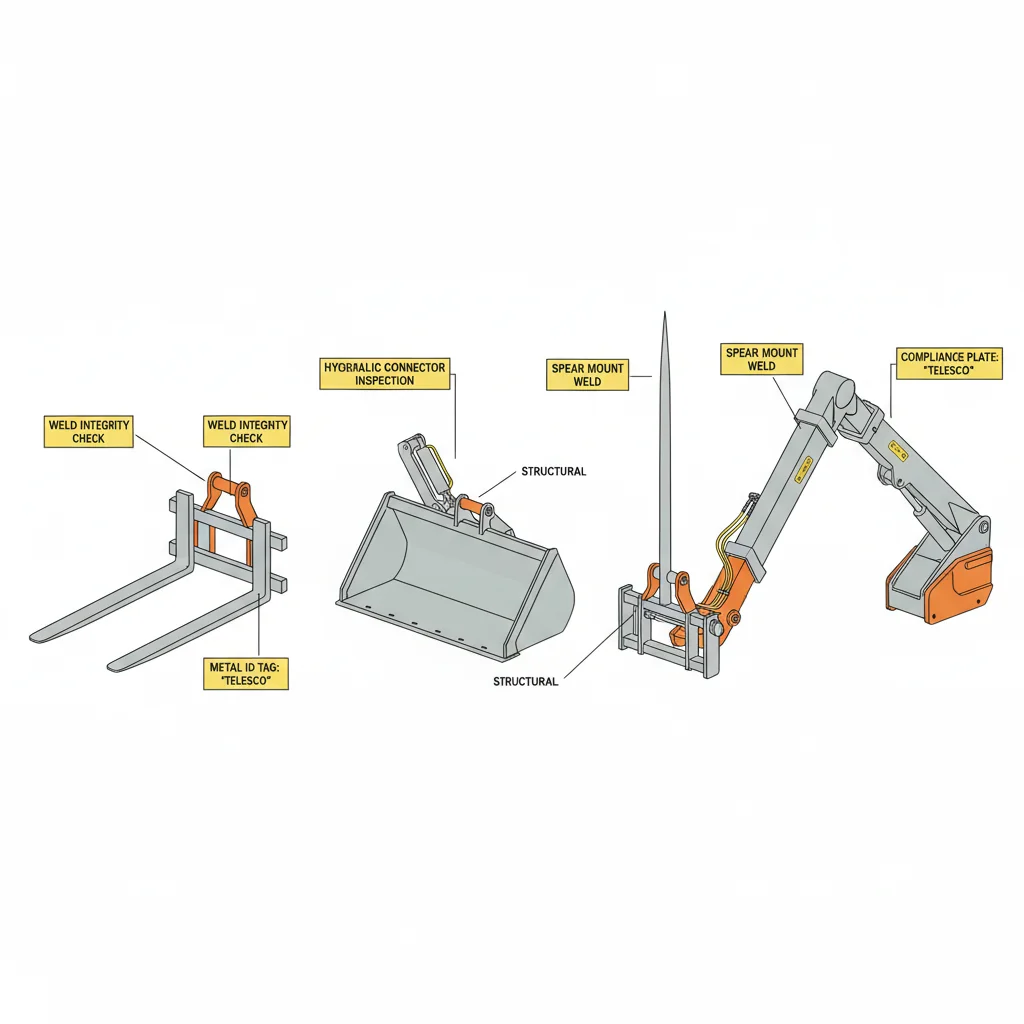
I’ve worked with customers from Kenya to Kazakhstan who want to save money on attachments, but not everyone knows when used ones actually make sense. The truth? If you need basic tools—think pallet forks, buckets, or bale spears—you can find great deals on the used market.I often see savings of 30 to 50 percent compared to new units. These attachments are simple, with few moving parts. That lowers the risk, as long as you check the key areas closely before buying. Here’s what you should inspect with used attachments:
- Welds and Frames: Look for cracks, bends, or poorly repaired welds.
I spotted a bucket in Brazil with hidden cracks near the mounting point—it failed two weeks later under load. – Hydraulic Components12: If the attachment has cylinders or hoses, check for leaks, pitting on rods, and smooth movement. Even a small leak can lead to expensive downtime.
- Pins and Locking Mechanisms: Make sure pins aren’t excessively worn and that locking devices engage positively.
One client I worked with in Poland bought a used fork carriage—within a month, a worn pin nearly caused a dropped load.
- ID Tags and Rating Plates: Always confirm the load rating tag is there and legible.
If you can’t read the capacity, you could risk overload and fail jobsite inspections. For lifting jibs or personnel platforms, I always suggest going new or OEM-refurbished. Insurance and safety standards on jobsites in Australia or Germany are strict—used units rarely meet all requirements.
Buying attachments separately often allows for more flexibility in matching specific attachment brands or models to your telehandler, potentially improving compatibility and performance.True
Purchasing attachments separately provides the opportunity to select from various manufacturers and specialized attachments that may better suit particular job requirements or telehandler models, rather than being restricted to the options bundled by the original equipment manufacturer.
It's always better to buy attachments with the telehandler as a package because attachments purchased separately will typically not fit properly and void the telehandler's warranty.False
Most telehandlers use standard mounting systems like the quick-attach plate, allowing attachments to be interchanged across brands without voiding warranties, so buying attachments separately does not inherently cause fitment or warranty issues.
Key takeaway: Used telehandler attachments13 offer significant savings for basic, low-risk tools when sourced from reputable refurbishers, but require diligent inspection for safety and certification. For critical lifting or personnel platforms, new or OEM-refurbished units are generally more advisable due to safety standards and insurance requirements.
Should Telehandler Attachments Be Bundled or Separate?
A hybrid, staged-purchase strategy14 is most effective for telehandler buyers. Specifying a unit with a universal quick-attach system15, purchasing core safety-critical attachments in a bundle for compliance and warranty, and reserving budget for additional tools sourced later achieves safety, flexibility, and cost optimization while supporting rapid deployment and reliable documentation.
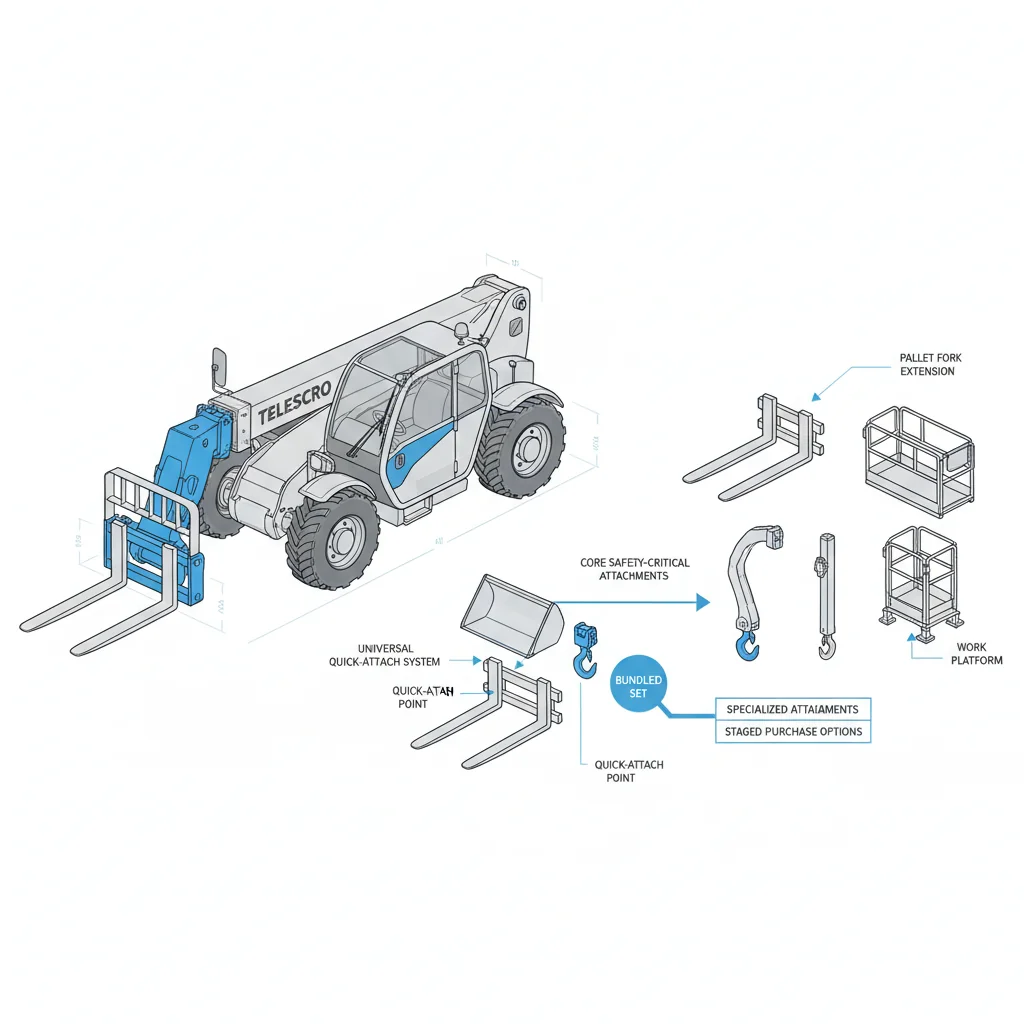
I get questions about attachment purchasing strategies almost every week—especially from first-time buyers. What’s the most practical approach? In my experience, I see the best results when customers use a hybrid, staged strategy instead of trying to grab every attachment up front or leaving everything last minute.
Here’s how it works best on real jobsites, whether you’re running a small fleet in Brazil or a large project in Kazakhstan. Start by listing out your primary lift tasks for the next year or two. For most construction jobs, you’ll rely most on a set of standard forks, a durable bucket, and (if needed) a man basket for work at height. I always recommend specifying a telehandler with a universal quick-attach system—this makes your life much easier if you add tools later.
Key steps in the staged-purchase approach:
- Bundle critical attachments at purchase: Secure standard forks, your main bucket, and any safety platform. When you buy these with the machine, you lock in warranty support and get matching load charts right away.
- Leave room in your budget for specialized tools: I’ve seen customers in Nigeria overspend early, only to underuse those “nice-to-have” attachments for months.
- Source add-ons after project demands become clear: Seasonality matters—maybe you need sweepers or snow blades in year two. Look for reputable aftermarket brands, check for quick-attach compatibility, and always double-check hydraulic flows.
- Document every new attachment: Keep the right manuals, approvals, and updated load charts with the machine.
Bundling telehandler attachments with the initial purchase can reduce overall costs by up to 20% due to package discounts and ensures hydraulic compatibility from the startTrue
Manufacturers often offer discounted pricing on attachment bundles, and purchasing attachments upfront guarantees that hydraulic and electronic interfaces are matched to the telehandler's specifications, preventing costly retrofits and downtime.
Purchasing telehandler attachments separately after the initial machine delivery always leads to better jobsite efficiency because operators can choose attachments on an as-needed basisFalse
While on-demand attachment purchase offers flexibility, it often results in delayed project timelines and increased costs due to unplanned downtime and potential compatibility issues, making a purely separate purchase strategy less efficient for most operations.
Key takeaway: Buyers achieve optimal safety and value by bundling core, high-use telehandler attachments at the time of purchase, then sourcing specialized or seasonal tools as needs arise. This staged approach maximizes operational readiness, enables fleet customization, and helps control costs without sacrificing compliance or operator safety.
Conclusion
We’ve looked at whether it’s better to buy telehandler attachments with the machine or source them later. The main benefits—compliance, warranty, and safety—come from sticking with OEM or approved dealer attachments from the start. From what I’ve seen on jobsites and with customers worldwide, the real headaches often come when people try to save money upfront. They end up facing downtime or safety reviews when non-approved attachments don’t work out as expected. Before finalizing your setup, I always suggest checking local support for both your telehandler and attachments—parts roulette can stall even the best crews. If you have questions about specific attachments, compliance, or want to compare options, feel free to reach out—I’m happy to help. Every site is different—focus on what actually fits your workflow.
References
-
Explains the critical role of load rating in preventing overload and ensuring safe operation with telehandler adapters. ↩
-
Understand how using non-certified attachments can trigger load moment indicator errors, impacting safety and warranty coverage. ↩
-
Learn how OEM attachments ensure updated load charts, certified safety, and full warranty protection for telehandler operations. ↩
-
Explore cost savings, quality considerations, and logistics when choosing aftermarket attachments for telehandlers in construction projects. ↩
-
Detailed insights on different quick-attach designs and why compatibility matters to prevent costly operational delays. ↩
-
Expert overview on hydraulic circuit variations, their impact on attachment performance, and tips for selecting compatible equipment. ↩
-
Understand how OEM bundle discounts help reduce upfront costs and freight fees when purchasing telehandlers with attachments bundled. ↩
-
Detailed overview of pallet forks for handling bricks, blocks, and pallets, essential for day-one telehandler productivity and safe load management. ↩
-
Explains the benefits and max reach considerations of lifting jibs, crucial for hoisting basic loads efficiently on construction sites. ↩
-
Explore how OEM-approved buckets ensure compatibility, simplify maintenance, and protect warranty on telehandler attachments. ↩
-
Detailed insights on using adapter plates to increase telehandler versatility while understanding capacity and stability impacts. ↩
-
Learn how to inspect hydraulic parts like cylinders and hoses to prevent leaks and costly downtime in used attachments. ↩
-
Explore expert guidance on safely purchasing used attachments to save 30-50% while ensuring quality and compliance. ↩
-
Understand the staged-purchase strategy to optimize safety, cost, and flexibility when acquiring telehandler attachments over time. ↩
-
Explore how a universal quick-attach system boosts telehandler flexibility and simplifies tool changes for varied jobsite demands. ↩