










How to Select the Right Telehandler for Construction Sites (Field Guide to Avoid Costly Mistakes)
The biggest mistake I see buyers make is matching a telehandler’s “max 적재 용량1” or “height” to their heaviest load—and stopping there. From the US to South Africa, I’ve watched those spec sheet shortcuts lead to stalled projects, safety scares, and blown budgets.
In this article, I’ll walk you through the real-world process for choosing the right telehandler for your site.
We’ll look at what these machines actually do best, how capacity and reach interact, why load charts matter, and how attachments and jobsites play into the decision.
What Is a Telehandler Used For?
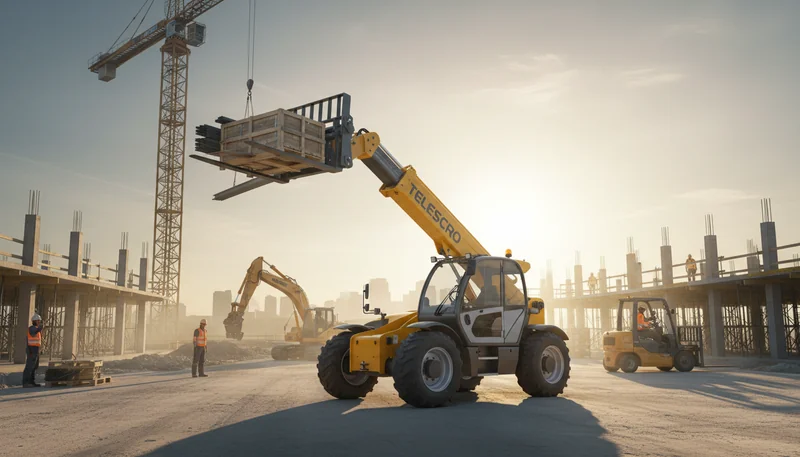
A telehandler is a lifting machine with a 텔레스코픽 붐2, ideal for moving materials, 트럭 하역3, and lifting items to upper floors. Versatile attachments allow it to replace multiple machines for repetitive tasks, but it’s less suitable for precision lifts like structural steel placement.
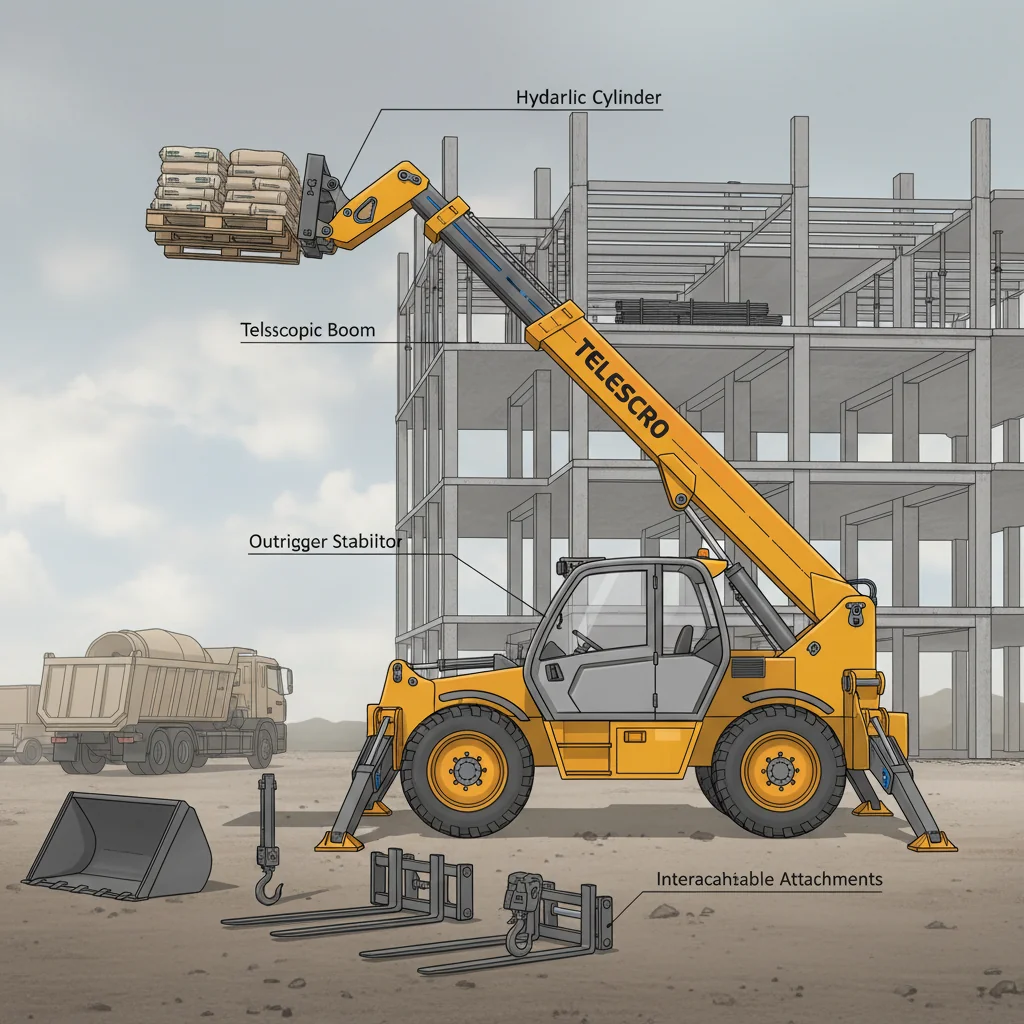
The biggest mistake I see is assuming a telehandler works just like a crane or forklift—it’s really something in between. With its telescopic boom, a telehandler can lift heavy pallets, place loads through upper-story windows, and reach across obstacles that normal forklifts can’t manage. In Dubai last year, a client needed to unload steel pipes—each around 2,500 kg—and place them on a scaffolding platform almost 14 meters high. A standard forklift couldn’t reach, and a crane was too expensive for daily use. Their team used a 4-ton, 15-meter telehandler with forks for the pipes and a bucket attachment to move sand. That one machine replaced two other pieces of equipment they normally rented.
Here’s where telehandlers really shine on a construction site:
- 트럭 하역 — Palletized bricks, blocks, piping, and even bulk bagged cement straight from delivery.
- Reaching upper floors — Lifting tools or materials to balconies, windows, or roof decks up to 18 meters high.
- Moving on uneven ground — Thanks to stabilizers and high ground clearance, they manage rough terrain much better than most forklifts.
- 빠른 첨부 파일 변경 — Swapping forks for a bucket or winch within minutes keeps productivity high.
Still, I always remind buyers not to expect surgical precision. Telehandlers aren’t designed for setting steel beams or delicate glass panels at full extension. To avoid over-specifying or misusing your investment, map out all the lifts you need for an average week on site. I suggest checking each task against the 로드 차트4—the safe lifting guide for different heights and reaches—before making a decision.
Selecting a telehandler with a boom reach of at least 14 meters is crucial for placing heavy loads on upper-story scaffolding, as typical forklifts generally cannot reach beyond 6 metersTrue
Telehandlers with telescopic booms can extend much farther than standard forklifts, which usually max out around 6 meters in lift height, enabling placement of heavy loads on elevated platforms that forklifts cannot access. This capability is essential for tasks like placing steel pipes on scaffolding 14 meters high.
Telehandlers are designed to replace cranes entirely on construction sites, making crane hire unnecessary for high-reach lifting tasksFalse
Telehandlers have significant reach and load capacity, but they cannot match the lifting height and precision of cranes for many applications. Cranes are still often essential for very high lifts or complex load movements where telehandlers fall short.
핵심 요점: Telehandlers excel at versatile material handling tasks on construction sites, such as lifting, placing, and moving materials with various attachments. However, understanding their capabilities and limits is crucial to prevent over-specification and ensure the right equipment is used for each task.
How Do Lift Capacity and Reach Interact?
Telehandler lift capacity decreases as you extend or raise the boom. A machine rated for 7,000 kg close to the chassis may only handle 3,000–4,000 kg when the boom is fully extended. Always consult the load chart and factor in boom position for safe operation.
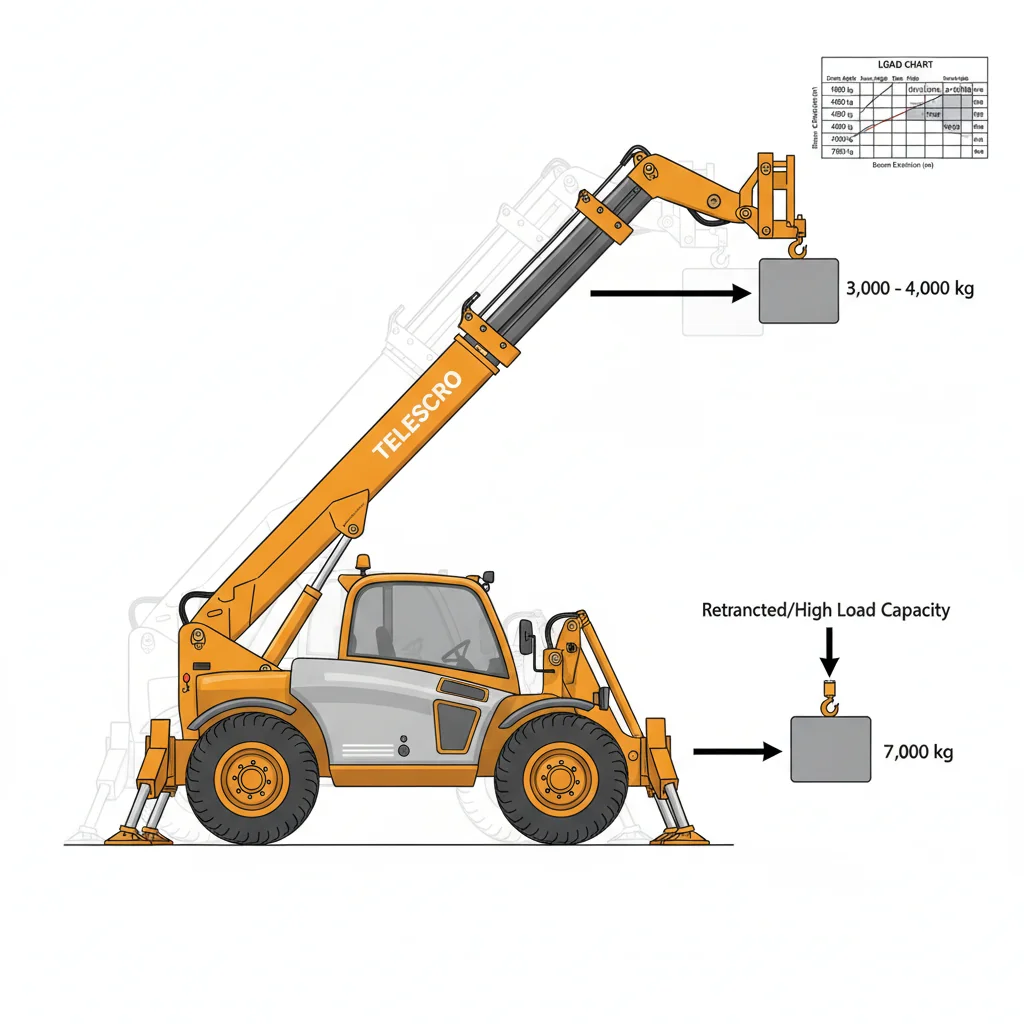
Let me share something important about telehandler specs—lift capacity and reach are tied closely together, but people often treat them as separate numbers. I recently helped a team in Dubai working on a mid-rise project. They picked a 7,000 kg unit for moving precast panels, confident that the machine would handle every panel. When it came time to lift at full 붐 연장5—nearly 13 meters out—they could barely lift 3,200 kg safely. That was less than half the rated maximum.
From my experience, this is the detail most buyers miss. The load chart (always attached inside the cab) tells you not just what the telehandler can lift, but what it should lift at every boom position. Let’s say your load is 4,000 kg and you need to place it 10 meters out, 8 meters up. Check that point on the chart. Many models rated for 7,000 kg at low height drop to 3,500 kg or even less when fully extended. I always advise customers to build in a 20–25% safety buffer as well. Material weight can vary, especially with moisture or packaging.
Last year, a customer in Kenya made this mistake on a farm silo build. Wet grain added over 400 kg per load, catching everyone off guard. Their moment indicator flashed warnings, so they had to offload and try again—a big waste of time. My advice? Don’t just go by “max” numbers. Always match real job needs to boom angle and extension, then review the load chart before buying. That margin can save budget and safety.
Telehandler lift capacity decreases significantly as boom extension increases, often dropping by more than 50% at maximum reach compared to retracted positionsTrue
Because the boom acts as a lever arm, extending it increases the moment load on the machine, limiting safe lift capacity to prevent tipping or structural failure, which is why a 7,000 kg rated telehandler may only safely lift around 3,200 kg at nearly 13 meters of reach.
A telehandler’s maximum lift capacity remains constant regardless of boom position or extension lengthFalse
Lift capacity is not constant but varies with boom extension and angle; as the boom extends or elevates, the available capacity reduces to maintain stability and structural integrity, which prevents operators from lifting the machine’s maximum rated load at full reach.
핵심 요점: Never rely solely on the maximum capacity rating when selecting a telehandler. Always check the load/lift chart for capacity at your required height and outreach, and build in a 20–25% margin under the rated limit to avoid dangerous overloads and unforeseen conditions.
How do I use telehandler load charts?
Telehandler load charts plot safe lifting limits based on boom angle, extension, and attachment. Select your toughest expected load, then check the chart to confirm it’s within the safe zone. Charts must match both model and attachment, and should be checked daily by all operators.

Most people don’t realize that a telehandler load chart isn’t just a sticker on the cab wall—it’s your main decision tool every single day. I had a customer in Dubai last year working on a high-rise project. He needed to lift rebar bundles to 15 meters, and assumed his 4-ton telehandler with 18-meter reach could manage any lift under that maximum. But when we checked the specific load chart for his fork attachment, safe capacity at 15 meters boom extension dropped to just 1,400 kg. That’s less than half the machine’s headline rating. Ignoring that chart would have been a costly mistake. Here’s how I always suggest using telehandler load charts on any jobsite: – Identify your “worst case” lift: Find your most challenging load, measure its weight (include pallet, any rigging, and wind if working at height). – Check your boom position: Measure both lifting height and forward reach—don’t rely on estimates. – Match machine and attachment: Use the correct chart for your exact model and attachment combo—don’t mix them. – Locate your load on the chart: Make sure your required lift is solidly within the safe working zone, not skirting the limit. For repeat tasks like stacking bricks onto a fourth floor, I’d recommend checking several typical positions. Operators must reference the load chart at the start of every shift. Any surprise—different bucket, rough ground, or a heavier-than-expected load—means going back to the chart.
Telehandler load charts specify safe lifting capacities that decrease significantly as the boom extends horizontally, sometimes dropping to less than 40% of maximum vertical lift capacity at full reachTrue
Load charts account for leverage and stability; as the boom extends outward, the machine’s tipping risk increases, reducing safe load limits. For example, a 4-ton telehandler might safely lift only 1,400 kg at 15 meters horizontal reach despite a 4,000 kg maximum capacity at minimal extension.
Telehandler load charts represent the maximum load capacity regardless of the attachment type used, so operators can rely on the machine’s rated capacity alone for all liftsFalse
Load capacities vary significantly with different attachments; for example, a fork attachment’s capacity differs from a bucket or jib. Operators must consult the specific load chart corresponding to the attachment in use to ensure safe lifting. Relying on machine-rated capacity alone can lead to dangerous overloads.
핵심 요점: Always consult the model- and attachment-specific load chart before any lift. Identify the most demanding lift requirement, then verify its safety zone on the chart. Daily reference and proper training are essential—never operate a telehandler without a clear, legible load chart from your supplier.
How Do I Size a Telehandler Correctly?
Accurate telehandler sizing starts by mapping out lift height, reach, and load weight for each site task—not just reviewing spec sheets. Assess obstacles, frequency, and duration of use. Each project’s unique demands dictate the ideal machine, minimizing costly swaps or rentals mid-project.

Here’s what matters most when sizing a telehandler: the real-world jobs you need to handle—not just what the catalog says. Every project is different. I’ve seen sites in Kazakhstan where a supposed 12-meter reach machine couldn’t deliver bricks to a fourth-floor balcony. Why? The actual working height was 13 meters due to uneven ground and the need to clear a wide setback. The operator ended up wasting days waiting for a taller machine. It’s much cheaper to plan this up front than to swap equipment halfway.
Start by listing each specific lift. What’s your maximum lift height6—is it really just the third floor, or will equipment, overhangs, or sloping ground mean you need more reach? Maximum forward reach matters just as much. Think: will you need to place loads over scaffolding, landscaping, or parked vehicles? Loads usually aren’t textbook perfect either. I worked with a customer in Dubai moving precast panels weighing 2,800 kg—well within the ‘max 3,000 kg’ of their telehandler, but at full extension, capacity slipped below 2,000 kg. The machine’s 로드 차트 (the safety limits at different boom positions) told the real story.
Obstructions also complicate things. Are there power lines, tight gates, or uneven ground? For jobs with daily, continuous lifts, I suggest looking for a model with a more comfortable cab and robust hydraulic circuit. Occasional use? Rentals might make more sense.
The best advice I can give: always check performance at your worst-case reach and height—don’t trust max numbers on paper. That’s how you avoid costly delays and keep your project on track.
When sizing a telehandler, you must consider the effective working height including ground slope and site setbacks, not just the nominal boom reachTrue
Nominal boom reach is often measured on flat ground and in ideal conditions; however, uneven terrain and obstacles like setbacks increase the effective height needed, which can cause otherwise suitable telehandlers to be undersized for real-world tasks.
Choosing a telehandler with the highest load capacity listed in the catalog ensures it will handle all lifting tasks regardless of boom extension or angleFalse
Load capacity varies significantly with boom extension and angle; the maximum rated capacity is only available at specific lift configurations, so selecting a telehandler solely on its peak capacity without considering the load chart under actual working conditions can lead to overload situations or inability to perform required lifts.
핵심 요점: Successful telehandler selection requires a detailed task inventory, including lift height, forward reach, and typical load weights, plus site-specific constraints. Avoid costly missteps by matching equipment to actual project needs rather than relying on generic specs or rough estimates.
How Do Attachments Affect Telehandler Capacity?
Attachments like forks, buckets, and jibs change both the lifting capacity and the balance of a telehandler. Since each attachment adds weight and shifts the center of gravity, always consult attachment-specific capacity charts to prevent overloads and ensure compliance with safety standards on construction sites.
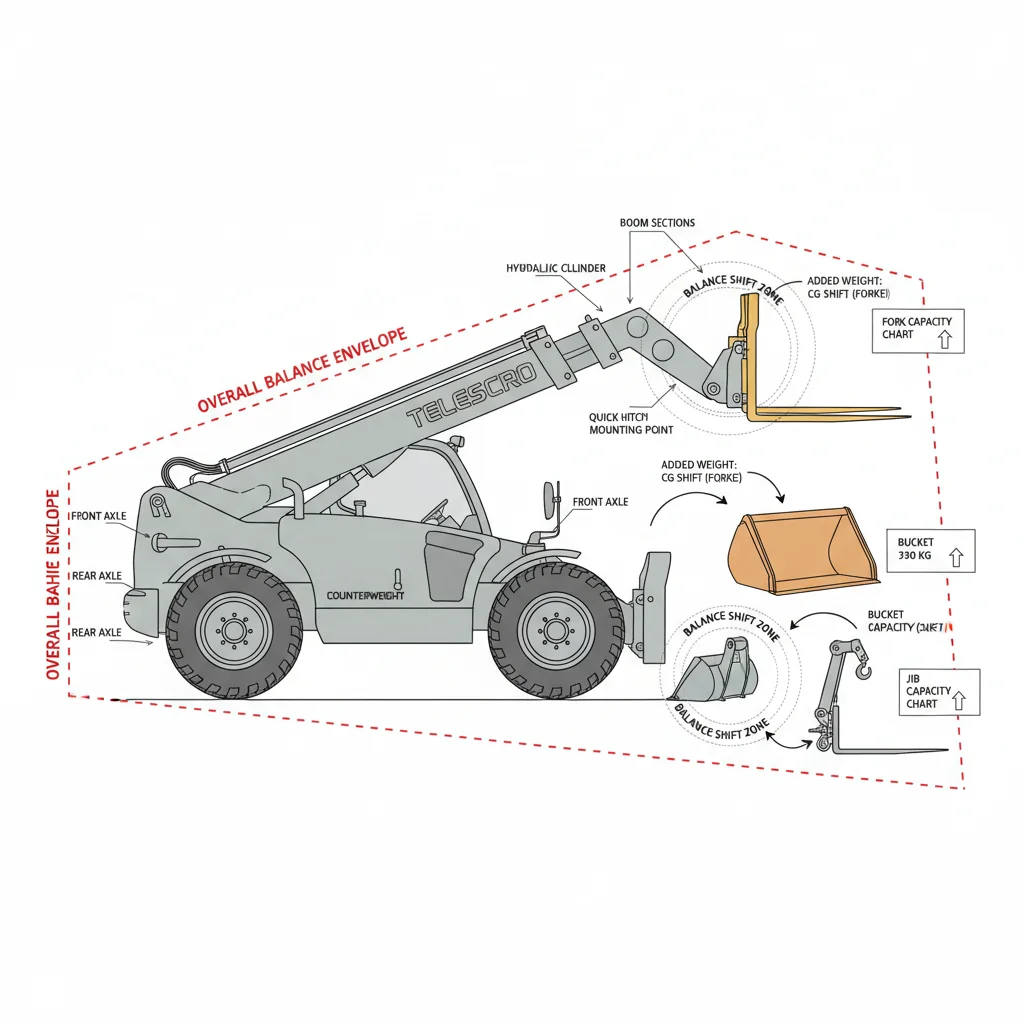
I’ve worked with customers who made costly mistakes by ignoring how attachments affect telehandler performance. One project in Dubai comes to mind—a contractor swapped forks for a heavy clamshell bucket without checking the new load chart. Their machine was rated for 4,000 kg, but with the bucket installed, safe capacity dropped to around 3,100 kg. They overloaded it anyway, and the overload alarm halted work. That shut down the site for half a day while they scrambled to check limits and repack the load. The lesson? Attachments change everything about safe lifting.
To help you avoid similar problems, here’s what I always emphasize with clients evaluating attachments:
- 부착물 무게7 counts against lifting capacity – If your bucket weighs 400 kg, your payload drops by that much. Hydraulic-powered attachments add even more.
- Center of gravity shifts8 – Jibs, hooks, or long extensions can move the load’s center outwards, reducing stability. Working at full reach makes this effect much greater.
- Each attachment needs its own capacity chart – Never rely on the main machine chart. Get the chart specific to your chosen attachment and position.
- Improvised attachments are risky – I’ve seen home-made grapples cause accidents in Kazakhstan. Use only certified kits approved for your model.
For multi-site fleets, I suggest standardizing a core set—maybe forks, one multipurpose bucket, and a lifting jib. This keeps training simple and prevents confusion about what’s safe to lift. And always check the moment indicator before each job; it’s the fastest way to catch an overload before it happens.
Using heavy attachments like a clamshell bucket can reduce a telehandler's rated capacity by up to 25% compared to standard forksTrue
Attachments often change the load center and weight distribution, so manufacturers provide specific load charts for each attachment type; heavy attachments shift the load center forward, decreasing the safe lifting capacity by significant margins, sometimes around 25%.
Telehandler load charts remain valid regardless of attachment type as long as the total weight lifted does not exceed the machine’s maximum rated capacityFalse
Load charts are specific to both the telehandler model and attachment used because different attachments alter the load center position and machine stability, so ignoring attachment-specific charts risks overloading and unsafe conditions even if the weight is below the max rated capacity.
핵심 요점: Choosing the right attachments directly impacts your telehandler’s safe lifting limits and operational flexibility. Always factor in attachment weight, insist on certified options, and standardize attachment kits across sites to simplify training, maximize payloads, and maintain compliance with safety and manufacturer guidelines.
How Do Site Conditions Affect Telehandler Choice?
Choosing a telehandler starts with site assessment—compact models suit tight urban or indoor locations, while rough-terrain units9 are essential for uneven ground. Key factors include 회전 반경10, ground clearance, and maneuverability relative to site access, obstacles, and daily workflow zones.
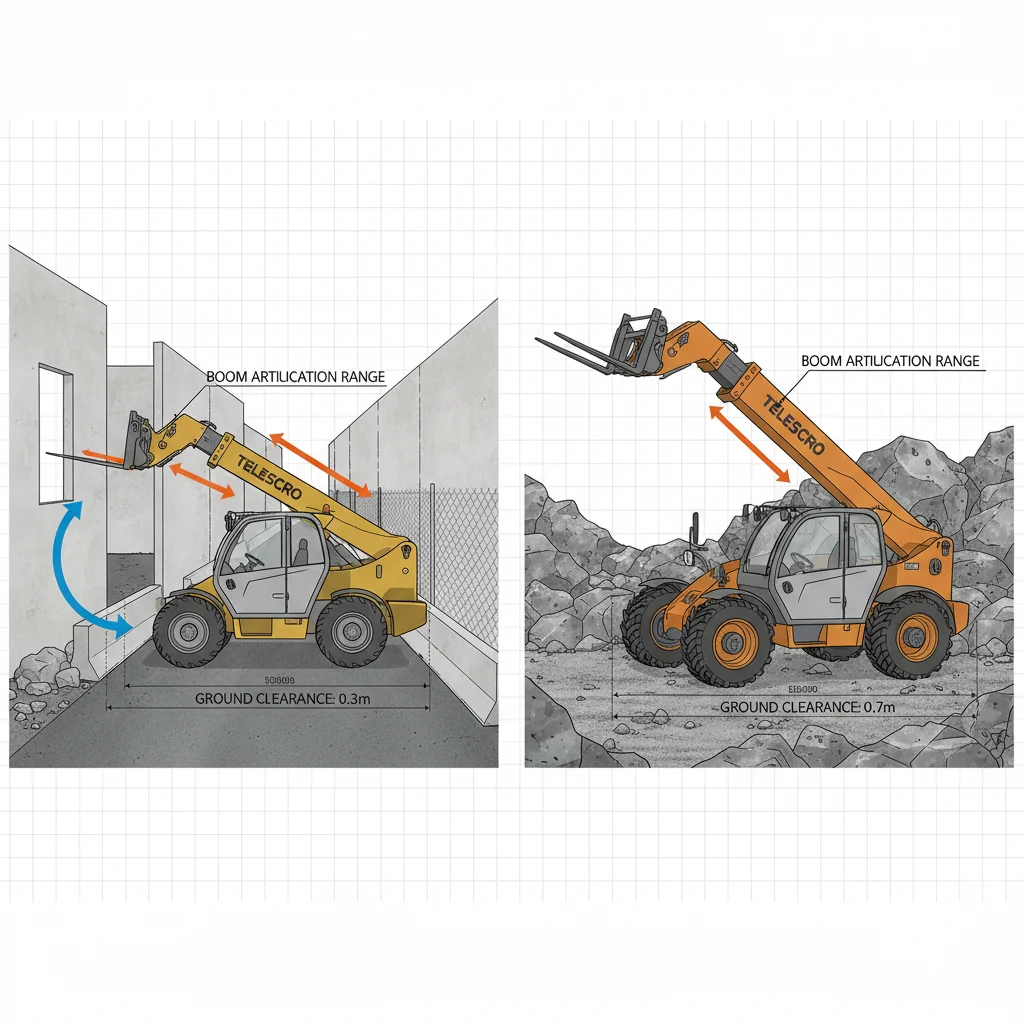
Let me share something important about how site conditions shape telehandler selection. Last winter, a client in Kazakhstan asked for an 18-meter high-reach unit—specs looked perfect for their job. But after I reviewed their site photos, it was clear even a mid-sized model would struggle with the narrow 2.8-meter gate and soft, uneven ground in the staging area. In the end, we switched to a compact 3-ton telehandler with ground clearance over 370 mm and a turning radius under 4.5 meters. That saved them weeks of potential headaches.
You can’t just go by brochure numbers or what “should” fit. Rough, muddy terrain changes everything—even a four-wheel drive telehandler with good tires can lose stability if the ground’s too soft, especially when extending the boom. I’ve seen this in South Africa: on one site, a 4,000 kg unit loaded to only 60% of its rated capacity simply couldn’t operate safely because the approach slopes were too steep and full of ruts.
It’s not just about outdoor jobs either. Compact models—around 2,500 kg and 5–9 meters reach—are made for tight spaces inside city blocks, underground parking, or busy warehouse yards. Their lower profile and shorter overall length help you avoid posts, low ceilings, or vehicles parked nearby. If you only think about height and lift, you’re missing what I call the “3-meter blind spot”—the daily turning, reversing, and tight maneuvers you’ll actually be doing.
I always suggest walking the entire site and measuring critical points yourself. Double-check gate widths, slope gradients, turning space, and any obstacles—those details will save you from costly surprises and project delays.
Telehandlers with a ground clearance over 350 mm and a turning radius under 5 meters are often necessary for navigating narrow gates below 3 meters wide and uneven, soft ground on construction sitesTrue
Higher ground clearance helps prevent chassis damage and getting stuck on uneven or soft terrain, while a smaller turning radius is crucial for maneuvering through tight access points like narrow gates, as demonstrated by the switch to a compact telehandler for a 2.8-meter gate site.
An 18-meter high-reach telehandler can always operate effectively on any construction site regardless of gate width or ground conditions because reach height is the primary selection factorFalse
Reach height alone does not determine telehandler suitability; site constraints like gate width, ground softness, and maneuverability are critical. A long-reach unit may be too large to enter through narrow gates or get stuck on uneven terrain, making smaller, more agile units necessary.
핵심 요점: The physical realities of a construction site—such as space restrictions, surface conditions, and access points—directly determine the most suitable telehandler type. Always inspect and measure actual site parameters before specifying machine dimensions or performance, to prevent operational limitations and avoidable costs.
What Safety Standards Apply to Telehandlers?
Telehandlers must comply with standards like EN 1459 in Europe and ANSI B56.6 in the US. Operators must go beyond these when site conditions change, requiring additional risk assessments, strict controls, daily inspections, clear load chart usage, and verified operator training before use.

Here’s what matters most when talking telehandler safety: the basic standards like EN 1459 (Europe) and ANSI B56.6 (US) set a starting point, not a guarantee. From my experience, those rules expect the machine to be parked on solid, level ground, usually using standard forks. But jobsites are rarely that predictable. Last year, I worked with a team in Dubai lifting HVAC units onto the tenth floor—around 26 meters up—using a 4-ton telehandler with a jib attachment. The factory safety limits didn’t cover their real risk. We found uneven gravel, nearby scaffolding, and constantly shifting exclusion zones. That’s when standards alone fall short.
In cases like this, I always suggest a thorough risk assessment11 before the first lift. If you’re working with extended booms, traveling with loads, or swapping to non-standard buckets or hooks, the safe working parameters change fast. Don’t trust 하중 모멘트 표시기12 or stability alarms alone; those help, but operator judgment is critical. I’ve seen jobs in Kazakhstan delayed by a week because untrained operators misunderstood hydraulic speed controls on a high-reach model. One control error, and you’re looking at expensive downtime or worse, a tipped machine.
To be honest, daily inspections and operator training aren’t optional. Inspect boom pins, check hydraulic circuit pressure, and review the load chart every morning. If you plan to use work platforms for lifting people, triple-check compliance with local regulations. As a buyer or fleet manager, require documented operator certification and written lift plans that factor in actual ground conditions, attachments, and restricted zones. It’s competent planning—not just machine features—that prevents costly mistakes.
EN 1459 standards require telehandlers to have defined stability envelopes based on using only standard forks on firm, level ground, meaning any attachments like jibs can invalidate the rated capacity unless specifically testedTrue
EN 1459 specifies that rated capacities and stability are calculated assuming standard forks and level ground conditions; using jibs or working on uneven terrain changes the load center and stability factors, which may cause the telehandler to operate outside tested safety margins.
ANSI B56.6 mandates that all telehandler operators must complete a minimum of 40 hours of simulator training before operating any telehandler on construction sitesFalse
ANSI B56.6 sets standards for telehandler safety and operation but does not specify mandatory simulator training hours; operator training requirements vary by employer and jurisdiction, often including hands-on and classroom elements rather than a fixed simulator hour requirement.
핵심 요점: Always confirm that telehandlers and their operators comply with applicable standards and regulations. Factor in site conditions, attachments, and non-standard uses to develop site-specific safety plans, require formal operator training, and never rely on machine features alone for safety. Competent planning prevents costly mistakes and incidents.
How do engine power and driveline affect selection?
Choosing engine power impacts both operational capacity and running costs. For typical handling, telehandlers under 74 hp may avoid costly DEF/AdBlue systems13, simplifying maintenance. Heavy-duty tasks might require more horsepower and advanced driveline features. Transmission type also affects handling, operator comfort, and cycle efficiency—ask for real-world data.
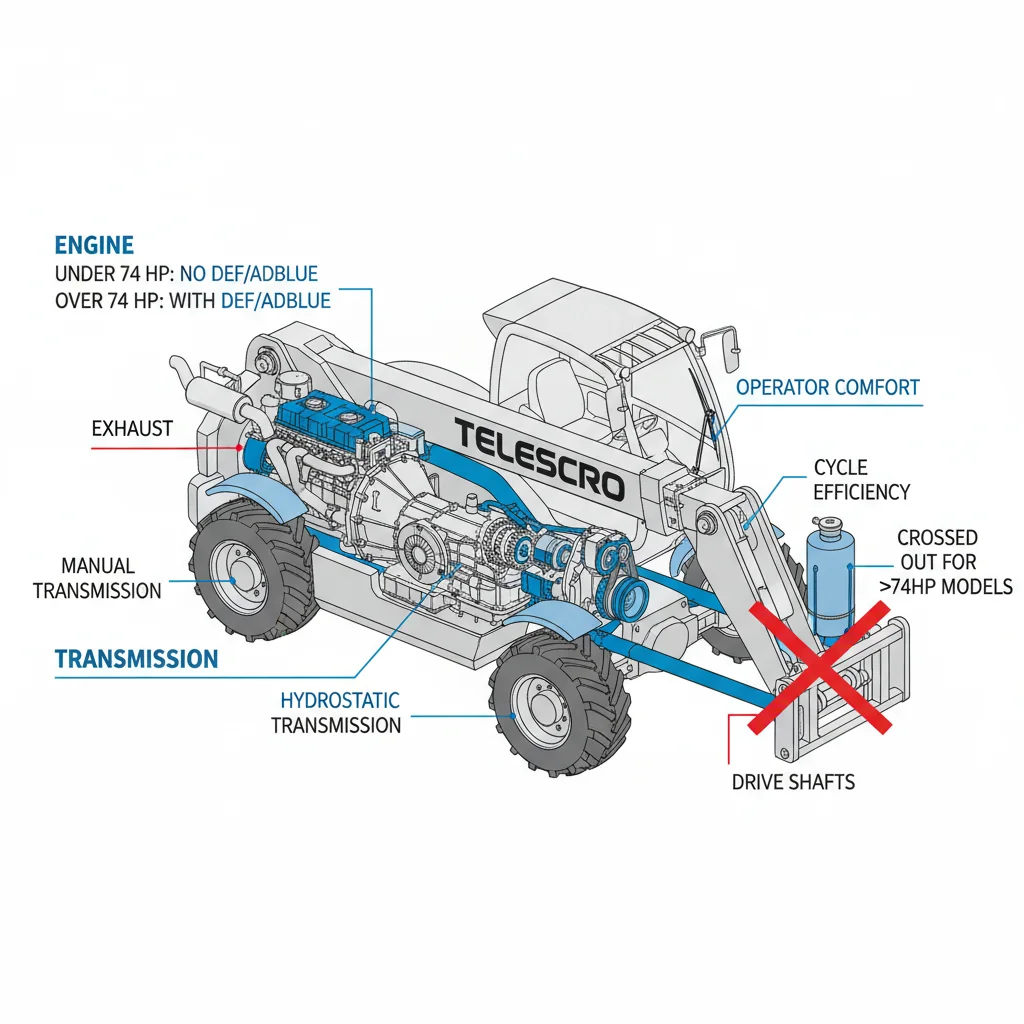
Last month, a contractor in Dubai contacted me with a question: should he invest in a high-horsepower telehandler for a general construction site, or would a smaller unit be enough? I’ve seen this dilemma play out in many countries. Here’s the thing—engine power does more than just determine how fast you move a load. It ties directly to fuel consumption, emissions systems, and ongoing running costs. Units under 74 hp (55 kW) typically avoid DEF/AdBlue after-treatment, which means less hassle for maintenance crews and fewer worries about DEF supply on remote sites. For most handling jobs—like unloading block pallets or raising materials to the third floor—I’ve found a well-geared 3.5-ton telehandler with a 75 hp engine performs smoothly and keeps fuel burn manageable, usually under 7 liters per hour.
To be honest, I’ve watched customers in Kazakhstan run into trouble by choosing more power than needed. They bought 120 hp machines because they wanted "extra strength," but then spent more on DEF fluids, dealt with sensor faults, and faced unexpected downtime due to complex emissions equipment. For truly heavy applications—continuous use with buckets, pulling large trailers, or working on steep grades—a bigger engine and more advanced powershift driveline make sense. But that’s maybe 25% of cases. For daily lifting, a simpler hydrostatic transmission is easier for operators, especially on tight sites or with frequent stop-start cycles.
I suggest always asking your supplier for real-world fuel and DEF use data from similar jobs. Matching engine and drivetrain to your actual workload will save headaches later—especially when maintenance resources are tight.
Telehandlers with engines rated under 74 hp (55 kW) typically operate without Diesel Exhaust Fluid (DEF) systems, reducing maintenance complexity and costs on job sites.True
Engines below 74 hp often fall under emission tiers that do not require SCR after-treatment like DEF/AdBlue, simplifying emissions compliance and lowering running expenses for users.
A telehandler with a higher engine horsepower will always consume less fuel on a construction site because of better torque management systems.False
Higher horsepower generally means greater fuel consumption under load; torque management can improve efficiency but cannot guarantee lower fuel use compared to smaller engines under similar working conditions.
핵심 요점: Select engine power and driveline based on site demands and maintenance resources. For most construction jobs, telehandlers below 74 hp can reduce costs and complexity. Consider your application’s intensity, ask for fuel and DEF data, and match transmission to expected operation cycles before deciding.
How Do I Calculate Telehandler Ownership Costs?
Total cost of telehandler ownership goes far beyond the initial purchase or rental price. It includes fuel, DEF, maintenance, repairs, insurance, transport, and operator training. Evaluate lifecycle estimates and service intervals, not just sticker price, to optimize long-term site productivity and minimize unexpected expenses.
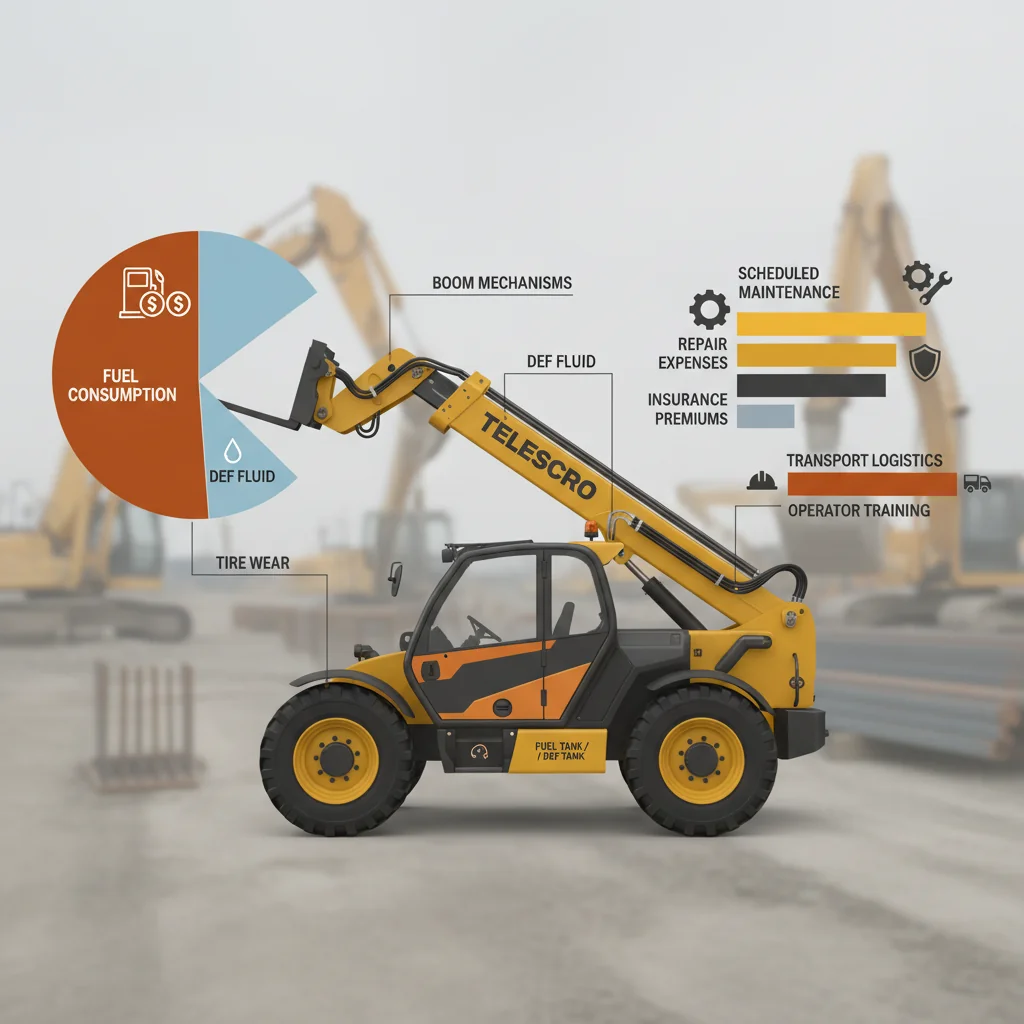
Last month, a contractor in Kazakhstan asked me why his “budget” 3-ton telehandler was turning into a money pit after just two years. The problem wasn’t the purchase price—the real issue was everything that came after. When you’re calculating ownership costs, it’s not just the sticker price or rental fee. You need to add up fuel (or electricity, for electric models), DEF if your engine requires it, routine maintenance, unexpected repairs, transport between sites, insurance, and operator training.
For example, in dusty sites like UAE or West Africa, I’ve seen air filters clog twice as fast—doubling maintenance intervals14. A typical mid-size, 4-ton telehandler can burn through 6–10 liters of diesel per hour, depending on load and duty cycle. Over 2,000 hours per year, that’s a serious fuel bill. And if your machine uses DEF, those costs add up quickly as well. Don’t forget annual maintenance: a good rule is 3–5% of the initial price in hard environments. In China, I helped a customer realize that “cheap” serviced every 250 hours ended up parked half the time—downtime that hurt project deadlines.
To be honest, a “showroom hero, jobsite zero” is no bargain once you count lost days waiting for parts. Ask manufacturers for lifecycle service data, and check availability of filters, hoses, and electronics. For short projects, compare these costs to rental—sometimes rental avoids big second-year surprises. I suggest mapping out all likely expenses, down to the last liter of fuel. That’s how you avoid unwelcome costs and select the most productive machine for your site.
Including operator training costs can add up to 10% of the total telehandler ownership expenses over the machine’s lifecycleTrue
Operator training is often overlooked but can represent a significant portion of ownership costs since skilled operators improve machine efficiency and reduce damage, thus lowering repair and downtime expenses. Training programs, certifications, and refresher courses accumulate substantial costs over time.
Telehandler ownership costs primarily depend on purchase price and fuel expenses, while maintenance and insurance costs are generally negligibleFalse
Maintenance, insurance, and other indirect costs like transport and training often exceed fuel expenses over the machine's life. Ignoring these can lead to underestimating true ownership costs, which is why purchase price alone isn't an accurate indicator of total expense.
핵심 요점: Focusing solely on a telehandler’s purchase or rental price can lead to expensive miscalculations. Always consider total cost of ownership—maintenance, fuel, repairs, downtime, and operational needs—to guide your selection. This comprehensive approach avoids costly surprises and boosts construction site efficiency over the machine’s lifespan.
Which Telehandler Maintenance Features Are Essential?
Look for debris-resistant radiators15, easily cleanable filters, protected hydraulic hoses16, and clearly marked grease points on booms and pivots. These features, paired with scheduled greasing and regular torque checks, significantly reduce downtime and extend both component life and overall machine value on construction sites.

To be honest, the spec that actually matters is how easily you can keep the telehandler running reliably—especially after the first year on site. Dust and debris will clog a standard radiator in less than a week if the core isn’t designed with wide fins or a reversing fan. In South Africa, I saw a five-ton unit sidelined every two days, just because the cooling system was too hard to access for cleaning. That led to engine overheating and expensive downtime nobody budgeted for. From my experience, operators really appreciate machines where filters and grease points are clearly marked and easy to reach—even with gloves on. Look for telehandlers with external covers for filters and grouped lubrication points.
If you’re working in concrete or brick sites, exposed hydraulic hoses on the boom are just asking for trouble. One customer in Brazil lost half a day after a jagged rebar tore through a hose at full extension. That’s an easy fix if the hoses are shielded inside the boom or tucked behind guard rails. Here’s a quick comparison of essential maintenance features:
| 기능 | 왜 중요한가 | 확인해야 할 사항 | Downtime Impact |
|---|---|---|---|
| Debris-resistant radiator | Reduces overheating risk | Wide fins, mesh guards, reversible fan | Low if present |
| Easily cleanable filters | Faster daily maintenance | External covers, tool-less access | 낮음 |
| Protected hydraulic hoses | Prevents damage, leaks | Routed inside boom, guards | Very low |
Telehandlers equipped with reversing fans can reduce radiator clogging by up to 70% in dusty environments, significantly extending maintenance intervalsTrue
Reversing fans periodically blow dust and debris away from radiator fins, preventing buildup that causes overheating; this feature helps maintain optimal engine temperatures, reducing downtime and cleaning frequency in harsh conditions.
Regularly replacing hydraulic oil every 500 operating hours is unnecessary if a telehandler has a dust-proof cabinFalse
Hydraulic oil degradation depends on system use and contamination, not cabin conditions; neglecting scheduled oil changes can lead to system wear and failure regardless of cabin dust protection.
핵심 요점: Prioritize telehandlers with accessible, construction-specific maintenance features and enforce strict service intervals to prevent breakdowns. Request sample maintenance logs and projected annual costs from suppliers to budget smartly. Standardizing fleet models and maintenance intervals helps reduce training, parts stocking complications, and long-term ownership costs.
Why Do Dealer Networks and Resale Matter?
Strong dealer support17 ensures quick parts access and minimized downtime, often outweighing minor spec differences between telehandlers. Leading brands provide better training and documentation, while their units typically retain 60–70% value after five years—a critical advantage if you regularly update your fleet.
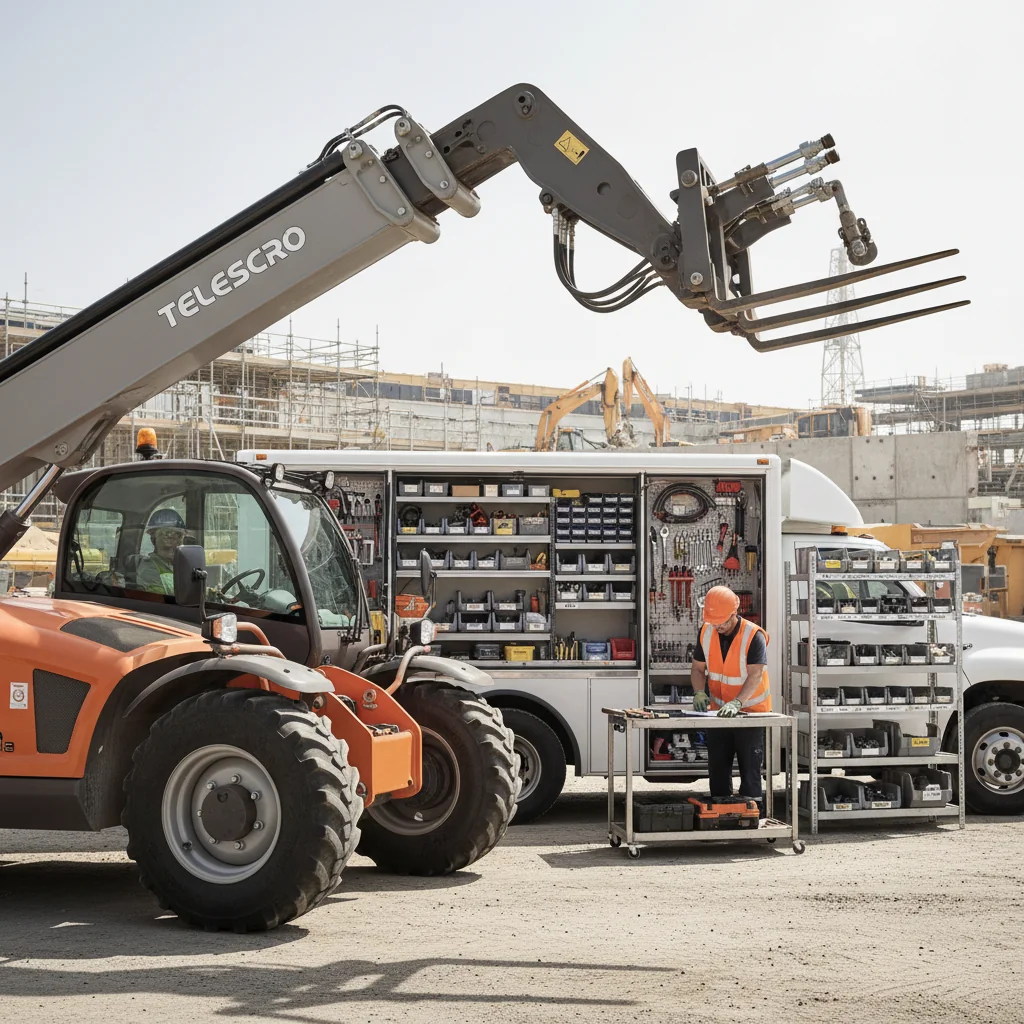
Last year, a project manager in Kenya called me after waiting nearly three weeks for a replacement hydraulic pump. That delay pushed his concrete pour schedule back by at least two weeks. It wasn’t a complicated part—just that his telehandler brand didn’t have strong dealer coverage in East Africa. This kind of downtime eats into profits and frustrates both contractors and clients. From my experience, fast parts access and a reliable support team outweigh small differences in lifting specs, especially when a jobsite runs on tight timelines.
Dealers do more than sell new machines—they train operators, supply up-to-date documentation, and offer mobile technicians who can be on-site within a day. I’ve seen in Brazil how a contractor refreshed his fleet every five years. He was able to resell well-supported, high-reach telehandlers for about 65% of their original value—even with over 4,000 engine hours. Lesser-known brands? Often they struggled to sell at even half that amount. That resale difference adds up fast if you manage a fleet of five or ten units.
When considering a new telehandler, I suggest checking three things: how quickly parts arrive for your chosen model, whether the local dealer has factory-trained mobile technicians, and if you can see resale prices in your market for units with similar engine hours. Look for real reviews or ask local rental houses what models they stock. In my experience, prioritizing established dealer networks keeps projects running and preserves the long-term value of your investment.
Telehandler brands with a dealer network covering at least 70% of a region can reduce average downtime for critical parts replacement to under 5 daysTrue
Extensive dealer networks ensure quicker availability of spare parts and service technicians locally, significantly cutting equipment downtime compared to brands with limited regional presence.
Telehandlers with higher lifting specs always justify longer delivery times for parts because performance outweighs downtime costsFalse
Although lifting specs are important, prolonged downtime due to unavailable parts can cause costly project delays that outweigh the benefits of higher capacity telehandlers in construction scheduling.
핵심 요점: Choosing a telehandler brand with a robust dealer network and proven resale performance reduces lifecycle costs and downtime. Prioritizing these aspects allows contractors to scale fleets efficiently and benefit from higher retained value on trade-ins, rather than facing unexpected delays or depreciation with less-supported machines.
결론
We’ve talked about how telehandlers handle material lifting, placing, and moving, plus what makes them fit different construction jobs. From what I’ve seen, the most reliable choices come from looking beyond headline specs—especially max lift height. That’s the “3-meter blind spot” many buyers miss. Before deciding, I always suggest confirming what loads the machine can handle at typical working positions and double-checking if local support and spare parts are accessible. If you want real-world advice or a side-by-side comparison for your project, just reach out. I’m happy to help with what’s actually worked for crews in the field. Every jobsite is different—choose based on what fits your workflow.
참조
-
Explains how telehandler lift capacity varies with boom position, helping operators choose the right equipment for safe loads. ↩
-
Detailed overview of telescopic boom technology, explaining its role in extending reach and lifting capacity on construction sites. ↩
-
Explores telehandler efficiency in unloading trucks, including versatile attachments and operational advantages over forklifts and cranes. ↩
-
Details the significance of load charts for safe telehandler operation, including how to interpret weight limits at different boom reaches. ↩
-
Understand the impact of boom extension on safe lift capacities and how it affects telehandler performance on various tasks. ↩
-
Explore expert tips on assessing real-world lift heights, avoiding costly equipment swaps by accurate upfront telehandler sizing. ↩
-
Explore how different attachment weights reduce lifting capacity and influence telehandler performance to ensure site safety and proper load management. ↩
-
Understand how shifts in center of gravity from attachments like jibs and hooks affect stability and increase risk during lifting operations. ↩
-
Comprehensive explanation of features that enhance rough-terrain telehandlers’ stability and performance on challenging sites. ↩
-
Detailed insights on why turning radius is critical for telehandlers navigating tight or obstacle-filled work sites. ↩
-
Detailed insights on conducting thorough risk assessments before telehandler use ensure safer jobsite practices and compliance beyond basic standards. ↩
-
Explains how load moment indicators help operators maintain stability and prevent accidents, critical for safe telehandler operation under varying conditions. ↩
-
Explore how DEF/AdBlue after-treatment reduces emissions but increases maintenance complexity and costs for heavy-duty telehandlers. ↩
-
Expert insights into how maintenance intervals impact equipment uptime and cost efficiency in harsh environments. ↩
-
Covers how debris-resistant radiators prevent overheating and reduce costly downtime, crucial for reliable telehandler operation onsite. ↩
-
Explains the importance of shielding hydraulic hoses to avoid damage and costly repairs, especially in harsh construction environments. ↩
-
Explore how strong dealer support ensures fast parts delivery, reduces downtime, and boosts fleet reliability for construction projects. ↩