










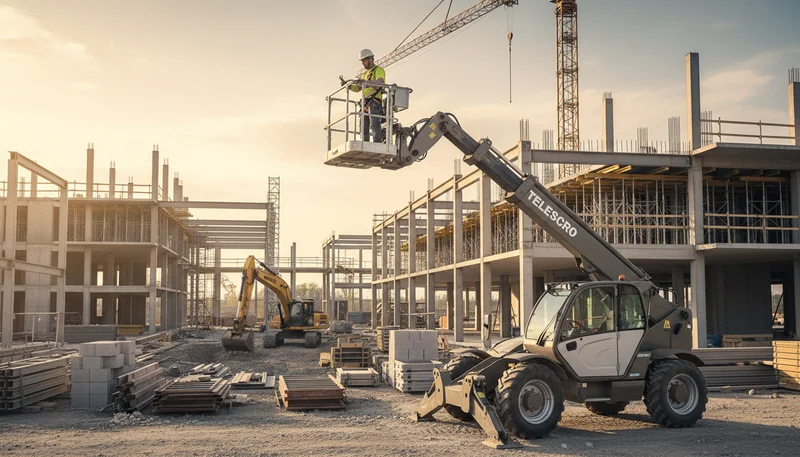
텔레핸들러 작업대 선택 방법 (현장 검증된 실수 방지)
Last month, a site manager from Poland sent me photos of his crew squeezed into an undersized man basket, tools hanging off every possible edge. He was shocked to learn that his "one-size-fits-all" platform was actually putting both his people and machine stability at risk.
Selecting a telehandler man basket involves precise alignment between task requirements, platform dimensions, capacity ratings, and machine compatibility. Platform size must support both personnel and necessary tools, while maintaining unobstructed movement and safe working posture. Real-world use highlights the importance of matching basket-rated load with telehandler-specific de-rating guidelines, especially as overall combined weight increases with personnel, PPE, and materials. Mechanical interfaces—fork size, pin dimensions, locking mechanisms—require exact matching to prevent detachment or instability.
Which Man Basket Size Fits Task Needs?
Selecting a telehandler man basket starts with aligning platform size to specific tasks, working height, and crew size. For maintenance at 6–10 meters, a 1–2 person basket (1.0–1.2 m wide) is typical. Construction tasks or multi-trade work often require 2–4 person platforms (up to 2.5 m long) for safe, efficient operations.
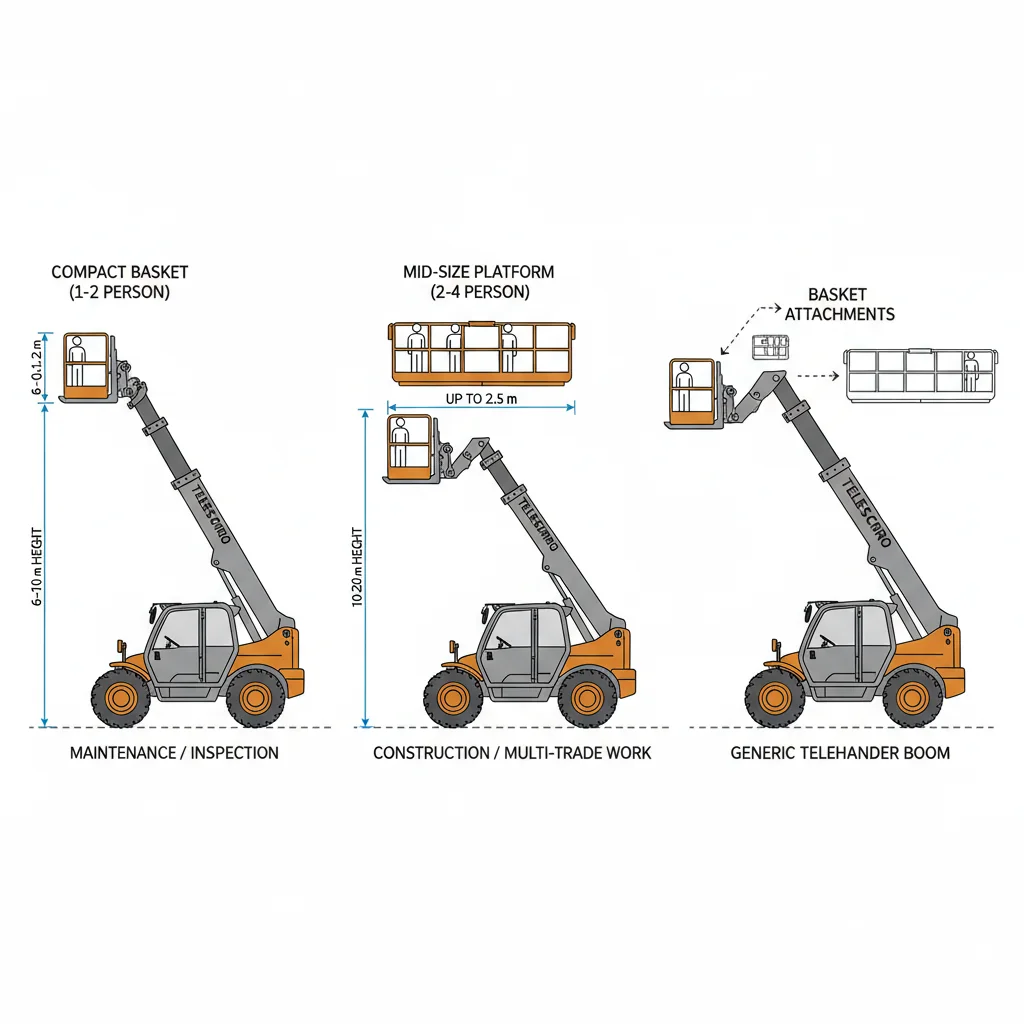
Most people don’t realize that basket size decisions start with your 실제 site work. I see crews in Dubai choosing oversized 2.5-meter baskets “just in case,” but then they struggle with extra weight and tighter turning—especially indoors. I always suggest mapping your daily tasks first. Take maintenance at 6–10 meters: in my experience, a 1.0–1.2 m wide basket safely fits one or two people plus a small toolbox. Cramming in more doesn’t help—tight space means slower work and more dropped tools.
Here’s a practical comparison:
| Basket Size | Crew Size | Typical Task | Width/Length (approx.) | Best Use |
|---|---|---|---|---|
| 1.0–1.2 m wide | 1–2 person | Maintenance, lighting | 1.0 m × 0.8 m | Access, safe posture, minimal tools |
| 2.0–2.5 m long | 2–4 person | Construction/multitrade | 2.5 m × 1.0 m | Multiple trades, material bins, wide tools |
| Over 2.5 m long | 4+ person | Special cases only | 3.0 m × 1.2 m | Facade, cladding, custom heavy tasks |
Last month, a client in Poland needed to service warehouse lights at seven meters. They wanted a big platform but, after reviewing load charts, chose a compact 1.2 m basket instead. That single change made the telehandler steadier, easier to maneuver, and kept them well within safe rated load on the hydraulic moment indicator. To be honest, matching the smallest safe basket to your main jobs always pays off—lighter setups mean less tip risk and easier fleet management. I suggest picking a “typical” task and sizing from there.
A man basket width of 1.0–1.2 meters is typically sufficient for one to two workers with a small toolbox when performing maintenance tasks at heights of 6 to 10 metersTrue
This basket size balances worker space and maneuverability, reducing extra weight and allowing easier navigation, especially indoors, which improves safety and efficiency during routine maintenance.
Using oversized 2.5-meter man baskets is generally recommended for all indoor telehandler operations because they provide ample room for multiple workers and equipment, improving productivityFalse
Oversized baskets add significant weight and reduce maneuverability in tight indoor spaces, leading to slower work and increased risk of accidents; right-sizing baskets to the task and environment improves operational efficiency.
핵심 요점: Defining representative tasks and required heights ensures man basket selection matches real-world site needs. Choosing the smallest platform that accommodates safe posture, headcount, and tool storage optimizes stability, reduces drop risks, and simplifies capacity planning across machines, especially for varied facility or fleet demands.
How Do Capacity Ratings Affect Man Basket Use?
Fitting a man basket to a telehandler substantially reduces its permissible lift capacity. Most regulations and manufacturer guidelines restrict personnel platforms to one-third to one-quarter of the machine’s rated load, accounting for boom angle and extension. The maximum allowable weight is the lower of the platform’s rating or the telehandler’s load chart value at operating position.
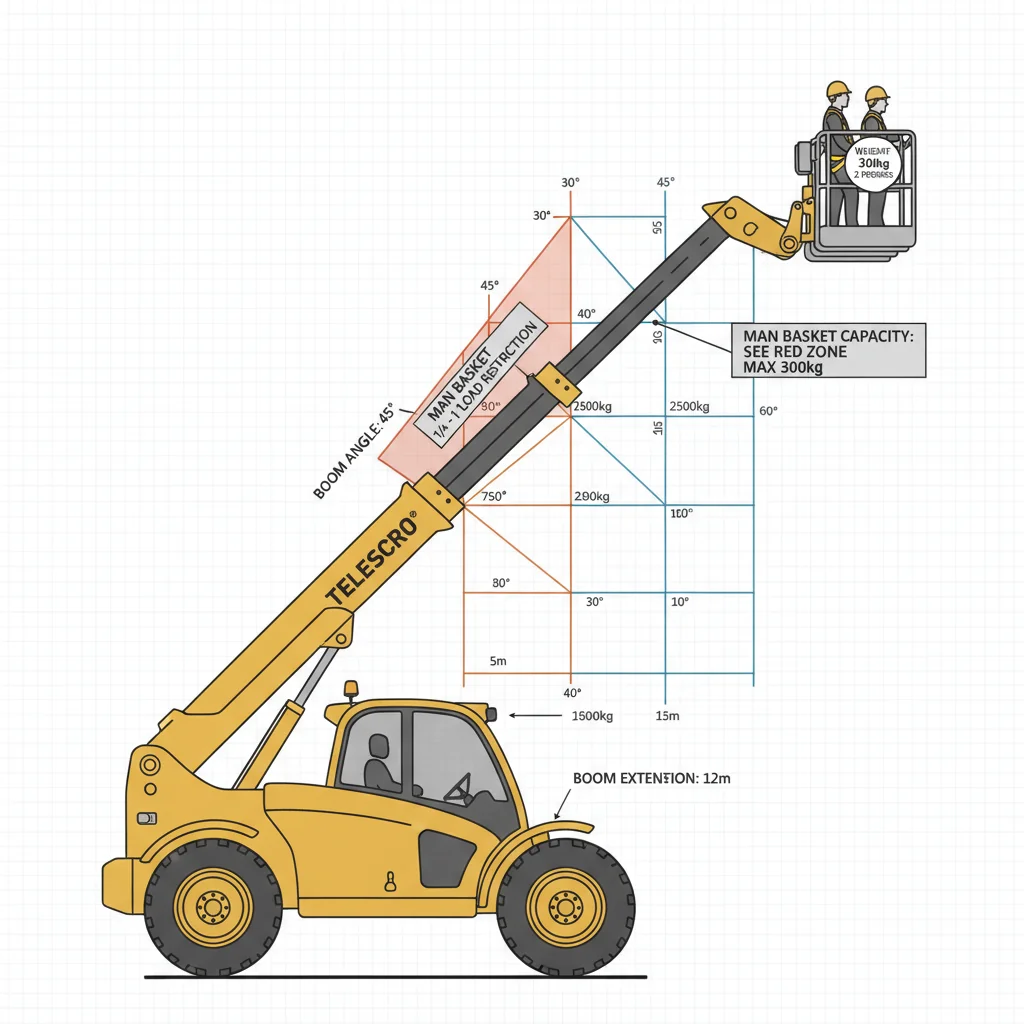
Let me share something important about using man baskets with telehandlers: most operators I meet focus on the basket’s sticker rating, but that’s only half the story. The real restriction comes from the telehandler’s load chart—especially at boom angles above 45 degrees or with full extension. I remember a project in Dubai where a crew tried to lift three workers plus tools in a basket on a 4-ton model. The telehandler had a maximum lift of 4,000 kg, but at 11 meters reach, the load chart showed just 1,300 kg. With the basket, people, and drills, they were dangerously close to overload—and they hadn’t factored in a safety buffer.
Here’s what you need to double check every time:
- Load Chart Values: Always check the telehandler’s load chart for personnel platform use at your planned boom angle and extension—not just the maximum rating.
- Basket Limit: The basket’s own rating (often 300–800 kg) sets an absolute upper bound. Exceeding this is a direct safety violation.
- Total Weight: Add up the workers, PPE, tools, and extra gear for the real combined weight. I see jobs in Brazil where just adding a few pipes pushes you over the safe limit.
- Safety Buffer: I always recommend staying at least 15% under the lowest rated value for unforeseen load swings or miscalculations.
If your calculated load is even close to either rating, choose a higher-capacity machine or split the job. A machine that meets the numbers “on paper” usually won’t be safe under real conditions. I suggest reviewing both ratings before every lift—not just during the initial equipment selection.
The telehandler’s load chart must be consulted at specific boom angle and extension combinations, as the maximum rated lift often decreases by up to 50% at 11 meters reach compared to the rated capacity at ground levelTrue
Load charts account for leverage and stability factors; as the boom extends and angles increase, the effective lifting capacity reduces significantly, sometimes halving the rated capacity to maintain safe operation. Ignoring this can lead to overload and tip-overs.
Man basket capacity is solely determined by the basket’s sticker rating, so as long as the combined weight of personnel and tools is below that figure, it is always safe to operate regardless of boom length or telehandler modelFalse
The basket’s sticker rating does not account for the telehandler’s reduced lifting capacity at extended boom lengths or higher angles. Safety depends on the lowest capacity limit between the basket rating and the telehandler’s load chart, especially at full extension.
핵심 요점: Always use the lower value between the man basket’s rating and the telehandler’s load chart at the intended boom angle and extension. Include all personnel, PPE, tools, and a safety buffer. Selecting a combination that barely meets paper ratings often leads to overload and safety violations onsite.
How to Verify Man Basket Compatibility?
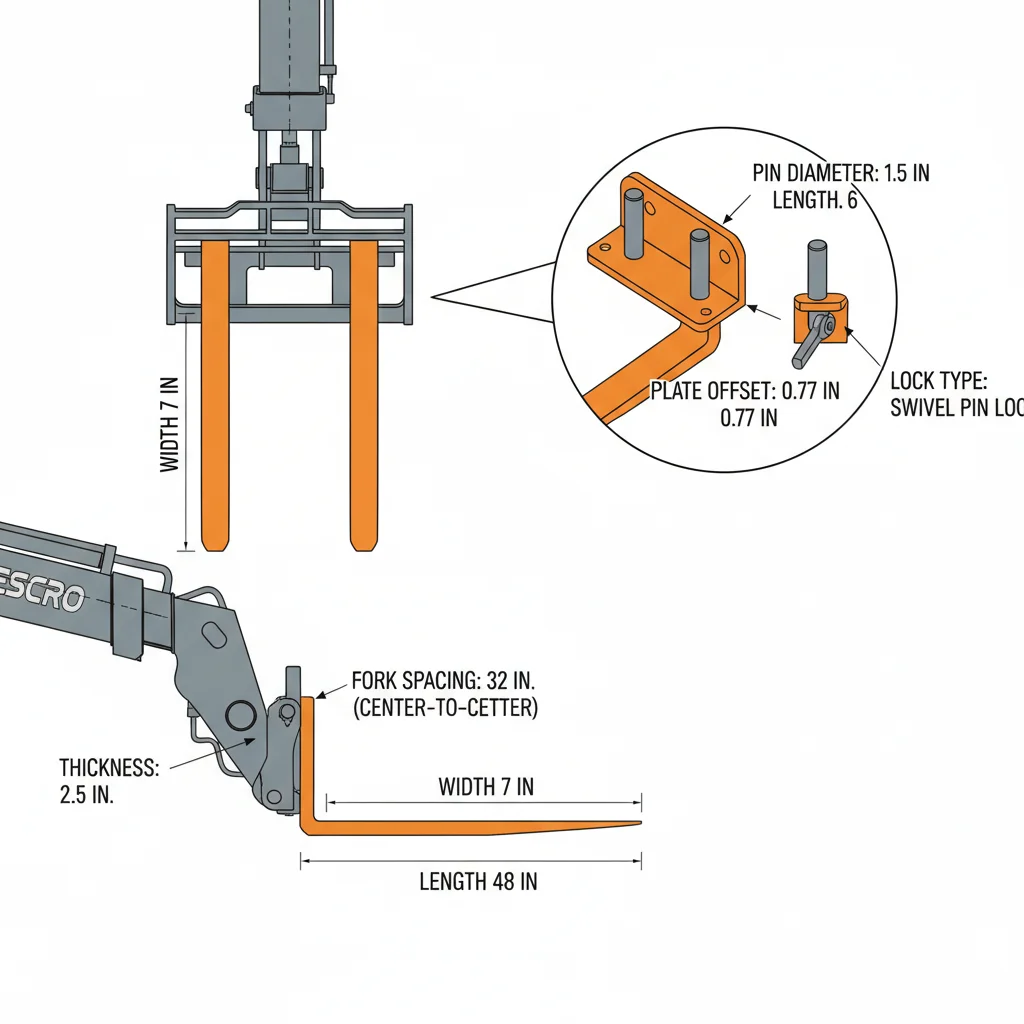
Ensuring telehandler and man basket compatibility requires exact match of fork thickness, width, length, and spacing for fork-mounted baskets1—typically 2.5 in thick, 7 in wide, and 48 in long. Quick-attach baskets2 demand correct pin diameter, length, plate offset, and lock type. Always conduct a physical test fit and verify retaining hardware to prevent safety risks.
The biggest mistake I see is trusting “universal fit” claims without checking the actual measurements. Just last quarter, a site manager in Dubai ordered six man baskets, thinking every 4×4 basket would drop right onto their 4-ton fleet. Unfortunately, their forks were a bit thicker than standard—just over 3 inches. The baskets jammed halfway on and balanced at an angle. We had to modify three baskets before the job could start. That delay cost them two extra working days.
I always suggest getting the tape measure out before placing an order. For fork-mounted baskets, check the fork pockets—most expect forks around 2.5 inches thick, 7 inches wide, and at least 48 inches long. If you’re even half an inch outside these numbers, the basket might not slot in fully or could rattle loose on uneven ground. Another real risk? Fork spacing differences. If your machine’s forks can’t align with the pocket centers, you compromise stability right away.
Quick-attach couplers are even trickier. I’ve worked with a team in Kazakhstan—they swapped baskets between different telehandlers on site. One needed 35 mm pins, another was built for 38 mm, and none of the locking plates matched up. They almost lost a basket on the first lift. In those cases, you need to confirm pin diameter, length, plate offset, and which lock style you have—spring-loaded or manual.
Physical test fits matter, always. I’ve seen “minor” mismatches cause major downtime. My advice: record all basket and coupler specs in your fleet file. It’s the best way to avoid surprises and keep your site safe.
Man baskets designed for telehandlers often specify fork pocket dimensions within a 2.5 to 3-inch thickness range, and exceeding this can cause misalignment and unsafe load distributionTrue
Fork pocket size compatibility is critical because thicker forks prevent proper seating of the basket, leading to instability. Manufacturers typically design fork pockets for standard fork thicknesses; exceeding these dimensions, even slightly, can cause the basket to tilt, as proper load balance depends on precise fit.
All 4×4 man baskets are designed with adjustable fork pockets that can fit any telehandler model without modificationFalse
Not all man baskets have adjustable fork pockets. Many models have fixed dimensions based on standard fork sizes. Assuming all 4×4 baskets universally fit any telehandler without verifying fork thickness or pocket size leads to improper fit, potential safety hazards, and costly modifications.
핵심 요점: Always perform a real-world fit test with the selected man basket and telehandler, verifying precise mechanical compatibility for forks or quick-attach couplers. Document hardware details and avoid relying solely on ‘universal fit’ claims to minimize risk of unsafe modifications, tipping hazards, or attachment failures across worksites.
Is this telehandler man basket compliant?
A telehandler man basket is compliant only if the telehandler is explicitly approved for personnel lifting3, includes matching load charts for platform use4, and both basket and machine possess current certifications to applicable standards such as EN 14502‑1, ANSI/SAIA A92.20, or AS 1418.10. Site and regulatory documentation must be carefully verified to ensure legal, safe operation.
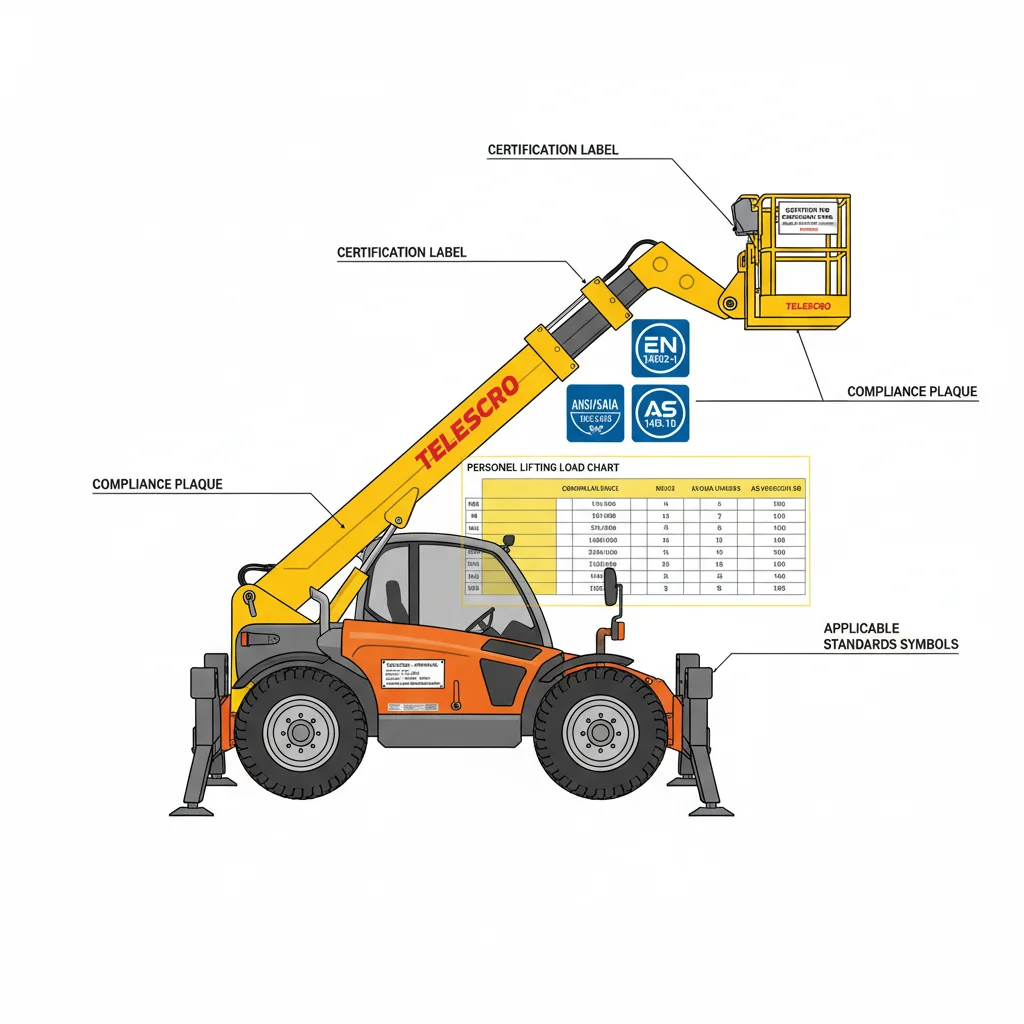
To be honest, the spec that actually matters is whether your telehandler is officially approved for personnel lifting—just being able to lift heavy loads isn’t enough. In Kazakhstan last year, I worked with a contractor who bought a 4-ton, 17-meter telehandler, hoping to use it with a generic man basket. The problem? The machine’s documentation said nothing about platform use, and there were no matching load charts for personnel. Their safety manager caught it just in time, and it probably saved them from a costly site shutdown. That’s not rare. I see this mix-and-match situation far too often, especially on projects in emerging markets.
What many teams overlook is that both the telehandler 그리고 the man basket require up-to-date certifications—EN 14502-1 for Europe, ANSI/SAIA A92.20 for North America, AS 1418.10 in Australia. This means a CE-marked platform alone isn’t enough; your machine’s serial number must be on an approved list, and the load chart for platform use has to be included with the operation manual. If the documentation is missing, the setup isn’t compliant, no matter what a supplier says.
From my experience, rental yards often standardize by only allowing specific, documented combinations—usually with dedicated safety rails, auxiliary hydraulic lines, and a moment indicator system that alarms if the load goes outside safe range. I always suggest double-checking site safety rules and asking for actual certificates, not just promises. It’s a simple step, but it closes the door on a lot of risk.
A telehandler must have a specific personnel lifting approval and corresponding manufacturer-issued load charts to be compliant for man basket useTrue
Telehandler compliance for personnel lifting requires explicit certification and load charts that account for dynamic loads and stability when using man baskets; simply being rated for heavy loads is insufficient and unsafe without this documentation.
Any telehandler with a lifting capacity over 3 tons can safely use a generic man basket without additional certificationFalse
Lifting capacity alone does not guarantee safe use with man baskets; lack of personnel lifting certification and tailored load charts means the telehandler may not account for the unique stability and dynamic load factors involved in safely lifting people.
핵심 요점: Only use manufacturer-approved telehandler and man basket combinations, with matching load charts and valid certifications. Thoroughly review both machine and platform documentation for compliance with local and international standards. Never mix and match unapproved components to avoid costly regulatory and liability risks.
How Do Man Basket Dimensions Affect Stability?
Platform width5 and length directly impact both telehandler stability and access. Regulations generally restrict baskets from extending over 250 mm past the outer load wheels, reducing overturning risk. Oversized baskets become hazardous on uneven terrain, while narrow platforms increase maneuverability between obstacles. Platform length also influences reach and swing, making careful dimension selection crucial for safety and productivity.
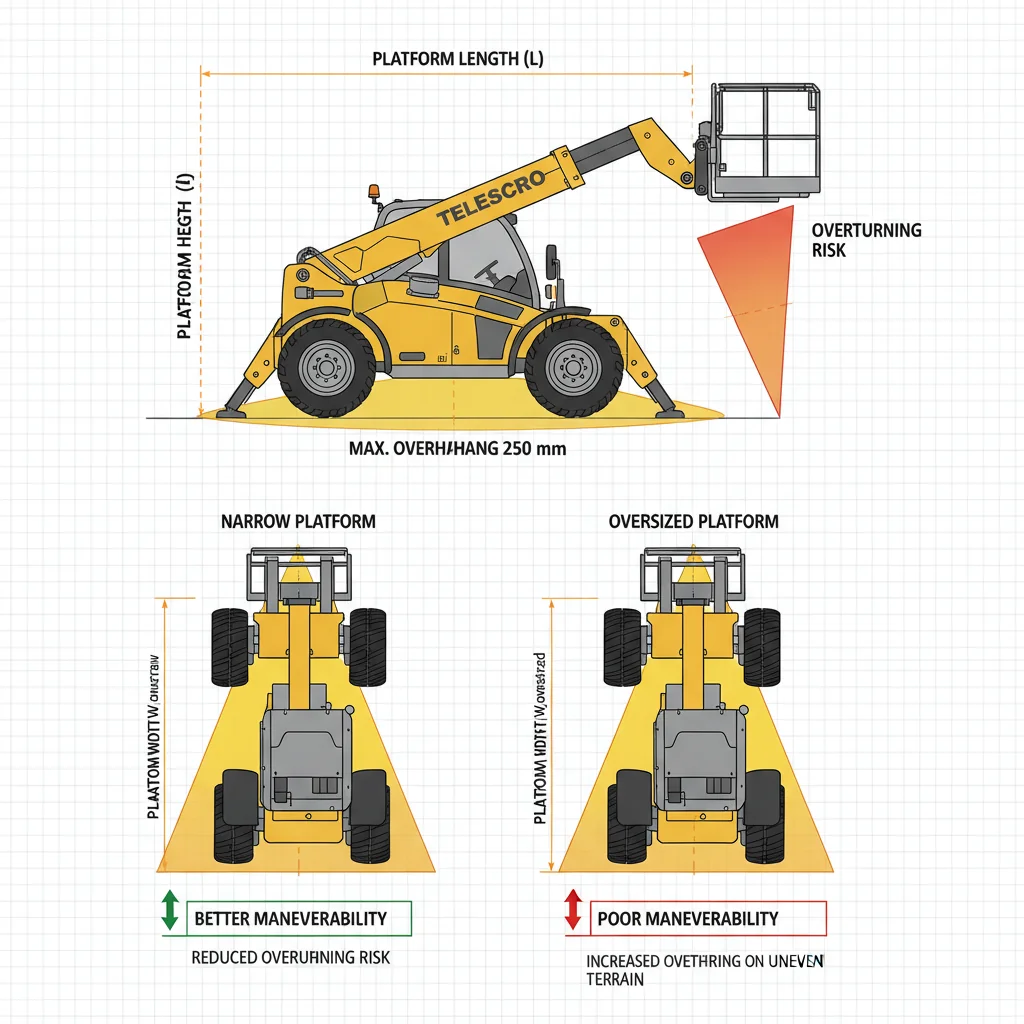
Here’s what matters most when you’re deciding on man basket dimensions: it’s not just about fitting more people or tools—it’s about controlling stability, especially on real jobsites. In Dubai last year, I worked with a team using a 4-ton high-reach telehandler on a tight facade renovation. They tried fitting a 2,400 mm wide platform for extra reach, but soon faced warning alarms from the moment indicator. The reason? At that size, the platform extended nearly 300 mm past the outer load wheels—over the legal safe limit. That extra width actually pushed the machine toward its tipping point on soft ground. We swapped to a 950 mm wide basket, which easily fit between scaffold towers and kept the platform swing under control when elevated.
Length can catch people off-guard, too. I saw this in Kazakhstan, where a crew needed to repaint warehouse cladding. They chose a 2,000 mm long platform for coverage. It sped up the job but made navigating tight alleys a headache. They bumped a column on day one—luckily, only the guardrail bent. I always suggest testing access points with the actual basket, especially if working offset from a building. Oversized there can mean trouble.
The safest approach? Review your telehandler’s load chart and see how much weight you can actually handle with different basket dimensions—especially when the boom is extended or the outriggers are retracted. Regulations usually cap platform overhang at 250 mm per side; exceeding that can put your project at risk. I suggest double-checking with your site’s safety officer before finalizing your order.
Extending a man basket platform more than 200 mm beyond the telehandler's outer load wheels significantly increases the risk of tipping due to altered load distributionTrue
When the platform extends beyond the outer load wheels, it shifts the center of gravity outward, reducing stability and triggering safety systems like moment indicators to prevent overturning. Maintaining extension within wheelbase limits helps retain safe balance.
Increasing the width of a man basket platform always improves telehandler stability by lowering the center of gravityFalse
While a wider platform may distribute load over a greater area, it can also extend beyond the wheel track and raise lateral leverage, actually decreasing stability and increasing the risk of tipping under load.
핵심 요점: Platform width and length must be specified with attention to site access points, telehandler stability limits, and local regulations. Oversized baskets can endanger stability, while narrower options may improve safety and maneuverability in confined work zones. Always cross-check dimensions against machine specs and legal standards.
Which Man Basket Gate and Floor Are Safest?
Professional-grade telehandler man baskets feature inward-swinging, self-closing gates6 with positive locking mechanisms for maximum fall protection. Expanded metal, non-skid floors7 enhance traction and drainage, reducing slip risk. Avoid chain-only gates and basic steel mesh floors, as these lack redundancy and can become dangerously slick in adverse conditions. Match specifications to worst-case jobsite scenarios for optimal safety.
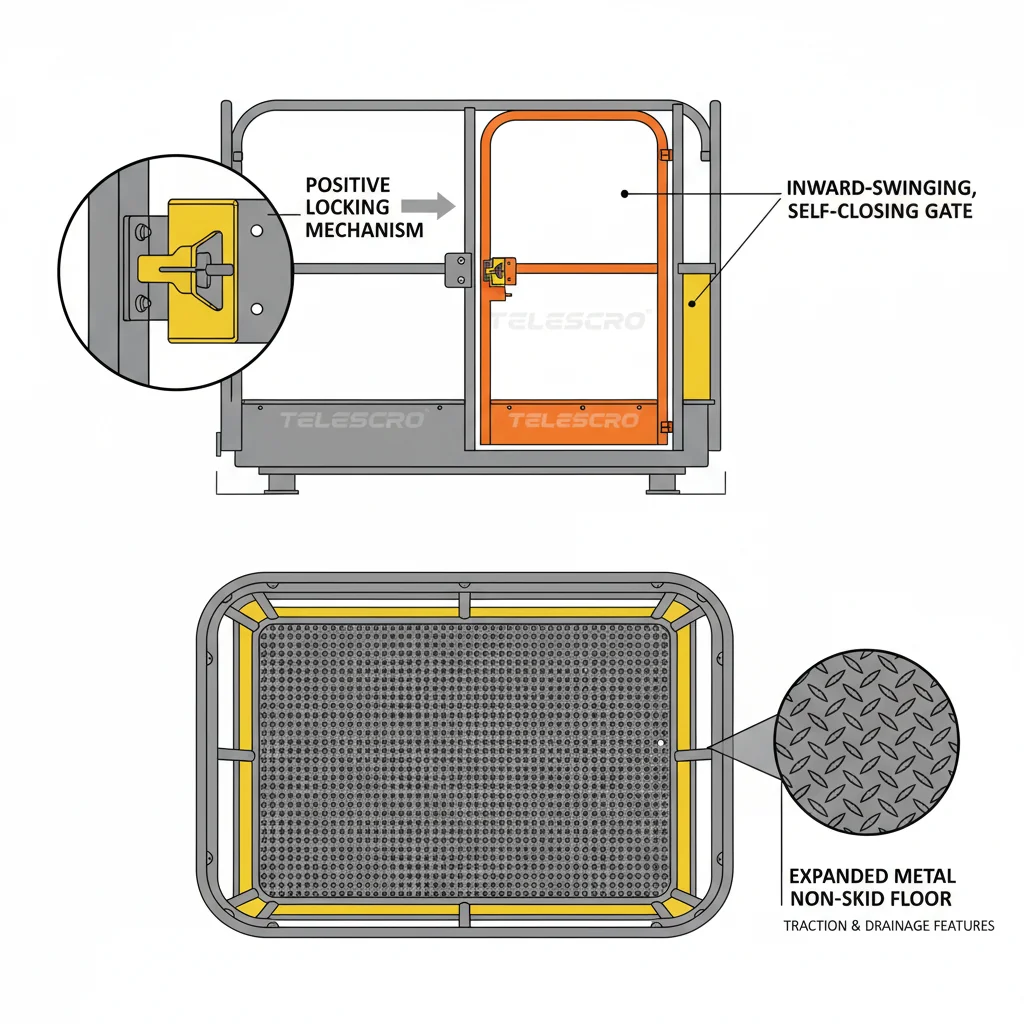
Last month, a roofing crew in Dubai asked me why their old work platform felt unsafe after a light rain. The problem was their man basket had a basic steel mesh floor, which turned slippery and even allowed small tools to drop through the gaps. From my experience, that kind of floor is a big risk—especially at height and in bad weather. Expanded metal, non-skid floors provide much better traction and let water, mud, or hydraulic fluid drain away fast. I’ve seen jobsite accidents in Brazil happen just because someone lost their footing on a worn, slick surface. When it comes to gates, I always recommend inward-swinging, self-closing models with positive locking latches. Here’s why: if the latch fails, gravity and the force of someone leaning keep the gate shut. Outward-swinging gates or just a chain? That’s asking for trouble. Chains offer no redundancy—if one breaks or isn’t clipped, there’s nothing left to catch a person. I spoke with a supervisor in Kazakhstan who watched a worker nearly fall nine meters after tripping near a chain-only entry.
Take a look at how these options compare:
| Gate/Floor Type | Fall Protection | Traction/Drainage | Jobsite Suitability | Drawbacks |
|---|---|---|---|---|
| Inward self-closing gate + expanded metal floor | Maximum | 훌륭한 | Wet, exterior, high-wear sites | Heaviest, slight payload loss |
| Chain-only gate + steel mesh floor | 최소 | 불쌍한 | Light indoor use | High fall & slip risk |
| Outward manual gate + steel floor | 보통 | Fair | General sites with lower traffic | Requires hands to open; slower use |
Man baskets with expanded metal non-skid floors reduce slip incidents by allowing liquids and debris to drain while providing 30% more traction surface compared to basic steel mesh floorsTrue
Expanded metal floors have smaller, angled openings that improve grip and enable water and fluids to drain quickly, significantly reducing slip hazards especially in wet conditions where basic steel mesh floors retain moisture and become slick.
Steel mesh floors without additional coating are safer than expanded metal floors because their larger openings allow better visibility of the ground and debris clearanceFalse
Although steel mesh floors permit some debris to fall through, their larger, flat openings tend to retain water and create slippery surfaces, making them less safe than the textured, draining expanded metal floors that enhance traction and reduce slip risks.
핵심 요점: For highest safety in telehandler man baskets, select models with inward-swinging, self-closing gates and expanded metal, non-skid floors. These features prevent outward gate failure and slipping hazards, especially in poor conditions. Avoid budget designs lacking redundancy or robust traction, and always factor weight limits when choosing heavy-duty floors.
How Do Site Conditions Affect Basket Capacity?
Telehandler load charts assume operation on firm, level ground, but real-world sites—featuring mud, ruts, soft soil, or slopes—can reduce effective stability and usable capacity by 20–30% or more. With man baskets, reduced margins amplify the risk, making ground assessments, derating, and proper selection of higher-capacity equipment critical for safe operations.
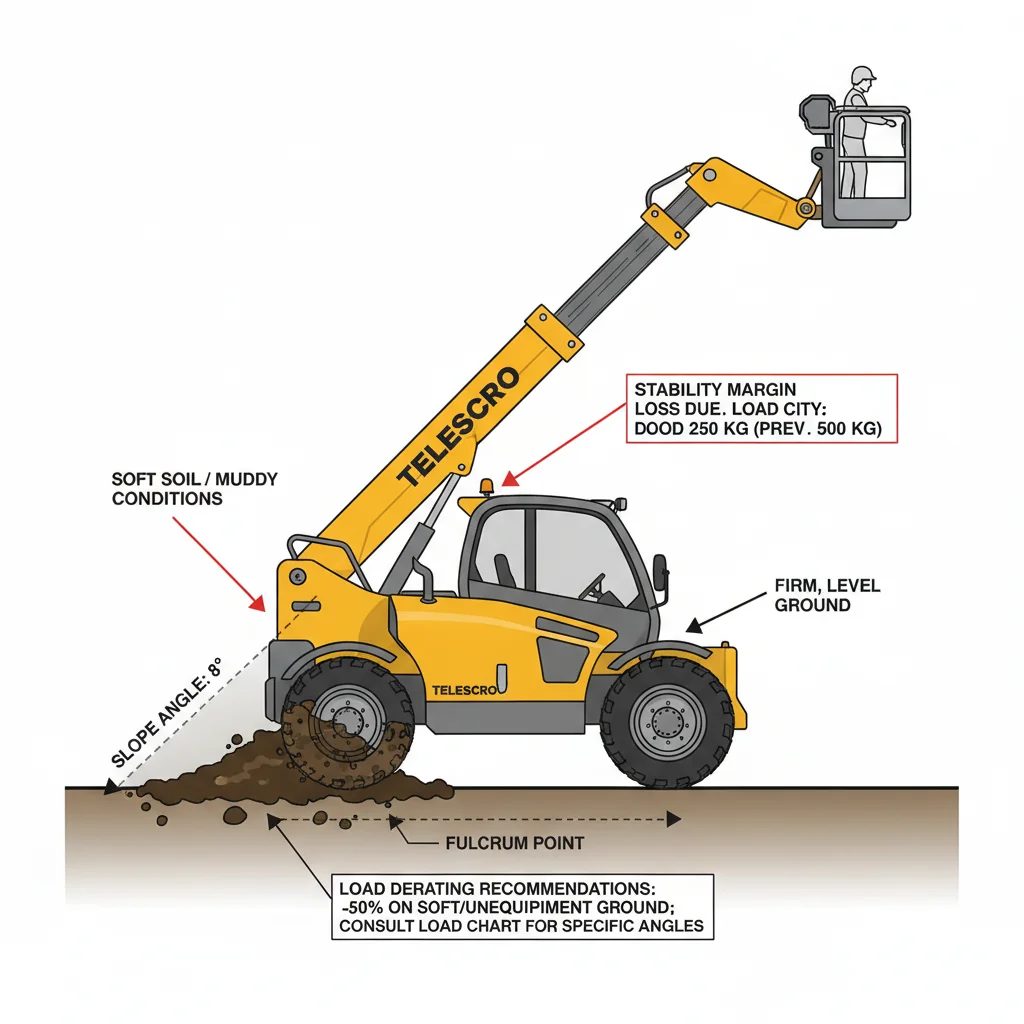
I’ve worked with more than one crew in Kazakhstan who thought their 1,000 kg-rated man basket could handle anything the jobsite threw at them. The problem? That basket was tested on hard, flat concrete—not the muddy, uneven ground they got after a week of spring rains. When you set up on soft soil or even a gentle slope, your telehandler’s effective capacity shrinks fast. From my experience, it’s not uncommon to lose 20–30% of rated stability just because the ground isn’t solid.
One recent project in rural Brazil proved this point. Their telehandler—rated for 3 tons at full retraction—lost so much footing in rutted farmyard mud that the operator alarm went off with just 2 workers and hand tools in the basket. The moment indicator, which measures how close you are to tipping, showed they were pushing the safe limit even at a quarter load. That crew ended up switching to a higher-capacity 4-ton model just to finish safely.
For any jobsite with unpredictable ground—whether it’s temporary works in Kenya or farm repairs in Poland—I always suggest building in a margin. Load charts only tell you the maximum under the best conditions. The moment your telehandler sits on soft patches, or the tires aren’t level, you can’t take those numbers for granted. I recommend inspecting the site every morning, checking for new ruts or waterlogged areas, and training operators to use rated capacity as a ceiling, not a target. Playing it safe costs less than a single incident.
A telehandler's man basket capacity should be derated by at least 20-30% when operating on soil with a bearing capacity below 100 kPa, to maintain stability and safetyTrue
Soft or uneven ground reduces the telehandler's stability, effectively lowering its rated lifting capacity. Testing on hard, flat surfaces does not account for soil deformation and uneven load distribution, so derating by 20-30% or more is a practical safety measure on soils with low bearing capacity like under 100 kPa.
Using a telehandler man basket on slopes up to 15 degrees does not require any capacity derating if the basket is rated for 1,000 kg on flat groundFalse
Slope angles reduce overall machine stability significantly; manufacturers typically require capacity derating or prohibition of basket use above certain slope thresholds (often much less than 15 degrees), as lateral forces and tipping risks increase, invalidating flat-ground capacity ratings.
핵심 요점: Always account for unpredictable site conditions—such as mud, incline, or unstable ground—when selecting a telehandler man basket. Load charts represent best-case scenarios; derate capacity and choose higher-margin models for safety. Regularly assess the work environment and train operators to treat rated capacity as an absolute maximum, not a guarantee.
What Fall-Protection Features Must Man Baskets Have?
Telehandler man baskets must include certified tie-off points for personal fall arrest systems, full-height guardrails, mid-rails, and toe boards. Anchor points must be clearly marked and positioned to prevent tangling or tripping. Lanyards should only attach to designated anchors, never to improvised points, ensuring compliance and operator safety. Safe design reduces the potential for fall-related incidents.
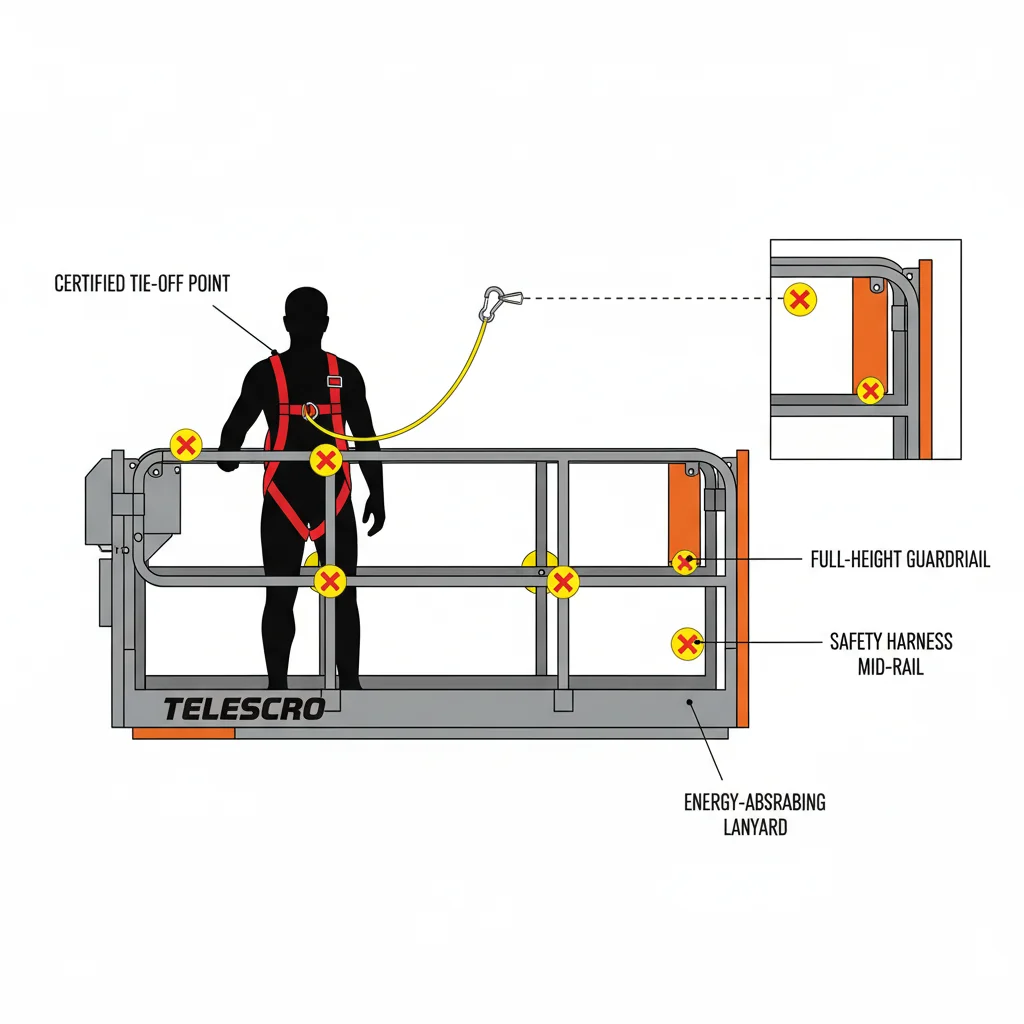
Let me share something important about telehandler man baskets that many buyers overlook. I’ve seen jobsites in Vietnam and the UAE where crews used platforms with missing or badly placed anchor points—one near-miss happened because a worker clipped their lanyard to a gate latch instead of a proper tie-off. That could have ended badly. No matter how sturdy your guardrails look, real fall protection starts with certified anchor points8 and correct training.
From my experience, reliable man baskets for telehandlers always include these essential fall-protection features:
- Certified anchor points—Properly rated and tested tie-off rings or brackets for personal fall arrest systems, usually rated for at least 1,130 kg (2,500 lbs).
- Full-height guardrails—Around the entire perimeter, minimum 1.1 meters tall, with mid-rails and toe boards to prevent slips and dropped tools.
- Clearly marked harness attachment points—These should be visible and labeled, never requiring workers to guess where to clip in.
- Non-trip layout—Anchor points positioned so lanyards don’t wrap around rail corners, snag on gates, or catch on tools.
- Integrated toe boards—At least 100 mm tall (around 4 inches), to stop hammers or hardware from falling off the edge.
I always suggest checking the basket’s documentation for test certificates and visible tags. If you’re managing a rental fleet or handling platforms across multiple crews—like I’ve seen with a rail contractor in Kazakhstan—standardize your harness use rules, and ensure every basket ships with instructions in the local language. It’s a small detail, but it keeps people safe and avoids costly accidents.
Man baskets must have anchor points rated to withstand at least 5,000 pounds per worker tie-off, as specified by OSHA fall protection standardsTrue
OSHA requires fall arrest systems to be capable of supporting a minimum of 5,000 pounds per attached worker to ensure safety during a fall, making it critical for man basket anchor points to meet this load rating.
Man baskets with guardrails of 30 inches in height are sufficient for fall protection compliance on telehandlersFalse
Standard fall protection guardrails must be at least 42 inches high, as per OSHA regulations; guardrails of only 30 inches do not provide adequate protection against falls from elevated platforms.
핵심 요점: Reliable fall protection in telehandler man baskets requires certified anchor points, full perimeter rails, and proper labeling. Standardize training and procedures to ensure harnesses are always used as intended. Avoid budget baskets lacking essential safety features or clear instructions to minimize risk, especially in fleet or rental operations.
How Do Telehandler Man Basket Costs Add Up?
Total cost of a telehandler man basket involves more than initial purchase price. Quality baskets—ranging US$600 to $2,500—last longer due to reinforced construction. Lower-cost models may deform within two years, while high-end versions feature collapsible designs for better storage and transport. ROI depends on factoring logistics, service cycles, certification, and anticipated repairs.
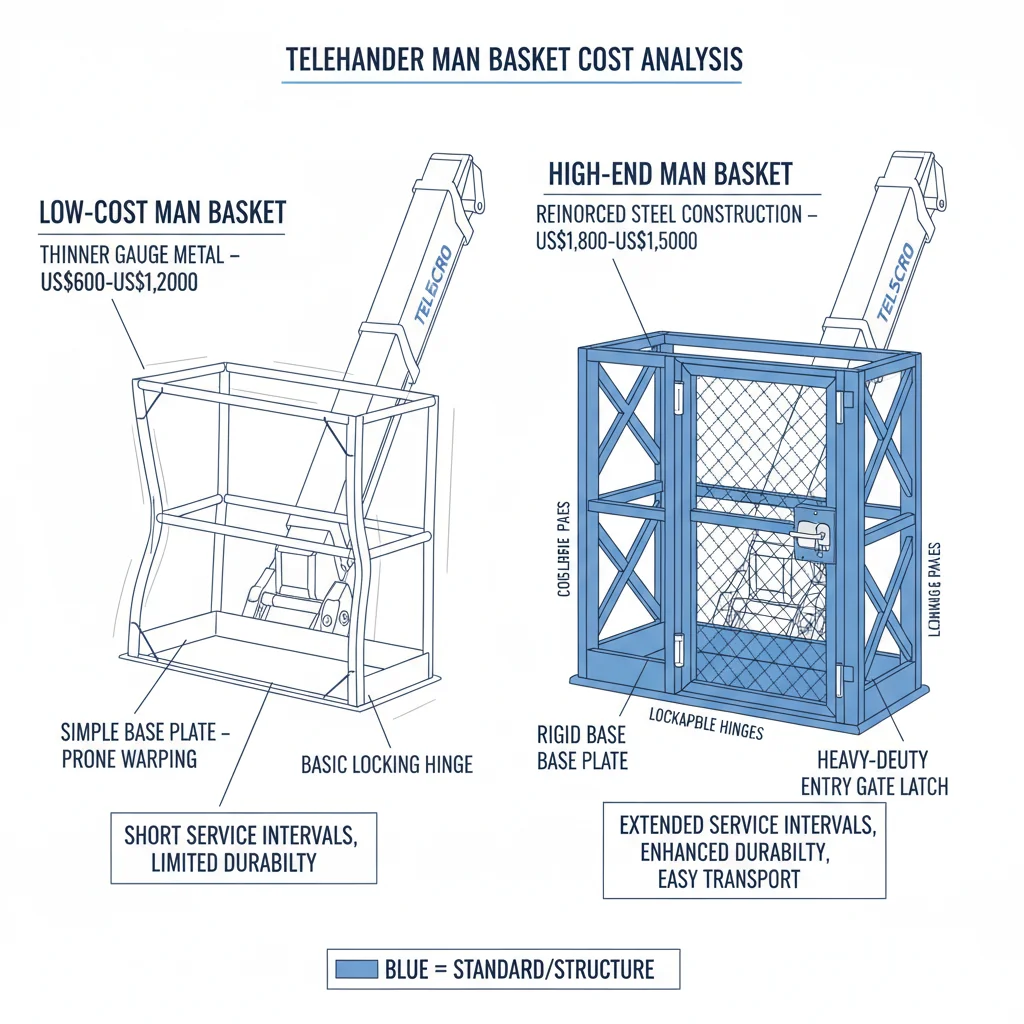
I’ve seen too many buyers lock in a low price tag, then regret it when hidden costs surface later. In Kazakhstan, one client picked a US$700 man basket mainly because it looked sturdy and fit his telehandler. Within sixteen months, cracked welds showed up at the corners, and the flooring buckled under just 250 kg—well under its supposed rating. The repair costs and downtime easily erased any savings. Baskets in the US$1,600 to US$2,500 range typically come with reinforced structure, heavier-gauge steel, and test certificates valid for three years. Those certifications aren’t just paperwork—sites in Singapore and Dubai demand them before you even unload from the truck.
Storage efficiency is another big factor. Higher-end baskets often feature bolt-together or collapsible frames. I worked with a fleet operator in Eastern Europe who needed to rotate equipment between four cities. Their older, one-piece baskets took up extra truck space and needed a second transport trip, costing another US$100 each time. When they switched to a collapsible design, everything fit on one truck—faster, cheaper, and less hassle with customs checks.
Don’t forget lifecycle expenses. Heavier baskets add extra load to the hydraulic circuit and axles, increasing fuel consumption and long-term wear. Factor in annual inspections, recertification costs, and the chance of "the second-year surprise"—expensive repairs just after warranty ends. I suggest calculating total cost per expected service cycle. The best value usually comes from baskets that balance reinforced design, compact storage, and internationally recognized certification. That approach pays off for both contractors and rental fleets.
Man baskets priced below US$1,000 often use lighter gauge steel and simplified welds, which can lead to structural fatigue such as cracked welds within a year under typical telehandler loadsTrue
Lower-cost man baskets frequently compromise on material thickness and welding quality to reduce price, which decreases durability and can cause early failure under loads well below their rated capacity, increasing repair costs and downtime.
Choosing a man basket solely based on its nominal load rating guarantees long-term safety and durability regardless of build quality or priceFalse
Nominal load ratings alone don't ensure safety; build quality, materials, and manufacturing processes critically affect durability and real-world performance, meaning a higher rated but poorly constructed basket can fail prematurely despite its rating.
핵심 요점: Evaluating telehandler man baskets requires looking beyond upfront costs. Assessing durability, certification, storage efficiency, and lifecycle expenses is crucial. Investing in higher-quality, easily stored baskets yields greater value and reliability over years of service, especially for rental fleets or contractors working across multiple sites.
How Should Telehandler Man Baskets Be Inspected?
Telehandler man baskets should undergo documented inspections monthly or every 160 operating hours, focusing on welds, corners, floor mesh, and mounting points. Removal of debris and residues prevents corrosion, while logbooks track service hours, site usage, and defects. Immediate replacement of deformed components mitigates structural failure risks and supports audit or resale compliance.
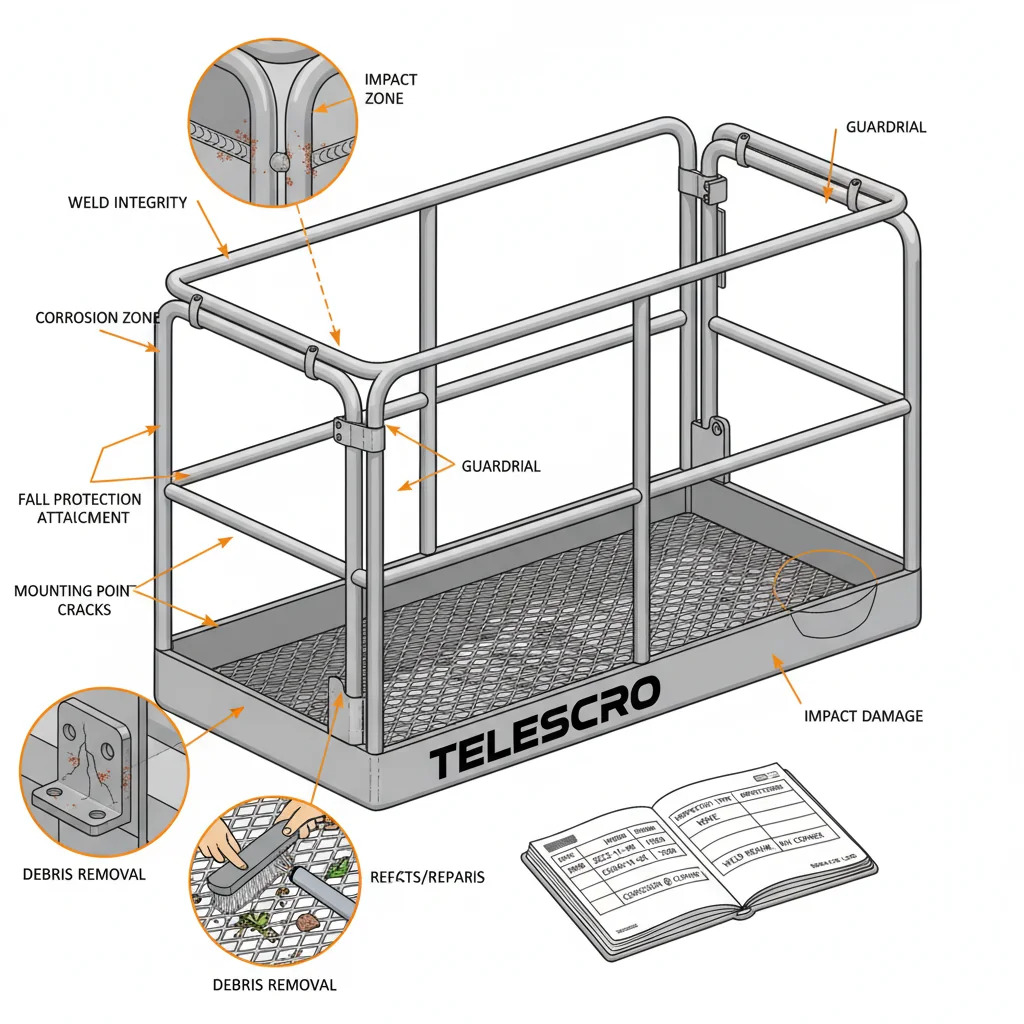
I see too many crews overlook simple inspection routines—especially when they’re pressed for time at busy sites. Last month, a rental operator in Kazakhstan called with a concern: their 2-meter basket showed floor mesh corrosion much earlier than expected, only eight months into service. Turns out, they’d skipped monthly cleaning and left concrete splatter around the welds. That’s practically an invitation for rust to start eating away at the structural joints. Cleaning off residues right after each job, especially concrete and mud, makes all the difference. You want to get under railings and into corners where most of the damage hides.
From my experience, the “silent killers” are cracked welds in mounting points or bent fork pockets. These issues don’t always look dramatic, but they seriously compromise safety. In Brazil, a customer actually caught two cracks during a routine monthly check—just with a flashlight and a stick magnet to feel gaps. That basket handled over 120 working hours, often outdoors, so those cracks could have led to a nasty accident if ignored. I suggest replacing damaged toe boards and rails immediately, even if the bend is slight.
It’s not just about the physical checks, either. Document everything. Keep a basic logbook for each man basket: hours worked, jobsite details, and any flagged damage. For larger fleets in Africa or Asia-Pacific, digital records save time—especially when audits or resale come up. Operators also respect equipment more if they see their notes taken seriously. Regular, detailed inspections help you prevent fatigue failures and keep people safe. That’s really the heart of man basket longevity.
Monthly inspections of telehandler man baskets should include detailed checks for corrosion around welds and floor mesh, as even minor concrete residues can accelerate rust development within 8-12 monthsTrue
Concrete splatter contains alkaline components that can cause localized corrosion if not cleaned promptly, compromising structural integrity, especially near weld joints where stress concentrations exist. Regular monthly inspections help detect and mitigate this early.
Telehandler man baskets with floor mesh made from mild steel do not require any special corrosion inspections within the first two years if painted once at manufactureFalse
Mild steel floor mesh is highly susceptible to corrosion, especially in construction environments where concrete and moisture are present. A single paint coat does not provide adequate long-term protection, making regular inspections and maintenance critical to prevent rust and ensure safety.
핵심 요점: Implementing structured inspections, thorough cleaning, and detailed logkeeping for man baskets enhances operator safety and equipment longevity while supporting compliance and traceability for audits or resale. Paying close attention to fatigue-prone areas and damaged components is critical in preventing catastrophic failures during telehandler operations.
결론
We’ve talked through the main points of matching your man basket size to the real tasks, heights, and crews you actually run on site. Focusing on practical fit makes your job safer and planning easier across a whole fleet. From what I’ve seen, the buyers who avoid headaches look past just platform length or advertised headcount—they check for steady tool storage and enough room for safe movement, not wasted space that soaks capacity. Before you choose, take a careful look at the load rating at your working heights, and double-check how long parts replacements usually take in your area—parts roulette is more common than most expect. Need advice on basket fit, accessories, or what works for mixed fleets? Feel free to reach out—I’m always glad to help you find what truly fits your jobsite.
참조
-
Detailed insights on matching fork thickness, width, length, and spacing to ensure safe, stable telehandler basket usage. ↩
-
Technical guidance on pin diameter, length, plate offset, and lock type to avoid compatibility issues with quick-attach baskets. ↩
-
Detailed explanation of telehandler approvals for personnel lifting ensuring safety and compliance with legal regulations in construction sites. ↩
-
In-depth look at the importance of matching load charts for platform use to prevent accidents and ensure telehandler compliance. ↩
-
Learn why platform width must comply with legal limits to prevent tipping, supported by site cases illustrating effects on stability and maneuverability. ↩
-
Explores how inward-swinging, self-closing gates with positive locks enhance fall protection and prevent accidental openings on job sites. ↩
-
Details how expanded metal, non-skid floors improve traction and drainage, reducing slip risks and enhancing worker safety in various weather conditions. ↩
-
Detailed insights on certified anchor points ensure compliance and enhance operator safety with tested fall arrest systems. ↩