










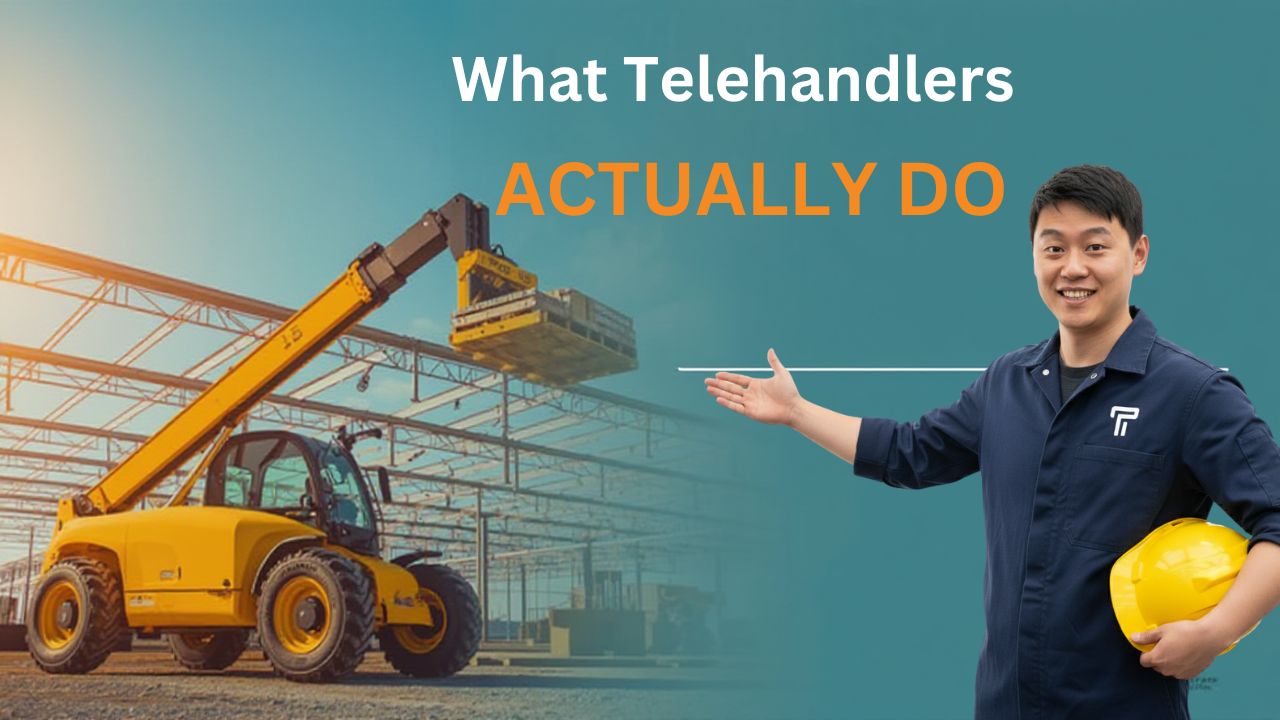
What Is a Telehandler Used for in Construction?
If you’ve ever walked through a construction site, you’ve probably seen a telehandler in action — lifting pallets of bricks, moving steel beams, or reaching up to place materials on a second or third floor.
Also known as a telescopic handler, this machine combines the strengths of several types of equipment: it lifts like a forklift, reaches like a crane, and drives over rough ground like a loader. Because of this unique versatility, the telehandler has become one of the most important pieces of machinery in today’s construction industry.
The Core Role of a Telehandler
At its simplest, a telehandler’s job is to lift, move, and place materials efficiently and safely.
But on a modern construction site, it’s much more than that.
A telehandler is often the first machine to arrive and the last to leave. It handles everything from unloading trucks to delivering materials to upper floors, scaffolding, or hard-to-reach areas. Its telescopic boom allows the operator to extend loads outward or upward — something a conventional forklift simply can’t do. This makes it perfect for projects where space is tight or the ground is uneven.
In short, the telehandler is the machine that keeps materials moving and the job site organized.
How It’s Used in Construction
Telehandlers perform a wide range of daily tasks on construction projects. Here are the most common applications:
| Application | Typical Use | Common Attachment |
|---|---|---|
| Material handling | Moving pallets, steel, or timber across uneven terrain | Forks |
| Material placement | Positioning loads on upper levels or scaffolding | Forks / Jib |
| Unloading trucks | Offloading deliveries and distributing them across the site | Forks |
| Work at height | Lifting personnel for façade or installation work | Certified platform |
| Site cleanup | Handling debris, soil, or aggregates | Bucket / Grapple |
Each of these tasks can be done by simply switching attachments — a process that usually takes only a few minutes. That’s what gives the telehandler its incredible flexibility and makes it so valuable for contractors and rental companies alike.
Why Contractors Rely on Telehandlers
Let’s look at why telehandlers have become so essential on construction sites.
First, there’s versatility. With one machine and the right attachment, an operator can lift pallets of materials, load trucks, or even support light lifting operations similar to a crane. That adaptability saves time, reduces the number of machines on site, and improves coordination between different trades.
Then there’s terrain capability. Construction sites are rarely flat or smooth, especially during early phases. Telehandlers are built with large off-road tires, high ground clearance, and four-wheel drive. They can climb over muddy paths, ramps, or compacted soil where other machines would struggle to move.
From a productivity perspective, telehandlers simplify material handling. They can lift heavy loads directly to where workers need them, reducing manual handling and double stacking. This means fewer interruptions and a smoother workflow for everyone on site.
And of course, safety plays a central role. Modern telehandlers include load management systems, frame-levelling functions, and stabilizers to ensure every lift stays within safe limits. When operated correctly and fitted with CE- or ANSI-certified attachments, they help reduce accidents and protect both workers and materials.
Finally, the cost efficiency is hard to ignore. A single telehandler can take on the work of several specialized machines — a forklift, a loader, and in some cases, a small crane — lowering both ownership and rental costs.
Typical Sizes and Capabilities
Not every project needs the same size of telehandler. Here’s a general guide to what you’ll find on most job sites:
| Type | Lift Height | Capacity | Best For |
|---|---|---|---|
| Compact models | 6–10 m | 2.5–3.0 t | Urban construction, tight spaces, interior renovation |
| Standard models | 12–18 m | 3–4 t | General building, commercial, and residential projects |
| Heavy-duty models | 18–20 m+ | 4–5 t or more | Steel structures, precast handling, heavy materials |
Selecting the right telehandler depends on the weight and reach required, as well as the ground conditions and space available on site.
What a Telehandler Can’t Do
Even with all its strengths, a telehandler isn’t a replacement for everything. It’s not designed for extremely tall structures or precision lifts that require a tower or mobile crane.
Its rated capacity decreases as the boom extends, so operators must always check the load chart before lifting.
When used for lifting personnel, only approved man platforms and safety-compliant systems should be used. Proper operator training and adherence to regulations are essential for safe operation.
The Bottom Line
The telehandler has earned its place as one of the most versatile and efficient machines in construction.
It keeps materials moving, supports work at height, and helps maintain safe and organized job sites — all while adapting to the constantly changing demands of a project.
For contractors, rental companies, and site managers, a telehandler isn’t just a lifting machine; it’s a core part of modern site logistics.
With the right attachments and a skilled operator, it delivers reliability, flexibility, and value every single day on the job.