










How to Minimize Telehandler Downtime: Field-Tested Preventive Tactics
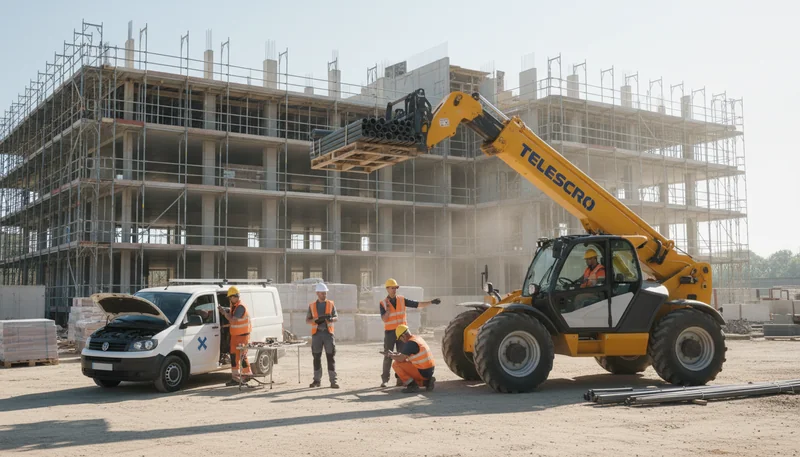
I’ll never forget visiting a project in Malaysia where two telehandlers sat idle all morning—both sidelined by preventable issues that anyone with a proper pre-start check would have caught in minutes. These scenes aren’t rare, and too often, expensive downtime traces back to the simplest skipped steps.
Effective telehandler uptime requires a structured mix of daily and weekly inspections, strict hour-based preventive maintenance1, and proactive management of wear components. Daily pre-shift checks catch obvious yet critical issues before they escalate, while comprehensive weekly inspections identify developing faults in hydraulics, structural components, and fluids. Strict adherence to OEM-recommended service intervals significantly lowers the risk of catastrophic failure.
How Do Daily Telehandler Inspections Prevent Failures?
Daily telehandler inspections identify common failure points—such as damaged tires, low fluid levels, leaks, and cracked forks—before operation begins. Conducting a disciplined 10–15 minute walk-around each shift reduces unexpected machine breakdowns, ensuring faults are flagged and repaired proactively. Standardized checklists and enforced operator compliance are crucial to minimizing costly mid-shift downtime.
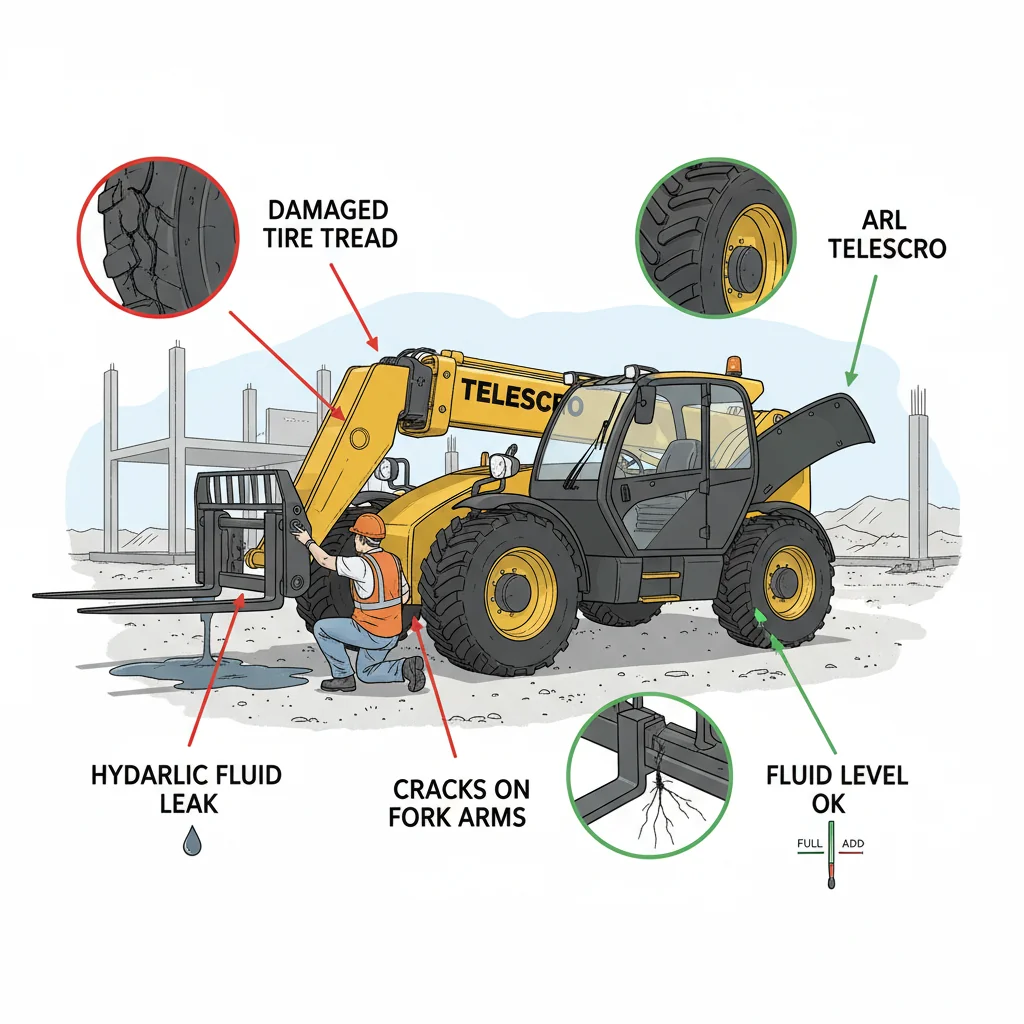
Most people don’t realize that nearly every telehandler breakdown I’ve seen started with something visible during a simple walk-around. Take last year in Kazakhstan—one client called me frustrated when their 4-ton unit lost hydraulics mid-shift. We traced it back to a hose fitted last week, clearly leaking fluid. The team admitted they skipped their morning check to save time. The result? Their crew lost half a day, plus paid a premium to fly in a technician.
To be honest, you don’t need advanced sensors to prevent most failures. I always suggest breaking your daily inspection into clear steps—start with the tires (watch for sidewall damage or low pressure), forks and any attachments, then focus on hydraulic lines for seepage or wear. Check under the machine for fluid leaks—hydraulic oil, engine oil, or coolant. Test all lights, backup alarms, steering, and see if the boom slides smoothly. Even something small, like a loose locking pin, can turn into a big safety risk if missed.
From my experience, using a checklist makes a real difference. A contractor in Dubai standardized 12 key inspection points for each operator. Within one month, they reported 30% fewer mid-shift stoppages and scheduled every repair outside production hours. The cost? Just an extra 10–15 minutes at shift start. My practical takeaway: keep a printed checklist in every cab, train your team to tag out any suspect unit, and spot-audit the process. Over time, you’ll spend far less on urgent repairs and lost shifts.
Daily inspections can identify small hydraulic hose leaks before they escalate, preventing up to 40% of telehandler hydraulic system failuresTrue
Regular walk-around checks can detect early signs of hose degradation or fluid seepage that are invisible during operation. Addressing these leaks promptly avoids sudden system failures and costly downtime, as demonstrated in field cases where overlooked leaks led to hydraulic loss mid-shift.
"MostFalse
"While
Key takeaway: Regular, thorough daily inspections using a standardized checklist are the most effective way to spot and address telehandler issues before they turn into failures, dramatically reducing unplanned downtime, repair costs, and productivity losses for fleet managers.
Why Are Weekly Telehandler Inspections Crucial?
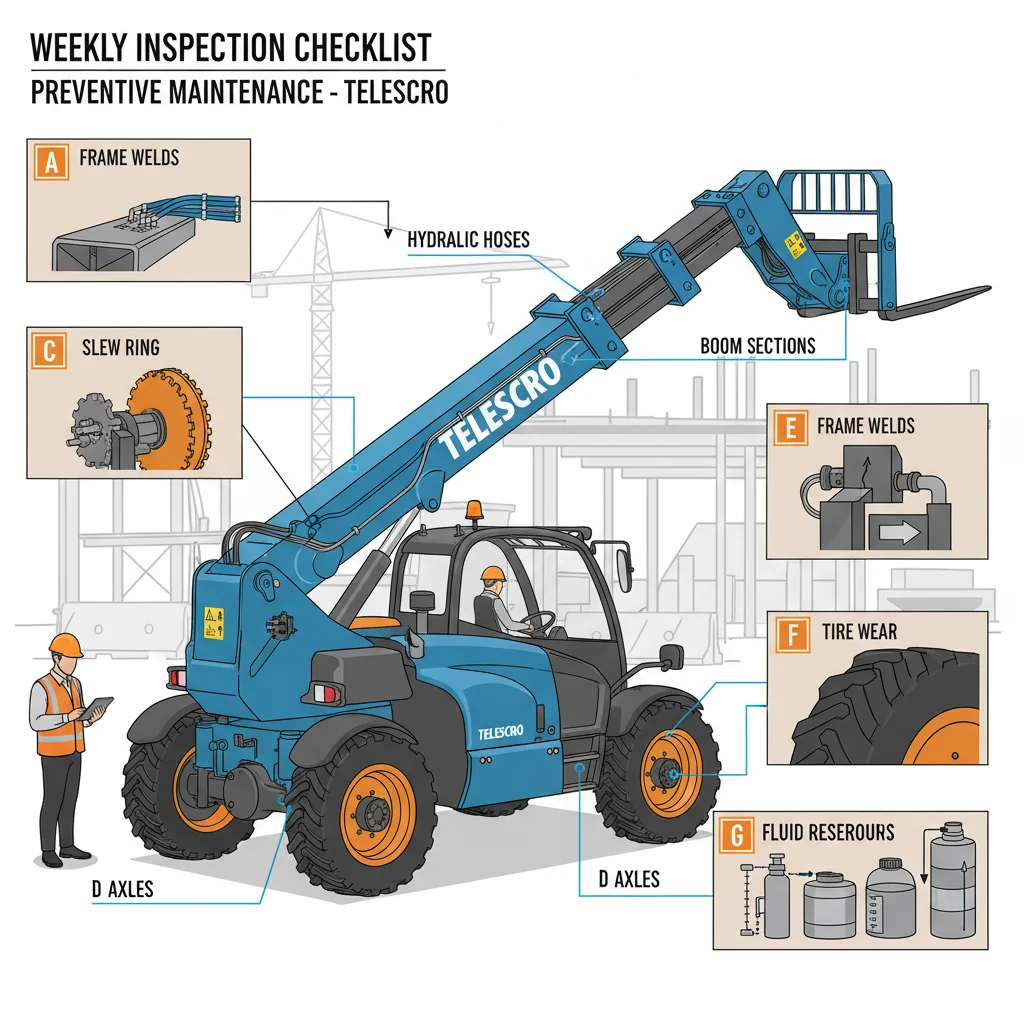
Structured weekly telehandler inspections go beyond daily visual checks by targeting critical components—such as hydraulic hoses3, boom sections, slew rings, axles, frame welds, tire wear, and fluid condition. Fleets implementing mandatory weekly programs identify 65–85% of developing issues early, achieving 98% machine availability4 and shifting maintenance to 80% planned repairs while significantly reducing emergency downtime and overall repair costs.
Let me share something important about weekly telehandler inspections—this step makes the difference between high uptime and costly surprises. Daily checks are good for catching leaks or obvious damage, but I’ve seen too many jobs shut down because small issues weren’t caught early. For example, one customer in Dubai ran a busy fleet of 4-ton machines with 17-meter reach. Their site mechanic skipped structured weekly checks for about six weeks. The result? A failed hydraulic hose halfway through a concrete pour. They lost at least two full working days and had to fly in replacement parts at a premium.
Weekly inspections go far beyond looking over the tires and topping up oil. You need to inspect boom sections for hairline cracks or excessive wear on pads, check hydraulic hose integrity (not just connections), listen for unusual sounds from slew rings and axles, and test for play in frame welds. I’ve found that catching small leaks or wear patterns early—especially on high-cycle jobs like in Kenya or Vietnam—lets crews plan repairs during scheduled breaks. That keeps at least 98% of the fleet available, based on what I’ve seen with disciplined teams.
Here’s the key: I always suggest building a standard checklist for every telehandler model you operate. Make weekly inspection a routine, not a favor done only when there’s spare time. Assign responsibility, and make sure every finding leads to a work order, not just a note in a logbook. That way, you shift most maintenance to the planned category—and avoid scrambling when you can least afford it.
Structured weekly inspections detect hydraulic hose wear that daily visual checks often miss, preventing failures in high-pressure telehandler systemsTrue
Hydraulic hoses on telehandlers operate under high pressure and can develop internal wear not visible during quick daily walkarounds. Weekly detailed inspections include pressure testing and hose condition assessments, which catch early deterioration and prevent unexpected ruptures that cause costly downtime.
Replacing hydraulic hoses only when visible leaks appear is sufficient to minimize telehandler downtimeFalse
Waiting for visible leaks ignores internal degradation and micro-cracks that can suddenly lead to catastrophic hose failures. Proactive replacement based on usage hours and scheduled inspections is necessary to avoid unexpected breakdowns and maintain operational uptime.
Key takeaway: Mandatory, structured weekly telehandler inspections detect most developing issues before failure, ensuring higher planned maintenance rates, minimizing emergency downtime, and reducing overall repair costs. This proactive strategy is proven to boost machine availability up to 98%, making weekly checks the backbone of an effective uptime program.
How Does Hour-Based Telehandler PM Reduce Downtime?
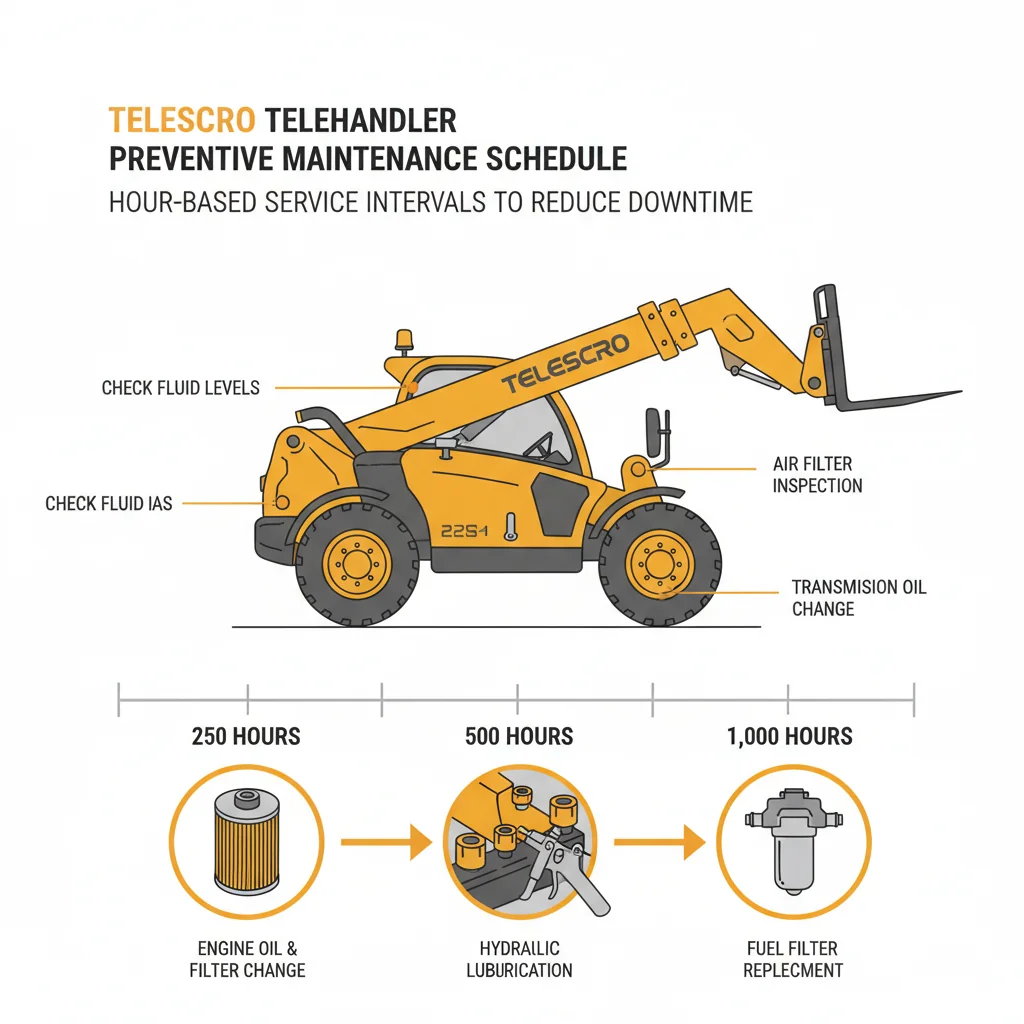
Strict hour-based preventive maintenance (PM) for telehandlers, following OEM service intervals at 250, 500, and 1,000 hours, significantly reduces breakdowns. Regular oil, lubrication, and filter changes prevent wear and system failures. Field data shows such schedules decrease unplanned outages by 30–40%, optimizing uptime during peak operational periods and lowering unexpected repair costs.
The biggest mistake I see is teams relying on memory or rough job schedules to plan their telehandler maintenance. On busy projects—like an airport job I supported in Dubai last winter—machines often run 12 or 14 hours straight, much more than what “monthly” service plans expect. I watched one crew struggle for almost a week after skipping a critical 500-hour check. Their 4-ton, 17-meter telehandler developed hydraulic leaks and a plugged fuel filter at the worst possible time—right before a steel erection deadline. Lost days, extra rental costs, and a lot of stress.
Here’s what matters most: hour-based maintenance isn’t only about oil changes. It covers all high-stress areas—hydraulic pumps, filters, boom lubrication, load sensors, and electrical checks. These systems push their limits on every cycle, especially in hot or dusty sites I’ve seen in Vietnam and Brazil. If you stretch intervals “just until next week,” you risk metal shavings building up or a minor hose leak turning into a major failure. Field data from my projects shows unplanned outages drop by at least 30% when customers really stick to the 250/500/1,000-hour OEM schedule.
To be honest, the spec that actually matters is how you track hours. I always suggest linking hour meters or telematics5 directly to your PM calendar. Set up automatic reminders—whether that’s a CMMS, a simple spreadsheet, or phone alerts—so no check slips through. It might feel like pulling a machine offsite comes at the wrong time, but that short pause almost always saves you far greater delays and costs later.
Scheduling telehandler maintenance based on actual engine hours rather than calendar months prevents overuse between services, which significantly reduces the risk of hydraulic failures and clogged filters in machines running over 12 hours dailyTrue
Engine hour-based maintenance aligns service intervals with actual machine workload, avoiding delays in critical checks like the 500-hour inspection. This approach ensures fluid changes and filter replacements happen before wear accelerates, reducing unexpected breakdowns on high-use projects.
Monthly scheduled telehandler maintenance is sufficient for all construction sites regardless of usage intensity because manufacturers design service intervals to cover worst-case operating conditionsFalse
Manufacturers provide general guidelines but high-intensity use, such as running a telehandler 14 hours daily, exceeds typical conditions. Relying solely on calendar-based schedules can miss key wear points, especially in hydraulic systems, leading to premature failures and downtime.
Key takeaway: Rigid adherence to OEM-specified, hour-based maintenance schedules greatly reduces telehandler downtime and expensive repairs. Automated reminders tied to hour meters or telematics, rather than guesswork or extended intervals, ensure consistency and maximize machine reliability—delivering substantial cost savings and enhanced fleet productivity.
Why Manage Telehandler Lubrication and Fluids?
Regular lubrication and hydraulic fluid management6 are critical for telehandler longevity and operational reliability. Greasing pivot points, inspecting all fluid levels each shift, and using OEM-specified or ISO-grade fluids slow wear and prevent damage. Hydraulics are a leading downtime driver, with contamination causing up to 40% of repairs.
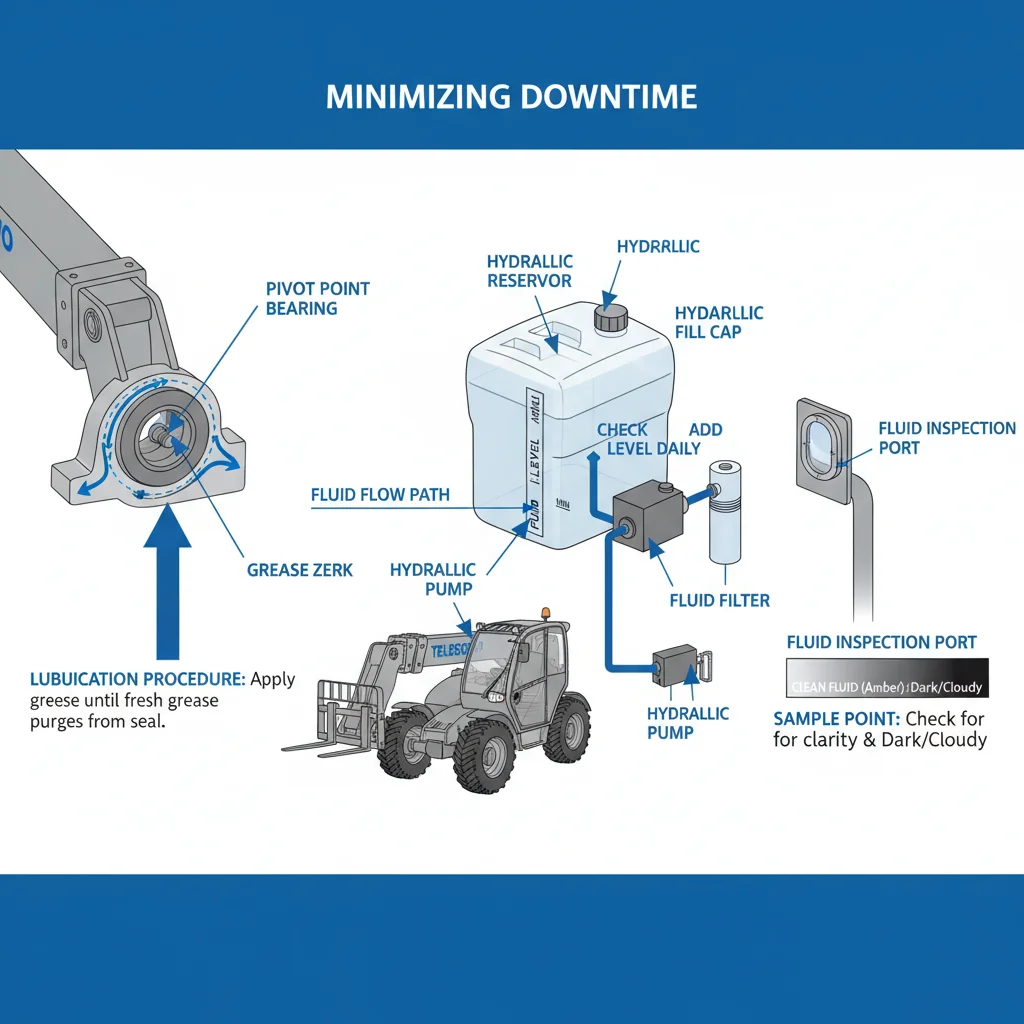
To be honest, lubrication and fluid checks are exactly where I see fleets lose the most uptime—usually because the tasks seem minor until they create real problems. Last quarter, I supported a contractor in Dubai who ran eight units on dusty jobsites. They thought monthly greasing was enough. By month four, they saw excessive pin wear on two 4-ton telehandlers with 16-meter reach. The repair cost almost matched half the price of a new boom section, just from missing daily grease routines at all pivot points—especially the boom pads7 and steering knuckles.
Here’s what matters most when managing telehandler fluids on busy projects: You need eyes on every critical fluid every shift. That means checking engine oil, hydraulic oil, transmission fluid, and coolant before you even start the engine. From my experience, not using OEM-specified or at least ISO-grade hydraulic fluid is a shortcut that leads to the “second-year surprise”—unexpected pump failures just outside warranty. One client in Kenya lost three days waiting for replacement hydraulic hoses because dirty oil wasn’t caught early. That same downtime could have been avoided by watching for oil discoloration and metallic particles during weekly checks.
Hydraulics deserve extra attention. Industry numbers and what I’ve seen both say that pump and valve damage from dirty fluids or clogged filters drive up to 40% of major shop repairs. It’s a low-cost habit—swapping genuine filters annually, or more often in severe dust, pays off. I suggest installing magnetic particle traps if you’re running more than five machines. Catching issues early will absolutely save you days of lost productivity.
Daily lubrication of boom pins reduces wear rates by up to 40% compared to monthly greasing on telehandlers working in dusty environmentsTrue
Frequent lubrication prevents abrasive dust and grime from embedding in pin surfaces, reducing metal-to-metal contact and wear. Monthly intervals allow contaminants to accumulate, accelerating damage especially on extended reach booms.
Switching to synthetic hydraulic fluid eliminates the need for regular fluid level checks on telehandlersFalse
While synthetic fluids offer better thermal stability and oxidation resistance, they do not negate the necessity of regular fluid level checks. Fluid loss due to leaks or consumption can still occur, risking system damage if levels are not maintained.
Key takeaway: Consistently prioritizing lubrication and fluid condition management extends component life, reduces costly repairs, and prevents major hydraulic failures in telehandlers. Adopting strict maintenance protocols and using correct fluids and filters offers a high return on investment by dramatically minimizing unscheduled downtime.
When Should Telehandler Wear Parts Be Replaced?
Proactively replacing telehandler wear components—such as hydraulic hoses, belts, filters, boom pads, and tires—based on combined OEM intervals and real-world failure data minimizes downtime. Fleet operators should treat these as consumables, scheduling replacements according to set hours, years, or inspection results, rather than waiting for failures that cause operational disruption.
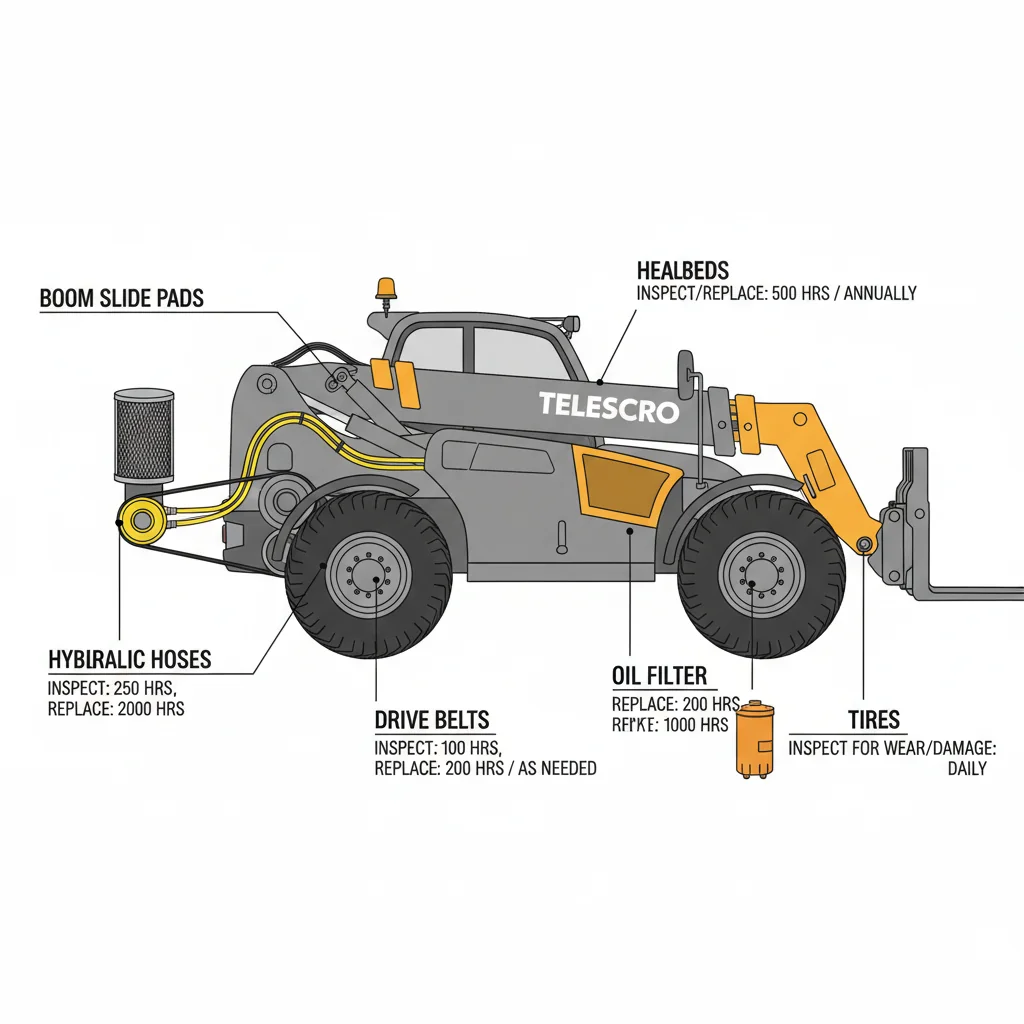
I’ve worked with customers in Kenya and the UAE who learned the hard way that running telehandlers until a hose or tire actually fails leads to far more downtime than planned maintenance ever would. One project in Nairobi faced a two-day delay because a main lift cylinder hose burst unexpectedly—right in the middle of a concrete pour. That jobsite sat idle, and a minor part turned into a major headache. If you stick to just reacting to failures, costs can double in lost hours and emergency service fees.
Here’s what matters most when deciding when to replace wear components: combine your manufacturer’s maintenance schedule with the real-world patterns you see in your own fleet. For example, I always recommend swapping out full hose sets every two to three years or at the 500-hour service, whichever comes first. With tires, don’t just check tread depth; inspect sidewalls for cuts and repeated damage, especially on rough terrain sites like those in Kazakhstan. Boom pads are another overlooked part—if wear gets close to the OEM-specified minimum, change them before metal-to-metal contact develops.
A fleet operator in Brazil shared their strategy: standardize filters, seals, and key hoses across all their 3.5 to 4-ton telehandlers. That way, scheduled maintenance is predictable, and their spare parts inventory is much simpler to manage. I suggest linking each inspection with a replacement plan. When you see recurring wear in the same area, don’t wait—replace all at once to avoid cascading failures. Treat wear parts as scheduled consumables, and you take control of your uptime, not the other way around.
Replacing telehandler lift cylinder hoses every 12 months, regardless of visible wear, can reduce unexpected downtime by up to 40%True
Regularly scheduled replacement of hydraulic hoses prevents catastrophic failures caused by wear and micro-damage that are often undetectable. Data from field maintenance shows that proactive hose changes dramatically lower the risk of sudden bursts, which cause costly downtime.
Telehandler tires only need to be replaced when the tread depth reaches less than 2 mm to minimize downtimeFalse
Waiting until tires are worn down to 2 mm tread depth greatly increases the risk of punctures and instability. Most telehandler manufacturers recommend replacement at about 6 mm tread depth to maintain safe operation and avoid sudden tire failures that lead to unplanned downtime.
Key takeaway: Treat telehandler wear components as scheduled consumables, not run-to-failure parts. Use both OEM recommendations and historical fleet data to define proactive replacement intervals. This approach reduces emergency breakdowns, limits downtime, and ensures critical components are serviced under controlled circumstances, maximizing overall fleet productivity and reliability.
How Does Operator Training Cut Downtime?
Focused telehandler operator training significantly reduces equipment downtime by preventing misuse such as overloading, improper boom operation, and ignoring warning indicators. Well-trained operators master load charts8, stability limits, and pre-operation inspections9. Fleets that implement structured training and refreshers report up to 20% fewer service calls, improving safety and extending component life.
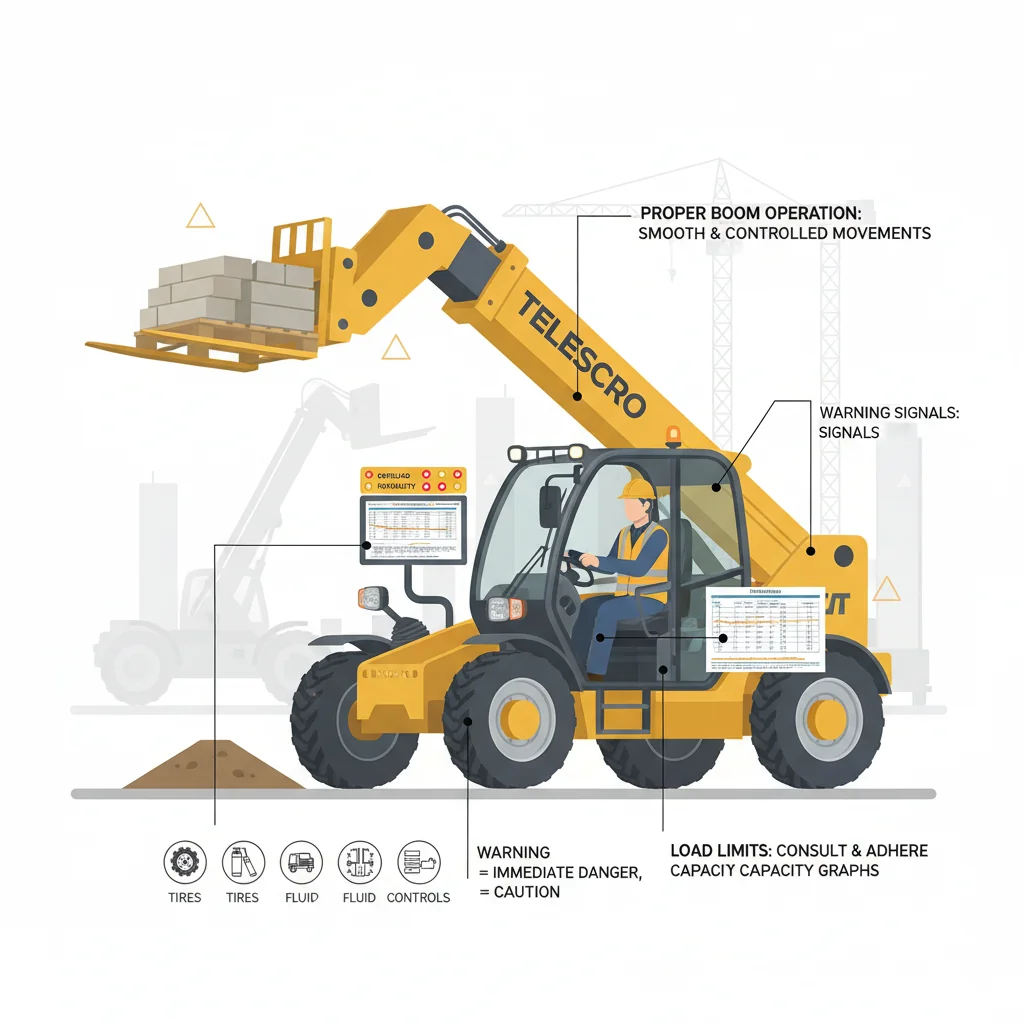
Let me share something important about operator training that comes up again and again. In Dubai last year, a contractor ran two identical 4-ton telehandlers on separate crews. One group had fresh, structured training every three months; the other just learned on the job. After six months, the trained crew’s telehandler needed only two unscheduled service calls, mostly for worn tires. The other? Six call‑outs—two from damaged hoses and one for a bent boom section caused by accidental overloading. Same machine, same hours, totally different results.
This isn’t just about the basics of driving or moving loads. Operators who know how to read the load chart—showing how much you can safely lift at a given boom angle and reach—rarely force the machine beyond its limits. I’ve seen too many teams ignore early warning signs like slow boom lift, odd creaks, or warning lights. Well-trained operators spot these immediately and report them before something major fails.
Here’s what matters most: A structured routine with certified training, regular refreshers, and pre-shift inspections. For example, I always tell crew leads to treat the moment indicator (the gauge warning of overload) as non-negotiable—if it flashes, stop and reassess. Empower your team to tag out a telehandler at the first sign of trouble, not just when something breaks. After all, downtime drains money and trust on site. I suggest reviewing operator recertification at least twice a year. It will keep more machines working—and fewer sidelined by avoidable mistakes.
Regular operator training reduces telehandler unscheduled maintenance by up to 67% by minimizing operational errors such as overloading and improper handlingTrue
Structured training improves operator awareness of machine limits and standard procedures, significantly lowering incidents like bent booms or damaged hoses that cause downtime. The Dubai case showed trained crews had only 2 service calls versus 6 for the untrained group over six months.
Telehandler downtime is unaffected by operator training because most failures result from inevitable mechanical wear and tearFalse
Operator training directly impacts machine condition by preventing avoidable damage from errors such as overloading and poor handling, which are a major source of unexpected repairs rather than just regular wear.
Key takeaway: Structured operator training in telehandler fleets minimizes misuse, reduces avoidable wear, and helps detect faults early. By ensuring certified training, mandatory inspections, and empowerment to report issues, fleet managers can achieve measurable drops in downtime—typically around 20% fewer service interruptions—while proactively protecting both equipment longevity and site safety.
How Do Checklists and Digital Logs Cut Downtime?
Checklists and digital logs systematically document telehandler inspections, creating reliable records for identifying recurring faults or compliance gaps. Digital tools, such as inspection apps and telematics, automate documentation, issue real-time alerts for maintenance needs, and support fault diagnosis. These processes help crews resolve issues proactively, lowering unexpected breakdowns and reducing minor downtime events by up to 25%.
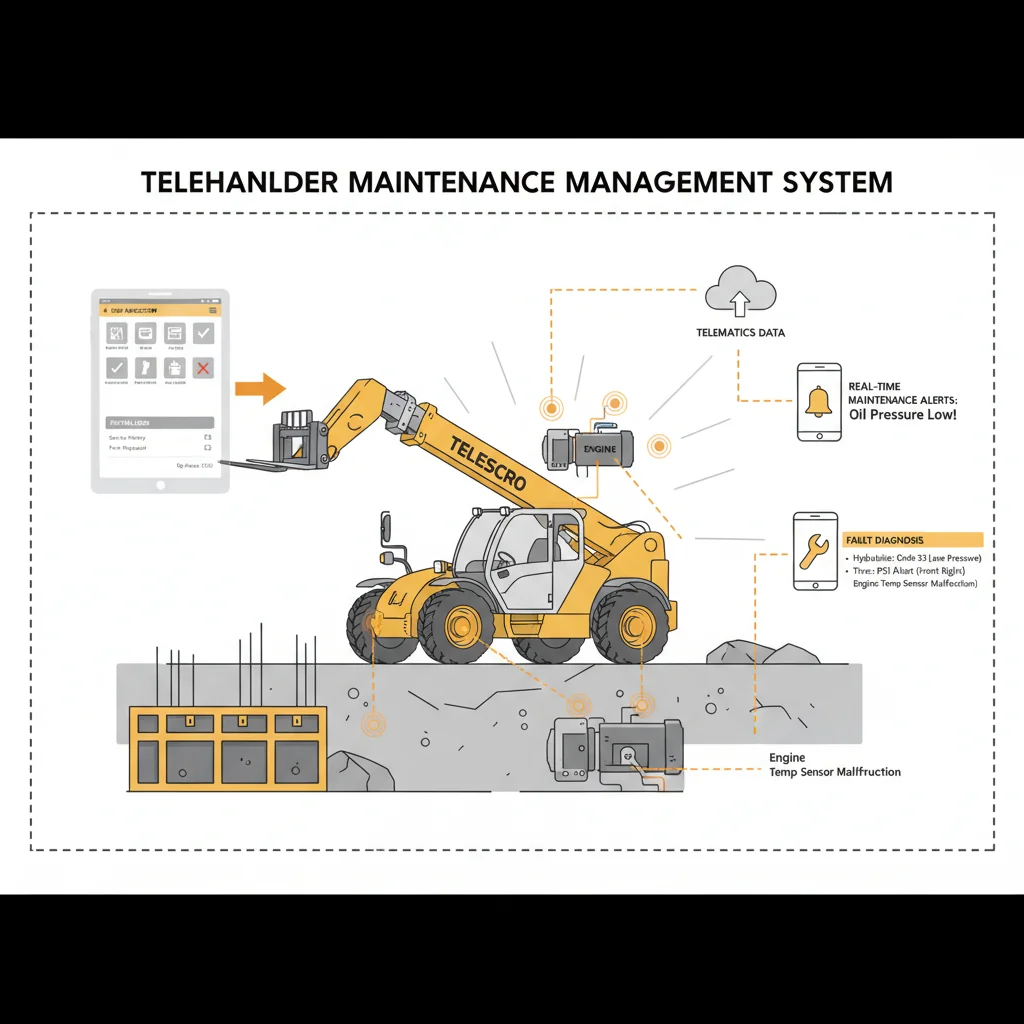
Last month, a contractor in Kazakhstan sent me a message—they were losing almost one hour daily just tracking down recurring hydraulic leaks. It turned out the team only used paper checklists, which often got smudged or lost. Without solid records, they missed a pattern: the left-side boom hose connectors kept needing tightening. Once they switched to a simple inspection app10, every check was time-stamped and photo-documented. The pattern became obvious within a week. They resolved it, and downtime for that unit dropped noticeably.
From my experience, digital logs make a huge difference, especially on larger sites running five or more telehandlers. When you use an app or telematics, you’re not just ticking boxes. The system pushes real-time alerts if, say, a hydraulic pressure reading goes low, or a sensor sends a fault code. You can flag an issue, attach a photo, and have a technician see it instantly—even if he’s across the city. One project in Malaysia saved at least two working days over a month by pre-ordering seals and filters before failures.
Here’s what matters most: structured logs reveal hidden trends. I’ve seen teams overlook the same worn-out tire sidewall on an 18-meter high-reach unit until it failed mid-job. With digital records, you’ll spot recurring wear in the weekly summary and plan for replacement. Even something simple like a laminated troubleshooting guide in the cab helps operators resolve minor electrical faults or reset warning lights in five minutes.
I always suggest using digital inspection tools as core equipment—not just paperwork. That’s what keeps telehandlers running when the job can’t wait.
Digital logs with integrated photo documentation can identify recurring hydraulic leak patterns within just 7 days, significantly faster than traditional paper checklistsTrue
Time-stamped entries combined with photographic evidence in digital logs allow teams to quickly correlate maintenance events, making it easier to spot repetitive issues like leaking boom hose connectors without guesswork. This accelerates diagnosis and resolution, reducing downtime.
Using paper checklists is more effective than digital logs for tracking telehandler maintenance because paper is less prone to technical failures in harsh environmentsFalse
While paper can be durable, it is susceptible to damage, loss, and illegible marks, which often obscure patterns in recurring faults. Digital logs offer reliable backup, precise timestamps, and easier data searchability, which improve maintenance tracking and help minimize downtime more effectively than paper.
Key takeaway: Consistent use of inspection checklists, logs, and digital solutions enables structured, real-time monitoring. This approach ensures nothing critical is overlooked, supports safety compliance, simplifies troubleshooting, and allows crews to prevent or quickly address issues—maximizing telehandler uptime and minimizing operational disruptions.
How Do Parts and Service Impact Uptime?
Telehandler uptime depends heavily on selecting models with advanced telematics, access to high-quality OEM or equivalent parts11, and responsive local dealer service. Robust telematics enable remote diagnostics and preventive action, while proper parts and skilled technicians ensure quick, reliable repairs. These factors, collectively, can reduce unplanned downtime by up to 15% versus conventional approaches.
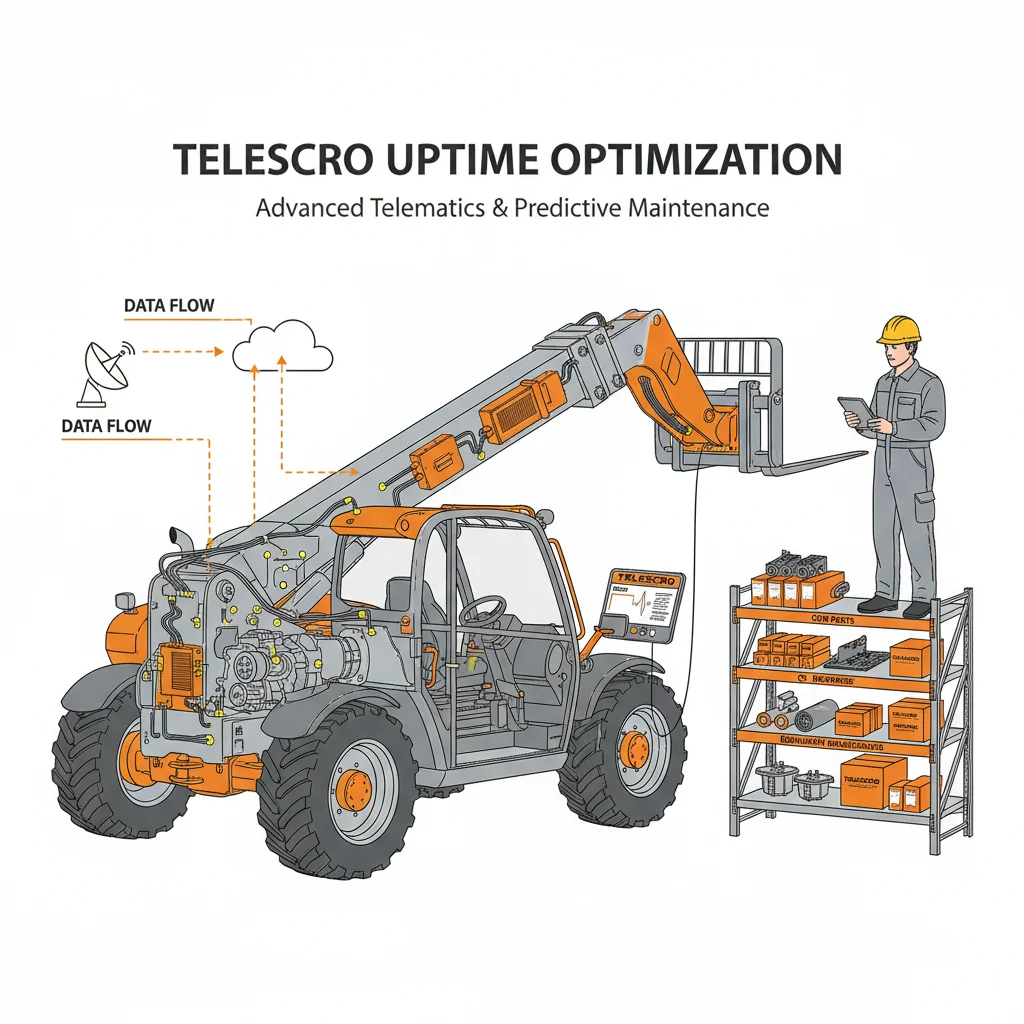
Let me share something important about telehandler uptime—what really counts isn’t just which machine you choose on day one, but how quickly you can get it fixed when something goes wrong. In my experience, a well-supported 3.5-ton unit with solid telematics outperforms a “bigger” machine that sits idle waiting for parts. I’ve worked with a contractor in Dubai running six telehandlers on a mixed-use high rise project. They switched to models with fault code telematics and partnered with a dealer who stocked hydraulic pumps and sensors locally. The result? Breakdowns that used to sideline a machine for two or three days dropped to less than eight working hours on average. That’s a massive difference when you’re lifting steel beams 20 meters up with tight crane schedules.
Here’s what matters most when downtime hits: access to genuine or equivalent-quality parts, close at hand. I’ve seen jobsites in Brazil get stuck for days because a worn steering joint had no local replacement. Using a cheap substitute led to rework a week later—classic “parts roulette.” For mission-critical items like hydraulic cylinders or boom pins, OEM or certified equivalents are worth every yuan spent. Telematics helps too. Most new machines send alerts for preventive service—sometimes weeks before a seal fails or a sensor trips a code. But the data only saves you time if your technicians or local dealer know how to act.
My advice? Weigh the service team and spare parts access as much as you check lift charts or turning radius. If your dealer can get you running in half a day, you’ll finish jobs faster and avoid project penalties.
Integrating fault code telematics with dealer-supported inventory systems can reduce telehandler downtime by up to 30% through faster diagnostics and priority parts deliveryTrue
Telematics systems that provide real-time fault codes enable precise diagnostics, which combined with a dealer's proximity and parts inventory management, streamline repairs and significantly reduce equipment idle time.
Choosing a larger capacity telehandler automatically results in higher uptime, regardless of parts availability or service supportFalse
While larger machines offer greater capacity, uptime depends largely on maintenance responsiveness and parts accessibility. Without timely service and parts, larger telehandlers can experience more downtime due to complexity and longer repair times.
Key takeaway: Real-world telehandler uptime is shaped by telematics capabilities, rapid access to quality parts, and expert technicians. Contractors who prioritize these elements—alongside dealer service responsiveness—experience fewer unplanned outages, giving them a strategic advantage in meeting tight project deadlines and boosting overall equipment reliability.
How Do Dirty Environments Affect Telehandler Downtime?
Dirty or harsh environments accelerate telehandler wear by clogging radiators, causing engines and hydraulics to run hot, and enabling abrasive dust and cement to damage seals and booms. Corrosive materials promote deterioration of pins, wiring, and steel. Routine cleaning and environmental management are proven tactics to minimize unplanned downtime and extend equipment lifespan.
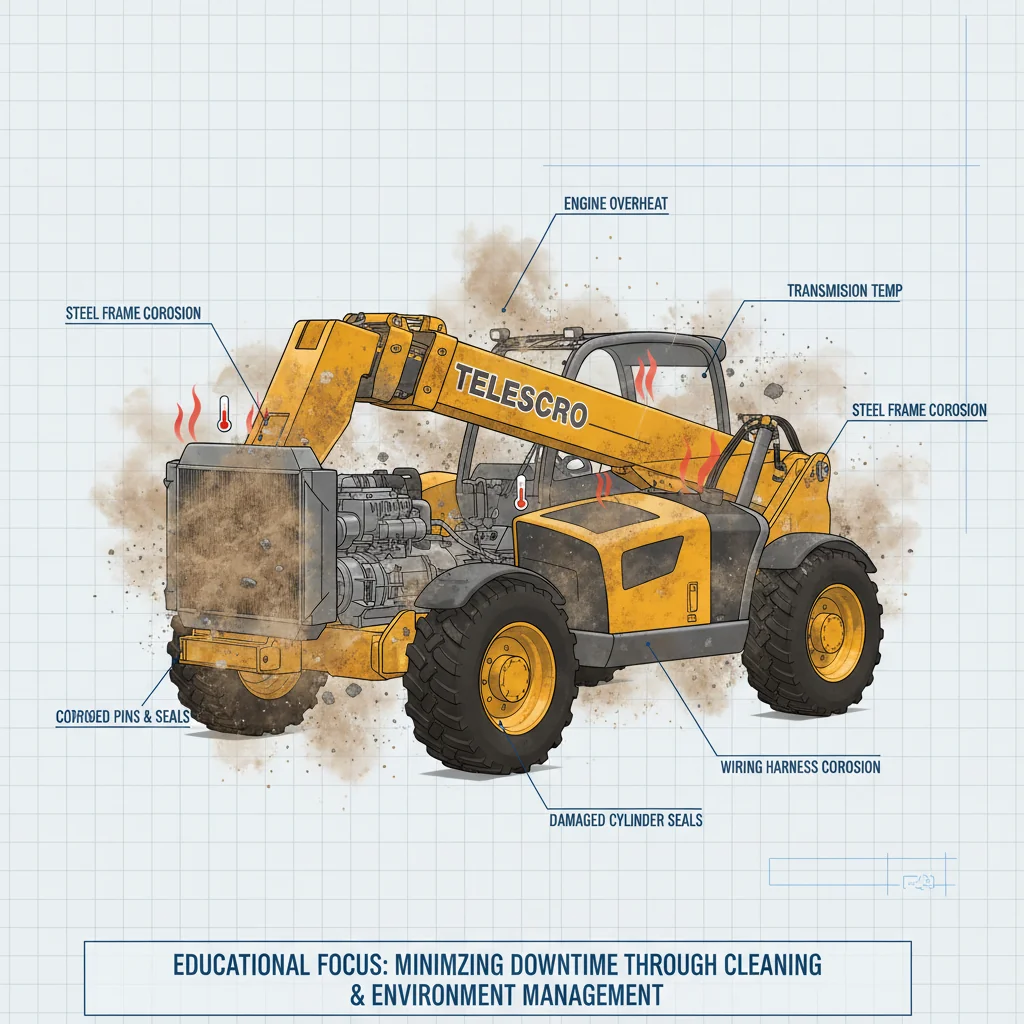
Here’s what matters most when you put telehandlers to work in tough, dirty environments—neglecting daily cleaning is the fastest way to lose uptime. I remember working with a large contractor in Saudi Arabia. Their 4-ton, 14-meter units operated at a concrete batching plant. Within two months, cement dust packed the radiator fins so tight that engine temps ran hot every afternoon. They saw three unplanned shutdowns before switching to a habit of blowing out radiators with compressed air every other day.
What surprised them even more was how quickly hydraulic leaks crept in. Fine dust and gritty cement worked deep into the boom sections and boom base, acting like sandpaper on the cylinder seals. In one case, a boom cylinder seal failed after just 900 hours—usually, you can expect at least 1,500 hours from these parts. I always suggest inspecting for grime buildup at the articulation points and under the boom after each shift, especially when running in dry, dusty climates.
Corrosive sites bring a different set of headaches. I’ve seen coastal projects in Vietnam where salty air combined with wet cement led to severe corrosion on pins and even electrical faults as salt bridged contacts in hydraulic sensors. Protective boot covers for exposed electronics and a weekly freshwater rinse made a dramatic difference. For clients on fertilizer plants or sewage sites, I recommend upgrading to reinforced seals and shortening service intervals by 30%.
At the end of the day, regular cleaning and basic site management—like parking on hard, dry ground—can easily add a year or more to component lifespan. Little steps really do save big on downtime.
Cement dust accumulation on radiator fins can increase engine operating temperatures by up to 15°C, significantly raising the risk of overheating and unplanned telehandler shutdownsTrue
Fine particles like cement dust restrict airflow through the radiator, reducing its cooling efficiency. This causes engine temperatures to rise, which can trigger thermal shutdowns to prevent damage, thus increasing downtime. Regular cleaning maintains optimal cooling.
Using water to wash telehandler radiators daily in dusty environments is the best method to prevent overheating and minimize downtimeFalse
While cleaning radiators is essential, using water daily can introduce moisture that may cause corrosion or electrical issues. Compressed air blowing is preferred to remove dust without adding moisture, preserving equipment reliability and reducing downtime.
Key takeaway: Regular cleaning and protective measures are essential for telehandlers operating in dirty or corrosive environments. By proactively addressing debris, dust, and corrosive buildup, fleet managers can significantly reduce overheating, leaks, and component failures, ensuring higher uptime and longer service life for their equipment.
Why Prioritize Telehandler Safety Systems for Uptime?
Regularly testing telehandler safety systems—such as load moment indicators12, limit switches13, brakes, and backup alarms—directly reduces the risk of major incidents that can cause extended downtime. Well-defined breakdown response protocols ensure operators can quickly secure loads and contact service, minimizing collateral damage, compliance hurdles, and repair times. Safety measures are essential uptime tools in telehandler operations.
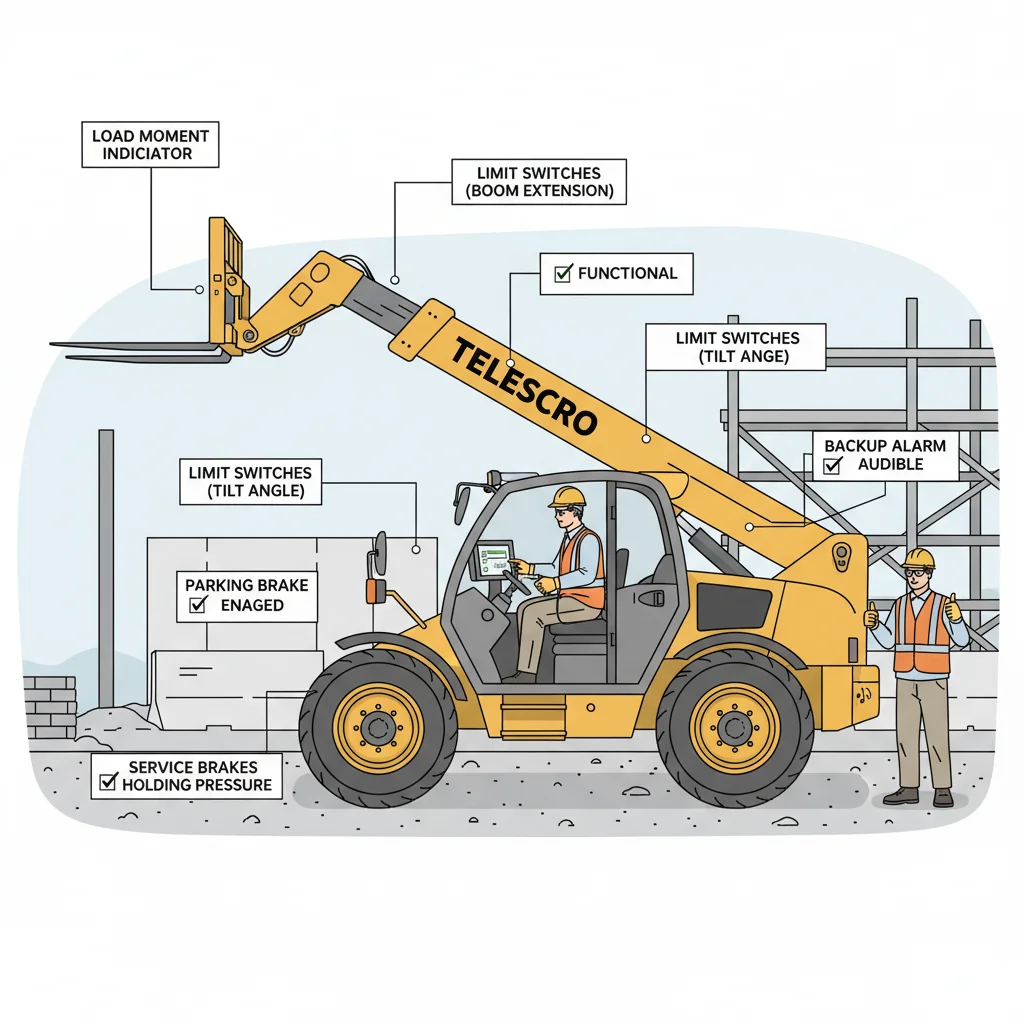
A lot of customers ask me if safety checks really make that much difference to uptime. Let me share something important I saw last year on a high-rise project in Dubai. The site used a 4-ton telehandler with a 17-meter reach, and the operator noticed the load moment indicator was acting up—sometimes flashing a warning even at low boom angles. Instead of waiting, they reported it during the morning inspection.
Service arrived within half a day, swapped a faulty sensor, and the machine was back to work by lunch. If they’d ignored the issue—or worse, overridden the alarms—the result could have been a dropped load or a tip-over. That kind of accident shuts down a telehandler for weeks, not hours. It invites insurance inspections, legal reviews, and safety audits, not to mention possible injury.
From my experience, regularly testing limit switches, backup alarms, brakes, and hydraulic systems is not just about ticking a box for compliance. It directly prevents the kind of major incidents that trigger long, expensive repairs. I’ve seen jobsites in Southeast Asia where a single failed brake cost the project nearly three full days. The issue wasn’t the part—it was the confusion over who to call and how to secure the stalled unit safely. That’s why I always suggest having a clear breakdown response protocol, including steps for isolating electrical power, stabilizing loads, and contacting service right away.
Keep inspection logs up-to-date. This builds trust with regulators and insurers and, more importantly, keeps your machines working—not waiting in line for approval. Proactive safety routines are your best insurance for uptime.
Regularly calibrated load moment indicators can prevent up to 30% of unexpected telehandler downtime by ensuring accurate load readings and preventing overstressTrue
Load moment indicators provide critical real-time data on boom load; if they are not calibrated, false warnings or missed alerts can lead to downtime from damage or emergency stops. Proper calibration maintains uptime by enabling safe operation and timely maintenance.
Disabling the overload warning system temporarily during high-demand tasks can improve telehandler uptime by avoiding unnecessary machine stoppagesFalse
Disabling overload warnings compromises operator safety and risks structural damage, resulting in potentially longer and costlier downtime due to repairs and accidents; these systems are essential to prevent damage, not hindrances to uptime.
Key takeaway: Proactive safety system checks and clear breakdown response play a crucial role in sustaining telehandler uptime. Proper protocols not only protect operators but also prevent lengthy outages, compliance issues, and expensive repairs. Treating safety as a primary element of uptime strategy ensures operational reliability and regulatory confidence.
Conclusion
We’ve looked at how regular daily inspections with a practical checklist go a long way in preventing telehandler failures on site. This simple daily habit really is what keeps jobs running smoothly and cuts surprise costs.
From my years in the field, I’ve seen that even experienced crews sometimes get caught out by skipping the basics. Just one missed oil leak or loose bolt can become a “second-year surprise” when the machine’s out of warranty and repairs get expensive fast.
If you want help building a checklist that fits your fleet or have questions on preventive maintenance, feel free to reach out. I’ve worked with teams in all kinds of climates and can share what’s worked for their schedules. Remember, every site is different—choose what works for your workflow.
References
-
Explore detailed benefits and field data showing how hour-based PM cuts unplanned outages by up to 40%, improving uptime and lowering repair costs. ↩
-
In-depth insights on common hydraulic leak sources in telehandlers and preventive measures to avoid costly downtime and repairs in harsh work environments. ↩
-
Explains technical reasons to inspect hydraulic hoses early, preventing costly failures and downtime in telehandler operations. ↩
-
Details how structured inspections boost uptime to 98%, improve planned repairs, and reduce emergency downtime and costs. ↩
-
Explore how advanced telematics enable remote diagnostics and prevent downtime, enhancing telehandler reliability and project efficiency. ↩
-
Explains critical role of hydraulic fluid quality and maintenance in reducing downtime and extending telehandler lifespan with expert data. ↩
-
Discover how timely replacement of boom pads avoids metal-to-metal contact and extends your telehandler’s service life. ↩
-
Detailed insights into load charts help operators understand safe lift limits, enhancing safety and preventing costly equipment damage. ↩
-
Comprehensive guides explain how inspections detect faults early, reducing downtime and extending telehandler component life. ↩
-
Learn how inspection apps provide time-stamped, photo-documented checks that help identify recurring faults and lower equipment downtime. ↩
-
Understand the importance of high-quality OEM or equivalent parts in reducing breakdowns and avoiding costly rework on job sites. ↩
-
Explore how load moment indicators prevent overload accidents, enhancing safety and reducing costly downtime on construction sites. ↩
-
Understand the role of limit switches in preventing telehandler failures and ensuring compliance, minimizing repair time and risks. ↩