










Can a Telehandler Be Used Indoors? Field-Tested Safety & Setup Guide
A few months back, I got a frantic call from a site supervisor in Malaysia—his team tried moving a large air handler through a shopping mall with a regular diesel telehandler. It fit through the doors, but nearly clipped a sprinkler pipe and set off every CO alarm within twenty minutes. That’s a situation I’ve seen all too often.
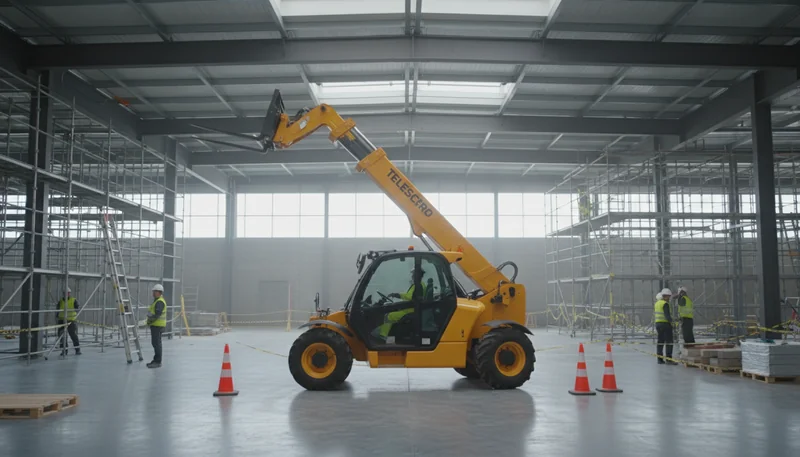
Yes, a telehandler can be used indoors, but only under controlled conditions. Indoor operation requires sufficient maneuvering space, floors rated to handle concentrated wheel loads and floor loading1, and adequate ventilation or zero-emission power to manage exhaust gases. Telehandlers are effective in large indoor environments such as warehouses, factories, and aircraft hangars, but risks increase sharply with restricted clearance, limited visibility, floor load limits, and inadequate exhaust control.
When Can Telehandlers Operate Indoors Safely?
Telehandlers can be used indoors only where interior space, floor structure, and ventilation meet operational requirements. Safe indoor use is realistic in large, open facilities—such as warehouses, hangars, malls, and prefab halls—when lifting heavy loads above what forklifts manage, provided all safety checks for clearance, floor loading, and exhaust control are satisfied.
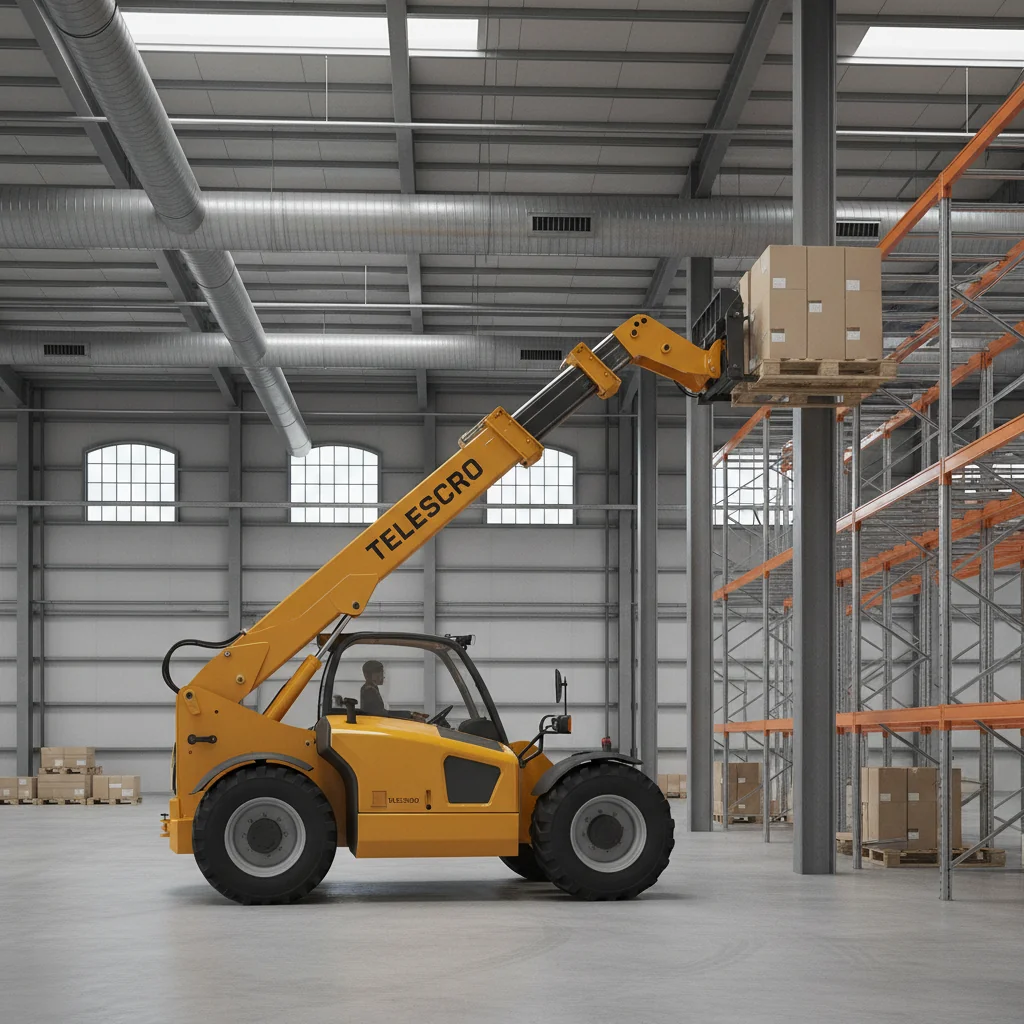
Most people don’t realize how quickly indoor operations become risky when a telehandler is introduced into a standard building. Telehandlers are large, heavy machines, but their operating weight varies significantly by model, configuration, and manufacturer. As a practical reference, telehandlers in the ~3.0–3.5 t capacity class with lift heights around 11–13 m can approach an operating weight in the range of roughly 9–10 t, even before lifting a load, depending on boom design, counterweight, tires, and optional equipment.
Last year, a client in Dubai attempted to use a machine in this class inside a prefabricated hall to move HVAC units onto a mezzanine. On paper, the space appeared adequate, but two critical factors were overlooked: actual maneuvering and turning clearance, and whether the concrete slab was engineered for the telehandler’s concentrated wheel loads and dynamic load transfer during travel and lifting. A follow-up inspection showed that the slab had been designed for lighter industrial traffic and was not verified for telehandler wheel loads under working conditions, making indoor operation unsafe.
I have seen similar situations in Brazil where indoor lifting was time-critical, but diesel exhaust accumulated rapidly due to insufficient ventilation. This is why ventilation should always be assessed first when considering indoor use—especially with internal-combustion telehandlers. While battery-electric telehandlers eliminate local exhaust emissions, most electric models currently available are focused on compact classes, and higher-capacity or longer-reach options may be limited by market availability and duty-cycle requirements.
Large indoor spaces such as aircraft hangars or newly built shopping malls can be suitable, but only when conditions align: adequate headroom (often around 7 m or more, depending on machine geometry and load), wide and unobstructed aisles, verified ventilation performance, and a floor slab that has been structurally assessed for telehandler wheel loads and dynamic effects. Anything less should be treated as a warning sign rather than an acceptable compromise.
If the task primarily involves repetitive pallet stacking below 6 m or operation in narrow aisles, a warehouse forklift or reach truck is usually a safer and more efficient choice than forcing a telehandler into an environment it was not designed for.
Telehandlers powered by electric or hybrid drivetrains can sometimes be used indoors safely, provided the ventilation and floor load requirements are thoroughly assessed.True
Unlike diesel models, electric and hybrid telehandlers produce significantly less harmful exhaust, reducing air quality risks. However, operators must still confirm the building's floor can bear the machine's concentrated weight before indoor operation.
Any telehandler equipped with non-marking tires is automatically suitable for safe use inside finished buildings.False
Non-marking tires only prevent floor surface damage; they do not address critical safety factors like adequate ventilation, floor load capacity, or machine maneuverability within confined indoor spaces.
Key takeaway: Telehandler use indoors is viable only in spacious, well-ventilated, structurally robust environments. Before approving indoor application, always confirm floor capacity, clearance, and air quality. For confined work under 6 m, forklifts or reach trucks are usually a safer, more cost-effective alternative.
Which Telehandler Power Source Is Safest Indoors?
Electric telehandlers2 are considered the safest for indoor use due to zero local emissions and minimal noise. Diesel engines can cause hazardous CO and NOx buildup even in short periods without robust ventilation. LPG units emit less but still require active gas monitoring. Combustion-powered telehandlers should only operate indoors with strict safety controls.
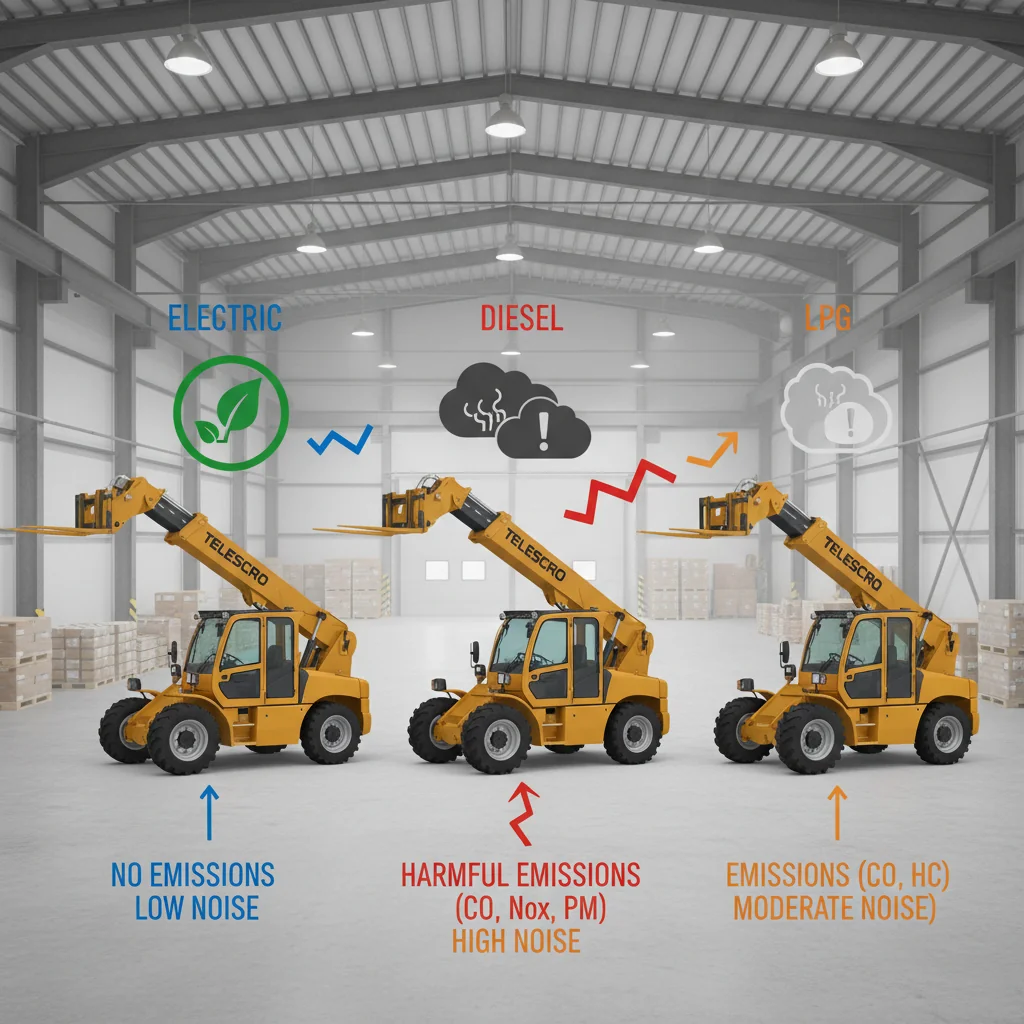
Let me share something important about choosing a power source for indoor telehandler work—this is where safety standards get strict, and the wrong decision can put your crew at risk. Diesel units, even with the newest filters, create exhaust—carbon monoxide and NOx—that build up fast if you’re working in warehouses or public buildings. On a job last year in Dubai, a customer called me after CO readings hit 40 ppm in under half an hour with just two diesel telehandlers running. The team had to stop work and bring in extra ventilation fans—lost almost half a shift. That’s not just a productivity hit; it’s a real safety hazard.
Here’s a side-by-side comparison of indoor telehandler power sources based on what actually matters for safety:
| Power Source | Local Emissions | Noise Level | Safe Indoors? | Key Controls Needed |
|---|---|---|---|---|
| Diesel | High (CO, NOx) | Loud | Only with strong ventilation, time limits | Industrial fans, CO detectors |
| LPG | Moderate (less than diesel) | Lower than diesel | Limited, with active monitoring | Gas leak & CO sensors, open doors |
| Electric | None | Quiet | Yes — no emissions | Battery charge management |
From my experience, electric telehandlers are the only type I’d recommend for tight spaces—factories, logistics centers, food or pharma sites—any place where air quality and noise matter.
It is also important to note that diesel particulate filters (DPF) are designed primarily to reduce particulate matter (PM) emissions; they do not eliminate gaseous pollutants such as carbon monoxide (CO) or nitrogen oxides (NOx), which can still accumulate in enclosed indoor environments.
Electric-powered telehandlers are considered safer for indoor use because they produce zero harmful exhaust emissions, reducing the risk of carbon monoxide and nitrogen oxide buildup.True
Exhaust emissions from combustion engines can accumulate quickly indoors, posing a significant health hazard. Electric telehandlers eliminate this by relying on battery power, making them suitable and compliant with indoor air quality regulations.
Diesel telehandlers equipped with modern particulate filters are just as safe for indoor use as electric models because the filters remove all dangerous gases.False
While particulate filters reduce particulate matter, they do not eliminate all harmful gases such as carbon monoxide and nitrogen oxides, which can accumulate indoors and pose serious health risks even at low concentrations.
Key takeaway: For true indoor telehandler operations, electric models are recommended to eliminate exposure to hazardous exhaust. If combustion engines are unavoidable, limit runtime, ensure robust ventilation, and install gas detectors to comply with strict indoor emission standards and protect worker safety.
How to size telehandlers for indoor use?
Indoor telehandler selection depends on precise sizing. Standard units (~2.2–2.5 m wide; 3.5–4.5 m outer turning radius3) often cannot maneuver safely in tight spaces. Compact models under 2.0 m wide and ~3.0 m turning radius, with overall height below obstructions, minimize collision risk and frustration in low-clearance environments.
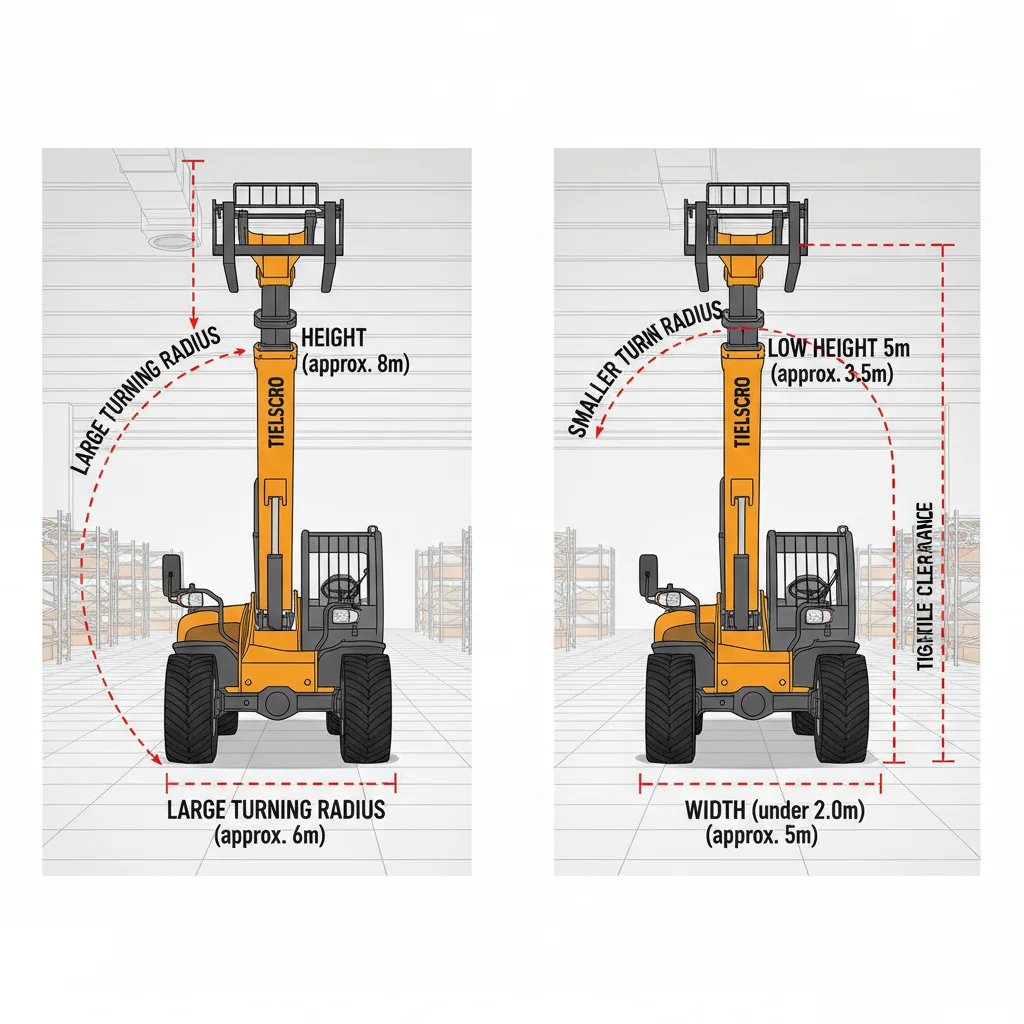
Here’s what matters most when you’re choosing a telehandler for indoor work: the machine’s size and geometry decide everything. I’ve seen projects grind to a halt in warehouses in Dubai and cold-storage sites in South Africa—all because the unit was too wide or too tall for the space. An average construction telehandler measures about 2.3 meters wide, with a turning radius between 3.5 and 4.5 meters. Those numbers are a headache if you’re working in 3-meter aisles or under a ceiling with fire-suppression pipes at 2.7 meters. Most clients don’t realize how quickly a wrong measurement turns into hours spent repositioning or even damaging racks. Last year, a logistics customer in Brazil called me after their standard 3.8-ton machine got wedged between steel columns.
The aisle was just under 4 meters wide, and the telehandler itself was 2.4 meters long plus a 4-meter turning radius. Result? Bent pallet rack, minor injuries, and days lost in re-planning. Now, I always recommend walking the intended path with a tape measure before signing any rental agreement. Mechanical specs look simple on paper, but clearances can change order fulfillment rates or risk safety.
Here’s a checklist I give to every customer sizing up for indoor jobs:
- Measure all aisle widths and entry doors—not just one section, but every transition point.
- Check ceiling height and lowest overhead obstructions like beams, lighting, or ducts.
- Allow extra clearance for turning—at least machine length plus 1–1.5 meters extra.
Telehandlers with low-profile designs and reduced overall height are often necessary for indoor applications to help clear obstructions like racking and HVAC systems.True
Indoor environments frequently have height restrictions due to fixtures, building systems, and overhead barriers, making a reduced height crucial for maneuverability and to prevent collisions.
Any outdoor-rated telehandler can be used indoors without modifications, as they are all designed to fit standard warehouse aisles and ceiling heights.False
Most telehandlers built for outdoor or general construction use are too large for typical indoor aisles and clearance heights. Without adaptations like compact frames or special tire options, standard machines risk causing damage or simply not fitting indoors.
Key takeaway: For indoor applications, always select a compact telehandler with precise width, turning radius, and height measurements matched to the facility’s clearances. Measure aisle width, ceiling height, and entry points in advance to avoid collisions. Where aisles are extremely narrow, consider reach trucks instead.
What Floor Limits Affect Telehandler Stability Indoors?
Indoor telehandler stability depends critically on both floor strength4 and traction5. Smooth concrete or tile surfaces can significantly reduce available tire grip compared to typical outdoor ground conditions, increasing the risk of sliding—especially when floors are dusty, wet, or contaminated with oil. In addition, many indoor floors are designed for distributed industrial loads rather than the concentrated wheel loads imposed by a telehandler. For this reason, indoor stability should never be assumed and must always be verified against the manufacturer’s floor loading guidance and the actual on-site surface and structural conditions.
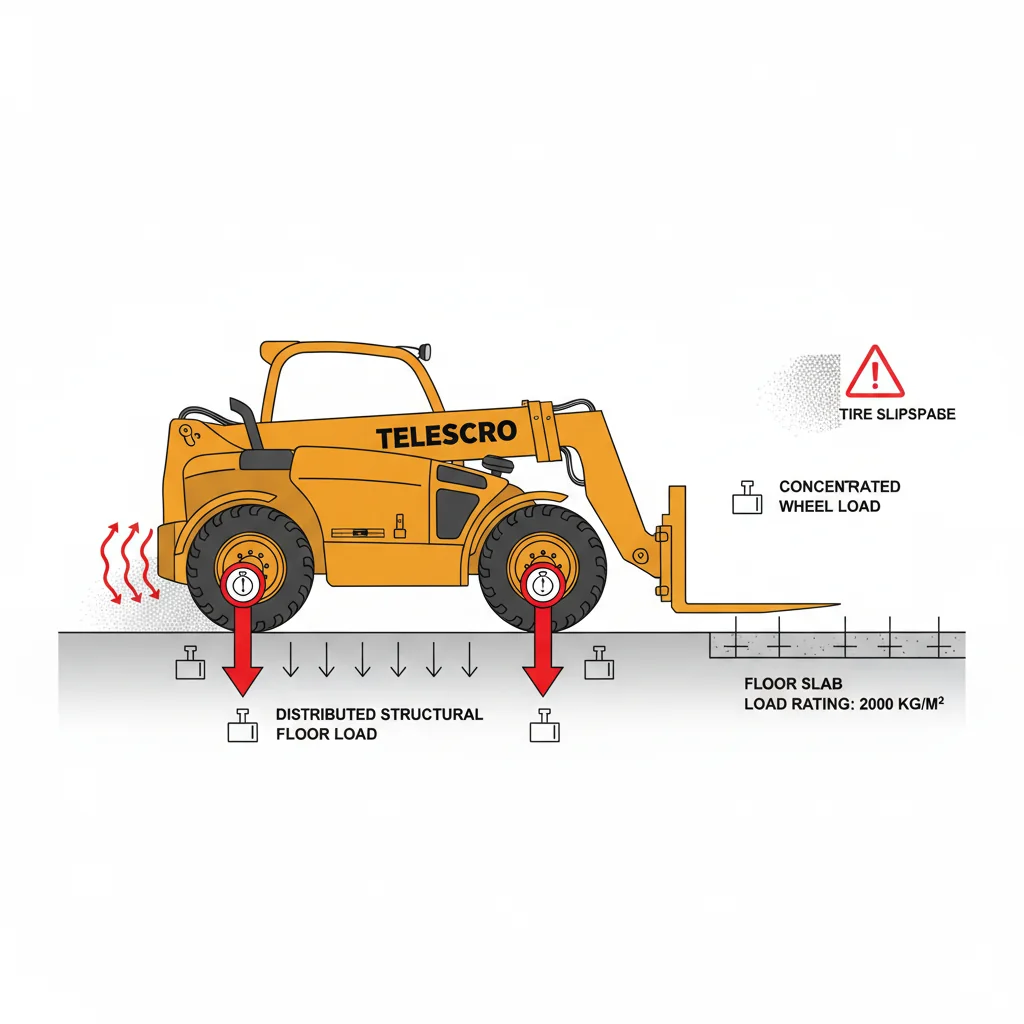
Last month, a contractor in Dubai called me after his nearly new 3.5-ton compact telehandler started slipping sideways on a polished warehouse floor. He thought a clean, flat surface meant good traction. But in reality, smooth indoor concrete can reduce wheel grip by 20–30% versus dirt or pavement—especially with dust, spills, or moisture. When you’re steering or braking, the risk of the entire machine sliding is much higher than it looks on paper. I’ve also seen cases where forklift rubber left a thin oily film, making the situation even worse.
The second big issue is floor strength—not just traction. Many industrial floors are engineered for distributed loads (like a row of shelving or small carts) but struggle with the concentrated pressure under a telehandler’s four tires, especially when loaded. I’ve visited sites in Vietnam where a 4-ton machine, weighing 10 tons with its cargo, left deep marks in older floor slabs. That’s because point loads can exceed 25 kN under each tire—far above the usual floor design. Any ramps or mezzanines are even riskier. If in doubt, I always suggest contacting a structural engineer for approval before driving over these spots.
So before bringing a telehandler indoors, walk your full route—look for slick spots, raised cover plates, surface cracks, or softer patch repairs. Use only solid or non-marking tires to maximize grip, and keep speeds around 3–5 mph (under 8 km/h), especially on tile or sealed floors. For safety, stay well below the rated load unless you’ve confirmed every part of the floor can handle it. That’s one shortcut you don’t want to take.
Indoor polished concrete floors can significantly reduce a telehandler’s tire grip compared to outdoor surfaces, increasing the chance of lateral sliding when steering or braking.True
Smooth concrete lacks the surface texture needed for optimal traction, especially for the tread designs typical of telehandler tires, so the risk of slipping increases indoors.
A telehandler’s load chart accounts for variations in indoor floor friction, ensuring stability ratings are always accurate regardless of surface type.False
Load charts are based on the machine’s geometry and weight distribution, but do not account for differences in traction; lower grip indoors can cause instability even within rated limits.
Key takeaway: Floor conditions—especially strength and traction—directly affect indoor telehandler safety. Always confirm the floor can bear point loads, check for slick spots or weak surfaces, use solid or non-marking tires, and operate well below rated capacity unless a structural engineer approves full loads indoors.
What Indoor Training Do Telehandler Operators Need?
Indoor telehandler operators must receive training that is specific to powered industrial truck standards6, such as OSHA 29 CFR 1910.178, and appropriate to the exact machine type, attachments, and site-specific hazards involved. Generic or non-site-specific certifications are typically insufficient for indoor operations. Effective indoor compliance requires task-based practical training, building-specific operating procedures, and documented understanding of load charts, visibility limitations, pedestrian interaction, and applicable safety precautions.
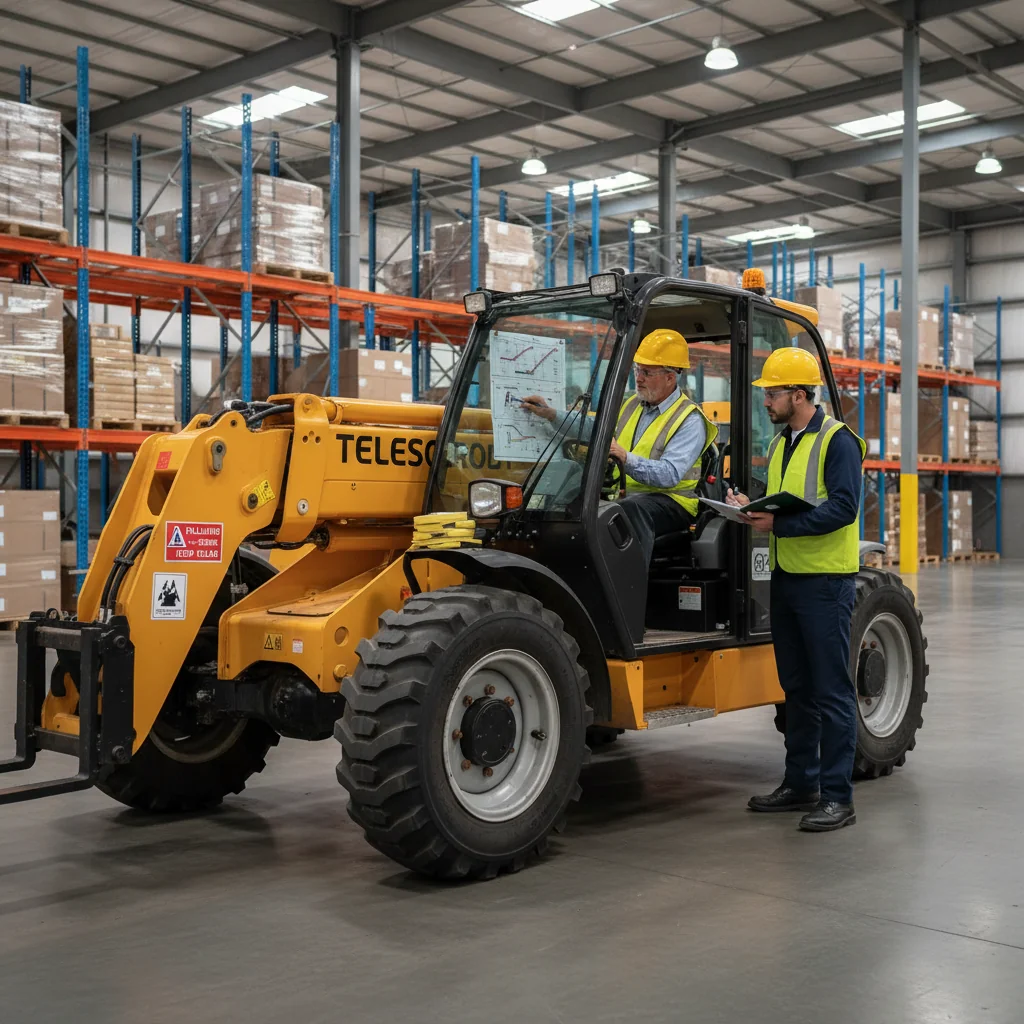
The biggest mistake I see is assuming any general telehandler license covers indoor work—this just isn’t true. Indoor sites bring special risks, and regulators like OSHA in the US or similar authorities elsewhere are strict about it. A warehouse in Malaysia called me last year after an incident. Their operator had outdoor certification but never learned their building’s floor rating or how to handle tight aisle turns. During a busy shift, he tried to maneuver a 3.5-ton compact unit with a full pallet at high reach. He clipped a fire sprinkler, flooding part of the loading zone. That company faced not only repair costs but also had their insurance claim denied because the operator’s training didn’t match site conditions.
From my experience, proper indoor telehandler training7 must start with the powered industrial truck standards—OSHA 29 CFR 1910.178 is one example, but rules in Europe and Australia are just as specific. Operators need hands-on drills for the actual site: navigating floor joints, avoiding overhead pipes, and running the machine with different attachments. They must prove they understand the load chart, especially at lower boom angles or with extensions—capacity can drop by half at maximum reach indoors. Pre-operation checks can’t be skipped. I always insist on daily inspection sheets, looking at hydraulics, brakes, lights, alarms, steering, and even tire wear. After any layout change or a swap of forks for a platform, I suggest retraining and updating procedures.
The key? Document all training, including drills in your own building. Set clear written rules—like speed limits and no-go zones for pedestrians. Most indoor accidents I’ve seen come from rushed decisions or missing these simple steps.
Telehandler operators must receive site-specific indoor training to understand local floor load limits and maneuverability constraints, which are not typically covered in standard outdoor certifications.True
Standard telehandler certifications often focus on outdoor environments, ignoring crucial indoor factors like floor rating, ceiling clearance, and restricted aisle navigation. Site-specific indoor training addresses these unique challenges and reduces risk.
Any telehandler with stabilizers can safely operate indoors without the need for additional specialized training.False
Stabilizers may improve stability, but indoor operations introduce additional risks such as limited visibility, confined spaces, and floor load restrictions that require specialized operator training beyond simple equipment features.
Key takeaway: Generic telehandler certificates do not meet regulatory or safety requirements for indoor use. Operators need site- and task-specific training per OSHA and ANSI/ITSDF rules, with hands-on drills and documented building procedures to address indoor hazards, load limits, and critical pre-operation checks.
How to plan indoor telehandler routes?
Safe indoor telehandler operation8 requires a detailed site assessment before movement. Operators must map travel paths from the unloading point, measuring aisle widths, turning pockets, doorways, and overhead clearances. Identify choke points, blind corners, and pedestrian zones. Establish marked, one-way telehandler routes when possible, enforce a 3–5 mph speed limit, and share annotated floor plans with all site personnel.
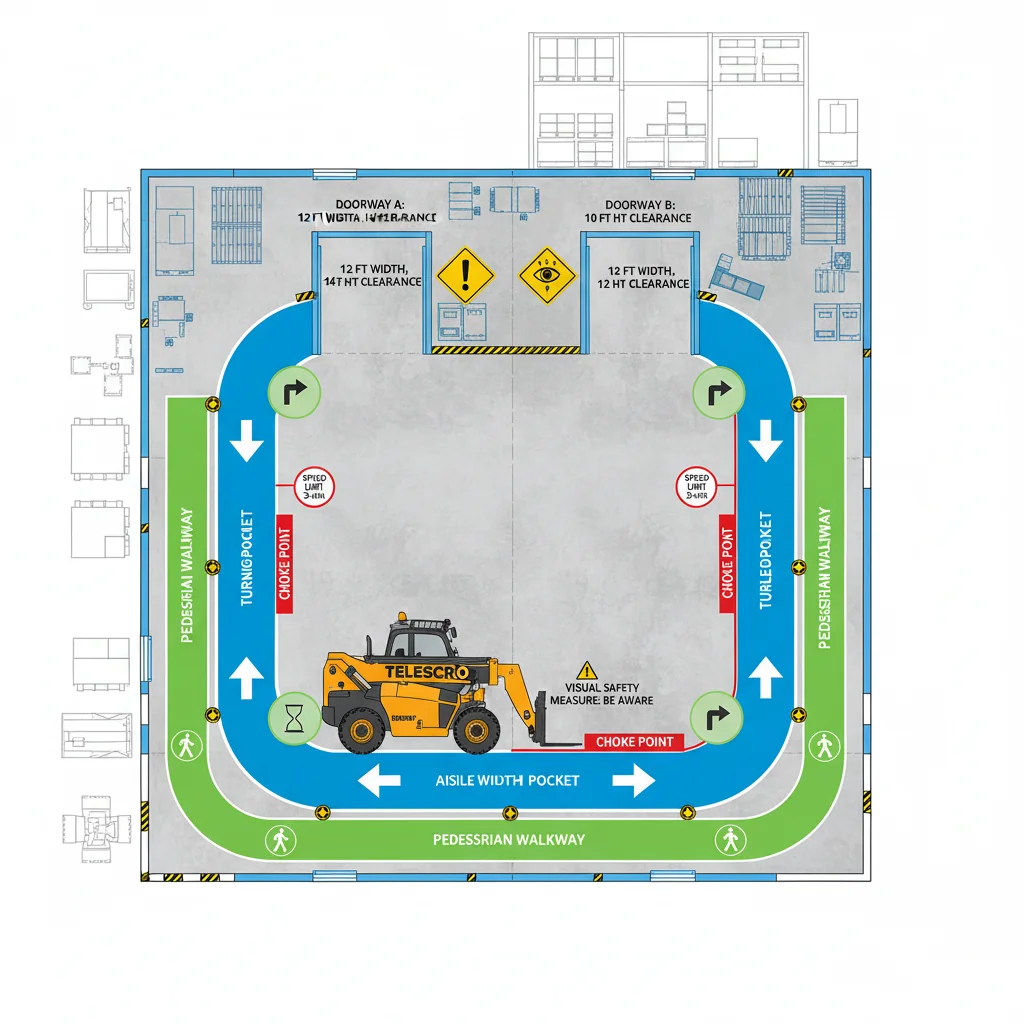
To be honest, route planning for indoor telehandler work is the most overlooked risk on many sites. People focus on the lifting side but forget about maneuvering. I’ve seen this go wrong at a retrofit warehouse project in Singapore—the team mapped a straight-line path from the roller door but ignored shelving pinch points and the low beams by the goods lift. As a result, the forks sheared a sprinkler head on the very first drive-in. Total stoppage for two days while repairs happened. That could have been avoided just by walking the route and verifying clearances at every turn.
Start by mapping your travel path before the telehandler even enters the building. Measure every aisle’s minimum width and don’t forget the swinging tail and turning radius—the average compact model needs at least 3.5 meters for safe maneuvering. Check the zoning around structural columns, racking ends, and doorways. If you have a 2.5-ton telehandler with a 4-meter boom, watch out for overhead services. I’ve seen pipes as low as 2.7 meters in European logistics centers. You need to flag anything under your machine’s cab height plus load—temporary covers or tape on beams help a lot.
Wherever possible, set up one-way movement and mark clear, wide turning pockets. Use spotters at blind corners—telehandlers, especially with the boom raised, can hide a person or another machine easily. Keep to 3–5 mph indoors; it sounds slow, but it truly reduces impact damage. I suggest sharing annotated floorplans with everyone—including subcontractors—before starting indoor work. One extra hour planning can save weeks of costly downtime.
Effective indoor telehandler route planning must account for both vehicle tail swing zones and dynamic height changes, not just the width of aisles.True
Telehandlers have rear overhang and their booms may pivot or extend upward, so planning only for aisle width can miss collision risks with racking, beams, or overhead fixtures. Both tail swing and vertical clearance must be considered for safe maneuvering inside buildings.
As long as the load is balanced, indoor telehandler routes do not need to avoid areas beneath fire sprinkler lines.False
Telehandlers have significant height even at rest, and both the cab and forks can easily contact overhead obstructions like sprinkler pipes. Loads can shift or bounce, and boom elevation changes while traveling can make overhead clearance critical—routes must always avoid low-hanging sprinkler lines regardless of load stability.
Key takeaway: Detailed route planning and clearance assessments are essential before moving a telehandler indoors. Mapping travel paths, enforcing low speed limits, and sharing clear, annotated floor plans minimize collision risks and costly impacts, improving safety for both operators and other building occupants.
Which Telehandler Attachments Are Safe Indoors?
Only manufacturer-approved telehandler attachments9 listed in the load chart are safe for indoor use. Forks with side-shift10 optimize pallet handling in tight spaces, while rotating carriages and short jibs maintain maneuverability. Certified personnel platforms with integrated controls are mandatory for lifting people; homemade or non-approved attachments create severe compliance and safety risks indoors.
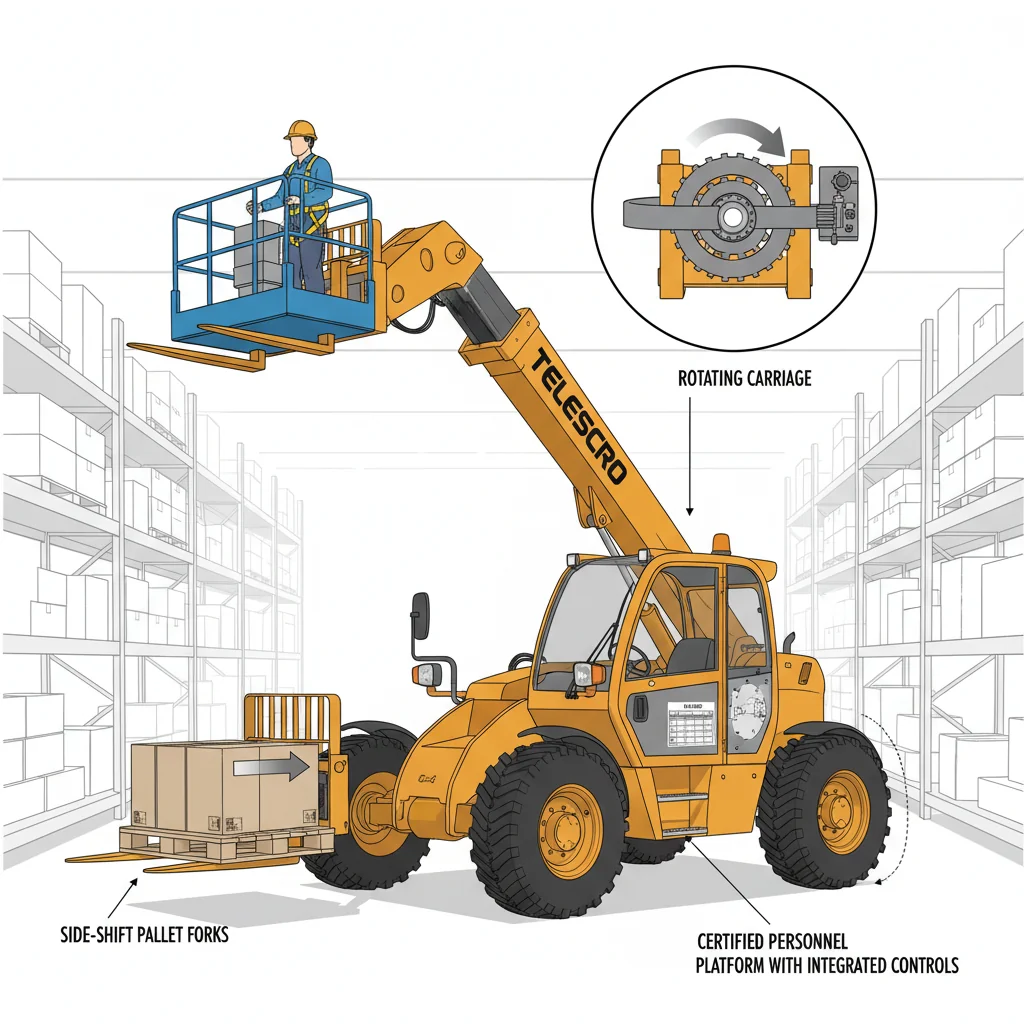
From my experience, too many operators assume any telehandler attachment will work indoors as long as it “fits.” The reality is much stricter. Only those attachments listed in your machine’s load chart—fully approved and documented for that exact model—are safe and legal for indoor use. I always remind crews in Singapore and Dubai: an unapproved jib or DIY bucket isn’t just risky, it could also shut your jobsite down for compliance violations.
Let’s break down the real-world options you’ll see on most load charts. Forks with side-shift are by far the safest choice for indoor pallet handling. They let you slide the load left or right without moving the whole telehandler—critical in narrow aisles or when working around columns. Short jibs and rotating carriages show up on indoor jobs where you need to drop loads over mezzanines or into tight spaces.
Below is a practical comparison:
| Attachment Type | Indoor Use? | Typical Capacity Loss | Best For | Key Risk |
|---|---|---|---|---|
| Forks w/ Side-shift | Yes (if approved) | 5–10% | Palletized goods, tight aisles | None if properly locked |
| Rotating Carriage | Yes (if listed) | 10–20% | Side placement, limited clearance | Unstable if overloaded |
| Short Jib | Yes (if listed) | 20–30% | Overhead/hooked loads in low headroom | Overloading beyond rating |
| Certified Work Platform | Yes (with controls) | 40–60% | Lifting personnel | Life safety—never DIY |
Telehandler attachments that introduce additional hydraulic circuits beyond the base machine configuration may be restricted for indoor use, particularly in clean or sensitive facilities, due to the increased risk of leaks and contamination.True
Attachments that add hydraulic hoses or connections can increase the likelihood of fluid leaks. In indoor environments—especially warehouses, food, pharmaceutical, or finished buildings—such leaks may create slip hazards, contamination concerns, or maintenance issues, leading some sites to impose additional restrictions or approval requirements.
Any attachment rated for the telehandler's maximum lifting capacity is automatically safe for indoor use, as long as it physically fits on the machine.False
Attachment approval for indoor use depends on compatibility with the machine's specific load chart and intended environment, not just load ratings or physical fit. Unapproved attachments can compromise stability and safety indoors.
Key takeaway: Indoors, only use attachments explicitly approved and rated by the telehandler manufacturer. Always consult the load chart for approved combinations and derating. Using unapproved or improvised attachments is not only unsafe but may also violate OSHA or LOLER regulations, creating liability and significant hazard.
When Is a Telehandler Unsafe Indoors?
Telehandlers are not always suitable for indoor work—especially where aisles are under 3 m wide, loads are below 1.5 t and 6 m high, or repetitive pallet handling11 is the norm. In such environments, forklifts, reach trucks, or lifts provide better safety, speed, and cost efficiency.
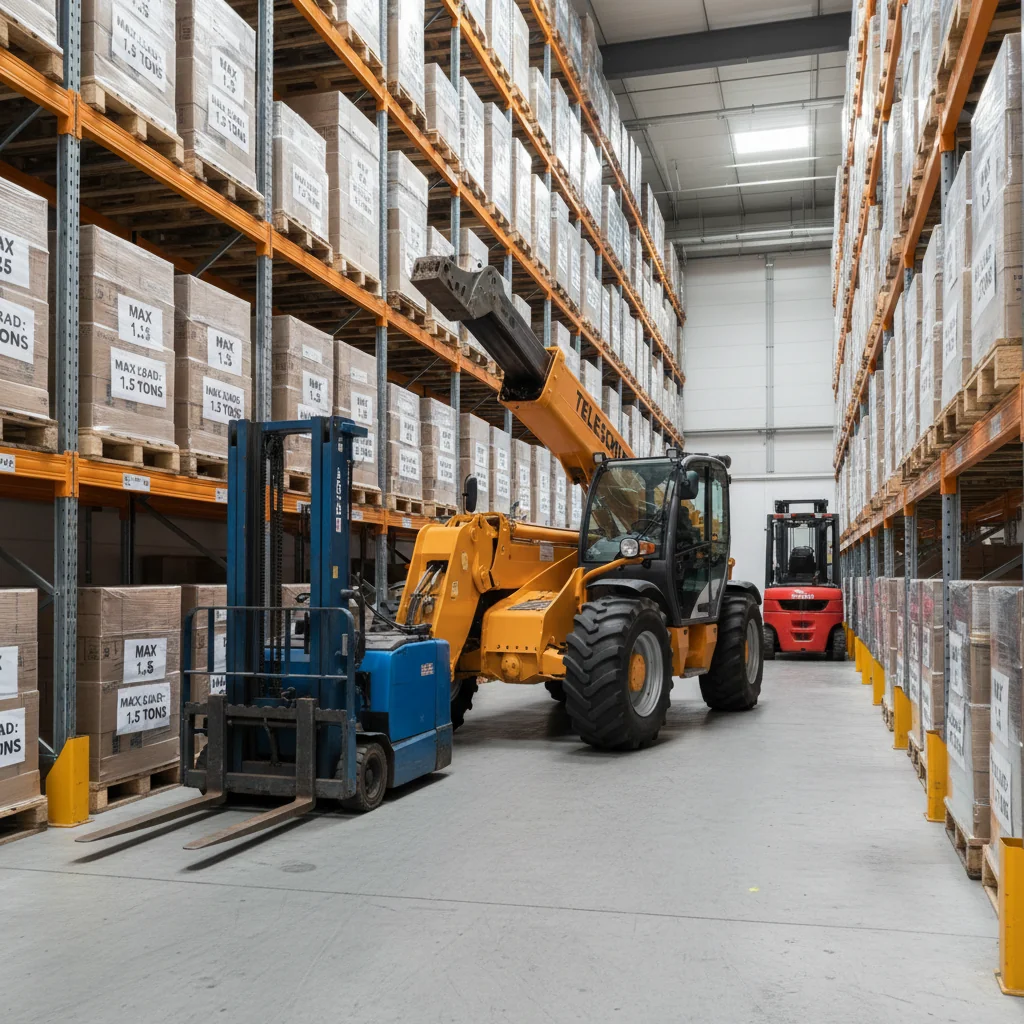
Let me share something important about using telehandlers indoors—this is one decision where shortcut thinking can lead to big problems. Telehandlers are strong, versatile machines, but that versatility comes with trade-offs. For example, a compact 2.5-ton telehandler might seem like a good fit inside a warehouse. But if your aisles are only 2.8 meters wide or you need fast, repetitive pallet movements along racking, the reality is different. These scenarios usually call for a dedicated warehouse forklift or a reach truck—with a turning radius under 2.2 meters and better low-speed maneuverability. I saw a site in Vietnam last year try to handle all their pallet moves with a telehandler—after two damaged door frames and a close call with overhead piping, they rented two electric forklifts instead. Productivity improved overnight.
From my experience, telehandlers are safest indoors only when you have space to stabilize and tasks that need outreach—like placing materials onto mezzanines or mixed cargo on scattered racks. But forcing a diesel telehandler into a tight logistics hall just to “get the most from what’s already on site” creates headaches. I’ve had calls from sites in Canada complaining about tire marks, floor cracking, even exhaust fumes building up after just a week of this. It’s also dangerous—your line of sight is worse, turning radius broader, and load stability on smooth floors relies entirely on following the machine’s load chart.
I always suggest matching the machine to the task, not the other way around. For repetitive, low-pallet, or tight-aisle work, forklifts and reach trucks simply outclass telehandlers in safety and speed.
Telehandlers with diesel engines are generally unsafe for prolonged indoor use due to poor ventilation and the risk of carbon monoxide buildup.True
Unlike electric forklifts, most telehandlers use diesel engines, which emit exhaust gases that can accumulate indoors. Without sufficient ventilation, this presents a serious health hazard and makes telehandler operation unsafe in enclosed spaces.
A telehandler with a boom fully extended is always stable indoors if it is within its rated capacity.False
Even when operating within rated capacity, extending the boom significantly raises the machine's center of gravity. Uneven or unsuitable indoor flooring, combined with a high or extended load, can lead to tipping hazards or floor damage, particularly if the surface is not designed for concentrated point loads.
Key takeaway: Telehandlers excel in open, mixed-task indoor environments. However, in narrow, repetitive, or access-focused settings, specialized warehouse forklifts or aerial lifts ensure greater efficiency and safety. Assess aisle width, load type, and work repetition before selecting a telehandler for indoor applications.
How Does Indoor Use Affect Telehandler Maintenance?
Indoor telehandler operation changes maintenance priorities: fine dust can clog air filters and radiators12, requiring more frequent cleaning. Oil and hydraulic leaks are more visible and less tolerated, especially in sensitive environments. Lighting, alarms, and sensors require daily functional checks. Some sites mandate non-marking tires or biodegradable hydraulic oils to meet strict compliance standards.
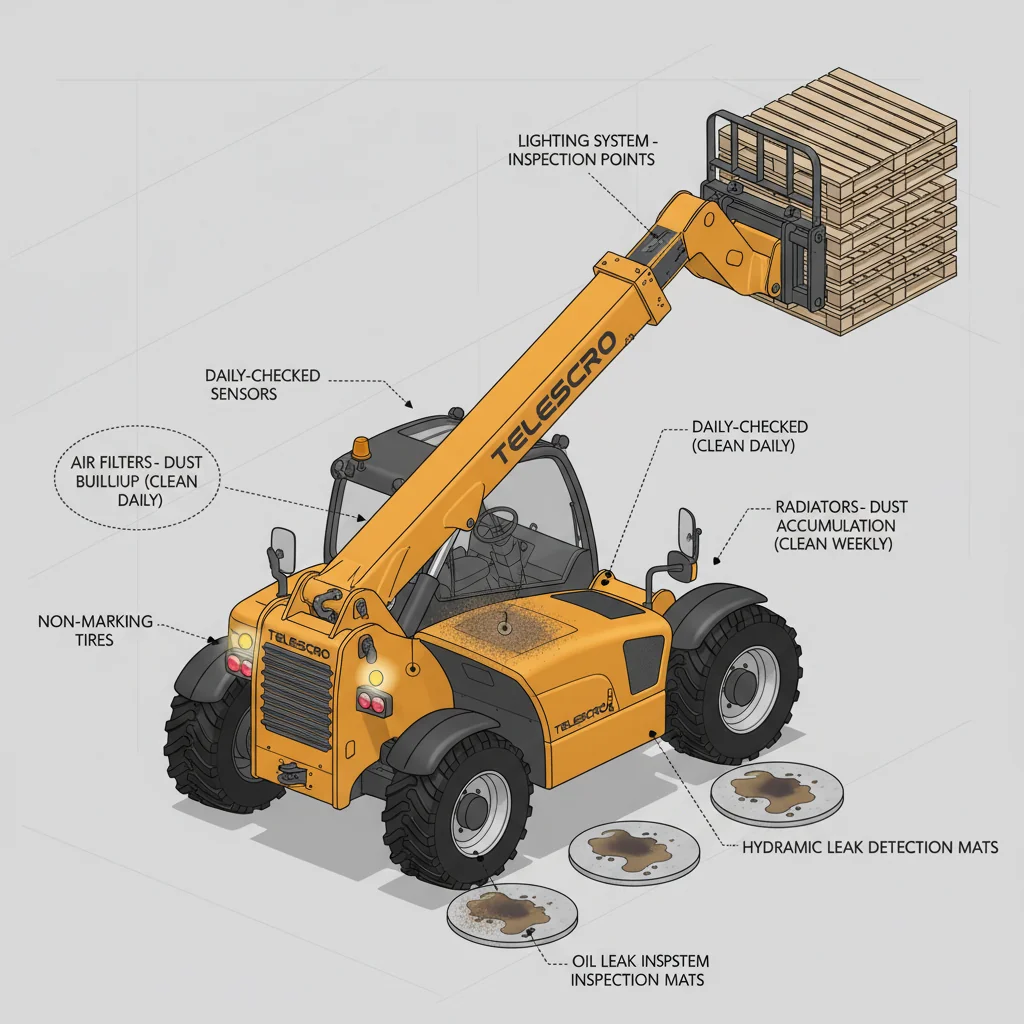
Here’s what matters most when maintaining telehandlers indoors: the environment may look cleaner than an outdoor site, but fine dust from concrete, woodworking, or packaging lines can build up fast. I’ve seen filter and radiator blockages happen after just a week in a busy food warehouse in Malaysia—the machine barely made 200 hours before needing service. Indoor sites highlight minor leaks or system faults you’d miss outside. One pharma client in Suzhou called me after strict site inspectors flagged tiny drips under the hydraulic couplings—those would have gone unnoticed on a dirt lot.
In these environments, daily checks become critical. I’ve learned to emphasize a few key maintenance points for customers running telehandlers inside logistics centers, factories, or high-end retail builds:
- Inspect and clean air filters and radiators more frequently—especially with combustion engines exposed to dust, grain, or fiber particles.
- Watch for any oil or hydraulic leaks13—even small stains can trigger compliance issues, especially where contamination isn’t tolerated.
- Test all lighting, alarms, and sensors daily—visibility drops and noise echoes make functional safety systems non-negotiable.
- Use site-approved tires—non-marking or solid rubber may be mandatory to avoid floor damage and ensure stability.
- Verify battery ventilation and temperature on electric units—charging in the wrong spot can be a real fire risk if there’s flammable dust in the air.
- Confirm you’re using the correct hydraulic fluid—some sites now require biodegradable oil for environmental standards.
From my experience, if you build these indoor-specific checks into your maintenance schedule, you’ll avoid shutdowns and site penalties. I always suggest clarifying compliance requirements before your machine arrives—no one wants a “clean environment” citation on day one.
Indoor use of telehandlers often leads to accelerated clogging of air filters and radiators due to the accumulation of fine dust from sources like concrete or packaging materials.True
Fine particulate matter indoors, though less obvious than outdoor debris, tends to settle rapidly on machine components, creating blockages that compromise cooling and filtration systems and requiring more frequent maintenance checks.
Telehandlers operating indoors are less likely to reveal hydraulic leaks because there is less environmental contamination than outdoors.False
Indoor settings typically feature clean, hard floors and controlled lighting, making oil drips and small leaks much easier to spot, not harder. This heightened visibility often results in quicker detection and response to hydraulic system issues.
Key takeaway: Indoor telehandler maintenance priorities include increased inspection of air filters and radiators, stricter monitoring for leaks, and daily functional checks of safety systems. Indoor environments often require compliance with stricter site standards—adapt maintenance plans and intervals accordingly to ensure operational reliability and avoid site shutdowns.
How Does PPE and Safety Culture Prevent Incidents?
Personal protective equipment14 (PPE) and a strong safety culture are critical for reducing incidents when operating telehandlers indoors. Hard hats, high-visibility vests, and slip-resistant footwear address immediate hazards, while enforcing safety rules, spotter requirements, and stop-work authority prevents unsafe behaviors. Industry data links lower incident rates to robust management support of PPE use and prudent safety protocols.
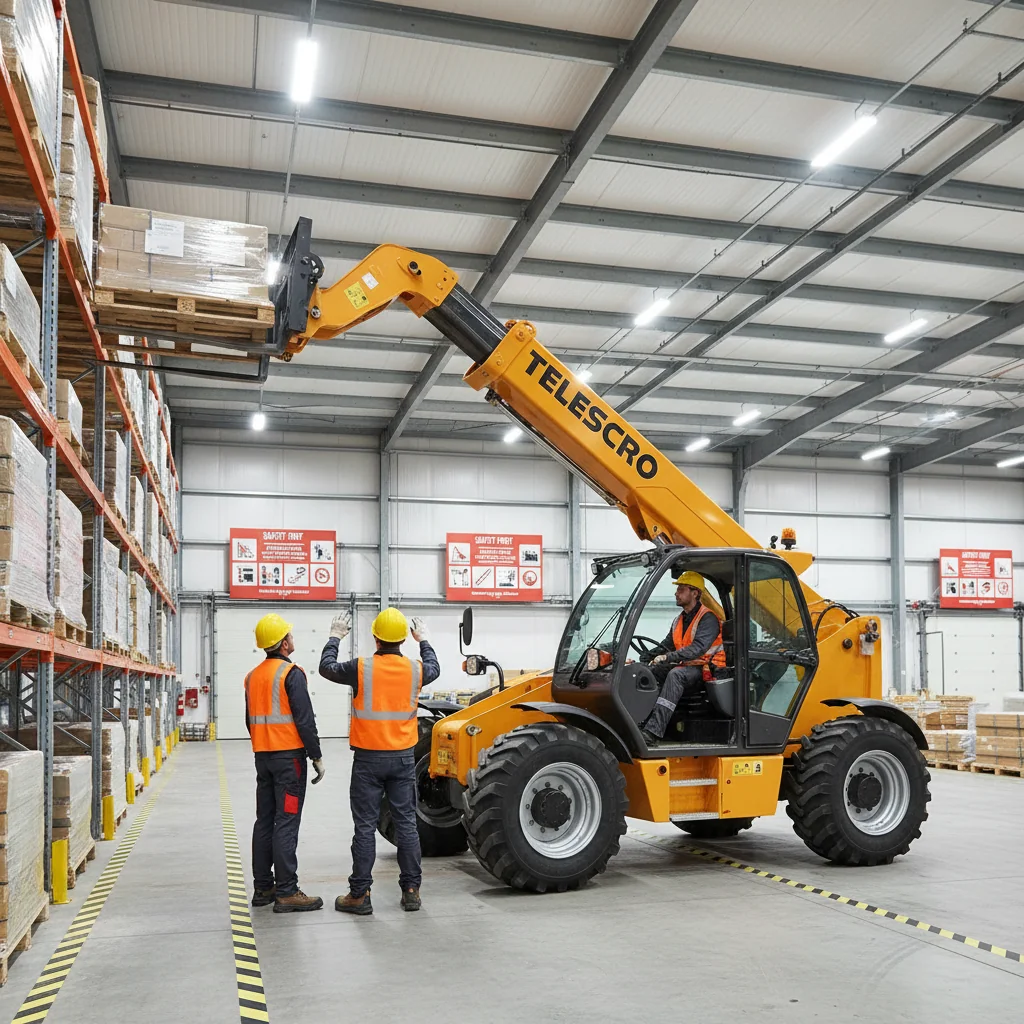
Let me share something important about telehandler safety indoors—most incidents don’t happen because of machine failure, but because someone underestimated the risks around people and materials. I visited a logistics site in Singapore where operators worked in a tight warehouse, moving pallets up to 7 meters high. They wore the right PPE—hard hats, vests, safety shoes—and that made a difference when a worker slipped on an oily patch near the telehandler’s rear tire. His helmet took the impact, not his skull. PPE can be the last layer standing between a minor scare and a hospital visit, especially when visibility is poor and objects can fall even from lower heights.
But honestly, the real game-changer is the safety culture. A few years ago, a contractor in Poland asked me to review their indoor procedures. I noticed spotters were only assigned for outdoor lifts, not inside the busy facility. We saw near-misses when bystanders crossed behind the telehandler without warning. After they started short daily toolbox talks and enforced “stop work” authority, incident rates dropped by half in three months. Schedule pressure often leads people to cut corners—like riding the load, using unapproved baskets, or ignoring the need for a spotter during complex maneuvers. Backing this up with management support changed attitudes overnight.
Here’s the thing: Even the strongest boom won’t protect someone standing in the “crush zone.” Wearing PPE is essential, but setting realistic shifts, requiring spotters, and making everyone feel responsible for safety—that’s what keeps both operators and bystanders injury-free. I always suggest walking the jobsite and asking, “Would I let my own crew work here?” If not, it’s time to revisit your safety plan.
Telehandlers can be safely used indoors if equipped with low-emission engines or electric power sources, along with proper ventilation and PPE enforcement.True
Telehandlers designed for indoor use typically feature electric or low-emission engines, reducing harmful fumes. Combined with adequate ventilation and strict PPE use, this configuration helps mitigate respiratory and collision hazards inside enclosed spaces.
Since telehandlers are larger than forklifts, PPE is less critical indoors because operators remain inside the cab throughout operation.False
PPE remains essential for all personnel around telehandlers indoors, not just for operators. Telehandlers often require workers to guide loads or work nearby, increasing risk of head and foot injuries, so relying only on operator cab protection is insufficient.
Key takeaway: PPE forms the last line of defense when operating telehandlers indoors, but a proactive safety culture—including clear enforcement of rules, realistic schedules, and daily toolbox talks—is proven to be the most effective way to reduce operator and bystander injuries.
Conclusion
We covered what makes indoor telehandler use possible, and why strict site checks around space, ventilation, and structure matter. From my experience, the contractors who avoid trouble always double-check floor strength and load charts—especially in older buildings where the "second-year surprise" with maintenance costs can catch you off guard. For jobs under six meters or in tight aisles, I’ve seen forklifts or reach trucks save both money and headaches. If you’re unsure which equipment fits your jobsite, or want to talk through load charts and attachment choices, I’m happy to help. Feel free to reach out—there’s no pressure, just practical advice based on real jobsite experience. Every site is different, so choose what matches your workflow.
References
-
Explore essential guidelines on floor loading limits to ensure safe use of heavy telehandlers inside buildings and prevent structural failures. ↩
-
Explores the safety benefits of electric telehandlers indoors, including zero emissions and low noise, essential for OSHA compliance and worker health. ↩
-
Understand how turning radius impacts telehandler maneuverability in confined indoor spaces, with tips to select the best size and shape. ↩
-
Explores the impact of floor load capacity on telehandler safety and performance, essential for indoor equipment operation planning. ↩
-
Analyzes how floor surface conditions influence telehandler traction and sliding risks, critical for safe forklift and telehandler use indoors. ↩
-
Explore detailed OSHA regulations and safety protocols essential for telehandler operators to comply with industry and legal standards indoors. ↩
-
Understand the critical differences and specialized skills required for safe telehandler operation in indoor environments to prevent costly incidents. ↩
-
Provides detailed site assessment methods critical for safe indoor telehandler use, reducing risks and preventing costly accidents. ↩
-
Explains the critical safety and compliance reasons why only approved attachments should be used indoors, backed by expert guidelines. ↩
-
Detailing how forks with side-shift improve maneuverability in tight spaces, essential knowledge for safe and efficient indoor telehandler operation. ↩
-
Understand why repetitive pallet handling indoors favors forklifts over telehandlers for improved safety, speed, and cost efficiency. ↩
-
Detailed insights on maintaining air filters and radiators indoors to prevent dust blockages and ensure optimal telehandler performance. ↩
-
Explains the importance of detecting minor leaks indoors to avoid compliance issues and contamination in sensitive environments. ↩
-
Provides detailed insights into how PPE like hard hats and slip-resistant shoes prevent workplace injuries and enhance operator safety indoors. ↩