










Can a Telehandler Drive with the Boom Raised? Field Safety Facts Buyers Miss
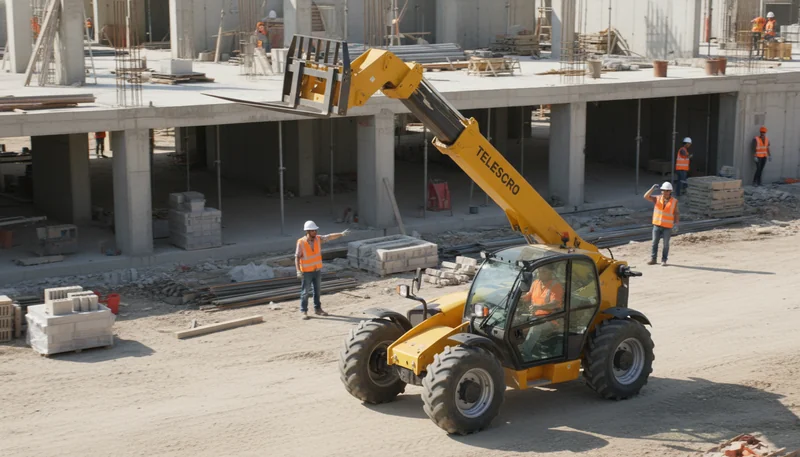
Last month, I watched a seasoned operator at a site in Malaysia shuffle a loaded pallet a few metres with his telehandler’s boom half-raised. The maneuver looked harmless from a distance—but instantly, every supervisor’s eyes locked on him. It’s a scenario I’ve seen spark heated debates from Germany to South Africa.
No. A telehandler should not be driven with the boom raised during normal travel. Manufacturers generally require the boom to be fully lowered and retracted when moving. Limited, slow repositioning with the boom slightly raised may be permitted only under strict conditions—short distance, level ground, creep speed, and explicit allowance in the operator’s manual.
Can Telehandlers Travel With Boom Raised?
Driving a telehandler with the boom raised is not considered standard or safe operating practice. Manufacturers and regulatory guidance state booms should be fully lowered and retracted for all routine travel. Movement with the boom elevated is a rare, high-risk, and controlled manoeuvre, limited to short, slow repositioning on stable, level ground only.
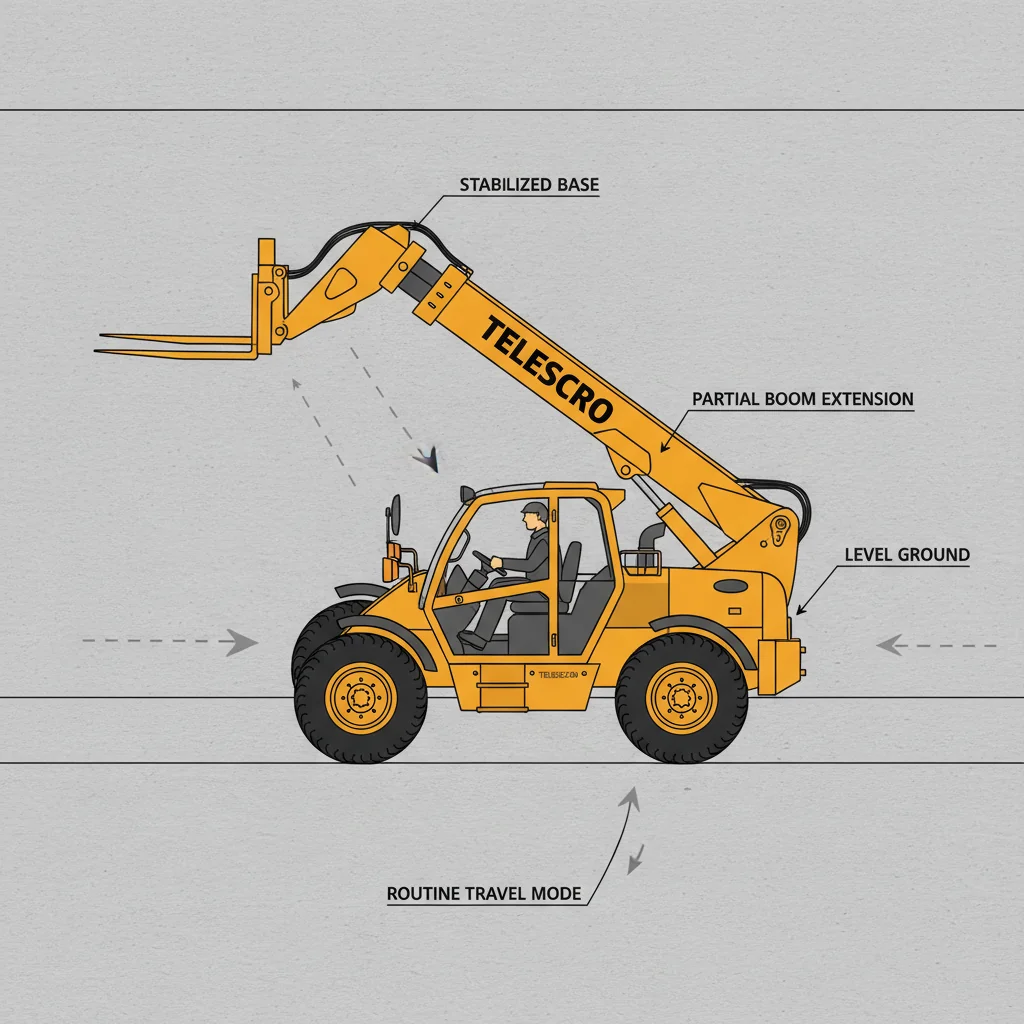
Most people don’t realize how quickly stability degrades when a telehandler travels with the boom raised—even by a meter or two. Once the boom is lifted or extended, the machine’s center of gravity shifts forward and upward, and stability margins reduce rapidly. This effect becomes much more pronounced on uneven or loose surfaces.
Several years ago, I saw a contractor in Saudi Arabia attempt to save time by repositioning a pallet over rough gravel with the boom partially raised. The telehandler began to rock noticeably, and the operator nearly lost the load. The load moment indicator activated, which is already a clear sign that the machine is approaching its stability limits rather than operating in a safe travel condition.
Modern telehandlers are often equipped with electronic limiters, load moment indicators, or tilt sensors, but these systems are designed as safeguards—not as permission to travel with the boom elevated. The safest and most widely accepted practice remains travelling with the boom fully lowered and retracted, with forks or buckets kept just above ground level.
In limited situations on firm, level surfaces, some sites permit very short, low-speed repositioning with the boom slightly raised—for example, nudging a load into final position or clearing a minor obstacle. This is typically treated as controlled positioning rather than normal travel and is carried out at creep speed over only a few metres, in a straight line, and only where allowed by the operator’s manual and site risk assessment.
Some rental fleets and contractors apply additional internal limits for such repositioning, such as restricting boom angle and travel speed. These figures should be understood as conservative internal controls—not general operating targets or manufacturer recommendations. In practice, if your workflow regularly depends on moving with the boom raised, it usually indicates that the site layout, travel routes, or machine selection need to be reconsidered rather than pushing operating limits.
"DrivingFalse
"This
It is safe to drive a telehandler at typical site speeds if the boom is only raised a meter or two, as long as the load is within capacity.False
This is false because stability is not simply a function of staying under capacity; any elevation of the boom can make the machine unstable and more prone to tip-over, especially if the ground is uneven or the machine has to turn.
Key takeaway: Routine telehandler travel must always be performed with the boom fully lowered and retracted. Any exception for short, slow repositioning with the boom raised should be risk assessed, planned in advance, and remain within strict manufacturer and site speed and angle tolerances to ensure compliance and safety.
Can a Telehandler Move With Boom Raised?
Driving a telehandler with the boom raised significantly compromises stability. Raising or extending the boom shifts the centre of gravity forward and higher, shrinking the stability triangle2 defined by the wheels. This increases the risk of tip-overs3 during bumps, braking, or turns, making the practice restricted by manufacturer and site safety rules.
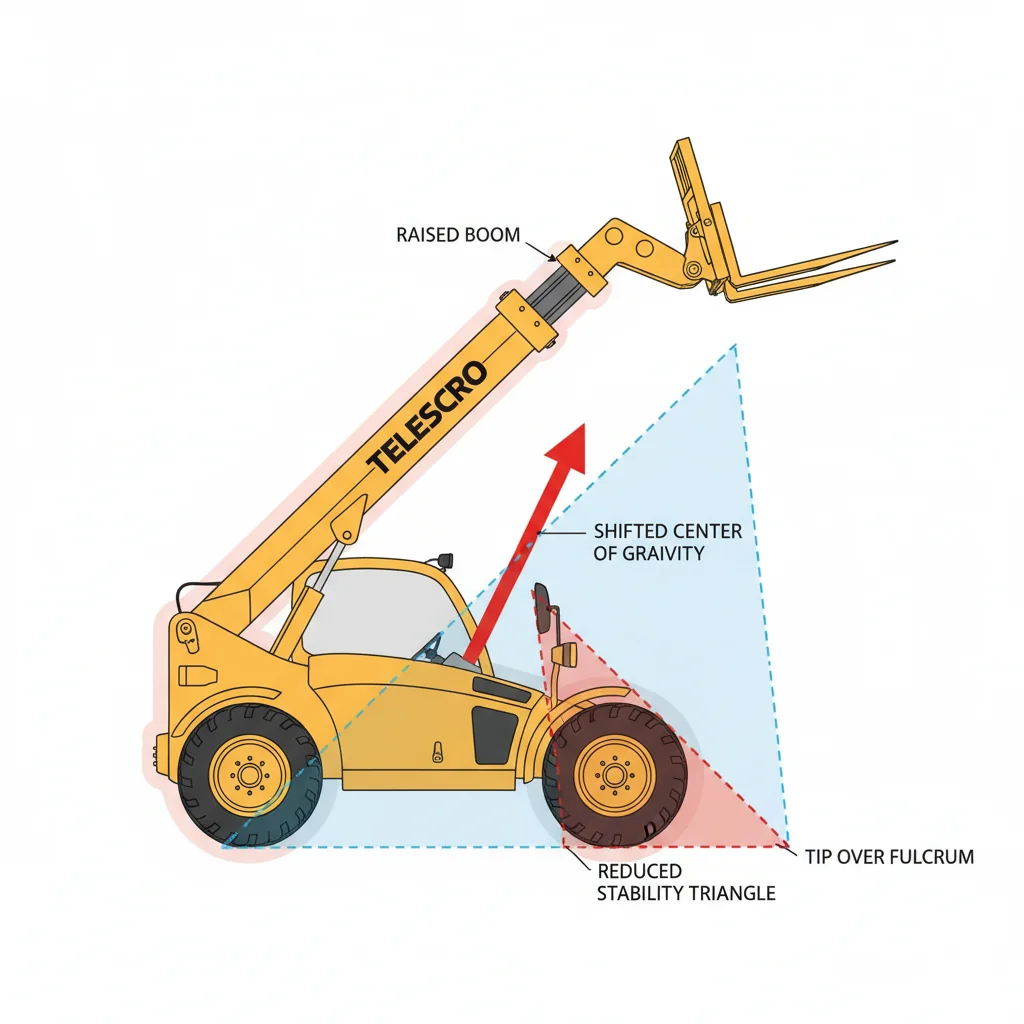
Let me share something important about moving with the boom raised on a telehandler: it’s one of the riskiest actions you can take, especially on a busy jobsite. The boom and load act like a long lever—when you raise or extend it, you actually push the whole machine’s centre of gravity forward and higher. The “stability triangle”—that safe zone formed by the telehandler’s tyres—shrinks dramatically. Even a small pothole or quick steer can be enough to send the machine off-balance, and I’ve seen close calls in both China and Brazil, especially when operators forgot how quickly things can change.
Last year, a customer in Dubai contacted me after a telehandler tip-over during a repositioning manoeuvre. The operator attempted to move the machine with the boom partially raised while handling a suspended load, assuming that low speed alone would control the risk. A slight steering input combined with uneven gravel caused the rear axle to unload, and the machine overturned. Fortunately, no one was injured.
Reviewing the operator manual and load chart afterward made the root cause clear. For that class of mid-size telehandler, routine travel is evaluated with the boom fully lowered and retracted, and stability margins reduce rapidly once the boom is raised or extended. As boom angle and reach increase, usable capacity and stability decrease sharply compared with the stowed position—leaving far less tolerance for uneven ground, turning, or sudden load shifts.
For supervisors, any routine involving speed, turning, or rough ground and a raised boom is a danger sign. I always train operators to recognize early cues—rear axle lift, slight rocking, or unsteady steering. If it doesn’t “feel right,” always stop and lower first. Consult the load chart every time—there’s no universal shortcut.
Driving a telehandler with the boom raised significantly reduces the effectiveness of the machine’s stability triangle, making it much more susceptible to tipping even on small inclines or uneven surfaces.True
When the boom is raised, the center of gravity shifts upward and outward, effectively shrinking the stability triangle formed by the telehandler's wheels. This makes the machine less stable and more prone to tipping, especially on uneven terrain, which is a key safety consideration for operators.
Telehandlers are designed to be just as stable when moving with the boom raised as they are with the boom fully lowered, due to internal balance mechanisms.False
Telehandlers do not have active balance mechanisms that counteract the shift in center of gravity caused by a raised or extended boom. Stability is highly dependent on boom position, and raising the boom inherently makes the machine less stable and more dangerous to move.
Key takeaway: Raising the boom on a telehandler while moving substantially reduces stability, putting the machine at risk of tipping forward or sideways. Load charts strictly rate capacities by boom angle and extension; movement with the boom raised should be avoided unless allowed by the manufacturer and well within safe operating limits.
Can Telehandlers Move with Boom Raised?
Telehandlers may move very short distances with the boom slightly raised only for controlled positioning within a defined work zone. This type of movement is typically limited to creep speed, minimal boom height and reach, straight-line travel, and firm, level ground, and only where permitted by the operator’s manual and site risk assessment. Normal site travel is expected to be carried out with the boom fully lowered and retracted, as extended movement with the boom raised is widely considered unsafe and non-compliant with manufacturer guidance.
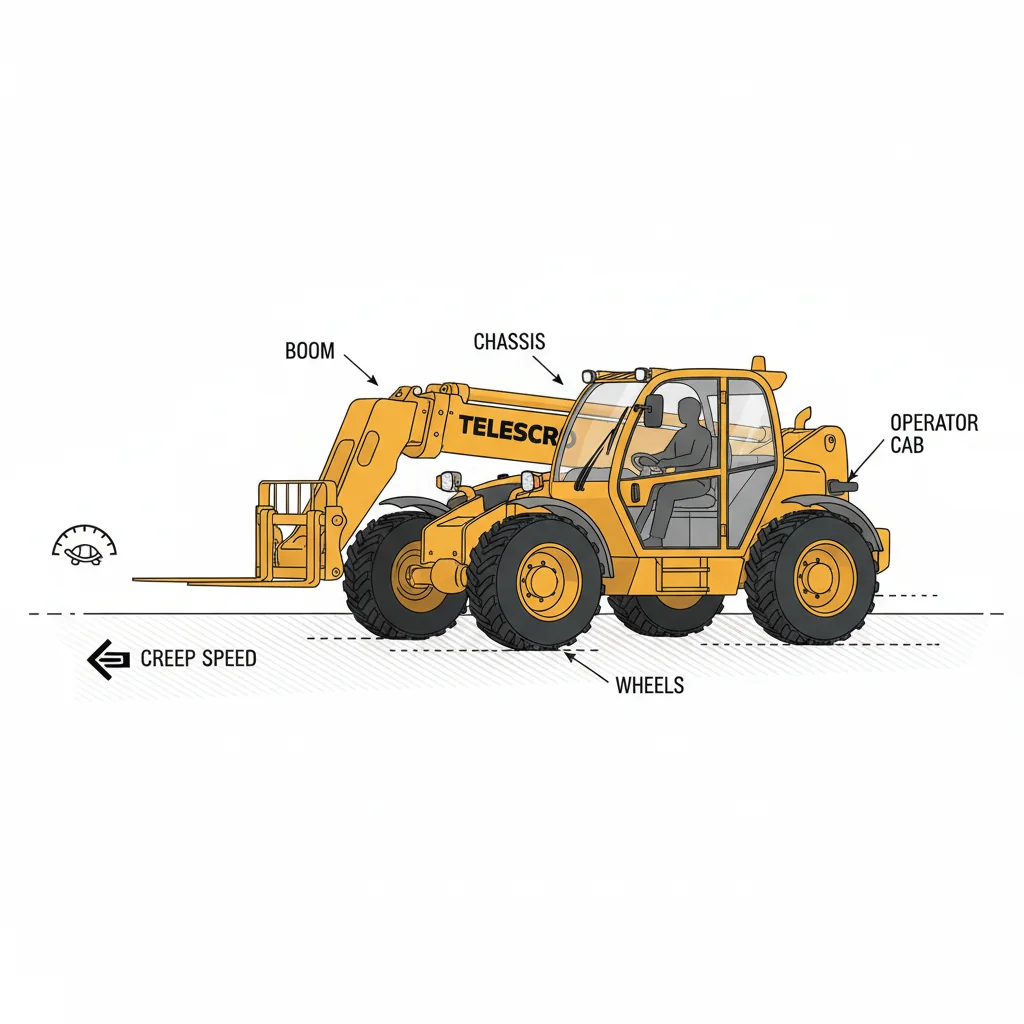
The biggest mistake I see is operators treating telehandlers like regular forklifts when positioning loads. If you drive around with the boom partially up just to save time, that’s risking both safety and equipment. Most telehandler manufacturers allow only short, slow movements with the boom slightly raised—think a few meters, not across an entire site. The rule is simple: keep the boom as low and retracted as possible and move at a crawl (usually under 3 km/h) on firm, level ground. Every operator I’ve trained, from Dubai to South Africa, hears the same advice—this isn’t “driving,” it’s careful, controlled repositioning within a tight work zone.
Let me give an example from a wind farm project in Kazakhstan. The crews needed to shift steel sections just two meters into position, but the ground was even and compacted. Their 4-ton telehandler kept the boom only half a meter above the ground during these tiny adjustments. They never turned with the boom up—instead, the operator would lower the load, re-align, then adjust position. Slow, steady, and safe. That job finished on time with zero incidents.
Here’s what matters most when writing your standard operating procedures. Make the distinction crystal clear: “Travel” means the boom is fully down and you’re moving between work areas. “Positioning” allows for the slightest boom raise, but only within a work zone and for a short, straight path. If you notice operators moving further or faster with the boom up, adjust your training immediately. I always suggest reviewing your manufacturer’s manual and reinforcing this rule—minor shortcuts on site can lead to major accidents.
Telehandlers should only be driven with the boom raised for short, low-speed maneuvers on firm, level ground to minimize the risk of tip-over due to a higher center of gravity.True
When a telehandler's boom is raised, its center of gravity moves higher, increasing the risk of instability, especially during turns or on uneven surfaces. Manufacturers and best practices specify that any movement with a raised boom should be limited to controlled, short distances at slow speeds on stable terrain to maintain safety.
It is safe to transport loads across a jobsite with the boom partially raised as long as the telehandler is driving below its maximum speed.False
Driving with the boom raised over longer distances, regardless of speed, significantly increases the risk of rollovers or loss of load stability. Industry standards require the boom to be fully retracted and lowered during travel, reserving raised boom movement only for minimal positioning, not site-wide transport.
Key takeaway: Limited boom-up driving is only acceptable for short, slow, straight movements on level ground within a designated work zone. Treat this as controlled positioning, not normal travel. Standard procedure requires the boom fully lowered for any site travel—operating outside these limits is a serious safety violation.
Are Raised Booms Safe on Slopes?
Driving a telehandler with the boom raised on slopes or uneven ground greatly increases overturn risk. The elevated boom shifts the center of gravity toward the downhill tipping axis, reducing stability. Even minor bumps, ruts, or turns can trigger rollovers, making boom-down travel mandatory on inclines.
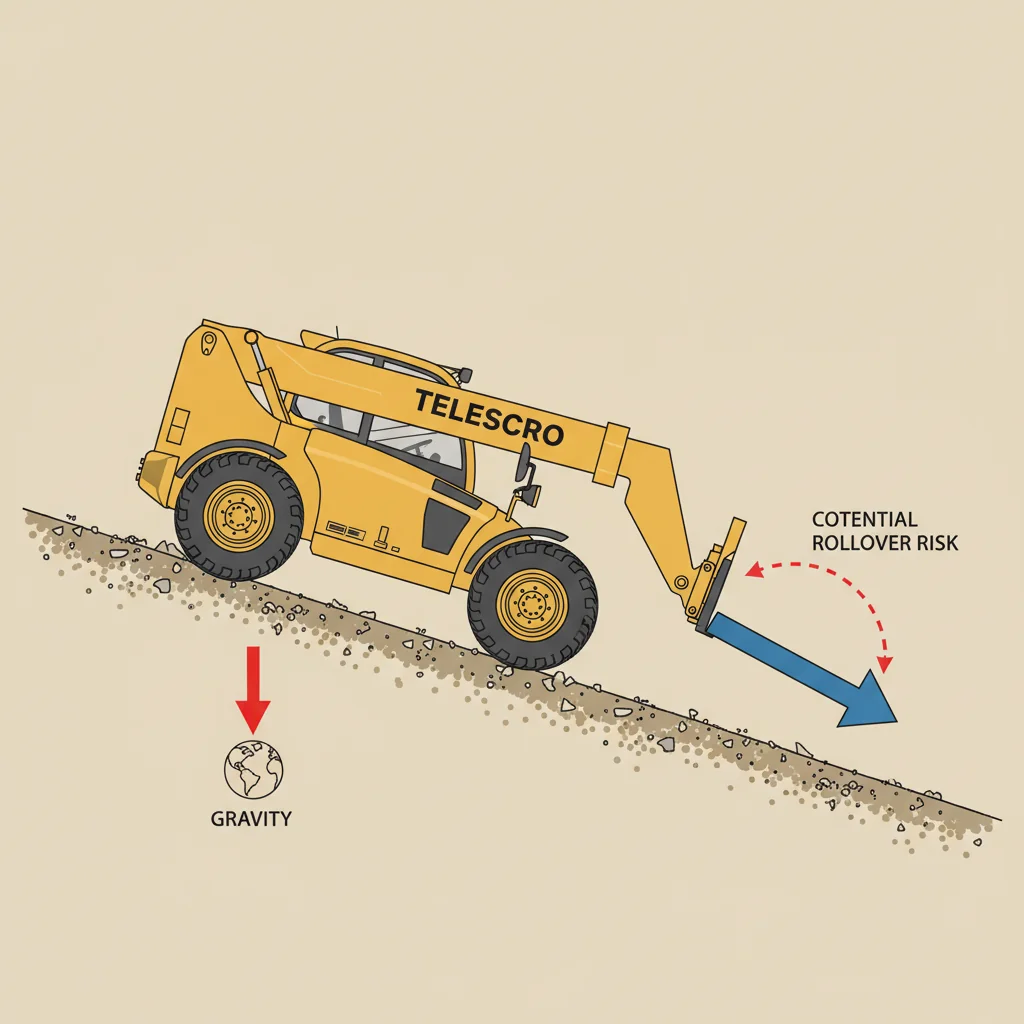
Here’s what matters most when you’re operating a telehandler on any kind of slope: keeping the boom raised is risky business, no matter how gentle the incline looks. A few years ago, I visited a jobsite in Kazakhstan where the crew moved load after load of brick up a sloped access road. The operator got impatient and drove with the boom partially up, hoping to save a few minutes. Halfway up, he turned slightly to avoid a pile of rebar—the telehandler lurched, lost balance, and nearly tipped. Luckily nobody was hurt, but the machine didn’t escape without damage.
The issue comes down to physics and what I call the “stability triangle.” When a telehandler parks or moves on level ground, its center of gravity stays safely inside that triangle formed between the wheels. But as soon as you drive on a slope, gravity tilts that triangle. Raise the boom—even a meter or two—and you shift that heavy center higher and closer to the downhill side. On rough surfaces, a pothole or small rut can tip the balance. I’ve seen this happen in Brazil and South Africa, especially when operators get too comfortable and combine a raised boom with a turning maneuver.
Here’s my honest advice: on any visible slope or rough ground, keep the boom fully down and attachment close to the ground. That’s not just good practice—most OEM operator manuals and site safety managers make it a non-negotiable rule. If you ever find the ground too uneven to lower safely, stop and plan a new route. Cutting corners puts lives and machines at real risk.
Operating a telehandler with the boom raised on a slope significantly raises the risk of tipping, because the machine's center of gravity shifts upward and outward, reducing stability.True
When the boom is elevated, especially on uneven or inclined ground, the telehandler's weight distribution changes. The higher the boom and load, the further the center of gravity moves from its base, which drastically decreases stability and increases the chance of a rollover—even when moving slowly or turning slightly.
It is safe to drive a telehandler on a slope with the boom raised as long as the machine is moving straight and slowly.False
Even at slow speeds and traveling in a straight line, raising the boom on a slope fundamentally destabilizes the telehandler. The risk does not disappear with reduced speed or straight travel, as the shift in the center of gravity and risk of sudden imbalance remain present regardless of these factors.
Key takeaway: Operating a telehandler with the boom raised on any slope or rough terrain is a proven rollover hazard. Best practice is to keep the boom fully down and attachment near ground while driving on slopes, and explicitly prohibit boom-up travel across inclines to maintain site safety.
Is It Safe to Drive With Boom Raised?
Driving a telehandler with the boom raised increases front-right blind spots4, significantly reducing operator visibility5 to pedestrians, ground hazards, and nearby vehicles. Manufacturer guidance and widely accepted industry best practice emphasize travelling with the boom kept as low as practicable to maintain clear sightlines. Modern telehandlers are designed to offer optimal forward visibility in the boom-down travel position; raising the boom during movement is therefore discouraged as it degrades situational awareness and increases site risk.
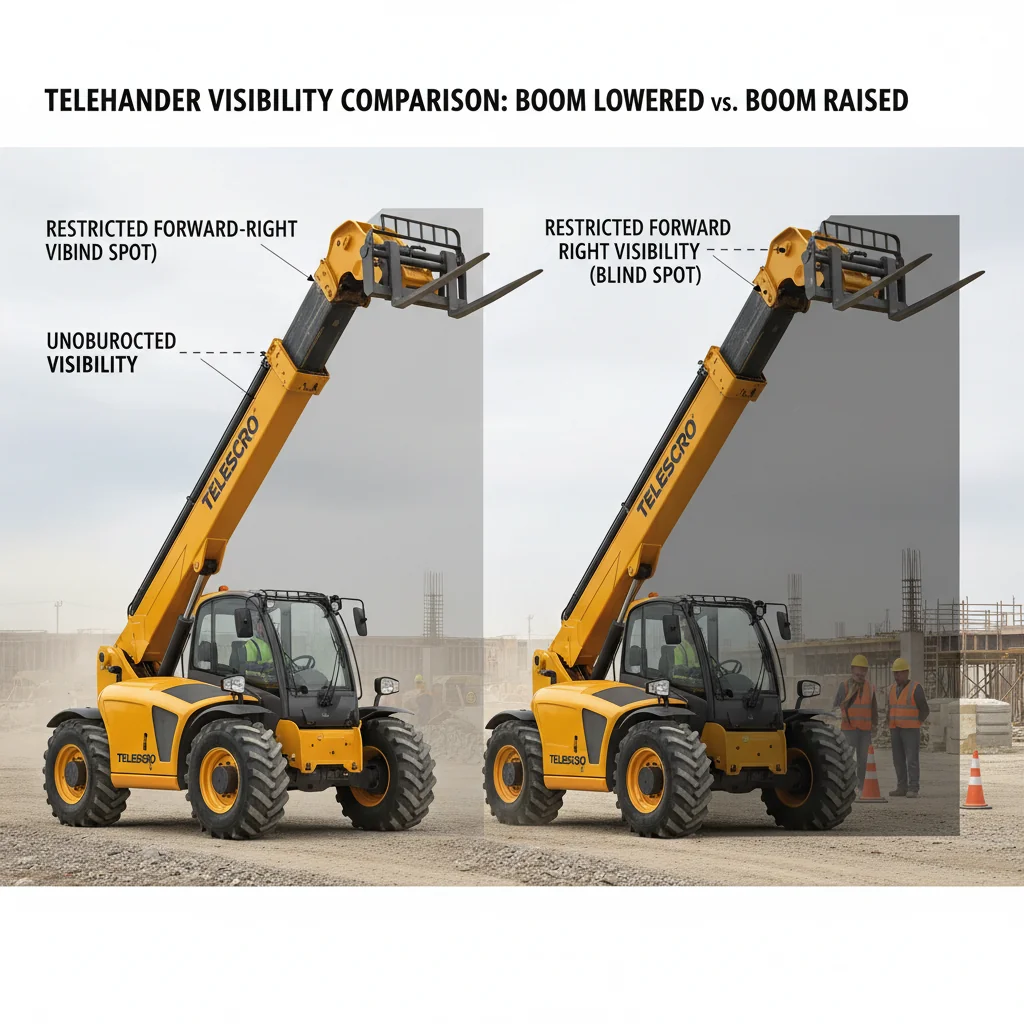
Last year, I worked with a logistics company in Dubai upgrading their site fleet. They had an experienced operator who lifted the boom to nearly half height while reversing, thinking it would improve forward visibility. In reality, that raised boom created a blind spot almost two meters wide to the front-right. A site worker crossing that edge wasn’t seen until the last moment—luckily no one got hurt, but it was a close call. That near-miss changed how their entire team viewed “driving with the boom up.” It’s a mistake I see more often than people realize, especially when switching between older and modern telehandlers.
Here’s what actually happens: when you drive with the boom raised, your line of sight to ground-level hazards basically disappears, especially on the front-right quarter. This isn’t just theory—I’ve reviewed accident reports from three continents. Most involve operators who lost sight of a pedestrian or ran over a low obstacle they simply couldn’t see. Even with side mirrors or a rear camera, nothing fully compensates for a blocked primary view. On a typical 4-ton, 14-meter telehandler, the front-right blind spot with a boom raised just to cab roof height can cover the space of a small vehicle.
Industry guidelines and every operator manual I’ve ever reviewed are crystal-clear: always keep the boom as low as possible when moving. If your site layout forces restricted visibility—tight corners or temporary barriers—use a trained marshaller or spotter. For added insurance, visibility aids like cameras are helpful, but they never change the golden rule: the safest travel position is with the boom lowered. No shortcut is worth the risk.
Driving a telehandler with the boom raised increases the risk of tipping, especially when turning or on uneven ground, due to a higher center of gravity.True
Raising the boom elevates the machine’s center of mass, making it less stable and more prone to tipping, which is why manufacturers and site safety protocols advise always traveling with the boom lowered for maximum stability.
Operating a telehandler with the boom partially raised improves all-around visibility because it lifts the carriage above blind spots.False
In reality, raising the boom often creates significant blind spots, particularly in front and to the sides of the machine, making it harder—not easier—to see workers or obstacles near the telehandler.
Key takeaway: Traveling with a raised boom significantly compromises visibility and is a frequent factor in serious on-site accidents. Buyers should prioritize low-boom travel, use a marshaller if sightlines are restricted, and consider visibility aids where necessary—but never use these aids to justify operating with the boom raised.
Can a Telehandler Travel with Boom Raised?
Most safety standards do not explicitly ban driving a telehandler with the boom raised. However, they require strict adherence to the manufacturer’s instructions, which typically mandate travel with the boom fully lowered and retracted. Only limited, slow repositioning is permitted with the boom raised on stable, level ground and always within rated capacities6.
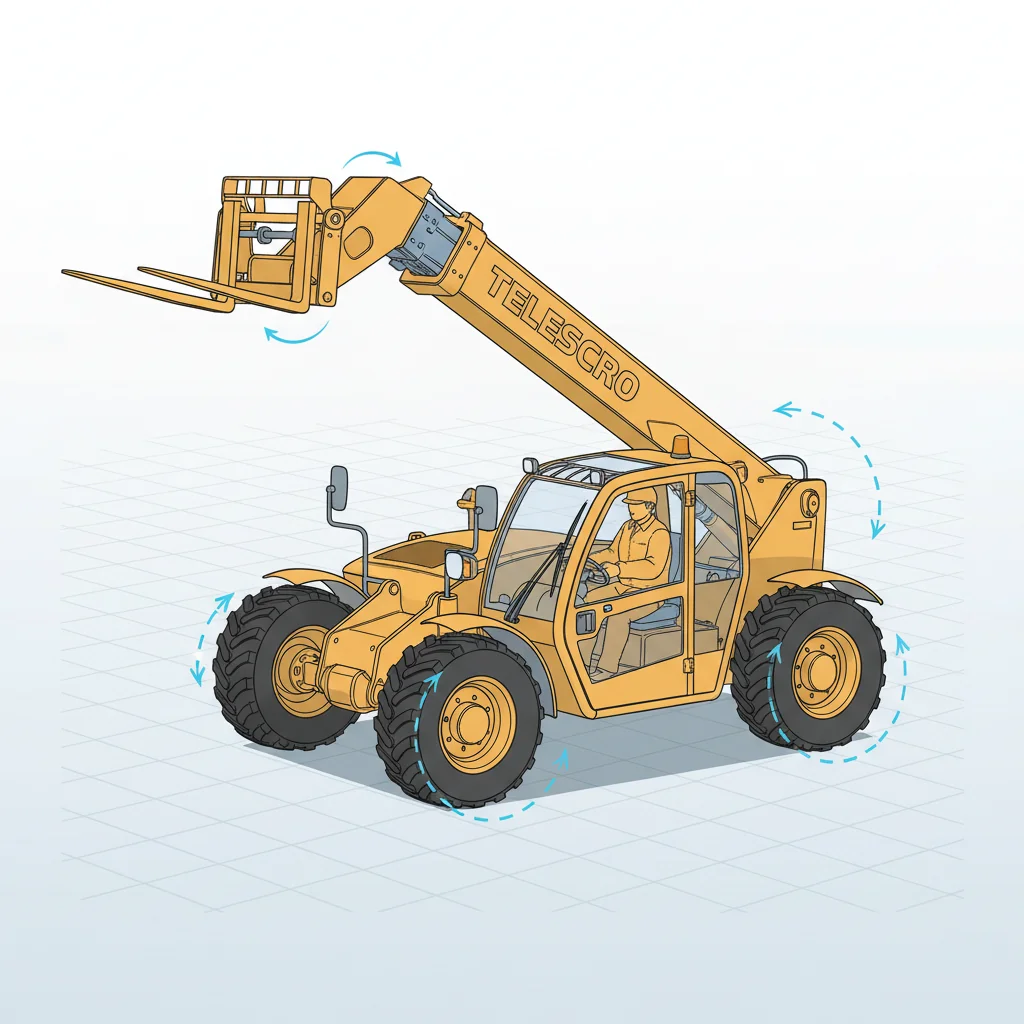
Last month, a contractor in Dubai called me after an incident on their site. One of their operators drove a 4-ton telehandler across uneven gravel with the boom half-extended—trying to save time between lifts. The machine handled poorly, started to sway, and nearly tipped. They were lucky no load was on the forks, but it sparked a full review from their safety team. I see this kind of risky shortcut more often than many realize, especially on fast-paced projects under deadline pressure.
Here’s the key: almost every telehandler manual I’ve reviewed—regardless of brand or country—specifically says to travel with the boom fully lowered and retracted. Some allow low-speed, short repositioning with the boom slightly raised, but only on stable, level ground and always within the rated capacities shown on the load chart. Why? Because raising the boom shifts the machine’s center of gravity forward, instantly reducing stability. Even a gentle slope or small pothole can trigger a tip-over if the boom’s up. Load moment indicators7 and stability sensors help, but they can’t compensate for bad operator habits or ignoring the manual.
Practically speaking, if there’s ever an incident while driving with the boom up, inspectors and insurance reps will inspect your policy—and usually find you out of compliance. That’s the real risk: it’s not just physical safety, but liability and project delays too. I always suggest fleets turn the factory manual into a clear written rule—boom down for all travel, no exceptions unless the manufacturer says otherwise. It’s the simple way to protect your people and your investment.
Traveling with a telehandler while the boom is raised greatly reduces the machine's stability because the center of gravity shifts higher and farther from the wheelbase.True
When the boom is raised or extended, the weight distribution changes, raising the center of gravity. This makes the telehandler more susceptible to tipping, especially on uneven ground, even if there is no load on the forks.
"ItFalse
"Even
Key takeaway: Legal and safety compliance for telehandler operation centers on following the manufacturer’s manual. While not outright illegal, driving with the boom raised is generally prohibited by OEM instructions, exposing operators and fleets to liability, insurance issues, and regulatory penalties if incidents occur outside approved parameters.
Is Driving With Telehandler Boom Raised Safe?
Routinely driving a telehandler with the boom raised is a safety risk and usually signals a site layout or equipment mismatch rather than operator error. Industry guidance recommends reviewing machine selection, site design, and work methods to avoid elevated travel. Frequent boom-up movement increases mechanical wear9, downtime, and fuel consumption. Redesigning workflows to keep booms lowered is essential for safety and efficiency.
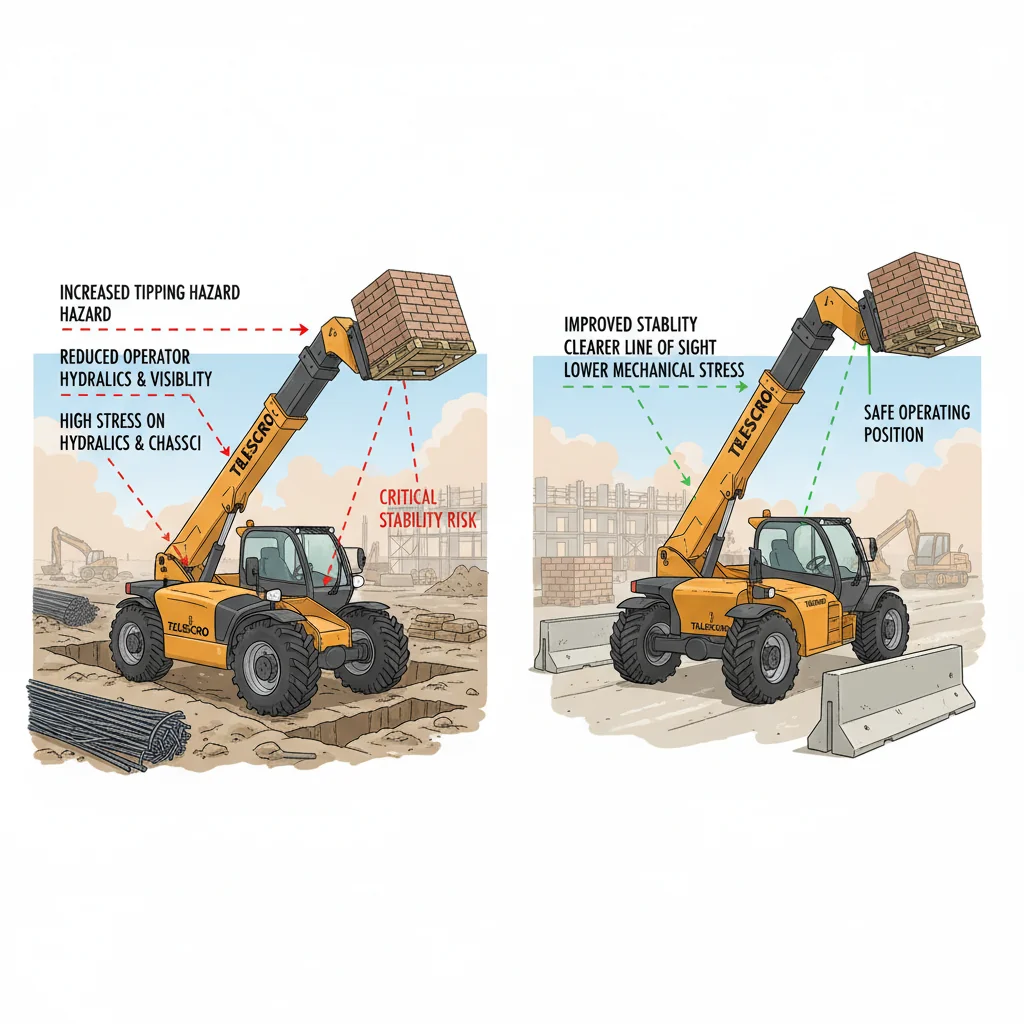
I’ve worked with customers in Australia, South Africa, and Poland who ran into serious issues because their sites forced them to drive telehandlers with the boom raised. In one case, a project in Sydney used a 3.5-ton telehandler with a 14-meter reach. The operator had to keep the boom up just to clear uneven stacks and low doorways on a crowded site. Within a month, their machine saw accelerated hydraulic wear and two close calls with tip-overs. I pointed out that it wasn’t operator error—it was all about poor jobsite design and the wrong equipment.
Driving with the boom up isn’t just uncomfortable—it’s risky. The higher center of gravity makes the whole machine less stable, especially on rough ground or turns. Most load charts are calculated for the boom in a low, retracted position when traveling. If you’re routinely driving with the boom high, you’re not working within the manufacturer’s safe parameters. Frequent boom-up movement can also triple your chances of hose leaks and pump overheating, especially if you’re hauling loads over long distances.
Here’s the thing—if your workflow requires boom-up travel, it’s time for a rethink. Ask: could a compact model, a side-loading forklift, or a change in how you stage pallets allow you to keep the boom low? One customer in Kenya solved this simply by rearranging loading zones, cutting out 90% of elevated travel overnight. I always suggest reviewing your site layout and machine selection before blaming the operator. Treat every time you drive with the boom up as a warning sign, not a normal habit.
Driving a telehandler with the boom raised significantly increases the risk of tipping, especially on uneven ground, because the machine’s center of gravity is shifted upward and away from the base.True
When a telehandler’s boom is raised, even without a heavy load, the center of gravity moves higher and forward, making the machine much less stable. On uneven terrain or during turning, this can cause loss of balance and tip-over events, which is why most manufacturers and safety standards advise keeping the boom as low as possible when traveling.
Driving with the boom raised actually reduces wear on the hydraulic system because the cylinders stay extended, minimizing pressure changes.False
Keeping the boom raised for extended periods increases hydraulic pressure and load on seals, hoses, and cylinders, which accelerates wear. Frequent adjustments to height and angle when avoiding obstacles also strain the system, leading to more frequent maintenance and potential failures.
Key takeaway: Regularly moving a telehandler with the boom raised indicates a fundamental issue with jobsite planning or equipment choice. Supervisors should mandate that standard workflows allow for travel with the boom lowered and treat repeated elevated travel as a trigger for risk review and process redesign.
Does driving boom-up increase telehandler costs?
Travelling with a telehandler boom raised significantly increases operating costs, even without tipping incidents. The elevated boom amplifies shock loads10 from bumps, accelerating wear on boom pads, pins, pivots, and steering linkages. This drives higher maintenance expenses, reduces component lifespan, increases fuel use11, and is often classified as an avoidable insurance risk.
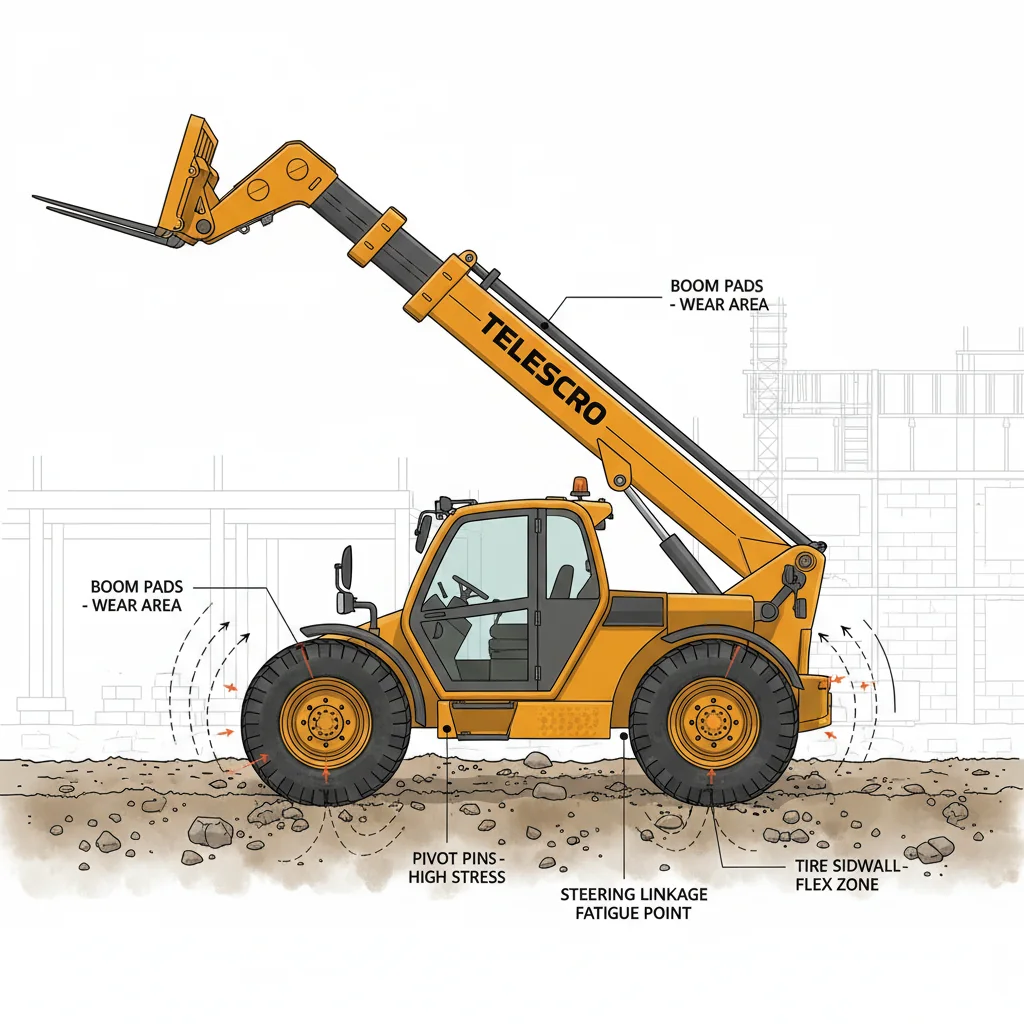
The biggest mistake I see is operators moving around site with the boom half raised, assuming it saves time. In reality, that practice chews through your maintenance budget faster than people realize. When the boom is up—even a meter or two higher than transport position—every bump in the ground sends extra shock through the wear pads, pins, and main pivot points. I’ve seen a 4-ton machine in Kazakhstan go from smooth operation to sloppy boom play in less than 1,500 hours, just because the crew regularly drove boom-up hauling tiles across broken concrete. They thought they were working efficiently, but ended up with early pad replacements and two cracked boom-pivot welds.
From my experience, the cost impact goes well beyond visible repairs. When a telehandler is driven with the boom raised, the altered weight distribution often forces operators to brake more frequently to maintain control, which can increase fuel consumption over time. The elevated boom also places additional cyclic loads on steering linkages, axle pivots, and suspension components, accelerating wear in these areas.
I worked with a contractor in Brazil who faced difficulties with an insurance claim after a minor site incident. During the review, operating data and incident context showed that the machine had been travelling with the boom raised—an operating condition the insurer classified as an avoidable risk and outside normal manufacturer travel guidance. While boom position is rarely the only factor in such decisions, operating outside recommended travel practices can significantly weaken a fleet’s position during incident investigations.
If you manage a fleet, I suggest restricting boom-up travel and scheduling extra inspections for those high-load points: boom wear pads, pins, pivot welds, axle mounts. Even logging near misses helps—one cracked weld caught early can save weeks of downtime. Driving with the boom lowered doesn’t just reduce costs; it keeps your machine and people safer. On most jobs, that’s where your real profit comes from.
Consistently driving a telehandler with the boom partially raised accelerates wear on boom wear pads and pivot points due to amplified stresses from uneven terrain.True
When the boom is raised, even slightly, the angle puts more leverage on key moving parts. Each ground bump exerts greater forces through the boom structure, creating excess friction and impact on wear pads and main pivots—leading to premature maintenance needs.
Operating a telehandler with the boom up is actually safer when traveling on uneven ground because it provides better visibility and balance.False
Driving with the boom raised actually lowers stability and increases the risk of tip-over by raising the center of gravity and making the machine more susceptible to shifts. In addition, the boom can block the operator’s sightlines, reducing situational awareness and overall safety.
Key takeaway: Driving with the boom raised accelerates telehandler wear and fuel consumption, increases maintenance costs, and exposes fleets to insurance and compliance risks. Restricting boom-up travel and performing targeted inspections are essential for lowering total cost of ownership and improving site safety.
What Features Improve Boom-Up Telehandler Safety?
Boom-up telehandler safety is enhanced by load management systems that limit boom movement near stability thresholds, precise inching or creeper controls for slow repositioning, switchable boom suspension for accurate load placing, clear position and load indicators, and boom-top or rear-view cameras. Telematics can monitor elevated-boom speed and alert supervisors to unsafe travel, supporting compliance and incident prevention.
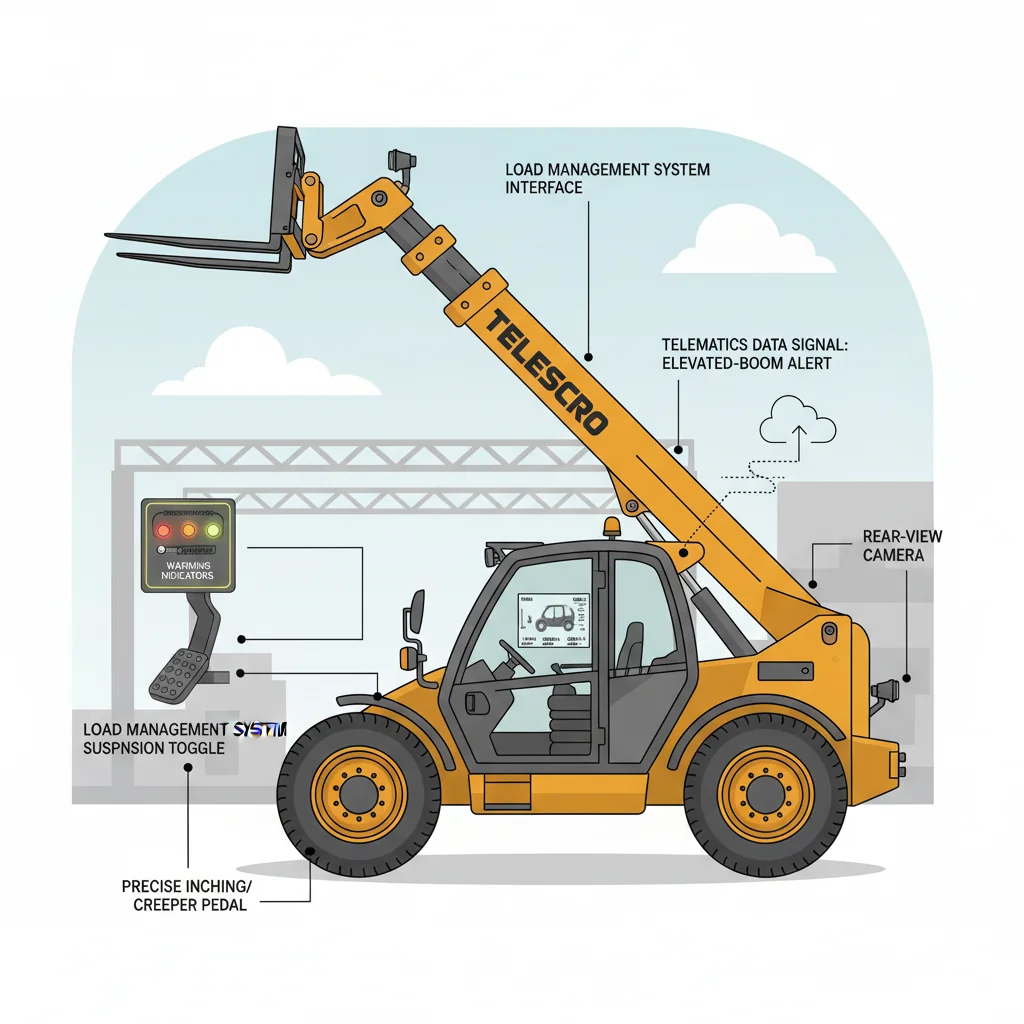
To be honest, the spec that actually matters is how the machine handles when you’ve got the boom raised and a load swinging out front. On paper, every telehandler looks stable, but I’ve seen jobsites—like one near Kuala Lumpur—where a 3,500-kg unit lost stability just creeping across uneven ground with the boom partway up. That’s why I always check if a customer’s shortlist includes real safety features that will make a difference, not just marketing claims.
Some key features that genuinely improve boom-up safety are:
- Load management systems: These use sensors and logic to stop or slow boom movement when the load approaches stability limits set in the manufacturer’s load chart.
- Precise inching or creeper control: Lets you edge forward or adjust position at speeds under 1 km/h without lurching, especially critical when placing heavy loads at height.
- Selectable boom suspension (ride control): This can be switched off for delicate final placement, stopping the boom from bouncing with every bump in the ground.
- Clear boom position and load indicators: Digital displays and warning lights show exactly where your boom is and how much weight you’re carrying—no guesswork.
- Boom-top or rear-view cameras: Help spot blind angles and avoid obstacles, especially when visibility drops at height.
On larger jobsites in the Middle East, supervisors ask for telehandlers with telematics that can track boom angle and travel speed.
Key takeaway: Telehandlers used with the boom raised should be equipped with load cut-outs, inching controls, and enhanced indicators, plus telematics for monitoring operator behaviour. These technologies do not make risky practices safe but provide vital safeguards where elevated travel is unavoidable. Always specify such features in purchase decisions.
Is It Safe to Drive Telehandler Boom Up?
Driving a telehandler with the boom raised greatly increases instability and accident risk. Operators should always travel with the boom fully retracted, attachment 300–400 mm above the ground, and the load tilted back. Following a clear, repeatable travel routine minimizes hazards and aligns with both safety standards and OEM requirements.
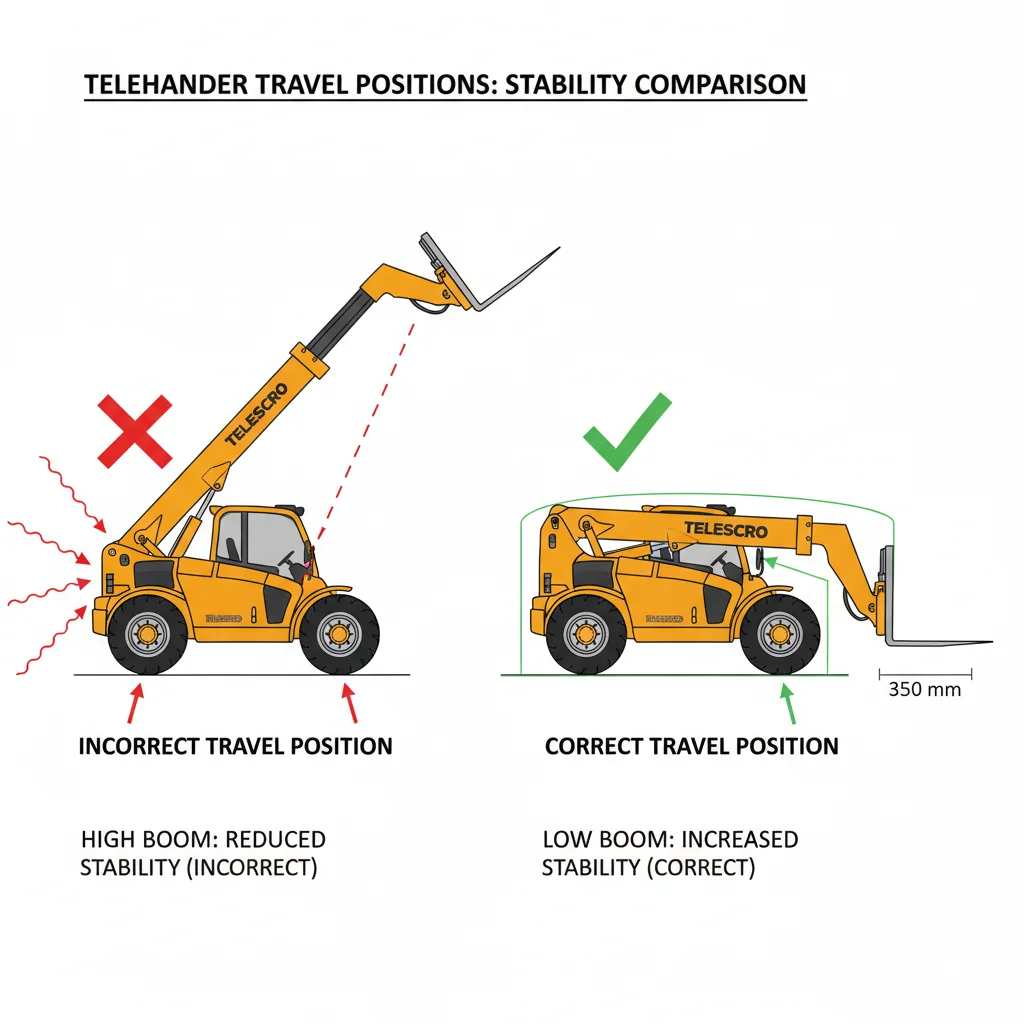
Too many people assume they can move a jobsite faster by driving with the boom partway up. The reality is altogether different—the second you travel with the boom raised, your center of gravity shifts forward, and stability drops sharply. I once saw a team in Kazakhstan try to speed things up by moving pallets across uneven ground with the boom out at chest height. Even at slow speed, their 4-ton telehandler started to rock. Within seconds, a slight slope was enough to lift a rear wheel—scaring everyone on site.
That’s why manufacturers and safety standards are so clear: always travel with the boom fully retracted, keeping forks or the bucket 300–400 mm above the ground. This keeps your load close to the axle, where the counterweight can actually do its job. I remind every operator—tilt the load back against the backrest before moving. Even a small tilt forward, or a boom angle that’s barely off level, changes the balance faster than most people expect. Modern machines might have load moment indicators and tilt sensors, but they can’t compensate for poor travel posture.
A good operator routine is simple and repeatable: boom down, load low, steady motion. I’ve trained teams in Brazil and Egypt to always use low gear or inching—no sudden starts or stops. If the machine feels light in the rear, or if you see the back start to rock, stop immediately and recheck your setup. Safe movement isn’t just about following a checklist—it protects your team, your machine, and your schedule. I always suggest making this the foundation of every induction or toolbox talk.
Driving a telehandler with the boom partially raised significantly increases the risk of tipping, even at low speeds and on seemingly level ground.True
When the boom is elevated, the machine’s center of gravity shifts upward and forward, reducing stability and making it more susceptible to tipping from minor slopes or sudden movements.
Telehandlers are designed to drive safely at normal speeds with the boom elevated, as their stability systems compensate automatically.False
While some telehandlers have safety features, these do not compensate fully for the instability caused by a raised boom; operators must always keep the boom low while traveling to maintain proper balance and control.
Key takeaway: Traveling with the telehandler boom raised dramatically increases the risk of tipping or loss of control. A simple operator routine—boom down, load close and low, smooth movement—enables safe transit, reduces accidents, and meets legal and manufacturer obligations. Always enforce the correct travel sequence during operator training.
Conclusion
We’ve looked at why it’s so important to travel with the telehandler boom fully lowered and only move with it raised in rare, planned conditions. From my experience, even experienced crews sometimes underestimate how quickly a misjudged angle or speed can cause trouble—especially when trying to save time during busy shifts. I’ve seen more than one "showroom hero, jobsite zero" situation where impressive specs lead to shortcuts that cost much more in repairs or lost time later.
If you’re unsure about safe operating limits or how these rules apply to your own jobsites, feel free to reach out. I’m always happy to share real-world advice and help you choose what actually fits your workflow. The safest choice is the one that works for your team and keeps everyone protected.
References
-
Explore how shifting the center of gravity impacts telehandler balance and overturn risk on uneven terrain with expert safety insights. ↩
-
Explains the critical role of the stability triangle in preventing tip-overs when operating telehandlers with raised booms. ↩
-
Provides expert insights into common causes of telehandler tip-overs and practical safety measures to reduce accidents on worksites. ↩
-
Explains how front-right blind spots reduce visibility and increase accident risks, supported by global accident reports and real cases. ↩
-
Details why maintaining operator visibility is crucial for site safety and how boom position impacts the driver’s line of sight. ↩
-
Explains how adhering to rated capacities ensures stability and safety when operating telehandlers under varying boom positions. ↩
-
Details how load moment indicators help prevent tip-overs by monitoring lifting loads and boom position for safer operations. ↩
-
Understand how traveling with the boom fully retracted maximizes stability and reduces the risk of accidents on uneven terrain. ↩
-
Explore the causes and impact of mechanical wear on telehandlers, including maintenance tips to extend machine lifespan and reduce downtime. ↩
-
Explain how shock loads from travelling with a raised boom accelerate wear and raise maintenance expenses on key telehandler components. ↩
-
Discuss how weight imbalance from boom-up operation causes more frequent braking and results in 5-10% higher fuel consumption over time. ↩